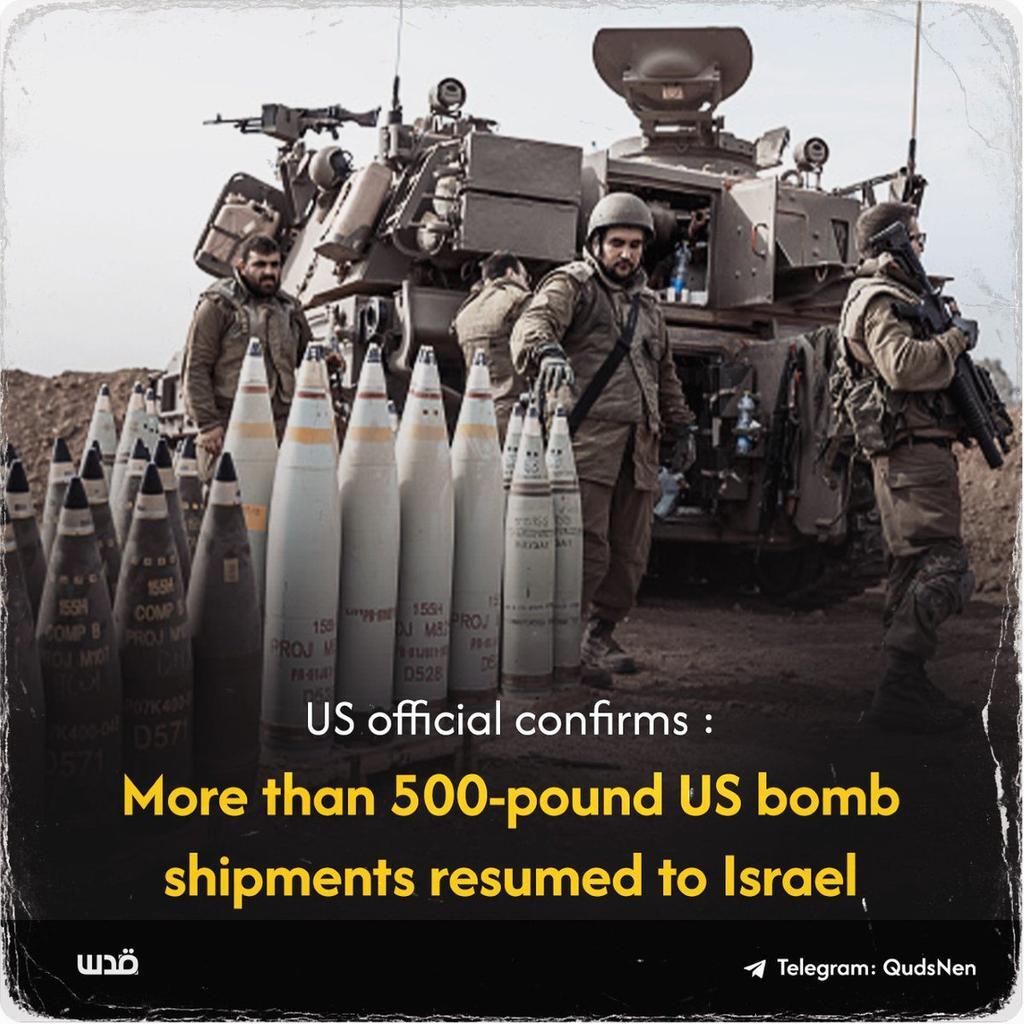
US Moves Ahead With 500-pound Bombs to Israel

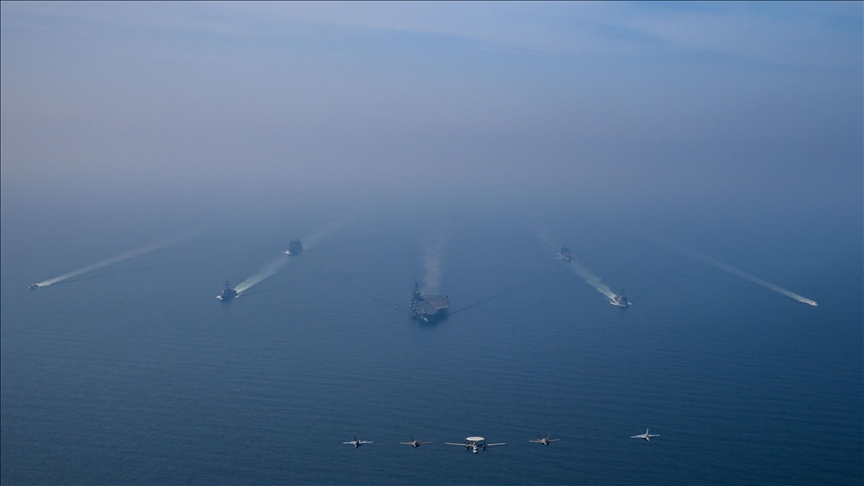
The US has decided to move ahead with the shipment of 500-pound bombs to Israel, which was previously paused due to concerns over Israel’s potential ground invasion of the southern Gaza city of Rafah and massive killings of civilians, a report stated Wednesday.

The bombs “are in the process of being shipped” after a two-month pause and are expected to arrive in Israel in the “coming weeks,” The Wall Street Journal reported, citing an administration official and reported in Anadolu.

In May, the Biden administration paused a planned shipment to Israel of 2,000-pound and 500-pound bombs amid concerns about Israel’s plans for a possible ground assault on Rafah, where 1.5 million displaced Palestinians sought refuge on top of the city’s pre-war population of more than 200,000.

“Civilians have been killed in Gaza as a consequence of those bombs and other ways in which they go after population centers,” US President Joe Biden acknowledged in an interview with CNN, referring to 2,000-pound bombs, and described Israel’s bombing of Gaza as “indiscriminate.”

“Heavier 2,000-pound bombs that were meant to be part of the same shipment are still on hold,” the official told WSJ.

Israeli Prime Minister Benjamin Netanyahu criticized the Biden administration in June for “withholding weapons and ammunition to Israel” in recent months, adding that Secretary of State Antony Blinken assured him that restrictions would be lifted on arms transfers to Israel.

“We’ve been clear that our concern has been on the end-use of the 2,000-lb bombs, particularly for Israel’s Rafah campaign, which they have announced they are concluding,” a US official told Anadolu when asked about the shipment of 500-pound bombs.

“Because of how these shipments are put together, other munitions may sometimes be co-mingled. That’s what happened here with the 500-lb bombs, since our main concern had been and remains the potential use of 2,000-lb bombs in Rafah and elsewhere in Gaza,” the official said. “Our concern was not about the 500-lb bombs. Those are moving forward as part of the usual process.”

Israeli Defense Minister Yoav Gallant said Wednesday that Tel Aviv is willing to open the Rafah border crossing between Gaza and Egypt, but without allowing Hamas to return to the area.

In early May, the Israeli army seized control of the Palestinian side of the Rafah crossing on the border with Egypt as part of a wide-scale military operation which resulted in civilian casualties and the suspension of humanitarian aid deliveries according to the Turkish news agency.

Continue reading
Israel Economy Dives as 46,000 Firms Close

About 46,000 Israeli companies closed down since the war began on 7 October, 2023, with expectations the number will rise to 60,000 firms by the end of 2024 according to the Israeli Hebrew daily Maariv.

It stated 46,000 companies closed down since the beginning of the war on Gaza according to Coface Bdi, a credit risk business information agency for Israeli companies.

“This is a very high number that includes many sectors,” Yoel Amir, CEO of Coface Bdi, was quoted as saying.

He explained 77% of the companies that closed down since the war beginning – that’s about 35000 companies, are small firms and are the most vulnerable in the Israeli economy.

The sectors suffering most are  the building and construction industry, and other related industries such as ceramics, air conditioning, aluminum, and building materials.

Amir added other sectors were also severely affected such as the trade sector, which includes the fashion, shoe, furniture, and household appliances industry, and the service sector, cafes, entertainment and entertainment services, and transportation.

He said this includes the tourism sector which is today non-existent, the tourist areas that have become combat zones, and the agricultural sector, most of which is located in the combat zones in the south and north, and suffers from a shortage in workforce.

Statistics show the abysmal state of the Israeli economy with the building and construction sector down by 27%, services sector by about 19%, while the industrial and agricultural sector by about 17%, and the trade sector by about 12%.

The high-tech and advanced technologies industry was affected by about 11%, and the food and beverage industry was affected by about 6%, according to official statistics.

“The damage in combat zones is more serious, but the damage to businesses is across the country, with almost no sector spared,” Amir noted.

“The damage is very great in all aspects of  the Israeli economy,” the Coface Bdi CEO noted, explaining “in the end, when companies close their doors and do not have the ability to repay debts, there is also peripheral damage to customers, suppliers and companies that are part of Its working system.

He added, “…there has been a sharp decline in corporate activity in various sectors since the beginning of the war.”

Amir confirmed that in a recent opinion poll made by his company, about 56 percent of commercial company managers in Israel said there was a significant decline in the scope of their activities since the beginning of the war.

“We estimate that by the end of 2024, it is expected that about 60,000 companies will close in Israel. For comparison, in 2020, the year of the Corona crisis, about 74,000 companies were closed,” he said.

Today Israeli companies face “very difficult challenges represented by a labor shortage, declining sales, a high interest rate environment and high financing costs, transportation and logistics problems, a shortage of raw materials, and inaccessibility to agricultural lands in combat zones,” as well as “the lack of Availability of customers involved in combat, flow difficulties, and increases in acquisition costs,” he added.

The war left more than 126,000 Palestinian martyrs and wounded, most of them children and women, and more than 10,000 missing amid massive destruction and famine that claimed the lives of dozens of children.

Tel Aviv continues the war, ignoring the UN Security Council resolutions to stop it immediately, and the orders of the International Court of Justice to take measures to prevent acts of genocide and improve the catastrophic humanitarian situation in Gaza.

Continue reading
Six Female Journalists in Israeli Jails

Attacks on Palestinian journalists have always been widespread. The Israeli authorities frequently charge Palestinian media workers with “incitement” and imprison them as “administrative detainees” based on claimed “secret evidence”.

Both of these charges are bogus and are aimed to prevent the journalists from exposing the Israeli crimes.

Like other detainees journalists held in Israeli prisons suffer from torture, beatings, humiliation and torture. As well, they are deprived from any form of communication with the outside world.

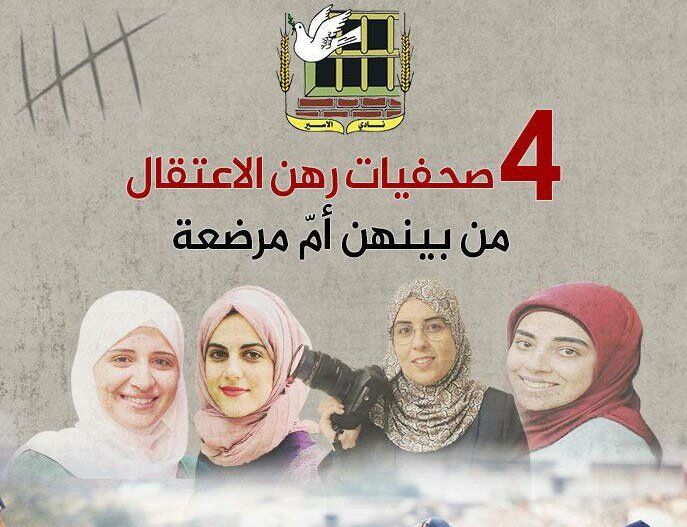
There are currently six Palestinian female journalists held in Israeli prisons and are not due to be released ant time soon while enduring the violence of the Israeli guards.

They are Bushra Al Taweel from Ramallah. This is her 5th arrest in three years and today she is held in administrative detention for six months under the instruction of the Israeli Shin Bet.

Then follows Ikhlas Saleh Sawalha. She was arrested at a military checkpoint in Dier Sharaf. Her arrest is due to the fact that her husband, journalist Ibrahim Abu Safiya has been in Ofer prison since 2022.

Ikhlas has been arbitrarly detained since December, 2023 with under an administrative detention that is renewed almost automatically.

Then comes journalist Rula Hassanein from Ramallah. She is also under administrative detention that is being routinely renewed.

Rula has a baby which has refused her food and milk without her mother leading to her dehydration. Therefore, doctors had to intervene and administer intravenous injections.

Then there is journalist Asmaa Harish. Israeli soldiers stormed her home in Beitunia, west of Ramallah, last April and took her away. She is presently in prison under administrative detention.

Her case is related to the fact she is the daughter of Noah Harish and her brother Ahmad who are in an Israeli jail.

Then there is 39-year-old Rasha Herzallah. She is being detained for what the Israeli authorities claim incitement on social media platforms.

She is the sister of Mohammad Herzallah, a journalist at the Wafa news agency. He was shot by Israeli soldiers in Nablus in 2022 and four months later he succumbed to his wounds and died.

Finally, student Amal Al Shujaiya was taken from her home in Dier Jarir, east Ramallah, late at night by Israel soldiers. She is being detained awaiting a military court hearing. Amal is journalism student at Birzeit University in Ramallah.

“She is living a big space of emptiness in our house,” her mother said.

Continue reading
Israel Escalates Genocidal War on Civilians – Euro-Med Monitor

As talks resume to reach a truce to end Israel’s genocidal war on the Gaza Strip, ongoing since 7 October 2023, the Israeli military appears to be using its policy of forced displacement and starvation as a tool of political pressure and blackmail according to Euro-Med Human Rights Monitor.

Israel is expanding its targeting of displacement centres and surrounding areas and continuing to carry out mass killing operations against civilians and displaced people, all while preventing the displaced from returning to their homes, starving them, denying them access to basic supplies that are necessary for survival, and blocking the entry of humanitarian aid. These acts demonstrate an insistence on committing genocide against the Palestinian people in the Gaza Strip.

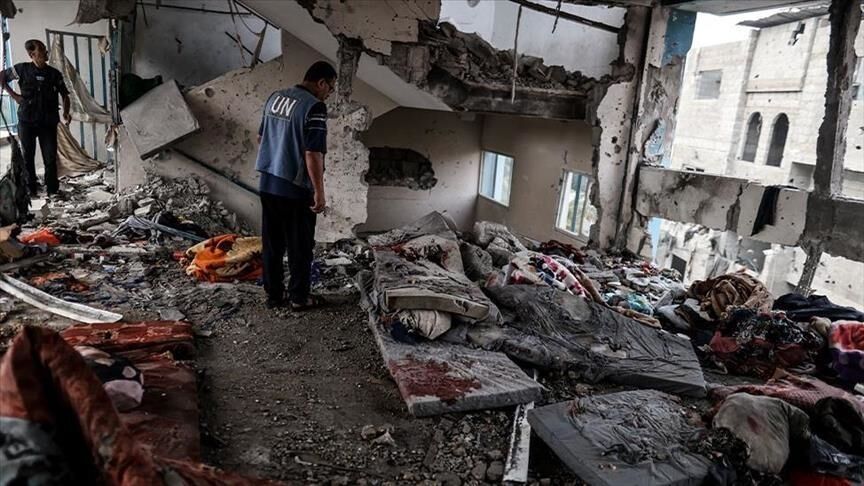
Israeli aircraft fired multiple missiles, Tuesday, 9 July at around 6:55 p.m.), at a group of people gathered at the gate of Al-Awda School in Abasan Al-Kabira, east of the city of Khan Yunis in the southern Gaza Strip. Abasan Al-Kabira houses thousands of internally displaced people. About 32 people were killed and 50 injured in the attack on the school, the majority of whom were women and children. Some of the victims’ bodies were blown into pieces.

According to preliminary data gathered from the examination of bomb fragments used in the attack, American bombs— which have been used in numerous mass killing operations against Gaza Strip civilians— were used in the bombing.

The Israeli army’s ongoing atrocities in the Strip, including repeatedly targeting UN-flagged shelter centres and killing those inside, while the international community remains almost silent, are primarily committed with the intent to eradicate Palestinians, with civilians being used as a tool of political pressure and blackmail. There is no justification for these crimes.

Since there has been talk of resumed negotiationsfor a ceasefire agreement, Israel has ramped up its attacks on the Gaza Strip. This suggests that Israel is applying pressure by increasing its targeting, starvation, and murder of civilians, as well as using them as a political tool for blackmail without respect for international law.

Israel has pursued, and continues to pursue, a systematic policy of targeting civilians in the Gaza Strip, who are protected by international humanitarian law. This targeting includes killing; starvation; arrest; torture; forced disappearance; sexual assault and rape; denial of medical treatment and humanitarian aid; forced displacement; bombing shelter centres over the heads of displaced people; targeting areas designated as humanitarian zones; and denying displaced Palestinians any stability or shelter, even if that shelter is only temporary.

Based on the aforementioned, all nations are required to fulfil their international obligations by enacting strong sanctions against Israel and severing all other types of political, financial, and military support and cooperation. This includes immediately halting arms transfers to Israel, including export permits and military aid; otherwise, these nations will be held accountable for the crimes that have been committed in the Gaza Strip, including genocide.

Additionally, the International Criminal Court ought to keep looking into any and all crimes committed by Israel in the Gaza Strip; broaden its investigation into criminal responsibility, in order to hold all perpetrators accountable; issue arrest warrants for those responsible; and acknowledge and address Israel’s crimes in the Strip, as they are international crimes that fall under the purview of the International Criminal Court and are clearly crimes of genocide.

Continue reading
‘Its Like Guantanamo’ Freed Prisoner Says of Israeli Jail

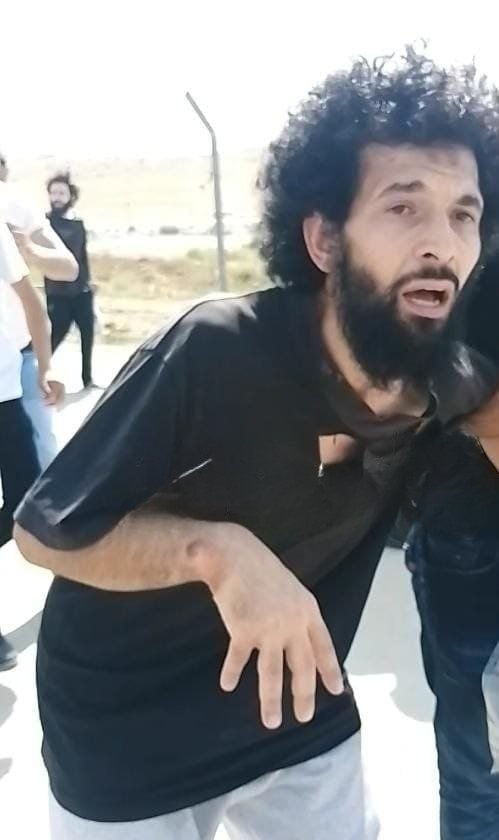
Laying on a hospital bed in Beit Jala in the southern West Bank, Moazzam Khalil Abayat cannot believe he was released from the Negev prison in southern Israel.

Abayat, 37, from the West Bank city of Bethlehem, was released in a “shocking” health condition on Tuesday after a nine-month detention without charge under Israel’s notorious policy of administrative detention.

“Negev prison is like Guantanamo. I saw prisoners killed and trampled on with boots,” Abayat told Anadolu.

“Every night, we were severely beaten. Only last night, I wasn’t hit,” he said.

Despite being surrounded by family and friends at the hospital, Abayat remains disoriented, believing he is still in detention.

“After my arrest, I was subjected to military interrogation and accused of being a murderer. I have never killed anyone,” he recalled.

“I suffered fractures in my head and hand, I was beaten on sensitive and injured areas. I was put in a black bag as if I was dead.”

Abayat said far-right National Security Minister Itamar Ben-Gvir participated in torture at Ofer military prison, west of Ramallah.

“Prisoners are dying in jails. This is an appeal to everyone to take action to save them,” he said.

Abayat’s speech was occasionally incoherent, indicating he still experiences severe psychological distress as if he were still imprisoned.

Family in shock

Abayat’s father, Khalil, was shocked by the health condition of his son.

“The family is in great shock. Moazzaz seems like a completely different person,” he told Anadolu.

“My son was a bodybuilder, worked in a butcher shop, was sociable, and a breadwinner of five. Today, he has almost lost his memory, is nearly paralyzed, thin, unable to walk, and does not recognize many family members,” Khalil added.

He noted that Moazzaz’s weight dropped from around 110 kilograms to barely 50 kilograms.

“Moazzaz was beaten throughout his detention, from the moment he was arrested until his release.”

Brutally assaulted

Dr. Nizar Qumsiyeh, the medical director of the hospital, said, Abayat has various bruises and is in a severe psychological state.

“We have begun medical tests and are awaiting the results, but it is clear he believes he is still in prison and surrounded by jailers,” Qumsiyeh added.

“He needs further examination and follow-up to determine his dietary needs to regain his physical health and then begin potentially long-term psychological treatment.”

According to the Palestinian Prisoner Society, Abayat was brutally beaten during his arrest in late October 2023.

“He was subjected to a series of vicious assaults, including torture and starvation,” it said. “His health condition after his release today serves as a testament to what he endured during his detention.”

Abayat was previously detained twice by Israeli forces. He did not suffer any health problems before his latest arrest.

At least 3,380 Palestinians, including women and children, are currently held without charge in Israeli prisons, according to Palestinian figures.

Israel, flouting a UN Security Council resolution demanding an immediate cease-fire, has faced international condemnation amid its continued brutal offensive on Gaza since an Oct. 7, 2023 attack by Palestinian group Hamas.

Nearly 38,300 Palestinians have since been killed, mostly women and children, and over 88,200 others injured, according to local health authorities.

Nine months into the Israeli war, vast tracts of Gaza lie in ruins amid a crippling blockade of food, clean water, and medicine.

Israel stands accused of genocide at the International Court of Justice, whose latest ruling ordered it to immediately halt its military operation in the southern city of Rafah, where over a million Palestinians had sought refuge from the war before it was invaded on May 6.

Continue reading