Trekking Ireland For Gaza

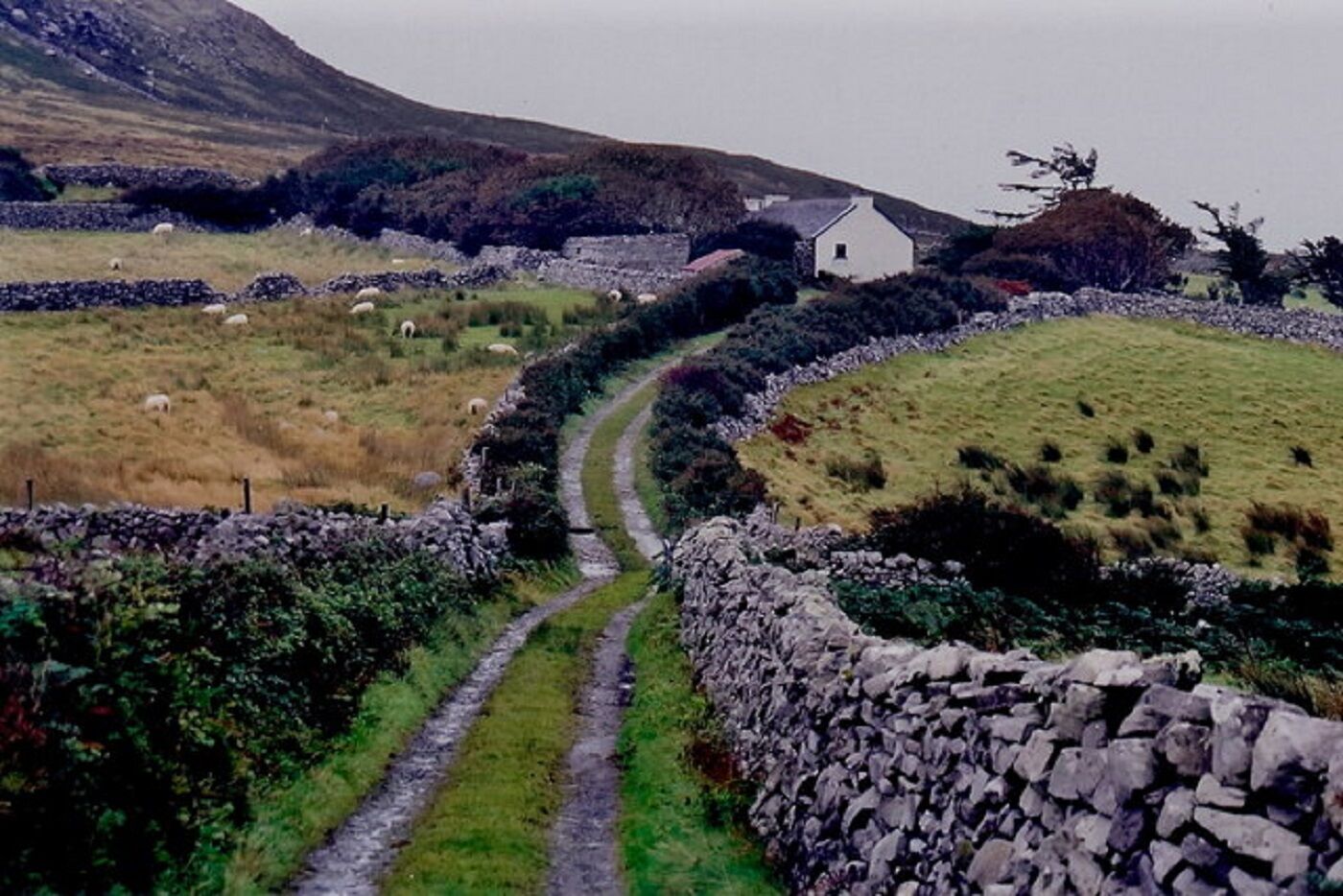
An Irish man is driving the length of Ireland along the 2,800km Wild Atlantic Way in a slow-moving open-top vintage tractor to raise funds for the people of Gaza.

Pat Murphy, a teacher and father of four from Corofin, Galway, will brave the elements in his 1962 David Brown 850, which can only reach a maximum speed of 24kph.

The drive from Malin Head in Donegal to Mizen Head in Cork should only take eight hours in a modern vehicle on a more direct route, but Pat expects his tractor will do it in about two weeks taking the coastal Wild Atlantic Way.

“The tractor can probably do a maximum speed of 24kph so it will be a long journey, but for a very worthy cause,” said Pat, who teaches woodwork at Wesley College Dublin and lives in Sallins, Kildare with his family.

“It is a 62 year old David Brown that has been fully restored. It has no power steering or cabin, just fresh air. If it rains, I’ll be just going through it.

“There is no suspension either and not a lot of comfort so I will have an extra cushion on the seat, which will make a huge difference.

“I will also be wearing a lot of factor 50 and a sombrero hat to protect me from the sun and it can actually get very cool in an open top tractor so I have a heavy coat with me too.”

He began his trek, Thursday 1 August, at 2pm at Malin Head and was accompanied by his friend Tony Harrison from Ballina in Mayo who will be driving a camper van where he will sleep each night.

All proceeds will go to the humanitarian aid organisation Concern Worldwide and its Gaza appeal. Pat chose Concern because of his past involvement with the charity as a volunteer in Rwanda in 1995 and 1996 after the brutal genocide that occurred there.

“I really value the work that Concern does, especially after working for them in refugee camps after the Rwanda genocide,” he said.

“The people of Gaza really need our help today. Anybody who has been the pictures on television knows that the people there need our support.”

Another friend, Brendan Joyce, transported Pat’s tractor from Corofin, where he grew up, to Malin Head and will collect it when they reach Ireland’s most south-westerly point at Mizen Head.

Pat hopes to raise at least €5,000 on his GoFundMe page called ‘Malin to Mizen – Charity Tractor Run for Concern’ and has already raised over €3,000.

Pat said they plan to drive for eight hours each day and to take 15 minute breaks every two hours. He said they are looking forward to driving through the many towns and villages that dot the Wild Atlantic Way.

https://www.gofundme.com/f/malin-to-mizen-charity-tractor-run-for-concern

“We will have signs up on the vehicles to show people how they can support us on our GoFundMe page and I will be posting my progress of the journey each day on my Facebook and Instagram pages,” he said.

To support Pat Murphy’s tractor fundraising trek for Gaza, go to his GoFundMe page: https://gofund.me/f7046b8d and his Instagram page is called Murphsmeander_malintomizen.

Reliefweb

Continue reading
Cemeteries: Even The Dead Are Attacked in Gaza

Mohammed Abu Tayr is trying to put together what can be restored of his father’s grave in the family plot in the Bani Suhaila Cemetery east of Khan Yunis, who died years ago. He is one of the lucky ones because others tried to find the graves of their loved ones but failed according to the Palestine Information Center (PIC).

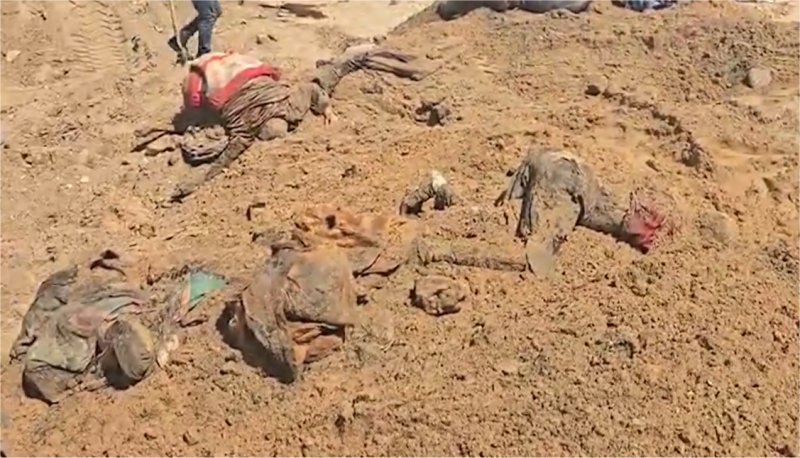
The Israeli occupation’s military vehicles wreaked havoc and destruction of the Bani Suhaila Cemetery during its last incursion of east of Khan Yunis that began on 22 July and lasted for eight days.

Abu Tayr said he was shocked at the bulldozing of the cemetery and the sight of graves being tampered with, trampled on and bodies exhumed by Israeli machinery. Its sheer desecration.

There is no sanctity for the dead. “What is the fault of the dead in their graves? What did they do to have their dignity and sanctity violated,” he asked.

After the Israeli army left, residents of the area flocked to the cemetery to try to restore and repair what has been completely bulldozed by the Israeli occupation forces.

Where is my mother’s grave?

On the opposite side of the cemetery, Ghaida Abu Tayem sits in tears. She tells the PIC reporter she cannot find her mother’s grave after the Israeli army bulldozed the cemetery. Here, there is no regard for human feelings and values.

The Bani Suhaila cemetery is not the only graveyard the Israeli occupation forces dug up and tombstones willfully destroyed. The Israeli army ravaged all cemeteries in the areas invaded by Israeli ground forces across the Gaza Strip.

And this is the case with the main cemetery in Khan Yunis, west of the city. There, the exhumation and devastation of the graves show the deep-seated hatred Zionists have to the Palestinians, whether dead or alive. Even in death, soldiers wish these graves to disappear and be wiped out.

The PIC reporter stresses that the features of the cemetery are completely changed with the bones of the dead scattered by the Zionist barbarians, with the cemetery being turned into a blasted battlefield.

In addition to destroying and bombing the main cemeteries in the Gaza Strip, Israeli soldiers dug up and bulldozed the mass and temporary graves hastily made in the courtyards of hospitals, neighborhoods and streets. This makes it difficult to transfer the bodies to the cemeteries.

In a previous statement, the Euro-Mediterranean Human Rights Monitor documented the Israeli occupation army’s attacks on many cemeteries in the Gaza Strip by deliberately bulldozing them, digging up and vandalizing graves and stealing dozens of bodies in the midst of the ongoing genocide against Palestinian civilians since 7 October 2023.

Mrs. Nour Nasser, a resident of Gaza City who was displaced to areas in the southern part of the Strip, said her martyred brother, “Mohammed, who was in his 20s was buried in the Al-Batsh cemetery in Gaza in dismembered remains, but they were shocked to find out later, the cemetery was bulldozed and there was no longer any trace of her brother.

 The Israeli army did not stop at killing my brother, but also deprived the family of even visiting his grave,” she added.

In another incident, the Israeli army raided a cemetery in Al-Tuffah neighborhood, east of Gaza City with its military vehicles, and exhumed more than a 1000 graves; that was a month ago. The residents of the neighborhood said that the Israeli soldiers stole more than 150 bodies of newly buried people there.

On 25 December 2023, Euro-Med reported it received several testimonies about the Israeli army bulldozing the Beit Hanoun cemetery north of the Gaza Strip and vandalizing its graves.

“Muhammad Abu Awad” from downtown Beit Hanoun said they were taken by surprise when the Israeli army stormed the town’s cemetery and destroying the graves with their military vehicles.

Abu Awad added they observed the Israeli army’s digging operations of specific graves inside the cemetery and stealing the bodies of recently buried people while the remains of the others were mixed together to make it difficult to identify any of them.

By destroying the cemeteries, Israel did not leave any sanctity that was not violated or sins not committed. Today it is trying to annihilate everything in the Gaza Strip, even the dead.

Continue reading
Israel Makes Gaza Battleground of Infectious Disease

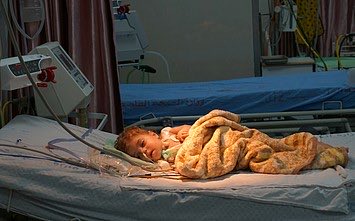
The Israeli authorities continue to enforce their ongoing arbitrary blockade of the Gaza Strip, refusing to allow humanitarian aid and necessities that are essential for survival—such as cleaning and personal hygiene supplies—into the Strip. This comes amid the spread of infectious diseases and on top of the precarious living conditions faced by the approximately 2.3 million Palestinians in the enclave, constituting a perpetuation of Israel’s comprehensive crime of genocide, which began on 7 October 2023.

Euro-Med Human Rights Monitor emphasizes that the consequences of Israel’s intentional worsening of the humanitarian situation in the Gaza Strip, by blocking people’s access to cleaning and personal hygiene products, medical equipment, and sterilization supplies, are dire. Nothing justifies subjecting the population to conditions that can cause widespread death, including by causing the spread of serious skin diseases and and infections, including hepatitis. 

https://x.com/EuroMedHR/status/1818950544188227969


Israel continues to systematically and arbitrarily deny hygiene supplies and equipment to all Gaza Strip residents, exacerbating the catastrophic health crisis that Israel has caused there. This crisis has been made worse by the population’s forced, widespread, and repeatedly occurring displacement, as well as the lack of personal hygiene supplies and disinfectants in shelters and camps housing hundreds of thousands of displaced people. Israel continues to prevent and obstruct the entry of the most basic supplies into the Strip, creating conditions that are ripe for the spread of infectious diseases, water pollution, and the absence of sanitation services, as Israeli army forces have destroyed these facilities.

Since the beginning of the genocide nearly, Israel has arbitrarily closed crossings into the Gaza Strip, blocking the entry of humanitarian supplies and the flow of food and water. These actions have resulted in a dangerous accumulation of crises that directly threaten the lives and health of the Gaza Strip’s residents, most notably due to their lack of access to food, clean water, medicines, medical supplies, sanitary tools, and cleaning supplies.

Aya Kamal Ashour Abed, a 20-year-old displaced mother of two at the Deir al-Balah Preparatory School for Girls in the central Gaza Strip, spoke with the Euro-Med Monitor team. “We are more than 30 people living in this classroom for about nine months,” she stated. “A few months ago, we numbered roughly 70, but after some of the displaced individuals relocated to tents outside the school, our numbers dropped somewhat.

“We only receive cleaning and personal hygiene supplies in small quantities every two or three months, despite the fact that our number is very high and we require them constantly,” Abed continued. “Sanitation supplies, like tissues, soap, and shampoo, are extremely expensive [or] even nonexistent in the markets.”

Added Abed: “A bar of soap, for instance, now costs 30 shekels (roughly nine USD) while a bottle of shampoo costs 90 shekels (roughly 25 USD). We do not have anything to eat, so how can we afford these amounts for basic hygiene?”

Abed, who was displaced from her home in the Jabalia refugee camp in the northern Gaza Strip following its bombing last October, said that her two sons had become afflicted with allergies and bacteria, for which she is unable to provide ointments because they are unavailable in UNRWA clinics. “I showed my son to the doctor, and he told me that his entire body is seriously infected with bacteria due to poor hygiene,” Abed told Euro-Med Monitor.

Obtaining sanitary pads—which are pricey and hard to find in local markets—is one of her biggest challenges. “Even though my children’s diapers are completely unusable, I have to cut them into tiny pieces and use them as sanitary pads,” Abed explained. “During my period, I also have to use a single pad for the entire day, which has led to numerous infections and rashes.”

Approximately 680,000 women and girls in the Gaza Strip are of reproductive age. These individuals lack access to menstrual pads and other essentials, and also face other challenges such as inadequate access to water, toilets, various hygiene products, and privacy. Additionally, they must use contaminated or unsterilised materials, which puts them at risk of developing infections that can lead to infertility and uterine cancer.

Since Israel has cut off electricity to the Gaza Strip, there is a growing risk to all residents caused by waste accumulation and sewage flooding of roads and markets due to the inability to drain it. Israel has destroyed most of the Strip’s vital infrastructure, including sewage networks, and forced over two million people—the majority of whom have been displaced more than once—into shelters and tents that lack the basic necessities of life, personal hygiene, and health care.

Forty-two-year-old Mohammed Saad Abu Haitham said that his family of eight, which resides in a tent in the Mawasi neighborhood of Khan Yunis in the southern Gaza Strip, is severely impacted by the lack of cleaning supplies, laundry detergent, and bar soap. Due to its scarcity, soap is unusually expensive and therefore difficult to purchase.

“We do not have the money to buy enough meals for our children, so we cannot buy cleaning materials and soap in light of their high prices and the lack of availability,” Abu Haitham told the Euro-Med Monitor team. “My spouse and kids’ hair has been infected with lice, and we all have skin diseases as a result of not washing and not using enough soap and shampoo.”

Food dyes are used instead of traditional dyes for making liquid soap and sterilisation products, which have not entered the Gaza Strip in months due to the Israeli closure of the crossings and the imposition of an arbitrary siege. These alternative and primitive cleaning products are made locally, are unsafe, and are generally insufficient in both quality and quantity when sold in the markets of the central and southern Gaza Strip.

Tens of thousands of cases of skin diseases, including eczema, have been reported to medical facilities as having cropped up in shelters and camps for displaced people living in tents. This is particularly concerning for women, as eczema often appears on the hands of people working to clean food utensils using antiquated and dangerous materials. Meanwhile, reports from the United Nations indicate that skin rashes and skin infections, especially among children, are sharply increasing in the Strip.

The Israeli authorities have placed an arbitrary and oppressive siege on the Palestinian people there, squeezing them into a tiny area with exceedingly limited resources; denying them access to food, clean water, and other necessities; and leaving them exposed to extreme heat.

The right to dignity is an internationally recognised human right that protects people from humiliation, among other forms of unethical treatment. It is meant to ensure fairness by providing the means for people to live in dignity, as well as other fundamental needs and rights, like the right to health and the right to water and sanitation. These rights are essential to maintaining human dignity and preserving the lives of the populace.

The only way to guarantee the rights of Gaza Strip residents is to put an end to Israel’s crime of genocide, lift the arbitrary siege on the Strip, and rescue what remains of the currently uninhabitable region. Delays will either cause the region to irreversibly deteriorate, or incur significant costs in terms of civilian lives and health.

The international community is required to guarantee the entry of humanitarian aid into the Gaza Strip, including the entry of non-food essentials needed to respond to the dire circumstances faced by the Strip’s entire population. Euro-Med Monitor stresses that swift and effective action must be taken to safely deliver aid to civilians across the entire Strip, including the northern section, which is particularly isolated right now. Additionally, the international community must prioritise providing adequate supplies of personal and family hygiene products, as well as products for menstruating individuals, plus sexual and reproductive health care services to prevent and mitigate further harm to women and children in particular, and the entire Palestinian population in general. These actions are mandated by international human rights law and relevant international obligations.

Pressure needs to be put on Israel, as the occupying force, to maintain sanitation facilities and services in the Gaza Strip, as well as to guarantee the safety of the technicians charged with repairing and renovating water lines and their various sources. The main water pipelines that enter the Strip need to be restored, particularly those that enter it from the north.

In addition to ensuring the entry of enough fuel to operate the Gaza Strip’s water and sanitation infrastructure, including desalination plants, water wells, and mobile toilets, it is crucial to exert pressure on Israel to permit the entry of materials required for repair work and rehabilitation of civilian infrastructure. These services are essential to the civilian population’s survival in the Strip, and will protect them from the threat of further health disasters.

Euro-Med Human Rights Monitor

Continue reading
Lebanese Flock to Beaches Despite Expected Israel Attacks

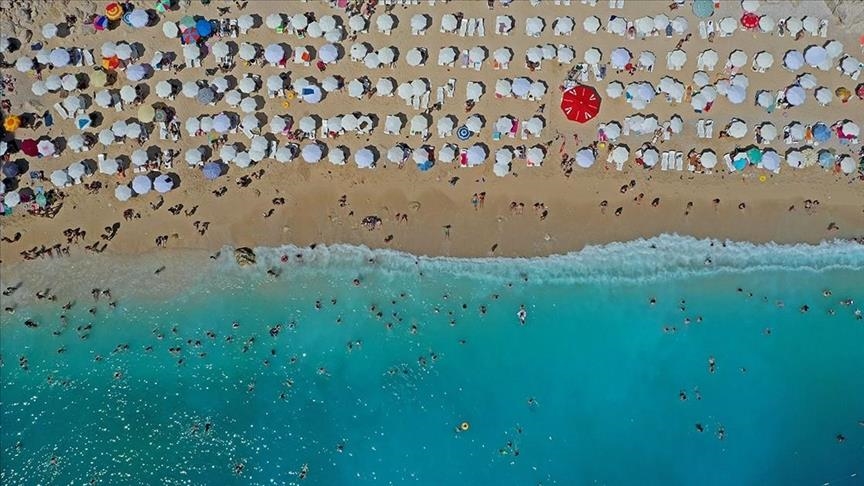
Amid sweltering temperatures, Lebanese people are flocking to the beaches and shores of the country to cool off. This is despite a mounting threat of an Israeli attack on Lebanon that could happen any day now.

For the past 10 months, there have been reciprocal attacks between the Israeli army and the Lebanese Hezbollah group along the 120-kilometer (75-mile) border between Israel and Lebanon.

Tensions have escalated further following a missile attack on a football field in the town of Majdal Shams in the occupied Golan Heights.

The missile strike on Saturday killed 12 people. Israel blames Hezbollah for the attack. But Hezbollah denies playing any part in the attack.

Despite Israel’s threat of all-out war, Lebanese people, especially residents of Tyre, a city about 20 kilometers (12.4 miles) from the conflict zone, continue to head to the beach.

An Anadolu reporter interviewed people in Tyre who were swimming in the sea as they cooled off with their families and friends at a public beach.

Rayan Fayad, a Lebanese expat from Abidjan, Ivory Coast who was visiting his hometown with his family, said he loves the beach in Tyre.

“Everyone is happy and no one is afraid. People are carrying on with their lives as usual,” he said.

Another resident, Abdullah Yahya, subtly referring to Hezbollah said there is a force in Lebanon to prevent Israel from targeting civilians, which is why civilians continue to live normal lives.

“Our home is very close to Israel. Yet we still go out, come to Tyre, and continue our lives as we did before,” Yahya said.

Fears of a full-blown war between Israel and Hezbollah have grown amid an exchange of cross-border attacks between the two side according to the Turkish news agency.

The escalation comes against the backdrop of a deadly Israeli onslaught on Gaza which has killed more than 39,300 people since last October following a cross-border attack by the Palestinian group Hamas.

Continue reading
Gaza That Haunts Me

By Sama Abu Sharar

It took me about eight months to sit and write about Gaza. Like most people, I went through a wide range of emotions that ranged from severe depression to severe helplessness, accompanied by crying from pain I have never felt and disappointment from a “free” and “unfree” world.

Emotionally, I am no longer myself. As much as Gaza has hurt me, it changed me to the core.

Most of the concepts and beliefs we were raised on, studied, or dictated to us went down the drain and with them, fell my faith in all the outdated universal laws that claim to protect human dignity and rights.

Gaza taught me to trust nothing. Nothing at all. Human beings are not equal in international covenants. There is the law of the “white man” opposed to the rest of humanity. The law of the “strongest” and the law of the “weakest”. In all cases, Gaza remained on the margins of humanity, equating the victim with the executioner in all of its ugliness.

***

My days since 7 October have become meaningless details. Gaza literally haunts me. I sleep, if I can sleep, on Gaza, and I wake up on Gaza. I can’t remember how many times I woke up from a fitful sleep to quickly grab my mobile phone to see if the weather was stormy or rainy there in Gaza?

Scenes of displaced people trying to fix their fragile tents or drain the water – the desired and unwanted visitor – flooding the tents and their inhabitants, and the shivering of young and old from the cold and the world’s failure to them, lie before me.

I wait impatiently for winter, but this winter has come bitterly. My prayers were for a kind winter, kinder on our people in Gaza; and a gentle summer, gentler than the harsh reality, unfathomable for the human mind to comprehend.

Even the weather conspired against the people of Gaza. The tents are unbearable, the raging heat, accompanied by all the creepy crawlers of the earth and the flying creatures, making life a continuing nightmare.

No, there is no room for things we once took for granted. All have become luxuries for the people of the tiny Strip in size, immense in its spirit, sacrifices and people.

***

I was witness to many of the tragedies of the great Palestinian people, on both the personal and public levels. Nothing is similar to what happened and is still happening in Gaza, which exposed everyone and primarily the Palestinian himself.  This new Nakba (catastrophe), the details of which we live every day has revealed the extent of our fragility in face of this historic event.

The fragility is evident on all levels, from our worn-out Palestinian political scene, to our crisis-ridden institutions to our weak official media scene drowning in political divisions unable to present the Palestinian narrative, unfit to us as a people and to our great and just cause and our right of resistance until the liberation of Palestine. A narrative also unfit to the Arab and western public in search of a genuine Palestinian narrative, which will not hurt if it were a unified one.

Politically, the scene became more worn out than it was before 7 October. The major event did not unite us or solidify our position but increased our fragmentation, dispersion and division. With some exceptions by some individual Palestinian efforts who presented a solid narrative, the vast majority stood in contrast despite the enormous amount of sacrifice the people of Gaza made and continue to make.

“Protecting Palestinian national unity inside and outside the occupied homeland is one of our main weapons with which we fight our enemies and a condition for our victory,” once wrote the late Palestinian martyr and revolutionary Majed Abu Sharar.

Where are we from this unity? How do we face the consequences of what is happening or invest in the unprecedented international awareness and mobilization to support our cause?

How many of us have remained silent at the beginning “because this is not the time for criticism,” as the battle is big and ongoing and the enemy is one or so we thought! But apparently the enemy was never one for many, as factional alignments are more important than the momentous event and supreme cause.

We would be lying to ourselves if we would say that the genocide in Gaza united us; the opposite is true.

Many mouthpieces, some of whom we have never heard and some we know too well, delivered statements that could have only come from an enemy, and in a chilling harmony with the Zionist viewpoint and that of global imperialism, instead of defending the Palestinian right to resist based on international laws.

Our political discourse has become a mirror image of our troubled reality. I am one of many Palestinians who did not find herself during this ongoing genocide and long before in any of the official Palestinian narrative and Arab discourse.

***

The tragedy continues and human interaction with it is enormous. But the official Palestinian institutions were generally absent from what was happening on the ground despite the great need to unify efforts and address its enormity as dictated by the ongoing war of extermination.

My life, like the lives of many others, has become centered around possible ways to extend a helping hand to our people in Gaza, but all these efforts remain individual and unorganized despite the good intentions, thus cannot meet the huge needs in Gaza.  One of the reasons for the institutional absence in these exceptional circumstances is the division and vacancy of a unified vision for an urgent relief plan.

The 1948 Nakba and the 1967 Naksa and all the massacres and pivotal events in the history of our long conflict with the enemy don’t seem to have taught us anything. The genocide in Gaza has clearly demonstrated this.

The unprecedented international mobilization and parallel awareness is heart warming! Who amongst us, and I mean Palestinians and Arabs, who still consider Palestine “as their cause”, ever dreamt of a similar scene to what we have witnessed in the last 10 months?

Awareness amongst young people in the West is equal to, if it does not precede that of many young Arabs and even Palestinians towards the Palestinian cause. And what young people in Europe and America are declaring in terms of adopting firm positions, many of our own hesitate even to think about. “Palestine from the river to the sea”, “Terminating the existence of Israel”, “Zionism equals Nazism”, “Israel is a criminal entity”… and others have become beliefs rather than slogans for many in the West, especially the youth.

https://twitter.com/faizelpet1/status/1816888931079569744

***

Palestine is no longer the cause of the Palestinians and some Arabs. It has become an international, humanitarian cause adopted by hundreds of millions of people, and if that indicates anything, it shows how Gaza and its people were able to achieve what we have failed to achieve for many years.

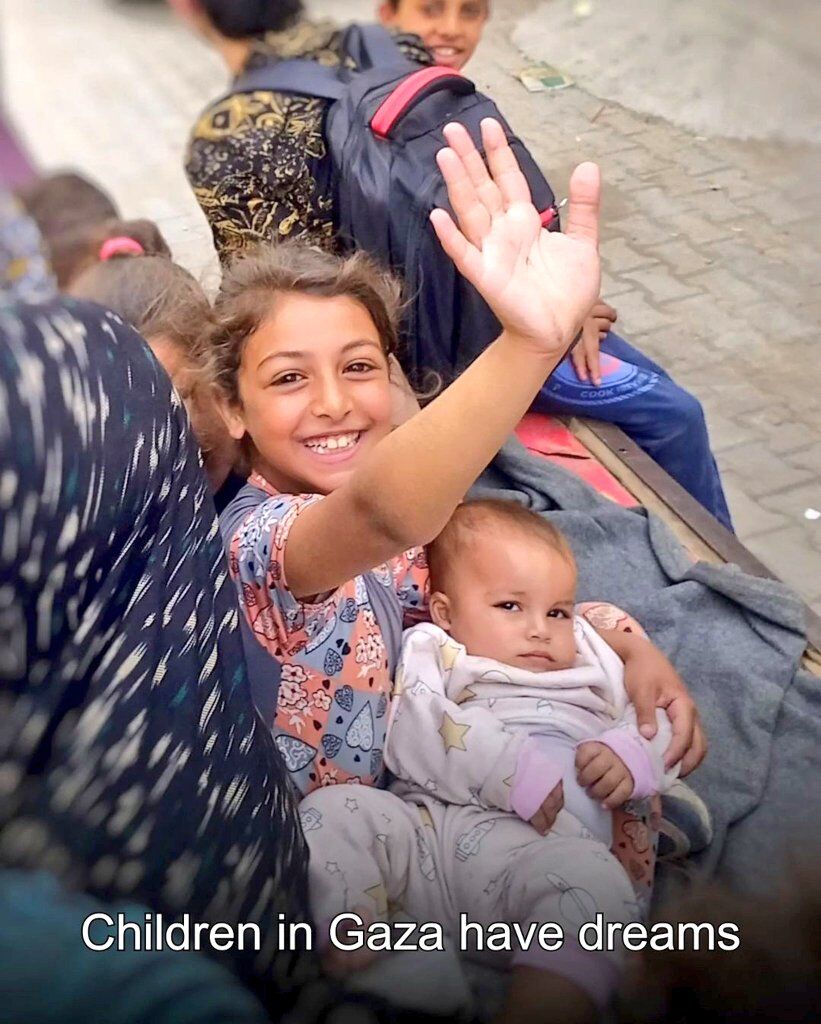
Yes, and despite the pain and the catastrophic scenes, Gazans came to teach us lessons in pride, dignity, faith, adherence to the truth, and steadfastness. I often wonder how the people of Gaza are able to do this while living the impossible over the last 10 months?

I have not left out a single curse that I did not use in this painful genocide, maybe as an expression of anger and resentment towards this world or maybe as a form of venting. But not once have I heard a Gazan utter a curse.

All we have heard were terms ranging from “Thank God,” “God is sufficient for me, “God is the best Disposer of affairs”, “May God take revenge on you, Netanyahu,” and other “polite” utterings in light of the abominable reality to which Gazans have been exposed to.

How many times have I wished to stop the rhythm of this world for the sake of Gaza, to stop this madness, how many times have I wanted to scream with all my heart in the hope that someone would hear me and stop a pain I have never imagined I could bear a portion of.

***

My private conversations with some friends and relatives in Gaza were not much different from what we all see and hear on television and all the available means of communication. Their responses when we dare to ask them about their well-being range from “thank God,” “may God end this war,” “we miss returning to our homes and lives,” and the most extreme is “we are tired, we are exhausted.”

I honestly don’t recall a single time when someone uttered a word that crossed the boundaries of known politeness.

I sometimes wonder when someone from Gaza contacts me to check on me or even congratulate me on Eid – two Eids (El Fiter and Al Adha) have passed by under indescribable circumstances for the people of Gaza – I wonder where they get the ability to continue?

Over the past months, I have built friendships with many acquaintances where our communication previously did not go beyond a comment here or a like there, on social media.

They might have needed an outside source of reassurance to ensure their presence in our existence, or perhaps any piece of news of a potential ceasefire for the ongoing madness or a glimmer of hope that this nightmare would end.

My relationship with existing friends in Gaza were strengthened further. They allowed me into the details of their lives amidst the endless killing, displacement, exhaustion, anxiety and other complex human feelings.

My heart skips a beat every time I hear of a bombing close to their displacement places, until I hear from them to know they are well, until the next time comes. Sometimes, I hesitate to ask about their being, as they are definitely not well, despite everything they say to reassure us and/or not to burden us with the impossible life they are living.

***

I don’t know the limit of pain a person can bear. What I do know is that amidst the ongoing genocide, we never once believed we could bear this unbelievable pain. The anxiety never leaves us, the helplessness that resides in us, the unparalleled disappointment… and the images that besiege us with their mythical cruelty.

How many times I wished to stop the rhythm of this world for the sake of Gaza, to stop this madness, how many times have I wanted to scream with all my heart so that someone would hear and stop a pain that I never imagined I could even bear a portion of.

Yet hope remains that the nightmare will end. Hope from which we derive our ability to continue for the sake of Gaza and its people, for the sake of Palestine.

The journey of recovery will be long, actually very long, and what awaits us may be more difficult than what we’ve already experienced. My hope remains in our ability to translate the pain into actions, so that the journey of freedom and liberation continues towards a homeland that we still dream of.

Samaa Abu Sharar is a Palestinian journalist and researcher living in Beirut. Her article on Gaza was translated from the 180post.com Arabic website.

Continue reading