Pezeshkian: ‘Iran Will Not Surrender to Bullies’
 CrossFireArabia
- March 16, 2026
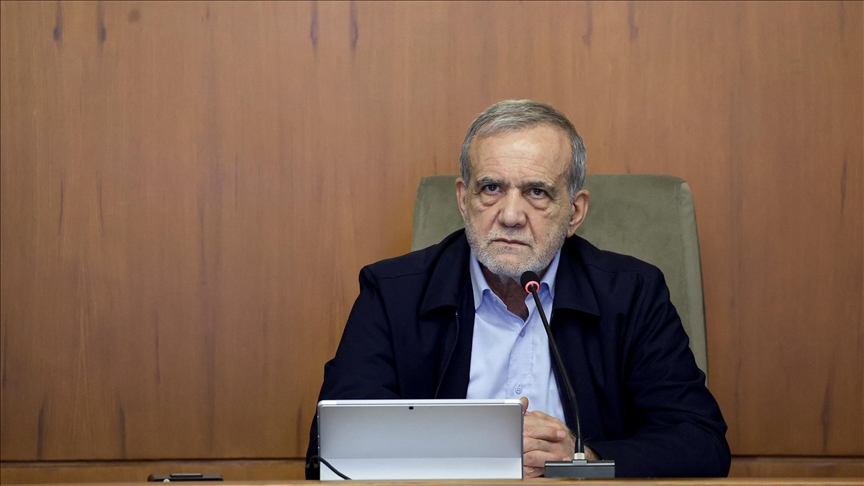
Iranian President Masoud Pezeshkian said Monday that Iran did not start the current war with the US and Israel, defending his country’s right to respond to attacks by Washington and Tel Aviv against Tehran, as fighting between the warring rivals continues unabated.
In a statement on the US social media company X, Pezeshkian said he spoke over the phone with French President Emmanuel Macron.
“I emphasized that Iran did not begin this atrocious war. Defending against invasion is a natural right, in which we are good at,” he said.
“Using the American bases against Iran in the region, with the purpose of disturbing our relations with our neighbors, should be stopped.”
The Iranian president said regional peace and stability cannot be achieved while disregarding US-Israeli attacks on Iran.
“The Islamic Republic of Iran will not surrender to bullies,” Pezeshkian said.
“We expect the global community to condemn this invasion and convince invaders to respect international laws. Commencing a war in order to conquer, based on false information, is a medieval act in 21st century,” according to Anadolu.
Pezeshkian described calls for ending the war as “meaningless, until we ensure there will be no more attacks in our land in the future.”
Regional escalation has raged since the US and Israel launched a joint offensive on Iran since Feb. 28, killing so far around 1,200 people, including then-Supreme Leader Ali Khamenei.
Tehran has retaliated with drone and missile strikes targeting Israel, along with Jordan, Iraq, and Gulf countries, which it says are targeting “US military assets.” Some of these attacks have caused casualties and damage to civilian infrastructure, including airports, ports and buildings.
Israeli Soldiers Enforce Closure of Al Aqsa
- CrossFireArabia
- March 16, 2026
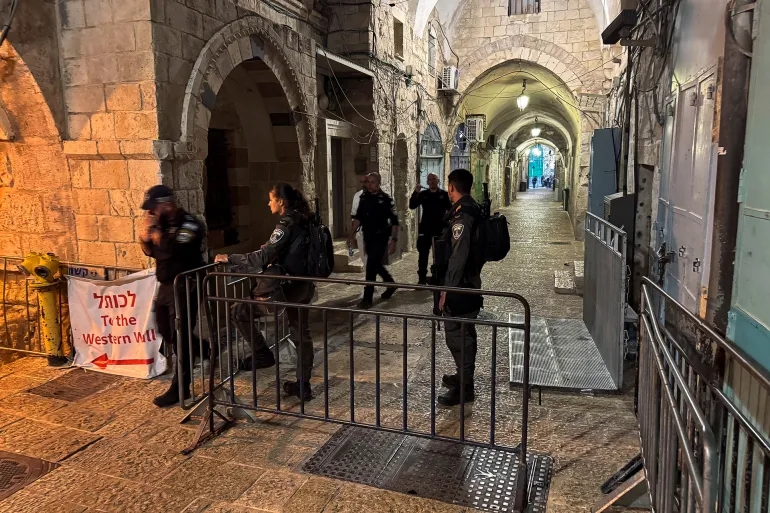
Israeli occupation authorities continued their closure of the Al-Aqsa Mosque compound on Sunday, marking the 16th consecutive day of closure. As the 27th night of Ramadan approached, they transformed the area surrounding the mosque into a military zone.
The Palestinian Jerusalem Governorate stated that occupation forces had turned the Old City of Jerusalem into a military barracks, deploying hundreds of soldiers around it.
It added hundreds of Jerusalemites performed the Isha and Taraweeh prayers in the Bab al-Sahira and Bab al-Amud areas and in the streets, as the Old City and the Al-Aqsa Mosque remained closed “amid a siege by Israeli forces.”
These Israeli reinforcements coincided with calls on social media to break the siege of the Al-Aqsa Mosque and observe Laylat al-Qadr (Night of Power) within its precincts or wherever possible.
Since the start of the US-Israeli attack on Iran on February 28, the occupation authorities have closed the Al-Aqsa Mosque under the pretext of declaring a state of emergency and preventing gatherings.
Palestinians observe the 27th night of Ramadan (Laylat al-Qadr) by observing i’tikaf (seclusion for worship) in mosques, praying, supplicating, and reciting the Quran until dawn. Last year, approximately 180,000 people observed it at Al-Aqsa Mosque.
According to the Jerusalem Governorate, dozens of Jerusalemites performed the Isha and Taraweeh prayers near the Damascus Gate (Bab al-Sahira) on the northern side of the Old City of Jerusalem, amidst heavy military reinforcements and a large deployment of occupation forces.
The Wadi Hilweh Information Center for Human Rights stated that occupation forces erected checkpoints, stopped those entering the Old City, and prevented non-residents from entering.
The center noted the collapse of the Old City’s markets, which appear almost deserted, with most shops closed due to Israeli restrictions, during a season that merchants eagerly anticipate each year.
The Arab League, in a statement, condemned “in the strongest terms” the continued closure of Al-Aqsa Mosque and the prevention of prayers and religious rituals there, especially during the holy month of Ramadan and its last ten nights.
The university deemed this “provocative measure a flagrant violation of international law, international humanitarian law, and the existing legal and historical status quo at the Al-Aqsa Mosque/Haram al-Sharif, an unprecedented provocation of the feelings of two billion Muslims worldwide, and an undermining of freedom of worship and unrestricted access to places of worship.”
It emphasized that “Israel, the occupying power, has no sovereignty over the Palestinian territory occupied in 1967, including the occupied city of Jerusalem and its Islamic and Christian holy sites.”
It called upon the international community, including the Security Council, to assume its responsibilities and adopt a firm international stance that compels Israel, as the occupying power, to cease its violations and practices, lift all restrictions imposed on Palestinian access to Jerusalem, and respect freedom of worship. J024
1 in 7 Displaced in Lebanon – NRC
- CrossFireArabia
- March 16, 2026
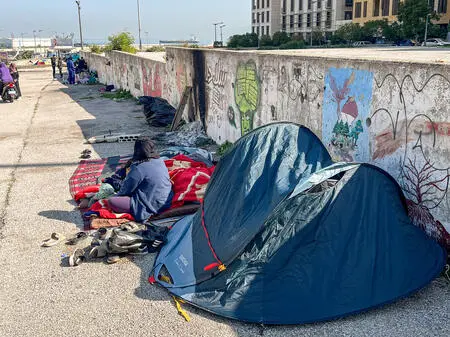
Lebanon is approaching a breaking point as displacement accelerates, with one in every seven people now displaced in the first ten days of the escalation, says the Norwegian Refugee Council (NRC).
Lebanon Published 13. Mar 2026
At least 816,000, or 14 per cent of Lebanon’s population, have been displaced, according to official figures. The figures are set to rise further as Israel repeats evacuation warnings and bombards more villages and neighbourhoods across Lebanon.
“The scale of destruction and displacement is increasing with every passing hour,” says Maureen Philippon, NRC Country Director in Lebanon. “This indiscriminate bombing must stop. The situation in the collective shelters I have visited bears witness to repeated trauma among families and their children. People are going through the same cycle of bombing, loss, and displacement that they experienced almost two years ago, only with greater intensity and speed.”
Israel’s evacuation orders have now engulfed 1,470 square kilometres, or 14 per cent of Lebanon, including South Lebanon, Beirut’s Southern Suburb, and parts of Bekaa. Yesterday, Israel issued additional evacuation orders, further expanding the number of Lebanese villages under imminent threat.
In Tyr, South Lebanon, NRC’s office was badly damaged in an Israeli attack in the neighbourhood. We are lucky nobody was in the office as the extent of the damage means that colleagues would certainly have been injured. The organisation had notified Israel of its office location through the UN but received no warning from the Israeli military ahead of the strike.
“Israel’s mass evacuation orders have expanded to broad geographic directives, often demanding immediate movement, creating panic and fear across communities that strikes are imminent – even when they are not. These orders are likely to cause prolonged displacement with little prospect of return. All efforts must be made to end the use of such orders and ensure that whether they choose to leave an area or remain, that civilians are protected in line with International Humanitarian Law at all times by all parties to the conflict,” added Philippon.
Across collective shelter, where over 122,000 people have sought safety, conditions present immediate challenges for people. In one school sheltering 1,200 people, an average of 15 people are staying in each classroom, with every 23 people sharing a single toilet. There are no shower facilities or cooking gas and a limited supply of water.
NRC continues to support collective shelter with pillows, blankets, mattresses, cleaning items and other basics. NRC is also assessing additional support to improve conditions in shelters, including installing showers, adding latrines where needed, providing water, and setting up partitions to give families greater privacy. The scale of needs is already outgrowing support provided by the government and aid organisations.
NRC urges donors to commit flexible funding to enable humanitarian actors to respond to rapidly growing needs. This must take place while diplomatic efforts exhaust all means to bring an end to attacks on civilians and their infrastructure.
Notes to editors:
- Since 2 March, 634 people have been killed and 1,586 injured in Israeli attacks in Lebanon, according to official figures (Lebanon’s Disaster Risk Management Unit). No fatalities have been reported in Israel as a result of Hezbollah’s attacks (Reuters), but several people have been injured, according to news reports (Jerusalem Post, Time of Israel).
- 816,700 people are recorded as displaced in Lebanon as of 12th March. This includes 125,800 staying in collective shelters (Lebanon’s Disaster Risk Management Unit).
- Lebanon has a population of around 5.8 million (World Bank). With 816,000 people forced from their homes, this makes up 14 per cent of the total population.
- Israel has placed 1,470 square kilometers of Lebanese territory under evacuation orders, representing about 14 per cent of Lebanon’s total land area.
For more information or to arrange an interview, please contact:
- NRC global media hotline: [email protected], +47 905 62 329