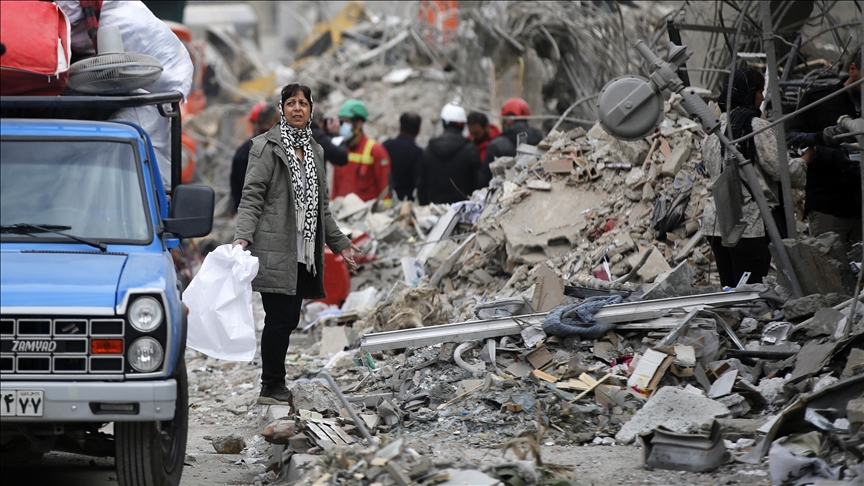
The Israeli Ministry of Health announced that since the start of Operation “Lion’s Roar” until Sunday, 1 March, 456 people were hospitalized, including 86 who remain in emergency rooms.
Earlier, Israeli occupation hospitals acknowledged the deaths of two people, although the occupation deliberately conceals its losses in an attempt to quell public anger and boost the morale of its soldiers.
Previously, Israeli media reported that the number of injuries in Tel Aviv had risen to 21, including critical and serious cases.
Iran continues to target occupation sites in the occupied Palestinian territories, as well as American bases in the region, in response to the American-Israeli aggression launched on Saturday morning against the country, which is still ongoing.
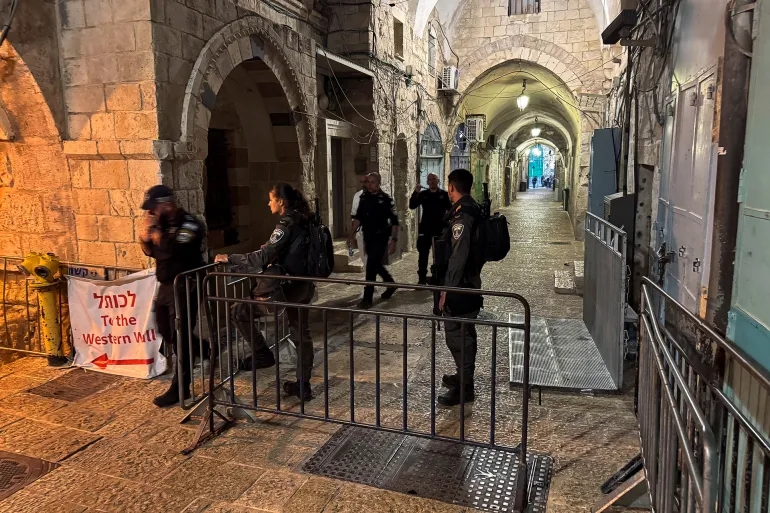
Secretary-General of the Palestinian National Initiative Dr. Mustafa Barghouti says the Israeli army’s closure of hundreds of checkpoints and military gates throughout the West Bank has led to widespread paralysis of public life and created a dire humanitarian and economic situation affecting all segments of the Palestinian population.
Barghouti told Jordan 24 these measures have not only restricted movement but have effectively fragmented the West Bank and isolated cities and towns from one another. Travel between governorates now takes many hours or is often impossible, which, he described as a de facto undeclared curfew imposed on millions of Palestinians.
He pointed out the health sector is among the most severely affected, with patients facing significant difficulties accessing hospitals and medical centers, particularly emergency cases and patients requiring dialysis and cancer treatment. He noted delays in accessing treatment can endanger many lives. Medical personnel also face frequent obstacles while traveling, further weakening the ability of healthcare institutions to perform their duties.
Barghouti also explained that students and teachers face daily obstacles in reaching their schools and universities, which disrupts the educational process and disrupts school attendance, especially in villages and areas surrounded by checkpoints. He added this situation negatively impacts the psychological and social well-being of students and their families.
He emphasized the economic damage is severe, as checkpoints impede the movement of workers and goods and prevent products from reaching markets, causing significant losses for merchants, farmers, and small business owners. He also pointed out that the disruption of internal movement weakens commercial activity and deepens the economic recession, amidst already difficult living conditions.
Barghouti stated that many Palestinian villages and towns have been transformed into closed areas resembling prisons, deprived of the most basic necessities and human services. He stressed that these policies constitute a form of collective punishment and exacerbate the suffering of the citizens.
He called on the international community to intervene urgently to stop these measures and ensure freedom of movement for Palestinians, stressing that the continued closure of checkpoints exacerbates tensions and undermines any opportunities for stability in the region.
Israel has installed 1000 security barriers in the occupied West Bank since 7 October, 2023.
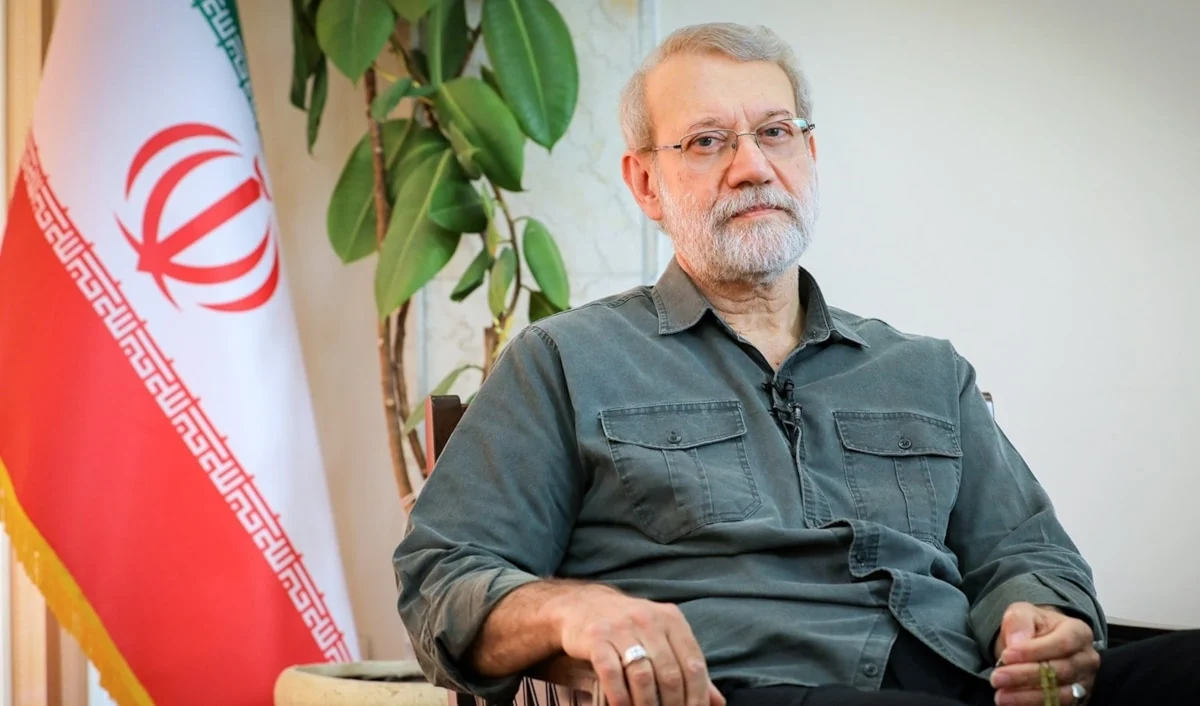
Iran’s Supreme National Security Council Secretary Ali Larijani affirmed that his country will not negotiate with the United States. He added that US president Donald Trump has plunged the region into chaos with his “false hopes.”
On Monday, Larijani asserted Iran will not negotiate with the United States, noting that Trump “has plunged the region into chaos with his ‘false hopes,’ and is now worried about further losses among American forces.”
In a post on his “X” account, Larijani argued Trump has transformed his “America First” slogan into “Israel First,” sacrificing American soldiers for Israel’s pursuit of power. He continued: “With delusional actions and new lies, Trump is once again making American soldiers and their families pay the price for his personality cult.”
He added: “Today, the Iranian people are defending themselves, and the Iranian armed forces did not initiate the invasion.”
These statements come in response to a report in the Wall Street Journal about an initiative by Larijani to resume talks with Washington, presented through Omani mediators.
These statements also come amidst the ongoing US-Israeli aggression against Iran, which has targeted large areas of the country and resulted in the martyrdom of the Supreme Leader of the Islamic Revolution and the Islamic Republic of Iran, Ayatollah Ali Khamenei, and a number of other Iranian leaders. Almayadeen
Iran’s State Television officially announced, Sunday early morning, that Iran’s spiritual leader Ali Khamenei was killed in American-Israeli strikes on the country. The television stated the leader of the Islamic revolution was martyred in the continuous US-Israeli attacks that begun on Saturday. He was working at his office on the early hours of Saturday morning. Iran media also stated his daughter, her husband and granddaughter were also killed in the attacks.
Iran has declared a mourning period of 40 days.
This is an extended profile on the late rule from Anadolu.
The killing of Iran’s Supreme Leader Ayatollah Ali Khamenei in Saturday’s joint US-Israeli strikes marks a watershed moment for the Islamic Republic, removing the figure who for more than three decades was the country’s ultimate political, military and ideological authority.
The 86-year-old cleric wielded power that extended across Iran’s armed forces, judiciary and foreign policy apparatus, with his decisions overriding those of presidents and parliament alike.
Since assuming leadership in 1989 following the death of the Islamic Republic’s founder Ruhollah Khomeini, Khamenei steered Iran through the aftermath of the Iran-Iraq war, crippling Western sanctions, diplomatic isolation, recurring domestic unrest and intensifying confrontation with Washington and Tel Aviv.
To supporters, he was the steadfast defender of Iran’s sovereignty against foreign pressure. To critics, he symbolized an uncompromising political system resistant to reform and dissent.
As supreme leader, he served as head of state and commander-in-chief, retaining final authority over the armed forces and the Islamic Revolutionary Guard Corps (IRGC).
Childhood, faith and early politics
Khamenei was born on April 19, 1939, in Mashhad in eastern Iran to a modest religious family. After completing primary education, he pursued Islamic studies at seminary in Mashhad before continuing with advanced theological training in Qom. He was also known for his deep interest in poetry and literature.
In the early 1960s, he joined Ayatollah Khomeini’s movement against Shah Mohammad Reza Pahlavi. Beginning in 1963, he was repeatedly arrested by SAVAK, the Shah’s intelligence service, for organizing protests and distributing anti-regime literature, and spent several periods in exile.
As mass protests swept Iran in 1978-1979, weakening the monarchy, political prisoners and exiles returned to public life. Khamenei re-emerged in Mashhad and other cities, helping organize demonstrations and mobilize support for Khomeini’s revolutionary agenda.
Ascent and role as supreme leader
Following the 1979 Islamic Revolution, Khamenei joined the Revolutionary Council and quickly rose within the new political order. He served as deputy defense minister, Tehran’s Friday prayer leader, and a member of parliament.
In 1981, after the assassination of President Mohammad Ali Rajai, Khamenei was elected president, serving two consecutive terms until 1989. That same year, he survived an assassination attempt when a bomb hidden in a tape recorder exploded during a mosque speech, leaving his right arm permanently impaired.
After Khomeini’s death in June 1989, Iran’s Assembly of Experts appointed Khamenei as supreme leader, with constitutional revisions later formalizing the position at the apex of the political system.
Though initially viewed as a compromise choice, he gradually consolidated authority, strengthening the power of the supreme leader’s office over both executive and legislative branches. Under his leadership, Iran pursued a foreign policy centered on resisting US influence, expanding regional alliances and maintaining strategic deterrence.
Domestically, Iran’s politics moved between reformist and conservative currents. Reformist President Mohammad Khatami’s 1997 victory generated public optimism, but Khamenei constrained efforts to open Iran to the West. Mahmoud Ahmadinejad’s presidency aligned more closely with conservative priorities, though the disputed 2009 election triggered mass protests.
Later administrations navigated a complex balance between pragmatism and ideological rigidity. President Hassan Rouhani pursued diplomatic engagement, including nuclear negotiations, while conservative President Ebrahim Raisi aligned closely with Khamenei’s policies.
Khamenei’s tenure also saw repeated waves of unrest. In 2022, the death of Mahsa Amini in morality police custody sparked nationwide protests that exposed deep social grievances.
Protests erupted again in late 2025, initially against economic hardships but later spiraling into mass anti-regime demonstrations. The protests saw violent clashes and a government crackdown, with Iranian authorities confirming over 3,100 deaths, including both civilians and security personnel.
Nuclear program and negotiations
Iran’s nuclear program became one of the defining issues of Khamenei’s rule. As tensions escalated with Western powers, sweeping sanctions severely strained Iran’s economy.
In 2015, Tehran reached the Joint Comprehensive Plan of Action (JCPOA), curbing nuclear activities in exchange for sanctions relief. Khamenei approved negotiations but remained deeply skeptical of Washington. The deal unraveled after the US under President Donald Trump withdrew in 2018 and reinstated sanctions, prompting Iran to scale back compliance.
Khamenei’s death comes as Washington and Tehran were engaged in indirect nuclear negotiations. US demands reportedly included permanent restrictions on Iran’s nuclear capabilities and limits on enriched uranium stockpiles, while Iranian officials insisted they would not relinquish enrichment rights or ship stockpiles abroad and demanded sanctions relief.
Khamenei consistently framed Iran’s nuclear ambitions as peaceful while portraying sanctions as economic coercion. In one of his last social media posts on Feb. 17, he said nuclear energy is an “undeniable right” recognized under international guidelines and assailed US interference.
Palestine, regional alliances and the ‘Axis of Resistance’
Support for Palestinian statehood remained central to Khamenei’s worldview. Following Israel’s war on Gaza in October 2023, he intensified rhetoric against Israel and the US, urging countries to sever ties with Israel and calling for diplomatic isolation.
A key pillar of Iran’s strategy under Khamenei was backing regional allies, including Hezbollah in Lebanon and armed groups across Iraq and Yemen, as part of what Iranian officials describe as the “Axis of Resistance” — a network aligned against Israeli and US influence. The grouping also covers Palestinian factions including Hamas and the former Syrian regime of Bashar al-Assad.
Confrontation with US and Israel
Khamenei remained a long-standing critic of US and Israeli policies, frequently portraying them as Iran’s principal adversaries. Regional tensions escalated after Israeli airstrikes on Iranian sites last year prompted retaliatory attacks by Tehran.
He repeatedly vowed that Iran would respond to Israeli actions and refused the prospect of negotiations with Tel Aviv, warning that Tehran would continue to resist its aggression.
At the same time, US and Israeli officials in recent weeks had renewed calls for political change in Iran, underscoring the intensity of the confrontation that framed the final period of Khamenei’s rule.
In a statement announcing Khamenei’s death, Trump said he “was unable to avoid our Intelligence and Highly Sophisticated Tracking Systems and, working closely with Israel, there was not a thing he, or the other leaders that have been killed along with him, could do.”
The US president also repeated his call for “the Iranian people to take back their Country.”
Khamenei’s death removes one of the most consequential figures in modern Middle Eastern politics — a leader who shaped Iran’s ideological identity, regional alliances and decades-long confrontation with the West.
The uncertainty now facing Tehran could prove as consequential as his rule, as Iran navigates leadership succession amid heightened regional tensions and fragile diplomatic efforts.
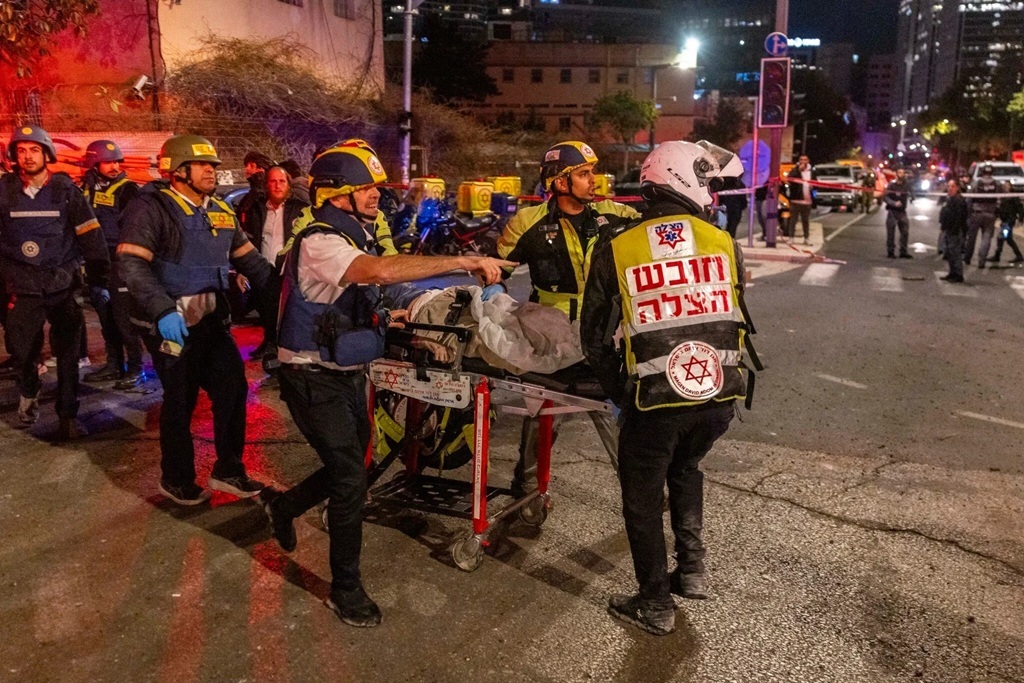
Israeli emergancy services stated, Saturday night, 89 people were injured as a result of the Iranian attacks while the Hebrew media (Channel 13) reported that Tehran launched more than 200 strikes on the different parts of the Jewish entity on the first day of the US-Israeli war launched on Iran. The Israeli media (Channel 12) reported that central Israel suffered much material damage from the Israeli missiles that launched on Israel despite the fact tenss of these were deflected by Israeli batteries. Yedioth Ahronoth reported injuries in the city of Bnei Brak, near Tel Aviv though it didn’t say how critical these were. The Hebrew Channel 12 reported the number of fires were caused in northern Israel. Air raid sirens were reported in many parts of the country as ringing all day because of the incoming missiles with millions of Israelis taking to underground shelters.

 CrossFireArabia