Plans to Displace Gazans Must be Fought – Hamas

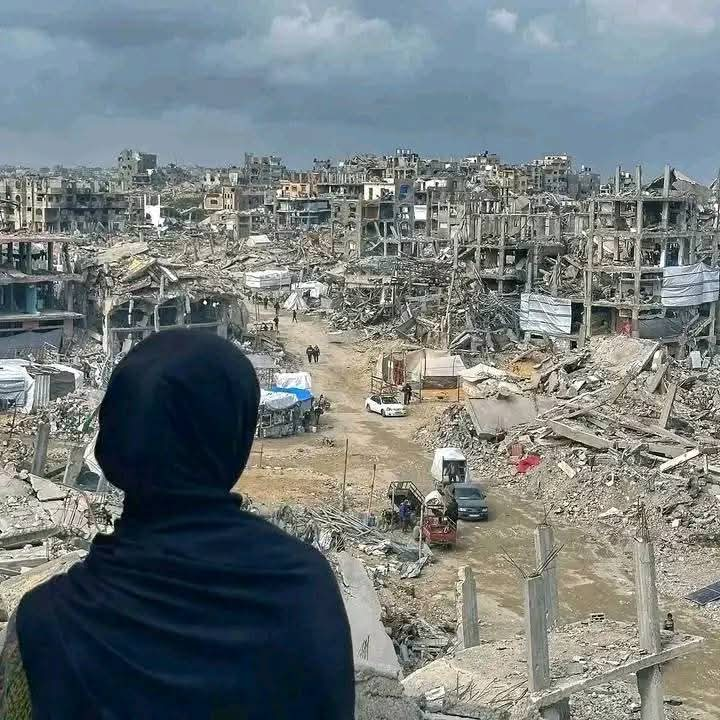
Plans to force Palestinians out of Gaza must be fought and defeated. Hamas spokesperson Hazem Qassem said current Israeli security meetings discussing the future Gazans to forcably displacement them represent a highly dangerous development that contradict any talk of peace, stability, or understandings reached by the mediators. He said the ongoing bombardment, destruction of infrastructure, starvation of the population, serve these displacement plans and threatens the rermoval of Palestinians from their land.

Qassem noted that as sponsor of the de-escalation efforts, it must prevent these displacement projects and the Arab League, and Egypt must coordinate Arab action to stop these plans that also pose a direct threat to Arab national security. Last Tuesday, Israel’s new National Security Advisor, Shmuel Ben Ezra, met with security chiefs to discuss such a plan to “encourage voluntary emigration” of Palestinians from the Gaza Strip. Haaretz revealed that leaked information by participants in the meeting, indicated that Ben Ezra called on the security agencies to study a plan and prepare the mechanisms for its implementation.

Continue reading
Germany Backs Egypt’s Gaza Reconstruction Plan

Germany on Friday expressed strong support for the Arab League’s reconstruction plan for Gaza, which stands as an alternative to US President Donald Trump’s proposed US takeover of Gaza.

“The German government welcomes the Arab League’s plan for the reconstruction of the Gaza Strip,” Chancellor Olaf Scholz’s spokesman Steffen Hebestreit told a news conference in Berlin.

“The plan includes many valuable elements we can build upon. Constructive discussions should begin immediately,” he said, adding that Berlin maintains that Gaza must not pose any security threat to Israel in the future.

At the same news conference, German Foreign Ministry spokesman Sebastian Fischer stated that the plan contributes significantly to a sustainable solution by addressing political and security concerns in the Gaza Strip.

“We also believe that it is appropriate to rely on the Palestinian Authority as a key player in this process,” Fischer said. “The plan supports the long-term goal of a two-state solution and also a resumption of direct negotiations between the Israeli and Palestinian sides. We also support this,” he added.

When asked about Germany’s position on other plans and proposals, such as the relocation of Palestinians to neighboring countries, Fischer firmly stated that “forced relocations and expulsions are always contrary to international law.”

Continue reading
Who is Going to Rebuild Gaza?

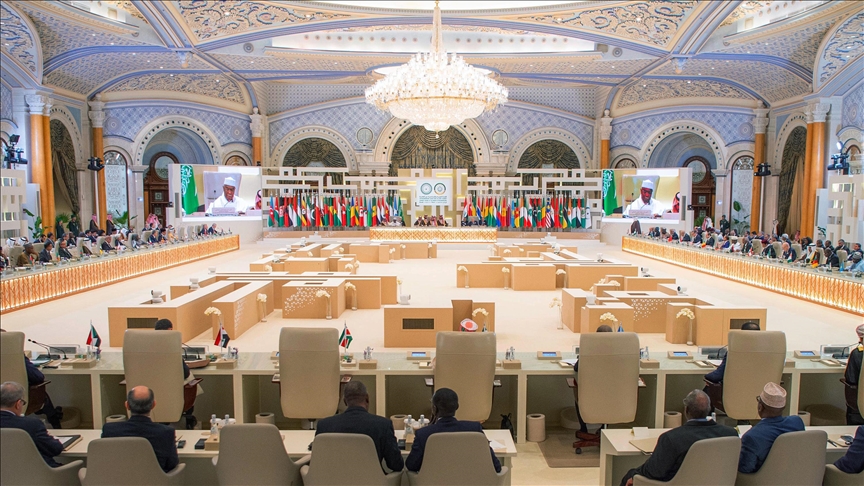
No official announcement was made following the Riyadh Summit, which was considered fraternal, friendly, and consultative rather than formal. The summit, held a few days ago, was attended by the Gulf states, along with Jordan and Egypt, in anticipation of the Cairo Summit scheduled for March 4. The Cairo Summit is expected to approve and announce a new Arab plan for rebuilding Gaza as an alternative to Trump’s plan. However, more importantly, the Arab plan presents a comprehensive political approach linking the Gaza issue to the establishment of a Palestinian state and a peaceful resolution in the region. This approach counters Israel’s new policies, which are based on political hegemony—not only in Palestine by eliminating the two-state solution but also by expanding Israel’s security boundaries to include parts of Syria and Lebanon and inciting the U.S. into a confrontation with Iran.

The Egyptian-Arab approach is still in its final stages of preparation. It takes into account a combination of financial, technical, political, and security aspects concerning Gaza. Palestinian Prime Minister Mohammad Mustafa has proposed modifications to the plan originally put forward by the World Bank, the United Nations, and the European Union, which estimated the cost of rebuilding Gaza at over $50 billion in a rapid and preliminary needs and damage assessment report (IRDNA). Instead, Mustafa proposed a more realistic and feasible plan costing no more than $20 billion, to be implemented in three phases. The Egyptians have incorporated this into their reconstruction plan, which includes dividing Gaza into three safe zones, using temporary housing (caravans) and tents, and developing a technical vision for redesigning the sector’s infrastructure through specialized Egyptian companies.

The Arab approach links the reconstruction plan to several key elements. The first is the technical, logistical, and financial aspect of rebuilding. The second is reforming the Palestinian Authority (PA) to counter Israeli claims of its incompetence, with reform measures covering political and security aspects. The third element concerns the administration of Gaza in the post-occupation phase. A significant development has occurred with the Palestinians agreeing on a temporary administrative committee responsible for technocratic affairs. Hamas has accepted this arrangement, and President Mahmoud Abbas has reluctantly agreed to it, as it implicitly means that the PA will not return to Gaza.

The most challenging aspect of the Arab plan lies in the security arrangements during the reconstruction phase. Arab states refuse to deploy security forces or enter Gaza without a clear vision for ending the Israeli occupation and establishing a Palestinian state. As Arab diplomats emphasize, what is needed is not just a roadmap for resolving the Palestinian issue, but rather an agreement on final-status issues and recognition of a Palestinian state—followed by a roadmap for implementation, not the other way around.

The most contentious issue in the Arab approach is Hamas’s weapons. Israel, along with the United States, will not accept Hamas retaining its weapons in Gaza. Israel has made it clear that it links the second phase of the process to this condition, and the U.S. has accepted this demand. On the other hand, the Arab side ties the issue of disarming non-state actors to the establishment of a Palestinian state that would have the exclusive right to possess weapons. The key question remains: Who would disarm Hamas? The only legitimate entity that could do so is a recognized Palestinian state, which remains the missing piece in U.S. policies that align with Benjamin Netanyahu’s vision.

The Arabs hope that this approach will establish a new framework for relations with the United States and offer alternative strategic options. They even believe it could persuade President Donald Trump to secure several achievements—perhaps even earning him a Nobel Peace Prize in the end.

This is undoubtedly a highly optimistic approach, but it represents a new Arab attempt to present a united position and alternative strategic options. However, the biggest challenge this vision overlooks lies in the details. As the saying goes, “the devil is in the details.” What kind of Palestinian state is actually possible under the current circumstances? What was previously proposed by Trump himself? Is there a single Palestinian—any Palestinian—who could accept a state comprising only 30% of the West Bank, without East Jerusalem, and without control over borders? How could Hamas and its supporters—or even the majority of Palestinian refugees—be convinced of such a proposal, even if there were Israeli and American acceptance of the new Arab approach?

Mohammad Abu Rumman is a columnist in The Jordan Times.

Continue reading
Cairo Confirms 4 March For Gaza Rebuild Summit

Egypt confirmed on Tuesday that it will host an emergency Arab summit on March 4 to discuss plans to rebuild the Gaza Strip without displacing its Palestinian inhabitants.

The summit was originally scheduled to be held on Feb. 27, but was postponed to March 4 “to complete logistical preparations,” the Egyptian Foreign Ministry said in a statement.

The ministry said the new date was set in coordination with Bahrain, the current chair of the Arab League, and in consultation with Arab countries according to Anadolu.

The summit follows a proposal by US President Donald Trump to take over Gaza and resettle its Palestinian inhabitants to develop it into what he called “the Riviera of the Middle East.”

On Sunday, Egyptian President Abdel Fattah al-Sisi confirmed that his country is preparing a “comprehensive” plan to rebuild Gaza without displacing Palestinians.

Trump’s plan for Palestinian resettlement has been rejected by the Arab world and many other nations, who say it amounts to ethnic cleansing.

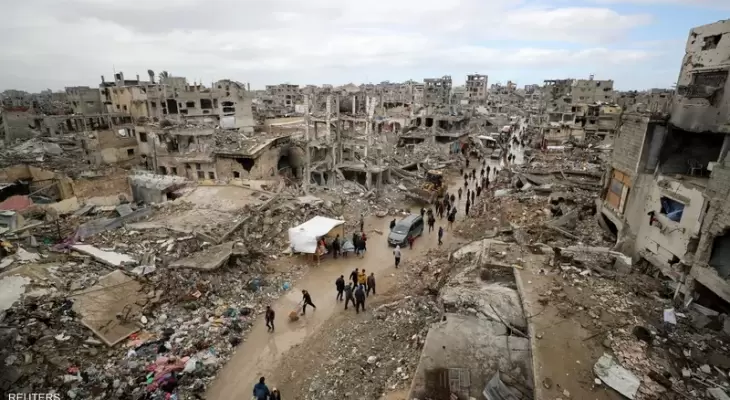
The controversial idea came amid the ceasefire agreement that took effect in Gaza on Jan. 19, halting Israel’s genocidal war, which has killed nearly 48,300 Palestinians, most of them women and children, and left the enclave in ruins.

Continue reading
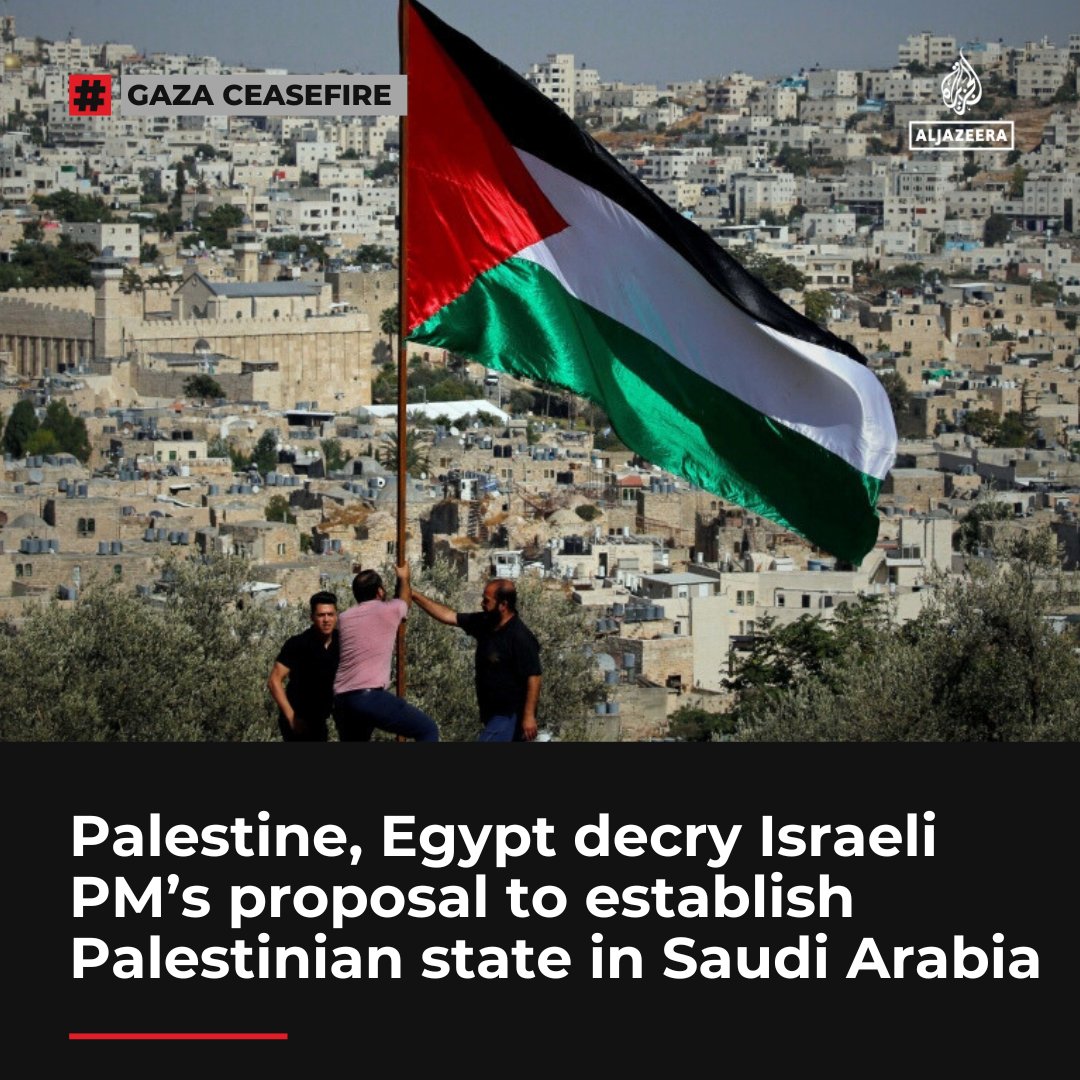
Arabs Condemn Netanyahu’s Call For Palestinian State in Saudi Arabia

Arab countries strongly condemned Israeli Prime Minister Benjamin Netanyahu’s statements suggesting the establishment of a Palestinian state in Saudi Arabia.

In an official statement, the Saudi Foreign Ministry reaffirmed its “categorical rejection” of such rhetoric, emphasizing that “the Palestinian people have a right to their land, and they are not intruders or immigrants to it who can be expelled whenever the brutal Israeli occupation wishes.”

The statement said, “This extremist, occupying mentality does not understand what the Palestinian land means to the brotherly people of Palestine,” asserting that Israel “does not think that the Palestinian people deserve to live in the first place.”

The Qatari Foreign Ministry said in a statement that Netanyahu’s statements are “a flagrant violation of international law and a blatant infringement of the United Nations Charter.”

The ministry affirmed Qatar’s full solidarity with Saudi Arabia and reiterated its “categorical rejection of calls for the forced displacement of the brotherly Palestinian people.”

In a statement, Jordan’s Foreign Ministry spokesman Sufian al-Qudah said, “The Israeli government continues its provocative policies and statements that undermine the sovereignty of nations and the principles of international law.”

He stressed Jordan’s “absolute rejection of these provocative statements, which reflect an exclusionary and inciting ideology hostile to peace and contribute to further escalation in the region.”

The Foreign Ministry in Muscat, in a statement, reaffirmed “Oman’s firm stance in support of the establishment of an independent Palestinian state on its full sovereign territory in Palestine, with East Jerusalem as its capital, based on the 1967 borders.”

The Bahraini Foreign Ministry, in a statement, expressed the kingdom’s “strong condemnation and denunciation of the irresponsible Israeli statements regarding the establishment of a Palestinian state on Saudi territory,” considering them a “blatant violation of international law and the UN Charter.”

The ministry reaffirmed “Bahrain’s full solidarity with Saudi Arabia and its unwavering support for its security, stability, and sovereignty.”

The Iraqi Foreign Ministry issued a statement expressing its “firm rejection of these remarks, which constitute a blatant violation of Saudi Arabia’s sovereignty and an attack on the legitimate rights of the Palestinian people, in addition to contradicting international law and the UN Charter.”

The ministry emphasized “Iraq’s full solidarity with Saudi Arabia and its unwavering stance in supporting the security, stability, and sovereignty of nations.”

The Yemeni government, in a statement issued by the Foreign Ministry, condemned Israel’s arrogant and provocative remarks against Saudi Arabia, describing them as “a dangerous escalation that threatens the stability of the entire region.”

The ministry warned that “Israel’s arrogant statements not only target Saudi Arabia but also represent a serious escalation that endangers regional stability as a whole.”

https://twitter.com/PressTV/status/1888667745274724703

The Mauritanian Foreign Ministry, in a statement, described the Israeli prime minister’s remarks as “irresponsible,” adding that they “constitute an unacceptable violation of international norms and laws and a provocation that threatens the security and stability of the region.”

Arab League Secretary-General Ahmed Aboul Gheit firmly denounced “in the strongest terms” the Israeli prime minister’s remarks about relocating Palestinians to Saudi Arabia. He emphasized that “the logic behind these statements is completely unacceptable and reflects a total disconnect from reality.”

Gulf Cooperation Council (GCC) Secretary-General Jassem Al-Budaiwi stated that “these dangerous and irresponsible statements confirm the approach of the Israeli occupation forces in their lack of respect for international laws and treaties, as well as the sovereignty of nations.”

Palestinian resistance movement Hamas strongly described Netanyahu’s remarks as “hostile toward Saudi Arabia and the Palestinian people, reflecting an arrogant approach and a colonial mindset that disregards the historical rights of the rightful owners of the land.”

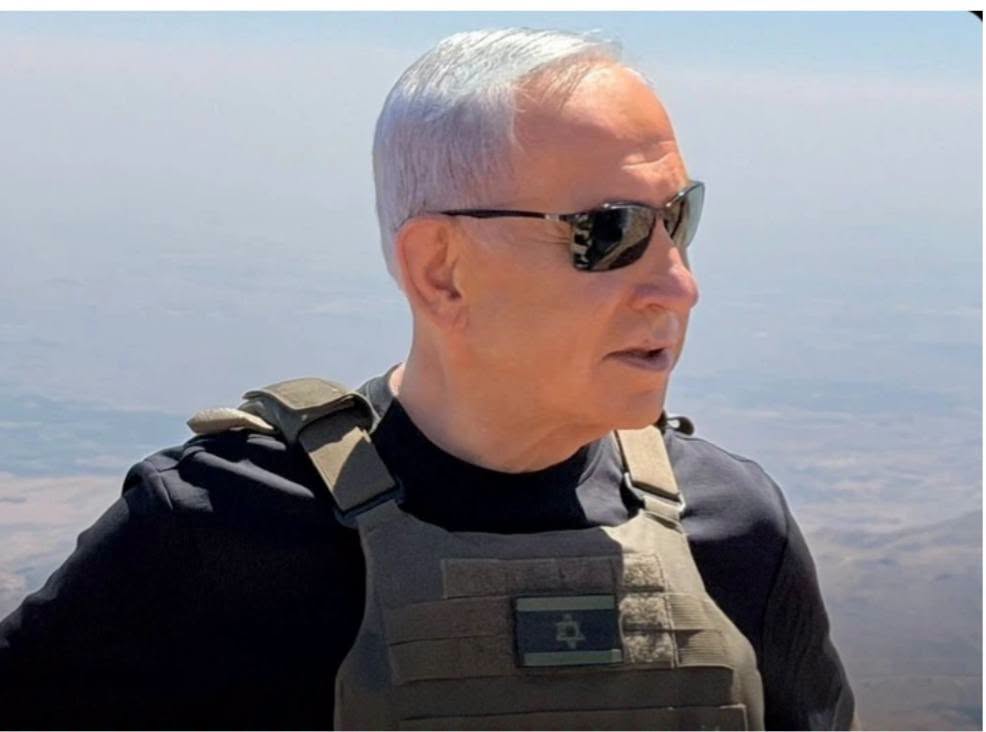
On Thursday, Netanyahu suggested that Palestinians should establish their state in Saudi Arabia rather than in their own homeland, dismissing any notion of Palestinian sovereignty.

“The Saudis can create a Palestinian state in Saudi Arabia; they have a lot of land over there,” he said.

Earlier, on Feb. 4, US President Donald Trump said Washington would “take over” Gaza and resettle Palestinians elsewhere under an extraordinary redevelopment plan that he claimed could turn the enclave into “the Riviera of the Middle East.”

His proposal was met with wide condemnations from the Palestinians, Arab countries, and many other nations across the world, including Canada, France, Germany, and the UK as reported in Anadolu.

Continue reading