A ‘Bomb Telegram’ to Arabs

By Maher Abu Tair

Israeli security breaches are not new. We used to hear about the assassination of Palestinian leaders through the explosion of a mobile phone, said every time to be stuffed with explosives activated suddenly but this is unlikely, because those leaders do not receive mobile devices from anyone with such naivety.

Most likely however, is that there is software that leads to heating up of the batteries of these devices and turns them into explosives: So the bomb is now in the hand of the fighter and his pocket, and the same bomb is filming, eavesdropping and spying in the new era of electronic wars.

Today there is all possibilities as Israel is penetrating beyond Lebanon, into all countries of the region, through human and electronic penetrations and software. The recent strike on Lebanon go beyond that country, reaching all in the region to seek to make Israel “gigantic” and restore its reputation, by saying it has the ability to blow up our mobile phones and even TVs connected to the Internet to burn your homes, and disrupt all services from water to electricity, to banks software, ATMs, and airports whilst disrupting military and civil devices and others.

This is the telegram Israel wants to send to the mail of the region and its people, to prove it is penetrating many countries, and is preparing for any emergency by continuously monitoring every movement in the countries neighboring Palestine.

Telegram of Intimidation

This telegram of intimidation wants to say, you must know your size, your area, and the capabilities of those in front of you on the technical, military, economic, and political levels, so that you do not meet the same fate.

Intimidation however will not work and change the reality. We already all know there are scientific, technological and military differences, and these differences have not  eliminated hostilities, nor will they force any people to surrender, especially since these wars are now managed from a distance.

Their pattern is painful.  There is no better evidence of that than Israel’s technical and intelligence failure to monitor the 7 October attack, and their failure to track missiles, and failure in many security operations, including reaching the prisoners, or specific names in Palestine, Lebanon, and other countries.

So many do not invest in the intimdation story that says that Israel can never be confronted in this region.

But Israel does not want war with Lebanon, because although it has killed and wounded thousands of Lebanese, it realizes missile wars are very costly, more so than a ground war, which Israel is avoiding because it will be playing in a different arena and exposed to great losses.

Despite this, Israel is trying to invest in cautious calculations in Lebanon working on the assumption that Lebanon does not want to be dragged into an open war, but this conviction may not last long. In  the face of embarrassments, Israel has caused the Lebanese may find themselves at some point, obliged to respond to the technological warfare strikes.

The most dangerous being leaked by the Israeli media is the focus on the motives of the recent Israeli telecom strikes to force Lebanon to pressure the Gaza resistance to handover the prisoners and stop the war, and here Israel is accusing the Palestinian resistance of receiving orders from Hezbollah, and Hezbollah wants the war to continue in Gaza, so that Israel is preoccupied with the Palestinians away from Iran’s camp and its groups, an accusation aiming to connect the arenas and link the regional scene.

The regional war, whose rhythm was controlled in the past few months, has lost its rhythm, and has exceeded the  limits drawn for it, stating the entire region now faces an open scenario if the Israeli strikes continue, and if the Lebanese reactions change, especially since all the continuing battles have not yet led to a political settlement, and we are still in the stage of exchanging punches till now!

This article is translated from Arabic on the Albaladnews website.

Continue reading
‘God Will Avenge Us’ – Lebanese React to Israel’s Cyber Terror Attacks

By Sama Abu Sharar

Editor’s note: This article was written before the second wave of explosions that hit Lebanon last Wednesday, also killing a number of Lebanese civilians and wounding hundreds.

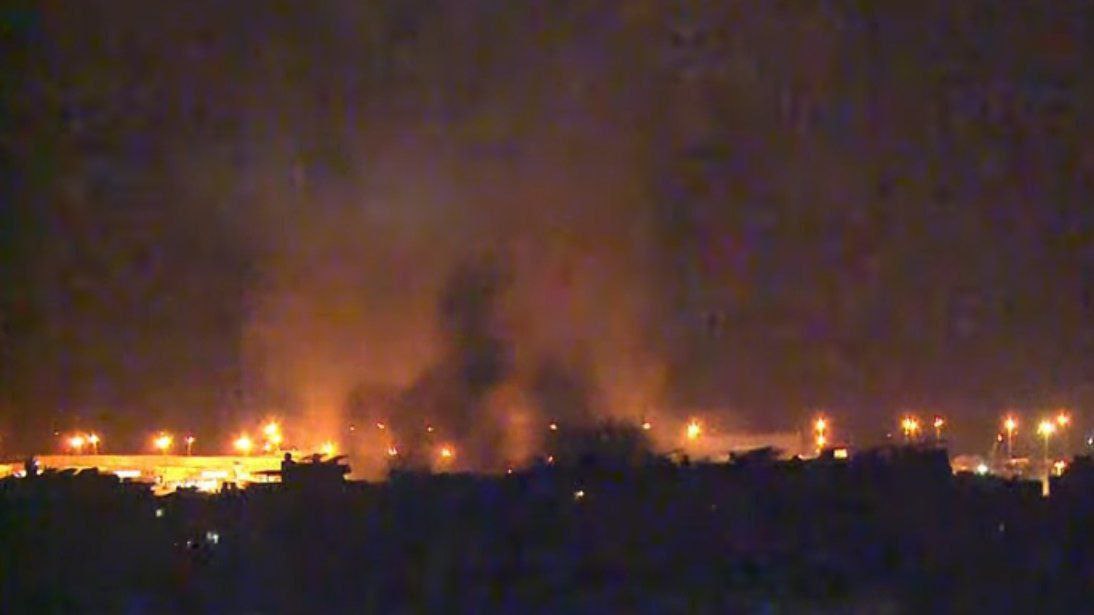
BEIRUT – Beautiful Lebanon woke up sad this morning following the massive Israeli cyberattack that hit the whole country last Tuesday afternoon. The streets are gloomy and traffic is less heavy than it usually is on a busy weekday, as people are still in utter shock, trying to process the events of 17 September. 

All public and private schools and universities are closed today and a general strike was called by the General Workers Union in memory of the victims who were killed and the thousands who were injured.

‘Shock and Astonishment’

Joanna Nasserdine, the Beirut correspondent for the Jordanian Roya TV who covered the events of Tuesday, told the Palestine Chronicle that she was as puzzled as the rest of the population when news of the attack started coming in as there were numerous questions and unclarity.

“Today, I can say that I am in a state of shock and astonishment over what happened yesterday because it is a crime that was committed against Lebanon, which did not differentiate between a civilian or a child or a military man, it is a disaster for the whole country,” Nasreddine said. 

She told the Palestine Chronicle that what touched her most as a Lebanese citizen and as a reporter were the horrific scenes in front of the different hospitals in the capital Beirut.

“The scenes of victims, injured, with blood everywhere was a stark reminder of the explosion of the Beirut port in 2020, along with all the feelings of fear, anxiety, and panic that reigned yesterday,” the Lebanese reporter added.

According to Nasreddine, the criminal Israeli cyberattack is unprecedented in the long Arab-Israeli conflict and is extremely dangerous since it was able, in one minute, to harm at least 4,000 people, 300 of whom are in critical condition, and kill at least 12, including two children.

“How can an entity be so criminal to attempt to take the lives of thousands in one minute,” she questioned, expressing the fear of all Lebanese of what is to come next, given how vulnerable the country is at the moment. 

Indeed this is what people feel: Vulnerable and exposed. 

One of the incidents that took place in Tuesday’s attack involved a young man who was passing by a building in Mrijeh, in the southern district of Beirut.

The young man was seen by the neighbors bleeding. They all thought that he had been shot by stray bullets in the air so they grabbed him and tried to hide in one of the buildings. 

When it was clear there was no shooting in the area, they asked the man if it was his phone or the battery trying to pinpoint the source of bleeding, until the man realized that the pager on his waist had exploded, according to a friend who preferred not to be named.

“People were everywhere, their clothes stained with blood, the smell of blood reminded me of what happened after the Beirut port explosion, I could not bear it, I left in a hurry,” a businessman, who preferred not to be named, told the Palestine Chronicle, recounting his experience while passing by one of the hospitals yesterday.

Following the ‘pagers’ attack, messages heavily circulated on WhatsApp groups requesting from people in their homes to disconnect their wi-fi from their home inverters since many of the inverters work on lithium, which apparently detonated the pagers in the cyberattack. 

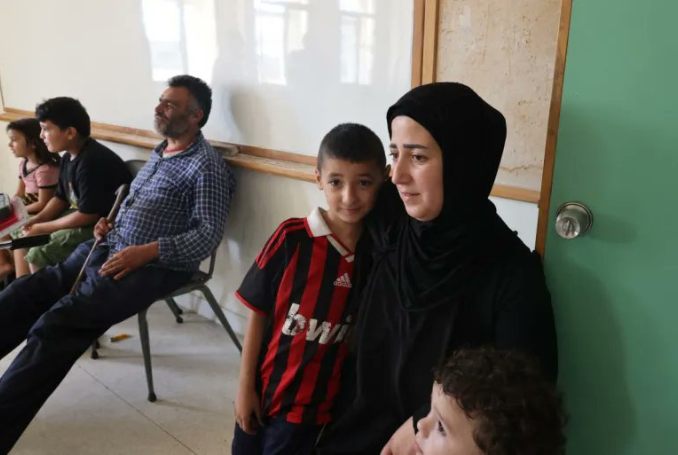
The majority of people in Lebanon depend on inverters for electricity, which feed on generators or the solar system due to electricity shortages or lack of electricity altogether. A state of panic reigned amongst the majority of Lebanese in fear that the inverters might be hit as well.

An expert on technology told Sawt el Chaab (La Voix du Peuple), a local radio station, in answer to people’s fears regarding their inverters and mobile phones, that “batteries in mobile phones have  higher protection,” admitting nonetheless that the gap between Lebanon and Israel is immense in regard to technology. 

‘A Child Just Died’

The scene by the American University Hospital (AUH) and other hospitals in Lebanon was indeed a stark reminder of the Beirut port explosion in 2020. Hospitals were flooded with the injured and relatives and friends outside of the medical facilities were packed trying to get any news about their loved ones.

A day after the Israeli attack, people still gathered around hospitals, waiting for any piece of news on their loved ones. The only topic of conversation is the attack of yesterday and the state of the patients inside. The streets by the hospitals are dotted with doctors and nurses running in and out of the hospital.

“A child just died,” one man said while on the phone coming out of AUH.

A group of young men in front of the hospital were discussing the insanity of these devices being detonated all at the same time.

I approached two women sitting on a bench by the AUH and asked them if they were waiting for someone.

“My nephew is inside,” she said. “How is he?”, I asked. “He’s ok, thank God,” she answered, “God will avenge us,” she added.

At the nearby Clémenceau Medical Center (CMC), and Makassed General Hospital further away, although less crowded, the scene is similar to military presence around the medical facilities. 

“The situation is bad, the hospital is full, they are even opening the outpatient departments due to the flooding of patients, it’s very bad,” a registered nurse at one of Beirut’s hospitals who spoke to the Palestine Chronicle on condition of anonymity. 

She explained that most injuries are in the fingers, face and hip. 

“It depends where the pager was, most people held the pager when it beeped to check if there was a message and it exploded in their hand so some endured injuries in the face and in the fingers. Others the pager was on their waist,” the registered nurse added.

The Palestinian hospitals, especially in the south of Lebanon, namely Al Hamshari Hospital in Saida, received numerous injury cases due to the over-flooding of the Lebanese hospitals. 

Also, Palestinian hospitals throughout Lebanon mobilized their staff and volunteers throughout the country to receive the wounded and “provide (the victims) with all support and assistance,” according to the Palestinian Ambassador to Lebanon, Ashraf Dabour.

The Palestinian Liberation Organization (PLO), along with all Palestinian groups in Lebanon, condemned the criminal attack and expressed their utmost “support and solidarity with the Lebanese people in the face of the Zionist attack.”

Lebanese political analyst Hussein Ayoub and editor in chief of the Arabic website ‘180 Post, told the Palestine Chronicle that Tuesday’s events are unprecedented due to the unconventional method that was used and the extremely high number of casualties, which he says is expected to rise. 

“It was a sudden and unexpected terrorist attack and a huge security breach,” he said, adding that he’s been asking himself since the attack yesterday what if this attack happened during the war and why didn’t the Israelis leave it till the war breaks.

According to Ayoub, the answer to this question could surface in the coming hours, because had Israel done this during a war the consequences would have been unimaginable. 

The political analyst admitted that “at one point in a battle you have to admit that your enemy did hit you but that this strike does not determine the outcome of the battle.”   

Ayoub says that Hezbollah must reconsider all its approaches, military formations and the subject of communications during the war.

“I believe that the matter requires a different kind of discussion, first, regarding seizing the national unity in the country, since everyone is in solidarity right now regardless of whether they are with the Resistance or not,” he stressed. 

“Secondly, in light of the Israeli superiority in war of technology, Hezbollah must return to the traditional and primitive means of previous guerrilla work,” the political analyst added. 

Ayoub believes that this is extremely necessary because we must understand that “the world’s capabilities are mobilized in service of Israel, including weapons, technology and AI, and all these are not in our service, on the contrary, they are fighting us.”

This article is reproduced from the Palestine Chronicle.

Continue reading
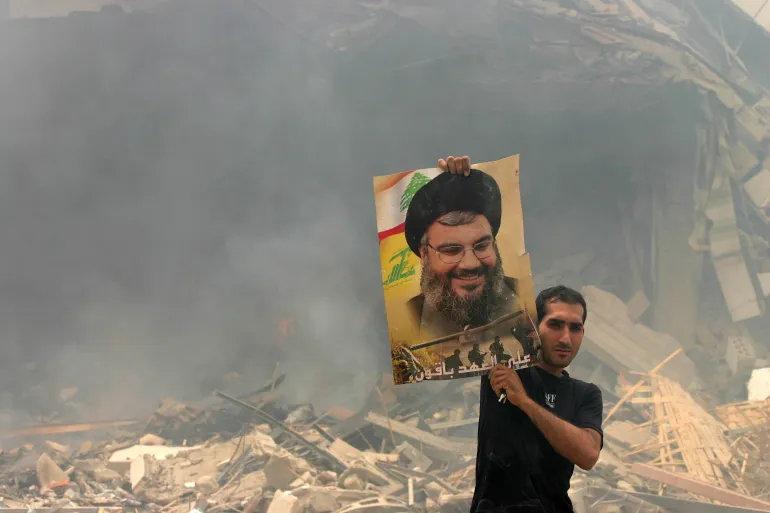
Hassan Nasrallah Vows ‘Hell’ For Israel

Hezbollah Secretary-General Hassan Nasrallah vowed to turn Israel’s actions into a “hell”, Thursday, after the group suffered a “severe blow” when communication devices were detonated earlier this week in Lebanon.  

Nasrallah made the remarks during a televised speech to address the explosions that killed 37 people and injured thousands.  

“We admit we have received a severe blow which is natural as we acknowledge Israel’s technological superiority, backed by the US, NATO, and the West,” said Nasrallah. “The Israeli enemy sought to kill 5,000 people within just two minutes, showing no regard for anything.”  

“The number of pagers carried by Hezbollah members is 4,000, which implies that Israel intentionally sought to kill 4,000 people,” he said.  

The explosions “will be met with a just retribution, severe reckoning, timing, place, the nature of which we will determine,” said Nasrallah.  

He warned Israel that if it establishes a security belt on Lebanese territory, “it will be turn into a trap and a hell.”  

Nasrallah added that multiple investigative commissions were formed to examine the circumstances of the explosions and they have reached a nearly definitive conclusion, but the Lebanese resistance group is awaiting confirmation.  

He noted that the severity of eye injuries from the explosions “has placed significant pressure on hospitals in Lebanon.”  

Furthermore, Nasrallah pointed out that many of the explosions occurred in hospitals, markets, public roads and homes – areas predominantly inhabited by civilians, including children and women.  

His speech coincided with the intensive flights of Israeli warplanes flying at low altitude over the Lebanese capital, Beirut, breaking the sound barrier multiple times, Anadolu reporter said.

The Hezbollah chief considered the blasts to be a natural occurrence, stating: “This is the nature of war and conflict. We know that our enemy has a technological superiority because America stands behind it, along with NATO and the West.”   

He emphasized: “the Lebanese front will not stop until the war on Gaza stops.”  

Nasrallah noted that senior Hezbollah leaders do not carry the type of pager devices that exploded on Tuesday, asserting that the resistance’s structure “remains large and cohesive.”  

Nasrallah concluded his speech by affirming that what occurred on Tuesday and Wednesday will be met with “just retribution and severe reckoning,” indicating that Hezbollah “will determine the timing, place, and nature of the response.”  

At least 37 people were killed and nearly 3,000 others injured on Tuesday and Wednesday in explosions that targeted thousands of wireless communication devices across the country.  

There has been no Israeli comment on the blasts, which came amid an escalation in cross-border warfare between Israel and Hezbollah since the start of Israel’s deadly war on the Gaza Strip, which has killed nearly 41,300 people, mostly women and children, following a cross-border attack by Hamas last Oct. 7.  

Continue reading
Sabra, Shatila: A Heinous Massacre

Dozens of Palestinian refugees in Lebanon participated in commemorating the 42nd anniversary of the Sabra and Shatila massacre at the shrine of the victims of the massacre in the Palestine Martyrs Cemetery near Shatila camp, south Beirut.

The event was held at the invitation of the “Popular Conference of Palestinians Abroad” (an independent international body) and Palestinian institutions in Lebanon to commemorate the anniversary of the bloody massacre that was committed on the 16-17-18, 1982 September, under the supervision of the Israeli occupation army.

In his speech, Yasser Ali, a member of the General Secretariat of the PCPA, stressed the “necessity of holding the Israeli occupation entity and all countries that provide support to the killing machine accountable for committing massacres against the Palestinian people and bringing them to justice.”

“We must all, as Palestinian refugees, mobilize all energies to support and back the Palestinian people inside the Gaza Strip and the West Bank with all available means and capabilities,” he said.

In turn, Sami Hamoud, director of the “Thabit for the Right of Return” organization (civil society) and a member of the PCPA, called for “the necessity of holding the occupation accountable in international forums to achieve justice for the victims of the Palestinian people who are still being subjected to the crimes of the occupation in the Gaza Strip and the West Bank.”

He called for “mobilizing international energies and supporting the case filed by the State of South Africa at the International Court of Justice to achieve some justice for the Palestinian people who have been suffering the scourge of wars for more than 76 years.”

Hamoud said that “the massacres committed by the Israeli occupation entity on a daily basis will not deter the Palestinian people from continuing their just and legitimate resistance to seize their rights guaranteed by international laws and charters to liberation and self-determination,” according to Quds Press.

Meanwhile, the Israeli occupation army has continued its aggression on the Gaza Strip for 345 days, with American and European support, as its warplanes bomb the vicinity of hospitals, buildings, towers and homes of Palestinian civilians and destroy them over the heads of their residents, and prevent the entry of water, food, medicine and fuel.

The ongoing aggression by the occupation on Gaza has led to the martyrdom of more than 41,206 martyrs, the injury of 95,337 others, and the displacement of 90% of the population of the Strip, according to data from the United Nations.

Continue reading
Palestine Bids Farewell to Elias Khoury

Palestine will miss him greatly. Elias Khoury, a leading Lebanese novelist and writers and a staunch advocate for the Palestinian cause, gave up and died, Sunday.

Khoury, a leading voice of Arab literature, had been ill for months and admitted and discharged from hospital several times over the past year until his death, the Al-Quds Al-Arabi daily for which he worked stated.

One of his best-known novels, Gate of the Sun, tells the story of Palestinian refugees expelled from their homes in 1948 during the war that coincided with heartache creation of Israel.

“The Catastrophe began in 1948 and it is still going on,” he once wrote referring to Israel’s illegal settlements in the occupied Palestinian territories.

On 16 July, he published an article, titled A Year of Pain, recounting his time bedridden in hospital and enduring “a life filled with pain, which stops only to herald in more pain”. He ended his piece by alluding to the Israeli war in the besieged Gaza Strip, which by had rthen aged on for more than nine months.

“Gaza and Palestine have been brutally bombarded for almost a year now, but they stand steadfast and unshakable,” Khoury wrote. “A model from which I have learned to love life every day.”

The Institute for Palestine Studies honored the late Lebanese novelist for his contributions in support of the Palestinian people.

“Elias Khoury was a staunch advocate for Palestine, contributing to the struggle nationally and intellectually,” the institute said in a statement posted on X.

“Even while hospitalised due to illness, Khoury continued to work on the publication of the institute’s Majallat al-Dirasat al-Filastiniyya journal, “especially during the genocide in the Gaza Strip”, the institute pointed out in a statement

He “paid exceptional attention to the plight of prisoners and detainees in Israeli prisons, devoting pages of the journal to this crucial cause”, the statement added according to the Quds News Network.

Continue reading