Gaza, Surrealism and Empty Stomachs

By Michael Jansen

“Let them eat cake” is a careless remark traditionally but falsely attributed to France’s Queen Marie Antoinette at a time peasants had no bread and were starving. She and her husband King Louis the 16th were beheaded in 1793 during the French Revolution which overthrew the monarchy.

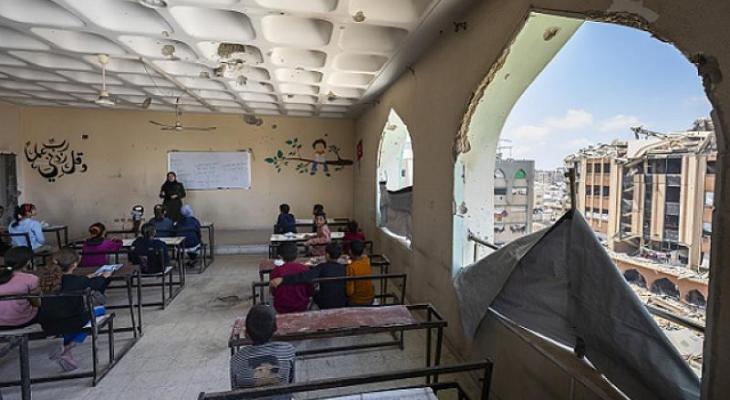
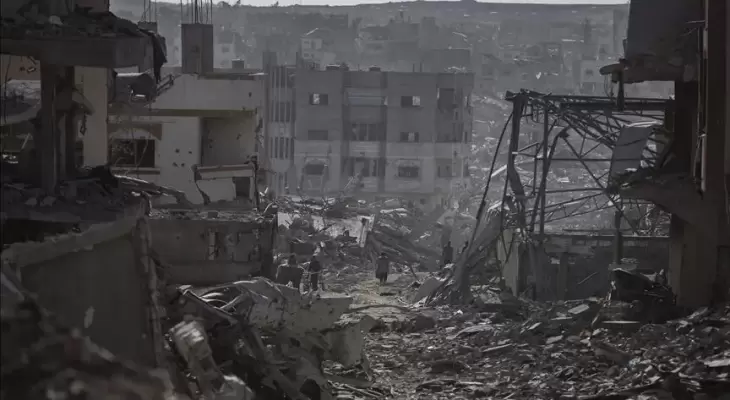
This past week Donald Trump spent five days in Scotland playing golf at two courses which he owns while 2.3 million Palestinians faced famine and starvation due to a four-and-a-half-month Israeli blockade of Gaza. During a press conference with British Prime Minister Keir Starmer, Trump finally acknowledged there is “real starvation” in Gaza. Later in the day, he claimed he had “told Israel maybe they have to do it a different way.” This suggested by adopting a new, less punitive policy. He was speaking after Egyptian and Qatari-mediated negotiations on a 60-day ceasefire had broken down, the US and Israel blamed Hamas and left Doha, delaying a full resumption of aid.

Hamas had demanded a return to UN and international agency deliveries of water, food, medicine, and fuel which have been blocked by Israel since March 2nd, Israeli withdrawal from areas of Gaza occupied since Israel broke the ceasefire on March 18th, and an end to Israel’s war on Gaza once the ceasefire expired.

Israeli Prime Minister Binyamin Netanyahu had refused all these demands and was backed up by his good friend Donald Trump. Instead of thinking of starving Gazans, Trump stated, “Hamas didn’t really want to make a deal. I think they want to die, and it’s very bad. It got to the point where you [Israel] have to finish the job.” He did at that time admit that images of starving children in Gaza were “terrible” but added, “They’re stealing the food,” echoing the Israeli accusation that Hamas is guilty of depriving Gazans of food. This has been denied by the World Food Programme and the UN agency looking after Palestinian refugees, UNRWA.

Israel has been fighting Hamas since October 7th, 2023, when it killed 1,200 and abducted 250, but Israel’s armed forces have failed to “finish the job.” Trump has given Israel permission to fight on indefinitely without totatally ending the blockade.

Alarmed by the “humanitarian catastrophe” in Gaza, Germany, France and Britian have called on Israel to end the conflict, “immediately lift restrictions on the flow of aid and urgently allow UN and humanitarian NGOs to resume operations. “Israel must uphold its obligations under international humanitarian law.”

Pressure from these three countries, the UN, and international humanitarian agencies has compelled Israel to declare 10-hour tactical pauses in the fighting in three areas of Gaza. During these pauses which could last a week or so, Israel is to allow air drops of supplies by Jordan, the Emirates and Israel, permit scores of lorries laden with aid to enter the strip, and create “humanitarian corridors” for aid deliveries. These “concessions” are far from a ceasefire and the reopening of all crossings into Gaza for between 500-600 lorries a day. Furthermore, this number must be greatly increased to compensate for Israel’s blockade which has deprived Gazans of sustenance as well as water, electricity and fuel.

Specialised food to treat malnutrition must be included as starving people cannot absorb normal food. Parcels being delivered contain rice, lentils, and beans which cannot be cooked by many of the 90 per cent of Palestinians who have been displaced from their homes and live in tents in crowded camps. There is no wood in Gaza for fires and Palestinians rely on rubbish and plastic which pollute the environment. Palestinians cannot survive on the other items the parcels: sugar, salt, and flour. The latter they can exchange at bakeries for bread.

If ever the previous flow of humanitarian aid is restored, Gazans will need fresh vegetables, fruit, meat and chicken to revert to a nutritious diet. They used to be raised on Gaza’s farms or brought into Gaza by commercial firms from Egypt, Israel, and the West Bank.

In Sunday’s New York Times, World Central Kitchen (WCK) founder Jose Andres proposed a programme which could help resolve Gaza’s hunger crisis. He called for the reopening by Israel of humanitarian corridors to all aid groups working in Gaza and permission to operate multiple communal kitchens. While WCK has been providing hot meals in Gaza since the war began in 2023, he proposed an increase in the production from thousands to one million hot meals a day and to feed families where they dwell. He said five large cooking facilities would have to be built in safe zones “where bulk supplies can be delivered, prepared and distributed without risk of violence.” These kitchens “would supply hundreds of smaller community kitchens “at the neighbourhood level throughout Gaza, empowering communities as essential partners.”

This project depends on obtaining the agreement of Israel and equipment, raw food and fuel supplies which could be provided by aid agencies and concerned governments.

The author is a columnist for the Jordan Times

Continue reading
Starvation Centers, Death Traps

The deaths of 21 Palestinian civilians by suffocation, crowd crush, and live fire from US security forces operating in coordination with the Israeli army at an aid distribution centre in Rafah expose the Gaza Humanitarian Foundation (GHF) as an active instrument of the systematic mass killing and starvation policies imposed on Gaza.

These centres are no longer relief sites but death traps, deliberately used to lure starving crowds in scenes marked by humiliation and genocide, which constitutes a grave violation of international law and requires the immediate suspension of GHF’s operations, an urgent investigation, and full criminal accountability.

Documentation by Euro-Med Monitor’s field team revealed that the attack on Wednesday, 16 July 2025, occurred in two phases. The first happened around 4:00 a.m., when Israeli forces opened fire on thousands of civilians gathered on al-Tina Street, north of Rafah, as food aid trucks were being unloaded, resulting in multiple deaths and injuries. Despite the gunfire and casualties, thousands remained. They had no choice but to wait or starve, especially after a GHF worker told them distribution would begin at 6:00 a.m.

    Those who fell to the ground could not get up and were trampled. I saw women and children among the victims, and we only managed to escape by stepping over the dead bodies lying there   

Abdul Rahman B., one of the survivors

The second phase happened at 6:20 a.m., when crowds surged toward the outer gate of the distribution centre amid severe overcrowding and the closure of the inner gate. This led to a deadly crowd crush, with no safety measures or immediate intervention to prevent or contain the disaster.

Instead of organising the crowds and ensuring their safety, US special forces used pepper spray and fired sound bombs and tear gas at civilians trapped between the outer and inner gates, triggering panic and chaos. Thousands tried to escape, while some attempted to jump into the distribution centre to avoid overcrowding and certain death, only to be met with live fire as well.

The open fire and the resulting violent crowd crush caused the deaths of at least 21 Palestinians, including seven killed by live ammunition and 15 from tear gas inhalation and the crush, according to the Ministry of Health in Gaza.

A review by Euro-Med Monitor of several casualties found no signs of bullet wounds, supporting the conclusion that most victims died from suffocation or being trampled in a closed, overcrowded space with no protective measures in place.

Abdul Rahman B., one of the survivors, told Euro-Med Monitor’s team: “At around 6:15 a.m., a quadcopter arrived and announced that the distribution centre had been opened and required that we head to the gates.”

“People rushed frantically toward the entrances, and when we reached the front gate, we found the inner gate closed and a heavy presence of US forces accompanied by employees speaking Arabic,” said Abdul Rahman. “They asked us to step back 50 metres and enter in groups of no more than 100, but the crowding was so intense that stepping back was impossible.”

He continued: “Minutes later, they began firing sound bombs, followed by tear gas and pepper spray. People were disoriented and suffocating. Some tried to climb the fences to escape, but snipers shot them. Those who fell to the ground could not get up and were trampled. I saw women and children among the victims, and we only managed to escape by stepping over the dead bodies lying there.”

This incident demonstrates that aid distribution centres were deliberately placed in dangerous locations, designed with narrow paths enclosed by barbed-wire fences that can be easily sealed. These routes cannot accommodate the vast numbers of people in need and are fully controlled by the Israeli army, making them resemble elaborate traps for killing and humiliation rather than corridors for humanitarian aid.

GHF, established by Israel to manage its starvation policy, issued a brief statement claiming to have opened an investigation into the incident. This follows a familiar propaganda pattern: whenever starving civilians are killed, an internal investigation is announced, its results are never released, no one is held accountable, and the same crime is repeated without consequence.

An investigation by an organisation established within a framework designed to perpetuate starvation can hardly be considered credible. Given its direct role in managing starvation, GHF must be immediately dismantled and its mandate withdrawn. It operates under the guise of humanitarian work, failing as a neutral intermediary for aid delivery.

GHF functions as a field instrument of blockade, starvation, and killing by operating distribution centres designed to humiliate civilians and gather them in tightly controlled locations under the pretext of “organising” crowds. Rather than protecting those in need, it facilitates the implementation of engineered starvation and creates a closed environment where civilians are killed in the name of humanitarian aid.

Even when a threat is alleged, international law requires security forces to apply force in a proportionate and graduated manner, using lethal force only as a last resort and in response to an imminent and real threat to life. This standard was not met in the documented cases, making the killings a grave and flagrant violation of international law.

The deliberate targeting of Palestinian civilians as they seek food, along with the use of starvation as a weapon, is a clear violation of international humanitarian and criminal law. These acts constitute war crimes under the Rome Statute, including wilful killing, targeting civilians, and using starvation as a method of warfare, all of which are strictly prohibited in armed conflicts.

The widespread and systematic nature of these violations against the civilian population fulfils the elements of crimes against humanity, particularly killing, persecution, and inhumane acts causing severe suffering or serious physical or mental harm, when committed as part of a systematic attack targeting civilians.

Placing these crimes in their broader context, including the systematic destruction of means of survival, the denial of aid access, and the imposition of deadly living conditions on the civilian population, along with public incitement by Israeli political and military figures, reveals a clear and deliberate intent to destroy the Palestinian population in the Gaza Strip. According to Article II of the Genocide Convention, these acts constitute genocide, specifically through the intentional killing of members of the group and the imposition of living conditions calculated to bring about its physical destruction, in whole or in part.

The international community and complicit governments bear responsibility for the continued crimes against starving civilians at GHF-run aid distribution centres in the Gaza Strip. An immediate halt to GHF operations is essential, along with the launch of an independent international investigation leading to the prosecution of its officials before international and national courts for their involvement in systematic mass killings at distribution sites imposed by the Israeli army as a replacement for the UN mechanism that had operated in the enclave for nearly a year and a half.

International and national judicial bodies must move to hold US President Donald Trump criminally accountable for his complicity in the genocide in the Gaza Strip. This includes his adoption and direct support of the Israeli aid distribution mechanism, imposed by force and transformed into arenas of mass slaughter against starving civilians, as well as his administration’s full-scale provision of military, financial, political, and diplomatic backing that enabled Israel to commit and expand the crime for over 21 months.

The United States, through this organisation and other instruments, continues to provide political, logistical, financial, and military cover for Israel’s crimes, rendering current and former American officials, foremost among them President Donald Trump, subject to international criminal accountability.

Euro-Med Monitor calls for holding all state leaders involved in the genocide committed in the Gaza Strip accountable, whether through direct or indirect participation, by providing political, military, or financial support, or by facilitating its commission in any form. Such acts constitute criminal complicity under Article 25 of the Rome Statute. It holds states that failed to take serious measures to prevent or stop the crime legally responsible under their international obligations, particularly under the Genocide Convention.

A comprehensive and independent international investigation must be launched into the role of the Gaza Humanitarian Foundation in facilitating and executing serious crimes committed against Palestinian civilians. These investigations should address the individual responsibility of the organisation’s founders, directors, logistics coordinators, team leaders, and any other staff members, whether through planning, facilitating, directly contributing, or knowingly failing to prevent the commission of crimes.

We urge all states with territorial or universal jurisdiction to open immediate criminal investigations against all individuals affiliated with the GHF and its contracted private security firms, in order to hold them accountable for their role in crimes committed against Palestinians in the Gaza Strip, particularly including wilful killings, starvation, and cruel or degrading treatment.

All states, both individually and collectively, must fulfil their legal responsibilities by taking urgent action to stop the genocide in the Gaza Strip, through implementing effective measures to protect Palestinian civilians; ensuring Israel’s compliance with international law and the decisions of the International Court of Justice; preventing the implementation of the US-Israeli forced displacement plan; and holding Israel and its more powerful allies accountable for all crimes against the Palestinians in the Strip. The International Criminal Court must implement the arrest warrants for the Israeli Prime Minister and Minister of Defence at the earliest opportunity, in accordance with the principle that there is no immunity for international crimes.

The international community must also impose economic, diplomatic, and military sanctions on Israel for its systematic and grave violations of international law. These sanctions should include an arms embargo; an end to all political, financial, and military support; freezing the assets of officials involved in crimes against Palestinians; imposing travel ban on these officials; suspending the operations of Israeli military and security industries companies in international markets; banning involved companies’ access to banking services; and suspending trade privileges and bilateral agreements that provide Israel with economic benefits that enable its continued crimes.

Continue reading
Trump, Netanyahu’s Shared Secret!

By Dr Hasan Al Dajah

Since his arrival on the American political scene, Donald Trump has been an exceptional case in the United States’ relationship with Israel. Historically described as a strategic alliance, this relationship has transformed under Trump into a personal partnership between him and Israeli Prime Minister Benjamin Netanyahu. This relationship has deepened to an unprecedented degree, with Trump becoming one of the most biased and supportive American presidents toward Netanyahu, not only in foreign policy decisions but also on issues of a purely Israeli domestic nature, such as the ongoing trials against Netanyahu or calls for early elections.

What drives Trump to this level of involvement in Israeli domestic affairs? And why does he insist on defending Netanyahu despite the criticism and accusations against him? In the current Israeli landscape, Netanyahu faces significant domestic challenges related to multiple corruption trials, in addition to escalating tensions within the ruling coalition, particularly with the religious parties, which have expressed on more than one occasion their desire to dissolve the Knesset and call for early elections. These parties, despite being partners in the government, view continuing under Netanyahu’s leadership as a political burden due to the corruption cases and poor performance in some cases. This recently prompted them to propose a vote within the Knesset to call for new elections.

In this context, Trump’s position was clearly supportive of Netanyahu, expressing his rejection of any attempt to remove Netanyahu from power and considering his continued rule essential to Israel’s stability and its security and political future. Even stranger are the reported interventions by Trump or his circle in the matter of Netanyahu’s trial. It has been reported—through both official and unofficial channels—that he called for a pardon or an end to the legal proceedings against him, arguing that these trials are politically motivated and that Netanyahu is being subjected to an unfair campaign by the Israeli judiciary. This intervention raises many questions, most importantly: What is Trump’s interest in Netanyahu’s survival? Why would he risk his political reputation for the sake of being a foreign leader facing criminal charges?

The answer to these questions requires examining the nature of the relationship between the two men. Since Trump assumed the presidency in 2017, he has pursued an unprecedented agenda in support of Israel, including moving the US embassy to Jerusalem, recognizing Israel’s sovereignty over the occupied Syrian Golan Heights, and supporting the “Deal of the Century,” considered the most biased in the history of US mediation.

All these measures were met with widespread acclaim and celebration by Netanyahu, who used them in his election campaign to bolster his domestic popularity, portraying himself as capable of bringing absolute US support to Israel.

In turn, Trump found in Netanyahu a reliable ally who reflects his vision for the Middle East and helps him win the support of a pivotal electoral base within the United States: evangelical Christians. People must realize that the true backbone of support for Israel in America is not the Jewish community, but evangelicals, who constitute approximately 25% of the population, compared to less than 2% of American Jews.

Therefore, Trump—as he has stated on more than one occasion—considers engaging with evangelicals more effective than appeasing the Jews, because they constitute a formidable lobbying force pushing for American policies aligned with the Israeli right-wing agenda, and view support for Israel as part of the Christian Zionist religious doctrine. These people see Netanyahu as the leader most qualified to preserve the “Jewishness of the state” and advance policies of expansion and hegemony.

Accordingly, Netanyahu’s downfall, or even his trial, represents a threat not only to Trump, but also to the political and ideological system he has meticulously crafted during his presidency. It is impossible to trust that potential Israeli alternatives will maintain the same level of loyalty or pursue the same confrontational approach toward Iran and the Palestinians.

Hence, for Trump, defending Netanyahu becomes a defense of a broader regional project that keeps Israel at the forefront of the confrontation with Tehran and strengthens right-wing populist alliances globally.

Moreover, Trump himself faces investigations and legal prosecutions in the United States, whether related to his attempt to overturn the election results, his retention of classified documents after leaving the White House, or various financial issues. Therefore, his defense of Netanyahu may be implicitly understood as self-defense. He seeks to establish the principle that the trial of political leaders is primarily a selective political process, not a fair judicial process. If Netanyahu is able to escape accountability or obtain a pardon, Trump will see this as a precedent that will strengthen his argument before the American judiciary and domestic public opinion.

Strategically, Trump does not view Israel merely as a traditional ally, but rather as an extension of his global political vision based on isolation from international institutions, undermining the liberal multilateral order, and strengthening bilateral alliances with strong leaders who share his political style and confrontational personality. For him, Netanyahu is the Israeli version of this model: a leader who clings to power despite internal and external pressures, fiercely confronts the media and the judiciary, and relies on a solid right-wing popular base fueled by a sense of existential danger and threat.

From this perspective, Trump’s support for Netanyahu is not limited to domestic issues but extends to regional security issues, most notably the open confrontation with Iran. Trump believes that an alliance with Netanyahu is necessary to sustain the escalation against Tehran and contain its influence in the region. Therefore, any weakening of Netanyahu, whether through elections or trials, is viewed as a direct blow to the axis of pressure on Iran and a threat to the deterrence strategy adopted by Trump during his presidency.

All of this explains why Trump supports Netanyahu and even intervenes in domestic issues, such as seeking a judicial pardon or rejecting early elections that could lead to Netanyahu’s removal from the political scene. It is a deeply mercenary relationship that transcends diplomatic protocol and extends to an ideological alliance between two leaders who each see the other as a mirror to their own selves and a first line of defense for their political and personal futures. Despite the criticism Trump faces for this involvement, he continues this approach without wavering, driven by an overwhelming desire to return to the White House and see a world shaped according to his own vision. In this world, there is no place for trials of political leaders, no room for elections that bring down allies, and only mutual loyalty, no matter the cost.

Dr Dajah is a professor of Strategic Studies at Al-Hussein Bin Talal University. He contributed this article to the Jordan Times.

Continue reading
Iran Targets Israel, Ignores Trump’s Surrender Call

Iranian missiles have continued to fell on Israeli areas, Tuesday/Wednesday according to the Israeli media which also reported that the projectiles fell after the Israeli defenses failed to intercept them.

This failure caused fires and much damages including to a building after two missile salvos from Iran of approximately 30 missiles in less than an hour on Israel.

Iran’s Revolutionary Guard (IRG) announced in the attack it used hypersonic ballistic missiles for the first time. Observers say this is a clear message to US President Donald Trump, to steer away from entering the war despite his calls for Iran to surrender unconditionally.

At 00:35 local time (GMT+3), the Israeli military said in a statement: “Alerts were activated in several areas within the country after missiles were identified being launched from Iran towards Israeli territory,” as reported by Anadolu.

The Hebrew newspaper Yedioth Ahronoth reported air raid sirens blasted in the greater Tel Aviv area, Haifa, and Jerusalem, because of the eighth Iranian missile barrage since Tuesday morning.

Loud explosions in Jerusalem were held as a result of the interception of Iranian missiles according to the Turkish news agency.

On the other hand, Israel’s Channel 12 reported it estimated Iran fired 20 missiles at Israel in that barrage and as grudgingly confirmed by the Israeli  Army Radio.

This is while Israel Hayom reported that at least two missiles fell in Jerusalem and the Sharon region near Tel Aviv and with the Hebrew media also reporting of the damages caused in central Israel.

It added that missile fragments fell on a building in the northern region, while several fires broke out in open areas as a result of the fall of Iranian missiles or their fragments.

Air raid sirens

Air raid sirens sounded in central Israel, including in the Greater Tel Aviv, Ashdod, Rishon LeZion, and Netanya, following the detection of new missile launches from Iran. This is the ninth barrage since Tuesday morning with at least 10 rockets toward Israel and resulted in mass fires that engulfed at least 20 vehicles in central Israel.

The extensive fires were reported and dealt with Israeli fighters despite the strict news blackout the Israeli government is imposing and especially when reports are made on military bases and other installations.

Iran Fateh Rockets

Iran’s Revolutionary Guard said the first-generation hypersonic Fatah ballistic missiles are being used for the first time and wants to send a clear message to Israel and the USA,that Iran is willing to go the full away despite the extensive Israeli attacks on the country.  

“The powerful and highly maneuverable Fatah missiles repeatedly shook the shelters of the cowardly Zionists this evening after penetrating their defensive shield,” an IRG statement conveyed.

“Tonight’s missile attack proved that we have established complete control over the skies of the occupied territories, and that their residents are now defenseless against Iranian missile attacks,” it added.

According to Army Technology, a leading global website specializing in analyzing and documenting information related to defense industries and military technologies, the Fateh missile is one of the most advanced weapons in the Iranian Revolutionary Guard’s arsenal, thanks to its hypersonic speed.

The missile has a range of approximately 1,400 kilometers and features a movable nozzle and an advanced guidance system, allowing it to adjust its trajectory during flight and perform precise maneuvers both inside and outside the atmosphere, including lateral and rotational movements.

Continue reading
Iran-Israel War: Cost And Opportunities!

By Mohammad Abu-Rumman

Benjamin Netanyahu has placed the Iranian regime, the Wilayat al-Faqih system, before a fateful challenge through a harsh pre-emptive strike. While extremely risky, the strike was not decisive enough to settle the confrontation. Netanyahu himself did not expect that an ideological-nationalist regime like Iran’s would surrender and offer immediate concessions following the strike, without launching a retaliatory blow against Israel.

Despite Iran’s unprecedented powerful strikes on Tel Aviv, the reformist current in Iran, represented by Foreign Minister Abbas Araghchi, has also demonstrated its continued commitment to “the negotiating table” and to finding a way out of this war. Iran has deliberately avoided using its full missile capabilities against Israel to prevent the battle from reaching the point of no return.

Current indicators suggest that this war will likely not last long, nor will it expand geographically, because the destruction costs—for both sides—are immense. For Iran, this includes damage to its oil facilities, which are the backbone of its economy, as well as the protection of what remains of its nuclear program and infrastructure. For Israel, the fact that Iran managed to breach the Iron Dome and cause major direct damage in the heart of Tel Aviv and Haifa presents a reality that Israelis cannot endure.

In this light, there will likely come a tipping point at which both parties will be willing to end the conflict. The timing of that moment will be decided by the U.S. administration, which will step in to halt the military escalation. But when will this moment arrive? It will come when both sides realise that they can no longer achieve significant additional objectives, and that the cost of continuing the conflict far outweighs the cost of stopping it, especially given that a so-called “knockout blow” is impossible in such existential wars.

On the Israeli side, there are two major areas of superiority: First, Israel’s air force has successfully destroyed much of Iran’s air defense systems, allowing it to operate freely over Tehran and strike targets at will. Second, intelligence penetration, which could lead to further surprises that may force the Iranians to retreat or make subsequent concessions. However, Israel’s major vulnerability lies in its inability to withstand sustained, large-scale missile attacks, especially after a prolonged multi-front military conflict.

As for Iran, it has two primary objectives in the current military confrontation: To preserve the political legitimacy of the Wilayat al-Faqih regime, which is built on religious ideology and propaganda. Failing to respond or retreating now would reflect poorly internally and could erode the regime’s very source of legitimacy. To protect Iran’s deterrence capacity and prevent its regional standing from deteriorating—especially after losing the bulk of its regional influence in the aftermath of “Flood of al-Aqsa” (the Gaza war).

American intervention, whether military or diplomatic, will be decisive in ending this conflict. It is evident that President Donald Trump prefers a negotiated path, aiming for political, military, and economic gains. Netanyahu, however, is betting that a major military defeat for the Iranian regime will lead not only to concessions on its nuclear program (the primary stated objective) but potentially to changing or collapsing the regime itself, thereby neutralizing it within the regional power structure. This would constitute a strategic shift in the regional security equation in Israel’s favour.

Direct US military involvement remains unlikely, except in two scenarios: If Israel were to request assistance after a massive and successful missile strike against its territory. If the U.S. concludes that Iran will not back down unless there is a more dramatic shift in the military balance of power that compels it to return to the negotiating table and offer substantial concessions.

This equation was not the same two years ago. Back then, Iran had greater geopolitical space and extensive tools of influence in the region. However, what has occurred with the fall of Bashar al-Assad’s corridor (the Syrian axis), and the diminished power of Hezbollah and Hamas, has cost Iran critical advantages in the regional balance of power. After this war, there will be significant consequences even for Iran’s remaining influence in Iraq, which may become the final outpost lost by Tehran, ending a twenty-year effort (since the 2003 invasion of Iraq) to weave its intricate carpet of regional influence.

Mohammad Abu Rumman is the Academic Advisor of Politics and Society Institute in Amman and has contributed this article to The Jordan Times.

Continue reading