Trump: The Deal-Maker in Our Midst

By Dr. Ali Bakir

US President Donald Trump begun his Middle East tour on 12 May, starting in Saudi Arabia with the Gulf Cooperation Council (GCC) summit, then moving on to Qatar and concluding in the United Arab Emirates (UAE). Trump will be accompanied by a large delegation, including senior White House staff, several ministers, high-ranking officials, and an army of businesspeople. At the core of Trump’s tour to the influential and wealthy GCC states—Saudi Arabia, Qatar, and the UAE—will be investments, economic ties, business, and bilateral relationships. The Trump administration aims to attract hundreds of billions of dollars in investments from Gulf wealth funds into the United States.

Expected discussions include Israel’s military campaign in Gaza, Palestinian statehood, negotiations over Iran’s nuclear program, and the ceasefire deal with Yemen’s Houthi group. Additionally, Syria and Lebanon may also feature on the agenda. Syrian President Ahmad al-Sharaa is reportedly seeking a meeting with Trump during his visit to Saudi Arabia, aiming to persuade him to lift sanctions and increase US involvement in Syria’s reconstruction, economy, and oil sector.

Trump critically needs this tour to project an image of a successful leader who has secured hundreds of billions of dollars in pledged investments and deals, as well as closer political and security ties with GCC states. Hundreds of agreements are anticipated during the visit, covering areas such as AI, transportation, minerals, energy, infrastructure, aviation, defense, and potentially broader agreements on semiconductors and nuclear energy.


Matter of prestige

The significance of this tour is heightened by the fact that Trump is facing both internal and external challenges, having yet to achieve any substantial victories in his ongoing struggles. These include the tariff dispute, Israeli involvement in Gaza, the Iran nuclear deal, Russia’s war in Ukraine, tensions with Canada and Greenland, and his ongoing conflict with China. An image of victory during his Gulf tour would help compensate for these setbacks. Gulf leaders are well aware of this and will arrange exceptional welcome ceremonies and generous hospitality for him. In other words, they will arrange a wonderful show for him. This not only caters to his personal ego but also enhances his standing both domestically in the US and internationally, where he is in dire need of a win. The outcome could create a win-win situation. However, it is important to note that not all the promises made during this tour will materialize. While some initiatives may come to fruition, others may remain merely part of the spectacle.

Unlike his first visit to the region during his initial term in the White House, which included Israel, Tel Aviv is notably absent from his current itinerary. This exclusion is quite significant. Under Netanyahu, Israel has little to offer the US president, aside from more problems, a negative image in the region, and a tarnished reputation for the president himself. It serves as a reminder of his failure to achieve a ceasefire in Gaza, largely due to Netanyahu’s unwillingness to pursue it.

In a previous interview following Biden’s election at the end of 2020, Trump explicitly blamed Netanyahu for the failure of his peace initiative with the Palestinians, stating, “Netanyahu never wanted peace.” Amid the ongoing conflict, initiatives aimed at encouraging Saudi Arabia to recognize Israel—an objective pursued by Trump during his first term—are likely to remain on hold. Riyadh has indicated that it requires tangible progress toward a Palestinian state first, a condition that Israel has not been willing to meet. However, Reuters reported this week that the US has shifted its stance and is no longer insisting that Saudi Arabia normalize relations with Israel as a prerequisite for advancing discussions on civil nuclear cooperation.

Desire to appear as dealmaker

Regardless, Trump’s Middle East tour represents more than just a diplomatic engagement with key US allies; it is a calculated effort to reclaim geopolitical momentum and project strength amid mounting domestic and international challenges. The emphasis on economic deals, defense cooperation, and strategic investments highlights Washington’s strategy of leveraging the Gulf’s financial and political capital to enhance Trump’s image as a dealmaker-in-chief. However, beneath the pomp lies a web of unmet expectations and unresolved conflicts.

While Saudi Arabia, Qatar, and the UAE are acutely aware of Trump’s need for a symbolic win, they remain cautious about committing to politically costly moves without tangible concessions, particularly concerning Palestinian statehood. Ultimately, this trip may provide short-term optics that bolster Trump’s leadership narrative, but its long-term impact will depend on whether these engagements translate into sustained commitments or fade into the background noise of global challenges.

Dr Bakir is Assistant Professor at Qatar University, and non-resident senior fellow at the Atlantic Council.

Continue reading
Trump’s Middle East Hour

By Mohammad Abu Rumman

President Donald Trump’s current visit to the Gulf holds substantial strategic significance, especially when compared to visits by previous American leaders or other political figures. This is due to two key reasons: the first relates to the current situation in the Arab region, which is undergoing an intense period of regional and domestic turmoil in several countries—making the future extremely difficult to predict. The second reason is Trump’s own personality, marked by unpredictability, surprise moves, and a disregard for the traditional constraints that bind other U.S. presidents.

While it may be premature to judge or fully grasp the surprises or major outcomes that Trump’s visit may bring for the next phase, the man has already, on the eve of his arrival, stirred the waters—overturning many expectations and analyses, particularly in relation to two major files: the Syrian issue and the war on Gaza, including U.S. relations with Israel and Arab states.

On the Syrian file, Trump announced that he is seriously considering lifting or easing sanctions on Syria and offering support to the new political regime there—reportedly at the request of Turkish President Recep Tayyip Erdoğan. This development is especially significant as it runs counter to the Israeli agenda, particularly in the south of Syria, where Israel has sought to incite minority groups, sow chaos, and even occupy parts of the country. It is clear that Trump has not embraced Netanyahu’s highly provocative approach toward the new Syrian regime. Instead, he seems more aligned with the Turkish and Saudi perspectives, despite Netanyahu’s earlier efforts during a visit to the White House to secure a green light for Israeli aggression in Syria and against Turkey—bait that Trump did not take at the time. Now, on the eve of his Gulf visit, Trump has drawn a clearer line by discussing the potential easing of sanctions on Syria.

The second file concerns Trump’s ongoing tension with Netanyahu. While this may appear to be a personal dispute with the Israeli Prime Minister and his political agenda, Trump seems to be distancing himself from Netanyahu’s grip—unlike in previous phases where Netanyahu appeared to dominate Trump’s outlook. How this rift will influence the next phase, particularly regarding the war on Gaza, relations with Iran, and the broader American vision for the region, remains one of the most critical questions—especially when assessing the growing divergence from the Israeli right-wing narrative.

Much has been said about the reasons behind this divergence—some even call it a crisis—between Trump and Netanyahu. Israeli and American media have widely covered the issue. However, what this writer leans toward is the idea that the Saudis have thoroughly studied how to deal with the new president. They found a way to draw him away from the Israeli perspective by offering him the deal of his dreams: the prospect of a peaceful resolution that would lead to the establishment of a Palestinian state—potentially bringing him a Nobel Prize—ending the war in Gaza with terms favorable to both Americans and Arabs, lucrative commercial deals, normalized relations with America and Israel, strong regional ties, and many other major gains. Why, then, would Trump reject all of that and blindly follow Netanyahu and his far-right team?

The Saudi leadership’s role in the current phase is crucial. They are driving a major shift in the Arab approach to regional policy. Their cooperation on several issues with Turkey, Egypt, Jordan, and the UAE is helping to correct the significant imbalances that have emerged since the Israeli war on Gaza.

That said, it would be inaccurate to claim that Trump has made a full pivot. He remains unpredictable—full of surprises and a master of reversals. Moreover, despite the wide latitude he often enjoys, there are boundaries he will not cross. He may be entering a phase of tension with Netanyahu, but he is unlikely to go so far as to harm Israeli or joint U.S.-Israeli interests. He is well aware of the entrenched domestic base, the powerful lobbies, and the political minefields involved. His room for maneuver is limited. Still, this moment may represent an opportunity to widen the gap between him and Netanyahu—even if the regional reality is complex and the current Palestinian reality even more so. We must also be careful not to raise expectations too high!

The writer is a columnist in Jordan Times

Continue reading
Haaretz: US Finally Independent From Israel

An article in Haaretz reports that Israel has suffered several blows in recent days in its historical relations with the United States. And that US President Donald Trump no longer requires Saudi Arabia to normalize relations with Tel Aviv for Washington’s nuclear cooperation with Riyadh.

Adding insult to injury to the Israel occupying state, Trump has reached an agreement with the Houthis Ansar Allah group to end US military strikes on Yemen. This is plus the fact the US has began negotiations with Iran without the blessing of Israeli Prime Minister Benjamin Netanyahu. Further to that a US official in the Trump administration also held direct contact with the Hamas.

However, Odeh Basharat in his Haaretz article argues that the most painful blow Israel has ever suffered was Trump’s dismissal of his National Security Advisor, Mike Waltz, due to a discussion he had with Netanyahu, behind Trump’s back, about launching a military attack on Iran.

Basharat said the United States has finally begun to wake up and free itself from the shackles of Israel, and act as an independent state, not a “banana republic.” Basharat, a journalist from the Arab world, expressed his astonishment at these developments and wondered whether what was happening before his eyes was real or merely an illusion.

The writer believes that a seismic clash is taking place between the two countries and the two men, and that all the reasons are now converging. “America is gaining its independence 250 years after the beginning of its First Revolutionary War,” referring to the war that took place between 1765 and 1783, when 13 British colonies in North America rejected British colonial rule and gained their independence.

Basharat describes this emancipation as the Great American Rebellion, and attributes its causes to the fact that the world—and the United States as part of it—felt deeply concerned by what the writer, with biting sarcasm, called “Israel’s diplomatic acrobatics,” its “enlightened occupation” of the Palestinian territories, and its “closure (of the Gaza Strip) that allows only air in.”

According to the article, as soon as Israel reaches an agreement on a particular issue, it adds new conditions the next day. Although the Arab states that signed peace agreements with Israel were not required to recognize it as a Jewish and democratic state, only the Palestinians are required to do so, which, as Basharat argues, permanently relegates Israeli Arabs to second-class citizens.

According to the article, it has become clear that Netanyahu is deceiving everyone: Arabs, Jews, and Americans, not just Hamas and the Lebanese Hezbollah movement, as he previously boasted to Israeli police investigators that he misled and deceived them, then bombed them.

Since the time of David Ben-Gurion, Israel’s first prime minister, the state’s policy has been based on force. In contrast, Trump seems to believe in a policy of carrots and sticks—meaning diplomacy and force combined—according to the article.

The author claims that the US president thinks differently, as demonstrated by his actions toward the Houthis, Iran, and the tariffs. Once he realized he had failed, he took a step back.

As for Israel, its problem does not lie solely with Netanyahu, as Basharat argues, but rather with the fact that it has not offered an alternative to force. Only three of its former prime ministers, according to the article, have taken a different path: Moshe Sharett, whom Ben-Gurion was keen to overthrow; Yitzhak Rabin, who paid for it with his life; and Ehud Olmert, who was ousted before even presenting his plan.

Furthermore, Israel has long treated the White House as a branch of its prime minister’s office, intervening in the wording of every sentence in documents issued by Washington regarding Israel, according to the Haaretz article as reported in Al Jazeera.

Continue reading
Hamas Releases US-Israeli Hostage

The International Committee of the Red Cross received Israeli-American soldier Idan Alexander from Hamas on Monday evening. His family confirmed he would travel to Doha later in May to meet President Trump and Qatar’s Emir, Sheikh Tamim bin Hamad Al Thani.

Hamas had captured Alexander in Gaza during the war as he served in the Israeli military. The release followed direct talks between Hamas and the U.S., and came as part of broader efforts to secure a ceasefire, open border crossings, and allow humanitarian aid into Gaza.

The handover took place in Khan Younis in southern Gaza. The Israeli military confirmed it received Alexander and said he is in good health.

Hamas said it released Alexander after “important talks” with the U.S. and praised the American administration’s efforts. The resistance movement emphasized that serious and responsible negotiations produce results in freeing prisoners. Continued military aggression, they warned, only prolongs prisoners’ suffering and risks killing them.

Hamas declared its readiness to begin immediate negotiations for a permanent ceasefire, the withdrawal of Israeli forces, lifting the blockade on Gaza, a prisoner exchange deal, and reconstruction of the war-torn enclave. It also called on U.S. President Donald Trump to intensify efforts to end “Netanyahu’s brutal war against children, women, and unarmed civilians in Gaza.”

Earlier Monday, Israeli media reported full preparations were in place to receive Alexander. His family confirmed he would travel to Doha later in May to meet President Trump and Qatar’s Emir, Sheikh Tamim bin Hamad Al Thani.

Channel 12 said the Israeli army received orders to halt fire in Gaza from midday to ensure a smooth handover. A military helicopter brought Alexander’s family to the Re’im base near the Gaza border to await his release.

Meanwhile, hundreds of Israelis demonstrated outside the U.S. Embassy in Tel Aviv, demanding the release of all Israeli prisoners.

Earlier in the day, Abu Obeida, spokesperson for Hamas’s military wing, said on Telegram that the group had decided to free Alexander. The 21-year-old soldier, originally from New Jersey, had served in the Israeli army and became the 39th prisoner released by Hamas since January 19, when a temporary ceasefire was reached. That deal later collapsed in March when Israel resumed its offensive.

U.S. Middle East envoy Steven Witkoff arrived in Israel for the release. Adam Boehler, the U.S. envoy for hostage affairs, posted a photo from the plane flying him and Alexander’s mother to Israel to receive the soldier.

Boehler praised Hamas’s decision and called for the return of the remains of four other U.S. citizens reportedly killed and still in Gaza.

Israeli Prime Minister Benjamin Netanyahu’s office issued a statement saying Israel remains committed only to securing a safe corridor for Alexander’s release—not to a broader ceasefire or exchange. Talks for other Israeli prisoners, they added, will continue while Israel prepares to intensify attacks.

Netanyahu claimed Alexander’s release came without concessions, crediting U.S. support and Israeli military pressure. “We are in critical days,” he said, “and Hamas now has a deal on the table that could lead to the return of our captives.”

Haaretz quoted a senior Israeli source saying Israel demands that Hamas release at least half of the Israeli prisoners—dead or alive—before it enters full negotiations to end the genocide.

The Times of Israel reported that Hamas had received assurances from a mediator that releasing Alexander would improve their standing with Trump. The resistance movement reportedly hopes the move will encourage the U.S. president to pressure Netanyahu into accepting a broader deal according to the Quds News Network.

Continue reading
Israel is Burning: Here’s Why!

By Dr Marwan Asmar

(Crossfirearabia.com) – Israel is burning. Its war on Gaza is going nowhere, Israeli society is being torn-apart, and its remaining 59 hostages remain in the depth of the tunnels in Gaza unable to be found. Its like looking for a needle in a haystack because of the extensive hundreds of miles of underground! Many, except Israeli Prime Minister Benjamin Netanyahu, people like US Envoy Steve Witkoff believe the hostages, 24 still alive, are likely to die if the war is not brought to an end.

After 18 months of bloodshed on the Gaza Strip with its endless destruction, Israel is nowhere near to reaching its objectivity of stamping out Hamas. The Islamist organizations remains just as strong, determined and willing for martyrdom as when the fighters unleashed themselves soon after 7 October, 2023.

On the contrary all the Israeli government did by insisting on the continuation of the war on the Palestinian territory has created the wrath of many world nations, including the irritation of US president Donald Trump who has cut off contacts with Israeli Prime Minister Benjamin Netanyahu and who now feels the latter can no longer be trusted for a meaningful end to the fighting.

Meanwhile, the Israeli army which is back fighting on Gaza not of its own accord, is facing what can all be called the “Gaza malaise” of being entrapped in the Strip through ambushes, booby-trapped, once-standing houses and Palestinian resistance missiles, ammunitions and artillery.

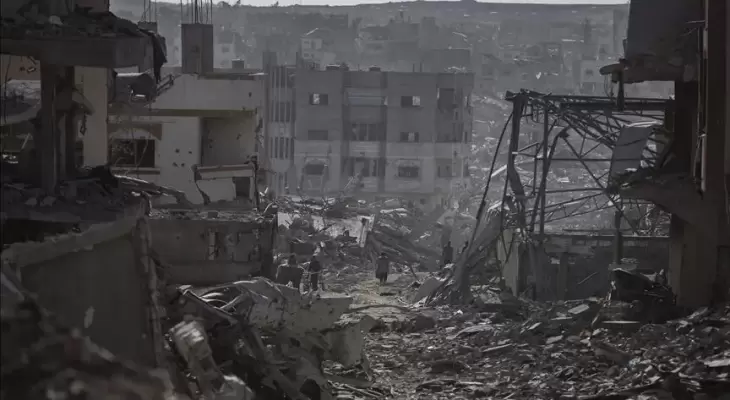
Israel and its army – despite the killing of over 52,000 Palestinians, 100,000 injured with over 12000 remaining under the rubble – is facing the worst of times, bogged down, through its own accord in an enclave it is determined not to leave while shamelessly embarking on a spree of killing, murder and mass-bombing civilians under the intrepid eyes of the world and documented by international agencies. In fact, many experts, including Israelis, say this is the worst documented genocide which the Jewish state will not be able to live it down.  

Meanwhile, the Palestinian resistance lead by Hamas and Islamic Jihad fighters and a motley of other determined factions led by the Popular Front for the Liberation of Palestine are wreaking havoc among Israeli soldiers and their killer machines of tanks, all over the Gaza Strip from its far north, center and its south.

Privately the Israeli army is complaining because of the orders they are following from extremist politicians like Netanyahu. And they have a right to be because they have literally bombarded every nook and cranny in Gaza, forcing its 2.1 million populations on a whirlwind pool of displacements not once, not twice but up to 10 times to squat from one place to another but to no avail.

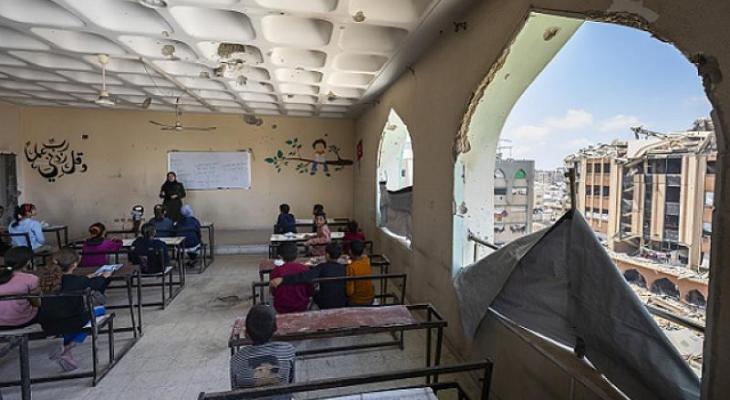
How can civilians, mostly women and children living in tents – for this is what Gaza has been reduced to – be military targets with mass bombs dropped on schools and hospital. For this is what the Israeli army is, an impressive air force, thousands of tanks and mass bombs supplied by the Americans, British and many more countries have been reduced to.

There are no Palestinians fighters here, they don’t lounge among civilians in makeshift UN schools. The fighters are in bombed houses, Israeli-gorged out what used to be manicured-gardens and residential squares, in semblance of buildings that used to be ministries, ruined university halls, restaurants, shops and libraries and much more.

Israel has made sure these longer exist. However, the Palestinian groups have came to fight among the rubble of these places that are bombed and re-bombed time and again like a macabre scene never existed before.

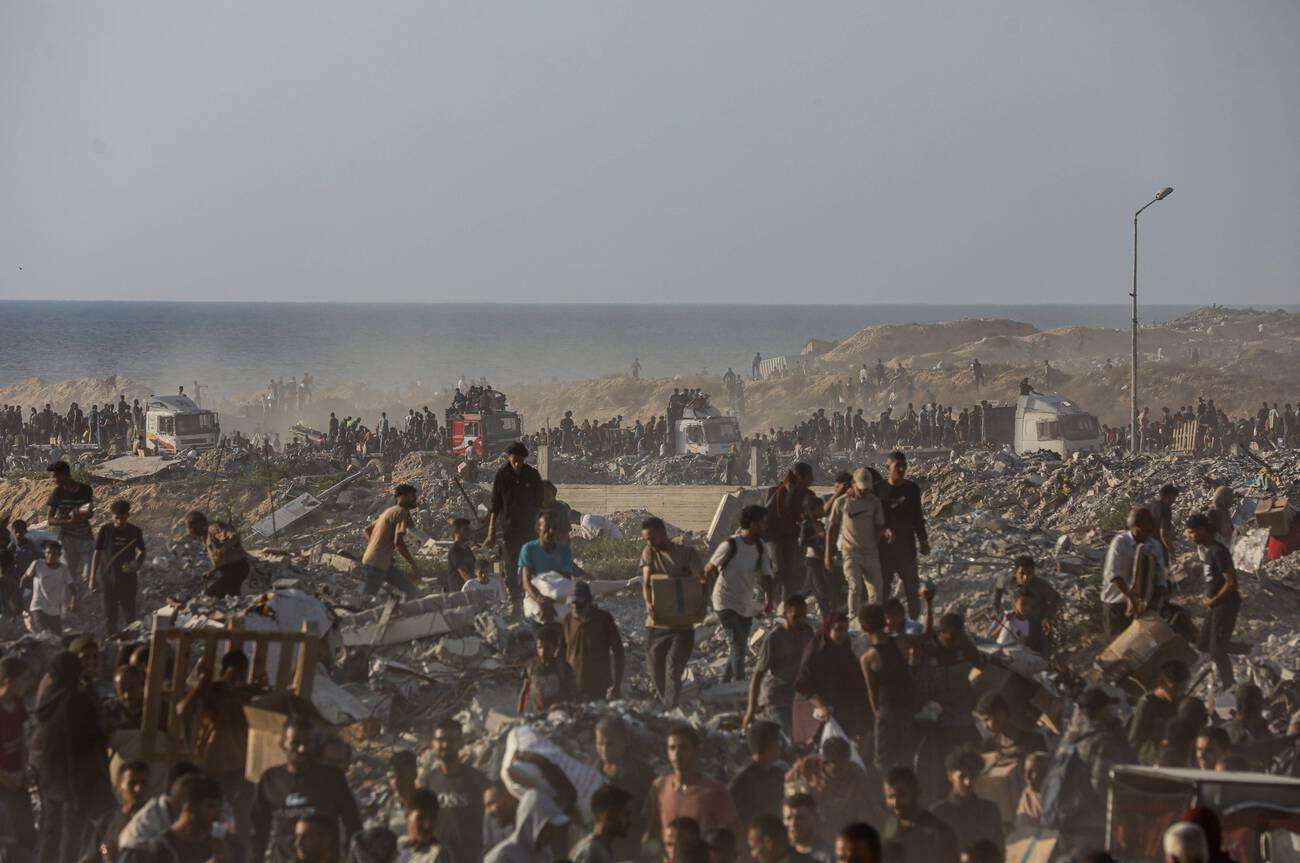
In many of these places, different neighborhoods of Rafah in the south of the Gaza Strip to the north the bombed-out town of Beit Hanoon to Al Tuffah in Gaza City and Shuja’iyya to the east, near the wall that divided Gaza from Israel, the rubble and wreckage has become so bad that Israelis, for the most part, are no longer able to enter their tanks, bulldozers and other heavy machinery.

The soldiers have to go on foot with their machine-guns and backpack of bombs and other “vile little goodies”. Frequently, and today, much more so, they would be running from one place to another fearful of being sniped by Palestinian fighters.

Since Israel re-started its war on the Gaza Strip after 19 March, and as the Palestinian fighters geared for action weeks later, ambushes of Israeli soldiers were stepped in in the different areas of Gaza. These ambushes resulted in the death and injury – on a daily basis of many Israeli soldiers.

While the Israeli army – and it has been so throughout this war – trying to massage and downplay the number of Israeli dead, this has not worked because of the Israeli media, the internet and power of satellite television which meant that the image and the picture – even by Israeli soldiers themselves – has been instant and at the ready ready to be posted online.

As to the intensity of the fighting when satellite television provide pictures of helicopters, both like a scene of the ambush, the booby-trapped house and landing on top of Israeli hospitals, in Tel Aviv for instance, experts said one can be sure the number of Israeli dead and injured is large because Israeli soldiers on the ground on Gaza have with them medical teams to deal with immediate emergencies.

If helicopters to be transported to hospitals are brought in, they argue the number of ‘critically’ wounded and dead is sure to be much higher and that means the resistance is meting out powerful blows at the Israeli soldiers thousands who have been protesting in this latest military campaign that they don’t want to go back to fighting in Gaza in a recent memo signed by 200,000 rank-and-file soldiers and some even prepared to go to prison for disobeying orders.

The dismay among the Israeli soldiers have been highlighted by the booby-trapped housing. In one case recent case in Al Jenienah neighborhood in Rafah, a group of Israeli soldiers with their dogs walked into what appeared to be a booby-trapped disused building and which exploded immediately bringing in the transport helicopters. The place just blew up.

Such a situation is being repeated daily on the streets of Gaza, a strip proving a tough fight that can’t be conquered nor subdued. Just to go back to Shuja’iyya, a wrecked place which the Israeli army entered many times, and which history will associate with Palestinian courage, as its name in Arabic, as of Saturday morning a military transport vehicle was just blown up.

All the Israeli army first said that there has been a serious security incident there, with helicopters hovering at the scene on top of Tel Hashomer Hospital in Tel Aviv. Later on the only owned up to two soldiers being killed and seven injured.

Brigadier-general Fayez Dwairi speaking on Al Jazeera says that the number of Israeli dead is likely to be between four and 12 depending whether we are talking about a Merkava tank and or a military vehicle that also carries 12 people. He points out the Israeli tanks is the only one in the world that has four operatives but has room for six additional soldiers.

Hence this is the battle Israel is currently waging. If Netanyahu insists that the war will continue then his army is likely to continue to face a vicious circle of death and mayhem as the Palestinian Israeli fighters will continue to mushroom.

Today the Palestinian resistance is still at the ready for with Gaza destroyed and mass wreckages that wrecks of death, they have nothing to look forward but to continue fighting especially against an Israeli government and army determined to fight Hamas and the other Palestinian factions till the end

This analysis is written by Dr Marwan Asmar, chief editor of the crossfirearabia.com website. 

Continue reading