How Can We Protect The ICC?

The coordinated actions to dismantle the International Criminal Court (ICC) and hinder its jurisdiction are deeply troubling and signal a dangerous path forward. This trend has become apparent with Venezuela and Chad announcing plans to withdraw from the Rome Statute. This occurs alongside clear US incitement efforts against the Court, including sanctions on its officials, and the European state parties’ lack of substantial action on arrest warrants for Israeli officials.

These actions risk undermining the international criminal justice system and depriving victims of international crimes of one of the few remaining accountability mechanisms, thereby entrenching impunity for perpetrators and providing political and legal cover for ongoing grave violations of international law.

Euro-Med Human Rights Monitor expresses deep concern over the Chadian government’s announcement that it has begun the process of withdrawing from the ICC. This comes shortly after Venezuela notified the United Nations of its withdrawal, following similar notifications from Niger, Mali, and Burkina Faso. These actions indicate a concerning trend of countries moving away from the Rome Statute, both within and outside Africa.

Chad plays a crucial role in Darfur investigations because of its direct border with the region and its large refugee, survivor, and witness populations. It has also recently supported ICC teams in documenting crimes. Although Chad’s withdrawal does not legally remove the Court’s jurisdiction over Darfur crimes, it may significantly hinder access to victims and evidence and impede cooperative efforts.

Additionally, Venezuela’s decision is especially significant because it occurs during an active investigation by the Court into alleged crimes against humanity since April 2017. This investigation involves suspected state security forces, civilian authorities, and pro-government actors. There are serious concerns that the withdrawal might be used as a tool to hinder cooperation and reduce chances of holding accountable those responsible for the crimes under investigation.

Venezuela and Chad’s simultaneous withdrawal decisions, along with similar actions by other states, reveal a coordinated effort to weaken the Court through two main strategies. The first involves a fierce campaign led by the United States with Israeli backing, employing sanctions, threats, and public rhetoric to encourage states to withdraw. The second consists of internal weakening tactics by state parties’ governments, such as withdrawing during investigations, ignoring cooperation duties, or selectively enforcing decisions while refusing to arrest or surrender wanted individuals.

Washington’s welcoming of Venezuela and Chad’s withdrawals on 25 and 27 July are part of a broader campaign, announced by US Secretary of State Marco Rubio on 13 July, aimed at dismantling the Court.

The successive withdrawals primarily harm the victims by limiting their access to justice, rather than penalising the Court as an institution. This situation gives perpetrators of international crimes more room for impunity, especially when there are no effective, independent national judicial alternatives.

The criticisms levelled at the ICC regarding slow procedures, selectivity in case handling, and limited outcomes, particularly concerning crimes committed outside Africa, are legitimate and demand serious structural reforms to strengthen the Court’s independence, efficiency, and consistency. However, addressing these shortcomings must not be done by dismantling or withdrawing from the Court, but by reforming it, enhancing its effectiveness, and ensuring it exercises its jurisdiction free from political interference or selectivity.

Past operational failures should not justify undermining the Court’s authority. The bias within the international justice system highlights the need to reform accountability mechanisms and broaden their scope, rather than weakening the few tools available to hold perpetrators of the gravest international crimes accountable.

Euro-Med Monitor points out the irony of the US administration exploiting African concerns about ICC selectivity while simultaneously intensifying its campaign against the international judicial system. This escalation is mainly due to the Court’s expanded reach to include officials in Israel, a key US ally.

Washington’s imposition of financial sanctions and travel restrictions on the ICC Prosecutor, judges, and deputy prosecutors due to their work on cases involving US and Israeli officials represents a blatant interference in the independence of international justice. These measures not only intimidate Court staff and block access to vital financial and technical resources but also discourage banks, corporations, organisations, and experts from cooperating, which hampers investigations, delays enforcement of decisions, and limits victims’ access to justice. Moreover, it sets a dangerous precedent that allows powerful states to penalise international justice whenever it targets their officials or allies, thereby broadening impunity.

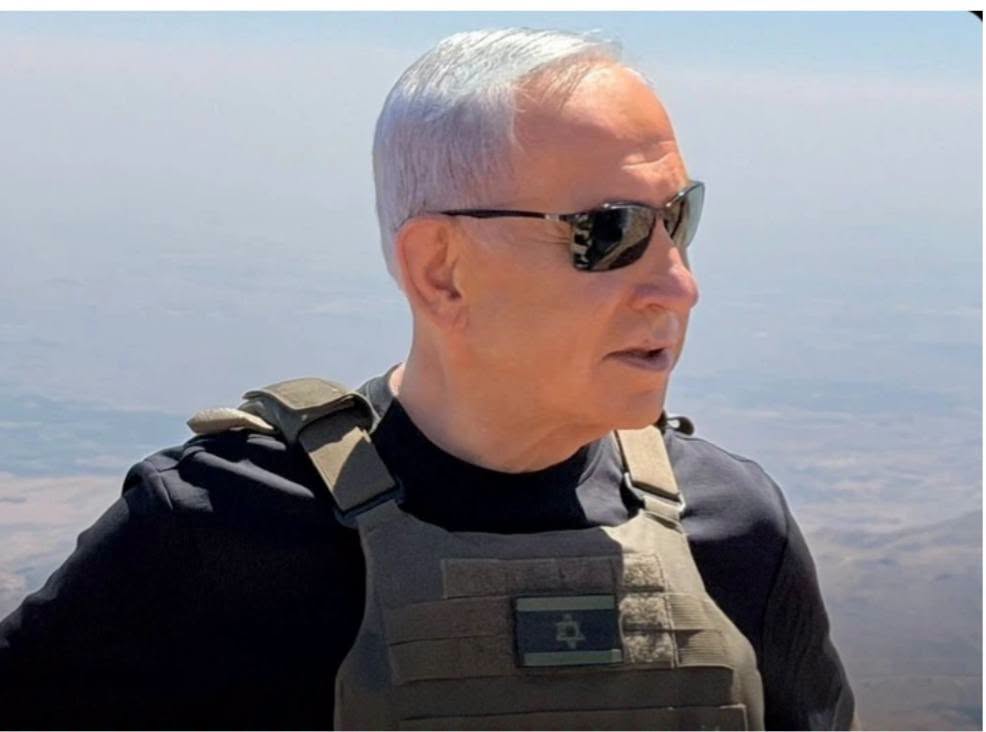
On 21 November 2024, the ICC Pre-Trial Chamber I issued arrest warrants for Israeli Prime Minister Benjamin Netanyahu and former Defence Minister Yoav Gallant, after judges found reasonable grounds to believe they are criminally responsible for war crimes and crimes against humanity in the Gaza Strip.

Both arrest warrants remain in effect and must be obeyed by the parties involved. The argument that the Court lacks jurisdiction because Israel is not a signatory to the Rome Statute is unfounded, as jurisdiction is based on crimes committed within the territory of the State of Palestine, a member state. This covers the Gaza Strip, the West Bank, and East Jerusalem. Therefore, Israel’s non-acceptance of the Rome Statute does not exempt its officials from accountability for crimes allegedly committed on the land of a party state.

The fact that Greece, Italy, and France permitted a government aircraft carrying Israeli Prime Minister Benjamin Netanyahu to fly through their airspace during his recent trip to the United States, despite all three being state parties to the Rome Statute and aware of the active arrest warrant against him, raises serious questions about whether this conduct aligns with their legal duty to cooperate in good faith with the Court and to refrain from undermining its decisions.

Granting prior airspace transit was not compulsory for these states; it was a sovereign choice they could refuse. This decision allowed an individual wanted by the International Criminal Court on suspicion of war crimes and crimes against humanity to pass, which undermines the purpose of the arrest warrant. It also highlights a contradiction: while these states publicly support legal obligations, their actions of helping wanted persons evade arrest contradict their stated commitments.

The European Union’s political backing for the Court diminishes in credibility and practical value when member states allow a judicially wanted official to transit through their territories, instead of denying transit permissions and using their authority to prevent their territories from being used to evade arrest warrants.

Euro-Med Monitor emphasises that Greece, Italy, and France need to give clear legal reasons for granting transit permissions. It is essential to adopt strict, clear protocols to prevent facilitating the movement of wanted persons and ensure their rapid arrest and surrender to the Court if they enter or land in these countries, in line with their obligations under the Rome Statute.

It is important to clearly separate proceedings related to the ICC Prosecutor Karim Khan’s personal and professional conduct from the Court’s judicial decisions. The process of dismissing or investigating Khan is a separate institutional matter and does not affect the legality of the arrest warrants.

Holding any Court official accountable for misconduct, when proven through independent, fair procedures that ensure the rights of all involved parties and safeguard whistleblowers and victims, is an institutional obligation that upholds the Court’s integrity without threatening its independence. Using individual accountability as a reason to discredit ongoing investigations or nullify independent judicial rulings is unacceptable.

Euro-Med Monitor rebukes any attempts to leverage Khan’s case to challenge the investigation into the situation in Palestine or the arrest warrants for Netanyahu and Gallant. The warrants were not issued by the Prosecutor in his personal capacity, but by an independent Pre-Trial Chamber that determined, following an evaluation of prosecution submissions, that there were reasonable grounds to believe both individuals bear criminal responsibility for crimes within the Court’s jurisdiction. Consequently, the enforceability and legal validity of the warrants do not depend on Khan remaining in office.

The removal of the Prosecutor does not disrupt the Court’s legal or institutional continuity, nor does it invalidate ongoing investigations or active arrest warrants, including those related to Palestine and Venezuela. Additionally, it does not absolve state parties from their obligation to cooperate fully with the Court and enforce its judicial orders.

A transparent, independent, and competitive process is crucial for selecting a new Prosecutor. This process should be based on clear public criteria for competence, integrity, and experience, ensuring candidates undergo rigorous professional and ethical assessments. It must also shield the selection from political influence and conflicts of interest. The Court must guarantee continuous progress on all cases without delays or bias, avoiding the transitional period being used to disrupt investigations or expose them to pressure from the US and Israel, which could undermine accountability.

Concerning the legal consequences of the withdrawals, notifications from Chad and Venezuela to begin withdrawal procedures do not cause an immediate departure from the Rome Statute. Article 127 states that a withdrawal becomes effective one year after the UN Secretary-General receives written notification, unless a later date is specified. Until that time, both countries remain state parties with legal obligations, including cooperating with the Court and fulfilling its requests.

Venezuela’s withdrawal, even after it takes effect, does not remove the Court’s jurisdiction over crimes committed while the Rome Statute was in force for the country. It also does not end ongoing investigations or cancel cooperation obligations related to proceedings started before the withdrawal became effective. Similarly, Chad’s withdrawal does not impact the Court’s jurisdiction over Darfur crimes or disrupt cooperation processes initiated during its membership. Withdrawal does not erase individual criminal responsibility nor stop the Court from considering issues submitted before it officially took effect.

Chad, Venezuela, Niger, Mali, and Burkina Faso should reverse their withdrawal decisions, retract their notifications before they become effective, uphold their legal commitments, and collaborate with other States Parties to reform the Court and address operational issues, rather than undermining the international criminal justice system and depriving victims of one of the few accountability tools available.

Concerned states should fully cooperate in relevant cases and investigations. This includes allowing Court investigators access to victims, witnesses, information, and evidence, while ensuring the protection of victims and witnesses and the preservation of evidence. States must also avoid using withdrawal procedures that could hinder investigations or reduce accountability for international crimes within the Court’s jurisdiction.

The United States should stop its efforts to dismantle the Court and lift any financial sanctions and travel restrictions imposed on its judges, prosecutors, and associates. EU member states and other allies need to work together to implement legal, financial, and technical strategies that protect the Court and its personnel from sanctions and political influence, so it can continue to utilise the necessary services and resources to fulfil its responsibilities.

European state parties to the Rome Statute should turn their support for the Court into tangible actions by refusing to accept wanted individuals or allow their transit through their airspace. They must also ensure the arrest and surrender of such individuals on their territories, adhering strictly to legal obligations, including executing arrest warrants for Netanyahu and Gallant without bias or political influence.

Euro-Med Monitor calls on state parties to review national legislation and adopt clear, binding protocols for executing arrest and surrender requests, as well as for handling transit, landing, and official visit requests by wanted individuals, thereby preventing procedural loopholes from being exploited to protect them.

It is vital to persist in investigating the situation in the State of Palestine, covering crimes in the Gaza Strip, the West Bank, and East Jerusalem. This includes executing arrest warrants for Netanyahu and Gallant without bias or political influence and rejecting any efforts to interfere with or alter the investigation’s direction or priorities.

Euro-Med Monitor calls on the Assembly of States Parties to ensure a transparent, independent, and competitive process for choosing and electing the new Prosecutor. This process should be based on published criteria for competence, integrity, and experience, with candidates undergoing comprehensive professional and ethical evaluations. It is also essential to disclose the selection procedures, prevent political interference and conflicts of interest, and thereby protect the independence of the Prosecutor’s Office. These measures are vital for maintaining the trust of victims and Court staff, and for ensuring ongoing investigations.

National judicial authorities should invoke universal jurisdiction as per their national laws, initiating independent investigations into international crimes and prosecuting suspects when jurisdiction is applicable. This approach broadens accountability opportunities beyond just the International Criminal Court. Euromedmonitor

Continue reading
‘Europe Shouldn’t Toe The Israeli Line’

Linking reconstruction efforts in the Gaza Strip to demilitarisation legitimises the ongoing genocide Israel has been committing in the enclave for more than two years and violates peremptory norms of international law.

This condition ignores the grave crimes committed by Israel against civilians and infrastructure in the Gaza Strip and turns the population’s right to reconstruction into a bargaining chip for political leverage, in explicit breach of Israel’s obligations as an occupying power under international humanitarian law, particularly the Geneva Conventions, which require the protection of civilians and the provision of their basic needs without restriction or condition.

Euro-Med Human Rights Monitor condemns the comments made by EU High Representative Kaja Kallas, who tied Gaza’s reconstruction to Hamas’ demilitarisation. This stance significantly deviates from the EU’s commitment to preventing genocide by setting political and security conditions that endanger civilians’ rights to life and safety.

Kallas confirmed in remarks on 29 January and 2 February that “Gaza’s reconstruction will depend on Hamas’ demilitarisation,” underscoring a clear insistence on linking civilians’ rights to reconstruction and survival to a political condition unrelated to protection obligations under international law, particularly for a population in a territory almost entirely destroyed by the genocide Israel has been committing since October 2023.

The position adopted by the EU High Representative reinforces a systematic European approach of complicity, militarily, economically, and politically, with the ongoing Israeli genocide against Palestinian civilians. This approach is reflected in the continued failure to adopt meaningful accountability or pressure measures despite the grave and unprecedented crimes committed over the past two years, alongside the ongoing export of weapons and military equipment by key European Union states documented as being used in war crimes against Palestinian civilians, thereby engaging those states’ legal responsibility for contributing to and sustaining such violations.

The prevention or delay of reconstruction in the Gaza Strip falls within Article II(c) of the Convention on the Prevention and Punishment of the Crime of Genocide, which prohibits “deliberately inflicting on the group conditions of life calculated to bring about its physical destruction in whole or in part.” The prohibition of genocide is a peremptory norm of international law from which no derogation is permitted, rendering the conditioning of reconstruction, an essential requirement for the population’s survival, on the fulfilment of a political or security condition, including disarmament, legally void.

This condition constitutes a serious breach of the European Union’s and its Member States’ positive obligation to prevent genocide, which requires the use of all possible and legally available measures to halt and end the deadly living conditions imposed on the civilian population, rather than creating additional obstacles to their removal or using political and economic influence to shield the continuation or prolongation of the crime.

Lima Bustami, Head of the Legal Department at Euro-Med Monitor, stated that “both legal and moral imperatives require the European Union to direct its political pressure towards Israel as the party responsible for this destruction.”

“This should be achieved by suspending the EU-Israel Association Agreement and linking all forms of economic, military, and diplomatic cooperation to the immediate cessation of the genocide, compliance with the rulings of the International Court of Justice, and the initiation of Gaza’s reconstruction alongside reparations for victims,” Bustami added. “Instead, Israel is imposing impossible living conditions on victims, effectively tying their right to life to security arrangements to which they are not a party.”

She continued, “This approach represents a flagrant inversion of justice: the perpetrator of genocide is effectively granted yet another veto over the reconstruction of what its military machinery has destroyed, while victims are punished twice, first through mass killing, and again by being denied their fundamental right to rebuild their lives.”

Euro-Med Monitor warns that these political conditions may be implemented on the ground by withholding or suspending reconstruction funding, restricting the entry of construction materials and essential goods, banning financial transactions, disrupting UN mechanisms and obstructing their work, or imposing other measures that deprive the population of life’s necessities. Such measures go beyond political bias and may legally amount to complicity in genocide, as they provide political cover and tangible material support that sustain deadly living conditions.

The conditioning of the fundamental rights of the civilian population in the Gaza Strip, including the rights to housing, health, and survival, on political, military, or security objectives, constitutes collective punishment expressly prohibited under Article 33 of the Fourth Geneva Convention. It also undermines core principles of international humanitarian law, particularly the principle of distinction and the prohibition on punishing civilians for acts they did not personally commit, and places direct legal responsibility on those imposing such conditions for the resulting consequences.

Euro-Med Monitor stresses that the rules of international humanitarian law apply unconditionally, irrespective of political considerations, and that reconstruction is a legal right of victims and an essential component of the duty to provide reparation, not a reward or bargaining chip used for political gain at the expense of affected civilians’ rights.

This condition constitutes a grave violation of the international human rights framework, as reconstruction and the entry of necessary materials are indispensable to the realisation of the civilian population’s fundamental rights, foremost the rights to life, an adequate standard of living, housing, health, food, and water. The most vulnerable groups, particularly children and women, bear the brunt of this deprivation, as their rights are immediately and directly harmed by ongoing destruction, siege, and the denial of life-sustaining essentials.

The EU High Representative for Foreign Affairs, Kaja Kallas, must publicly retract her statements linking Gaza’s reconstruction to demilitarisation and refrain from policies that provide cover for the continuation of genocide in the Gaza Strip and for Israeli crimes against the Palestinian people as a whole.

Influential international actors, particularly the European Union, must impose deterrent economic and diplomatic sanctions on Israel to compel compliance with the International Court of Justice’s rulings. This legal duty extends beyond permitting reconstruction to include the immediate imposition of a comprehensive arms export ban on Israel and ensuring accountability for the perpetrators of these crimes.

Euro-Med Monitor stresses that it is profoundly disgraceful for the European Union to deliberate over the conditions for rebuilding the destruction caused by machinery supplied by some of its Member States.

The international community must act decisively to compel Israel to comply with international law by immediately and comprehensively ceasing all crimes and grave violations against civilians in the Gaza Strip. Achieving justice requires activating a comprehensive and effective accountability process and guaranteeing victims the right to an effective remedy and to fair, comprehensive compensation for the material and moral harm suffered, as this is both an obligation on Israel and a legal entitlement for victims, unaffected by limitation periods.

Euro-Med Monitor calls on influential international actors, including the European Union, to comply fully with international law by separating the humanitarian track, including reconstruction as an inalienable right, from political and security considerations, ensuring that reconstruction is recognised as a legal duty and a right of victims rather than a tool of negotiation or coercion.

The international community must act urgently to break the blockade on the Gaza Strip and ensure the unrestricted entry of reconstruction materials, as this is a binding legal obligation and a humanitarian necessity to safeguard the rights, lives, and dignity of the civilian population. – Human Rights Monitor

Continue reading
An Israeli Obsession: Digging Up Graves in Gaza

The large-scale exhumation operations by the Israeli army east of Gaza City, under the pretext of searching for the body of the last Israeli captive in the Gaza Strip, are deeply alarming.

Euro-Med Human Rights Monitor stresses that this pretext does not grant legitimacy to violating the sanctity of the Palestinian dead, tampering with their graves, or desecrating their remains. Any search operations must be strictly limited in scope, subject to stringent humanitarian safeguards, and conducted under neutral international supervision.

Over the past two years, Israel has systematically destroyed cemeteries in the Gaza Strip, dug up and vandalised graves, tampered with bodies, and transferred dozens of remains.

Euro-Med Monitor has reviewed documented reports indicating that the Israeli army dug up nearly 200 graves in a cemetery in the Shuja’iyya neighbourhood near the Yellow Line. The operations are reportedly ongoing, with no independent information or neutral verification as to whether examinations are being conducted on site or whether bodies are being removed or transferred elsewhere. This significantly heightens the risk of serious violations and undermines any claim of necessity or restraint, particularly given Israel’s documented pattern of destroying, bulldozing, tampering with, and snatching bodies from cemeteries in Gaza.

The expansion of exhumations in the absence of any Palestinian or neutral international presence, such as the International Committee of the Red Cross, risks exceeding the stated purpose of searching for a specific body and significantly increases the likelihood of violating the sanctity of cemeteries and the remains of the dead, including through the transfer or tampering of remains without traceable records.

Such practices not only violate the dignity of the deceased but also inflict severe psychological harm on their families by leaving them in uncertainty about the fate and burial sites of their loved ones, denying them verification or official information, and amounting to cruel treatment and psychological torture of the families of the deceased.

The Israeli army has destroyed 21 out of 60 cemeteries in the Gaza Strip over the past two years and has systematically vandalised cemeteries and exhumed graves in all areas where it conducted ground incursions. These actions included bulldozing graves, extracting remains, and crushing them with military machinery, repeatedly causing the mixing, loss, and disappearance of remains, as well as damage to neighbouring graves.

On 25 December 2024, Euro-Med Monitor received multiple testimonies regarding the Israeli army’s bulldozing of the Beit Hanoun Cemetery in northern Gaza. Documented excavations in specific graves included the removal and snatching of recently buried bodies, as well as the mixing of remains to the point that identification became impossible. Between 17 and 20 December 2024, the Israeli army stormed the Sheikh Shaban Cemetery in Gaza City, bulldozed dozens of graves, and ran over the bodies of the dead.

On 20 December 2024, Euro-Med Monitor documented extensive destruction and vandalism by the Israeli army in a cemetery approximately 1.7 kilometres east of central Khan Younis in southern Gaza, including the exhumation of graves across an area of about 2,500 square metres. Earlier that month, the Israeli army stormed the Al-Faluja Cemetery in Jabalia, northern Gaza, causing widespread destruction, including damage to graves and headstones and the confiscation of several bodies.

The attacks also targeted the Ali Ibn Marwan Cemetery, Sheikh Radwan Cemetery, Al Shuhada’ Eastern Cemetery, the Tunisian Cemetery, and the Cemetery of St. Porphyrius Church, all located in Gaza City and its northern areas. The central Khan Younis Cemetery in the Austrian neighbourhood was also targeted, destroying dozens of graves, creating large pits that swallowed graves, mixing and disappearing of remains, damaging adjacent graves, and violating the dignity of the dead.

Based on Euro-Med Monitor documentation over recent months, Israel is systematically violating the sanctity of the dead and cemeteries in clear breach of international humanitarian law and the rules of war, which require the protection of cemeteries during armed conflicts, the respectful treatment of the dead, and the preservation of graves, and prohibit their desecration or tampering.

Any Israeli search operations for the body of the last Israeli captive in the Gaza Strip do not justify violating the sanctity of Palestinian dead or exhuming Palestinian graves. The respect for the dignity of the dead is an obligation without discrimination, and tampering with remains or burial sites, or desecrating cemeteries, is prohibited.

International humanitarian law prohibits the snatching of dead bodies and affirms that degrading treatment and attacks on dignity, including that of the dead, constitute a war crime under the Rome Statute of the International Criminal Court.

An immediate halt to all grave exhumation and bulldozing operations is required, along with refraining from any unilateral search measures and ensuring that any claimed search operations are subject to strict, written, and public constraints that precisely define their scope with minimal interference. Euro-Med Monitor calls for the presence of a neutral competent body, such as the International Committee of the Red Cross, to thoroughly document every grave opening, including the identification and coordinates of targeted graves, prevent the transfer of any remains outside the Gaza Strip, ensure reburial at the same site without alteration, and rehabilitate damaged cemeteries in a manner that preserves the dignity of the dead and the rights of their families.

Euro-Med Monitor stresses the need for the International Criminal Court and relevant UN investigative mechanisms to fulfil their role in investigating the systematic destruction of Palestinian cemeteries and the snatching of bodies as part of broader files on crimes committed by Israel in the Gaza Strip, to ensure accountability, prevent impunity, and uphold the dignity of the dead.

Continue reading
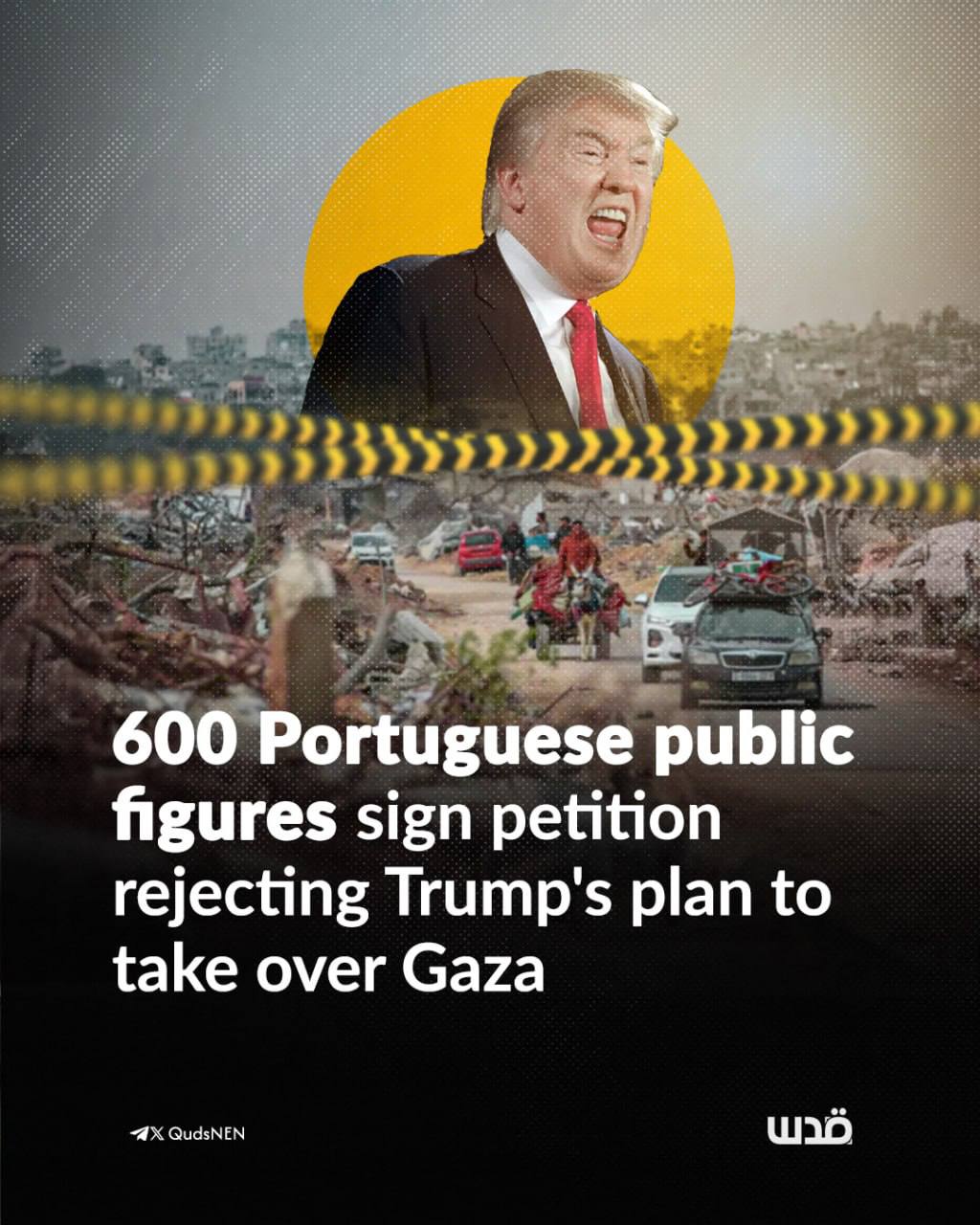
Portugal Says No To Trump!

Nearly 600 Portuguese political, academic, and military figures, along with journalists, petitioned the government and UN to reject Trump’s plan to take over Gaza and show solidarity with Palestine. They urged Portugal and the EU to oppose forced displacement and support Palestinian self-determination.

Continue reading
A Year on: Remembering Late Poet of Gaza

If I Must Die, Let it Bring Hope’ – Remembering Professor Refaat Alareer

Refaat Alareer’s daughter was killed by Israel in Gaza. (Design: Palestine Chronicle)

By Nurah Tape – The Palestine Chronicle  

“Sometimes a homeland becomes a tale. We love the story because it is about our homeland and we love our homeland even more because of the story.”

On Day 3 of Israel’s genocidal assault on the Gaza Strip, intellectual and writer Professor Refaat Alareer said in a live interview from the besieged enclave “I’m an academic. Probably the toughest thing I have at home is an Expo marker. But if the Israelis invade … I’m going to use that marker to throw it at the Israeli soldiers, even if that is the last thing that I would be able to do.”

Nearly three months later, on 6 December, 2023, Alareer was killed in an Israeli airstrike on his sister’s home in northern Gaza. The activist’s sister, Asmaa, along with three of her children, and his brother Salah, with his son Mohammed, were among those also killed in the attack.

As a professor, poet and writer, Alareer’s pen was his weapon. And it continues to defend and tell the story of his people.

Iconic Poem

His poem, If I Must Die, written in 2011 and shared on X a month before his death, has become an iconic reminder of the Palestinian struggle for liberation from Israeli occupation and oppression.

“If I must die, you must live, to tell my story, to sell my things, to buy a piece of cloth and some strings…If I must die, let it bring hope, let it be a tale” the actor Brian Cox delivered a passionate rendition of the poem published by the Palestine Festival of Literature.

On December 4, two days before his death, Alareer wrote in a post on X: “I wish I were a freedom fighter so I die fighting back those invading Israeli genocidal maniacs invading my neighborhood and city.”

“The building is shaking,” he added. “The debris and shrapnel are hitting the walls and flying in the streets. Israel has not stopped bombing, shelling, and shooting. Pray for us. Pray for Gaza.”

Over a year later, his words echo as the bombing, shelling, and shooting continue unabated.

To date, a total of 44,612 Palestinians have been killed, and 105,834 wounded, according to Gaza’s Ministry of Health.

We Are Not Numbers

As the beloved professor of Literature and Creative Writing at the Islamic University of Gaza and co-founder of the We Are Not Numbers project, Alareer inspired a myriad of young people in the enclave to own their narrative and tell the story of Palestine based on their experiences.

In a TED talk delivered in 2015, Alareer impressed upon preserving oral history and how “stories make us.”

“I realize I am the person I am today because of the stories” told to him by his mother and grandmother, he said, “because my mum was teaching me values, etiquette, to love people, to love my life, to love my country at the same time.”

“Stories are also important in our lives as Palestinians, as people under occupation, as native peoples on this land,  not only because they make us, they shape us,  they make us the people we are but also because they connect us with our past, they connect us with our present, and they prepare us to the future,” shared Alareer.

He said his grandmother “told us stories (about) when she was a kid, when she was a newly married wife who would spend months plowing her land, harvesting the crops, the land that now we don’t own because it was occupied.

“Although the land is physically occupied, it still lives in our memories, still lives in our hearts, because we can easily visualize this.”

‘Tell Us Stories’

Concluding his talk, Alareer encouraged the audience to “beg” their parents and grandparents to “tell us stories” and share them with “our kids.”

“Because if we don’t do that, if the story stops there, we’re betraying ourselves, we’re betraying the story, we’re betraying our parents and grandparents, and we’re betraying our homeland,” he emphasized.

https://www.palestinechronicle.com/let-it-be-a-tale-israel-kills-the-storytellers-of-gaza-but-will-not-kill-the-story/embed/#?secret=A1GEdoACO7#?secret=0ulwRI8zTr

Born on September 23, 1979, in Shejaiya in Gaza City, Alareer said in a media interview that “every move I took and every decision I made were influenced (usually negatively) by the Israeli occupation”.

“As a kid, I grew up throwing stones at Israeli military Jeeps, flying kites, and reading,” he also said.

‘Gaza Writes Back’

Alareer edited several books, including ‘Gaza Writes Back’ and ‘Gaza Unsilenced’, which according to Palestine Chronicle editor, Ramzy Baroud, “allowed him to take the message of other Palestinian intellectuals in Gaza to the rest of the world.”

“Sometimes a homeland becomes a tale. We love the story because it is about our homeland and we love our homeland even more because of the story,” he wrote in ‘Gaza Writes Back’.

The Geneva-based group, Euro-Med Human Rights Monitor, said Alareer’s killing was “apparently deliberate” and called for an investigation into his death.

“The apartment where Refaat and his family were sheltering was surgically bombed out of the entire building where it’s located, according to corroborated eyewitness and family accounts,” the organization said in a statement.

This came after weeks of death threats that Refaat received “online and by phone from Israeli accounts.”

His Legacy

Husband to Nusayba, Alareer was also a father of six, who had their home bombed previously by Israel in 2014, killing over 30 of his and his wife’s family members, according to Euro-Med Monitor.

Not long after her father’s death, Alareer’s eldest daughter, Shaymaa, gave birth to her first child.

https://www.palestinechronicle.com/do-you-know-o-dad-after-murdering-her-father-daughter-of-refaat-alareer-killed-in-gaza/embed/#?secret=rRVGG1V8cH#?secret=tKEZQfH3l5

She wrote a note to her deceased father, as conveyed by the Resistance News Network through their Telegram channel:

“I have wonderful news for you, and I wished I could convey it to you face-to-face, handing your first grandson to you… This is your grandson Abdul Rahman, whom I have always imagined you holding. But I never thought that I might lose you too soon, even before you could meet him.”

In April, Shaymaa was killed in an airstrike on her family’s apartment in Gaza City along with her husband and infant son.

‘Haunted by Horrors’

As with many Palestinians who fought and died fighting for a liberated Palestine in which ever manner they could, Alareer’s contribution to that struggle lives on.

In honor of his memory, and to mark the first anniversary of Alareer’s killing, Shahd Ahmad Alnaami, a contributor to We Are Not Numbers writes:

So many of us still
hold our phones, read
your poems — not
losing hope, but

we’re tired of sleeping
in fear, tired
of being displaced,
living in tents,

haunted by horrors
that linger in our minds.
A missile pierced the silence,
burning all the tents —

including you. I have
not forgotten. Nights
become nightmares, children
cry from the cold,

their laughter, once bright,
now a distant echo.
We yearn to return,
free from fear. When

will these bloody nights end?
When will this tragedy stop?
When will our normal lives return,
and our distant dreams come true?

We keep asking, “Will this pass?”
And remember how you
used to say, “It shall pass…
I keep hoping it shall pass…”

Still, we wait for the day
peace will dawn,
and a new chapter
open its bleary eyes.

(The Palestine Chronicle)

– Nurah Tape is a South Africa-based journalist. She is an editor with The Palestine Chronicle.

Continue reading