Gaza Genocide Fails to Move The Arab Street

The ongoing genocide on Gaza over the past 11 months have failed to move the Arab Street even one iota. This is an Israeli genocide but the Arab world continues to look on helplessly and hopelessly unable to fathom of what to do to stop it.

Despite the intensity of Israel’s war on the whole of the Gaza Strip since 7 October, 2023, and the consequent daily massacres perpetrated by the Zionist army, literally committed nonstop, the popular streets across the Arab world has largely been dormant, lethargic and ineffective, spectators to a deadly bloody match with vastly unequal partners.

Gone are the days…

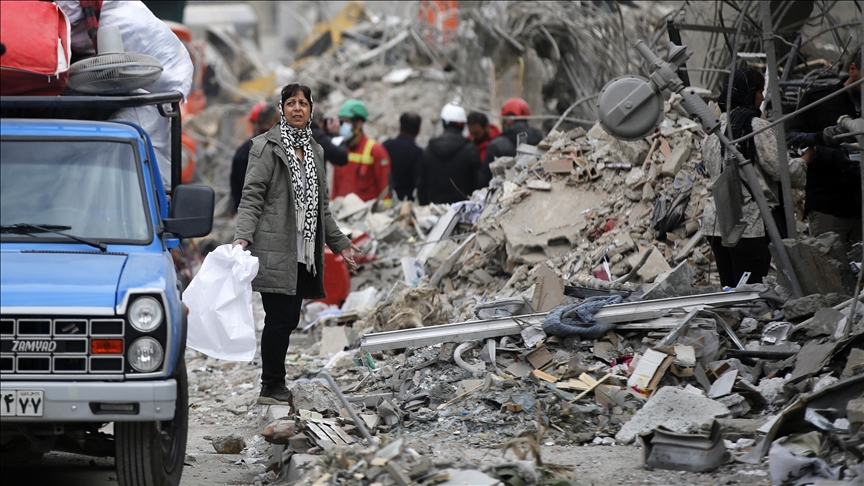
People have been glued to their television sets, especially on Al Jazeera, stunned at the annihilation of Gaza by Israeli bombardment and missiles. But they have not been able to do anything except wonder in amazement at the scale of destruction of the Palestinian territory with men, women, children, toddlers, babies and infants standing alone to face the Israeli enemy only to be blown up to pieces.

Gone are the days when popular protest gripped the Arab world to-the-teeth and were a sense of nationalism, dignity, values and pride once held sway. This of course was not always this way.

https://twitter.com/GazaMartyrs/status/1826270375279288537

The pan-Arab street have always been ripe with anger and frustrations and political awareness of right and wrong expressed in almost daily demonstrations right from at least 1956 when Israeli, Britain and France carried their tripartite attack on Egypt at the nationalization of the Suez Canal.

Then countries like Kuwait, Jordan and others took part in the protests against the three-country attack crying foul of neocolonialism and subjugation. But then was the period of the pan-Arab nationalist movement that grew up in Beirut and spread to other Arab cities in the wake of the fall of Palestine in 1948 and the creation of the state of Israel.

No new dawn!

Despite statist policies and autocratic governments popular protests continued across the Arab world sporadically, whether in the 1960s, 1970s, 1980s and 1990s with the central question being Palestine.

This  culminated in the Arab Spring of 2011 when there was a new popular push forward and the promise of a new dawn across the region. With the economic squeeze increasing against the Arab masses Palestine was joined by calls for regime change and economic modernization to increase employment and lower the stinging rates of poverty.

Despite the fact that governments were brought down, here and there, starting with Tunisia, Egypt, Yemen and Libya, the Arab Spring – the great popular deluge of protests that was unprecedented in many ways – succumbed to the strong and powerful Arab state, together with its institutions, leaderships, bureaucracy and security apparatuses and military forces.

Whilst Arab governments were at first taken by surprise, they quickly recuperated, gained their power back and dominated the will of the majority and stomped the popular uprisings movement in their tracks; halting regime change there and then.

The popular Arab street may have erupted again in 2019 in particular in Lebanon, Sudan and Algeria but it once again failed in its demands to change the political status quo and reflected the dichotomies of awkward change. There was regime change in Sudan for instance, but the country degenerated into a civil war up till now with its power elites fighting each other over the seats of government.

Cool reaction

The present Gaza situation, and the Israeli onslaught on its people and resistance, must be understood within this context. The ebbs and flows of the popular street and its failure to change states, regimes and governments – starting from the radicals to the most conservatives – may explain why the present pan-Arab street is reacting in coolly to the present attacks on Gaza and which very quickly turned into a criminal genocide, in deed and practice.

People feel even if they continue to rally, and protests are continuing against the mass bombing of Gaza by countries like Morocco which has established a normalization deal with Israel, they will not be able to stop Israel from its daily war crimes in Gaza mainly because popular movements have limits. And that it is finally it is up to these states to make decision and pressure the United States and Israel to stop the genocide on Gaza.

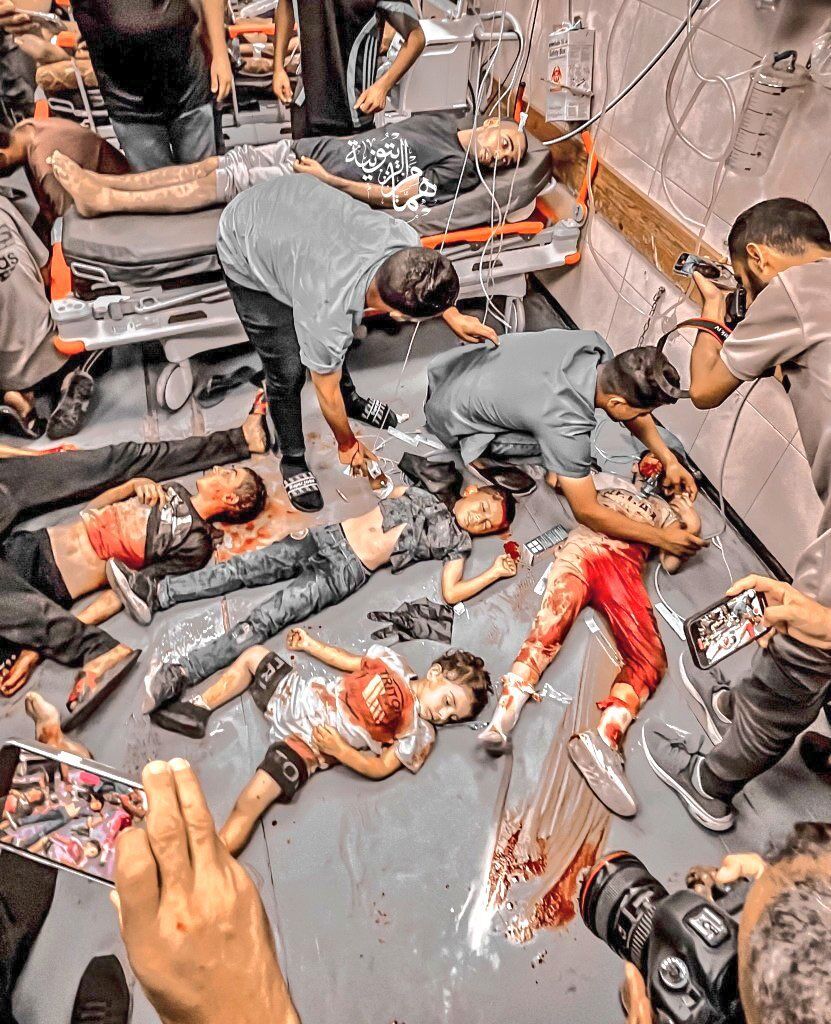
It’s a strange situation with emotions dampened and cushioned despite the horrific images of babies cut to pieces, children dying in hospitals, women and men crying at loved ones and which have jam-locked the the social media. Growing daily statistics of the dead, buildings bombed, homes ripped apart have become just numbers regurgitated daily by televisions anchors or skimped through in newspapers and websites.

In this onslaught on Gaza, the apathy of the Arab street has reached a very low point – to the nadir because people are in a whirlpool of helplessness. They tried before and they failed and now these people have long become divided between poor and rich states in the Middle East region where consumerism and the high life has taken the better of them and where ideologies and nationalism are reduced to second place and where religion is interpreted differently.

This time around, the “popular world” erupted for Gaza, in Europe, across America, including in US university campuses and elsewhere like Japan, demonstrating time and again, against the genocide, but sadly this has not been the case in the Arab world.  

Later on sociologists, anthropologists and political scientists would need to explain what happened this time around – almost total Arab silence against the Gaza genocide, why!
Continue reading
Rats Bite off Israeli Soldier’s Ear, Noes  

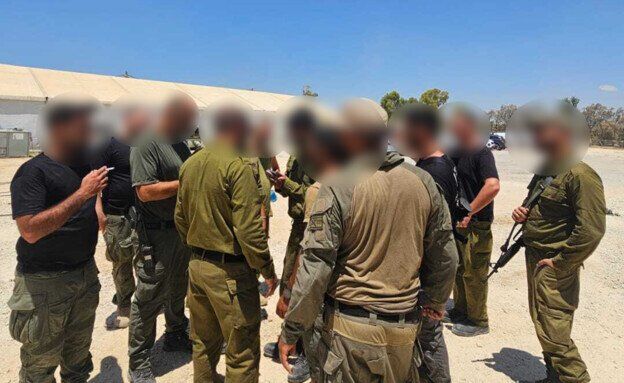
In a shocking incident, two Israeli soldiers stationed at the “Ami’ad” military base in the occupied Galilee were bitten by rats on their noses and ears, leading to severe bleeding.

According to Yedioth Ahronoth, two soldiers in the “Ami’ad” military base in the occupied Galilee were shocked awake after being bitten by rats on their noses and ears as reported in the Quds News Network.

The newspaper noted the rats bit the soldiers until they bled in the camp located in northern occupied Palestine. The soldiers were then taken to a medical facility for treatment.

The father of one of the soldiers in the military unit told the Israeli daily: “The rats literally ate the soldiers, and it is shocking and disgraceful.”

“The images I saw this morning of soldiers with bleeding faces make me ashamed of the army’s failure to protect our most precious assets and I never imagined for a moment that my son could be harmed or be in danger because the army does not provide him with assistance or basic hygiene conditions,” he added.

This is not the first time the Israeli soldiers have been attacked by animals during the war. A few weeks ago, the Walla website reported that a soldier in the Israeli army, part of the 252nd Division occupying the Netzarim area in the Gaza Strip, said: “I was attacked by a group of dogs one of the times I went outside the shelter.”

The soldier pointed out that “generally, except for the change that happened in the last few weeks when they brought in large garbage containers, there were many cases of massive garbage accumulation, including food brought in large quantities by dogs, cats, and rats, among others.”

He continued, “Every time we asked for a solution to the health disaster, they – referring to the Israeli army leadership – would reply: We are taking care of it.” But in reality, the soldier said, someone would come to remove a pile of garbage and dig a hole to make room for more garbage.”

Additionally, other soldiers claim that there is a phenomenon of groups of stray dogs, which have not been vaccinated, with some of them attempting to attack soldiers “who were forced to use live ammunition to defend themselves.” In one case, soldiers saw a dog carrying a human skull.

Israeli reserve soldiers stated that there are no toilets in many places in the “corridor,” so soldiers in large settlements relieve themselves in bags or bottles.

Another soldier said, “This is one of the large settlement sites, think about the situation when you enter a site.”

Continue reading
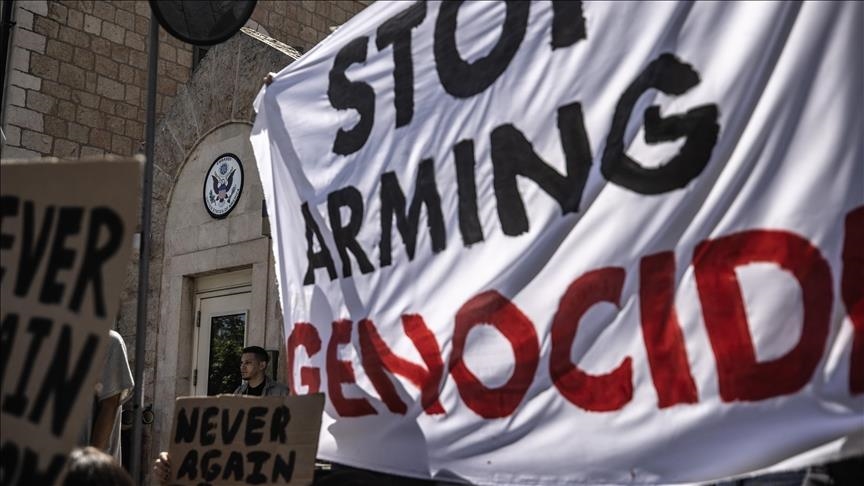
US Doctors Tell Biden To Stop Arming Genocide

About a half-dozen doctors who recently returned from providing medical care in the devastated Gaza Strip urged the Biden administration Tuesday to impose an immediate arms embargo on Israel, saying that without one, the US remains complicit in the bloodshed that has devastated the coastal enclave.

Speaking on the sidelines of the ongoing Democratic National Convention in Chicago, Illinois, Dr. Tammy Abughanim said the result of Israel’s over 10-month war “has been to make life literally impossible for a civilian in Gaza right now.”

“When I say we cannot afford one more day of this, and when they tell me we cannot afford one more day of this, it is quite literally true,” Abughanim said, recalling conversations she held with Gazans during her recent trip there.

“When we press the Biden administration for an arms embargo as physicians, what we are saying is we cannot do our jobs as bombs are falling. We cannot do our jobs as Israeli snipers target children and civilians, as Israeli quadcopters descend on groups of civilians. We cannot do our jobs, because Israel has made our jobs impossible, and Israel has made our jobs impossible with the direct support of the United States,” the Chicago-area emergency medicine specialist added.

The sentiment was repeatedly echoed by Abughanim’s fellow physicians, who described horrors whose extent they acknowledged could not be fully conveyed.

“I was in Gaza from March 25 to April 8 and saw firsthand genocidal violence. I saw children’s heads smashed to pieces by the bullets that we paid for — not once, not twice, but quite literally, every single day. I saw the outrageous and systematic destruction of the entire city of Khan Younis. If there was a single room in that city with four walls left, I can’t tell you where it is, ” said Dr. Feroze Sidhwa.

“I saw mothers mix what little formula they could find with poisoned water to feed their newborns, because they were so malnourished themselves that they could not breastfeed. I saw children who cried out, not because of pain, but because they wished they had died along with their families instead of being burdened with the memory of their siblings and their parents charred and mutilated beyond recognition. And all, of course, with American weapons,” he added.

Sidhwa stressed that imposing an arms embargo on Israel “is not a radical idea” and read aloud a letter passed on by Mark Perlmutter, a Jewish-American doctor who accompanied him on a recent trip to Gaza but who could not attend Tuesday’s press conference.

In it, Sidhwa’s colleague recalls the “cruelty being visited upon the people of Gaza,” particularly its children, saying it “remains incomprehensible to me” how it could come to pass.

“Never before have I seen a small child shot in the head and then in the chest, and I could never have imagined that I would see two such cases in less than two weeks. Never before have I seen a dozen small children screaming in pain and terror, crowded into a trauma base smaller than my living room, their burning flesh filling the space so aggressively that my eyes started to burn. I could never have imagined what a hospital looks like when it becomes a displaced person’s camp,” he said.

“Worst of all, I could never have imagined that my government would be supplying the weapons and funding that keeps this horrifying slaughter going — not for one week, not for one month, but for nearly an entire year now,” he added.

“For the good of the Palestinians, for the good of the United States, for the good of Israel, for the good of Judaism, and indeed, for the good of international law and all of humanity, please stop arming Israel.”

Israel’s war on the besieged Gaza Strip has killed over 40,000 Palestinians, including tens of thousands of women and children, and displaced 2 million others, leaving them exposed to famine and disease amid acute shortages of daily necessities and medical supplies.

Multiple doctors who spoke at Tuesday’s press conference maintained that it is Israel’s restrictions that are preventing them and their colleagues from obtaining badly-needed medicines, including pain killers to dull the suffering of the wounded according to Anadolu, the Turkish news agency.

Continue reading
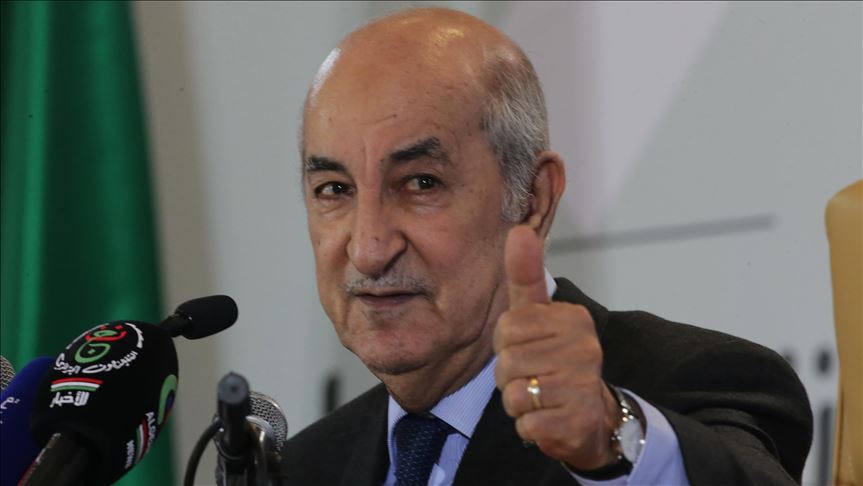
Algerian President Causes Uproar in Israel

Algerian President Abdelmadjid Tebboune’s statement, a candidate for the presidential elections on 7 September, that his country’s army is “ready as soon as the borders between Egypt and the Gaza Strip are opened” is causing a great uproar in Israel. The Algerian president demanded his army be allowed to reach Gaza to build three hospitals there.

Israeli analyst in the Israeli Yedioth Ahronoth newspaper Lior Ben Ari said Tebboune’s words, which began with “I swear to you there is something we can do”, were considered by Tel Aviv as a direct threat and sparked reactions on the social media networks, in Israel and Arab countries.

Tebboune referred to the war between Israel and Hamas, and said in the speech he wanted to send aid to the Gaza Strip.

“We will not abandon Palestine in general nor Gaza in particular,” Tebboune said in a speech on the 4th day of his election campaign, in the city of Constantine.

“I swear to God, if they help us and open the borders between Egypt and Gaza… there is something we can do,” he added.

He explained if the borders are opened and our trucks are allowed to enter, we will build three hospitals in 20 days, send hundreds of doctors there and help restore what the Zionists destroyed.

Yedioth Ahronoth said that the Algerian president’s words, which were sometimes taken out of context, were considered a threat to Israel and sparked widespread reactions in the Israel and the Arab world.

The London-based Arabic-language newspaper Asharq Al-Awsat covered the storm his words caused on social media, noting Tebboune’s statements suggested he wanted to send his army to fight Israel.

Many Internet users commented on the president’s speech, which was about transferring aid to the people of Gaza, and claimed he was calling on Egypt to “open the borders.” Other surfers linked his words to the presidential elections in Algeria, and others criticized the interpretations of what he said.

Egyptian journalist Ahmed Moussa wrote: “I listened several times to what Tebboune said…he was not talking about sending the Algerian army to war against Israel, but about opening the borders between Egypt and the Gaza Strip to transfer doctors to treat the wounded.”

Other surfers published Tebboune’s words, and called on Arab armies to move urgently to provide aid to the Palestinians.

While Dr. Tarek Fahmy, a lecturer in political science in Cairo, said the timing of the statement is linked to “using the Palestinian issue in the electoral process in Algeria.”

He explained the Palestine has its impact on the Algerian voter who cares about the issue “like any Arab citizen,” stressing Algeria’s attempt to play a role in the Gaza Strip may face technical obstacles, such as a lack of communication with Israel.

Continue reading
Israeli Army in Fix Because of Soldiers Shortage

The Israeli army is so short up for manpower it’s calling up its reserve soldiers who were previously exempted from service.

This order is coming from the Israeli Defence Minister Yoav Gallant who have cancelled all previous exemtions from the Israeli army due to the shortage in the number of soldiers.

The army and the Minister’s office have confirmed this step comes “after an assessment of the situation and the scope of activity of regular and reserve forces, and as part of the process that the army is planning to increase the number of individuals serving in it.”

The army is facing an acute shortage of 50,000 soldiers as the fighting in Gaza continues, and the confrontation with Hezbollah in Lebanon  could expand into a full-scale war.

Former head of the Israeli army’s Soldiers’ Complaints Division, Yitzhak Brick said the army is facing a catastrophic situation.

The retired general blamed Chief of Staff Herzi Halevi for not planning to make up for the shortage in ground forces after they were reduced by six divisions over the past 20 years.

He said this “makes it impossible to win in the Gaza Strip, let alone win a regional war in which fighting must be fought in multiple arenas at the same time.”

The Israeli government has ordered the immediate recruitment of 3,000 from the ultra-Orthodox section. It says this would plug the gap at this initial stage. Galant however wants to recruit an additional 10,000 soldiers immediately to fill some of the army’s manpower shortage according to Jo24.

Continue reading