Cairo Unveils Plan to Rebuild Gaza Without Displacement

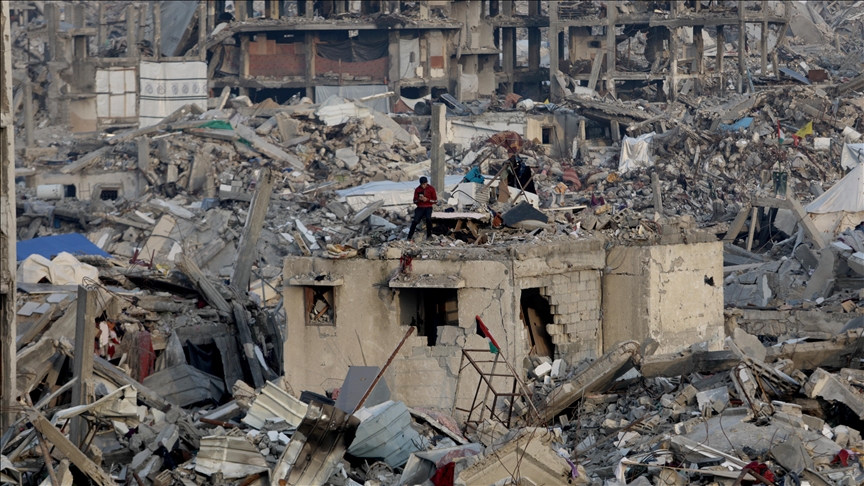
Egyptian President Abdel Fattah al-Sisi announced a comprehensive plan on Tuesday to rebuild the Gaza Strip without displacing its inhabitants, urging regional and international backing.

Addressing an emergency Arab summit in the New Administrative Capital east of Cairo, Sisi said that Egypt had worked with Palestine and international institutions to develop the plan and called on Arab leaders to endorse it. He also proposed a dedicated fund for its implementation.

The Egyptian leader emphasized that the initiative aims to “preserve the Palestinian people’s right to rebuild their homeland and remain on their land.”

Egypt “will not partake in any injustice against the Palestinian people,” Sisi stressed.

Additionally, he announced an international conference for the Gaza reconstruction set for April and revealed that Egypt and Palestine had formed an independent administration committee to temporarily manage the enclave, monitor the flow of humanitarian aid, and pave the way for the Palestinian Authority’s return to the territory.

Sisi condemned Israel’s war on Gaza, stating that it sought to “empty the strip of its people,” and described the onslaught as a “stain on humanity.”

“We hope that US President (Donald Trump)’s efforts to maintain the ceasefire in Gaza will continue,” he said.

Reaffirming Egypt’s stance on the need for a permanent solution, Sisi asserted that true peace in the region requires a just settlement of the Israeli-Palestinian conflict.

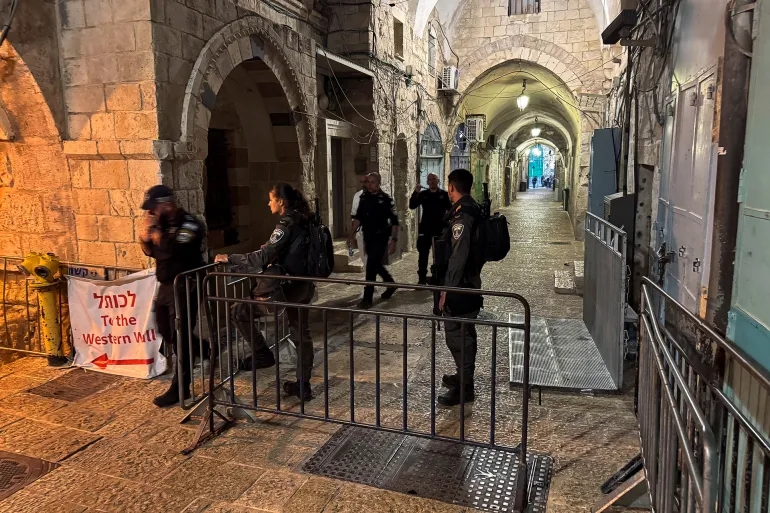
“Jerusalem is not just a city, but a symbol of our identity,” he stressed.

Continue reading
Israel Starves Gaza For Politics

Israel’s move to prevent all aid from entering the Gaza Strip after Hamas reportedly refused to accept a plan to continue with phase one of the fragile ceasefire has had an immediate impact, including a 100-fold increase in the price of flour and vegetables.

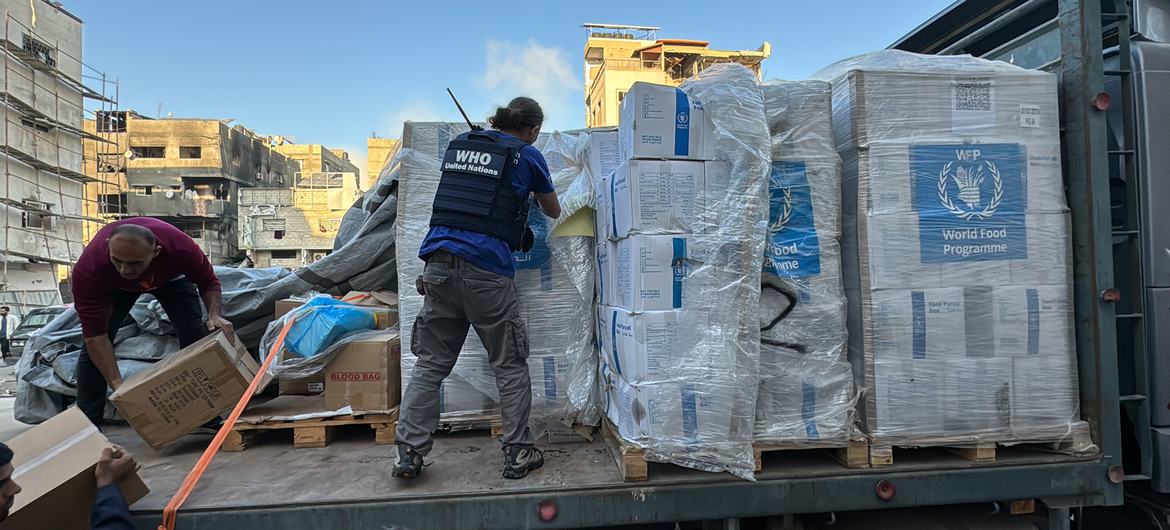
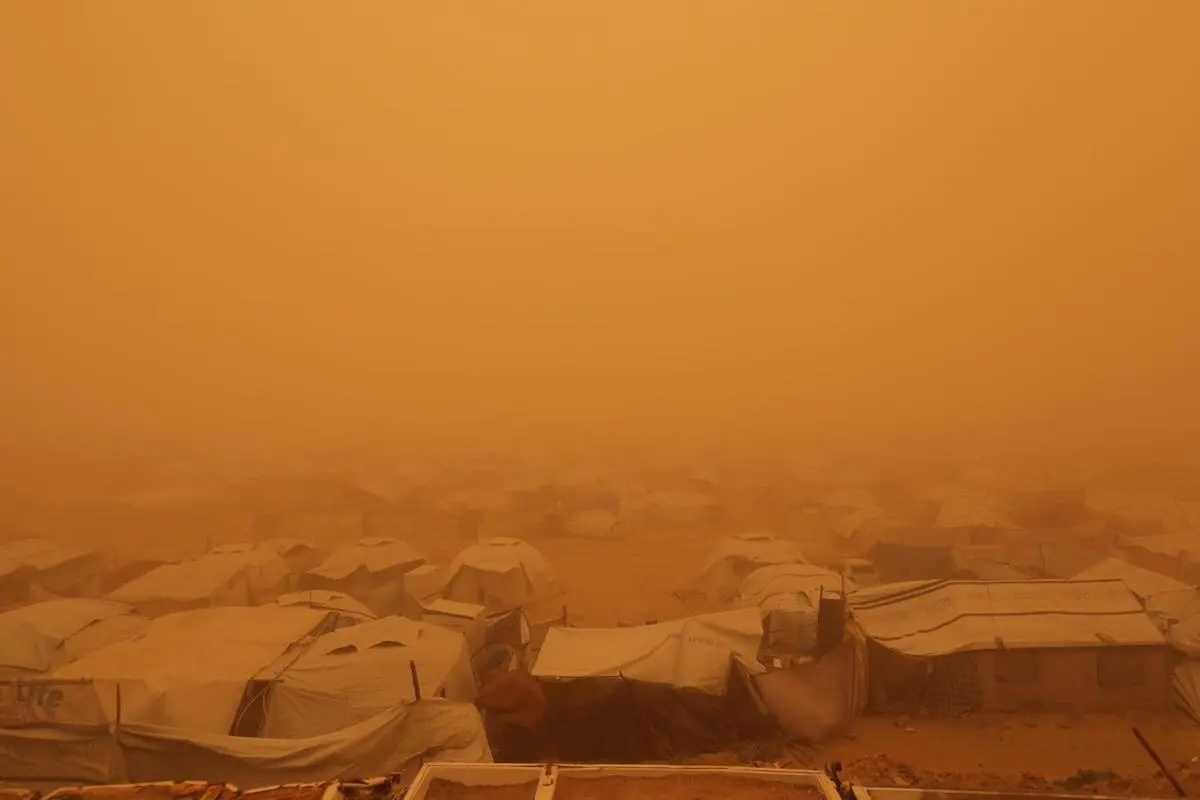
That’s according to the UN aid coordination office, OCHA, which said on Monday that the Kerem Shalom, Erez and Zikim crossing closures means that vital humanitarian assistance, including thousands of tents, can’t be delivered to civilians in need.

Phase one of the ceasefire mediated by Egypt, Qatar and the US expired on Saturday, with Hamas calling on Israel to move on to the next agreed phase – but Israel is calling instead for a continuation of phase one through the end of the Holy Month of Ramadan in line with a proposal from the top US envoy to the region.

January’s ceasefire deal has seen the release of 33 Israeli hostages who’ve been held captive since the 7 October terror attacks, with around 1,900 Palestinian prisoners exchanged.

“The ceasefire has provided the opportunity to distribute food, to distribute water, as well as shelter assistance and medical aid, allowing nearly everyone in Gaza to receive food parcels,” said UN Spokesperson Stéphane Dujarric, briefing reporters in New York.

“Our humanitarian partners tell us that following the closure of the crossings into Gaza yesterday, flour and vegetable prices increased more than 100-fold. Partners are currently assessing the stocks that are currently available,” he added.

Ceasefire, ‘a critical lifeline’: UNICEF    

The UN children’s agency, UNICEFwarned that the stoppage of aid deliveries into Gaza will quickly lead to devastating consequences for children and families who are simply struggling to survive.

“The aid restrictions announced yesterday will severely compromise lifesaving operations for civilians,” said Edouard Beigbeder, UNICEF Regional Director for the Middle East. “It is imperative that the ceasefire – a critical lifeline for children – remains in place, and that aid is allowed to flow freely so we can continue to scale up the humanitarian response.”

The agency said that between 19 January and last Friday, almost 1,000 UNICEF trucks had crossed into the enclave carrying clean water, medical supplies, vaccines, therapeutic food and other materials.

Since the start of the ceasefire on 19 January, UNICEF and partners have provided warm clothing to 150,000 children in Gaza and increased daily water distribution for nearly half a million people living in more remote areas, Mr. Dujarric said.

Nearly 250,000 children and thousands of pregnant and breast-feeding mothers have received nutritional supplements since the ceasefire took effect.

Over the past two weeks, in Rafah, Khan Younis and Deir al Balah, aid partners have distributed vegetable seed kits for gardening to try and encourage more diverse diets.

Around 1,500 water distribution points are now operating across Gaza – double the number operational at the start of the ceasefire. “However, partners tell us that pipes and spare parts for maintenance are urgently needed,” said Mr. Dujarric.

Classrooms open

Across Gaza, more than 100 public schools have reopened, allowing around 100,000 students back into the classroom.

In Gaza City and North Gaza, UN partners will use tents to ensure children can continue learning, with some wood pallets recycled into school furniture.

OCHA teams visited a displacement site in Khan Younis on Monday where around 1,200 people are staying. These communities have not been allowed to return to their homes, which are located in the buffer zone.

OCHA is working to mobilise assistance to meet their needs.

Meanwhile in the occupied West Bank, OCHA reports that ongoing operation by Israeli forces continues to drive humanitarian needs in northern areas. Humanitarian partners continue to face movement restrictions.

UN News

Continue reading
Israel’s Aid Blockage…Collective Punishment

Israel’s decision to block aid to over two million Palestinians in the Gaza Strip as Ramadan begins is a reckless act of collective punishment, explicitly prohibited under international humanitarian law and as Oxfam stated.

Humanitarian aid is not a bargaining chip for applying pressure on parties, but a fundamental right of civilians experiencing urgent need in challenging and life-threatening circumstances.

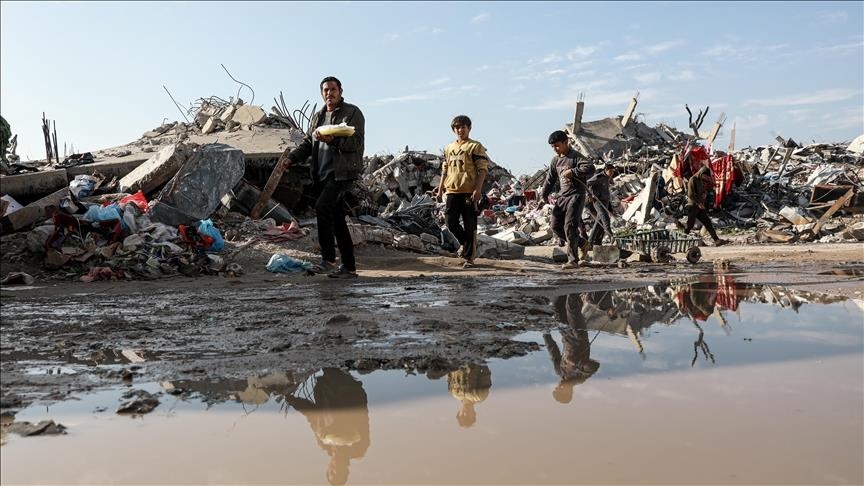
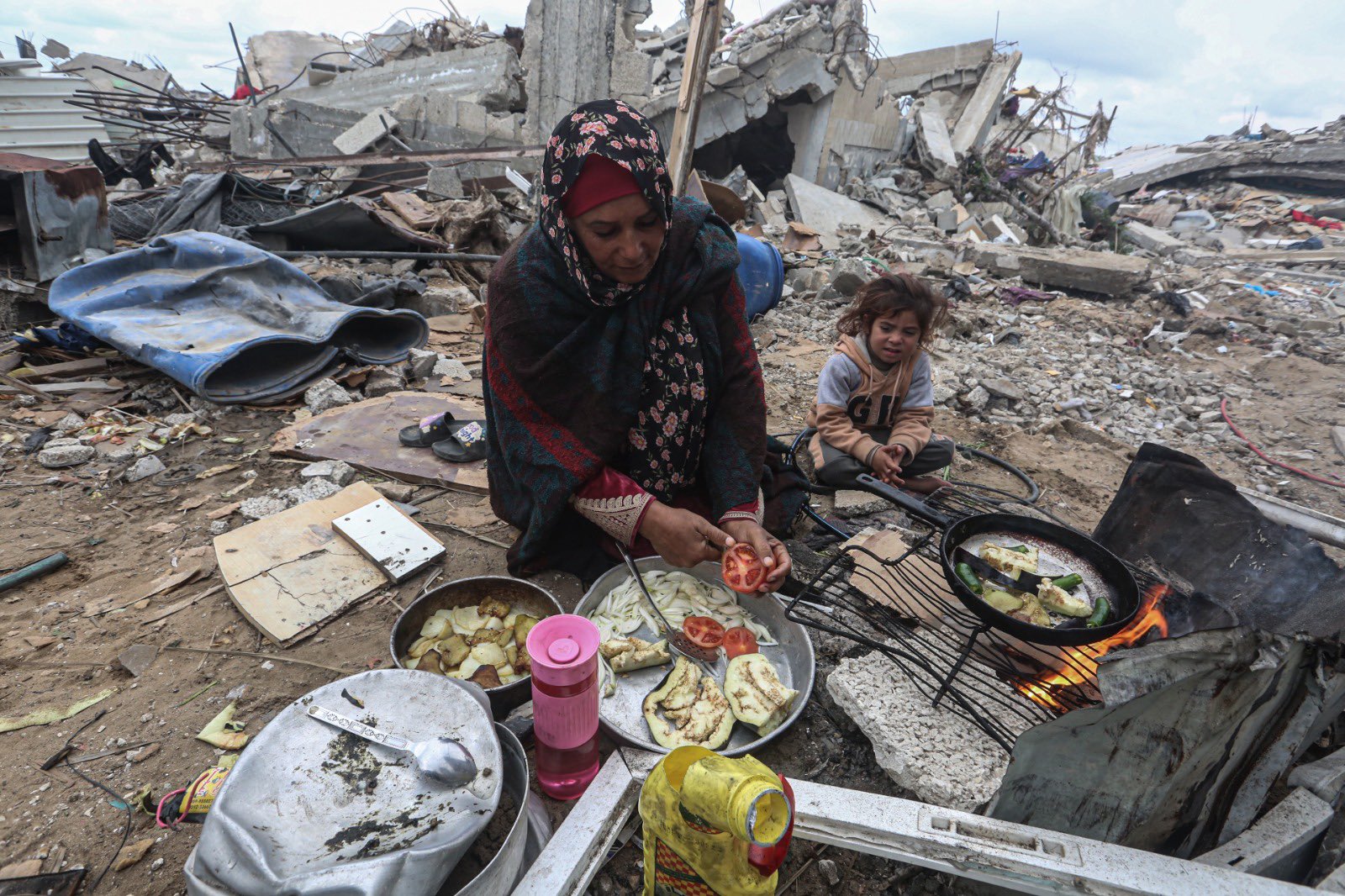
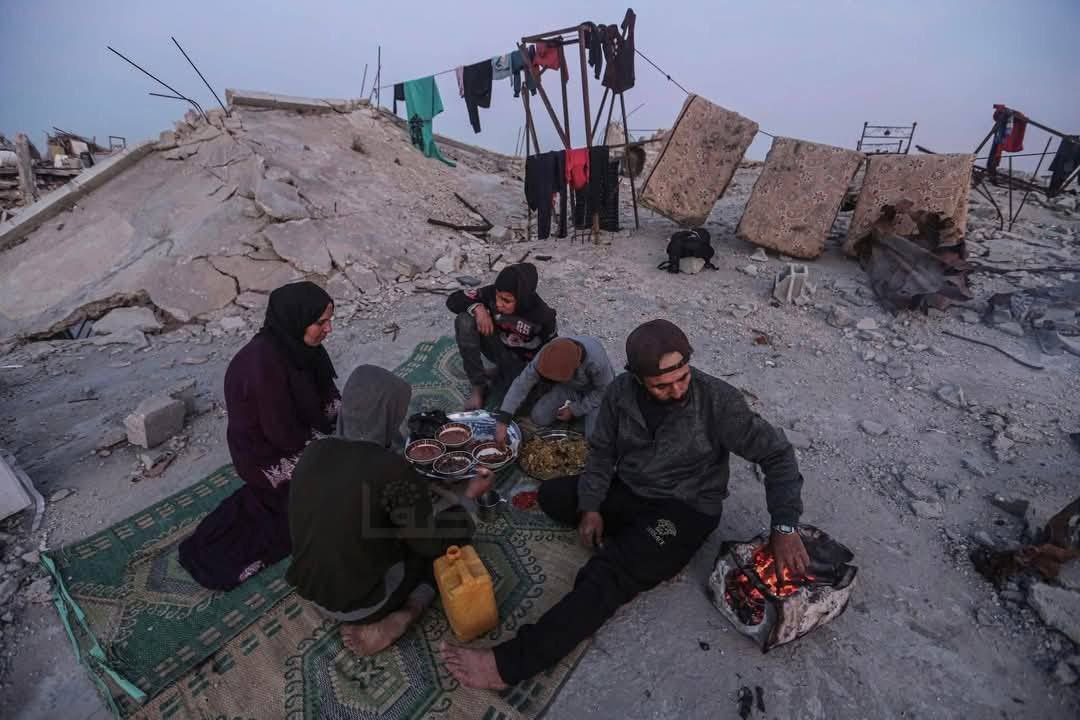
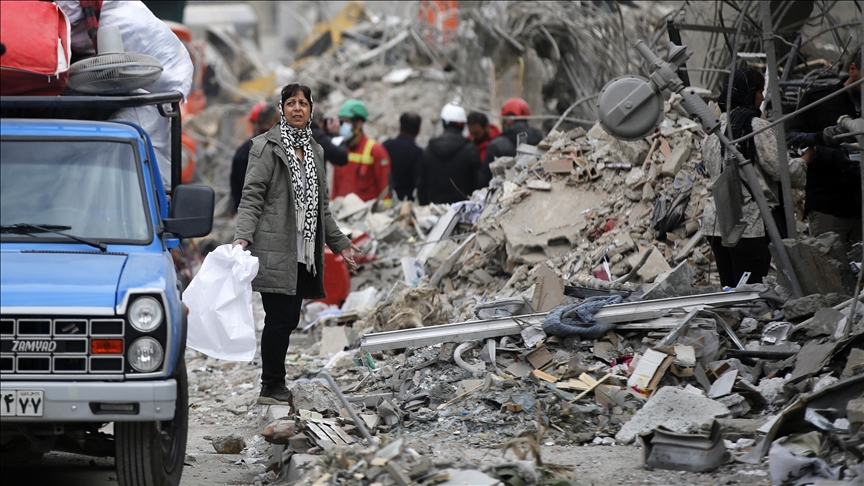
When our teams assessed the conditions in Gaza in the wake of the January 19th announcement of a temporary ceasefire, they encountered apocalyptic scenes of complete destruction and famine-like conditions.

People in Gaza need everything: lifesaving water, food, sanitation and other necessities, as well as equipment critical for the restoration of water and electricity. The goods that were able to enter during the weeks of ceasefire have brought some relief, but remain a drop in the ocean.

The international community must apply immediate pressure on Israel to ensure vital aid urgently gets into Gaza. The International Court of Justice has ordered Israel to ensure aid deliveries at scale throughout Gaza.

Reliefweb

Continue reading
Al-Azhar Denounces Aid Stoppage to Gaza

Al-Azhar, Egypt’s prestigious Islamic institution, denounced Israel on Monday for barring humanitarian aid from entering Gaza, labeling the move a “crime of starving innocent children, women and men” that disregards the sanctity of the Muslim fasting month of Ramadan.

The statement, posted on X, condemned Israel’s “cowardly decision” to halt aid convoys as a flagrant violation of human values.

The statement emphasized that Israel, in perpetrating this act, “deprives innocent civilians of food, showing a complete disregard for mercy and human values,” particularly during Ramadan according to Anadolu.

The institution called on Islamic governments to utilize their diplomatic and political tools to break the oppressive siege on Gaza’s hungry population during the holy month.

It warned that the blockade is intended to force Palestinians to choose between dying of hunger or fleeing Gaza, giving up their land to the occupying entity.

Al-Azhar urged Islamic countries and the international community to demand the immediate opening of border crossings, facilitate the entry of aid convoys and hold Israel accountable for its crimes.

The statement called for war criminals responsible for some of the most horrific acts in modern history to face trial and justice.

The Israeli government halted the entry of humanitarian aid into Gaza on Sunday as Prime Minister Benjamin Netanyahu refused to start negotiations on the second phase of a ceasefire deal between Israel and the Palestinian group Hamas.

The agreement has halted Israel’s genocidal war on Gaza, which has killed nearly 48,400 people, mostly women and children, and left the enclave in ruins.

Continue reading
Israel Threatens to Resume War…

Israel has threatened to resume its genocide war in Gaza, setting a deadline of 10 days for Hamas to release the remaining captives, a move that violates the ceasefire agreement.

Israel’s Channel 12, citing an Israeli official, said on Monday that the occupation government has set a deadline 10 days from now for Hamas to release the remaining captives in Gaza before a return to war.

“We are currently at a dead end regarding the deal negotiations,” the official told Channel 12.

At the parliament on Monday, Israeli Prime Minister Benjamin Netanyahu threatened, “I tell Hamas: If you do not release our hostages, there will be consequences that you cannot imagine.”

Defence Minister Israel Katz later said if Hamas did not free the captives, “the gates of Gaza will be locked, and the gates of hell will open”.

“We will return to fighting, and they will face the (army) with forces and methods they have never encountered—until a decisive victory,” he said in a statement.

Israel Violates Ceasefire

Israel has imposed a block on all aid entering Gaza following the end of the first phase of the ceasefire deal. Netanyahu’s office issued a statement on Sunday morning confirming the decision.

The move, which coincides with the holy month of Ramadan, came after Hamas refused to accept the extension of the first phase of the ceasefire deal.

Israel said that it had accepted a last-minute proposal put on the table by the US president’s special envoy for the Middle East, Steve Witkoff, for a temporary ceasefire over Ramadan and Passover.

According to Israel, the proposal also outlined the release of all captives still in Gaza in two stages, with the second stage contingent on negotiating a permanent ceasefire.

“With the end of phase one of the hostage deal, and in light of Hamas’ refusal to accept the [US envoy Steve] Witkoff outline for continuing the talks – to which Israel agreed, Prime Minister Netanyahu has decided that starting this morning all entry of goods and supplies into the Gaza Strip will cease,” the statement said.

“Israel will not allow a ceasefire without the release of our hostages. If Hamas continues its refusal, there will be further consequences.”

Hamas refused to extend it, noting it will only release captives in phases, per the ceasefire agreement, which Israel is now refusing to continue.

It said it would only accept moving to the second stage, which was supposed to guarantee the definitive end of the assault, an Israeli withdrawal from Gaza, and the release of remaining captives.

Hamas also slammed Israel’s decision to block the entry of aid and adopt the US proposal. In a statement, the movement said this “is a blatant attempt to renege on the agreement and evade negotiations for its second phase.”

“Netanyahu’s decision to block the entry of all humanitarian aid into Gaza is a cheap blackmail and a war crime in an appalling violation of the ceasefire deal. Mediators and the international community must act to place pressure on the occupation and put an end to its punitive and immoral measures against more than two million people in the Gaza Strip.”

Hamas stated that Israel has continued to violate the ceasefire since it took effect, which has resulted in the killing of over 100 people in Gaza and the disruption of the humanitarian protocol. This includes blocking the entry of sheltering and relief aid, further aggravating the humanitarian catastrophe in Gaza. According to Gaza’s Government Media Office, Israel has committed around 962 violations of the ceasefire agreement according to the Quds News Network.

Continue reading