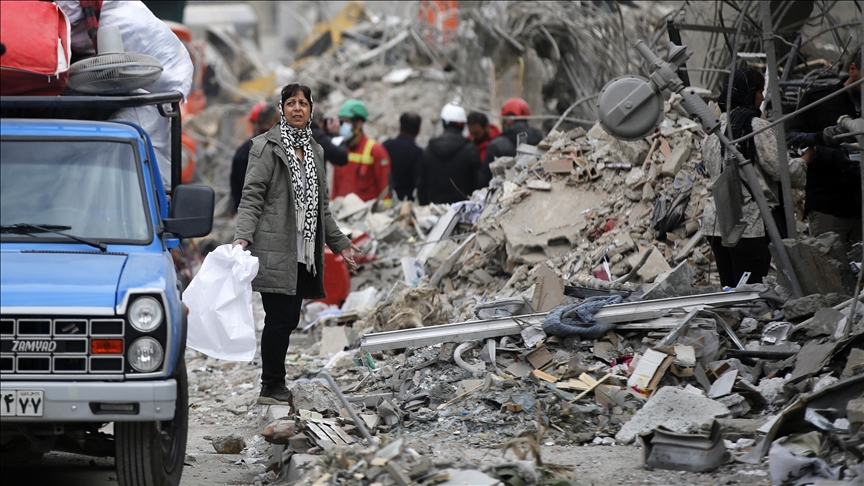
Thousands Rally in Amman For Gaza

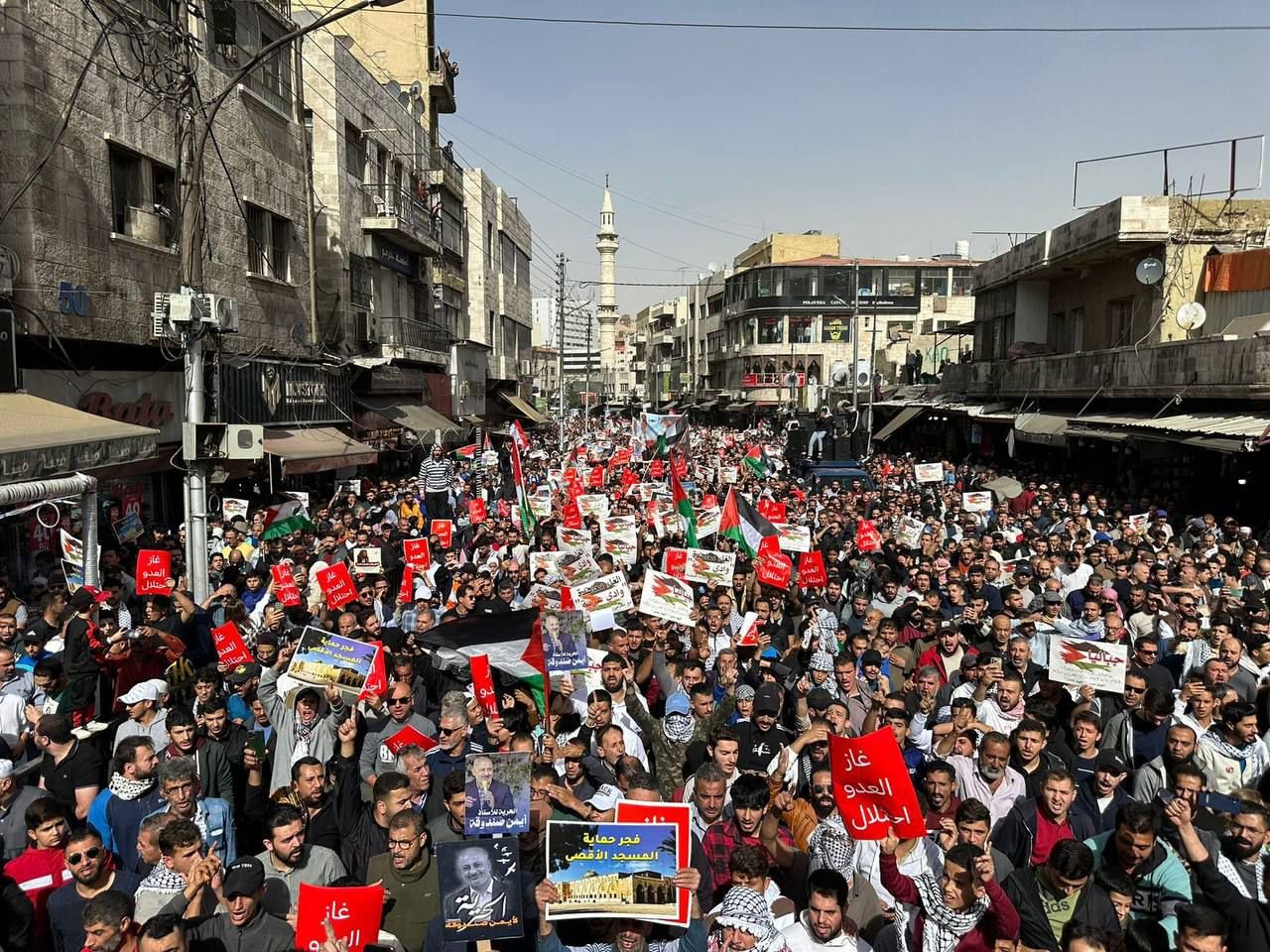
Thousands held a rally, Friday in downtown Amman, Jordan, in solidarity with the people of Gaza and Lebanon in the face of the ongoing Israeli aggression.

The great march started after the Friday noon prayers from the famous Al-Husseini Mosque under the slogan “Cancel the shameful Wadi Araba Treaty”.

Participants denounced the genocide the Gazans are being subjected by the Israeli army with unlimited American and Western support whilst denouncing the international and Arab silence despite the massacres against the Palestinians in the occupied West Bank and Gaza Strip.

The participants called on the government and Arab countries to take the necessary measures to stop the genocide and stop all forms of normalization with the Israeli army and called on Jordan government to cancel the 1994 Wadi Araba Agreement and the latest gas agreement.

The participants affirmed their support for the Palestinian resistance factions, led by the Islamic Resistance Movement (Hamas), noting the resistance constitutes the first line of defense against the Zionist expansionist project that targets Jordan as it targets Palestine according to Jordan24.

Continue reading
Nervous Mideast Awaits: Gaza, Lebanon and Possibly Iran

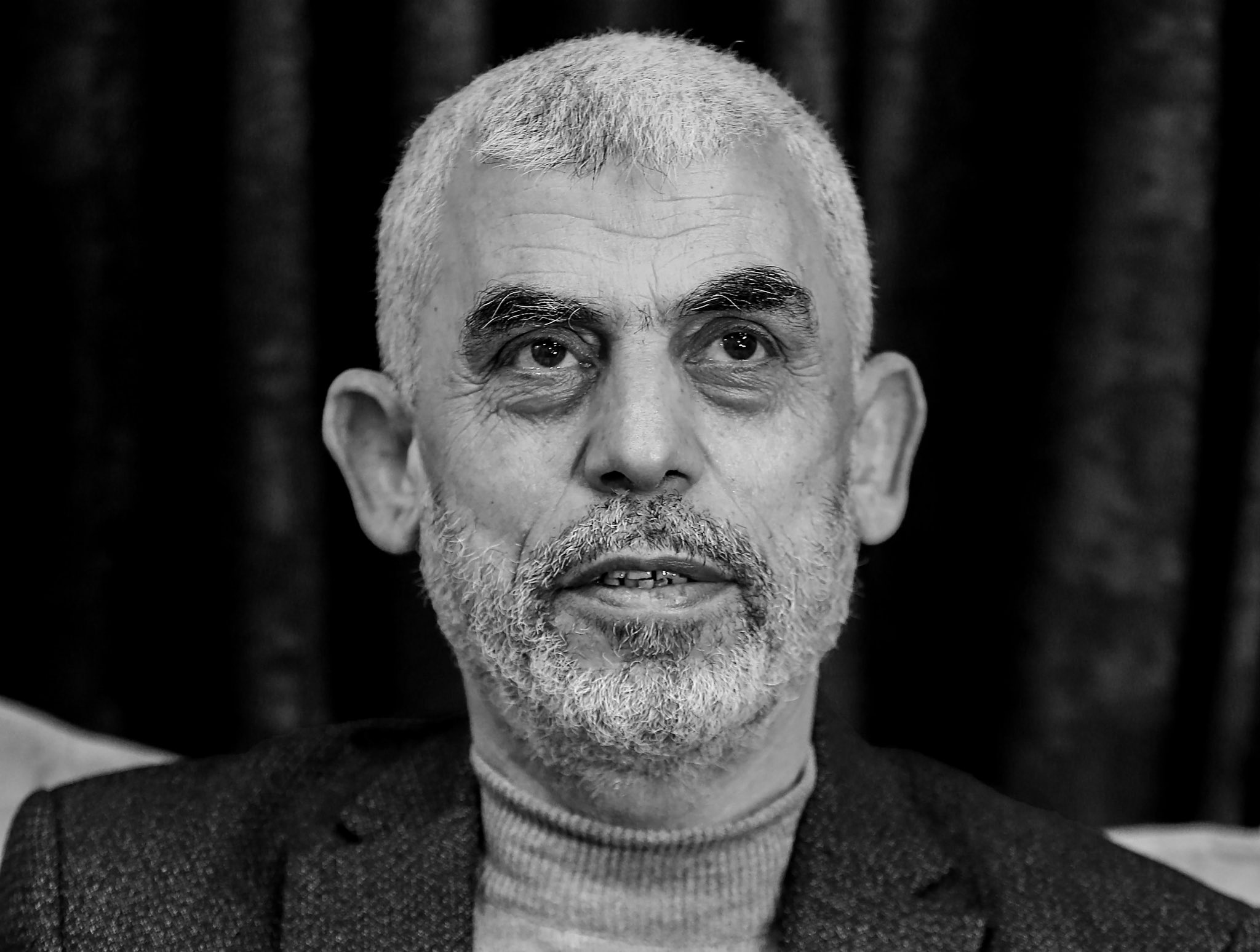
In recent days, the region has witnessed significant events, the most notable of which was the assassination of Yahya Sinwar, the de facto leader of Hamas. This event, heavily relied upon by Israel, came at a time when the military focus had already shifted to the Lebanese front. This shift has kept the war atmosphere ablaze, making it difficult for the international community to put more pressure on Netanyahu to end the war in Gaza.

Meanwhile, Israel will likely manoeuvre by appearing to offer concessions in humanitarian aid and relief efforts, while in reality escalating its pressure on Hamas and seeking to take advantage of the uncertainty within the movement following Sinwar’s death. This situation may force Hamas to urgently craft a new political strategy for the coming phase, especially as its upcoming political battle promises to be one of its most complex challenges.

On the Lebanese front, Hizbollah managed to deliver strikes inside Israel in recent days, the most prominent of which was the drone attack targeting Israeli Prime Minister Benjamin Netanyahu’s residence. Although the attack did not cause significant damage, its symbolism was considerable. Netanyahu quickly seized the opportunity to shift the narrative in his favour, moving from a position of blame in the eyes of some allies to portraying himself as a victim. This allowed him to launch a new campaign of mobilization. Through this effort, Netanyahu aims to gain a green light for a series of operations that could go beyond military and security targets to also include political objectives in Lebanon and Iran, with potential extensions into Syria and Iraq.

At the same time, Israel has intensified its attacks on Hizbollah across various regions of Lebanon, targeting individuals and locations, particularly in Beirut’s southern suburbs. It is clear that Israel aims to dismantle the urban infrastructure of this area while also contributing to ongoing demographic displacement efforts. The broader goal appears to be turning the southern suburbs into an uninhabitable zone, displacing its residents. Ultimately, Israel seeks to reshape Lebanon’s security landscape by creating a deep buffer zone in the south, ensuring a different form of international presence that would replace the current UNIFIL forces, and stripping Hezbollah of its social strongholds in the future.

As Israel works to contain the surrounding fronts, from Gaza to the West Bank, it continues to escalate its strikes against Lebanon and maintains Syria under constant attack to disrupt the presence of Iran and Hezbollah and cut off potential logistical supplies. These actions indicate that Israel is paving the way to target Iran’s Revolutionary Guard Corps (IRGC).

At the same time, Yemen and Iraq remain potential sources of threat. The United States’ robust engagement in targeting the Houthis with specialized operations, particularly using B-2 bombers, suggests that Iraq might be the front activated to distract Israel and create a security crisis within its borders. This aligns with recent operations from Lebanon that aim to create internal security turmoil in Israel, seeking to disrupt daily life. These efforts are expected to escalate through multiple operations using diverse methods, as has already been observed in recent weeks.

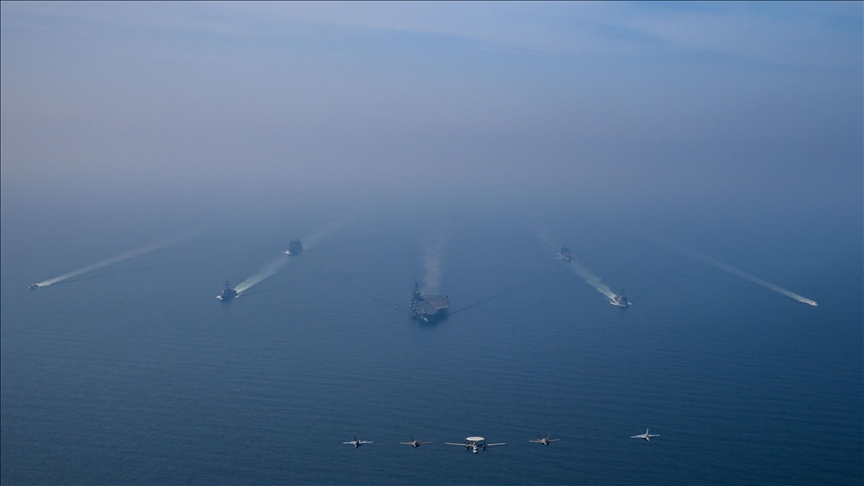
The intensification of attacks on Lebanon, the isolation of Syria, and the significant US military buildup, including the deployment of the “THAAD” missile defence systems to Israel, all fall under the broader preparations for what could come after an Israeli strike on Iran. This further suggests that the groundwork has been laid for a significant and targeted attack on the IRGC.

Sensing this looming threat, Iran’s foreign minister has embarked on a wide-reaching diplomatic campaign across the region, though it appears that none of its objectives have been met. The campaign’s primary goal was to prevent military action against Iran while highlighting the dangers of entering an open confrontation with Iran and the security risks it would pose across the region.

The region’s entry into a phase of direct targeting of Iran opens the door to new repercussions. Large swaths of geography could face waves of violence and attacks, particularly given the possibility that various groups and cells may act independently. This raises the level of security threats across much of the region, including areas that are not currently involved in the active conflict zones.

Dr Amer Al Sabaileh, a professor in Jordan University, is a columnist for the Jordan Times

Continue reading
Al Duwairi: Jabalia Battalion Surpassed Itself

Military expert Maj-Gen Fayez Al-Duwairi said that the killing of the commander of the Israeli army’s 401st Brigade in north Gaza indicates the nature of the resistance, praising the capabilities of the Jabalia camp battalion of Qassam Brigades, the Hamas military wing.

Al-Duwairi explained in his analysis of the military scene in Gaza, the commander’s killing was expected as soon as he reached the outskirts of Jabalia, considering the value of the event lies in his military rank targeted by the resistance.

The Israeli occupation army announced the killing of the commander of the 401st Brigade, Colonel Ihsan Daqsa, and the serious injury of another officer in battles in Jabalia. The 401st Brigade is part of the 162nd Division, which is an armored brigade.

Yedioth Ahronoth newspaper reported that Colonel Daqsa was killed and another officer was seriously injured in a battle inside the Jabalia camp, after boarding a tank that had an explosive device inside it.

Journalist Mohammed Khairi quoted Israeli sources confirming that Daqsa was killed after he got off his tank with other officers and walked 20 meters, where an explosive device that had been planted in the area exploded.

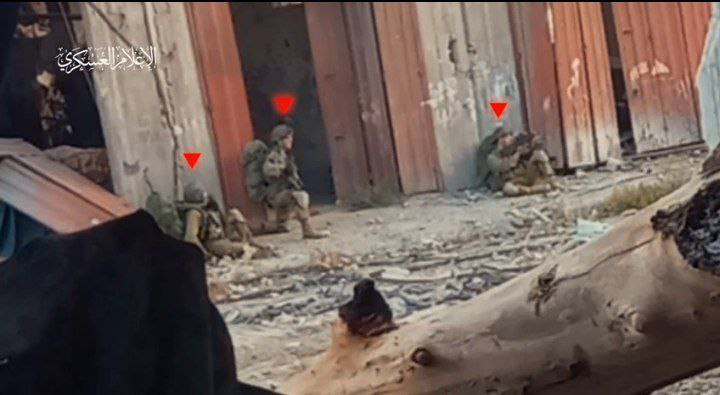
On Sunday, the Qassam Brigades broadcast scenes of its fighters targeting Israeli military vehicles with explosive devices and anti-tank shells, in addition to fierce clashes with Israeli special forces from short distances.

Al-Duwairi believes that no ordinary person can wage such a defensive battle as that being done by resistance fighters in Jabalia because of its “complications, extermination and displacement.” He stressed the resistance has “exceeded” itself.

Under these circumstances, the military expert says that even “the American special forces cannot fight at the level of the Jabalia camp battalion of  the Qassam Brigades.”

Al-Duwairi explained the resistance is “decentralized” to increase its maneuverability, adding this is unlike previous ground battles whilst analyzing the Jabalia Battalion divided itself into cluster cells, each of 3 to 5 fighters, where its commander chooses the targets based on field data.

He explained the brigade commander came to the area with a group of officers after the military operations in Jabalia faltered despite 17 days after their launch.

He expected the deputy commander of the slain brigade to be chosen to lead the 401st Brigade “if he is not injured”, as a search is underway for another commander, indicating that the deputy commander of the brigade is usually aware of 85% of the field reality according to Al Jazeera.

Continue reading
Analysis – Israeli Army Can Only Move at Night

Military and strategic expert, Maj-Gen Fayez Al-Duwairi said the Israeli occupation army is not able to advance in northern Gaza Strip except at night, indicating this is creating new challenges for the Palestinian resistance.

Differences this time

Al-Duwairi explained the differences between the current Israeli military operation here, and its previous operations, highlighting the new tactics followed by the occupation army and the challenges posed to Palestinian resistance groups.

He pointed out while there are ongoing battles and heavy Israeli losses including the destruction of vehicles and the killing of their soldiers, he believes the occupation’s success in isolating the Jabalia camp from all four sides has created a different reality this time around.

Moving at night

But he stressed most of the occupation’s main advances take place at night, attributing this fact to the resistance’s lack of night vision weapons with infrared rays. He pointed out this allows the occupation forces to set up barricades and achieve additional progress, even at limited distances ranging between 50 and 70 meters.

The military expert added this situation has created a new problem for the resistance it has not been exposed to before, despite its success in inflicting heavy losses on the occupation forces.

He drew attention to the seriousness of the humanitarian situation, noting there are about 150,000 Palestinians trapped in an area of ​​no more than two square kilometers, with Israeli tanks standing at the doors of shelters.

Human shields

Al-Duwairi believes it is as if the Israeli army is using civilians as human shields, making it difficult for resistance fighters to carry out their duties without risking harm to these civilians, considering this situation as one of the biggest challenges facing fighters, which they did not face in previous military incursions.

Commenting on the video shown by the Israeli army of the leader of the Islamic Resistance Movement (Hamas) Yahya Sinwar – which he said shows him with his family in a tunnel on the night of 7 October, 2023 – Al-Duwairi pointed out this video represents a “glorification of Sinwar and not condemnation of him.”

Not a 5-star hotel!

He explained the video shows the Hamas leader and the main planner of Operation Flood of Al-Aqsa living a difficult life inside the tunnels, not in a 5-star hotel, adding that he is the head of a family and is being directly targeted, and it is natural for him to seek to put his children in safety.

Al-Duwairi added the fact that Sinwar and his children lived for a year in the tunnels represents a sacrifice that must be appreciated, and he believed that the occupation’s attempt to use this video to condemn Sinwar may backfire, as he can be seen as a resistance leader who sacrifices his personal life for his cause.

Al-Duwairi believes that this video refutes the accusations directed at Sinwar and other Hamas leaders that they live a life of luxury, and that what appeared is that these leaders are not looking for a life of luxury, but seek to liberate the land, protect its honor, and are ready to die for the sake of God according to Al Jazeera.

Continue reading
Foreign Policy: Killing Sinwar Will Only Make Hamas More Fierce

A Foreign Policy magazine report confirmed that Israel’s killing of the head of the Hamas political bureau, Yahya Sinwar, will only make the movement more fierce. It added while it may seem like a great achievement today, with time, others will rise in his place – as is always the case – and the resistance will continue.

Middle East affairs specialist Stephen Cook, a columnist for the magazine, said that history shows that “it is impossible to eliminate a resistance movement” by killing its members, and the martyrdom of their leaders will not deter “those who support the cause”, but will lead them to redouble their efforts to achieve their goals.

The writer pointed out that resistance is not a “sterile” project, but rather “an essential part of the identity of those who belong to it,” and for this very reason Sinwar did not want to die a natural death but rather to be martyred by a tank shell on the battlefield, believing that this would strengthen the resistance.

The writer warned the Israelis not to be distracted by celebrating and distributing sweets from reality, and addressed them, asking: “Do you remember the most prominent founders of Hamas, Ahmed Yassin, or the Palestinian leader Khalil al-Wazir (Abu Jihad)? What about the former Secretary-General of Hezbollah, Abbas al-Moussawi, or the founder of the Islamic Jihad Movement, Fathi Shaqaqi? They were monsters to Israel in the past, and it was able to assassinate them all, but the resistance continued.”

He added: “As skilled as the Israelis are in avenging the blood of their dead, they have never succeeded in putting a real end to the resistance over the past decades, so what makes them think that killing Sinwar will lead to a different result this time?”

In the writer’s opinion, Israel’s killing of Sinwar will not break Hamas, but will ignite anger and a desire for revenge in the hearts of its members, just as the assassination of its founder, Hassan al-Banna, in 1949 did not weaken the Muslim Brotherhood.

Cook believes that Israel’s failed strategy of eliminating movements by targeting their leaders is similar to the mentality of the United States after the 11 September attacks. Although the US forces killed the founder of Al-Qaeda, Osama bin Laden, and his successor, Ayman al-Zawahiri, the organization survived, as did the Islamic State after the killing of its founder, Abu Bakr al-Baghdadi, and these organizations still pose a threat to the United States to this day according to JO24.

Continue reading