Adina Says Bibi’s Army Don’t Know Zilch About Gaza Tunnels

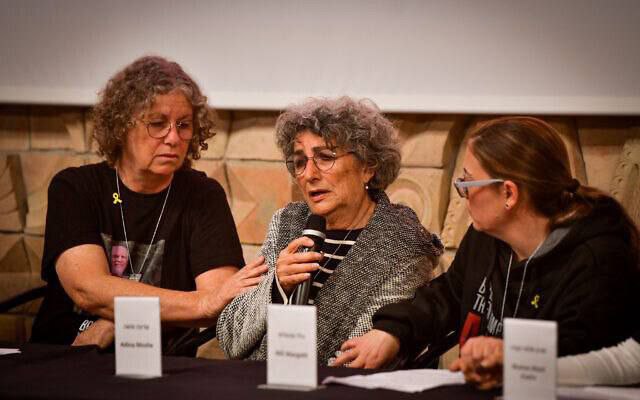
The Israeli media quoted Adina Moshe, a former Israeli captive held by Hamas in Gaza, as saying the Israeli internal security service (Shabak) asked her to draw a map of the tunnels in Gaza, “because they don’t know anything about them.”

Moshe, who was released in a previous exchange deal last November, told the Shabak investigator who visited her after her release that the tunnels in the Gaza Strip are “a huge, large labyrinth that extends underground throughout the Strip, and military pressure will not help bring back the prisoners.”

She said that Israeli Prime Minister Benjamin Netanyahu is lying, and that he and the army do not know anything about the tunnels of the Islamic Resistance Movement (Hamas) in the Gaza Strip.

During her speech at the protests demanding a prisoner exchange deal with Gaza, Moshe noted that the Shin Bet investigator asked her to explain what Hamas’s tunnels looked like, what their branches were and where they were located, which made it clear to her that the Israeli security services knew nothing about the tunnels.

Moshe told the investigator that the tunnels were “a huge, vast labyrinth that runs underground across the entire Strip. It’s not one tunnel, but a network of endless tunnels.”

When they asked her to draw the tunnels in Gaza, Moshe told the Shin Bet that she wasn’t a painter, which she considered further proof that they knew nothing about them.

The New York Times reported last week that the tunnels in Gaza were an underground nightmare for the Israeli army and the core of Hamas’s ability to survive.

According to the newspaper, Israeli intelligence officials estimate that there are about 160 kilometers of tunnels under Khan Yunis, the second largest city in southern Gaza according to JO24.

Continue reading
Ex-Shabak Chief: Netanyahu Must Stop The Gaza War Now

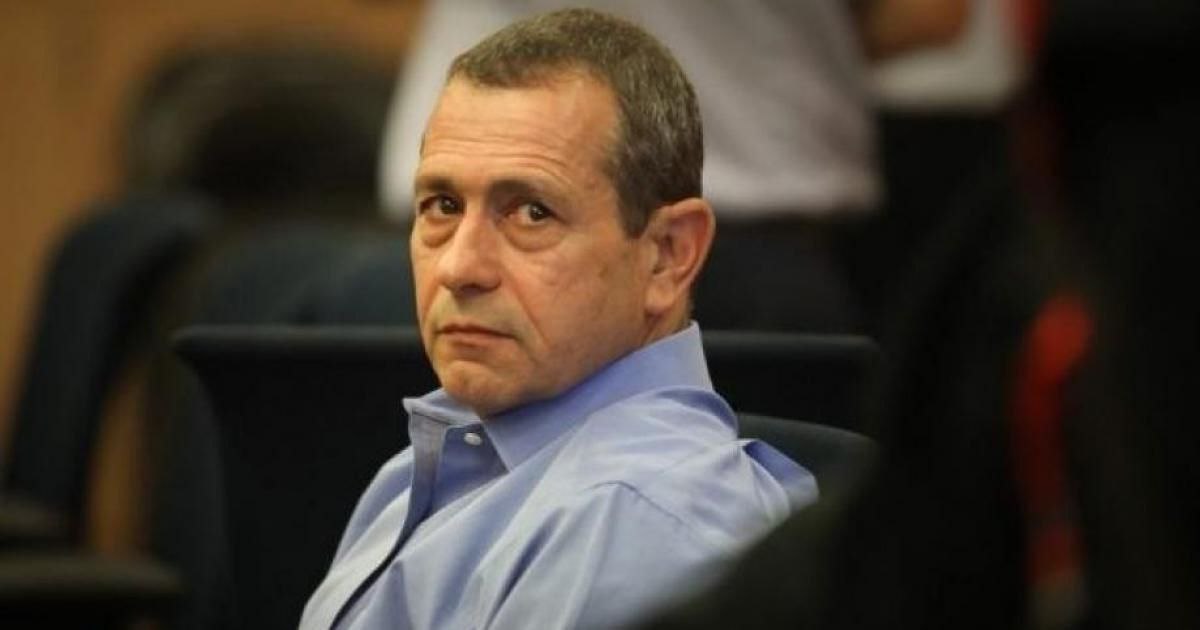
Nadav Argaman, ex-head of the Israeli General Security Service (Shabak), called for a immediate halt to the fighting in the Gaza Strip and an end to the war. He said Israel is not qualified for long wars.

Argaman added according to Israel’s Channel 12 the war should have ended a long time ago, stressing “the lives of those in captivity are more important than anything, and they must be returned despite the painful price we will pay in the deal.”

Argaman criticized Israeli Prime Minister Benjamin Netanyahu, saying what he is doing now, as per continuing the wara on Gaza, is for the benefit of the continuation of his rule and the preservation of his coalition government and not for the security of Israel as highlighted in Al Jazeera.

He added that Netanyahu’s insistence on remaining in the Philadelphi Corridor aims only to preserve his government. He explained there is no connection between the existing weapons in the Gaza Strip and the Philadelphi Corridor, and that it is Netanyahu who invented this.

The former Shabak chief stressed the majority of the weapons in Gaza are produced by Hamas itself, and that it has made these weapons through adapting so-called “dual-use materials” that enter through the Kerem Shalom crossing as fertilizers for agriculture.

“The Philadelphi axis is not important to the axis of evil, but to the axis of Ben-Gvir and Smotrich,” he maintained.

“Our priority should be to return the kidnapped soldiers, ceasefire in Gaza and shift our weight to the north and the West Bank,” Argaman said, adding, “We will deal with the risks that will arise as a result of such a deal later.”

He explained Israel must establish a regional and international alliance with the Americans to confront Iran, noting the only way to do so is to stop the war in the Gaza Strip according to Jo24.

Continue reading
Using Philadelphi to Block Hostages Deal

Where do we go from here? Many people, including those in Israel are deeply frustrated with the prolonged war on Gaza because of the stubbornness of one man who for selfish reasons doesn’t want to stop the war on Gaza that has now been going on for the best part of a year.

Sources close to the Israeli government have revealed that Prime Minister Benjamin Netanyahu is deliberately undermining a potential prisoner deal that may be reached through American, Qatari and Egyptian mediation for his own political, personal gains and reasons.

According to an analysis published in the Israeli Haaretz newspaper, Netanyahu decided weeks ago he did not want a deal to free Israeli prisoners who remain in different parts of Gaza.

This is despite the opportunities that have arisen over the past weeks and months for such a deal and despite the extensive efforts of teams and delegates going to and coming back from Doha and Cairo where endless negotiations tick almost round the clock.

Today, a further obstacle has been bolted in these talks that have tended to circle around the Netanyahu personality and character. He is now – and has been for the last couple of weeks at least – using the so-called Philadelphi Corridor—a 14-kilometer stretch along the Gaza-Egypt border — to bolster his position among his extreme rightwing allies in the cabinet and stop a deal in its tracks, one that would release the hostages and end the war on Hamas.

Philadelphi Corridor

By focusing public and media attention on the corridor, Netanyahu has effectively shifted attention and the narrative away from the issue of the fate of Israeli prisoners – now down to slightly more than 100 – and have turned the debate instead over so-called measures to do with Israeli’s security and the refusal to move out of the corridor which is presently occupied by Israeli troops and that is unacceptable to Hamas because it would establish a permenant Israeli presence there.

An Israeli government insider revealed that the staunch anti-ceasefire prime minister, and acting with near-total dictatorial authority, has kept any potential exchange deal from reaching the cabinet, implying that it is confined to him alone and within his office.  

He said this unilateral approach, which has been pursued by Netanyahu over the past months has led to growing frustration among ministers in the government who recognize the sabotage but remain silent and have remained so in the past out of fear for their political survival and continuity in government.

“Netanyahu will pursue an endless war because that’s what is good for him,” the source stated, highlighting the prime minister’s willingness to prolong the conflict for personal and political advantage. This includes the legal consequences and court hearings he faces after the court.

The Haaretz analysis also criticizes the Israeli official narrative that Hamas will not agree to any deal, labeling it as a political ploy. This stance, coupled with Netanyahu’s declarations, has effectively killed any momentum for negotiations, leaving the fate of the prisoners hanging in the balance as reported in the Quds News Network.

Continue reading
Video: Israeli Hostages Say Netanyahu ‘Abandoned Us’

An Israeli hostage said Hamas fighters moved him 10 times to protect him amid relentless Israeli bombardments of the Gaza Strip over a period of 11 months.

Alexander Lobanov made the claim in a video that was recorded before he was killed, and his body was found with the bodies of six other hostages and whose remains were recently recovered by the Israeli army in Gaza.

In the video released, Wednesday, by the Hamas al-Qassam Brigades, Lobanov described the dire conditions he and other hostages have been facing in the last months.

“We are being held under extremely difficult conditions with basic necessities like water, food, electricity, and cleaning supplies unavailable,” he said.

“There is constant bombing all the time by the Israeli army. We are scared and can barely sleep,” he added in the video.

He noted that the al-Qassam fighters which represent the Hamas military wing moved him “approximately 10 times in order to preserve” his life.

Lobanov directly addressed Israeli Prime Minister Benjamin Netanyahu and his government in the videoclip. He accused them of long abandoning the mostly Israeli hostages who now stand at around 100 people.

“You have failed and abandoned us on 7 October,” he said. “And now, you continue to fail in every attempt to free us alive.”

He openly accused Netanyahu and his government of attempting to kill the hostages to avoid negotiating with Hamas over their release.

“You are trying to kill us to avoid making any deal,” he said in a firm but desperate tone.

Lobanov urged Israelis to protest and take to the streets to demand his release and the rest of the hostages and their return from Gaza alive.

The al-Qassam Brigades released the video featuring Lobanov alongside another hostage, Carmel Gat, who was also killed in Gaza in one of the underground tunnels in Rafah.

The Israeli military announced Sunday that their bodies, along with the bodies of four other hostages, had been recovered, according to Anadolu.

The video also showed Gat, from the Be’eri settlement near Gaza, speaking about the difficult conditions she was enduring. “The bombing [by Israel] doesn’t stop, and I don’t know if I will get out of here alive,” said Gat.

She pleaded with the Israeli government and Netanyahu, saying: “Please stop abandoning us, stop this bombing, and bring us home.”

Gat also urged Israelis to continue protesting as a way to increase pressure on the government to secure their release rather than undermine it.

“Don’t abandon us and don’t let anyone shut down negotiations for our release,” he said.

The army accused Hamas of killing the hostages, while Hamas said the Israeli military killed them through direct aerial bombardment.

Israel is holding at least 9,500 Palestinian prisoners in its jails and estimates that 101 Israeli hostages are being held in Gaza. Hamas has announced that dozens of the estimated 250 hostages have been killed in indiscriminate Israeli air strikes.

Since the discovery of the six captives’ bodies, there has been growing criticism in Israel, blaming Netanyahu for their deaths and urging him to move quickly to reach a deal to exchange the remaining captives.

Security officials, the opposition and the families of the captives have long accused Netanyahu of deliberatly obstructing a deal with Hamas.

But far-right ministers including National Security Minister Itamar Ben-Gvir and Finance Minister Bezalel Smotrich have threatened to withdraw from the government and bring it down if a deal to end the war is reached.

The US, Qatar and Egypt have been trying for months to reach an agreement between Israel and Hamas to ensure a prisoner exchange and a ceasefire deal and allow humanitarian aid to enter Gaza.

But mediation efforts have been stalled due to Netanyahu’s refusal to meet Hamas’ demands to stop the war.

Israel has continued its brutal offensive on Gaza since the 7 October, 2023 Hamas attack despite a UN Security Council resolution demanding an immediate ceasefire.

More than 40,800 Palestinians, mostly women and children, have since been killed and nearly 94,300 injured, according to local health authorities according to the Turkish news agency.

An ongoing blockade of the enclave has led to severe shortages of food, clean water and medicine, leaving much of the region in ruins.

Israel faces accusations of genocide for its actions in Gaza at the International Court of Justice.

Continue reading
Sniper’s Rifle Remains Axiom on Gaza’s Battlefield

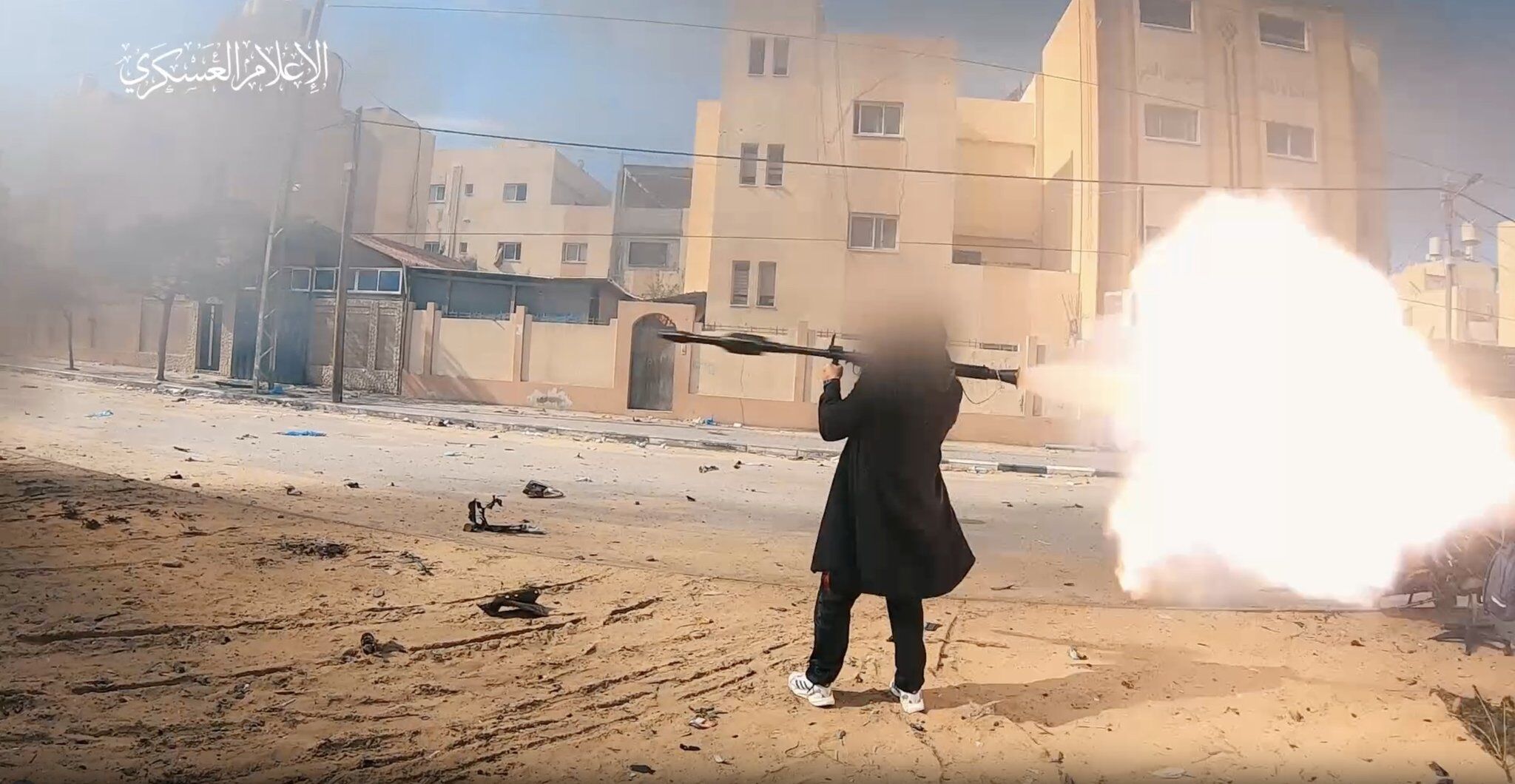
Military expert Colonel Hatem Al-Falahi believes the axes of Al-Zeitoun neighborhood (southeast of Gaza City) and Tal Al-Hawa (southwest of Gaza City) are continually active with Palestinian groups putting up stiff resistance there and explains why the Israelis are faltering in their military operations in those areas.

Colonel Al-Falahi of Al Jazeera Satellite Channel made this observation as he commented on the joint operation between Al Jihad’s Saraya Al Quds and the Hamas Al-Qassam Brigades which led to the sniping of an Israeli soldier in the Al-Zeitoun neighborhood.

As per Saraya Al-Quds video, it showed because the Israeli army is fighting from inside buildings, none of its soldiers are able to stick their heads out of the window and/or show their bodies completely.

In contrast, Colonel Al-Falahi says in an analysis of the military scene – the resistance groups are fighting from areas very close to the occupation army.

He said the recent  military operations carried out by the resistance show that the cooperation between the Palestinian factions have become great, especially between the two Islamists groups: Qassam Brigades and Saraya Al-Quds; adding this means they are work together as one unit and there is a joint operations room that coordinates the different military activities.

Sniper operations

Al-Falahi believes sniper operations have a very large impact, in terms of subject and psychology, on the occupation forces. He pointed out these are precise operations carried out against Israeli officers at high levels.

Colonel Al-Falahi recalled a previous report by the Hebrew daily Yedioth Ahronoth, which revealed that the Israeli army monitored the work of Palestinian snipers for 70 hours in the past and concluded a sniper in the Qassam Brigades and the rest of the factions take two or three days to monitor the target.

The daily stated these snipers have the capability to monitor their targets accurately, also concluding that snipers do not carry weapons during their movements, but rather, there are specific points where these are located in.

He pointed out snipers had a very large role in inflicting heavy losses on the occupation army in its war on the Gaza Strip, and added that at least 100 sniper operations have been carried out so far by Palestinian resistance fighters in the Gaza Strip.

The military and strategic expert confirmed that the resistance operations are still ongoing in Gaza, and the “sniper’s rifle” will remain operational for a long time, and the occupation army will not be able to remain in these areas no matter how much capabilities it has.

Resistance factions are fighting fierce battles with the Israeli occupation forces in different areas of Gaza. They have managed to kill Israeli soldiers in ambushes and clashed with them in the  combat axes in the Zeitoun neighborhood in Gaza City, the center and southern part of the Strip according to the Palestine Information Center.

Continue reading