Can ‘Realist’ Trump Pull Off Gaza Ceasefire?

By Michael Jansen

During his ongoing visits to Saudi Arabia, Qatar and the Emirates, US President Donald Trump seeks to focus on business opportunities and investment in the US rather than address the negative political realities to which he contributed during his first term (2017-2021).

At that time, he dismissed the two-state solution in favour of “The Deal of the Century” which would give Palestinians a degree of autonomy within Israel. He defunded UNRWA, recognised Jerusalem as Israel’s capital, moved the US embassy there, and said the US no longer considers Israeli settlements illegal overturning a 1978 policy. The fate of the refugees, Jerusalem, and settlers were meant to be negotiated under the two-state solution by the sides under the 1993 Oslo accord. He closed the US consulate in occupied East Jerusalem which served Palestinians and the PLO office in Washington. Trump recognized Israeli annexation of Syria’s occupied Golan.

Trump began his second term by calling for the expulsion of Palestinians from Gaza which would be redeveloped as a Middle East Riviera instead of exerting pressure on Israel to end the Gaza war and enable its reconstruction. Under Trump’s real estate venture Gazan Palestinians were supposed to settle in Egypt and Jordan, which along with all the Arabs flatly rejected this proposal. Egypt drew up a counterproposal to reconstruct devastated Gaza while its population stays put.

His resort scheme has angered the Arab public from the Gulf to the Atlantic. His call for Saudi Arabia to establish relations with Israel has been rejected as Riyadh has said it will normalise when there is a Palestinian state with its capital in Jerusalem.

Since Trump made Saudi Arabia his first foreign destination in 2017 during his first term, the region has changed significantly by pivoting to the East. Saudi Arabia and the Emirates have cultivated ties with Russia – Riyadh’s partner on oil production and pricing – and China which buys Gulf oil and exports billions of dollars in goods to the Gulf. The Emirates, Egypt and Iran joined BRICS (the grouping of Brazil, Russia, India, China, and South Africa) while Saudi Arabia applied but did not follow through. China mediated Saudi-Iranian reconciliation. This has ended Iran’s isolation in the region.

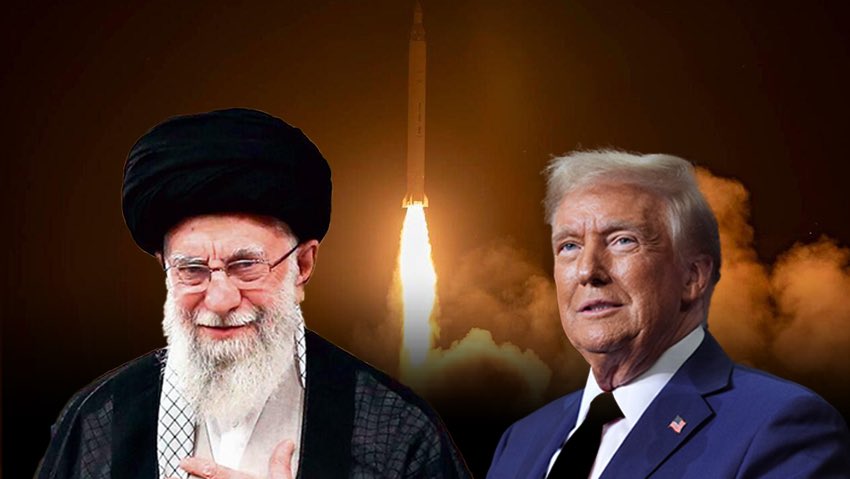
On the positive side, early in this term Trump opened talks with Iran over its nuclear programme to replace the 2015 deal from which he withdrew in 2018. A fifth round of talks is expected. Although Trump wants to be a peacemaker, he has threatened war if the talks fail.

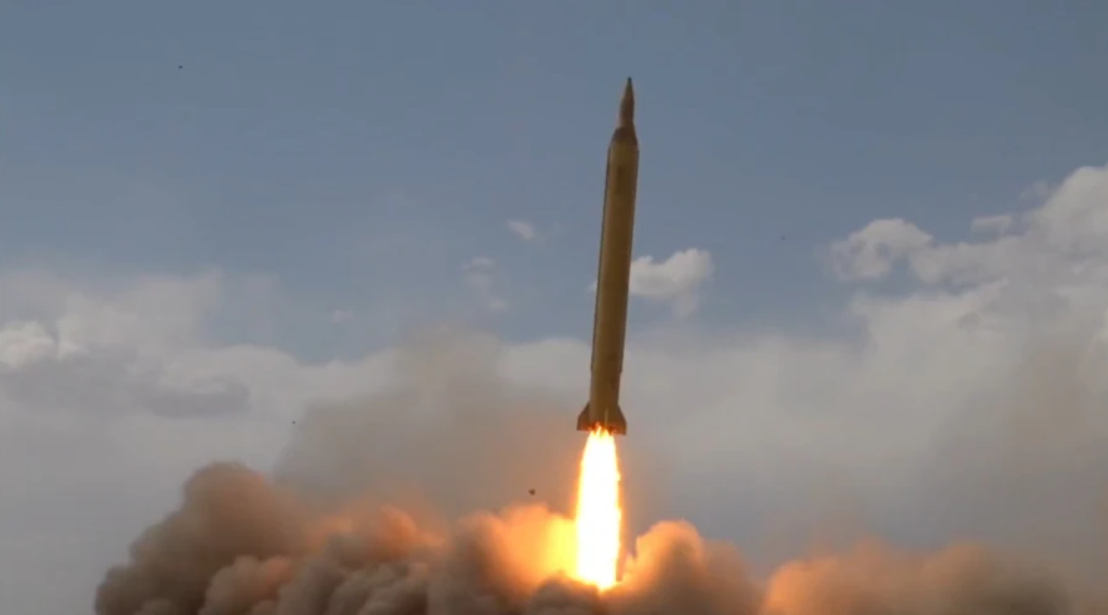
As a peacemaker, Trump bombed Yemen heavily to force Yemen’s Houthis to end attacks on international commercial and naval vessels in the Gulf of Aden and the Red Sea. The Houthis and US agreed to end this confrontation. Trump has not, however, halted Houthi drone and ballistic missile attacks on Israel which the Houthis say will stop if Israel observes a ceasefire or ends the war on Gaza.

Trump has not planned to stop in Israel during this Gulf tour, indicating that there is some distance between him and Israeli Prime Minister Binyamin Netanyahu. He has not only refused to ceasefire in Gaza but also maintained a ten-week blockade of the strip. He could have done both to ease Trump’s swing around the Gulf where Gaza is high on the agendas of the rulers and public. Since Netanyahu has carried on with his Gaza war, Trump has ignored him when resuming talks with Iran on limiting its nuclear programme in exchange for lifting sanctions and agreeing to a ceasefire with Yemen’s Houthi. The ceasefire has been welcomed by Washington’s Arab allies, particularly Saudi Arabia which had been urging an end to US attacks on Yemen before Trump began his tour.

Without Israeli involvement, the US has also negotiated with Hamas over the release on Monday of US-Israeli hostage Edan Alexander. For Trump, this is a greatly desired success in the US. In Israel, families of hostages who are not US-Israel dual citizens fear their relatives will be forgotten by Netanyahu who is determined to not only continue with the war but also to expand it once Trump departs from the region. Hostage families are not alone in their suspicions. A majority (54 per cent) of Israelis said that the war was being driven by personal rather than security reasons. Only 21 per cent agreed with Netanyahu’s prioritisation of eliminating Hamas over rescuing the hostages. A March poll showed 70 per cent of Israelis wanted Netanyahu to resign.

He has adopted this stance for several reasons. First, right-wingers in his coalition have vowed to pull out if he ends the war. Second, once the war is over, Netanyahu will be called upon to account for lax Israeli security in the south where Hamas breached the fence on October 7th, 2023, killed 1,200 Israelis and visitors and abducted another 251. There was no excuse for laxity. Young female Israeli soldiers deployed as “watchers” along that part of the border with Gaza, warned repeatedly that Hamas was conducting drills and manoeuvres ahead of an attack. Their warnings were not taken serioiusly by senior Israeli officers. Some of these women were killed and some captured. Third, as long as the war is being waged, Netanyahu will not have to explain how lightly armed Hamas fighters have managed to carry on the fight while the mighty Israeli army and air force levelled Gaza and killed 53,000 Palestinians. Netanyahu has a lot of explaining to do.

Jansen is a columnist for the Jordan Times

Continue reading
Trump’s Twist With The Houthis

By Dr Khairi Janbek

During his meeting with the Canadian Prime Minister Mark Carney, US President Trump interrupted the proceedings and declared that the American bombing campaign against the Houthis has stopped. He said, they don’t want to fight us so we respect that.

Now, what does that translate to, is not really very clear. Does it mean that the Houthis will not attack US ships only, or will they cease their actions which threaten maritime movement in the Red Sea including Israeli ships? And will the fighting, for instance, end British bombardment and/or Israeli bombardment. I suppose it remains to be seen.

It is said by observers that the Trump decision was a surprise to the international community and even to some in his administration, though one would argue there are no more surprises with president Trump since his definition of the “America First” policy has come to mean either extracting himself out of the problems he makes as if nothing happened or alternatively stick his nose in already existing mess here and there, then extracting himself out of it without having either solved or achieved anything.

What went on and still goes on in the Red Sea area seems to be closely tied to the big red apple or the big prize, and that is the nuclear negotiations with Iran. Otherwise what would make the Houthis stop fighting, they have been bombed for such a long time without any tangible results?

On the one hand, one would assume that Iran is sending positive signals to the Americans by clearly restraining their proxies in Yemen, while at the same time the Saudis are urging both the Americans and the Iranians to reach an agreement over the issue, while in the mean time, in the background, Israel is lurking behind the scenes being restrained in the name of a successful nuclear agreement.

Indeed, the success of the nuclear agreement will mean that Iran can have a civilian nuclear program subject to periodic inspection, and that by itself, should bolden Saudi Arabia to have its own civilian nuclear program and enrich uranium on its own territory independent of the usual American demand that Saudia should sign first a peace agreement with Israel.

I suppose someone must give in, after all President Trump will be returning back from his coming trip to the Gulf with almost $3 trillion, and calling the Persian Gulf, the Arab Gulf in America; which would be just as meaningless as calling the Gulf of Mexico, the Gulf of America.

As for Israel, well the Houthis declare clearly that their soul stand with Gaza will not refrain from bombing the Zionist state?

Now, to what extent can Mr Netanyahu, the prime minister, whom till now has managed to disguise his political survival in the garment of a regional strategy, will be allowed to upset the American plans, especially, first of all, in counter bombing the Houthis, or even emboldened enough to bomb Iran as the sponsors of the Houthis.

If Israel is to be kept out of the Gulf currently, it will work on exacting a price somewhere else.

Dr Khairi Janbek is a Jordanian writer based in Paris, France.

Continue reading
Trump’s War in The Red Sea

Dr Khairi Janbek

The US foreign policy in the Red Sea today is characterized by a robust military response to Houthi threats, aiming to protect critical maritime trade routes and assert influence in a geopolitical strategic area. While these military operations garnered international support, the ongoing conflict underscores the complexities and challenges of Middle East interventions.

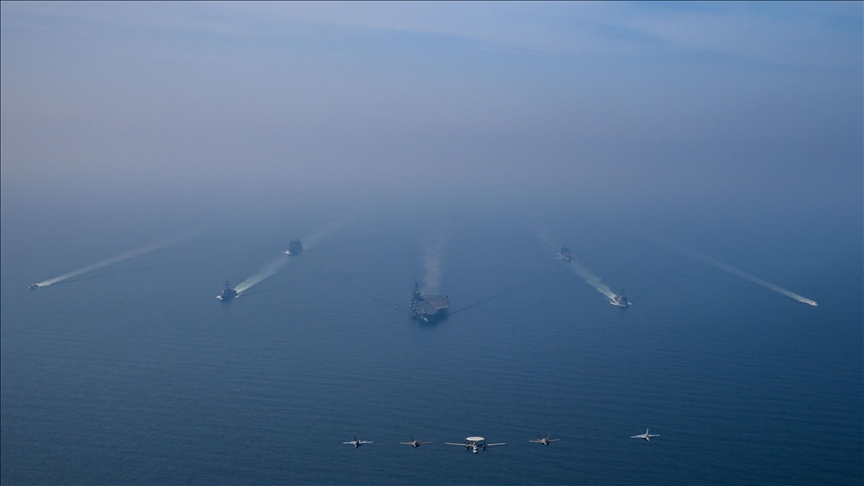
The US military’s increased involvement in the Red Sea, including the deployment of two aircraft carriers, signals a commitment to ensuring freedom of navigation and countering the Iranians in the region. However, the present ongoing escalation also risks entangling the US in a prolonged conflict.

This is reminiscent of past Middle East engagements which the Americans should be well-aware of, and may put additional strain on the US military resources amid other pressing global priorities if faces.

That said, the present military strikes on Yemen are not just about the Houthis. They are also widely seen as demonstration of US strength towards the group’s main backer: Iran.

The Washington administration is currently locked in a series of negotiations regarding Iran’s nuclear programme and Trump has not ruled out military action if those talks fail, yet, it is possible still, that the US, and judging by recent history, the Americans may change their mind and everything is put on hold yet again.

But we need to wait and see! The US has already moved its patriot and THAAD missiles from Asia to the Middle East, and only in the first month of the preparedness campaign, $200 million of ammunition has been used and this is making military officials greatly concerned about the impact on stocks the US Navy might use in the event of a Chinese attack on Taiwan.

At the same time, there are various Yemeni groups opposed to the Houthis with regional backing, and dare one say with some international backing, reportedly considering taking advantage of the situation to launch a ground campaign to oust the Houthis once and for all, but Washington is yet to make a decision on whether to back such operations or not.

Most analysts and officials say that, American troops participating in any ground operations in Yemen is highly unlikely, moreover, even more limited support for ground operations would still be another case of the US backing armed groups in a messy middle Eastern war; exactly the sort of situation Trump blasted previous administrations for falling into.

Dr Janbek is a Jordanian analyst based in Paris, France.

Continue reading
Rehabilitating Iran?

By Dr Khairi Janbek

All eyes now are on the new game in the Middle East: The US-Iran negotiations. One would say the aim here is far more advanced than the Iranian nuclear programme when the agreement was torn up by US President Donald Trump himself who was more concerned with details which would eliminate all threats against Israel, and would that in all liklihood, transform the whole region.

It seems that in this early intense stage, the ambiance is for reaching an amicable agreement through the recognition that no matter of the outcome, there will be nothing divisive. Trump will continue creating crisis just for the sake of showing that he can control those crises, and act in the manner of the old Arabic adage, for neither the wolf to die nor the sheep to parish. While for the Iranians, they have everything to gain from a positive outcome to those negotiations.

Of course, the Iranian nuclear programme is an important component of these negotiations, and most often than not, at times Iran and at times its enemies, exaggerate the potential of the country to making nuclear weapons for political purposes.

Yet the fact remains that despite the possibility of Iran being still far from creating weapon-grade enrichment programme, if carried on unchecked, it is inevitable that at one point in the future it will have nuclear weapons. Consequently the fact remains, the onus is on Iran to prove credibly that its nuclear programme is for peaceful purposes, and accept periodically, the checks of the international nuclear inspectors.

The other dimension is the relationship of Iran with its proxies in the region, which falls under the category of threats to Israel. Well, and under the circumstances, Iran has to decide the reasons for its continued alliances with its proxies – whether such alliances served their purpose, or have become a burden than an asset – or if it can maintain these alliances with definte no threat commitment Israel but with political clout in Arab world affairs, which incidentally may not seem such a bad idea for Trump.

After all eliminating the threat against Israel is the primary concern, while at the same time his rich Arab allies buy their protection from him, a protection which Iran cannot dare to test.

But what is in it for Iran to reach an accord with the United States? One would say plenty. For a start it’s reintegration back into the region. After all it kept claiming it’s nuclear programme, is in reality, a peaceful programme and Tehran never had the intention of enriching weapons grade uranium.

Well, and with an accord it can now easily prove, and then can start dealing with the issue of not being a threat to Israel by either dissociating itself from these proxies which have become costly to its image and/or work in their transformation to political, unarmed forces and parts of the political structures wherever they exist in the Arab region.

Essentially if the sanctions against Iran are lifted and its assets are no longer frozen, Iran will be able to assume a very strong position in the Middle East region based on its economic strength and its enormous trade potential. In fact, Trump knows that any military action he takes against the Iranian nuclear installations, and any possible response will not have a decisive result. Therefore, the most likely decisive result will be, a new Iran, big in the region as well as moreover, that will owe him a favour.

In the meantime , we are still at the very early stage to even try to guess, but we can safely assume, that no matter how those negotiations proceed, nothing tangible is likely to happen before the visit of President Trump to the Gulf region in May.

Dr Khairi Janbek is a Jordanian analyst based in Paris, France

Continue reading
Middle East Psychosis

By Dr Khairi Janbek

As far as one is concerned, the Middle East has been for a long time a matter of balance of power overlapping with strategic reluctance to change its status quo. But the advent of US President Donald Trump is ushering a new era with all sorts of possibilities.

On the microcosm level for instance, Arafat’s Fateh movement in the PLO was checked in a formula of a balance of power by the leftists organizations as well as the Palestinian organizations sponsored by some Arab countries, the affiliation of all in the PLO created the sense of a balance of power.

However, with the emergance of the PNA and the affiliation of the Palestinian groups in it, albeit with variable influence, created a unit which under the balance of power notion, necessitated the creation of a check and balance on its power.

Consequently Hamas was created, and what seemingly appeared as contradiction between them, turned out to be a symbiotic relationship between them. Now, one cannot say with certainity what will happen next, however, if the objective is to maintain the balance of power by just weakening Hamas, this will require symbiotically weakening the PNA as well, but if the objective is to eleminate Hamas, the next step will be to eleminate the PNA.

As for the macro level, and as one often repeats, the Middle East, has at least for the last five decades was strategically governed by the famous triangle, Iran-Israel-Turkey, with the Arab world having little say in their own affairs , if at all.

However, since the fall of the Shah regime in Iran, the search started for a third angle to replace Iran in governing the Middle East, considering the open hostility of Iran towards West. Consequently some Arab countries jumped into the frey as possible candidates, like Egypt, then Qatar, UAE and Saudi Arabia. But as it seems, a preference for the old triangle was decided upon by the world powers, accepting the inconvenience of having to negotiate with Iran.

Now, we can see a new development that breaks the taboo of the old balance of power in the region.

Starting mid-way from the Biden administration, and with the start of the second Trump administration, the notion of balance of power by the usual triangle has turned into a balance of aggressiveness in the region, as Israel and Iran “bombard” each other, Turkey’s involvement in toppling Assad, and now the distinct possibility of confrontation with Israel in Syria, while being threatened itself by Iran if it cooperates in any possible American attack on Persia. Thus the stability which this triangle had sustained itself, is no more.

From appearances, at least how things look like: It seems Israel is being supported by Trump explicitly and by many other international parties implicitly, to be either the major power that has a say in Middle Eastern affairs. This means that Iran’s grip on the region will be curtailed through negotiations at least if not war; and here the symbiotic issue appears again, with Turkey’s role curtailed through pressures and/or and economic threats.

Here, as well, the aim is to designate Israel as only point of compass on the map of the Middle East, which Arabs are expected to flock to and normalise with.

In this case events will inevitably take a nasty symbiotic turn, meaning Iran will have to be attacked and taken out altogether with its surrogates from the power relations of the Middle East, and Turkey forced to take a more insular step from the affairs of the region, even with a regime change if required.

But we will have to wait and see what lies in store!

Dr Janbek is a Jordanian writer based in Paris, France.

Continue reading