Syria: 10 Days That Shook The World

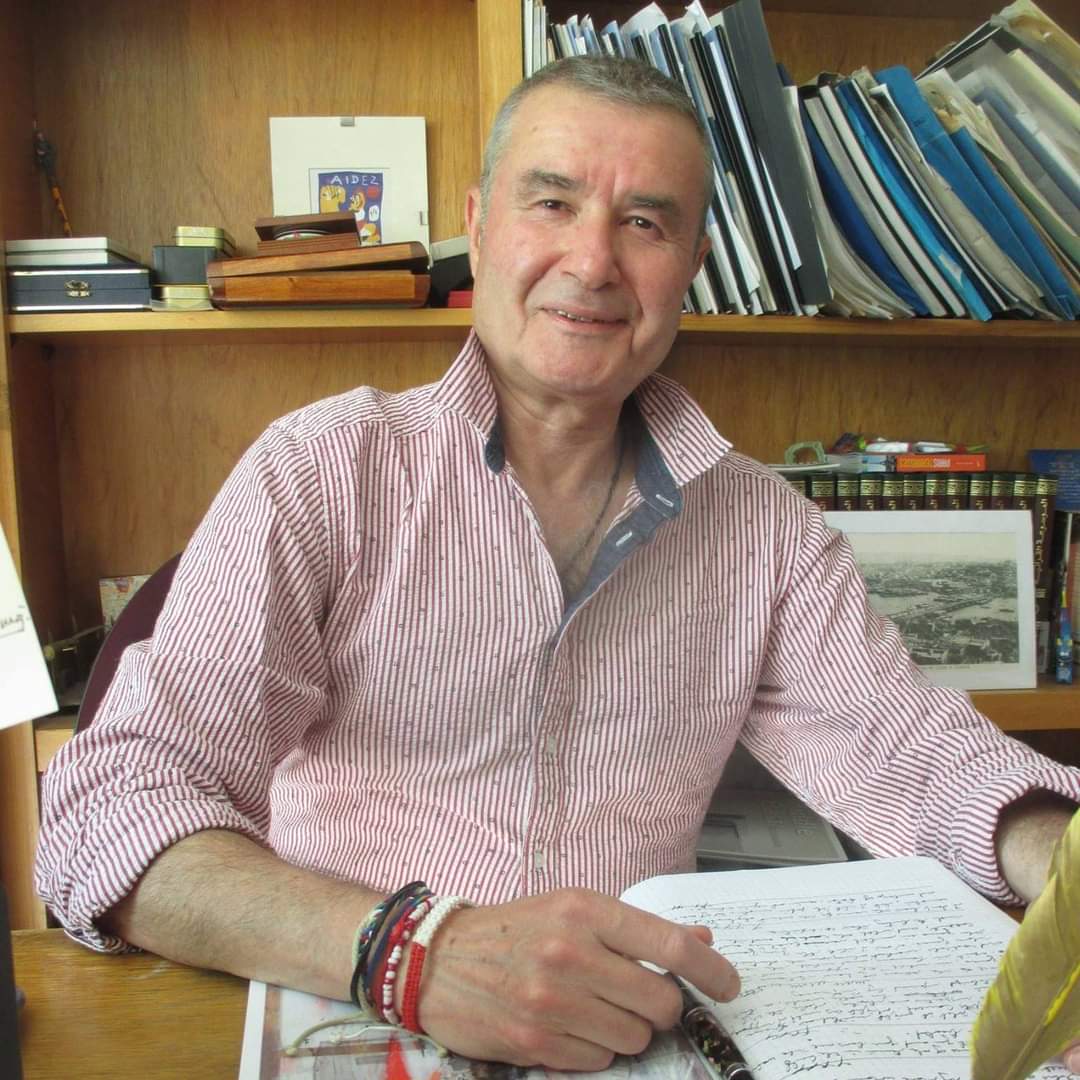
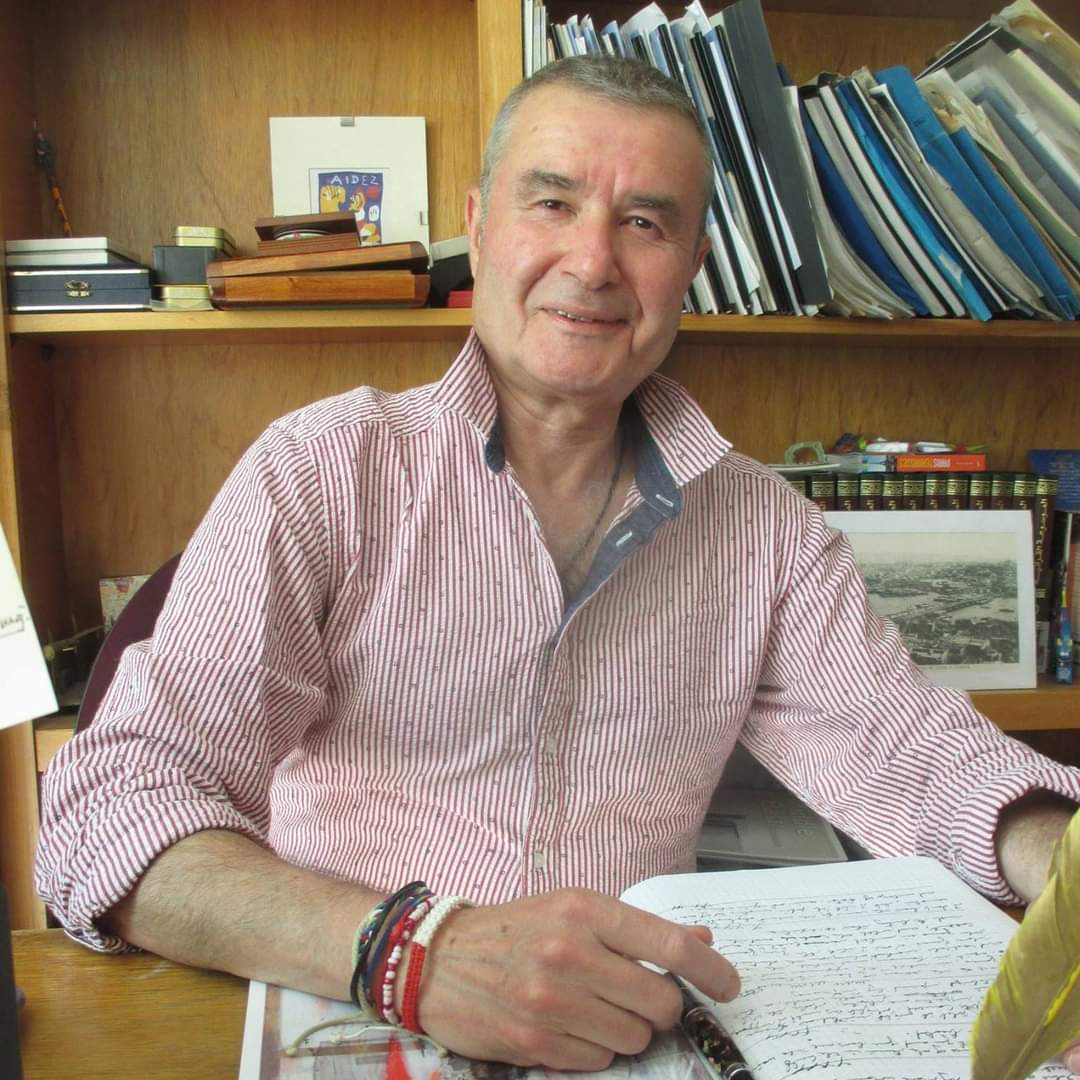
Dr Khairi Janbek

Without much ado, the western media is currently preoccupied with this question: Are the Syrian rebels Jihadis? This is while the Arab media appears to be in a state of euphoria about the Syrian rebels seen as liberators. The issue however is about two perspectives, the first being cautious about the next phase for the country, and this is for understandable reasons, while the second reflects optimism for the next stage and also for understandable reasons.

Now, the fear of dividing Syria on ethnic and sectarian grounds has its blueprint in the colonial history of Syria and certainly not a product of today and/or creative chaos utterances.

Looking back

In fact, on 1 July, 1922, the French colonial authorities divided Syria into federal statelets: statelet of Damascus, statelet of Aleppo, statelet of the Alawites, and the statelet of the Druze. Of course, the idea was that the country would be easier to rule and a regional and a sectarian balance would guarantee political stability. Of course, the Kurds were outside this formula as they were struggling to create an independent state of their own.

But what about Syria now, to paraphrase John Reed, after the 10 days that shook the world. Indeed, the two regional police stations in the region, Turkey and Israel seems to be gaining major influence in the current affairs, while the third police station, Iran, has lost out in this formula.

Rivalry

For all intents and purposes, no one is naive enough to think that the march towards Damascus could have occurred without Turkish support, and the Israeli foreign minister has confirmed that talks were held between his government and the Druze as well as the Kurds of Syria, whom he described as having good relations with them.

But what about the Russians? One would venture to say that they are like to stay in Syria as most probably, paying guests of the new Syrian government, renting their military installations from them.

Undoubtedly, no matter how much we can be optimistic about the future of all-inclusive democratic Syria, we will always reluctantly fall back on our cognitive dissonance regarding the case of Iraq, and make the mistake of comparison with the post-Saddam era of terrorism, sectarianism an ethnic strife.

This is simply because, we forget that in Iraq there was superpower which brought down the regime and destroyed all the functioning institutions of the country favoring when religious Islamic sect over another, and supporting one ethnicity against others. While in Syria, its the Syrians themselves brought down the Ba’ath regime.

On the face of it, the rebels don’t seem to want to be the new masters of Syria and they are working very hard to protect and preserve the functioning institutions of the country, and claim their adherence to pluralism and for an all inclusive new regime.

But two important questions remain outstanding, and only time will tell how these will unfold: To what extent will there be Turkish and Israeli influence on the emerging regime, and more importantly, what would be the share of those two police stations of the country?

In other words, how will Turkey perceive the future of the Kurds in Syria, and where does Israel see its border posts with the “new” Syria?

In all likelihood, the rebels will keep their word of wanting a stable pluralist Syria, but let us not forget also, that a future spark of ethnic, regional or sectarian conflict, will very likely turn all into extremists in the country.

Dr Khairi Janbek is Jordanian commentator based in Paris.

Continue reading
What Next For Moscow After Fall of Damascus

Events are rapidly unfolding before after the fall of the Syrian capital, Damascus, into the hands of the armed opposition forces that entered it without resistance because the Syrian army, under orders from its supreme commander, decided not to resort to bloody confrontations to prevent bloodshed and accept defeat in the face of a tripartite aggression well-planned in the dark rooms of Washington, Ankara and Tel Aviv.

The Russian authorities’ announcement, Sunday, of the arrival of Syrian President Bashar al-Assad and his family to Moscow and granting them political asylum, confirms that the sudden developments currently taking place may be the tip of the iceberg.

There may be many surprises to come on all levels, as Syria is a jungle of weapons, and it is unlikely that the sudden surrender is just a maneuver, just like what happened in Iraq after the collapse of the Iraqi army in the face of the American invasion, and the goal now is to reposition, bow to the storm, and prepare to resist the occupation.

https://twitter.com/abdelbariatwan/status/1865843698195378221

The fall of Damascus is a fatal stab to Russia and its leadership, which the new authority in Syria has no affection for, and sees it as a strategic partner of the isolated Syrian regime. Its warplanes have not stopped bombing Idlib, Aleppo, Hama and Homs, and this Russian airstrike played a major role in the Syrian Arab Army regaining most of the cities and villages that were seized by the opposition forces supported by America, Europe and Turkey.

We do not know what President Bashar al-Assad’s plans are in the coming period. Will he resort to calm and withdraw from political work, in compliance with the conditions of political asylum, or will he make Moscow a base to manage a resistance that he will form and lead from his new exile.

News circulated in the past few days that countries supporting the deposed Syrian president, led by Russia, suggested he form a government in exile to confirm his non-recognition of the new government that may be formed in the coming few days to run the country, avoid a political vacuum, and prepare for holding general elections.

We do not know the extent of the accuracy of this news, and perhaps it is too early to try to extrapolate what events are coming in Syria, as only one day has passed since the fall of Damascus and President Assad’s flight to Moscow and his granting of political asylum.

However, what can be pointed out is that the picture seems blurry in Syria at the present time, as Damascus and the major Syrian cities have been exposed to a war led by armed Syrian opposition factions on behalf of America, Turkey and other Arab countries, unlike the direct American war in Iraq in 2003, in which more than 160,000 American soldiers participated, and Paul Bremer was installed as military governor of Iraq in a transitional phase.

Unfortunately, we can’t disagree with Benjamin Netanyahu when he said: “The fall of Damascus and the collapse of the ruling regime there is considered a historic day and a great victory for Israel.”

Damascus is the crown jewel of the axis of resistance, the main supporter of the Palestinian cause, and the stubborn opponent of normalization. The question remains: Will Netanyahu’s celebrations of this fall last long? We leave the answer to the coming days and months.

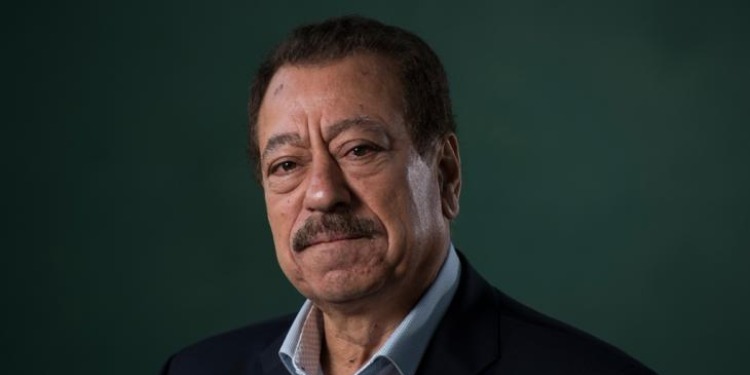
Abdel Bari Atwan is the Chief Editor of Al Rai Al Youm

Continue reading
Some Arab States Welcome ICC Decision…

Arab countries welcomed the decision by the International Criminal Court (ICC) to formally issue arrest warrants Thursday for Israeli Prime Minister Benjamin Netanyahu and former Defense Minister Yoav Gallant.

The Iraqi government “values the courageous and just stance taken by the International Criminal Court in issuing arrest warrants against the head of the Zionist entity’s government and its former defense minister,” government spokesperson Basim al-Awadi said in a statement.

“This historic decision affirms that no matter how much oppression persists and tries to prevail, justice and truth will confront it and prevent it from dominating the world,” he added.

Al-Awadi described the decision as “a vindication for the blood of the innocent and martyrs who perished during the criminal (genocidal) war waged by the Zionist entity for more than a year against Gaza and Lebanon.”

He reiterated his country’s demand for an end to the Israeli onslaught and urged “all free nations to implement this decision by bringing the accused to the competent courts to hold them accountable for their blatant violations against humanity.”

Jordanian Foreign Minister Ayman Safadi said the ICC’s decision “must be respected and implemented without selectivity,” Anadolu.

“This is a pivotal moment that requires immediate and effective international action to halt the Israeli aggression on Gaza,” Safadi added during a press conference with European Union foreign policy chief Josep Borrell.

The court’s decision is “a message to the entire international community emphasizing the necessity of stopping the massacres against the Palestinian people,” he added.

Algeria also praised the ICC’s verdict, describing it as “an important step and a tangible advancement toward ending decades of impunity and the evasion of accountability and punishment by the Israeli occupation.”

It emphasized that “the Israeli occupation has perpetrated crimes against the Palestinian people and against all the countries and peoples of the region.”

Israel has launched a genocidal war on the Gaza Strip following a cross-border attack by the Palestinian group Hamas in October last year, killing more than 44,000 people, most of them women and children, and injuring over 104,000.

The second year of genocide in Gaza has drawn growing international condemnation, with officials and institutions labeling the attacks and blocking of aid deliveries as a deliberate attempt to destroy a population.​​​​​​​

The ICC announced in a landmark move Thursday that it issued arrest warrants for Netanyahu and Gallant for war crimes and crimes against humanity in Gaza.

The court’s Pre-Trial Chamber I said it “issued warrants of arrest for two individuals, Mr. Benjamin Netanyahu and Mr. Yoav Gallant, for crimes against humanity and war crimes committed from at least 8 October 2023 until at least 20 May 2024, the day the Prosecution filed the applications for warrants of arrest.”

“The Chamber considered that there are reasonable grounds to believe that both individuals intentionally and knowingly deprived the civilian population in Gaza of objects indispensable to their survival, including food, water and medicine and medical supplies as well as fuel and electricity,” the decision said.

Israel also faces a genocide case at the International Court of Justice for its deadly war on Gaza.

Continue reading
Avi Shlaim: ‘I am proud of my Arab heritage and proud of my Jewish heritage’ 

Editor’s Note: On the first anniversary of the bloody 7 October, 2023, I reprint the story I wrote on Professor Avi Shlaim that was scribbled early this year and published in countercurrents. Avi Shlaim is an eminent Israeli-British historian and international relations expert at Oxford University in the UK with many books on the Arab-Israeli conflict. He is part of what is called the “New Historians” who sought to provide a critical analysis of the prevailing Israeli view claiming Palestinians left their land of their own free will and were not forced out in 1948 as Israel was created.

In the light of Israel’s latest genocide in Gaza, he provides what he calls a “personal commentary” of his views as a Jewish Arab and on the current Netanyahu government.

“I am an Arab Jew. I was born in Baghdad and I grew up in Israel. My Iraqi birth certificate gives my name as Ibrahim. So, I am the real Ibrahim Al Baghdadi. The other chap is a fake. He stole my Identity,” he says in a mirthful manner.

Baghdad

“I am proud of my Arab heritage and I am equally proud of my Jewish heritage. The three pillars of Judaism are truth, justice and peace,” the historian, who left Baghdad at the age of five in 1950, emphasizes.  

“The Netanyahu government is the opposite of these core Jewish values,” adding “it is the most aggressive, expansionist, overtly racist and Jewish supremacist government in Israel’s history,” Shlaim maintains.

“The essence of Judaism is non-violence.” The present government is the anthesis of this non-violence,” he laments.

“As a Jew and an Israeli, I therefore feel that I have a moral duty to denounce Zionist-settler colonialism and American imperialism and to stand by the Palestinians in the anti-colonial struggle, in the just struggle to live in peace and dignity in their own land,” he concludes.

Continue reading
Is an Israel-Iran War Coming?

By Dr Khairi Janbek

In the late 1990s, the grandiose talk of a new order for the Middle East emerged which turned out to be nothing more than a euphemism for Disney Land Arab countries, poverty and conflict-stricken regional reality, with a mixture bordering on more than buffer zones.

Now we have a less ambitious notion and that is a new balance of power in the Middle East, another euphemism for Israel calling the shots and all its neighbors being called on to abide.

But how does this new notion translate in practical terms? Well basically, to all concerned and less concerned waking up every morning asking the question: Will Israel strike Iran or will it not? 

Of course, this is a horrific question if indeed Israel does hit Iran as it carries with it many important existential perils for the whole region and beyond.

One believes whatever is on Benjamin Netanyahu’s mind to achieve advantageous results must be carried out before the date of the US elections this November because no matter what he has been told by the US prospective candidates, at the end of the day, a sitting president doesn’t act like a president-elect.

Now what would a direct confrontation and open warfare between Israel and Iran entail? Well primarily, direct confrontation takes precedence over war by proxies, which means Israel will have to go directly into destroying the military capabilities of Iran in a hugely destructive war.

This would ultimately open the possibilities for its own destruction which means dragging the US and western powers into the conflict, no matter how reluctantly they maybe to defend it, and/or basically go into a slippery-slope open warfare reaching Syria and Iraq and Iran and whatever is on its plate regarding Gaza and Lebanon.

The current wisdom dictates a large scale war does not seem to be likely on the agenda, but that does not exclude a cycle of tit-for-tat strikes between Israel and Iran.  Clearly Israel knows that for the economy of the west which is seriously preoccupied with prices and inflation, to target the Iranian oil facilities is a red line.

Moreover, to target the Iranian nuclear facilities would open the door for Tehran to retaliate against the Israeli nuclear facilities which will have dire consequences for the whole region and the world.

Therefore, if Israel is seriously thinking of dealing a blow to Iran, it will either resort to targeting personalities from the hierarchy of the country, and/or will be a just a face saving act with superfluous consequences.

Dr Khairi Janbek is a Jordanian writer based in Paris and the above opinion is that of the author and doesn’t reflect crossfirearabia.com.

Continue reading