Sharaa Says No to Syrian Normalization With Israel

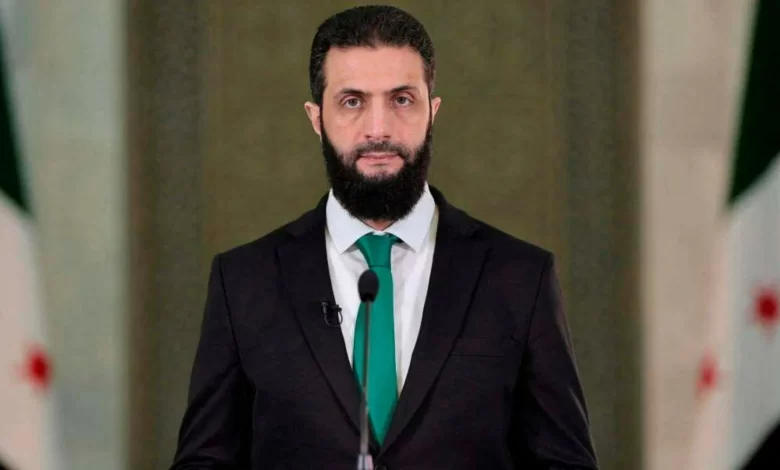
Syrian President Ahmed Al-Sharaa ruled out any near-term normalization deal with Israel, citing its continued occupation of the Golan Heights.

In an interview with The Economist, Al-Sharaa stressed that Syria seeks peaceful relations with all countries. However, he noted that Israel’s presence in the region remains a major obstacle. “There is great sensitivity regarding the Israeli matter, especially after the big wars and their occupation of the Golan since 1967,” he said. Al-Sharaa made no mention of Israel’s genocide in Gaza.

Ahmed Al-Sharaa also addressed US and Israeli military activities in Syria. He reaffirmed Syria’s commitment to the 1974 disengagement agreement with the occupation state, mediated by the UN. He called on Israeli forces to withdraw to pre-advancement positions to allow the UN peacekeeping force (UNDOF) to operate in the buffer zone.

Regarding US troops in Syria, Al-Sharaa asserted that any foreign military presence must be based on official agreements. “We are reassessing the Russian military presence, and we might reach an agreement or not. But any presence should have the host state’s approval,” he explained.

The Syrian president reiterated that international pressure is mounting against Israel’s recent military actions. “There is near-unanimous agreement that this advancement is not right,” he said.

While Al-Sharaa did not rule out future discussions, he emphasized that Syria is still prioritizing internal recovery. “We entered Damascus only two months ago, and there are many priorities ahead of us. It is too early to discuss such matters,” he concluded according to the Quds News Network.
Continue reading
Saudi Arabia Reaffirms Palestinian Statehood

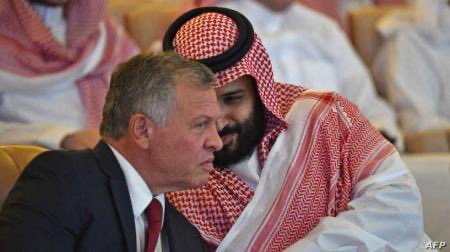
Saudi Arabia has reaffirmed its stance on Palestinian statehood, stating that normalization with Israel will not happen without an independent Palestinian state with East Jerusalem as its capital. The Saudi Foreign Ministry issued the statement at 4:00 a.m. on Tuesday, directly contradicting remarks made earlier by US President Donald Trump.

The statement emphasized that Saudi Arabia’s position on the Palestinian issue is “firm and unshakable.” It cited Crown Prince Mohammed bin Salman’s speech on September 18, 2024, during the opening of the Shura Council’s ninth session. In that speech, the crown prince made it clear that the kingdom remains committed to the establishment of a Palestinian state and will not establish diplomatic ties with Israel without it.

The ministry also referred to the extraordinary Arab-Islamic summit in Riyadh on November 11, 2024. During the summit, the crown prince reiterated Saudi Arabia’s commitment to a Palestinian state based on the 1967 borders. He also urged more countries to recognize Palestine and called on the international community to support Palestinian rights.

The Saudi statement came just hours after Trump claimed that Saudi Arabia no longer insists on Palestinian statehood as a condition for normalization with Israel. His remarks sparked speculation about a potential shift in Saudi policy, but the Foreign Ministry’s statement dismissed any such notion.

The ministry stressed that Saudi Arabia rejects any infringement on Palestinian rights. It condemned Israeli settlement expansion, land annexation, and forced displacement of Palestinians. It also called on the international community to ease the severe humanitarian suffering in Palestine.

Saudi Arabia reaffirmed that its stance is non-negotiable. “Permanent and just peace cannot be achieved without the Palestinian people obtaining their legitimate rights in accordance with international resolutions,” the statement read. The ministry also noted that this position has been clearly communicated to both the previous Biden administration and the current administration according to the Quds News Network.
Continue reading
US Money Rolls to Israel

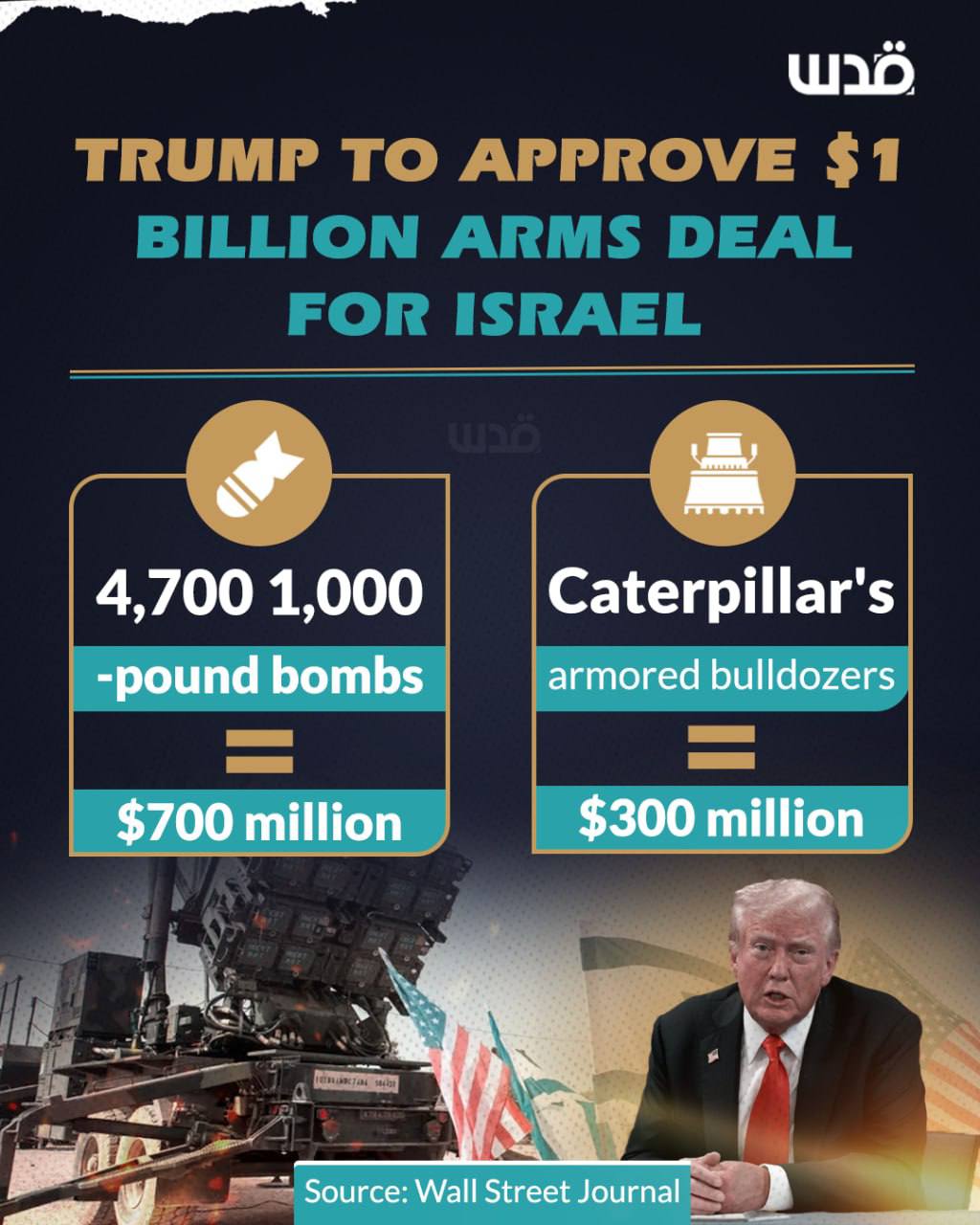
US President Donald Trump’s administration has requested congressional approval for the transfer of approximately $1 billion in bombs and other military equipment to Israel.

The Wall Street Journal, reported that the proposed arms transfers include 4,700 1,000-pound bombs valued at over $700 million, along with Caterpillar-built armored bulldozers worth more than $300 million.

The report added that the request would be paid from the annual US military aid allocated to Israel, which totals $3.3 billion in foreign military financing.

Continue reading
Jordan, Trump and The High Stakes of Politics

The recent remarks by US President Donald Trump suggesting the displacement of Gaza’s residents to Egypt and Jordan as a “practical solution” for Gaza’s reconstruction carries significant risks. This proposal not only overlooks the fundamental complexities of the issue, from the acceptance of displacement by Gaza’s residents to the logistical feasibility of relocating populations and securing the consent of all involved parties, but also reveals that forced displacement appears to be Trump’s primary solution, one that the region may have to contend with for years to come.

It is essential to remember that we are observing Trump in the early phases of his political return. He is eager to present himself as a strong and decisive leader capable of imposing solutions, even if they appear coercive. However, as with many theoretical ideas that seem simple at first glance, the real challenge lies in their practical implementation.

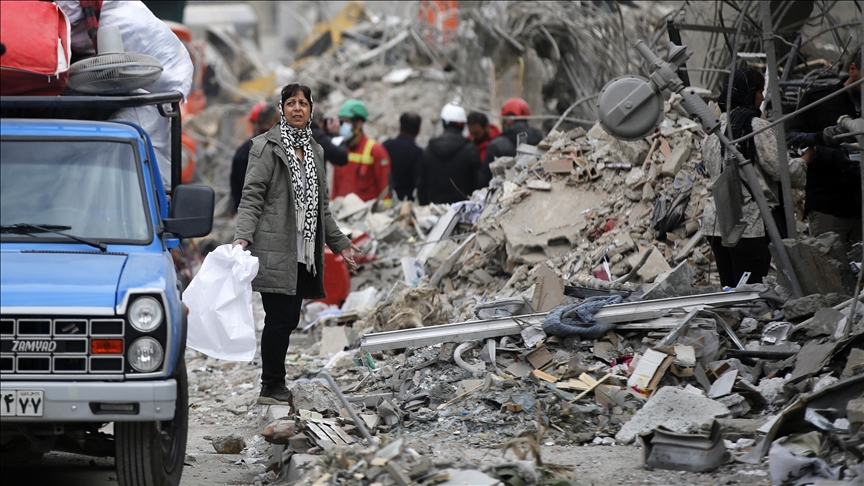
We are living through an unprecedented era. The events following October 7 have fundamentally altered the region. Gaza is witnessing destruction on a scale it has never seen before. Amid this devastation, Israel appears to be betting on worsening the humanitarian crisis, hoping to make life in Gaza unbearable for its residents. This coincides with difficulties in finding realistic reconstruction solutions or even implementing humanitarian relief efforts that adequately respond to the scale of the disaster. 

Israel’s strategic vision is focused on achieving demographic displacement in Gaza and redrawing its geographic landscape. These goals might seem attainable if the crisis continues, and the humanitarian catastrophe deepens. What is alarming, however, is that proposing Jordan as an option in this context may implicitly lay the groundwork for considering it a destination for displaced Palestinians from the West Bank as well, should this theory of forced displacement extend beyond Gaza. 

Indeed, Israel is actively pursuing this scenario by seeking to reshape the geography of the West Bank through dismantling densely populated areas, such as the refugee camps in Jenin, Nablus and Tulkarm. This objective aligns with the vision of the Trump administration, which supports Israel’s ambitions under the framework of “Judea and Samaria.” Neither Egypt nor Jordan has had sufficient opportunity to directly engage with the US administration to present alternatives or explain the security, economic, and political risks associated with these proposals. 

Jordan’s strategic response should focus on warning against these scenarios while presenting viable alternatives. Highlighting the potential shocks these steps could inflict on a key ally like the United States is crucial. Additionally, Jordan has several cards to play, particularly in the economic domain. These include regional energy projects, development initiatives, and the reconstruction of Syria. Such endeavours could offer the US tangible benefits across multiple fronts, forming the foundation for alternative approaches. 

In short, navigating Trump’s looming flood of proposals requires a nuanced understanding of American perspectives and avoiding direct confrontation whenever possible. At the same time, Jordan must strengthen its position with robust Arab support. Elevating strategic relations with Saudi Arabia is particularly crucial, given its dominant role in the current and upcoming phases and its centrality to Trump’s economic and political ambitions, including regional peace efforts. 

Nevertheless, Israeli Prime Minister Netanyahu’s visit to Washington may signal a new escalation in the region. The Gaza conflict remains unresolved, and tensions in the West Bank and Lebanon persist. If the conflict extends further to Iran, a broader escalation could stretch from Iraq to Iran, potentially resulting in the imposition of forced displacement as a grim humanitarian reality, especially if violence escalates once again in Gaza and intensifies in the West Bank.

Dr Amer Al Sabaileh is a professor and a columnist at the Jordan Times

Continue reading
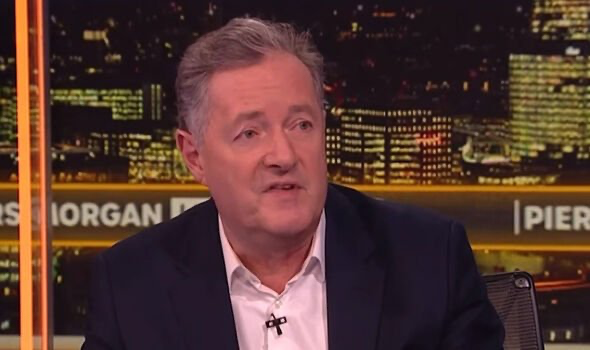
To Piers Morgan: How Can The Killing of Women Children Be Justified as a ‘Moral Right’

British broadcaster and journalist Piers Morgan said Israel’s killing of Palestinian civilians in Gaza, including women and children, could be justified as a “moral right.”

In an interview this week with journalist Tucker Carlson on a rooftop in Saudi Arabia’s capital, Morgan discussed several topics, including the Israeli assault in Gaza and whether the U.S. should be funding it.

Carlson condemned Israel’s bombardment of civilians for over a year, which Morgan questioned as he said such bombing ‘wasn’t evil.’

Carlson said: ‘If you’re intentionally killing civilians, you probably shouldn’t beat your chest and brag about it… maybe you can make the case that you had to do it, but you should weep.’

‘Is it evil though?’ Morgan responded, to which Carlson argued: ‘To kill civilians on purpose? I think it is. Kids and children? Yeah.’

Morgan said he could see there being a ‘moral right’ to civilian deaths in wartime, saying: ‘If there is a world war that threatens the entire world, yes.’

When Carlson called his view ‘disgusting’, he walked back and said it could be justified ‘in a pure defensive action’ as the two journalists sparred over the assault.

‘To intentionally kill noncombatants, women and children, I think we can say that’s wrong,’ he concluded.

The two journalists moved onto the issue of whether the US should continue funding Israel’s assault in Gaza, after former President Joe Biden sent at least $17.9 billion in military aid since the start of the Israeli genocide in October 2023.

After Carlson repeated his calls for the US to stop supplying aid to Ukraine in its conflict with Russia, Morgan questioned: ‘Why do you support Israel against Hamas? Why do you support giving them billions of dollars?’

‘I don’t,’ Carlson snapped back.


‘I support Israel in the sense that I really like Israel, I brought my family on vacation there… but (I support Israel) only to the extent that it helps the United States.’

Morgan said this was a hypocritical stance given his criticism of aid to Ukraine, saying his support merely ‘depends on which country’.

‘I don’t see a difference between (Israel’s bombing of Gaza) and what is happening in Ukraine,’ Morgan continued.

‘This is a long way away from America, there is no direct involvement with America or no mainland involvement, and yet you think it’s right that America supports Israel, but you don’t think it’s right that America supports Ukraine.’

Fifteen months of Israeli bombardment have reduced buildings to rubble and ash, leaving large areas of Gaza uninhabitable. More than 47,400 Palestinians were killed during the Israeli assault, with 70 percent of the victims being women and children, according to Gaza’s Health Ministry.

Continue reading