Middle East End Game!

By Dr Khairi Janbek

For the last four decades, each time a tragic event or another took place in the Middle East, the slogan that gets thrown onto the arena is that of a “new Middle East”. No one is certainly not against a new Middle East per se, but against the one in which someone acts stupidly and then against the stupid acts of someone else to stop the first one from acting stupidly.

Such a series of stupid events makes one think that the notion of the Middle East is supposed to be worse for the peoples of the region except most probably, Israel. Into the fray, is the idea of Israeli Prime Minister Benjamin Netanyahu who wants to change the face of the region, giving the impression this region is the face and Netanyahu is the make-up artist whom to make this “face beautiful” for Israel and probably with those grudging consent of those around it.

Now, considering what has been achieved on the ground as far as Israel is concerned in relation to Netanyahu’s end game may well be too early to tell, but at least one can say that Israel has gained a respite with its seeming regional  supremacy.

The start was with crippling the threat capability of Hezbullah and although it has not been destroyed, the responsibility for dealing with this Iranian proxy is now left to the new Lebanese government, which means that the latter will have to bear the new/old responsibility.

Then Syria came along. After the demise of the Assad regime, all Syrian military capabilities became fair game for Israeli bombardement, but in fairness, they were already so during the past Assad regime. Now, however, Israel has gone further, occupying the buffer zone between the two states while expanding its security zone deep inside Syria. Here, the project being pursued is a push for a federal structure to make the country incapable of becoming a future threat to Israel.

As for the 12-day campaign of bombardment and counter-bombardment by Israel and Iran with US cameo appearance, it is hard to reach any conclusions because of the great damage on both sides that is not really known as it verges on exaggerations, either for seeking international sympathy or as a show of awkward display of power.

Here, the end game was for Iran to be stopped from backing its proxies in Yemen, Iraq, and Lebanon and to eliminate its nuclear capability, if indeed it has reached such a level. Here, again, it is very hard to say to what extent the Iranian nuclear program has been set back, and to what extent Iran will go on the diplomatic path to stop its military support for its regional proxies.

Inevitably, we go back in circles, to the bleeding wound of Gaza, bleeding for the Palestinians, Arabs and Israelis. End game, ideal scenario and possible solution are all lost between the Israeli genocide policy, Arab impotence and naïveté , EU flip-flopping in accordance with the change of wind, and Trumpist absurd proposals and change of mind.

The issue here is far beyond Hamas, it’s Gaza and its people. As things stand the strip is divided into three regions under starvation. A massive refugee camp for people on their own land which for all intents and purposes, will no longer be their land. All in all, Israel is, with the consent of all, will be the supreme power in the region. 

Dr Janbek is a Jordanian writer based in Paris, France.
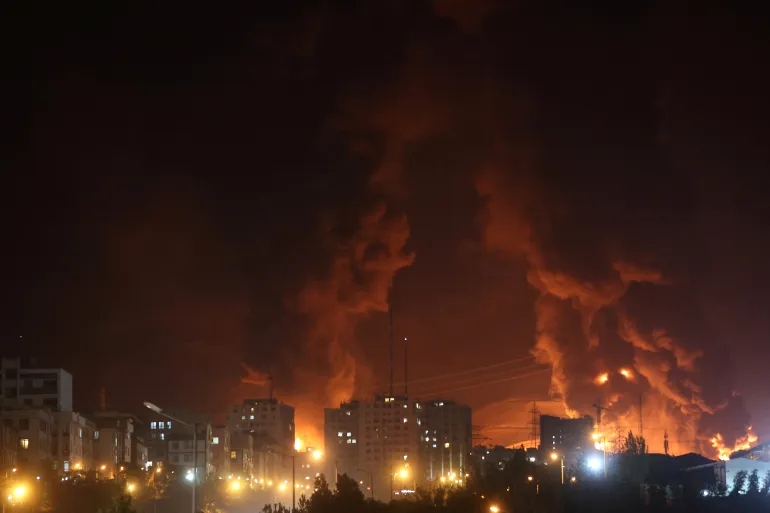
Continue reading
Iran Emerges Strongest From This War

Dr. Salam al-Obeidi

In the finally analysis Iran still has about 600 kilograms – that is 60% enriched uranium – that it has hidden. Iran has nuclear physicists and it has technical capabilities. From a theoretical point of view, the amount of uranium ot still has could be enriched to 90%, fissile material that is needed for a nuclear bomb, within a few months. All that separates Iran from that is a fatwa made by its Supreme Leader Ali Khamenei.

We must remember that the conflict was imposed on Iran and therefore it was very important for Tehran to withdraw from it. And hence upon withdrawal, it symbolically bombed Israel again as a final show of force.

The world saw that the Iranians know how to fight and are ready for a major war (even though they don’t seek it). But Iran’s enemies are not ready for a major war. Realizing that the Iranian street would not revolt, they preferred to hold off. Netanyahu has so far been unable to drag the United States into a full-scale conflict with Iran. Without that, Israel can do nothing.

Israel has suffered heavy losses without achieving its primary goals. Netanyahu’s window of opportunity is about to close (unless he embarks on another adventure). Trump has emerged from the deadlock, as expected, similar to 2020. Now he’ll await the Nobel Prize.

At this point, it can be said that Israel has lost. It failed to drag the United States into a war aimed at destroying Iran, it did not eliminate the Iranian nuclear program, and did not change the regime in Iran.

Iran suffered damage, but it did not lose. In fact, it gained a lot.

The Iranians gained invaluable experience and learned many lessons. They saw all of Israel’s weaknesses, understood what to expect from whom in the region and the world. They tested their missiles in real combat against technologically-advanced powers.

Finally, the Iranians eliminated a huge number of internal enemies. Overall, they realized the magnitude of the disaster not before it was too late, but while they still had the time and strength to eliminate the threat. The purges in Iran will continue for a long time to come. This will strengthen the Supreme Leader’s authority.

As well, the positions of those in Iran who advocate for nuclear weapons have also been strengthened.

Dr al-Obeidi is an Iraqi writer and contributed this piece to Al Rai Al Youm.

Continue reading
Iran Launches 400 Ballistic Missiles on Israel

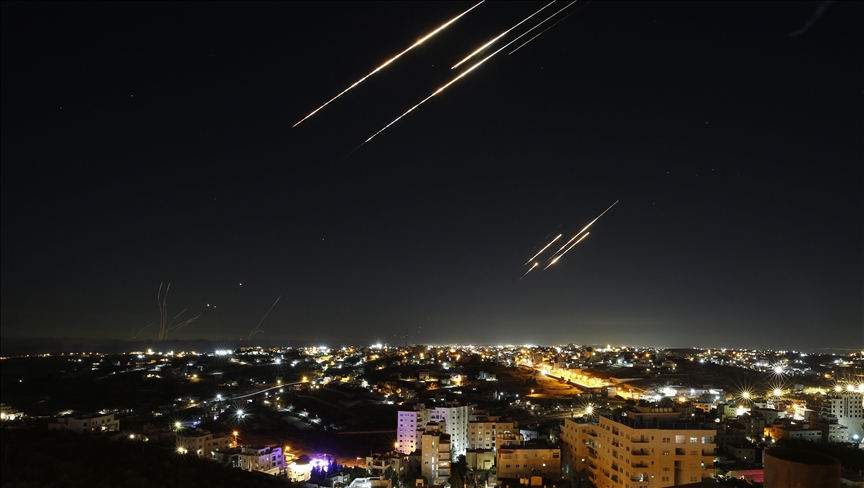
Iran has fired over 400 ballistic missiles and hundreds of drones on Israel since 13 June according to an Israeli Government statement.

This was in retaliation of the Israeli mass attacks on Iran that begun on Friday, and as instituted by the extremist government of Benjamin Netanyahu.

The Israeli statement also confirms that the Iranian attacks have resulted in over-40 confirmed impact sites, without specifying the exact locations according to Anadolu.

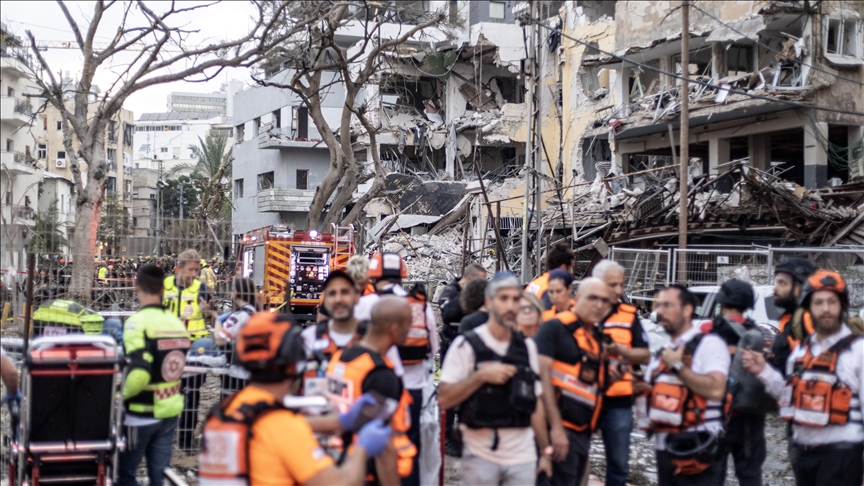
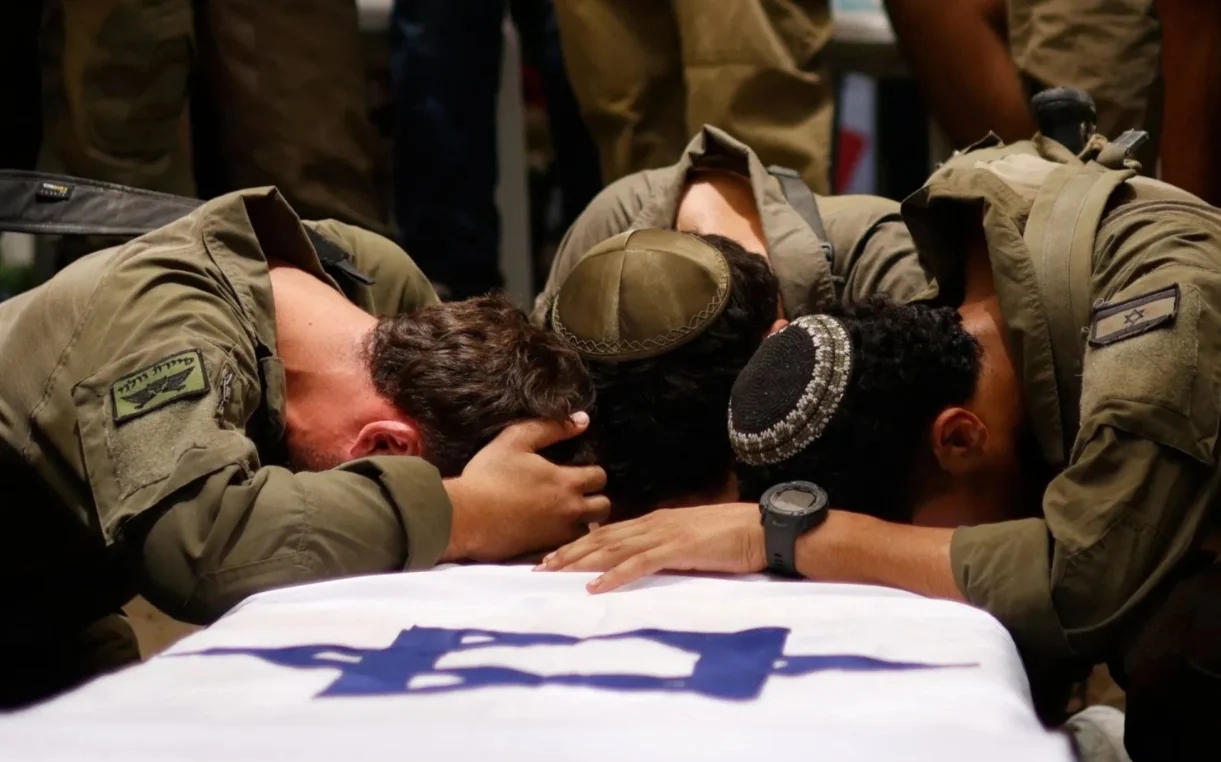
At least 24 Israelis were killed and 804 others injured in the Iranian attacks, including eight in critical condition, the statement added.

The Israel-Iran war is still in its 6th day and is set to continue.

Continue reading
Iran Targets Israel, Ignores Trump’s Surrender Call

Iranian missiles have continued to fell on Israeli areas, Tuesday/Wednesday according to the Israeli media which also reported that the projectiles fell after the Israeli defenses failed to intercept them.

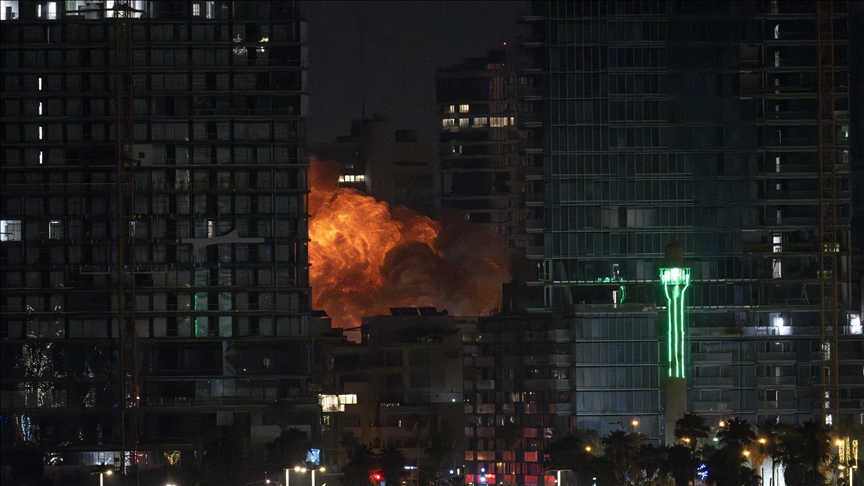
This failure caused fires and much damages including to a building after two missile salvos from Iran of approximately 30 missiles in less than an hour on Israel.

Iran’s Revolutionary Guard (IRG) announced in the attack it used hypersonic ballistic missiles for the first time. Observers say this is a clear message to US President Donald Trump, to steer away from entering the war despite his calls for Iran to surrender unconditionally.

At 00:35 local time (GMT+3), the Israeli military said in a statement: “Alerts were activated in several areas within the country after missiles were identified being launched from Iran towards Israeli territory,” as reported by Anadolu.

The Hebrew newspaper Yedioth Ahronoth reported air raid sirens blasted in the greater Tel Aviv area, Haifa, and Jerusalem, because of the eighth Iranian missile barrage since Tuesday morning.

Loud explosions in Jerusalem were held as a result of the interception of Iranian missiles according to the Turkish news agency.

On the other hand, Israel’s Channel 12 reported it estimated Iran fired 20 missiles at Israel in that barrage and as grudgingly confirmed by the Israeli  Army Radio.

This is while Israel Hayom reported that at least two missiles fell in Jerusalem and the Sharon region near Tel Aviv and with the Hebrew media also reporting of the damages caused in central Israel.

It added that missile fragments fell on a building in the northern region, while several fires broke out in open areas as a result of the fall of Iranian missiles or their fragments.

Air raid sirens

Air raid sirens sounded in central Israel, including in the Greater Tel Aviv, Ashdod, Rishon LeZion, and Netanya, following the detection of new missile launches from Iran. This is the ninth barrage since Tuesday morning with at least 10 rockets toward Israel and resulted in mass fires that engulfed at least 20 vehicles in central Israel.

The extensive fires were reported and dealt with Israeli fighters despite the strict news blackout the Israeli government is imposing and especially when reports are made on military bases and other installations.

Iran Fateh Rockets

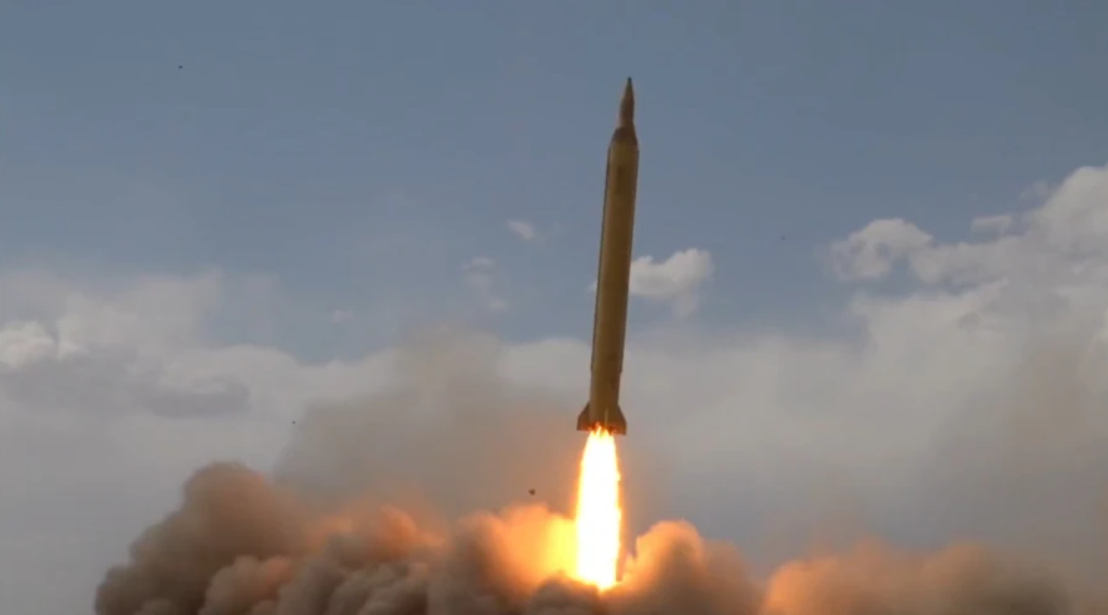
Iran’s Revolutionary Guard said the first-generation hypersonic Fatah ballistic missiles are being used for the first time and wants to send a clear message to Israel and the USA,that Iran is willing to go the full away despite the extensive Israeli attacks on the country.  

“The powerful and highly maneuverable Fatah missiles repeatedly shook the shelters of the cowardly Zionists this evening after penetrating their defensive shield,” an IRG statement conveyed.

“Tonight’s missile attack proved that we have established complete control over the skies of the occupied territories, and that their residents are now defenseless against Iranian missile attacks,” it added.

According to Army Technology, a leading global website specializing in analyzing and documenting information related to defense industries and military technologies, the Fateh missile is one of the most advanced weapons in the Iranian Revolutionary Guard’s arsenal, thanks to its hypersonic speed.

The missile has a range of approximately 1,400 kilometers and features a movable nozzle and an advanced guidance system, allowing it to adjust its trajectory during flight and perform precise maneuvers both inside and outside the atmosphere, including lateral and rotational movements.

Continue reading
Iran-Israel War: Cost And Opportunities!

By Mohammad Abu-Rumman

Benjamin Netanyahu has placed the Iranian regime, the Wilayat al-Faqih system, before a fateful challenge through a harsh pre-emptive strike. While extremely risky, the strike was not decisive enough to settle the confrontation. Netanyahu himself did not expect that an ideological-nationalist regime like Iran’s would surrender and offer immediate concessions following the strike, without launching a retaliatory blow against Israel.

Despite Iran’s unprecedented powerful strikes on Tel Aviv, the reformist current in Iran, represented by Foreign Minister Abbas Araghchi, has also demonstrated its continued commitment to “the negotiating table” and to finding a way out of this war. Iran has deliberately avoided using its full missile capabilities against Israel to prevent the battle from reaching the point of no return.

Current indicators suggest that this war will likely not last long, nor will it expand geographically, because the destruction costs—for both sides—are immense. For Iran, this includes damage to its oil facilities, which are the backbone of its economy, as well as the protection of what remains of its nuclear program and infrastructure. For Israel, the fact that Iran managed to breach the Iron Dome and cause major direct damage in the heart of Tel Aviv and Haifa presents a reality that Israelis cannot endure.

In this light, there will likely come a tipping point at which both parties will be willing to end the conflict. The timing of that moment will be decided by the U.S. administration, which will step in to halt the military escalation. But when will this moment arrive? It will come when both sides realise that they can no longer achieve significant additional objectives, and that the cost of continuing the conflict far outweighs the cost of stopping it, especially given that a so-called “knockout blow” is impossible in such existential wars.

On the Israeli side, there are two major areas of superiority: First, Israel’s air force has successfully destroyed much of Iran’s air defense systems, allowing it to operate freely over Tehran and strike targets at will. Second, intelligence penetration, which could lead to further surprises that may force the Iranians to retreat or make subsequent concessions. However, Israel’s major vulnerability lies in its inability to withstand sustained, large-scale missile attacks, especially after a prolonged multi-front military conflict.

As for Iran, it has two primary objectives in the current military confrontation: To preserve the political legitimacy of the Wilayat al-Faqih regime, which is built on religious ideology and propaganda. Failing to respond or retreating now would reflect poorly internally and could erode the regime’s very source of legitimacy. To protect Iran’s deterrence capacity and prevent its regional standing from deteriorating—especially after losing the bulk of its regional influence in the aftermath of “Flood of al-Aqsa” (the Gaza war).

American intervention, whether military or diplomatic, will be decisive in ending this conflict. It is evident that President Donald Trump prefers a negotiated path, aiming for political, military, and economic gains. Netanyahu, however, is betting that a major military defeat for the Iranian regime will lead not only to concessions on its nuclear program (the primary stated objective) but potentially to changing or collapsing the regime itself, thereby neutralizing it within the regional power structure. This would constitute a strategic shift in the regional security equation in Israel’s favour.

Direct US military involvement remains unlikely, except in two scenarios: If Israel were to request assistance after a massive and successful missile strike against its territory. If the U.S. concludes that Iran will not back down unless there is a more dramatic shift in the military balance of power that compels it to return to the negotiating table and offer substantial concessions.

This equation was not the same two years ago. Back then, Iran had greater geopolitical space and extensive tools of influence in the region. However, what has occurred with the fall of Bashar al-Assad’s corridor (the Syrian axis), and the diminished power of Hezbollah and Hamas, has cost Iran critical advantages in the regional balance of power. After this war, there will be significant consequences even for Iran’s remaining influence in Iraq, which may become the final outpost lost by Tehran, ending a twenty-year effort (since the 2003 invasion of Iraq) to weave its intricate carpet of regional influence.

Mohammad Abu Rumman is the Academic Advisor of Politics and Society Institute in Amman and has contributed this article to The Jordan Times.

Continue reading