King Abdullah: Jordan Supports Rebuilding Gaza, Rejects Displacement

His Majesty King Abdullah II on Tuesday affirmed Jordan’s support for the plan to rebuild Gaza, which will be presented to active partners to gain international support, according to a royal court statement.

Delivering Jordan’s address at the Extraordinary Arab Summit hosted by Egypt, dubbed the ‘Palestine Summit,’ His Majesty reiterated Jordan’s total rejection of all attempts to displace Palestinians in the West Bank and Gaza and annex land, in addition to condemning the Israeli decision to block humanitarian aid to Gaza.

The King stressed the importance of maintaining the ceasefire in Gaza and ensuring the implementation of all its phases, as well as stopping the dangerous escalation of the situation in the West Bank.

Following is the English translation of Jordan’s address at the Extraordinary Arab Summit and as printed in the Jordan Petra news agency:

“In the Name of God, the Compassionate, the Merciful,

Prayers and peace be upon our Prophet Mohammad,

Your Majesty King Hamad bin Isa Al Khalifa,

Your Excellency President Abdel Fattah Al Sisi,

Your Highnesses and Excellencies,

Peace, God’s mercy and blessings be upon you.

I would like to first express my thanks to my brother President Abdel Fattah Al Sisi for hosting this extraordinary summit during this difficult phase, which demands stepping up Arab coordination and unifying our positions, and to my brother, King Hamad bin Isa Al Khalifa for his outstanding efforts in presiding over the ordinary session of the summit. I also thank the Secretary General of the Arab League and its staff for their efforts in organising our summit today.

My brothers,

We salute the steadfastness of the Palestinian people on their land, and renew our support for our Palestinian brethren in their efforts to gain their full legitimate rights, foremost of which is their right to freedom and an independent and sovereign state on their national soil, on the basis of the two-state solution, which is the only way to achieve just and comprehensive peace that guarantees security and stability for our region.

At this delicate stage, when the Palestinian cause is facing very serious challenges, it is imperative to work urgently together to counter any attempts to impose solutions at the expense of Palestinians and liquidate their cause.

We stress the importance of maintaining the ceasefire in Gaza and ensuring the implementation of all its phases. We also reiterate our rejection of the Israeli decision to block the entry of humanitarian aid into Gaza, which constitutes a violation of the most basic principles of international law.

Thus today, we need to prioritise four main themes:

First: Our total rejection of all attempts to displace Palestinians in the West Bank and Gaza, and to annex land, which is a flagrant violation of international law and international humanitarian law, and our support of the plan to rebuild Gaza, to be presented to active partners in order to gain international support.

Second: Supporting the reform efforts of the Palestinian National Authority in the interest of our Palestinian brethren, as well as preparing a clear and implementable vision for the administration of Gaza and linking it to the West Bank in order to provide all basic services and ensure the required security.

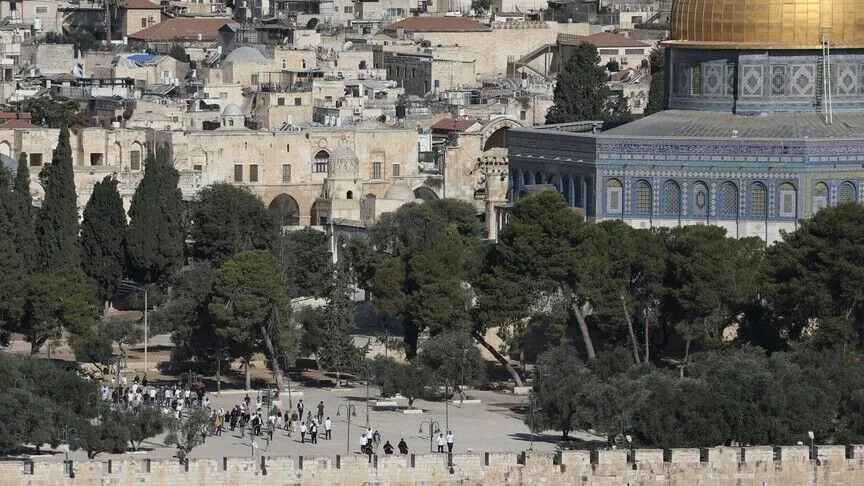
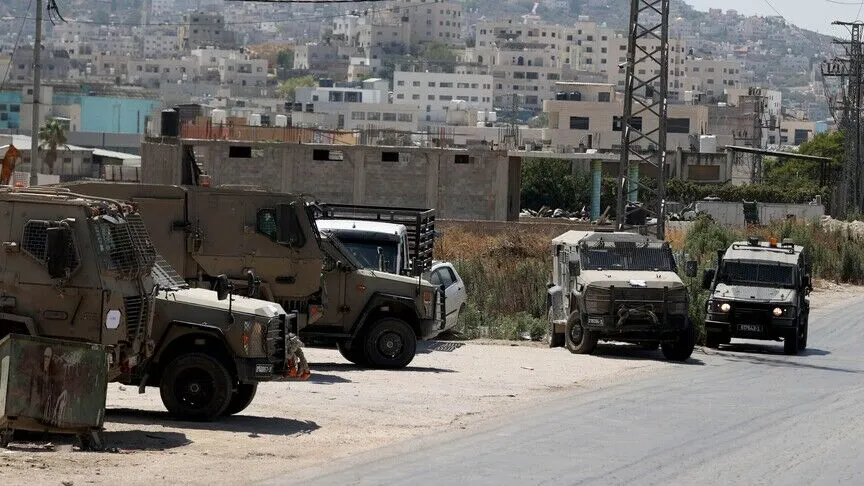
Third: The need to stop the dangerous escalation in the West Bank, which threatens the existence of Palestinians in the West Bank and is resulting in the displacement of some of them, leading to the erosion of prospects for stability and peace in the entire region. We also need to counter the violations of Muslim and Christian holy sites in Jerusalem and preserve the historical and legal status quo, especially during the holy month of Ramadan, to prevent attempts by extremists in the Israeli government to exacerbate the situation.

Jordan will persist in undertaking its historic duty to safeguard Muslim and Christian holy sites under the Hashemite Custodianship.

Fourth: Reaffirming that the two-state solution is the only way to achieve just and comprehensive peace that guarantees the establishment of an independent Palestinian state on Palestinian national soil, with East Jerusalem as its capital. The two-state solution provides a comprehensive political horizon to stabilise the region and spare its peoples further conflict.

My brothers,

Since the beginning of Israel’s unjust war on Gaza, Jordan’s position has been clear: we reject any attempt at displacement and any measure to liquidate the Palestinian cause and undermine the two-state solution.

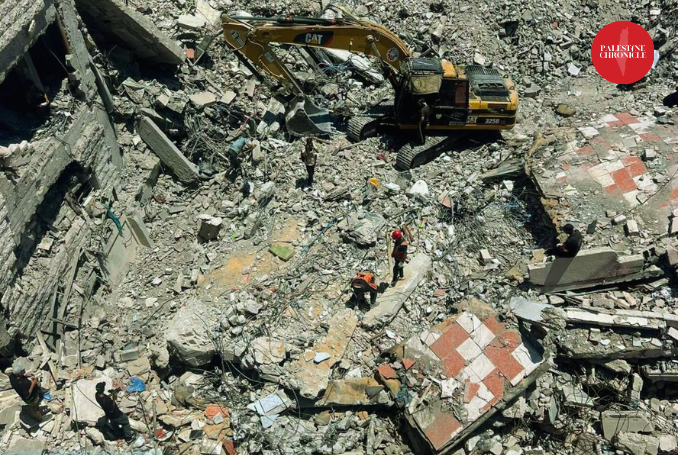
An immediate and effective regional and international effort must be launched to address the tragedies, killings, terror and destruction caused by the war on Gaza. Efforts must focus on providing shelter, treatment, and food for the people in Gaza, and we must work to implement plans to rebuild what was destroyed by the war.

The humanitarian response in Gaza must continue. Jordan will continue to provide aid to Gaza by land and air. We also appreciate the efforts of our brothers and friends and their continued work alongside us to provide relief to Gazans.

My brothers,

The outcome of our summit must be practical steps to support our Palestinian brethren, support their steadfastness on their land, alleviate their suffering, and mobilise international efforts to stop everything that prevents the achievement of peace, which cannot be realised through military escalation, displacement of peoples, and denial of their rights.

Peace, God’s mercy and blessings be upon you.”

The Jordanian delegation at the Extraordinary Arab Summit included Prime Minister Jafar Hassan, Deputy Prime Minister and Foreign Minister Ayman Safadi, Director of the Office of His Majesty Alaa Batayneh, and Jordan’s Permanent Representative at the Arab League Amjad Adaileh.

Continue reading
Jordan’s Fight Against Displacement

By Dr Amer Al Sabaileh

With the conclusion of the first meeting between President Donald Trump and His Majesty King Abdullah, Jordan finds itself facing a real political test. The strategy of buying time with an administration that has been in office for only a few weeks may not offer much room for maneuvering, making it increasingly difficult to navigate the direction of US policy. Jordan has sought to carve out a space for itself by engaging with the American president and promoting an alternative that has broader Arab support. However, this approach requires swift action and the presentation of practical alternatives that could gradually shape Trump’s perspective.

Jordan now needs to build strong alliances to manage the next phase and counter the looming threat of forced displacement of Gaza’s population—a proposal that Trump has openly suggested as the only solution. Regionally, Jordan finds itself alongside Egypt as both countries face direct pressure from the US displacement plan. This shared challenge has reinforced their cooperation on various regional issues over the years, yet expanding the Arab alliance has now become an urgent necessity. The multiple forms of US pressure on Egypt make it crucial to establish a stronger, more resilient Arab coalition, with Saudi Arabia playing a central role.

Trump views Saudi Arabia as a gateway to regional peace and a key economic partner, not only for the United States, but also for a major strategic project aimed at linking India to Europe through the Arabian Peninsula, the Mediterranean, and Italy. This highlights the importance of Saudi Arabia’s role in Trump’s vision. At the same time, Jordan’s southern geography is closely tied to Saudi Arabia within this ambitious economic corridor, which strengthens shared economic interests between the two countries. This growing economic partnership could lay the groundwork for deeper political coordination, including a potential Jordanian-Saudi understanding regarding the proposed displacement policy.

On the international level, Jordan can work to rally support for its political stance, which enjoys broad consensus among key global actors. However, at this stage, prioritising Arab alliances and maintaining effective communication channels with the US administration is far more critical than merely seeking international backing.

Domestically, Jordan’s internal front remains the most crucial. The current climate presents an opportunity for the state to reinforce national unity, as growing regional instability has heightened public awareness of external threats. This requires decisive steps to foster genuine political participation and address long-standing grievances of exclusion and marginalization. A shift in political discourse, engagement strategies, and governance methods is necessary to strengthen national cohesion. Uniting Jordanians under an inclusive and representative state framework will be vital in shaping a new phase in the country’s history.

What remains striking is how Jordan was suddenly thrust into the equation of resolving the Gaza crisis. From the outset of the war, discussions primarily centered around Egypt due to its direct geographical connection to Gaza. However, Trump’s unexpected move to involve Jordan has now exposed the country to two major risks: the potential displacement of Gaza’s population and, more alarmingly, the forced displacement of West Bank residents. The push to make Jordan part of the US plan for Gaza raises concerns that this could lead to an imposed reality in which Jordan is expected to absorb West Bank residents as well.

Categorically rejecting forced displacement must be Jordan’s top priority. However, achieving this requires a high level of political agility and the ability to engage in direct negotiations with all relevant stakeholders. This approach would strengthen Jordan’s regional role at a time when further Israeli escalation across multiple fronts, including Gaza and the West Bank, seems increasingly likely. Such an escalation could be used by the Israeli government to block political maneuvering and impose new realities on the ground. A military confrontation could shift the issue of displacement from a political debate to an unavoidable reality, forcing all parties to confront its consequences.

The author is an academic writing for The Jordan Times.

Continue reading
King Abdullah: No to Displacement

Jordan’s King Abdullah II reiterated on Monday his firm opposition to the displacement of Palestinians.

His remarks came during a meeting with military retirees at the Royal Hashemite Court, according to a statement.

“For 25 years, I have been saying no to displacement, no to resettlement, no to the alternative homeland,” the court quoted the monarch as saying, denouncing “those who question these firm positions.”

He also reiterated “the importance of de-escalation in the West Bank,” highlighting that “achieving just peace on the basis of the two-state solution is the only way to guarantee stability in the region,” according to Anadolu.

The Jordanian monarch underscored that “preserving Jordan’s interest and stability and protecting Jordan and Jordanians are above all considerations,” stressing the importance of rebuilding Gaza “without displacing Palestinians in Gaza and the West Bank.”

Trump hosted Jordan’s King Abdullah at the White House last week, renewing his insistence that Gazans be relocated and the enclave controlled by the US to be redeveloped into a tourist area.

The ceasefire deal has been in place in Gaza since Jan. 19, pausing Israel’s genocidal war that has killed nearly 48,300 Palestinians and left the enclave in ruins.

The International Criminal Court issued arrest warrants in November last year for Netanyahu and his former Defense Minister Yoav Gallant for war crimes and crimes against humanity in Gaza.

Israel also faces a genocide case at the International Court of Justice for its war on the enclave.

Continue reading
Saudi Arabia Holds 5-Nation Summit For Gaza

Saudi Arabia is set to host a five-nation Arab meeting on 20 February to discuss an Egyptian-led proposal for rebuilding the Gaza Strip while ensuring that its Palestinian residents are not displaced, an Arab League official announced.

The meeting will bring together officials from Saudi Arabia, Egypt, Jordan, Qatar, and the United Arab Emirates (UAE), according to Hossam Zaki, the Arab League’s assistant secretary-general.

In a televised statement, Zaki noted that Palestine may also be invited to take part in the discussions, which aim to establish a framework for the reconstruction initiative ahead of an upcoming Arab summit according to The Palestine Chronicle.

https://youtube.com/watch?v=vcly18dvil4%3Ffeature%3Doembed

Egypt has scheduled an emergency Arab summit for 27 February, following the controversial proposal by former US President Donald Trump to take control of Gaza and forcibly resettle its Palestinian population.

Trump claimed his plan would turn the devastated enclave into the “Riviera of the Middle East,” a proposal widely condemned as ethnic cleansing.

“The countries participating in the upcoming meeting seek to coordinate their positions regarding the Egyptian proposals that will be presented at the Arab summit,” Zaki stated.

He added that the summit could be postponed for logistical reasons to ensure maximum participation from Arab leaders.

https://www.palestinechronicle.com/israel-is-threat-to-all-arab-nations-ramzy-baroud-speaks-to-egypts-al-dostour/embed/#?secret=mqxlQ55DlN#?secret=ZpysDELW92

According to Zaki, the summit will aim to unify the Arab stance on Palestine, firmly reject displacement schemes initiated by Israel and backed by the US, and put forward a collective Arab counterproposal to Trump’s plan.

On Sunday, Egyptian President Abdel Fattah el-Sisi confirmed that Cairo is working on a comprehensive reconstruction plan for Gaza, emphasizing that the initiative would not involve the forced relocation of Palestinians.

The discussions come in the wake of a ceasefire agreement that took effect in Gaza on 19 January, ending months of Israeli attacks that killed and wounded over 160,000 Palestinians—mostly women and children—and left much of the enclave in ruins.

Continue reading
Jordan’s Red Lines

Jordan’s King Abdullah II will reject US President Donald Trump’s plan to take over Gaza and resettle Palestinians even if Washington cuts aid to the kingdom, local media said. 

Abdullah is set to meet Trump at the White House on Tuesday, in the first meeting between an Arab leader and the US president since he assumed office last month. 

The meeting comes shortly after Trump said Monday that he may cut aid to Jordan and Egypt if they don’t take in Palestinians from Gaza. 

The US is a key supporter of Jordan, having signed a memorandum of understanding in September 2022 under which Washington provides $1.45 billion in annual financial aid to the kingdom from 2023 to 2029. 

Last month, however, the Trump administration decided to freeze all foreign aid for 90 days to conduct a review process.  

Red lines 

In an article titled “The King and Trump: A Historic Meeting,” Al-Dustour editor-in-chief Mustafa Ryalat described the monarch’s visit to Washington as “historic in every sense of the word.” 

He emphasized that the meeting comes at a “highly sensitive political moment as crises escalate across the region, but the king carries with him the well-known red lines of Jordan.” 

Ryalat recalled that when Trump’s so-called “deal of the century” was rumored to include a plan for resettling Palestinians to Jordan as an alternative homeland, King Abdullah responded, “As a Hashemite, how can I back down on Jerusalem? Impossible. This is a red line. No to Jerusalem; no to an alternative homeland, no to resettlement [for Palestinians in Jordan].” 

Trump’s “deal of the century,” unveiled in 2020 as a proposal for resolving the Israeli-Palestinian conflict, was widely rejected by Palestinians and the broader Arab world as it heavily favored Israel at the expense of Palestinian rights. 

Ryalat acknowledged the difficulty of the current situation, stating, “Yes, the challenge is great, and yes, we are dealing with the most dangerous issue of the moment – forced displacement – but we, as Jordanians, led by our king, do not have the luxury of making deals at the expense of our principles. In our hands, we hold a firm position: No to resettlement.”  

3 possible scenarios 

In an article titled “The King-Trump Meeting: Three Scenarios for the Region’s Future,” Al-Rai editor-in-chief Khaled Al-Shuqran described the summit as a “critical turning point that could either reshape Washington’s position or deepen the crisis, with analysts focusing on three possible outcomes.” 

He said the king, as a strategic US ally, could succeed in persuading Trump to abandon his displacement plan and return to supporting the two-state solution as the only viable path to peace. 

Shuqran said another possible scenario includes US insistence on implementing the displacement plan, whether by forcibly transferring Gaza’s population to other countries or displacing them internally within the enclave. 

The Jordanian journalist said Tuesday’s meeting could also end without a resolution, leaving the situation unchanged, with Israel maintaining its occupation, continuing the siege on Gaza, and freezing peace negotiations. 

Shuqran warned that the third scenario “is the most dangerous because it fuels Palestinian despair and could trigger a third Intifada, potentially more violent than before, especially with rising extremism on both sides.” 

“This stagnation will drain the resources of neighboring countries like Jordan, Egypt, and Lebanon, all of which are already struggling with refugee crises, leading to further social and political instability in the region,” he said. 

“The US decision will determine not just the fate of the Palestinians, but also the future of regional alliances and the so-called ‘economic peace’ strategy that Trump’s administration has been promoting.”  

Blackmail 

In an article titled “Cutting US Aid to Jordan: We Will Not Bow, We Will Not Bargain,” journalist Awni Rjoub criticized Trump’s threat to halt financial assistance to Jordan, calling it “a new chapter of cheap political blackmail aimed at subjugating Jordan and forcing it to accept the rejected deal of the century.” 

“Trump believes that Jordan, a small country in size but strong in will, can be coerced with financial threats. He is gravely mistaken,” he said. 

“Jordan – its leadership and its people – will not bow. Our hands will not be forced, even if the entire world stands against us,” he added.    

Jordan’s leverage 

In the Al-Ghad newspaper, journalist Nidal Mansour highlighted the diplomatic significance of the king’s visit to the US. 

“This is a politically complex and sensitive visit that will showcase Jordan’s strategic leverage after decades of close relations with Washington. The outcome will define the next phase both politically and economically.” 

In an article titled “Before the King Meets Trump,” Mansour noted, “This may require shifts in alliances and strategies to confront upcoming challenges.” 

“What is certain is that Jordan-US relations are entering uncharted waters under Trump, and the world is watching closely.” 

Under the headline “Jordan, Trump, and the Bold Confrontation,” journalist Mundher Al-Houarat argued, “Trump has gone too far. He does not care about international law, making legal appeals futile.” 

Instead, he suggested that Jordan should “deepen alliances with China, Russia, and the EU, convene an emergency Arab League summit, and engage with US institutions and the UN.

However, given Trump’s unpredictable nature, these efforts may not yield the desired results.” 

He proposed a more direct approach: “To make Trump understand the consequences of his actions, Jordan must consider bold steps – such as hinting at freezing the Wadi Araba Peace Treaty (1994) with Israel, halting security and military cooperation with the US, and outright rejecting any aid that comes with conditions,” according to Anadolu.

Continue reading