Jordan’s PM: ‘Greater Israel’ Illusion

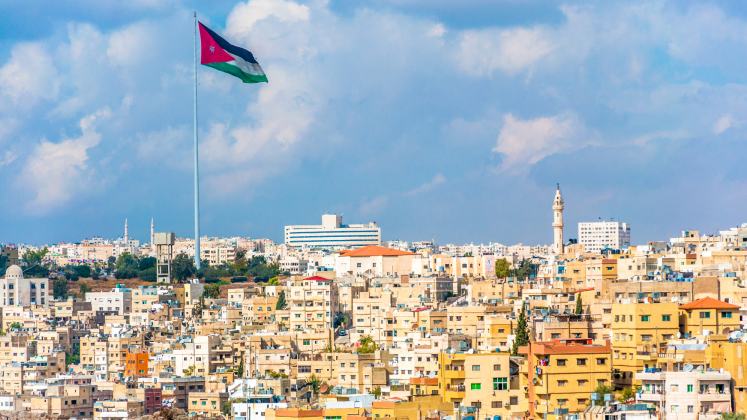
Jordanian Prime Minister Jafar Hassan on Tuesday called the so-called “Greater Israel” vision an “illusion,” stressing that Tel Aviv is “isolated” due to its “extremist” policies.

“We hear about visions and proposals that imply a perpetual war with no end, such as the illusion of Greater Israel entertained by extremist politicians in Israel,” Hassan said during a meeting in Amman with his Lebanese counterpart, Nawaf Salam, who arrived in the Jordanian capital early Tuesday for an unannounced visit.

He said Israel is “isolated and besieged because of its extremist policies.”

“The entire reality points to (Israeli) policies that deepen hatred and resentment as a result of ongoing massacres, and the peoples of the world and the region will not forgive them,” he added in his comments carried by the official Petra news agency.

On Monday, Jordanian government spokesman Mohammad al-Momani accused the far-right in Israel of “threatening the region and undermining prospects for a two-state solution.”

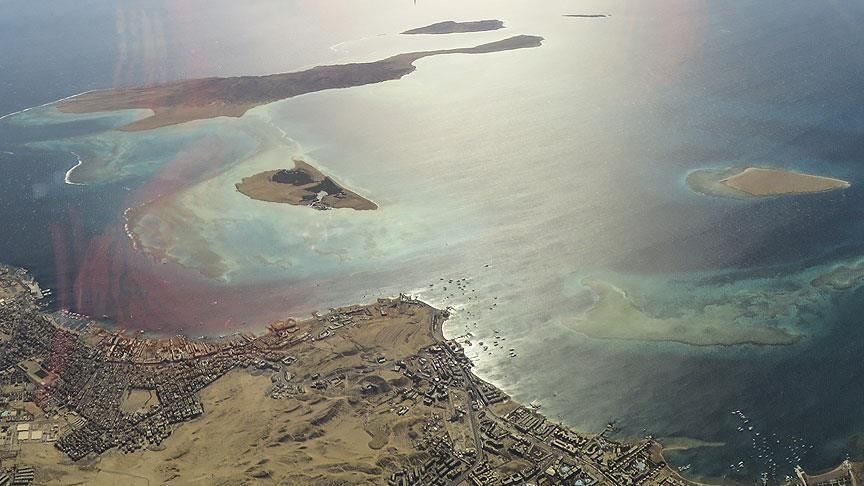
“Greater Israel” is a Biblical term used in Israeli politics to refer to the expansion of Israel’s territory to include the West Bank, Gaza, Syria’s Golan Heights, Egypt’s Sinai Peninsula, and parts of Jordan.

Last week, Israeli Prime Minister Benjamin Netanyahu told a news channel that he feels “very attached” to the vision of a Greater Israel. He said he considers himself “on a historic and spiritual mission” which “generations of Jews that dreamt of coming here and generations of Jews who will come after us,” according to Anadolu.

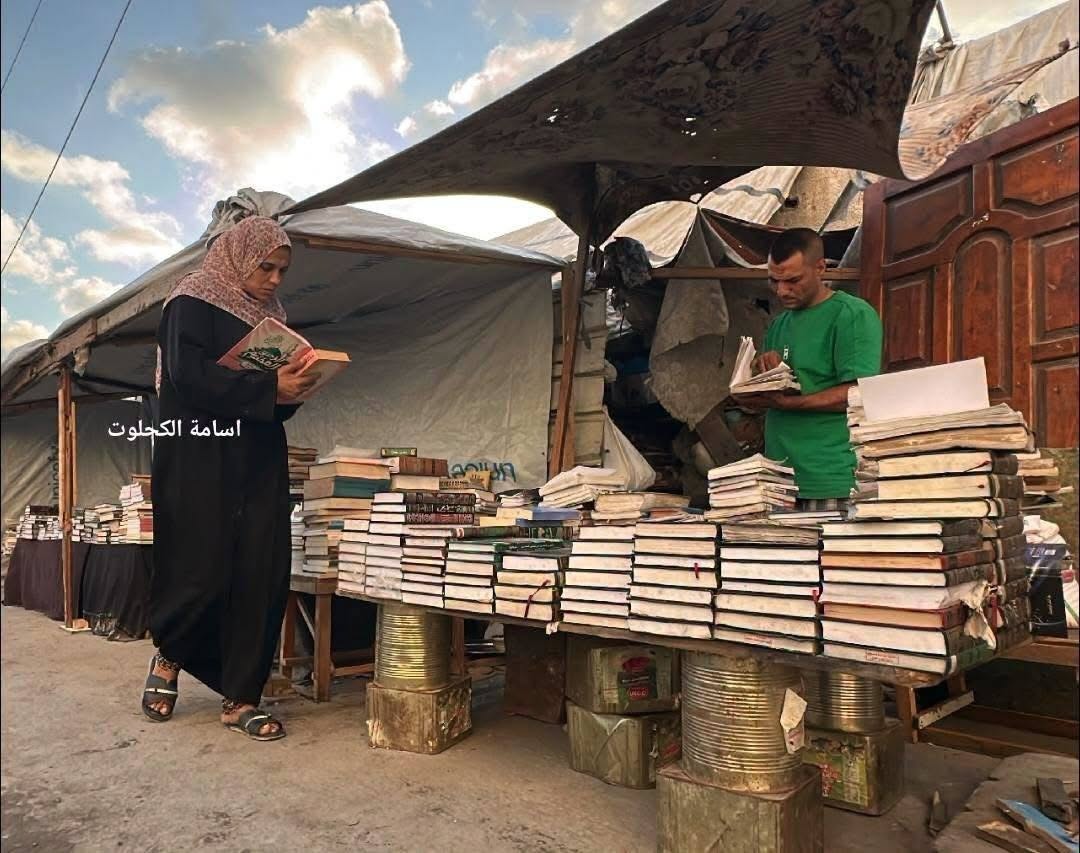
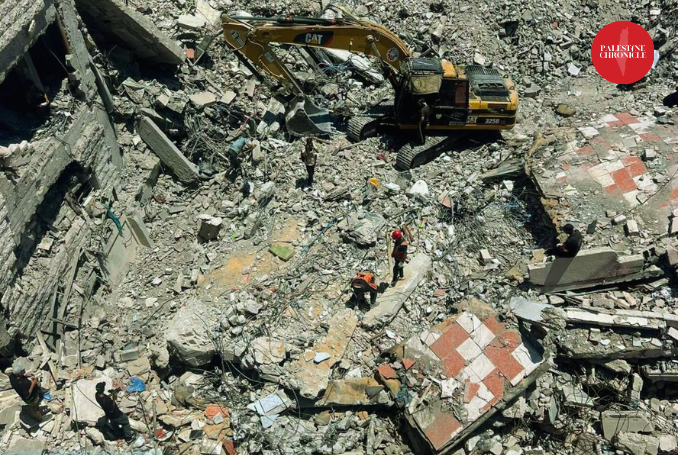
Israel has killed more than 62,000 Palestinians in Gaza since October 2023. The military campaign has devastated the enclave and brought it to the verge of famine.

Last November, the International Criminal Court issued arrest warrants for Netanyahu and his former Defense Minister Yoav Gallant for war crimes and crimes against humanity in Gaza.

Israel also faces a genocide case at the International Court of Justice for its war on the enclave.

Continue reading
France to Airdrop Mass Aid Into Gaza

France announced Tuesday that it will airdrop a total of 40 tons of humanitarian aid into the Gaza Strip starting Friday.

“We will organize, starting Friday and in close coordination with Jordanian authorities, four flights carrying 10 tons of food each into the Gaza Strip,” Foreign Minister Jean-Noel Barrot told French broadcaster BFM TV, as he is co-chairing a high-level conference on a two-state solution to the Palestinian-Israeli conflict at UN headquarters in New York according to Anadolu.

Stressing that the air route is “useful” but “not sufficient,” he noted that 52 metric tons of French humanitarian cargo are currently blocked just a few kilometers from the Gaza Strip.

“It is therefore essential that Israeli authorities finally agree to reopen land access to Gaza in a sufficiently meaningful way to ease the horrific suffering of the civilian population there,” Barrot said.

He further reaffirmed that they had achieved and “even exceeded” the goals that they had set by creating momentum with Britain’s announcement that it is considering recognizing the state of Palestine.

“Other countries are following suit,” Barrot said. “In short, we have revived a political horizon: the two-state solution, which was on the verge of collapse.”

Continue reading
Can Arab States Stop The Israeli Genocide?

Neither the Israeli war nor the ethnic cleansing of Gaza will ever stop if there is no forceful, determined intervention from the outside. 

And primarily this intervention has to come from the Arab countries and the pan-Arab nation as a whole: If these states – so-called Arab brethren and Islamic affiliates bound by common language and culture – don’t stand up and say ‘no’ to Netanyahu’s bloody war on Gaza, now in its 15th month, the ethnic cleansing, devastation, destruction and possibly the near and future displacement of the Palestinian people will continue to be hummed.

No bland utterances

Arab countries, from the far-west to the center and all the way to the east must move beyond bland utterances and condemnations of the mindless bloody Israeli military actions on Gaza that has so far resulted in the killing of more than 50,000 people, internally displaced more than 2 million of the population with 14,000 dead yet to be recovered from under the millions-of-tons of rubble that needs years to clear out.

As well, and further stated by Palestinian activist Dr Mustafa Al Barghouti, Arab states have to now develop at least a two-pronged strategy to drive the message across that they will not stand ideally by and watch the Palestinian people of Gaza being massacred and driven to smithereens.

Arab countries, and incidentally this should have been done a long time ago, which have normalized with Israel must freeze their diplomatic relations with the Zionist entity. Their leaders must say to Prime Minister Benjamin Netanyahu that relations will remain cut and frozen and that no further relations will take place, until he ends the Israeli war on Gaza and from now on, its back to the “bad old days” of a black Cold War between the Arab countries and Israel. 

The message needs to be loud and made crystal clear by Arab leaders for Netanyahu and his extremist government and military men to stop the carnage, killing and mayhem that is being created in Gaza and its people.

Determined Arabs

It is only through such a determined approach that will force the Israeli government, its leaders and ministers to sit, think and possibly review their slaughter of the Gaza enclave. At the very least, they would be forced to put the “brakes on” to their “happy attitude” of committing their atrocious massacres carried out almost daily since 7 October, 2023.

What is needed is a credible deterrence with those in power moving beyond their pedestals and high chairs and plush stages and put words and action together for the Arab world is nowhere as helpless on this issue as it is being projected.

All of the 22 Arab countries have now a real opportunity to stop the Gaza massacres through the new American president at the White House Donald Trump. He forced Netanyahu’s hand for a temporary ceasefire starting 19th January, 2025 which continued for almost two months and he can do it again if he wanted to and/or forced to. At the moment there is no political will.

Effective tool

Despite the present-relaunching of the war on 19 March, basically through an American green-light, Arab countries can have an effective and meaningful role if they choose to. After all, Trump soon backed down when he first suggested that the USA take over Gaza and turn it a Middle East Riviera whilst displacing its people to neighboring countries such as Jordan and Egypt.

He soon retreated from pursuing such an idea especially when Arab capitals such as Cairo, Amman, Riyadh, Algiers, Beirut, Kuwait, Doha, Muscat and Abu Dhabi condemned such a move with Netanyahu even having the audacity to say  Palestinians can have their state in Saudi Arabia. Trump’s Riviera idea soon became bogged down but Israel shortly after, restarted its war on Gaza, again with the blessing of the US administration.

But here again, and today the Arab countries, can make their move. The USA has vital, strategic, economic and political interests in the world and these can be used in different ways to persuade Washington to pressure Tel Aviv to back down on Gaza, other than promising to continue its bloody onslaught on ordinary Palestinians in Gaza with the hope of getting rid of Hamas and which according to their calculations they can’t beat until 2027 and/or whenever.

Netanyahu must be made to stop! He is not doing so because of the ongoing military supplies and backing from the United States and from the muted Arab response which have to go beyond condemnation and denunciations. Arab states have the tools at their disposal, it is time for these to be uses effectively otherwise the Israeli genocide will continue and expand.

This comment is written by Dr Marwan Asmar, chief editor of the crossfirearabia.com website.

Continue reading
How Do You Deal With a ‘Political Earthquake’?

The Middle East has long been accustomed to dramatic events and repeated surprises. However, it is undeniable that what came before October 7 is fundamentally different from what followed.

This shift is not only due to the ongoing wars that have spread beyond Gaza to other fronts, nor solely because of the consequences these conflicts have triggered across the region. More significantly, it has exposed the harsh realities the region faces, from the collapse of the concept of the state and its implications to the erosion of national identities and the emergence of new ethnic, sectarian, and geographical standards reshaping political maps.

Over the past years, the failure of the nation-state model, coupled with its reduction to authoritarian concepts, has played a pivotal role in deepening the psychological division in many countries, a division that, in many cases, precedes geographical fragmentation.

In the current geopolitical landscape, Gaza is no longer the Gaza we once knew. With the absence of a viable Arab-led solution, the US administration, despite its often-contradictory diplomatic statements, still keeps the depopulation of Gaza on the table as a practical resolution. Meanwhile, the West Bank is experiencing Israeli operations aimed at bringing about a radical transformation, one that all parties may soon have to accept as a new reality.

Syria, too, has entered a state of turmoil that makes it increasingly difficult to revert to its former political and territorial structure. Whether through shifts in internal power dynamics or anticipated geographical and political changes, Syria is on a path of transformation.

These unprecedented changes, which directly impact Jordan, impose urgent requirements for adaptation and strategic engagement with new realities. This new era demands a shift in priorities, making “Jordanian-focused thinking” a fundamental approach to navigating the geopolitical and security challenges unfolding across the region.

This strategic recalibration must take place on three levels. The first involves managing relations with the current U.S. administration, which has been in the White House for only a few weeks yet has already triggered a geopolitical earthquake on the global stage. For Jordan to remain a key regional player, it must employ new tools and diplomatic tactics that emphasize effectiveness and tangible results, especially considering that this administration is highly focused on reassessing the utility of aid provided to its allies.

The second is the regional shift, where several key issues stand out. The evolving relationship with Israel, which is shifting dramatically and deteriorating from bad to worse, requires a reconsidered strategy for future engagement. The relationship with Saudi Arabia, meanwhile, demands greater attention, not only because Saudi Arabia remains the only pillar of stability in the region but also due to its economic and political influence, which could prove crucial for Jordan in the coming phase. In this context, the concept of “political and economic integration” should be the foundation for shaping and strengthening ties between the two countries.

Perhaps the most pressing regional challenge is Jordan’s approach to Syria. Changes are already unfolding in the areas adjacent to Jordan’s northern border, creating a new reality that Jordan must navigate carefully. It is imperative to formulate a strategy that not only secures borders but also leverages new political and economic configurations to serve Jordan’s long-term interests.

The third is the domestic, and most important recalibration, how does Jordan adapt to these external shifts and their internal repercussions? This phase demands a new political discourse and a fresh approach to managing internal affairs. Shielding Jordan from external shocks, narratives of fragmentation, sectarian polarization, and social discord requires a two-pronged strategic response: strengthening the bureaucratic system and reinforcing national identity.

This necessitates a well-crafted national narrative, a reinvigoration of collective national consciousness, and tangible policy actions that signal the beginning of a new phase of resilience and transformation, one that will be the defining test of the coming period.

Dr Amer Al Sabaileh is a columnist in the Jordan Times

Continue reading
Israel Rejects Egypt’s Plan to Rebuild Gaza

Israel rejected Egypt’s Gaza reconstruction plan, which opposes any forced displacement of Palestinians, a proposal put forward by US President Donald Trump, calling to encourage his “take over” Gaza plan.

Arab leaders met on Tuesday in Cairo for an emergency summit to discuss an Egyptian plan for Gaza’s reconstruction and governance following Israel’s genocide. The summit reaffirmed rejection of any forced displacement of Palestinians.

Israel’s Foreign Ministry claimed that the plan “continues to rely on the Palestinian Authority and UNRWA — both have repeatedly demonstrated corruption, support for terrorism, and failure in resolving the issue.”

“Now, with President Trump’s idea, there is an opportunity for the Gazans to have free choice based on their free will. This should be encouraged! Instead, Arab states have rejected this opportunity, without giving it a fair chance, and continue to level baseless accusations against Israel,” it added.

Egypt’s Foreign Minister Badr Abdelatty slammed Israel’s rejection as “unacceptable,” describing its position as “stubborn and extremist.”

“There will be no peace neither to Israel or to the region” without establishing an independent Palestinian state in accordance with United Nations resolutions, he said. He added, “Israel violates all international law rules … the international law must be imposed.”

“No single state should be allowed to impose its will on the international community,” he said.

Washington also voiced its disapproval.

“The current proposal does not address the reality that Gaza is currently uninhabitable and residents cannot humanely live in a territory covered in debris and unexploded ordnance,” White House spokesman Brian Hughes said when asked whether Trump would support the Arab leaders’ plan.

“President Trump stands by his vision to rebuild Gaza free from Hamas,” he added.

Trump’s “Riviera of the Middle East”

Trump had previously proposed permanently displacing Palestinians from Gaza and transforming the area into what he called the “Riviera of the Middle East.” His plan envisioned a developed, Palestinian-free zone under US control and ownership, where “the world’s people” could reside.

He suggested that Jordan and Egypt take in displaced Palestinians, but both countries firmly rejected the idea. Palestinian leaders also dismissed it.

However, two weeks ago, Trump appeared to walk back his Gaza plan. Speaking on Fox News Radio, he said he would not push the proposal but simply recommend it then own the Palestinian territory.

“I’m not forcing it. I’m just going to sit back and recommend it,” Trump said, suggesting that if implemented, “the US would own the site.”

“If you gave the people of Gaza a choice between that and living in a nice community, I think I know where they’d go,” he added, implying support for the ethnic cleansing plan against the Palestinian people but avoiding direct advocacy.

Trump’s remarks sparked global criticism, with many pointing out that he promotes ethnic cleansing. Legal experts warned that forced displacement violates international law and could destabilize the region.

Key Points of Egypt’s Reconstruction Plan

The plan comes as a reaction to Trump’s proposal. According to the draft final statement of the summit, the plan includes:

A six-month administrative committee that would govern Gaza under the Palestinian government. The committee will be independent and composed of technocrats, paving the way for a full Palestinian-led administration according to the Quds News Network.

Egypt and Jordan will train Palestinian police in preparation for deployment in Gaza. The possibility of international peacekeeping forces in Gaza and the West Bank will also be studied.

A medium-term ceasefire to build trust and halt unilateral actions, with a commitment to the two-state solution as part of a political resolution.

Debris removal and temporary housing for displaced residents. The plan includes 20 temporary housing zones built with the participation of Egyptian and international companies. Reconstruction efforts will take three years.

Palestinian elections within a year if conditions allow, reaffirming that Gaza is an inseparable part of Palestine.

A unified Arab stance against any attempts to displace Palestinians, with legal and international measures to protect their rights and ensure ceasefire commitments.

Hamas Welcomes Reconstruction Plan

In a statement issued on Tuesday, Hamas welcomed the extraordinary Arab summit in Cairo which “aims to address the critical threats to our Palestinian cause, in light of the ongoing Zionist aggression and the plans for extermination and displacement that our people in Gaza, the West Bank, and Jerusalem are enduring.”

Hamas also hailed the reconstruction plan adopted by the Arab summit in its final statement, calling for the “provision of all necessary resources to ensure its success. We also commend Egypt’s efforts in preparing to host an international conference for the reconstruction of Gaza.”

The movement emphasized its commitment to support any efforts that serve the interests of the Palestinian people in “removing the consequences of the aggression and genocide targeting our people and land.”

Continue reading