If you remember in the films, when the big mafiosi harms a friend or an ally, says, usually I had nothing against him, I even liked him, but this is pure business.
One is using this adage, because it simply reminds me of what president Trump said about the Jordanian monarch and the Egyptian president. He expressed his affection towards both, and said he got on well with them and liked them, but wants them to take refugees from Gaza and settle them in their own territories.
Now, doesn’t Mr Trump know that this move presents an existential threat to all? Or is he indifferent to their concerns, the fact being that, it’s nothing personal, just a businesslike solution to the Gazan Palestinians, whom in fact do not wish to leave their land as things stand now.
Unfortunately, this proposal stems from a very long history of the notion that, Israel is a very small country, and the Arab world is vast, and since the Palestinians are Arabs then they can be absorbed in other Arab countries!
Of course, this notion does not take into consideration that the Palestinians do not wish to leave their lands and seek justice in their own homeland, but then again there is an Arab contribution to this dimension which emerged in the so-called post-Arab-Israeli peace process, albeit in all probability unintentionally.
The fundamental idea of land for peace, which implicitly and explicitly meant land and state for the Palestinian people; which is incidentally a political notion, is that the Palestinian problem becomes a humanitarian issue that of refugees demanding the right of return.
In essence a people without land, or unspecified area of land doesn’t not constitute a nation. One is not going to bore everyone with justice and injustice, rather wishes to say why is it assumed by Mr Trump that the Palestinians should not have a say in their independent destiny? Why doesn’t he address them directly, after all the US is one of the guarantors of the Oslo accords, which incidentally gave legitimacy to the PNA.
Having said all that, where do we go from here, and for whom is Gaza supposed to be built for? If it is supposed to be built for the Gazans would that mean the Gazan status in Jordan and Egypt is a temporary proposal, in other words until Gaza is rebuilt? And who will rebuild Gaza?
These are very important details which cannot be swept aside without discussions involving the Egyptians, Jordanians and the PNA. But can Mr Trump’s idea really be worth considering and entertaining in terms of practicalities or is it on top-of-the-head remark?
The writer is a Jordanian columnist based in Paris
United States President Donald Trump announced his plan to expel the Palestinians in the Gaza Strip from their homes there, and has called on neighbouring nations to accept the Palestinians into their countries. These remarks, which were made after Israel egregiously violated international law by committing genocide against the Palestinian people in the Strip for over 15 months—including by destroying all essential necessities for life in the enclave—are deeply concerning.
The Palestinians, who are already suffering from the devastating effects of Israel’s attempts to annihilate them, should not have to pay a further price for this genocide by being forcibly displaced outside of their homeland. Israel, as the occupying power, is the only entity that must take moral and legal responsibility for the crimes it has committed in the Gaza Strip, pay reparations to the Palestinians, and rebuild the Strip as quickly as possible.
Since the Fourth Geneva Convention expressly forbids the forced displacement of populations under occupation, any plans to do so would be a blatant violation of this agreement. The facilitation of these plans would also violate the Palestinian people’s inalienable right to stay on their land and in their homeland, a right which is protected by international law, and would be crimes against humanity and war crimes. In addition to being an international crime, the forced displacement of Palestinians is a component of a larger plan to strengthen the systematic expulsion and forced relocation crimes Israel has been committing against Palestinians for many years.
Not surprising, Gaza was made unlivable & it's elite targeted precisely so it couldn't be rebuilt. Mass deportation of Palestinians to Egypt & Jordan has also been a key Jewish supremacist talking point throughout the genocide in Gaza. Trump is parroting his AIPAC backers. https://t.co/fBou1hxH5a
In addition to directly supporting Israel’s expansionist and colonial policies, which systematically aim to remove Palestinians from their lands in favour of its illegal colonial settlement projects, Trump’s statements call for the evacuation of Gaza’s population by forcing neighbouring countries to absorb refugees from the Strip. This runs counter to the strong historical and cultural ties that bind Palestinians to their land.
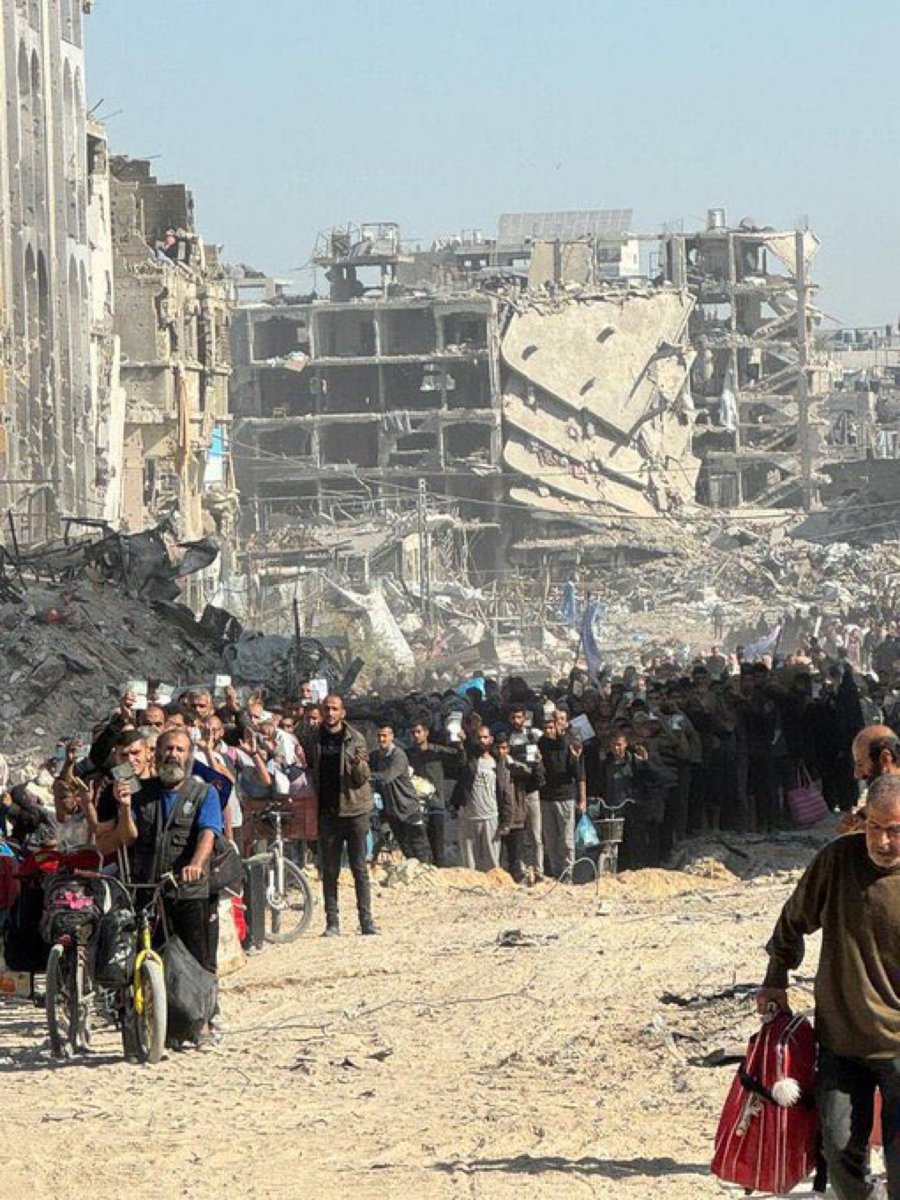
For months, Israel has been committing genocide by carrying out mass killings against civilians and methodically demolishing Gaza Strip cities, neighbourhoods, and infrastructure in an effort to drive Palestinians from their land and force them to flee. In order to weaken the Palestinians’ ability to survive on their land, and to establish a coercive environment that forces them to flee, these policies have gone beyond simply killing, destroying, and starving them. They have also included destroying the essentials of life, such as access to water, electricity, education, and health care.
Trump stated today (26 Sunday) that more Palestinians from the Gaza Strip should be sent to Jordan and Egypt, and that he is pleading with the leaders of the two nations to allow them to do so because the Strip is “in a state of chaos”.
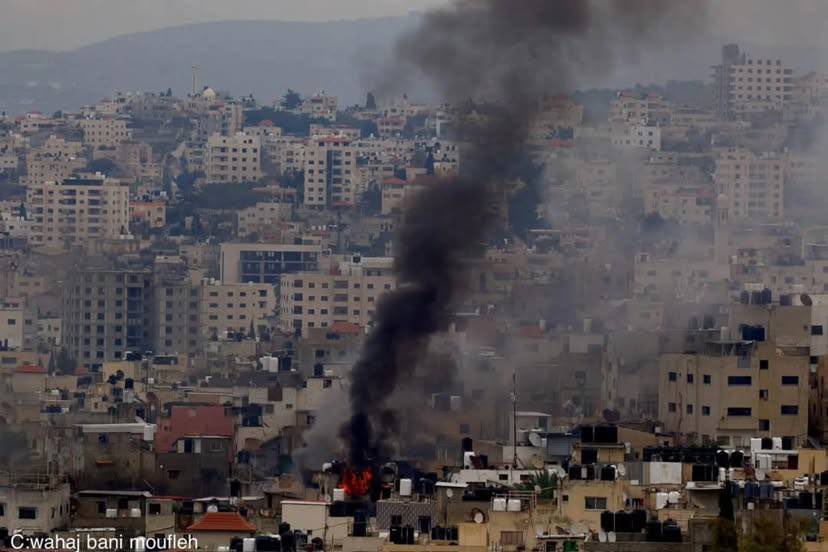
Since the reopening of the Rafah land crossing with Egypt, which was closed last May, Israel has purposefully bombed cities, residential neighbourhoods, and infrastructure in the Gaza Strip, including streets, schools, and essential facilities there. Israel’s deliberate attempt to either kill or drive Palestinians from their land is especially obvious given the dearth of basic necessities in the besieged enclave, such as homes and infrastructure like water, electricity, communications, Internet, and school networks. In addition, statements made by Israeli ministers and officials publicly promote voluntary migration.
Israel has been committing genocide in the Gaza Strip since 7 October 2023, and the destruction of entire Palestinian cities and neighbourhoods by the Israeli army is a glaring example of this crime and a key instrument of its execution.
This crime has gone beyond simply killing 10s of thousands—or potentially hundreds of thousands—of Palestinians and progressively destroying the lives of over two million people by removing their basic necessities for survival. It has also included the total destruction of Palestinian cities and their architectural and cultural heritage; the erasure of the Palestinian people’s national and cultural identity; the forced relocation of Palestinian people from their lands, and the imposition of this permanent displacement; the dismantling of their communities; and the obliteration of their collective memory in an attempt to eradicate their physical and human existence as well as their past, present, and future.
A regional and global stance opposing Trump’s claims of deporting Gaza Strip residents is absolutely necessary. Mass displacement as a solution to the current conflict not only ignores the underlying causes of the issue but also exacerbates the injustices already experienced by the Palestinian people, and denies them their rightful self-determination and safe residence in their homeland. Trump’s claims, along with any actions that follow, are likely to exacerbate tensions and undermine regional stability.
The international community must fully uphold the principles of international law and adopt solutions that respect Palestinian rights. These solutions should include ending Israel’s illegal occupation of Palestinian territories, holding Israel accountable for its ongoing crimes, and establishing a clear path to achieving justice for the Palestinian people. Additionally, the international community should ensure that all Palestinian refugees and displaced persons are able to return to their original areas in accordance with relevant international resolutions, rather than supporting any policies that would uproot Palestine’s indigenous population in favour of Israel’s colonial policies.
As Jordan has only just recovered from the aggression on Gaza and has seen some relief along its northern borders, the issue of displacement has resurfaced once again. This time, it arises either from Gaza, exploiting the humanitarian and political catastrophe it faces, or from the occupied West Bank, where Netanyahu’s most right-wing government continues to escalate security and military tensions.
🇯🇴🇺🇸 Jordan rejects Trump's initiative to relocate Palestinians from Gaza to neighboring countries, — DW
"Jordan rejects any relocation of Palestinians, and our position is firm and unwavering," Foreign Minister said. pic.twitter.com/rRgggW8Owt
From the beginning of the aggression on Gaza, Jordan understood that the goal was to displace its people. Alongside its Egyptian brothers and other Arab and international parties, Jordan worked to confront this scheme. Jordan is fully aware that displacement is not just about relocating Gaza’s residents to another country; it is about dismantling the Palestinian cause and undermining its major pillars. Amman is cognizant that Israel seeks a Palestine without Palestinians and, through displacement, it seeks to destroy the prospects for a Palestinian state and the right of return.
Jordan, which has already received millions of Palestinians and millions of others due to the region’s endless crises and wars, has paid a heavy price in terms of its limited resources and political stability. Each wave of migration—most recently from Syria—has come at a significant cost. Jordan is aware that accepting any number of people from Gaza or elsewhere is no longer acceptable or tolerable, especially given the political implications for Jordan’s demographic composition, its national identity, and the Palestinian national identity.
Logic dictates that after all these wars and acts of aggression, the world should seek to resolve the Palestinian issue by granting Palestinians their rights on their national soil. It should not seek solutions to address Israel’s so-called security concerns by emptying Palestinian land of its people and displacing them to other countries.
Jordanians will not accept any solution at the expense of their national identity, homeland, and state. Those who truly seek peace must understand that the path to peace lies in granting Palestinians their rights on their land, not through displacement or the illusion of peace based on a scheme that can only be described as a liquidation of the Palestinian cause.
US President Donald Trump, Saturday, proposed relocating Palestinians from Gaza to neighboring countries like Egypt and Jordan. This is an unusual proposal that was opposed by the former administration of Joe Biden.
Speaking to reporters aboard Air Force One towards Miami, the president said he raised the matter during a telephone call with King Abdullah II of Jordan, and he might talk with Egyptian President Abdel-Fattah al-Sisi on Sunday.
“I said to him (Jordan’s king) that I’d love you to take on more because I’m looking at the whole Gaza Strip right now and it’s a mess, it’s a real mess,” said Trump. “I’d like him (Jordan’s king) to take people”.
“I’d like Egypt to take people. I’m talking to Gen. Al Sisi tomorrow sometime I believe. I’d like Egypt to take people. And I’d like Jordan to take people,” Trump continued.
“You’re talking about a million and a half people, and we just clean out that whole thing. You know over the centuries it’s had many, many conflicts. And I don’t know, something has to happen,” he added.
Describing Gaza as “a demolition site,” the US president said: “Almost everything is demolished and people are dying there. So l’d rather get involved with some of the Arab nations and build housing at a different location where they can maybe live in peace for a change.”
He added that the move “could be temporary or could be long-term.”
The Biden administration opposed relocating Gaza residents outside the enclave, advocating a return of Gazans to their homes in the aftermath of a potential peace and a two-state solution.
Israel’s genocidal war has killed more than 47,000 Palestinians, most of them women and children, and injured over 111,000 since Oct. 7, 2023.
Since Jan. 19, a ceasefire is in place to bring respite to civilians in the Palestinian enclave, but Trump said last week he is not confident that the truce will hold.
“It’s not our war. It’s their war. I think they are very weakened on the other side,” Trump told reporters in the Oval Office. “I looked at a picture of Gaza. Gaza is like a massive demolition site. That place is. … It’s really got to be rebuilt in a different way,” he said.
“Gaza is interesting. It’s a phenomenal location on the sea, best weather, you know, everything’s good. It’s like some beautiful things could be done with it, but it’s very interesting, but some fantastic things could be done with Gaza,” Trump added according to Anadolu.
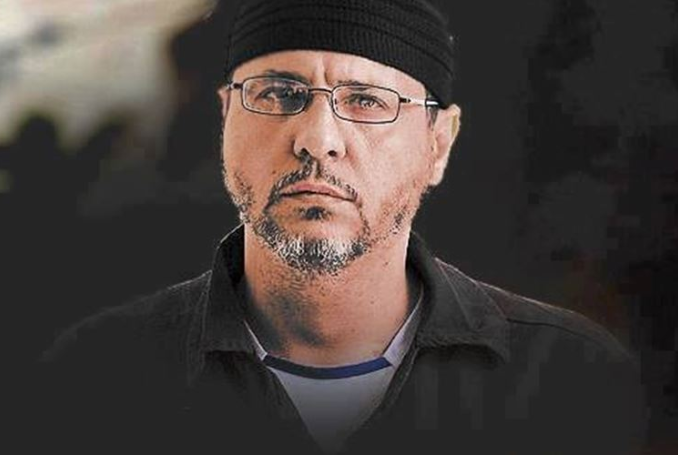
Nicknamed “the Prince of Shadows” Abdullah Barghouti is the Palestinian political prisoner with the most number of life sentences ever given to a single detainee.
A former leader of the Hamas’ al-Qassam brigade’s armed wing, in the West Bank, he now appears to be on the verge of release in the Hamas-Israel prisoner exchange.
Born in Kuwait in 1972, Abdullah Barghouti grew up outside of occupied Palestine, despite his family having originated from the village of Beit Rima, located near Ramallah. Barghouti attended school, up until high school in Kuwait.
Upon the eruption of the first Intifada in the occupied Palestinian territories, in 1987, Barghouti recounted in his memoir that the uprising had inspired him to seek revenge against the occupiers, especially after Israeli forces murdered one of his cousins and youngest uncle. “Simply put, they threw stones at the Zionist occupation forces that were wreaking havoc, so they were shot and martyred” he stated.
During the first Gulf War (1990-1991), Abdullah Barghouti was reportedly arrested for around a month after being accused of participating in the fight against US forces, later being released after the war. Prior to this, Barghouti had decided to pursue the combat sport of Judo and was trained by a man named Munir Samik who was also Palestinian.
Samik once asked Barghouti: “Aren’t you Palestinian? Don’t you want to liberate your country? If you use it against all those who occupied your homeland, there in Palestine, use what you learned here.” Inspired to make himself physically strong and capable of fighting Israel, he then began training in the use of firearms and explosives in the Kuwaiti desert. During the war, Barghouti’s family was forced to flee to Jordan.
When he traveled to live in Amman, Jordan, he would finish high school there but due to his family being too poor to afford University, so he would borrow money from a relative in order to open up a mechanic shop, continuing to practice Judo as a hobby. However, he wasn’t able to earn enough money to keep his business afloat and pay back his relatives and decided to move abroad in order to pursue higher education instead.
A friend of Barghouti had recommended he apply for a visa program to travel to South Korea, which ended up leading him there in pursuit of an education. When he arrived, he had no money and little but the clothes on his back.
Barghouti walked from the airport to a location that was supposed to help him secure an education; his journey would take three days during which he went without eating. He recalled that he drank water from public parks until reaching the address he had been given, finding out that it was a wood-cutting factory.
So, without any money or prospects, he ended up working at the factory for 45 days without having money to buy food, eating only from what the factory would supply him.
In 1991, after a few months in the wood-cutting factory, he moved to work in a mechanical factory and studied in parallel with his work at an engineering institute, specializing in electromechanics. This was also the time during which he would meet his wife, who was of Korean origin.
However, his passion for seeking the liberation of Palestine through armed struggle would not perish while he lived in South Korea, as he would routinely go deep into the forest and practice making improvised explosive devices and refining his craft. In 1998 he would then return to Amman with his wife, before deciding to divorce her due to his desire to have children.
Around this time he started becoming more religious, moved to Jerusalem and then the West Bank, married a Palestinian wife, and settled down in his family’s village of Beit Rima. He later had two daughters, Safaa and Tala, and a son called Osama.
It just so happened that in 2001, Beit Rima would be the first area in the West Bank that would experience a full-scale military invasion during the Second Intifada. Israeli forces deployed tanks, attack helicopters, and a huge military force to the village.
Abdullah Barghouti joined the Qassam Brigades in 2001, seeking out his cousin Bilal Barghouti in order to share his expertise in bomb-making.
After his cousin, who is currently serving 16 life sentences in Israeli military prison, witnessed how skilled he was at engineering explosives, he told his superiors in the Hamas military wing and Abdullah Barghouti would begin military training in the Nablus area, going on to become a commander of the Qassam Brigades in the West Bank.
This entire time, almost nobody close to him knew of his secret ambition to seek revenge against Israel and his bomb-making skills. He would later go on to participate in the manufacturing of explosives that killed 66 Israelis and injured over 500.
When he was eventually tracked down in 2003 and arrested by the Israeli occupation forces, he was interrogated and tortured for over five months, before being handed 67 life sentences, amounting to 5,200 years in prison. In later interviews recorded with Barghouti from inside an Israeli prison, he would confidently state that one day interviewers would come to meet him while he sits inside a hot tub in Ramallah.
If he is to be released during the upcoming Hamas-Israel prisoner exchange, it is likely that Israel will request his deportation outside of occupied Palestine. It is speculated that Barghouti could be useful to Hamas in developing its influence in the armed struggle inside the West Bank, which is currently dominated by Palestinian Islamic Jihad (PIJ) and Fatah-aligned fighters.
(The Palestine Chronicle)
– Robert Inlakesh is a journalist, writer, and documentary filmmaker. He focuses on the Middle East, specializing in Palestine. He contributed this article to The Palestine Chronicle.

 Dr Khairi Janbek
 CrossFireArabia