Amidst War 50,000 Lebanese Return Home

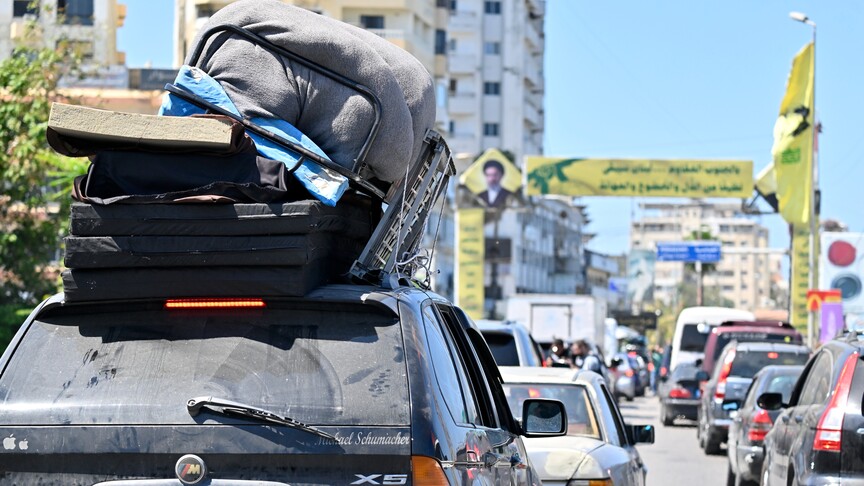
Nearly 50,000 people have returned home in southern Lebanon, though more than 106,000 remain in collective shelters across the country, the UN said Thursday. “Nearly 50,000 people have now returned to their homes in Nabatieh and South governorates,” UN spokesman Stephane Dujarric told reporters, citing data from the UN Office for the Coordination of Humanitarian Affairs (OCHA). “However, more than 106,000 people remain in collective sites across the country, with many others seeking shelter elsewhere.”

Continue reading
‘Insulting Phone Call’, Beirut, Iran and Changing Dynamics

By Abdul Bari Atwan

Israeli Prime Minister Benjamin Netanyahu demonstrated his ability to effectively redraw the maps and borders of the Middle East when he backed down from striking Beirut’s southern suburb to completely destroying it. He succumbed to the threats and pressure from US President Donald Trump. In this respect here, Iran can be considered to have become a regional superpower not only in the Middle East, the West and Central Asia, but globally.

Trump, who previously threatened to wipe Iran off the map and unleash hell upon it, destroying all its energy and electricity infrastructure, scurried like a frightened rabbit to the phone to call Netanyahu in a “call of insults,” ordering him to immediately halt all plans to bomb Beirut’s southern suburb and withdraw his troops and warplanes en route to the area, just hours before the bombings and destructions where to begin.

***

In a Washington Post interview, Trump completely changed his threatening tone and began pleading for peace with Iran, after extending the unilateral ceasefire by 60 days. More importantly, he expressed his desire for a summit with Ayatollah Mojtaba Khamenei as soon as an agreement is reached, and confirmed that Mojtaba, whom he had previously claimed was no longer alive, is now involved in the decision-making process regarding war and peace in the current conflict.

The new and effective ‘password’ in the Middle East, reflecting Iran’s “power shift,” is embodied in its thunderous response to the Israeli threat to destroy the southern suburb of Beirut, western Bekaa Valley, and Nabatieh. Iran launched hundreds of missiles and drones to strike deep into occupied Israel, sending a clear message: “Greater Tel Aviv in exchange for the southern suburb.”

The Iranian leadership, backed by a solid popular base, a highly advanced missile and drone industry, a naval fleet, and over 460 kilograms of uranium enriched above 60%—enriched to produce 10 nuclear bombs in a few days—says what it means and acts accordingly. It will not tolerate injustice and is prepared for all eventualities.

There is ample evidence to support this assertion, as demonstrated early Wednesday morning when Iranian missiles and drones struck US military bases in Kuwait and Bahrain in retaliation for attacks on an Iranian oil tanker in the Strait of Hormuz and a communications tower on Qeshm Island, both launched from these bases.

The American-Israeli alliance has, since the October War of 1973, grown accustomed to a deeply ingrained official Arab subservience, a failure to respond to any Israeli aggression, and a refusal to reject any American dictates. Most Arab leaders turn the other cheek to Israeli and American slaps, becoming indifferent to the situation. But now, someone has emerged to uproot this system of surrender and usher in a new, truly Islamic era—an era of resistance, where the response is not merely in kind, but in a stronger and more significant way.

Mohsen Rezaei, advisor to Iran’s Supreme Leader Mojtaba Khamenei, summarized this new military, political, and moral upheaval in a statement saying, “America and its president, Trump, should expect a barrage of missiles (hypersonic and cluster warheads) and drones should they renew their aggression against Iran.”

Netanyahu, who craved the limelight and the humiliation of Arabs, and who rubbed his hands with glee at the long line of Arab leaders queuing before his office seeking normalization and the signing of the Abraham Accords, has fallen silent and disappeared from the public eye. He no longer dares to threaten to destroy Iran alone, without America’s participation in the aggression.

The dictates Trump issued just days ago, the shifting balance of power on the ground, and Iran’s threat of retaliation for any aggression against Lebanon have evaporated. The American president, as a New York Times editorial acknowledged, has failed miserably in all his wars since arriving at the White House a year and a half ago—in Iran, Ukraine, and the Gaza Strip—and has not achieved his objectives and has become a laughingstock.

As for the Gulf states – those that normalized relations and/or those that were eager to join the “Abraham Accords” to avoid angering Trump and rejecting his demands – they reached a firm conviction that America is incapable of protecting itself, its bases, and its ships.

The most prominent evidence of this is the destruction of American military bases in their countries, including the US Navy base in Bahrain, and the closure of these bases and Saudi airspace to planes and drones, whilst preventing them from launching attacks on Iran from their territory. They saved the Hajj season, just as they saved themselves and their people from the consequences of the mirage of American power.

***

In conclusion, we sympathize with our Kuwaiti brothers who were injured as a result of an Iranian missile attack on the passenger terminal at Kuwait Airport, whether by mistake or deliberately. However, the blame lies entirely with those who allowed America to use Kuwaiti territory as a launching pad for aggression against Islamic Iran. America possesses three aircraft carriers and more than 300 warships in the Arabian Sea, so why didn’t it use them in this aggression? And why does it insist on using its bases in the Gulf states, thereby endangering millions of their citizens?

Abdul Bari Atwan is the Chief Editor of the Arabic Al Rai Al Youm and his piece has appeared in the English crossfirearabia.com English website. 

Continue reading
Israeli Planes Bombard Civilian Areas in Lebanon

The Israeli army’s escalated military attacks against civilians and residential areas in Lebanon, particularly in the South and Bekaa regions, along with the issuance of evacuation orders, raising alarm in the region. Urgent international intervention is required to prevent the massacres and other atrocities being carried out by Israel in the Gaza Strip for more than 11 months from occurring in Lebanon as well.

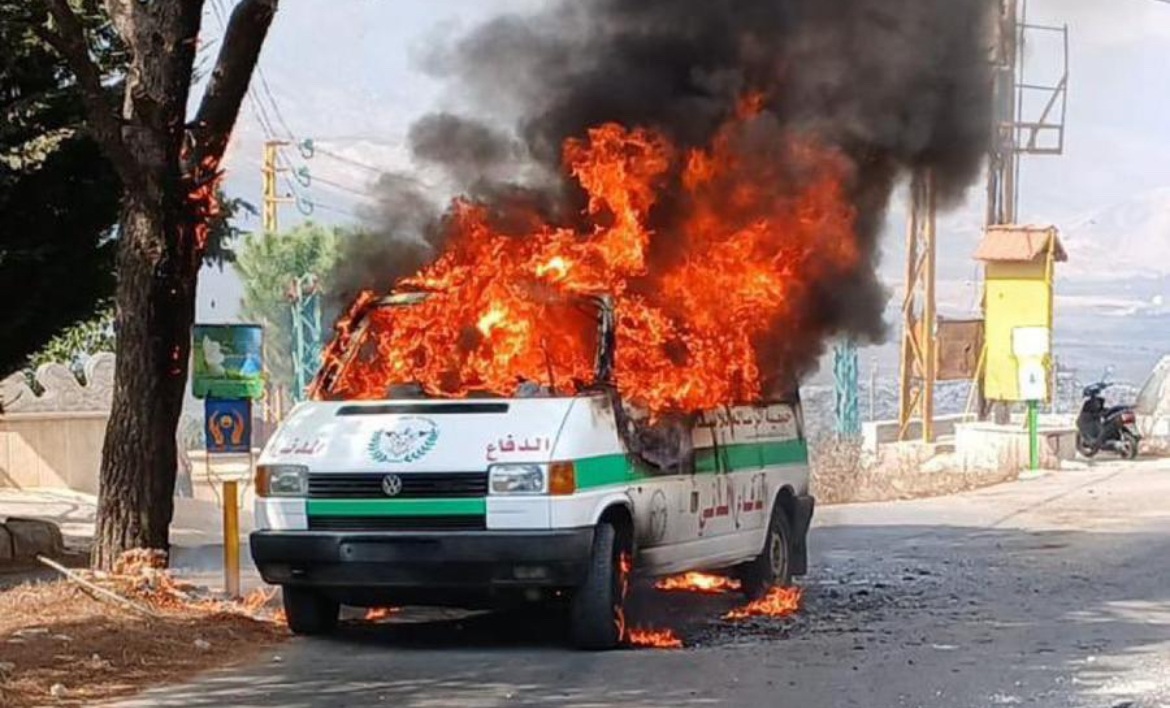
Israel’s army carried out over 330 raids in over 117 Lebanese towns and cities today, 23 September 2024, according to the Euro-Med Monitor field team. These raids were directed towards civilian residential areas in southern Lebanon and various areas of the Bekaa region. As a result, 274 people—including 21 children—have been killed and over 1,024 individuals—including women, children, and paramedics—have been injured as of the early afternoon hours. As of the time of writing, Israeli airstrikes are still in progress, with the frequency of shelling attacks on residential areas rising.

In both the Gaza Strip and Lebanon, the Israeli army deliberately denies civilians enough time to escape the areas being bombed, offering them no real protection from the dangers arising from military operations. Instead, Israel randomly and directly targets civilian buildings, including the buildings of surrounding hospitals and schools.

For instance, the inhabitants of Lebanon’s Bekaa Valley, which spans an area of about 4,429 square kilometres, were given just two hours to evacuate when the Israeli army issued evacuation orders. However, it would take many citizens at least three hours to leave areas within the valley. Moreover, the Israeli army neglected to designate safe zones to which people could escape—just as it has been doing in the Gaza Strip—showing that Israel either ignores the legal obligation to direct people to safe zones, or targets areas it has designated as safe. Since Israel began bombing Lebanon, dangerous conditions as well as significant challenges to the evacuation process have been documented.

The Israeli army is required by international humanitarian law to take all reasonable measures prior to any military attack in order to prevent, or at the very least reduce, harm to civilians and civilian property. This entails, among other things, providing the civilian populace with a sufficient amount of warning prior to the commencement of the attack; allowing them enough time to flee; and, unless circumstances dictate otherwise, enabling them to take protective action and relocate to safe areas.

International humanitarian law states that civilians who are unable or unwilling to leave an area are still protected as civilians, and that Israel is still obligated to protect them to the extent that they need to be shielded from harm simply because of their presence in the area.

In addition to towns in the Bekaa Valley, the Israeli army struck over 117 towns in the south of Lebanon, including some that saw serial and repeated raids, like Aitaroun, Ansar, Kfar Reman, Haris, Sarafand, and other villages in the districts of Tyre, Sidon, and Nabatieh. The Israeli army also announced that it had begun a third wave of raids and aggression against Lebanon.

Israel also used drones to light fires in southern Lebanon’s forests at the same time as it conducted warplane strikes, suggesting that Israel has been burning agricultural lands with white phosphorus—a weapon that is prohibited by international law due to the severity of burns it can cause. These burns often reach the bones of victims, and the severe fires caused by white phosphorus can destroy property, buildings, crops, and soil. It is likely that the Israeli military has been using white phosphorus in its attacks on Lebanon since its first attack on the country following the start of its genocidal war in the Gaza Strip on 8 October 2023.

Today’s military build-up in Lebanon follows an Israeli army raid on Friday 20 September 2024 into Beirut’s southern suburbs. The raid caused the collapse of two residential buildings, killing over 37 people—including children—and leaving more bodies trapped under the rubble, with the search for victims still ongoing.

Israeli forces launched a random and illegal attack on Lebanon earlier, on 17 September 2024, using radio and pager explosions. The attacks resulted in at least 32 fatalities, including two children as well as medical staff members, and 3,250 injuries, including to a diplomat. There were 200 cases of critical injuries, and 500 serious injuries to the eyes and limbs specifically.

All of the aforementioned Israeli attacks are grave breaches of the Fourth Geneva Convention, the Additional Protocol, and international humanitarian law in general. These treaties require warring parties to always distinguish between civilians and combatants and offer special protection to vulnerable populations like journalists and the elderly, in addition to providing special protection to women and children. The Fourth Geneva Convention on the Protection of Civilians, its regulations, the Fourth Hague Convention, and Article 48 of the First Additional Protocol all attest to this; customary rules of international humanitarian law also support this.

International humanitarian law also prohibits indiscriminate attacks that do not distinguish between military and civilian targets, including attacks that do not target specific military objectives or that use combat means or methods incapable of being directed at a specific military objective.

The international community must act swiftly to stop Israel from repeating its genocide in the Gaza Strip in Lebanon, by safeguarding Lebanese civilians and stopping the situation from deteriorating further. Additionally, effective sanctions must be placed on Israel, such as a complete ban on arms exports, and Israel must be cut off from all forms of political, intelligence, and financial support. Finally, Israel must be held responsible for its ongoing crimes against peoples that occur on their own territory.

EuroMed Human Rights Monitor

Continue reading
Israel-Hezbollah Clashes Means ‘Greater War’ Likely

Northern Israel is on fire. Hezbollah rockets fired from Southern Lebanon has been a constant reminder that a war-situation is here to stay and likely to develop.

A batch of 55 rockets were fired on Safad and the sorrounding areas adding to the scorching of the region. These rockets were launched from southern Lebanon and hit Israeli settlements and military bases in northern Israel adding to nervousness of the dwingling number of people who are still there.

They are just the latest batch at the wail of many sirens across northern Israel.

Since last night and into Saturday morning a total of 60 rockets fell on the area including over the border into Safad and Tiberius in the Upper Galilee and the vacuous Israel town of Kiryat Shmona,  the Israeli media reported.  

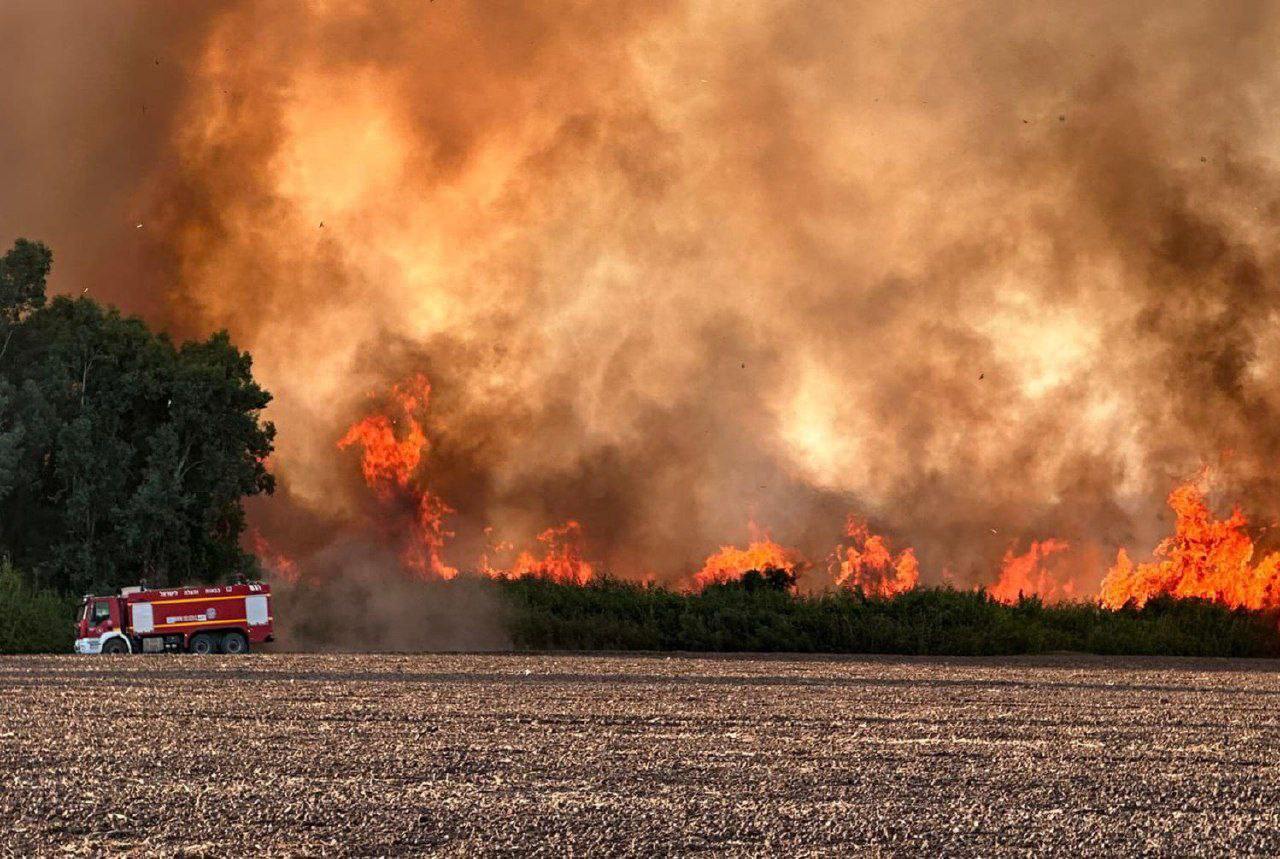
Fires raged in the different forest areas of this region soon after the rockets landed as testified by pictures and images on the social media adding to deep tensions and fear of a wider regional war.

The latest barrage of rockets was in retaliation for Israeli overnight airstrikes on towns in southern Lebanon which included the Beqaa and Nabatieh and which injured many Lebanese civilians.

The Israeli-Hezbollah crossfire clashes have increased in the passed few months but the upward momentum was noticed since the early summer. 

The Hebrew media has been rife in its reporting of the active northern front stating the Hezbollah rockets into these areas have become a routine affair. 

But this is a source of major worry for men like Benny Gantz who once served as a member in Netanyahu’s war cabinet but is now deeply at odds with him. 

‘Hit Hezbollah hard’

Gantz, a major contender for the Israeli leadership, says the present government needs to dampen its 11-month war on Gaza that killed over 41,000 civilians and to concentrate on the dangerous developments happening in northern Israel.

He said Israel must have an action plan and hit Hezbollah hard, adding the Israeli air force “has thousands of targets in Lebanon” Gantz said on Israel’s Channel 12. 

Meanwhile the cross-border war continues at its present tempo while Israeli Prime Minister Benjamin Netanyahu refuses to leave Gaza but at the same time orders his military to maintain a war position on Hezbollah and southern Lebanon while continuing his strikes on different positions in Gaza.

But reports of the raging fires continue to be bad news for Israel. Hundreds of thousands have already left the north and are in temporary placements on hotels. The latest patch of fires are creating more displacements. One social media post points to the fact that 62,000 settler Israelis are fleeing the north for safety, pointing out that more than 40 percent of these wont return back.

Continue reading