‘Living in a Tent is Like Living in Hell’ Maryam Says

In Gaza, tents are no longer havens from war. They have become prisons of fabric, trapping displaced civilians in the sweltering heat of the summer, while thirst, hunger, mosquitoes, and disease stalk them at every turn.

Here, people don’t escape the constant bombing to safety. Rather day, they face another battle against the scorching sun, the scarce water, and the sleepless nights in tattered tents, that no longer protect from the darkness.

In the Heart of Hell

Read also: “Gaza Live”… 7 Martyrs and Injuries in 13 New Israeli Violations of the “Truce”

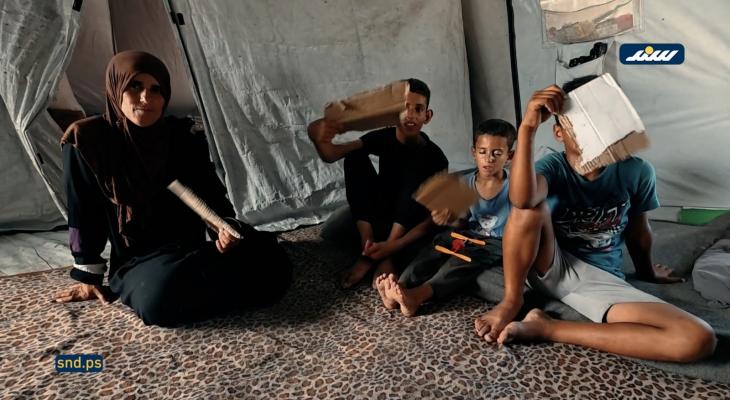
“There are eight of us living in a tent, and the situation is hell in the summer,” displaced woman Mariam Baraka, tells the Sanad News Agency, whilst summarizing the details of life inside her tent that offers no protection from the heat and leaves little to dignity.

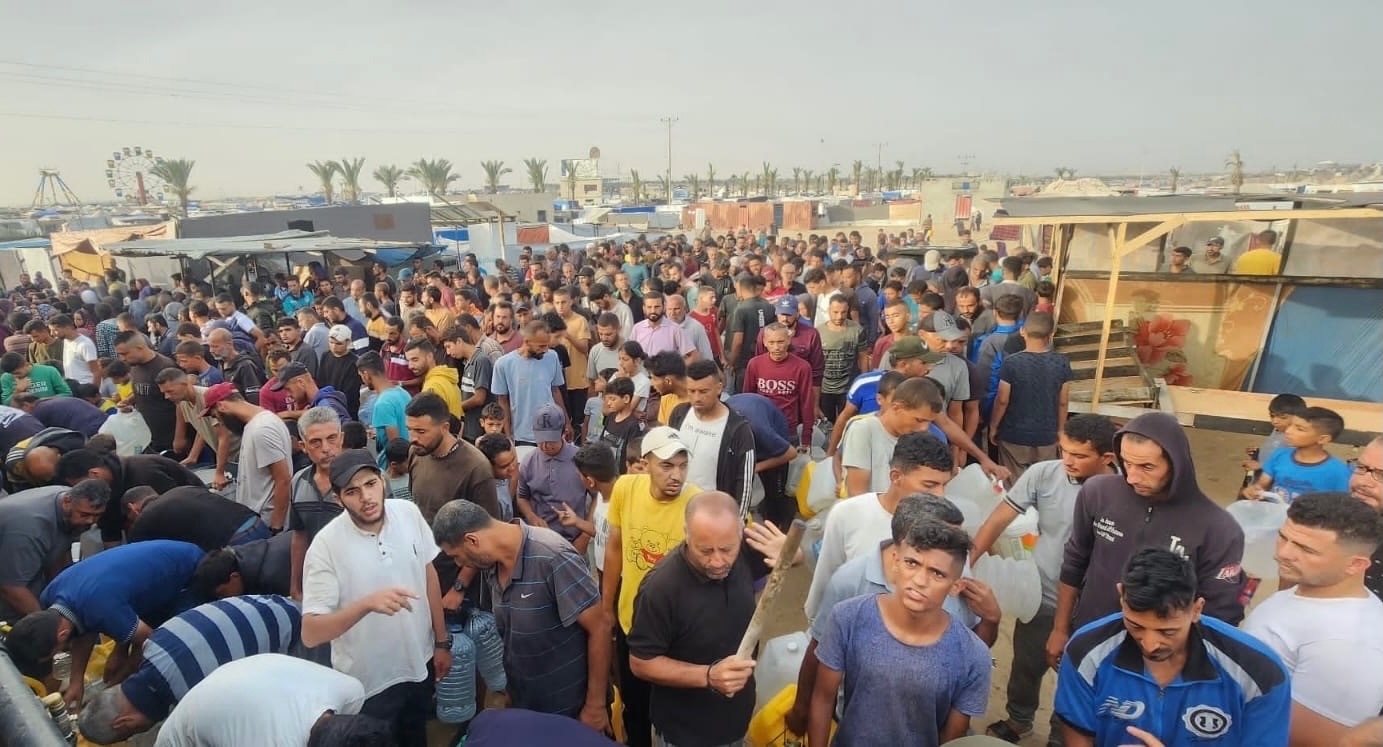
She says she spends long hours searching for water under the bitter hit of the sun, sometimes managing to fill a few buckets, while other times she returns empty-handed after a grueling journey to a distant water source.

The suffering doesn’t end with thirst. The family is forced to cook over a wood fire amidst sweltering temperatures, and cardboard boxes serve as a primitive makeshift tolls to circulating air inside the tent.

Maryam recounts that her son can no longer bear the intense heat, constantly telling her: “Mommy, I can’t take it anymore.” Her young child is unable to sleep due to the heat and the bites from mosquitoes and flies that have covered his body in blisters. Their entire lives revolve around the sun and what she describes as “extremely difficult” conditions.

Maryam’s testimony reflects the stark reality faced by nearly one million displaced people—about 170,000 families—who endure the summer heat in tents and makeshift shelters, according to a recent report by the Norwegian Refugee Council.

Documented data indicates that 125,000 out of 135,000 tents have been damaged and are unfit for human use due to weather conditions. The organization also reports that approximately 5,000 families are sleeping in the open without any shelter from the sun or darkness.

A Daily Battle

The tents, made of nylon and thick fabric, have become like closed ovens, with temperatures inside sometimes exceeding 37 to 40 degrees Celsius. This makes staying inside nearly impossible due to the trapped heat and humidity, a situation described in international press reports as “slow death inside thermal gas chambers.”

The tragedy is compounded by the severe water crisis. The United Nations Children’s Fund (UNICEF) confirms that water supplies in the camps have dropped to critical levels, forcing families, including children, to walk long distances under the scorching sun to obtain limited quantities of water.

The dangers don’t stop at heat and thirst. The spread of mosquitoes and flies within the camps has led to skin diseases among children, while displacement areas are witnessing an increase in snakes, scorpions, and rats due to the accumulation of rubble and the breakdown of sanitation systems, according to multiple media reports.

Doctors and health workers warn of a rise in skin and infectious diseases, in addition to heatstroke and dehydration, which threaten the lives of children and the elderly.

The Secretary-General of the Norwegian Refugee Council, Jan Egeland, emphasized that this humanitarian catastrophe could have been avoided were it not for the continued blockade and the closure of crossings, which prevent the entry of essential aid, awning materials, wood, and hygiene supplies.

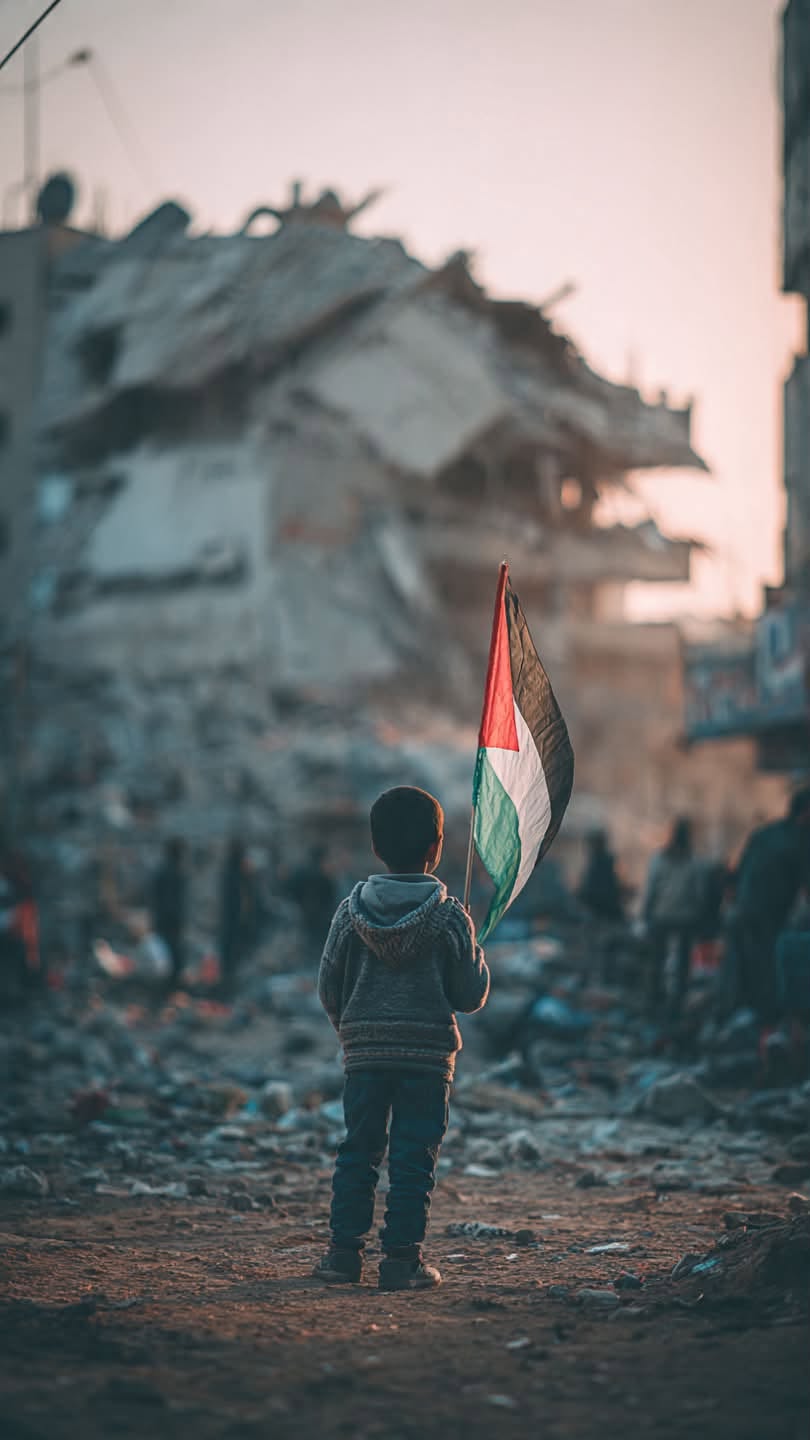
With the destruction of homes and infrastructure, areas like the Khan Younis and Deir al-Balah camps have been transformed into vast tent cities lacking water and sanitation. Each tent has become a new chapter in an unending ordeal, a daily battleground for displaced people struggling for survival.
Continue reading
‘A Devastating Year For Gaza’ – Jan Egeland

A complete and lasting ceasefire is the only way to end the cycle of death, destruction, and loss for millions of civilians in the region, warns the Norwegian Refugee Council (NRC) as we approach the first anniversary of the escalation of hostilities in Israel and Gaza.

“This has been a devastating year,” said Jan Egeland, NRC secretary general. “For 12 months, the horrific events in the occupied Palestinian territory, Israel, and Lebanon have wrought havoc, and we are now on the cusp of an all-out regional war. Hundreds of thousands of civilians have been killed, injured, or displaced, and vast numbers of innocent children remain traumatised, hungry, and sick. One year on, we are now no closer to a ceasefire agreement than we were during the darkest days of hostilities.

“Governments must realise that so long as weapons continue to flow to Israel and non-state armed groups, the war machines continue to be fuelled, and the suffering of civilians will be, in no small part, the responsibility of those who bring fuel to the fire. They hold the key to bringing this tragedy to an end, and they must do everything in their powers to achieve that.”

Despite immense challenges, NRC continues to offer support for families throughout the occupied Palestinian territory and Lebanon. In Gaza, our teams have managed to remain operational despite multiple displacements and disruptions. The volume of aid that has entered Gaza over the last year has never come close to meeting ever-growing needs. On average, 50 trucks per day have crossed into Gaza in September, the lowest yet.

“The humanitarian crisis in Gaza has reached an unbearable level. The scale of damage and loss is so immense that it will take many years to reverse, but NRC will stay and continue to support communities in all ways possible.

My colleagues put their lives on the line to provide the aid that we are able to receive into Gaza. Hundreds of thousands of people are still without proper access to basic necessities, like shelter, food and clean water. The needs remain so vast against aid supplies because of Israeli restrictions, the erosion of the social fabric, and a breakdown of law and order. All crossings into Gaza must be opened to allow for a scaling up of aid. There is no excuse for allowing this suffering to continue,” said Egeland.

Reliefweb

Continue reading
Israel Makes Life Unbearable For Palestinians – Here’s The Evidence!

In the first half of 2024, there has been a severe escalation of violence and human rights violations in the West Bank reports the Norwegian Refugee Council (NRC). Hundreds of Palestinians have been killed by Israeli forces and settlers, with over 1,000 displaced and nearly 160,000 adversely affected by demolitions.

The West Bank has experienced a significant surge in violence, resulting in 228 Palestinian fatalities, including 51 children, marking a 65 per cent increase compared to the same period in 2023. In five instances, it could not be determined whether the killings were committed by Israeli forces or by settlers.

“The data indicates that Israeli forces are deploying unwarranted use of lethal force against Palestinian civilians,” said Ana Povrzenic, NRC’s country director in Palestine. “We cannot separate the worsening conditions in the West Bank from the actions of senior Israeli officials aimed to establish sovereignty over the West Bank, in violation of international law.”

The number of search and arrest operations conducted by Israeli forces in the West Bank nearly doubled, rising to 3,384 in the first half of 2024 from 1,873 in the same period in 2023. Israeli authorities have intensified raids, particularly in Jenin, Tulkarm, and Nur Shams refugee camps, utilising military tactics and heavy weaponry against civilians, including airstrikes. These operations have led to the destruction of 81 structures and the displacement of 499 Palestinians in these areas alone.

“The Israeli army did not differentiate between a stone, a tree, or a human being,” said Nihaya al-Jundi, a resident of Nur Shams camp, where 242 Palestinians were displaced, and a youth centre, a kindergarten, and a multi-purpose hall were destroyed. “No person and no home are safe, not even those with the elderly, people with disabilities, or children.”

Israel’s unlawful demolition of Palestinian property has reached unprecedented levels. By 30 June 2024, 643 Palestinian structures had been destroyed, marking a 42 per cent increase from the same period in 2023. In most of these cases, Israel reports the structures lack Israeli-issued building permits, which are virtually impossible for Palestinians to obtain.

Settler attacks have also climbed, with 649 incidents recorded in the first half of 2024, compared to 598 in 2023. In Duma, a multi-hour settler attack on 13 April resulted in the destruction of homes and livelihood structures, Izzat Dawabshe, a Duma resident, described the event: “Anyone who defended himself in any way was shot or detained.”

https://visuals.nrc.no/pages/search.php?search=%21collection9321&k=dfc67aba3f#

Settlers destroyed four homes and damaged or burned 31 others during the attack on Duma. Settlers completely burned a dozen livelihood structures and damaged or burned three others.

“While some states have imposed sanctions against individual violent settlers, this has had limited impact in reducing rates of violence,” said Povrzenic. “States must do more to hold the state of Israel, its central and local governments, and security forces – not just individual offenders – accountable for grave breaches of international law.”

This article is reprinted from reliefweb

Continue reading