Top Oman Everest Climber Dies in Pakistan

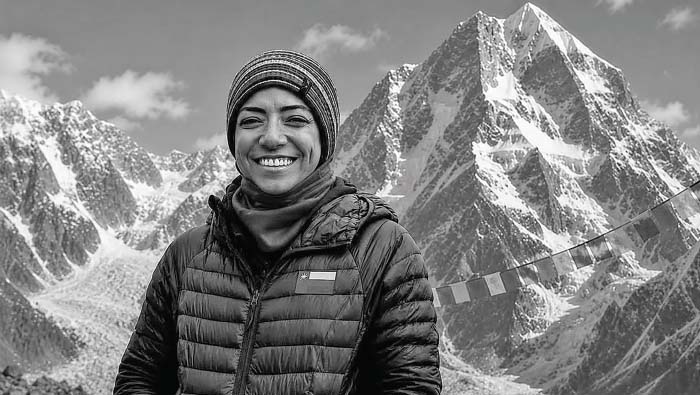
Oman has been plunged into mourning following the tragic death of pioneering mountaineer Nadhira bint Ahmed Al Harthy on Thursday, whose life was cut short in a devastating avalanche while climbing in northern Pakistan, bringing an abrupt end to the extraordinary journey of the woman who inspired a generation by carrying the Omani flag to some of the world’s highest and most dangerous peaks.

Nadhira was among a 10-strong team of climbers reported missing following the avalanche in Pakistan-administered Gilgit-Baltistan while attempting to climb Broad Peak, the world’s 12th-highest mountain at 8,047 metres. Her death – alongside that of the Nepalese climber Pur Bahadur Gurung – was announced by the Alpine Club of Pakistan on social media on Friday.


Nadhira etched her name into Oman’s history books in 2019 when she became the first Omani woman to conquer Mount Everest, planting the national flag atop the world’s highest mountain and inspiring countless young Omanis to dream beyond perceived limits.


Nadhira, who was the second Omani national to summit Mount Everest after late Khalid Al Siyabi, became a landmark figure for adventurers across the Sultanate of Oman. 

Among the seven still missing from the 10-person expedition on Broad Peak, is renowned Nepal-born climber Nirmal Purja. The multinational climbing group was being led by Purja. He is known for climbing all 14 of the world’s 8,000m-plus mountains in just over six months in 2019.


Three of four climbers’ bodies have been located by Pakistani search crews.

Nadhira’s death triggered an unprecedented wave of grief across the Sultanate, with ministries, senior officials, diplomats, sports personalities and ordinary citizens paying tribute to a woman widely regarded as a symbol of courage, resilience and national pride.

Tributes also spread widely across social media, where thousands of Omanis shared messages celebrating her legacy.

The Ministry of Foreign Affairs confirmed that it is working closely with the relevant Pakistani authorities to complete the formalities required to repatriate Al Harthy’s body to Oman after it was recovered during a difficult search and recovery mission on Broad Peak. Times of Oman

In a statement, a spokesperson for the ministry’s Consular Department expressed profound sorrow over the loss, while extending heartfelt condolences to her family and loved ones.

The ministry also highlighted that Nadhira’s impact reached far beyond mountaineering.

As Chairperson of the Oman-Nepal Friendship Association, she played a significant role in strengthening humanitarian and cultural relations between Oman and Nepal, promoting friendship, cooperation and community engagement.

The Ministry of Culture, Sports and Youth described her as one of Oman’s most inspiring personalities, saying her life represented ambition, perseverance and determination. The ministry said the nation had lost an exceptional figure whose achievements would continue to inspire future generations long after her passing.

The Civil Defence and Ambulance Authority also mourned her death, remembering her as a passionate advocate of safety awareness. The authority said she consistently demonstrated exemplary commitment to safety procedures during her expeditions and actively supported initiatives aimed at promoting a culture of safety throughout society.

Condolences poured in from prominent Omani figures who remembered not only her remarkable achievements but also her character and determination.

Saud Al Harthy described his cousin as a young woman defined by resilience, strength and an unwavering determination to succeed. He said she had left behind a legacy of extraordinary accomplishments that would continue to elevate Oman’s name on the international stage.

Former leading women’s sports administrator Saada Al Ismaili paid tribute to what she described as her inspiring national, educational, sporting and historical legacy. She praised her ability to pursue the demanding mountaineering pursuits, while proudly raising Oman’s flag atop some of the world’s most challenging mountains.

Khalid Al Muslahi, Undersecretary of the Ministry of Foreign Affairs for Administrative and Financial Affairs, described Nadhira as the embodiment of perseverance and determination. He said she would forever be remembered as the first Omani woman to stand on the summit of Mount Everest and as a lasting symbol of courage whose legacy would remain deeply rooted in the hearts of Omanis.

Pakistan’s Ambassador to Oman, Naveed Safdar Bokhari, also expressed his condolences.

“Deeply saddened by the tragic news of demise of Nadhira Al Harthy in an avalanche accident. She was a legend in the field of mountaineering and a great source of inspiration for millions. I wish to convey our heartfelt condolences to her family and the entire Omani nation.”

Nadhira etched her name into Oman’s history books in 2019 when she became the first Omani woman to conquer Mount Everest, planting the national flag atop the world’s highest mountain and inspiring countless young Omanis to dream beyond perceived limits.

Nadhira’s high-altitude accomplishments also included successful summits of several of the world’s most formidable 8,000m peaks, including Manaslu, K2, and Nanga Parbat.

She became the first Arab woman to reach the summit of Nepal’s challenging Ama Dablam. Earlier in her mountaineering career, she had also climbed Mount Kilimanjaro, Africa’s highest mountain.

To many Omanis, however, her greatest achievement extended beyond records and summits. She became a role model who inspired women, young people and aspiring adventurers to pursue ambitious dreams while proudly representing their country on the world stage.

Following a challenging search and recovery operation, Nadhira’s body was recovered from Broad Peak and was transported by helicopter to Skardu. From there, arrangements are being made to repatriate her remains to Oman, where family, friends and the nation will bid a final farewell to a woman whose courage took the Omani flag to the roof of the world—and whose legacy will continue to inspire generations to come. Times of Oman

Continue reading
Will The US-Iran Deal Last?

By Ali Bakir

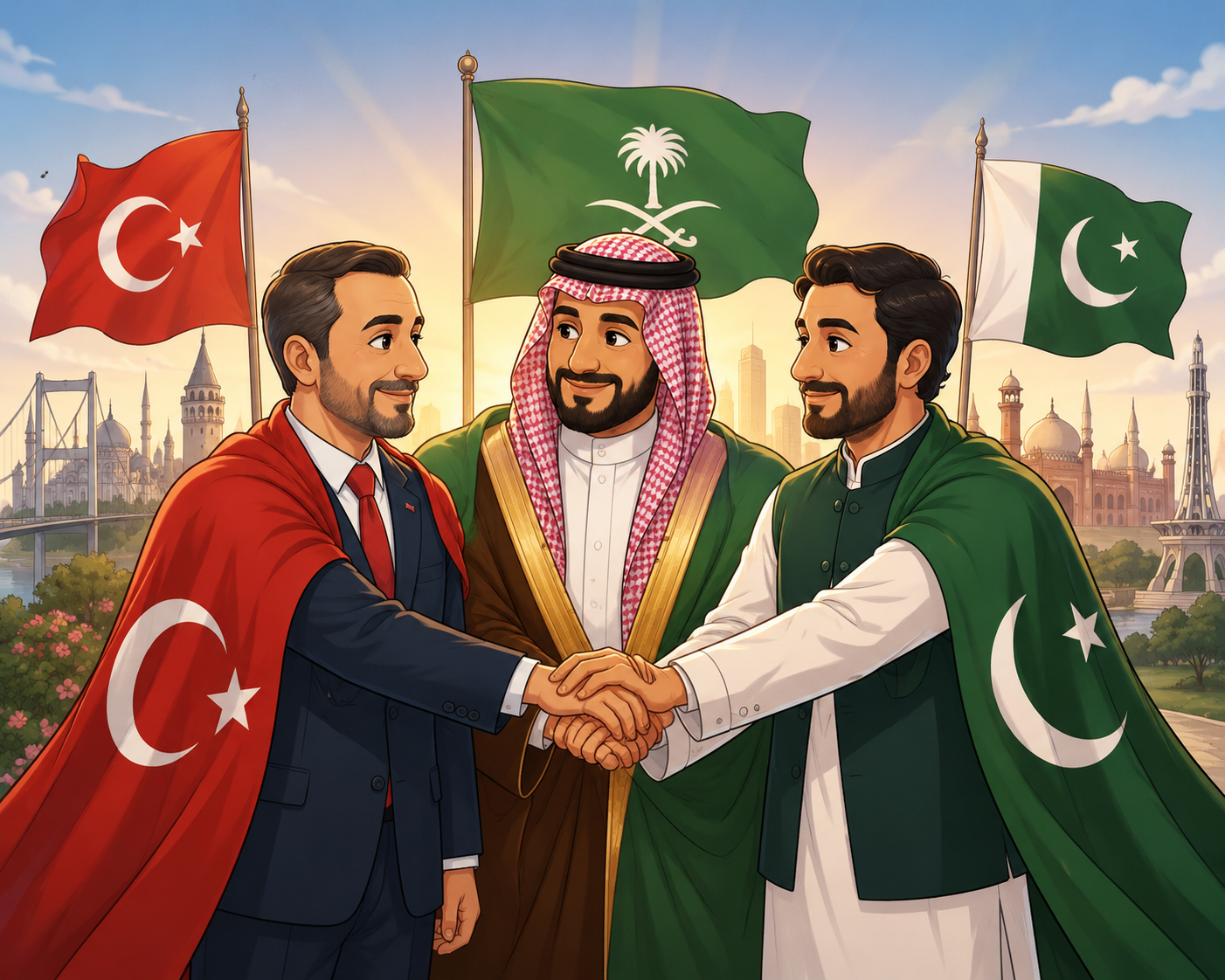
On June 15, Pakistan’s Prime Minister Shehbaz Sharif announced via the US social media platform X that a peace deal between the US and Iran had been reached, following over two months of mediation by his country. Sharif expressed gratitude to Qatar, Saudi Arabia, and Türkiye for their significant contributions, stating that the official signing ceremony would take place on June 19 in Switzerland. Following this announcement, a memorandum of understanding was signed electronically by US President Donald Trump and Vice President JD Vance on the US side, and by Iranian Parliament Speaker Mohammad Bagher Ghalibaf on the Iranian side.

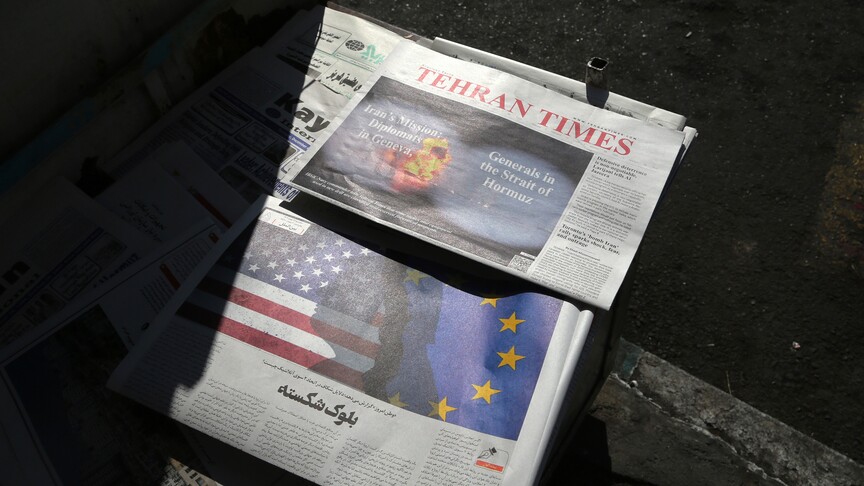
The reported agreement is characterized as a framework peace deal aimed at ending the 2026 Israel/US-Iran war and transitioning the current ceasefire into a broader diplomatic process. Although the text of the agreement has not yet been published, key reported elements include immediate cessation of military operations, reopening of the Strait of Hormuz to international shipping, and a 60-day negotiation period to address unresolved issues, particularly Iran’s nuclear program, alongside discussions on sanctions relief and access to frozen Iranian assets during follow-up negotiations.

This agreement follows two significant developments. First, Israel conducted military strikes on Iranian targets in western and central Iran around a week ago, marking the first such actions since April. Explosions were reported in Tehran, Tabriz, Isfahan, and other cities in response to Iranian missile launches that were highly performative. Second, Trump warned that Iran would “pay the price” for what he described as slow progress in negotiations to end the conflict, indicating that the US could resume strikes against Iranian infrastructure.

5 bullet points on the agreement

Although the agreement does not necessarily mean that the root causes that prompted the war have fully disappeared, a few observations are worth mentioning and analyzing.

First, a lot of narrative spinning is occurring publicly at the moment. While the main parties are trying to sell the agreement as a victory, there are factions within the broader regional camps (such as hardliners in both Iran and Israel) that oppose it. Critics in Iran have labeled the agreement a “humiliating capitulation,” arguing that it involves unjustified concessions. Hardline opponents have publicly criticized the negotiating team, with Iranian MP Mahmoud Nabavian stating that the latest draft is “more damaging” than previous versions. Similarly, Israeli officials emphasized that Israel was not directly involved in negotiating the US–Iran deal and does not necessarily consider itself bound by its provisions. Israeli Defense Minister Israel Katz declared that Israel would not withdraw from territory seized in Lebanon and would continue to act against threats from Hezbollah and Iran if necessary.

Second, the timing of the agreement suggests that Iran was running out of options. As the Islamic Revolutionary Guard Corps (IRGC) focused on messaging and performative measures, the gap between their narrative and reality widened, with Iran’s ability to endure further pressure significantly diminishing. Trump’s counter-blockade against Iran’s restriction of the Strait of Hormuz imposed significant economic costs on Iran, leading to the decision to sign the agreement. It is estimated that the blockade could have cost Iran over $24 billion in just two months — almost equal to Iran’s reported total reserves of foreign currency — leaving the regime with little choice but to agree to the terms or face economic collapse.

Third, despite the negative reactions from hardliners in both Iran and Israel, the agreement highlights Trump’s genuine interest in reaching a resolution with Iran, especially following last year’s swift 12-day war between Israel and Iran. However, radical elements in both Iran and Israel seem intent on using procrastination, escalation, or military actions to sabotage meaningful attempts to achieve peace. Given that there is reportedly a 60-day negotiation period following the signing of the agreement, it is likely that these factions will continue to work against a comprehensive resolution.

Fourth, while Pakistan played a significant role in the mediation process, Qatar’s involvement was also crucial, as acknowledged by American, Pakistani, Saudi, and Turkish officials. Notably, neither the Qatari Foreign Ministry spokesman nor the ministry itself reported any independent measures taken by Qatar, apart from endorsing Pakistan’s mediation efforts. In fact, a Qatari spokesman denied any independent role in the mediation at this stage. Qatar’s involvement appears to have been executed at the request of the United States and had several dimensions.

Primarily, Qatar facilitated technical issues between the US and Iran, such as enabling the transfer of Iranian funds without direct US involvement, thereby avoiding the perception of it being a US initiative or taxpayer-funded. Additionally, Qatar played a role in establishing a communication channel between the United Arab Emirates and Iran, which emerged later in the mediation process. Finally, Qatar aligned itself with Saudi Arabia’s position, providing support for the Pakistani initiative.

Changing actors

Fifth, two awkward positions regarding the agreement can be highlighted. Firstly, the Europeans have been largely inactive in resolving the crisis yet somehow managed to host the official signing ceremony between the Americans and Iranians. Instead of crediting Pakistan, Switzerland offered to host the ceremony, which can be seen as an act of opportunism. Secondly, Oman, historically a favored mediator between the US and Iran, has been notably absent from this current arrangement. Oman’s position during this war was not popular in the Gulf Cooperation Council and beyond. According to a senior US administration official, Oman was removed from its mediation role in negotiations with Iran after the US concluded that Muscat had acted “very duplicitously” during the talks.

Finally, we must approach the prospects of the agreement with caution. It is essential to recognize that this is not a comprehensive peace agreement but rather a transitional framework. The future of the agreement will largely depend on the outcomes of negotiations in the next 60 days. Given that several factions within Iran and Israel are opposed to the agreement, we should not dismiss the possibility of sabotage, particularly from Israel.

Ali Bakir is an assistant professor of international affairs, security, and defense at Qatar University and senior nonresident fellow at the Middle East Council on Global Affairs. Anadolu

Continue reading
Why is Iran’s FM in Oman?

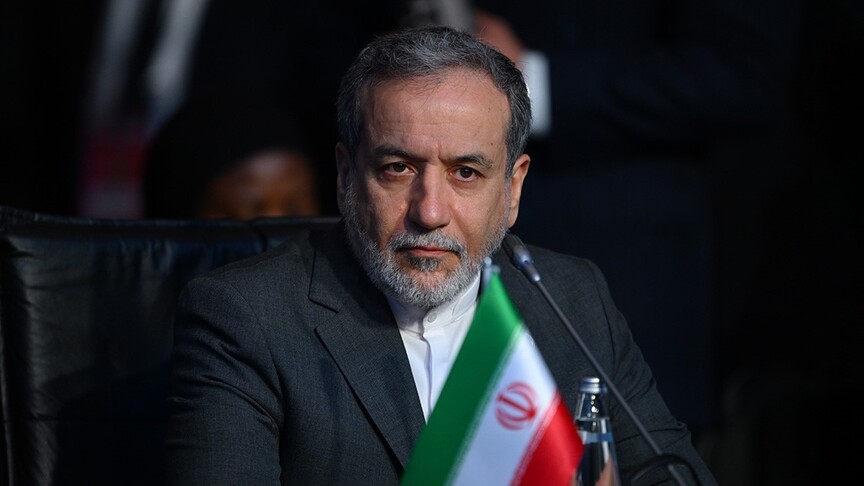
Iranian Foreign Minister Abbas Araghchi arrived in Muscat, Oman’s capital, on Saturday evening, leading a diplomatic delegation, according to Tasnim news agency.

Araghchi is expected to meet with senior officials in Oman to discuss bilateral relations and exchange views on regional developments.

The visit follows his trip to Pakistan, where he said in a statement that he shared his country’s “position concerning a workable framework to permanently end the war on Iran,” without providing further details.

He also expressed skepticism about Washington’s intentions.

“Have yet to see if the U.S. is truly serious about diplomacy,” he said on the US social media company X.

Pakistan has been acting as an intermediary between Tehran and Washington amid ongoing tensions following recent military escalation.

Araghchi arrived in Pakistan late Friday and met with Pakistan’s Prime Minister Shehbaz Sharif in Islamabad on Saturday, amid efforts to revive stalled peace talks between the US and Iran to end their eight-week war.

The first round was held in Islamabad two weeks ago but failed to reach an agreement to end the conflict that began on Feb. 28 and engulfed the entire Middle East. Those talks came after Pakistan brokered a two-week ceasefire on April 8, which was later extended by US President Donald Trump.

Meanwhile, US President Donald Trump on Saturday said that he has cancelled a planned trip to Pakistan by special envoy Steve Witkoff and adviser Jared Kushner.

“I’ve told my people a little while ago they were getting ready to leave, and I said, ‘Nope, you’re not making an 18 hour flight to go there. We have all the cards. They can call us anytime they want, but you’re not going to be making any more 18 hour flights to sit around talking about nothing’,” Trump told Fox News via phone.

Iran has refused to hold direct talks with the US and said observations would be conveyed to Pakistan.

Some of the sticking points are said to be the Strait of Hormuz, the US blockade of Iranian ports, and Iran’s enriched uranium. Anadolu

Continue reading
The Muslim World – An Obituary

By  Junaid S Ahmad

How does one speak of a “Muslim World” when the supposed collective is either silent, complicit, or supine in the face of genocide? When Muslims from Gaza to Kashmir, from Sudan to Syria, are being brutalized with impunity, and the so-called leaders of Muslim-majority states are either polishing boots in Washington or mumbling their dissent into the sand? Perhaps it’s time to recite the Fatiha over the concept of a unified “Muslim World.” If nothing else, a proper funeral might finally clear the air.

The phrase “Muslim World” once conjured images of a vast, vibrant ummah stretching from Jakarta to Casablanca, a spiritual and civilizational brotherhood united by faith and a shared moral vision. Today, that term feels like a cruel joke, the geopolitical equivalent of a sticker slapped onto a broken mirror. The nations that populate this imagined collective can barely agree on the date of Eid, let alone mount a coherent response to the systematic annihilation of their brethren. If this is the “Muslim World,” then it is one in hospice care, wheezing out platitudes as realpolitik pulls the plug.

Let us be honest: most Muslim-majority governments today are client states, marionettes in a puppet theatre directed by Western powers, primarily the United States. Iran is the notable exception, though even it often walks the tightrope between pragmatism and defiance. The rest? From Riyadh to Rabat, from Islamabad to Amman, their foreign policies are either written in Washington or blessed by it. One could argue that the only difference between the State Department and the foreign ministries of many Muslim states is the choice of drapes.

Take, for instance, the case of Pakistan. Its military—the true center of power—has for decades played the role of loyal valet to American interests, occasionally barking in protest, but always fetching the slippers when the master whistles. General Asim Munir, the current Chief of Army Staff, may feel compelled to issue a tepid statement condemning Israel’s rampage in Gaza, but no one is fooled. The servility runs so deep it has become muscle memory. If a U.S. diplomat sneezes, half the GHQ catches a cold.

But the problem runs deeper than cowardice or corruption. The real crisis is conceptual. The phrase “Muslim World” implies unity—political, moral, spiritual. But what unity can there be when Muslim regimes routinely trade in their principles for arms deals and IMF loans? When the defense of al-Aqsa becomes a photo-op and the plight of Muslim refugees is met with monastic silence? When loyalty to Washington counts for more than loyalty to the ummah? The term “Muslim World” no longer describes a coherent political bloc, let alone a moral one. It is an empty husk, a sentimental relic best abandoned.

And perhaps that abandonment is not a tragedy, but a liberation.

In fact, letting go of the mirage of the “Muslim World” may allow us to reorient our political compass. We can stop pretending that shared religious identity guarantees moral solidarity, and instead adopt a sharper, more principled political framework—one that distinguishes friends from enemies not by slogans, but by their actions. Here, the German political theorist Carl Schmitt might be unexpectedly useful. Schmitt famously argued that the essence of the political lies in the distinction between friend and enemy. In a world where Muslim rulers shake hands with tyrants while quoting the Qur’an at summits, such clarity is sorely needed.

In Schmittian terms, the real question is this: Who stands with Pharaoh, and who stands with Moses and the slaves?

Nearly every ruler today bows to Pharaoh. The gold-plated palaces of the Gulf, the military barracks of Islamabad, the ceremonial thrones of North Africa—all pay homage to power, not principle. They genuflect before the American imperium, whispering prayers for stability while Gaza burns. But the prophetic tradition—the real one, not the one trotted out for PR—stands with the oppressed, even when doing so is costly, unfashionable, or dangerous. It was Moses who stood against Pharaoh, not because it was strategic, but because it was right. The prophetic path doesn’t calculate risks; it obeys moral imperatives.

This is where a new politics must begin. A prophetic politics. One that refuses to be seduced by the theatrics of summitry and diplomatic fictions. One that understands that sometimes the friend is not the one who shares your name, your language, or even your religion, but the one who stands with the oppressed and speaks truth to power. Conversely, the enemy is not always the infidel; sometimes he wears a keffiyeh and speaks flawless Arabic but signs arms deals with Zion.

It is a bitter pill to swallow, but the truth often is. The idea of the “Muslim World” as a political community is dead. What survives is a scattered multitude of Muslims, some noble, many fearful, and a good number complicit. But therein lies the hope. Because when the fiction falls away, reality can begin. The ummah, in its truest sense, has never been about flags or borders, embassies or trade deals. It is a moral and spiritual community. And perhaps, in this age of disillusionment, it can finally reclaim that identity.

Let us stop appealing to kings and generals and start building solidarities from the ground up. Let us forge alliances not with “Muslim nations,” but with the oppressed, the truthful, the just—whoever they may be. The Palestinian teenager throwing a stone, the Sudanese doctor tending to wounds, the Syrian child clutching a torn schoolbook amid rubble—these are the citizens of the real ummah. Their resistance is not just political; it is sacred.

This kind of realignment also invites a rethinking of what leadership looks like. We must resist the temptation to look upward to palaces and parliaments and instead look laterally—at the poets, scholars, youth activists, and organizers who speak with prophetic moral clarity. We must build communities of resistance that transcend national boundaries and language barriers, and that unite under a banner not of nationalism, but of justice. We must build the ummah from the ashes, with no illusions, but with fierce hope. And we must cultivate a political imagination that allows us to see past failed institutions toward radical alternatives rooted in dignity and accountability.

Of course, the path forward is daunting. There are no oil revenues to fund this movement, no standing armies to defend it, no state institutions to give it legitimacy. But that is the point. The prophetic tradition has always begun on the margins—with a man in a cave, a voice in the wilderness, a staff in the hand of a fugitive. It has always been the path of those who would rather be right with God than comfortable with Pharaoh.

So let us bury the illusion of the “Muslim World” with dignity. Let us write its obituary, recite its funeral prayer, and move on. Not in despair, but in defiant hope. Because when the idols fall, even the golden ones shaped in our image, the possibility of true worship begins. We may not have presidents or prime ministers on our side, but we have the legacy of prophets. And that, in the end, may be enough.

We stand today at a political and moral crossroads. We can continue to genuflect before the thrones of compromised leaders, hoping for scraps of righteousness from tables drenched in blood. Or we can rise, like Moses, like Muhammad, like Malcolm, and say no. No to Pharaoh, no to injustice, no to complicity disguised as diplomacy.

The “Muslim World” is dead. Long live the ummah of the oppressed, the just, and the free.

Prof. Junaid S. Ahmad teaches Law, Religion, and Global Politics and is the Director of the Center for the Study of Islam and Decolonization (CSID), Islamabad, Pakistan. He is a member of the International Movement for a Just World (JUST – https://just–international.org/), Movement for Liberation from Nakba (MLN – https://nakbaliberation.com/), and Saving Humanity and Planet Earth (SHAPE – https://www.theshapeproject.com/).

Countercurrents

Continue reading
Changing The Middle East Face Through War

Dr Marwan Asmar

Israeli Prime Minister Benjamin Netanyahu finally got what he wanted: ‘A war with Iran.” But this war – now in its fifth day, is already proving very costly for Israel because of the Iranian military firepower meted out on Jewish cities, towns and military installations.

Such a war that begun Friday, 13 June, 2025, will be remembered as one of the greatest events in the calendar of the Middle East. The start of the reaping of the Muslim pride, for up until it was always US-backed Israeli ‘superman superiority’ – versus Islamic weakness and meekness.

Netanyahu may have made a devastating calculation by attempting to go after the Iranian vast nuclear infrastructure while in reality creating mayhem in Iranian cities, people and assassinating 10 of its top military leaders in the early hours of Friday morning.

This was all to change on the evening of that day as Iranian long-range missiles began to hurl down on central Israel and more precisely the Greater Tel Aviv area that includes other cities, towns and settlements with a population of 4 million people.

The start of the strikes on Israel stands today as unprecedented, a first-time development since the creation of the Zionist entity in 1948 and struck a series of bullet sounds among the Israeli population who has been huddling up-and-down the shelters since the conflict begun and best summarized by the US Ambassador to Israel Mike Huckabee who said one night after the bombs that:

“It was a tough night in Israel,” referring to the fact that he had to go down to the bomb shelter five times because of the incoming Iranian missiles that would not let up.

Shock, mayhem, hysteria quickly consumed Israelis as they started seeing first-hand, the destroyed buildings and quashed cars in the middle of Tel Aviv and its surrounding areas like Bat Yam, Ramat Gan, Rehovot, Petah Tikva and Herzliya.

Very quickly as well, missiles, and indiscriminately so, began to fall in these places, long seen as the pride of joy of Israeli technology, military industrialization and top business. These were crumbling in front of their eyes as reported by the Israeli newspapers and media channels.

Shocking was the fact, the incoming missiles, which made Israeli defenses like the Iron Dome and the David Sling look pitiful, were striking buildings and high-scrappers including the prestigious Weizmann Institute of Science with reporters of three its top flights struck and is now in fear of complete collapse.

Despite this, Netanyahu says he is sure of a complete victory, adding that Israel is on the verge of completely changing the face of the Middle East, including his claims of bombing Iranian military facilities, but in reality striking at civilian infrastructure and people.

However, for the first time Gazans and Palestinians are jubilating at the sight of what seems to be the non-stop Iranian missiles falling on Israeli areas where sirens go off and on in all middle of the night and day whilst in glee at the ruined and destroyed buildings. “Let them see how its like to be hit by a missile,” is a frequent comment voiced not only by Palestinians but also by many others in the world.

It is true the face of the Middle East is, and for the first time, is truly changing the face of the Middle East, but not according to the wishes of Netanyahu but to the people of the area of Gazans, Palestinians Arabs and Persians where they have watched the Israeli army bomb the enclave over the past 21 months or so.

This is indeed a historic moment led by Iran and soon to be joined by members of the Muslim world including Turkey, Pakistan, Malaysia and Indonesia. The unexpected war in the Middle East, as brought on by Netanyahu and his extremist and racist government, is upsetting the plans of the Trump plan for the Middle East who is portraying himself as a so-called “man of peace” – a fake image in the light of the fact that the US has been the top military supplier for Israel to carry out its Gaza genocide.

The conflict with Iran – that is not likely to end any time soon because of the arsenal that waits in the ready and to be unleashed – has effectively put an end to the idea of transferring Palestinians from Gaza to other lands. They are likely to stay firmly on their places despite the mass destruction of the enclave.

However, there is a clear slippery-slope to this war that is still in the initial stages with outside powers ready to take sides developing into a real possibility of World War III, if cool hands don’t take the lead and let real and effectively diplomacy take the reign of power to stop what was seen in the 1960s, 1970s and even 1980s the concept of Mutual Assured Destruction.  

The world today is on a precipice….


Continue reading