Netanyahu in the Eye of the Storm!

By Saleem Ayoub Quna

CROSSFIREARABIA – Whatever our political affiliations might be, there is no denying that the Israeli Prime Minister Benjamin Netanyahu has been trying to navigate his way through the worst crisis that hit Israel since 1948.

As this crisis gathered momentum, Netanyahu became more and more inclined to think that he was “chosen” for this once in a life-time moment! In this regard, he likes to liken himself to Winston Churchill and Franklin Roosevelt and likens the 7th Oct., – Hamas audacious full scale attack on Israeli settlements encircling the Gaza Strip – to that of America’s Pearl Harbor of 1941.

Before this devastating development, Netanyahu was busy with couple of matters. For instance, he considered Iran’s nuclear ambitions a life-threatening element to Israel. He would not waste any chance to emphasize that. In all of his speeches on international platforms, his picture holding the diagram showing Iran’s progress in making its own nuclear weapon, became familiar to the eyes of the world.

At the same time, he was engaged in disputes with critics and allies over the future of the Arab occupied territories since 1967 war, primarily the West Bank, which he and his like-minded Israeli politicians, are relentlessly trying to annex to “little Israel”!

De facto factor

Netanyahu and his clique, shared the impression that while the international public opinion in the late 1940s tolerated Israel’s de facto encroachment on territories that were originally allocated to the Palestinians according to the UN partition plan (181). Today he hopes that Israeli continuous attempts to acquire additional Palestinian territories will be, as well, tolerated and eventually neglected and forgotten!

To turn this plan into reality, he followed the example of Israeli successive governments since 1967 war when they embarked on building settlements for immigrant Jews brought in from all over the world. Today, there are more than half a million settlers in the West Bank against 3 million Palestinians, plus the 220,000 Israelis in East Jerusalem, against 372,000 Palestinians.

Dawn of 7th Oct.

Then rises the dawn of 7 Oct., 2023 to dynamite all the above mentioned plans and dreams of Netanyahu and his likeminded right-wing allies!

The surprise full scale attack by Hamas shocked the world and humiliated Netanyahu, for he was the man behind the strategy to strengthen and enrich the Hamas movement in Gaza, while undermining the Palestinian Authority in Ramallah to widen the gap between the two competing representatives of the Palestinian people.

Netanyahu cannot pardon himself as he was the man who had in 2011, sanctioned the release of the now Hamas leader Yehya Sinwar, along other 1000 Palestinian prisoners, in exchange for one Israeli soldier, Gilad Shalit, who was abducted by the Islamic movement back in 2006.

By deepening the wedge between the two Palestinian rival groups, Netanyahu’s plan was to tell the world that there was no reliable Palestinian partner to make peace with. According to his logic, the Palestinian Authority is corrupt, weak and unpopular, and Hamas is a “terrorist” organization with whom Israel, by law, cannot talk with!

Such an argument would leave the fate of the West Bank, solely and helplessly, in the hands of Netanyahu’s Likud Party and the other extreme right-wing parties, whose main reason d’etre, is the annexation of the West Bank, while at the same time continually applying different tactics to expel, as many Palestinians as possible from beyond the green line of 1948, or what the world concurs as calling “ethnic cleansing”!

The year after!

In years to come, Israeli school children, if we could dig into Netanyahu’s mind, will be taught that Theodor Herzl was the founder of Zionism in 1889, David Ben Gurion, the founder of “little Israel” in 1948 and Netanyahu was the man who tried to outmaneuver the waves of the storm!

Who can resist such a toxic temptation? A war criminal, as some Israeli liberals call him, Netanyahu seems to care less what others think or say of him!

This opinion was especially written for Crossfire Arabia by Saleem Ayoub Quna who is a Jordanian author writing on local, regional and international affairs and has two books published. He has a BA in English Literature from Jordan University, a diploma from Paris and an MA from Johns Hopkins University in Washington. He also has working knowledge of French and German.

Continue reading
‘Art is Resistance’ Says Sliman Mansour

Sliman Mansour, a prominent figure in modern Palestinian art, emphasized the importance of “rehumanizing” the Palestinian people, noting that he spent his youth fighting against the erasure of Palestinian identity.

“The Israelis and the West – they’ve been trying very hard to dehumanize us. As artists and people who deal with culture, it’s our role to rehumanize the Palestinian people,” Mansour told Anadolu.

The 77-year-old renowned artist, sculptor, writer and cartoonist, who depicts the historical struggle of Palestinians through his paintings, said he sees art as a form of resistance.

Born in 1947 in the town of Birzeit in the West Bank city of Ramallah, Mansour has portrayed the Palestinian resistance through his art for over half a century.

“I would like to show that Palestinians cherish their land and are holding onto it, and they are saying in poems about the beauty of the land. In my art, I want to show the beauty of the landscape of the land. I want to show that we live in a very unjust situation,” he said.

‘Don’t forget Palestine’

“I’m not thinking about the whole people. I think about the Palestinian people, and especially those who live outside who never saw Palestine. My message for them is: Don’t forget Palestine and Palestine is beautiful. In my art, there is no message of hate. It’s beauty and love.”

Mansour, who lived through the Six Day War between Arab states and Israel in June 1967, often draws attention to the conflicts and pressures faced by Palestinians.

Using symbols derived from Palestinian culture, history, and traditions, Mansour underscores the deep attachment Palestinians have to their land, which serves as a significant source of inspiration for his work.

“Everybody is fighting about the land, and the land is my main inspiration. I was born in a village and I experienced the land and working in the land and living in a village,” he said. “I think the memories of childhood always stay with people, even if they leave the village. From these memories, I think I take my imagination and I take my inspiration,” he said.

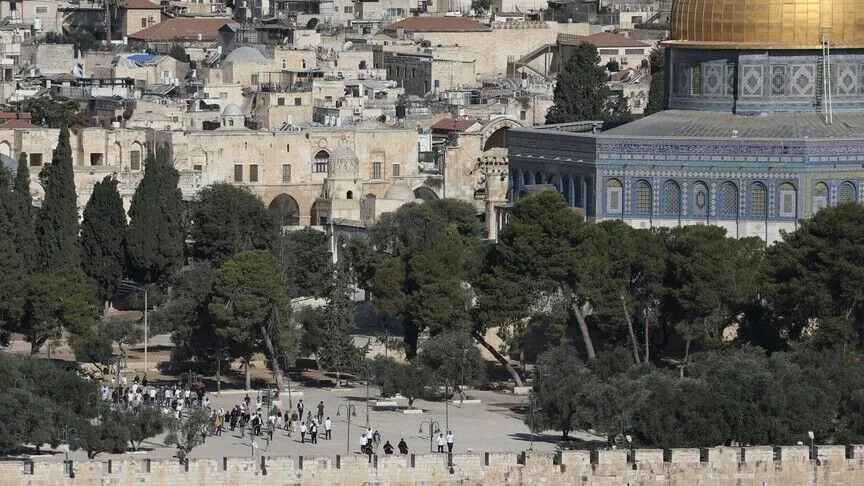
Saying that Jerusalem is a symbol of Palestine, and the Dome of the Rock is a symbol of Jerusalem, Mansour said he reflected this idea in a painting titled, The Camel of Hardships, which contained his first political message.

“But the first main painting that I did that had very obvious political meanings is the old man carrying Jerusalem on his back. I have a big family outside, living in the US and everywhere. I noticed that everybody was outside of Palestine. He goes out and he thinks he’s free from all the political pressures.

“But no, he’s always carrying his Palestinian on his back. If you are a Palestinian, you are a problem just because you exist. I wanted to show this fact about Palestinians who live abroad,” he said.

Mansour said in his 1989 work titled, Rituals Under Occupation, he depicted crowds carrying a cross covered with the Palestinian flag and extending toward the horizon.

He received inspiration from a Palestinian judge who lived in the Old City in Jerusalem and had a son who could not walk. Mansour said the Palestinian identity is a “big burden” for them.

“I talked to him (the judge) and he said that everybody in the world has his own cross, and Palestinian people have, all of them, have one big cross,” he said.

“The Palestinian identity is a big burden for us. Our existence is a problem. The flag became one of the main important images of Palestinian identity. The flag is the Palestinian identity, and it’s forever. We don’t see the end of it,” he added.

Mansur pointed out that one of the most frequently used symbols in his work is the olive tree, highlighting his 2021 piece, From the River to the Sea.

“It’s half olive tree and half orange tree. The olive tree symbolizes the land that was occupied in 1967. The orange tree — it symbolizes the land that was occupied in 1948,” he said.

Olive tree, orange tree

Saying that he does not only address the Israeli occupation but also underscores the resilience of the olive tree in the painting, Mansour clarified: “Olive trees – it can live in very rough places on the mountains and without water, and its roots are very long inside the land.

It symbolizes perseverance and the feeling of being that – holding the land and not giving up. In my opinion, Palestinians are like the olive tree,” he added.

Highlighting the Israeli occupation with barbed wire in his paintings, Mansour said: “Barbed wire symbolizes the occupation. It symbolizes also the settlements.”

“Because in every settlement, you see these barbed wires all around the settlement. For Palestinians, when they see barbed wires, it’s either a settlement or a military base or something. It symbolizes the occupation. They want to forbid you to come near that area,” he said.

Adding he is not always hopeful as an artist, Mansur referred to his 2018 work, Temporary Escape, where he expressed those feelings.

“I made this painting during this time when I felt very, very depressed and hopeless. When you live in occupied land, you are the target of many media people that — they aim to defeat you. I mean, defeat you from the inside. Sometimes they succeed, but then you wake up after a while. This is a fight that you have to go in,” he added.

Mentioning the impact of art on the Palestinian resistance, Mansour stated: “If the artist is really truthful with his feelings, he could be effective or she could be effective.”

“Some artists, they do it just because they have to do it. It doesn’t affect anybody. But my art is still, until now, it’s effective because I do what I like to do. It comes out from my heart,” he said.

“It’s not enough to come from your heart. You have to feel a belonging to the culture of your people. It’s not enough to feel belonging, but you have to study it. If you want to express your art through this culture, you have to know this culture very good. I think I have been through that,” he added in an interview with the Turkish news agency.

Continue reading
Six Female Journalists in Israeli Jails

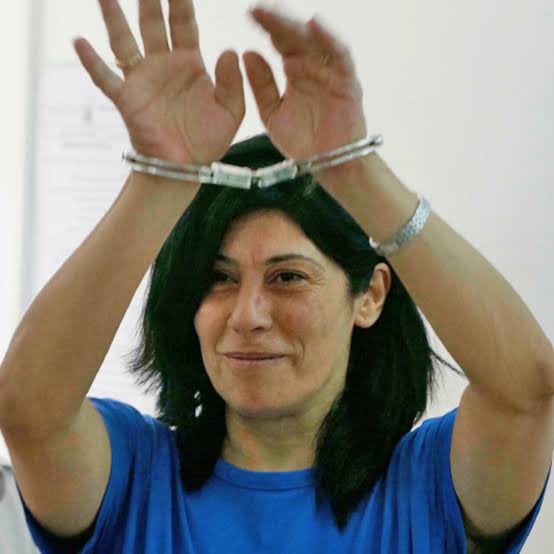
Attacks on Palestinian journalists have always been widespread. The Israeli authorities frequently charge Palestinian media workers with “incitement” and imprison them as “administrative detainees” based on claimed “secret evidence”.

Both of these charges are bogus and are aimed to prevent the journalists from exposing the Israeli crimes.

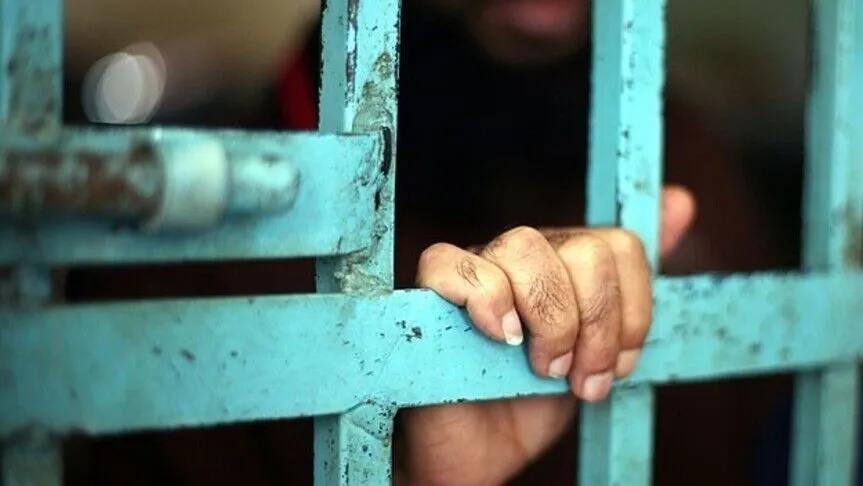
Like other detainees journalists held in Israeli prisons suffer from torture, beatings, humiliation and torture. As well, they are deprived from any form of communication with the outside world.

There are currently six Palestinian female journalists held in Israeli prisons and are not due to be released ant time soon while enduring the violence of the Israeli guards.

They are Bushra Al Taweel from Ramallah. This is her 5th arrest in three years and today she is held in administrative detention for six months under the instruction of the Israeli Shin Bet.

Then follows Ikhlas Saleh Sawalha. She was arrested at a military checkpoint in Dier Sharaf. Her arrest is due to the fact that her husband, journalist Ibrahim Abu Safiya has been in Ofer prison since 2022.

Ikhlas has been arbitrarly detained since December, 2023 with under an administrative detention that is renewed almost automatically.

Then comes journalist Rula Hassanein from Ramallah. She is also under administrative detention that is being routinely renewed.

Rula has a baby which has refused her food and milk without her mother leading to her dehydration. Therefore, doctors had to intervene and administer intravenous injections.

Then there is journalist Asmaa Harish. Israeli soldiers stormed her home in Beitunia, west of Ramallah, last April and took her away. She is presently in prison under administrative detention.

Her case is related to the fact she is the daughter of Noah Harish and her brother Ahmad who are in an Israeli jail.

Then there is 39-year-old Rasha Herzallah. She is being detained for what the Israeli authorities claim incitement on social media platforms.

She is the sister of Mohammad Herzallah, a journalist at the Wafa news agency. He was shot by Israeli soldiers in Nablus in 2022 and four months later he succumbed to his wounds and died.

Finally, student Amal Al Shujaiya was taken from her home in Dier Jarir, east Ramallah, late at night by Israel soldiers. She is being detained awaiting a military court hearing. Amal is journalism student at Birzeit University in Ramallah.

“She is living a big space of emptiness in our house,” her mother said.

Continue reading
‘Its Like Guantanamo’ Freed Prisoner Says of Israeli Jail

Laying on a hospital bed in Beit Jala in the southern West Bank, Moazzam Khalil Abayat cannot believe he was released from the Negev prison in southern Israel.

Abayat, 37, from the West Bank city of Bethlehem, was released in a “shocking” health condition on Tuesday after a nine-month detention without charge under Israel’s notorious policy of administrative detention.

“Negev prison is like Guantanamo. I saw prisoners killed and trampled on with boots,” Abayat told Anadolu.

“Every night, we were severely beaten. Only last night, I wasn’t hit,” he said.

Despite being surrounded by family and friends at the hospital, Abayat remains disoriented, believing he is still in detention.

“After my arrest, I was subjected to military interrogation and accused of being a murderer. I have never killed anyone,” he recalled.

“I suffered fractures in my head and hand, I was beaten on sensitive and injured areas. I was put in a black bag as if I was dead.”

Abayat said far-right National Security Minister Itamar Ben-Gvir participated in torture at Ofer military prison, west of Ramallah.

“Prisoners are dying in jails. This is an appeal to everyone to take action to save them,” he said.

Abayat’s speech was occasionally incoherent, indicating he still experiences severe psychological distress as if he were still imprisoned.

Family in shock

Abayat’s father, Khalil, was shocked by the health condition of his son.

“The family is in great shock. Moazzaz seems like a completely different person,” he told Anadolu.

“My son was a bodybuilder, worked in a butcher shop, was sociable, and a breadwinner of five. Today, he has almost lost his memory, is nearly paralyzed, thin, unable to walk, and does not recognize many family members,” Khalil added.

He noted that Moazzaz’s weight dropped from around 110 kilograms to barely 50 kilograms.

“Moazzaz was beaten throughout his detention, from the moment he was arrested until his release.”

Brutally assaulted

Dr. Nizar Qumsiyeh, the medical director of the hospital, said, Abayat has various bruises and is in a severe psychological state.

“We have begun medical tests and are awaiting the results, but it is clear he believes he is still in prison and surrounded by jailers,” Qumsiyeh added.

“He needs further examination and follow-up to determine his dietary needs to regain his physical health and then begin potentially long-term psychological treatment.”

According to the Palestinian Prisoner Society, Abayat was brutally beaten during his arrest in late October 2023.

“He was subjected to a series of vicious assaults, including torture and starvation,” it said. “His health condition after his release today serves as a testament to what he endured during his detention.”

Abayat was previously detained twice by Israeli forces. He did not suffer any health problems before his latest arrest.

At least 3,380 Palestinians, including women and children, are currently held without charge in Israeli prisons, according to Palestinian figures.

Israel, flouting a UN Security Council resolution demanding an immediate cease-fire, has faced international condemnation amid its continued brutal offensive on Gaza since an Oct. 7, 2023 attack by Palestinian group Hamas.

Nearly 38,300 Palestinians have since been killed, mostly women and children, and over 88,200 others injured, according to local health authorities.

Nine months into the Israeli war, vast tracts of Gaza lie in ruins amid a crippling blockade of food, clean water, and medicine.

Israel stands accused of genocide at the International Court of Justice, whose latest ruling ordered it to immediately halt its military operation in the southern city of Rafah, where over a million Palestinians had sought refuge from the war before it was invaded on May 6.

Continue reading
Israel-India: Comrade-in-arms Over Gaza

India has been supplying Israel with weapons ever since the latter started its war on Gaza since 7 October, 2023.

New Delhi has been supplying Israel with artillery shells, drones and other weapons on a regular basis. It supplied Israel the advanced Hermes 900 drones that have been towering over the skies of Gaza for the last nine months.

The Hermes 900 is a drone that can be used for surveillance and aerial bombardment and have already been in active deployment in the Gaza Strip.

India joins the USA, France, Britain, Germany and Canada as an Israeli constant military supplier to keep Israel’s devastating war on Gaza going and resulted in the killing of more than 37,000 people and injured 85,000 today combined with the mass bombings of the houses, schools, infrastructure, government buildings and more.

Traditionally it has been Israel that exported hardware military equipment to India, however, Tel Aviv’s war on Gaza has turned things around. Now, it is India that is the main exporter of arms to Israel.

It continued with the 27-ton explosives shipment that India tried to send to Israel through Spanish ports last May. But today this relationship continues as India has become crucial in providing Israel with ammunition through joint deals between Israeli and Indian defence contracting companies.

The military relationship underscores the close ties that developed between India and Israeli under Prime Minister Benjamin Netanyahu and Narendra Modi who become the first Indian Prime Minister to visit Israel and 2017.

Today India and Israel are regarded as key allies, underlined by the fact that the latter has become a huge destination for Indian tourists.  

However, the ex-Israeli ambassador in New Delhi Daniel Carmon put the relation between the two countries in an overall context. He said India might be supplying weapons to Israel as a gesture of gratitude for Israel assistance during the Kargil war of 1999 as reported in the Quds News Network.

https://t.me/QudsNen/110997


“The Indians always remind us that Israel was there for them during the Kargil war. Israel was one of the few countries that stood by them and provided them with weapons. The Indians don’t forget this and might now be returning the favor,” Carmon stated.

https://x.com/ZubairMemonPune/status/1711047612101689428


The comments of the former diplmat came amid reports confirming India has supplied drones and artillery shells to Israel during its ongoing war on Gaza, which international bodies like the International Criminal Court and International Court of Justice have ruled as involving serious war crimes committed by Israel.

However despite the developing close relations India have always backed a two-state solution to the Israeli-Palestinian conflict when India established a PLO office in the country in the 1970s.

Further, in 2108 Modi made it a point of visiting Ramallah as part of a regional visit to Jordan and the Arab Gulf countries and in an effort to balance India’s foreign policy in the Middle East.

Continue reading