How Britain Funded The Israeli Genocide

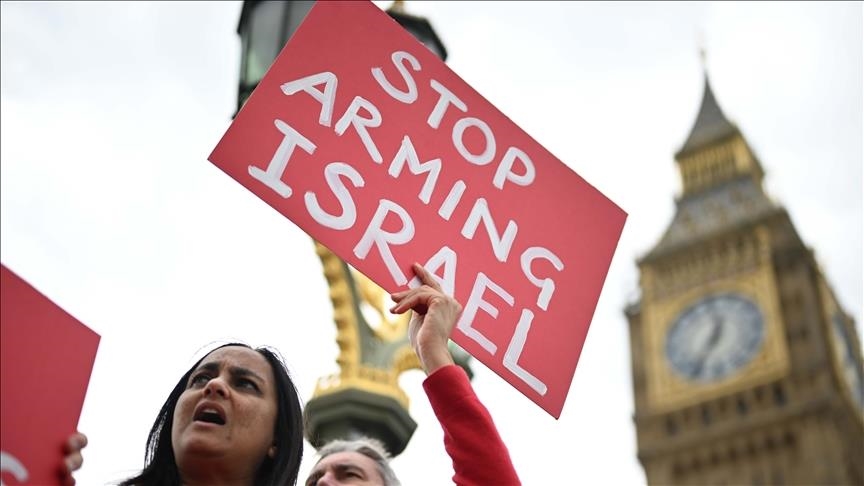
Britain’s support for Israel’s genocidal conduct in Gaza, through weapons, intelligence sharing, and diplomatic cover, is in the spotlight again after this week’s court ruling on a legal challenge to the UK’s continuing arms exports to Tel Aviv.

Critics, ranging from top human rights groups to legal experts and members of Parliament, say the UK has become complicit in the devastation Israel is inflicting on Gaza, where its forces have killed more than 57,000 Palestinians and wounded over 134,000 since Oct. 7, 2023.

The UK High Court on Monday dismissed a judicial review brought by Palestinian human rights group Al-Haq and London-based Global Legal Action Network (GLAN), supported by Amnesty International UK, Human Rights Watch, and Oxfam.

The case centered on Britain’s decision to exempt F-35 parts when suspending some arms export licenses for Israel last year, citing the UK’s legal obligations under international humanitarian law, including the Geneva Conventions, the Arms Trade Treaty, and the Genocide Convention.

Despite acknowledging these concerns, judges Stephen Males and Karen Steyn ruled that the so-called “F-35 carve-out” policy was lawful and beyond the jurisdiction of the courts. The decision drew widespread condemnation from the rights groups, who have vowed to keep up their efforts to force the British government to halt all arms exports to Israel.

According to a detailed investigation by London-based watchdog Action on Armed Violence (AOAV), the UK has supplied thousands of munitions, continued shipments of components for the F-35 fighter jet used in Israeli airstrikes, and conducted over 570 surveillance flights over Gaza since December 2023.

Arms and material

Britain has continued to arm Israel despite mounting civilian casualties in Gaza. “Since October 2023 there have been at least 14 shipments of military goods from the UK to Israel,” Labour lawmaker Kim Johnson said in Parliament last month.

“Those include over 8,500 munitions, bombs, grenades, missiles, and 146 armored vehicle parts. In October 2023 alone, the UK exported 150,000 bullets.”

In September 2024, under growing pressure, the Labour government announced it was suspending around 30 of 350 active export licenses for Israel, citing a “clear risk” that British-made weapons could be used in serious violations of international humanitarian law.

However, the move fell far short of a full embargo, with AOAV noting that “the vast majority of licenses remained valid.”

Critically, the UK exempted components for the F-35 fighter jet program from suspension. BAE Systems, a key British arms manufacturer, contributes to the jets used in Israeli airstrikes.

AOAV reports that F-35s have played “a critical role in the Israeli bombing campaign,” including an attack in March 2025 that killed more than 400 Palestinians.

While the UK insists that all exports are rigorously assessed, Parliament has heard warnings that Britain cannot ensure its arms are not used in Gaza.

“It is completely conceivable that those weapons have been used to kill and maim children in Gaza,” Labour MP Warinder Juss said in a Parliament session.

Surveillance and intelligence

Starting in December 2023, the Royal Air Force began flying near-daily surveillance missions over Gaza and southern Israel from the RAF Akrotiri base in the Greek Cypriot Administration.

According to AOAV data, Britain has flown over 570 such sorties, with more than 200 under the current Labour government.

The primary aircraft used is the Shadow R1, operated by the RAF’s 14 Squadron, equipped with high-resolution cameras and signals intelligence tools. The RAF also deployed RC-135 Rivet Joint planes to collect electronic intelligence.

The UK government claims these flights are “solely” for hostage rescue purposes. However, AOAV raised serious concerns about how the intelligence is used, warning that “British spy aircraft may have given Israel additional eyes and ears over Gaza’s battlefields.”

Britain’s membership in the Five Eyes intelligence alliance complicates matters further. As AOAV explains, the UK has long held responsibility for Middle East monitoring within the alliance, and signals intelligence shared with the US may have ultimately supported Israeli military operations.

Legal challenges and ethical concerns

Despite the September 2024 suspension of some export licenses, arms shipments from the UK to Israel appear to have continued. Human rights groups have sharply criticized what AOAV calls a “blind alliance.”

In early June, former Labour leader Jeremy Corbyn called for an independent public inquiry into the UK’s involvement in Israeli military operations in Gaza, urging the government to end arms sales to Israel and accusing ministers of complicity in what he described as “mass murder.”

Most recently, on June 30, the UK High Court dismissed the judicial review brought by Al-Haq and GLAN, saying that decisions on whether to continue UK’s involvement in the F-35 program were for the government and Parliament according to Anadolu.
Continue reading
Iran Strikes Mossad Center

Iran’s Islamic Revolutionary Guard Corps (IRGC) announced, Tuesday it had directly targeted and struck two high-level intelligence facilities inside Israel, including the headquarters of Israel’s Military Intelligence Directorate (Aman) and a Mossad operational center.

The announcement came after a wave of Iranian ballistic missiles struck central areas of the occupied territories early Tuesday morning. 

Israeli media confirmed at least five missiles hit targets across the Tel Aviv metropolitan area, with one reportedly landing in Herzliya—a coastal city that hosts key Israeli security and intelligence infrastructure.

A separate strike targeted the Glilot area, a highly sensitive site believed to house core logistical operations for Aman. 

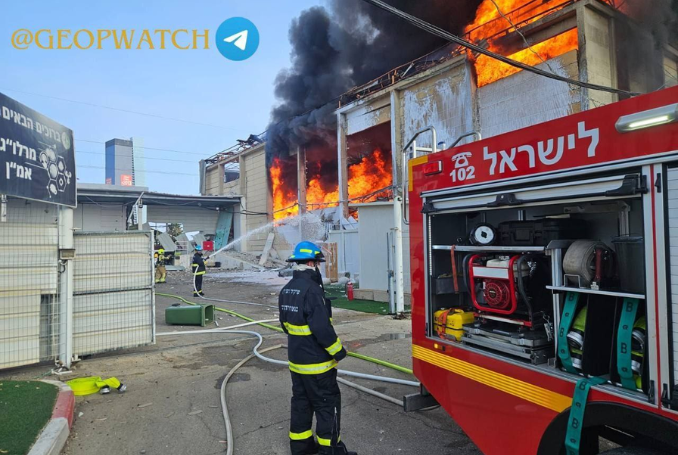
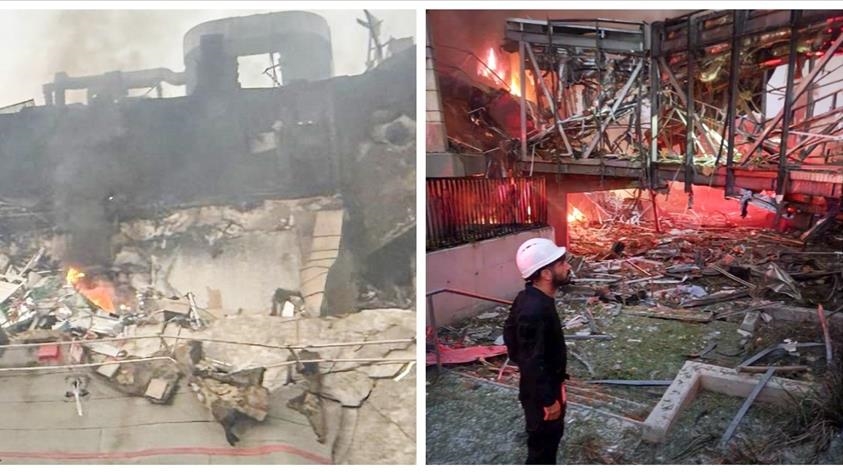
Military censorship was swiftly imposed on coverage of that location, though images published by Israeli outlets suggest a large warehouse or command center was hit.

The IRGC stated that the precision strikes were part of its ongoing Operation True Promise 3, which aims to deliver “precise and painful blows” to the Israeli occupation in retaliation for recent attacks on Iranian cities and infrastructure.

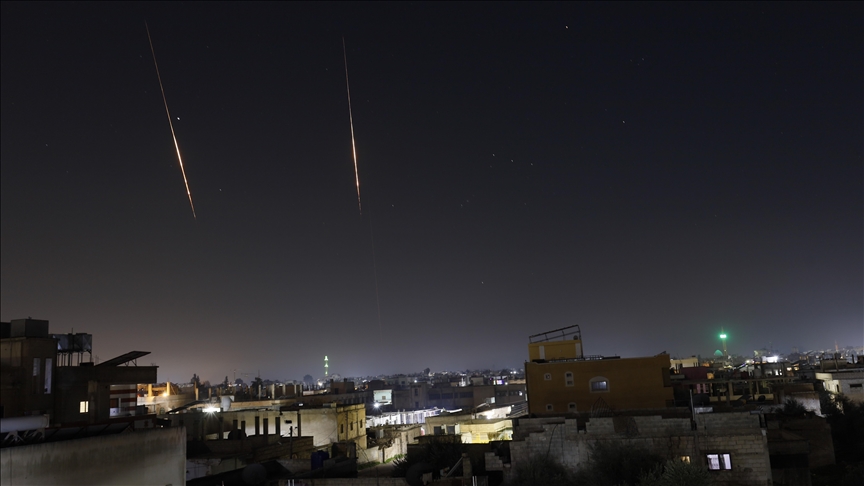
The broader missile barrage included the launch of 20 to 30 ballistic missiles from Iran toward central and southern areas of the occupied territories. 

Air raid sirens were heard across Tel Aviv, Gush Dan, and surrounding towns as Israeli air defenses attempted interception.

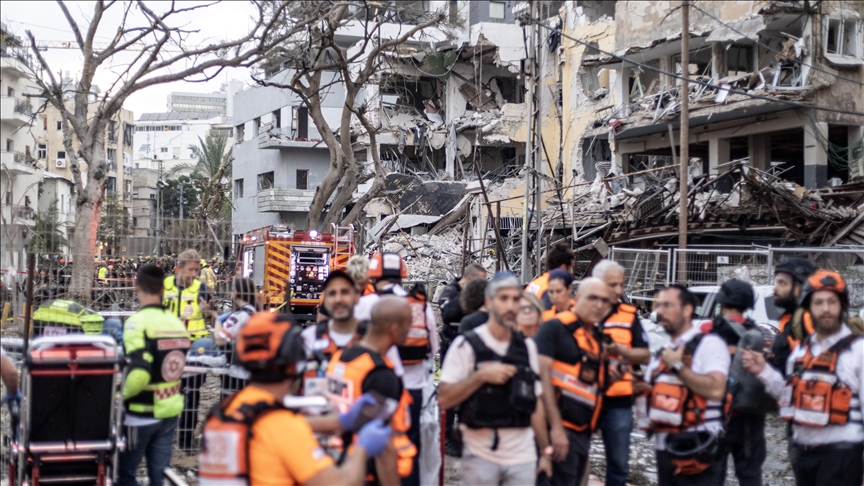
Despite those efforts, multiple explosions were recorded across the region. Israeli media reported loud blasts in Herzliya, Ramat HaSharon, and Ra’anana, with several buildings damaged and injuries reported. 

According to Magen David Adom, ten Israelis were injured while rushing to shelters.

Fires, Evacuations, and Structural Damage

The Fire and Rescue Authority responded to at least eight incidents in the Hasharon region and greater Gush Dan. 

Over 20 firefighting teams were deployed to contain fires caused by falling debris and missile shrapnel. A blaze was also reported in Kfar Saba after Iranian projectiles impacted the area.

Three additional Iranian missiles reportedly struck targets in southern “Israel”, including near Beer al-Sabe’ (Beersheba) in the western Naqab.

Authorities are investigating reports that some Israelis may be trapped beneath rubble in the Tel Aviv area, though official casualty counts have not been released.

Israeli media reported a delay in the missile alert system, with detection occurring only two minutes before impact. Sirens were reportedly triggered just three minutes before the strikes, prompting criticism of the so-called Home Front Command.

Iran Responds

Iranian officials said the missile operation was a direct response to the Israeli occupation’s continued bombing of Iranian hospitals, media buildings, and residential neighborhoods. 

While Israeli authorities claim to be targeting “military sites,” the rising civilian death toll inside Iran has drawn international condemnation.

The missile strikes appear intended to demonstrate Iran’s capacity to hit deep inside the occupied territories with precision, targeting not only population centers but also high-value strategic and intelligence locations.

The IRGC confirmed the launch of the ninth wave of Operation True Promise 3 on Monday night, stating that strikes would continue through dawn on Tuesday. Iran’s Tasnim News Agency published footage showing missiles traversing the skies over the occupied West Bank.

Separately, the IRGC said it had struck the same base from which Israeli aircraft had launched an attack on Iran’s state broadcasting authority days earlier.

Air raid sirens were also activated across the north, from Nahariya to Caesarea and Haifa, as well as in the occupied Syrian Golan, amid fears of further drone or missile attacks according to the Palestine Chronicle.

Continue reading
Changing The Middle East Face Through War

Dr Marwan Asmar

Israeli Prime Minister Benjamin Netanyahu finally got what he wanted: ‘A war with Iran.” But this war – now in its fifth day, is already proving very costly for Israel because of the Iranian military firepower meted out on Jewish cities, towns and military installations.

Such a war that begun Friday, 13 June, 2025, will be remembered as one of the greatest events in the calendar of the Middle East. The start of the reaping of the Muslim pride, for up until it was always US-backed Israeli ‘superman superiority’ – versus Islamic weakness and meekness.

Netanyahu may have made a devastating calculation by attempting to go after the Iranian vast nuclear infrastructure while in reality creating mayhem in Iranian cities, people and assassinating 10 of its top military leaders in the early hours of Friday morning.

This was all to change on the evening of that day as Iranian long-range missiles began to hurl down on central Israel and more precisely the Greater Tel Aviv area that includes other cities, towns and settlements with a population of 4 million people.

The start of the strikes on Israel stands today as unprecedented, a first-time development since the creation of the Zionist entity in 1948 and struck a series of bullet sounds among the Israeli population who has been huddling up-and-down the shelters since the conflict begun and best summarized by the US Ambassador to Israel Mike Huckabee who said one night after the bombs that:

“It was a tough night in Israel,” referring to the fact that he had to go down to the bomb shelter five times because of the incoming Iranian missiles that would not let up.

Shock, mayhem, hysteria quickly consumed Israelis as they started seeing first-hand, the destroyed buildings and quashed cars in the middle of Tel Aviv and its surrounding areas like Bat Yam, Ramat Gan, Rehovot, Petah Tikva and Herzliya.

Very quickly as well, missiles, and indiscriminately so, began to fall in these places, long seen as the pride of joy of Israeli technology, military industrialization and top business. These were crumbling in front of their eyes as reported by the Israeli newspapers and media channels.

Shocking was the fact, the incoming missiles, which made Israeli defenses like the Iron Dome and the David Sling look pitiful, were striking buildings and high-scrappers including the prestigious Weizmann Institute of Science with reporters of three its top flights struck and is now in fear of complete collapse.

Despite this, Netanyahu says he is sure of a complete victory, adding that Israel is on the verge of completely changing the face of the Middle East, including his claims of bombing Iranian military facilities, but in reality striking at civilian infrastructure and people.

However, for the first time Gazans and Palestinians are jubilating at the sight of what seems to be the non-stop Iranian missiles falling on Israeli areas where sirens go off and on in all middle of the night and day whilst in glee at the ruined and destroyed buildings. “Let them see how its like to be hit by a missile,” is a frequent comment voiced not only by Palestinians but also by many others in the world.

It is true the face of the Middle East is, and for the first time, is truly changing the face of the Middle East, but not according to the wishes of Netanyahu but to the people of the area of Gazans, Palestinians Arabs and Persians where they have watched the Israeli army bomb the enclave over the past 21 months or so.

This is indeed a historic moment led by Iran and soon to be joined by members of the Muslim world including Turkey, Pakistan, Malaysia and Indonesia. The unexpected war in the Middle East, as brought on by Netanyahu and his extremist and racist government, is upsetting the plans of the Trump plan for the Middle East who is portraying himself as a so-called “man of peace” – a fake image in the light of the fact that the US has been the top military supplier for Israel to carry out its Gaza genocide.

The conflict with Iran – that is not likely to end any time soon because of the arsenal that waits in the ready and to be unleashed – has effectively put an end to the idea of transferring Palestinians from Gaza to other lands. They are likely to stay firmly on their places despite the mass destruction of the enclave.

However, there is a clear slippery-slope to this war that is still in the initial stages with outside powers ready to take sides developing into a real possibility of World War III, if cool hands don’t take the lead and let real and effectively diplomacy take the reign of power to stop what was seen in the 1960s, 1970s and even 1980s the concept of Mutual Assured Destruction.  

The world today is on a precipice….


Continue reading
Iran-Israel War: Cost And Opportunities!

By Mohammad Abu-Rumman

Benjamin Netanyahu has placed the Iranian regime, the Wilayat al-Faqih system, before a fateful challenge through a harsh pre-emptive strike. While extremely risky, the strike was not decisive enough to settle the confrontation. Netanyahu himself did not expect that an ideological-nationalist regime like Iran’s would surrender and offer immediate concessions following the strike, without launching a retaliatory blow against Israel.

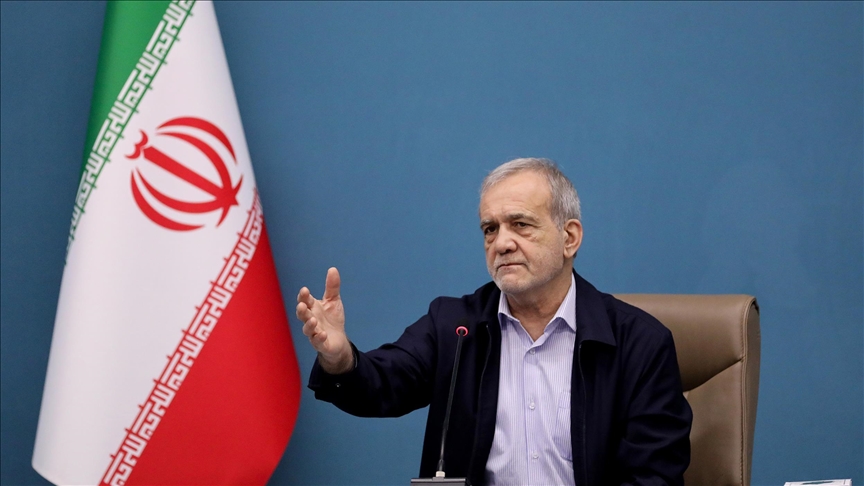
Despite Iran’s unprecedented powerful strikes on Tel Aviv, the reformist current in Iran, represented by Foreign Minister Abbas Araghchi, has also demonstrated its continued commitment to “the negotiating table” and to finding a way out of this war. Iran has deliberately avoided using its full missile capabilities against Israel to prevent the battle from reaching the point of no return.

Current indicators suggest that this war will likely not last long, nor will it expand geographically, because the destruction costs—for both sides—are immense. For Iran, this includes damage to its oil facilities, which are the backbone of its economy, as well as the protection of what remains of its nuclear program and infrastructure. For Israel, the fact that Iran managed to breach the Iron Dome and cause major direct damage in the heart of Tel Aviv and Haifa presents a reality that Israelis cannot endure.

In this light, there will likely come a tipping point at which both parties will be willing to end the conflict. The timing of that moment will be decided by the U.S. administration, which will step in to halt the military escalation. But when will this moment arrive? It will come when both sides realise that they can no longer achieve significant additional objectives, and that the cost of continuing the conflict far outweighs the cost of stopping it, especially given that a so-called “knockout blow” is impossible in such existential wars.

On the Israeli side, there are two major areas of superiority: First, Israel’s air force has successfully destroyed much of Iran’s air defense systems, allowing it to operate freely over Tehran and strike targets at will. Second, intelligence penetration, which could lead to further surprises that may force the Iranians to retreat or make subsequent concessions. However, Israel’s major vulnerability lies in its inability to withstand sustained, large-scale missile attacks, especially after a prolonged multi-front military conflict.

As for Iran, it has two primary objectives in the current military confrontation: To preserve the political legitimacy of the Wilayat al-Faqih regime, which is built on religious ideology and propaganda. Failing to respond or retreating now would reflect poorly internally and could erode the regime’s very source of legitimacy. To protect Iran’s deterrence capacity and prevent its regional standing from deteriorating—especially after losing the bulk of its regional influence in the aftermath of “Flood of al-Aqsa” (the Gaza war).

American intervention, whether military or diplomatic, will be decisive in ending this conflict. It is evident that President Donald Trump prefers a negotiated path, aiming for political, military, and economic gains. Netanyahu, however, is betting that a major military defeat for the Iranian regime will lead not only to concessions on its nuclear program (the primary stated objective) but potentially to changing or collapsing the regime itself, thereby neutralizing it within the regional power structure. This would constitute a strategic shift in the regional security equation in Israel’s favour.

Direct US military involvement remains unlikely, except in two scenarios: If Israel were to request assistance after a massive and successful missile strike against its territory. If the U.S. concludes that Iran will not back down unless there is a more dramatic shift in the military balance of power that compels it to return to the negotiating table and offer substantial concessions.

This equation was not the same two years ago. Back then, Iran had greater geopolitical space and extensive tools of influence in the region. However, what has occurred with the fall of Bashar al-Assad’s corridor (the Syrian axis), and the diminished power of Hezbollah and Hamas, has cost Iran critical advantages in the regional balance of power. After this war, there will be significant consequences even for Iran’s remaining influence in Iraq, which may become the final outpost lost by Tehran, ending a twenty-year effort (since the 2003 invasion of Iraq) to weave its intricate carpet of regional influence.

Mohammad Abu Rumman is the Academic Advisor of Politics and Society Institute in Amman and has contributed this article to The Jordan Times.

Continue reading
Iran Missiles Kill 8 Israelis, Injures 100

Eight Israelis were killed and more than 100 injured as Iranian missiles struck central Israel in new attacks launched by Iran, Monday morning. Many of these missiles penetrated the Israeli defense systems and struck Tel Aviv and Haifa.

Yedioth Ahronoth reported that the Israeli death toll had risen to eight after three bodies were found in Haifa.

Earlier Monday morning, the Israeli Maariv daily quoted Israeli ambulance services as saying that four people were killed in the Iranian missile attack on Israel. The ambulance service said its crews were working at four sites where the missiles fell.

Israeli media reported that the number of people injured by Iranian missiles in the greater Tel Aviv area had risen to 103.

Israel Hayom, citing eyewitnesses, reported that the extent of the destruction in greater Tel Aviv was extensive. Haaretz also reported that some of the Iranian attacks targeted Israeli military sites as well as urban infrastructure.

The Israeli Broadcasting Authority reported the collapse of a building directly hit by an Iranian missile in the Tel Aviv area. It said that three people are still missing at a site in Haifa, and their lives are in danger. Channel 13 also confirmed that contact with the three people missing under the rubble in Haifa remains cut off as reported in Al Jazeera.

Continue reading