Salman Abu Sitta: Safeguarding Palestinian Memory
 CrossFireArabia
- September 12, 2026
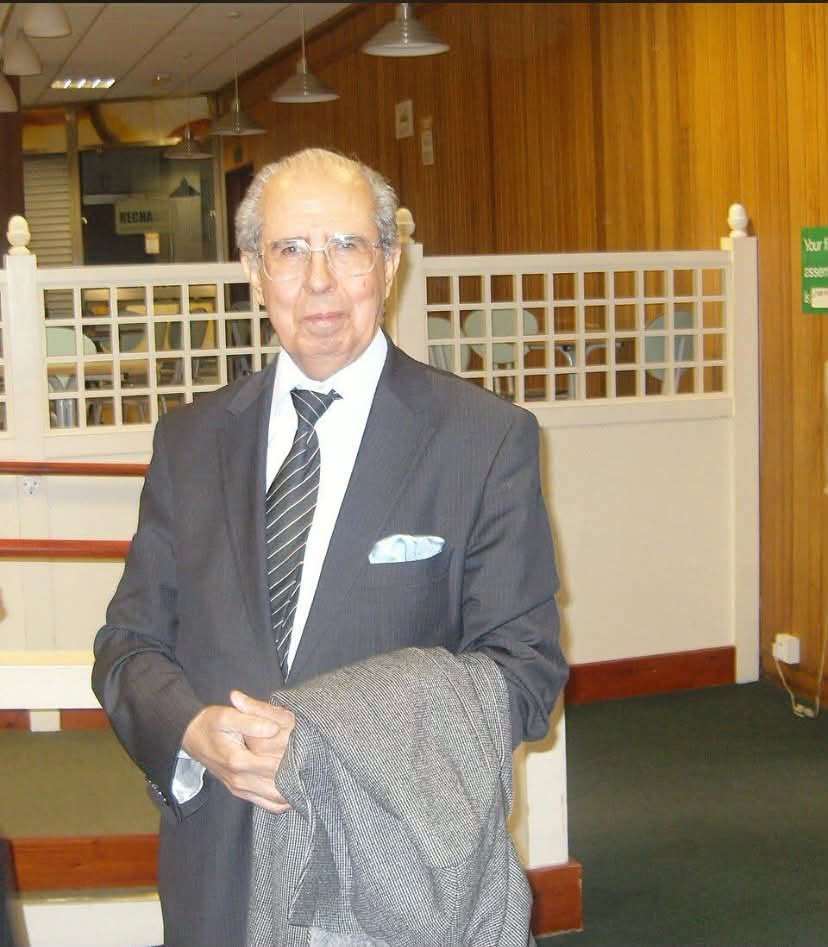
Salman Abu Sitta (b. 1937) is a Palestinian researcher born in the city of Beersheba; he is considered one of the researchers most deeply engaged with the issues of Palestinian refugees and the right of return.
Abu Sitta: A Note
Salman Abu Sitta was born in Beersheba, Palestine, in 1937. He earned a Bachelor’s degree in Civil Engineering from Cairo University in 1959 and a PhD in Civil Engineering from the University of London in 1964. He is a fellow of the Institution of Structural Engineers (UK), the Association of Professional Engineers of Ontario (Canada), and the American Society of Civil Engineers. He is also a former member of the Chartered Institute of Arbitrators (UK), the American committee for energy facility specifications, and the executive council for space structures. He has authored over 30 scientific papers and books on engineering and received multiple awards from the British engineering association.
He served as a professor at the University of Western Ontario in Canada and was an independent member of the Palestinian National Council from 1974 until the signing of the Oslo Accords in 1993. Additionally, he was a member of the Palestinian Cooperation body in Geneva, where he chaired the committee on refugees and UNRWA. He has authored more than 80 research papers and articles and published four books on the refugee issue in both Arabic and English. He also designed and illustrated a comprehensive map of all the villages and cities of Palestine, with three-quarters of a million copies distributed in both Arabic and English.
Documenting the Nakba
Abu Sitta spent over 40 years researching information regarding Palestine—both before and after the establishment of Israel. The mission he undertook went beyond merely chronicling the Nakba and documenting Palestine; he also strove to ensure that “the memories and identity of the homeland would never be lost.” Abu Sitta began his documentation work in his thirties after discovering the memoirs of the Turkish commander of Beersheba—which was under Ottoman rule at the time—a document dating back to the early 19th century. “That is where the research began, and it has never stopped since,” he says. “I have continued to gather every scrap of material regarding every inch of my homeland.”
Works
Atlas of Palestine 1917–1966.
The Right of Return: Sacred, Legal, and Feasible (2001), Arab Institute for Research and Publishing.
The Road to Return: A Guide to Displaced and Existing Towns and Villages and Holy Sites in Palestine (2007), Palestine Culture Foundation.
The Nakba Register 1948 (2000), Baheth Center for Studies.
Sources
Geographicus Rare Antique Maps biographical dictionary of cartographers | Salman Abu Sitta (in English), QID: Q133842860.
The Palestinian Return Centre. “Third Return Week” (in English). Archived from the original on 2023-12-12. Retrieved 2023-11-23.
Al Jazeera: Bila Hudood (Without Borders) – Dr. Salman Abu Sitta, October 10, 2007 [Broken link]; archived copy (March 4, 2016).
Interview with Al-Ahram newspaper [Broken link]; archived copy (September 24, 2013).