How Trump Burned Western Friendships

By Jassem Al-Azzawi

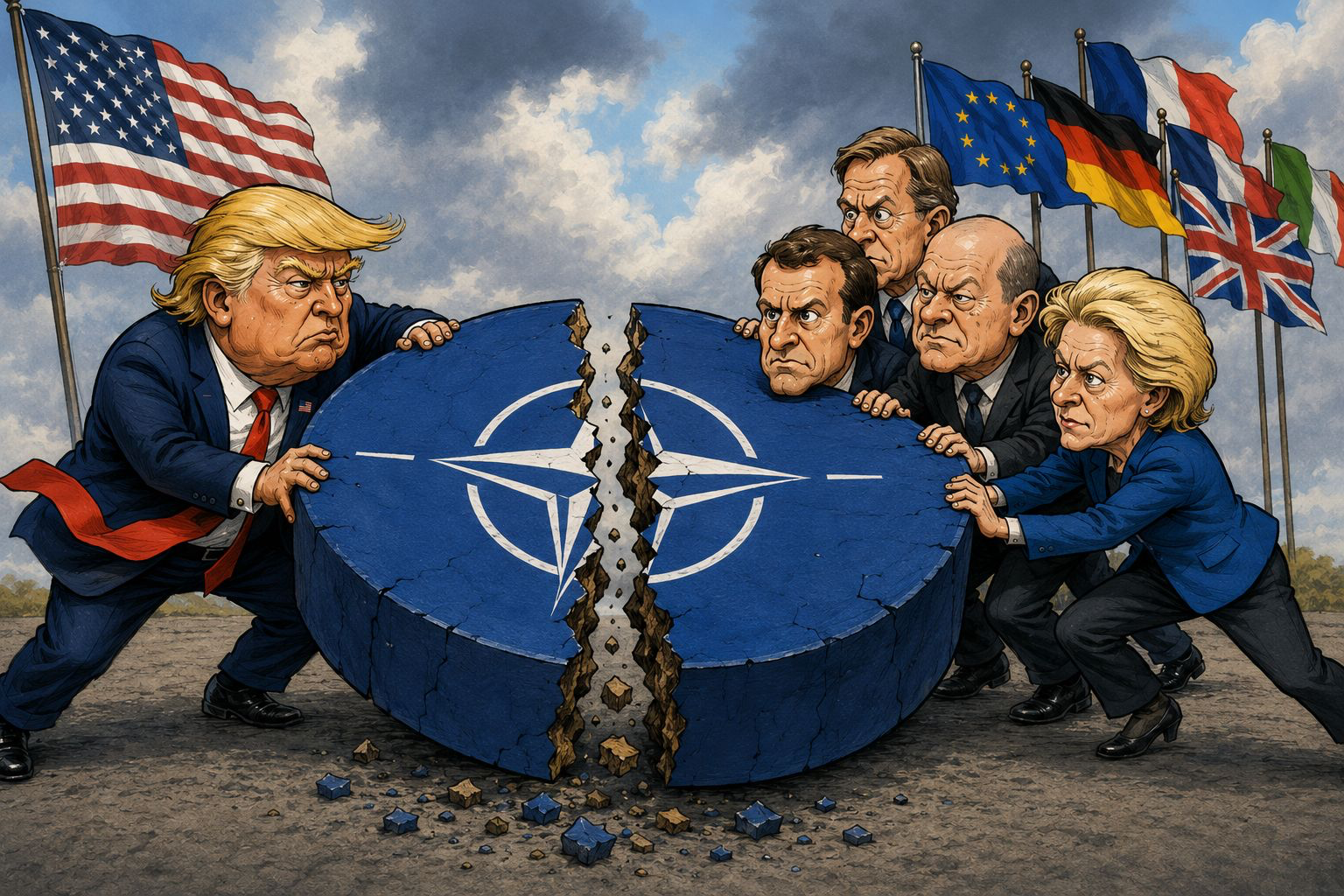
Something remarkable is happening today in the corridors of western powers. America’s closest allies are no longer whispering their frustrations behind closed doors; they are now shouting them from the podiums of their parliaments and in press conferences. And US president Donald Trump is responding in kind. The transatlantic alliance, painstakingly built over eight decades, is now fracturing in a live broadcast.

The immediate cause is the American-Israeli war on Iran, launched on 28 February, 2026, without consulting NATO partners, United Nations, or even Washington’s closest friends. But the rift runs deeper than a single conflict; it reflects a strategy that is indifferent to its allies, or even openly contemptuous of them.

“The Americans clearly lack a strategy.”

The breaking point was starkly illustrated in the frank remarks made by German Chancellor Friedrich Merz to students in Marsberg, northwest Germany. Merz likened the conflict with Iran to past US failures in Afghanistan and Iraq.

“It’s clear the Americans don’t have a strategic plan,” he said, describing Washington’s approach as “ill-conceived.”

He went even further, suggesting that the US was being “humiliated” by Tehran’s negotiating tactics which is a stunning public accusation from a Chancellor who, until recently, was one of Washington’s most hawkish European allies.

Trump reacted furiously, writing on his TruthSocial platform that Merz “doesn’t know what he’s talking about” and threatening to reduce the number of US troops stationed in Germany, currently at 36,436. He then told the German chancellor to mind his own business:

“The Chancellor of Germany should spend more time ending the war between Russia and Ukraine, where he has been completely ineffective, and fixing his own battered country… rather than meddling in the affairs of those who are eliminating the Iranian nuclear threat.”

This verbal sparring is transcending all diplomatic norms and is shakening the foundations of the US-European axis.

Starmer: “I’m fed up,” he says publicly.

British Prime Minister Keir Starmer invested considerable political capital in cultivating a working relationship with Trump, but that investment has now proven costly. When asked about Trump’s threats to destroy Iran, Starmer told ITV:

“These are not words I would ever use, because I speak from our British values ​​and principles.”

The harshest language came when Starmer placed Trump alongside Vladimir Putin as partners in causing British economic hardship, telling Talking Points:

“I’m fed up with seeing families and businesses across the country struggling with fluctuating energy bills because of Putin’s or Trump’s actions around the world.”

On British military involvement, Starmer was unequivocal: “I will not change my mind, and I will not back down. It is not in our national interest to join this war, and we will not do so.” Trump rewarded this initial stance with a statement to The Sun newspaper: “Starmer has not been cooperative. The relationship is clearly not what it used to be,” he said.

Meanwhile, the International Monetary Fund underscored the scale of the material risks by lowering its 2026 growth forecast for Britain to 0.8 percent. This is a direct consequence of the energy shock Trump’s trade war has inflicted on British households.

Sanchez and Carney: Europe and Canada Draw a Line

Spanish Prime Minister Pedro Sanchez has emerged as the most vocal European leader in his criticism of Trump and his uncompromising stance. After Trump threatened to sever all trade ties with Madrid following Spain’s refusal to allow US troops to use the Rota and Morón air bases, Sanchez did not back down. When the ceasefire was announced, his judgment was scathing:

“A ceasefire is always good news, but this temporary relief cannot make us forget the chaos, destruction, and lives lost. The Spanish government will not applaud those who set the world ablaze just because they have finally appeared with a bucket of water.”

For his part, Canadian Prime Minister Mark Carney offered a broader structural indictment, stating in a speech at the Lowy Institute in Sydney:

“Geostrategically, dominant powers are increasingly acting without restraint or respect for international norms and laws, while others bear the consequences.”

He described the war as “a failure of the international order,” adding that “the United States and Israel acted without engaging the United Nations or consulting allies, including Canada.”

The alarm bells were not only ringing abroad; Senate Democrats launched a fierce campaign to reclaim congressional authority over a war they deemed illegal, unauthorized, and a diplomatic disaster.

Senator Tim Kaine’s diagnosis was accurate: “There was no clear justification, no clear plan, and no effort to engage allies or Congress. When you make diplomacy impossible, you make war inevitable.”

Senator Chris Murphy was even more blunt.

“We have never seen a foreign conflict so publicly mismanaged. We have become a laughingstock around the world, while hurting Americans who are now paying billions more in fuel prices.” Senator Tammy Duckworth linked the current disaster to America’s post-World War II pattern, saying:

“Our duty is to ensure that our nation never again slides into an endless, self-serving war.” Despite this, all six war powers resolutions introduced by the Democrats failed due to Republican loyalty to Trump, even as the war cost the lives of 13 Americans in its first month and the price of a gallon of gasoline reached $4.30.

Time for reckoning has come…

Whether Trump’s antagonism toward allies is a strategic dismantling or simply the impulsiveness of a leader who confuses aggression with strength, the result is the same. He threatened to withdraw from NATO, imposed trade sanctions on Spain, threatened to withdraw troops from Germany, and pushed the “special relationship” with Britain to the brink of collapse. Secretary of State Marco Rubio’s warning also came to light.

Trump will “re-examine” Washington’s commitments to allies who did not support the war, as a declaration of “conditional friendship.”

America’s friends are being pushed away, its adversaries are watching, and the West, for the first time since 1945, is genuinely unsure whether it can rely on Washington.

Jassem Al-Azzawi is an Iraqi writer and journalist who contributed this article to the Arabic website, Al Rai Al Youm and appears in Crossfirearabia.com.
Continue reading
Netanyahu ‘Reassures’ Iran Via Putin

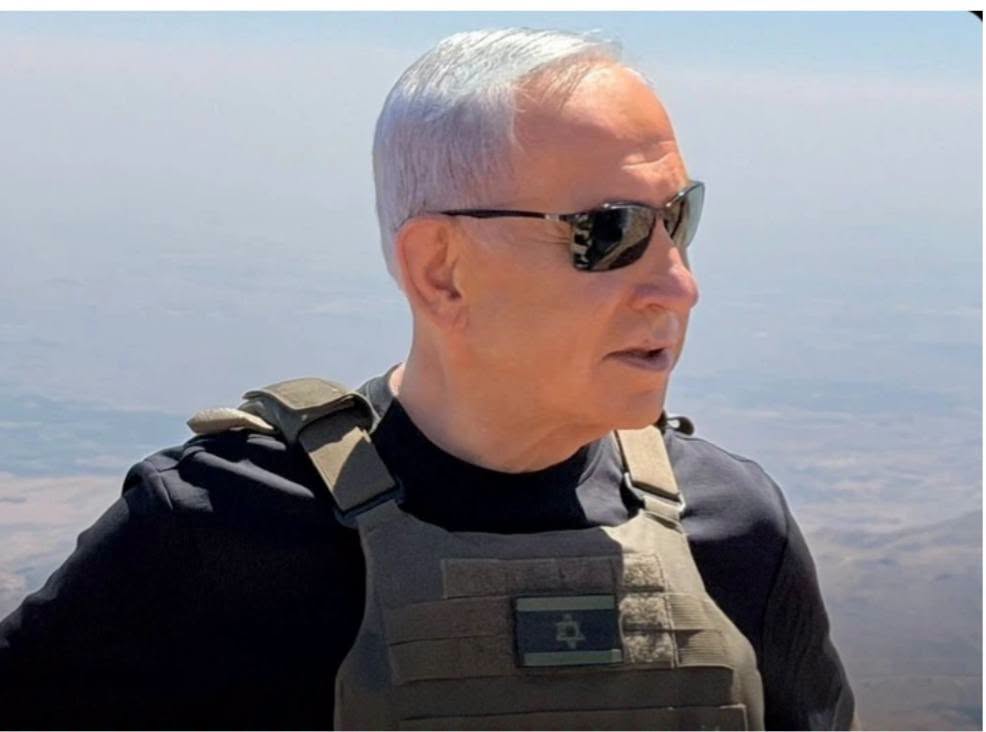
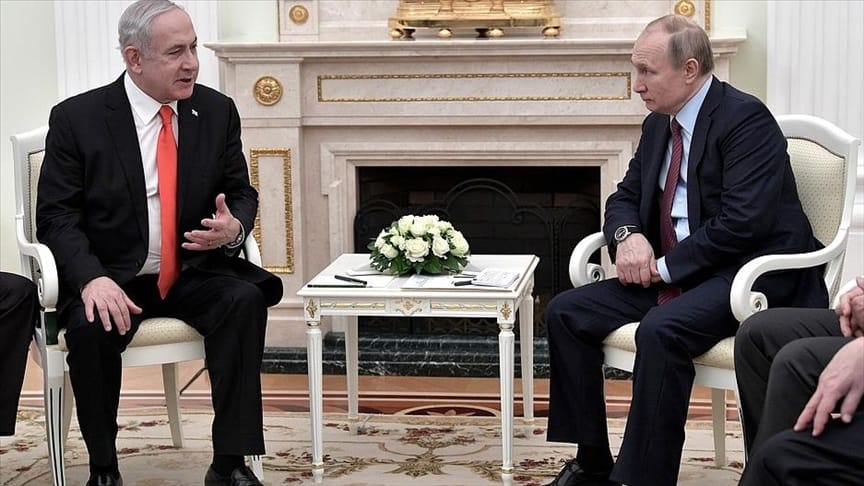
Israel’s Prime Minister Benjamin Netanyahu sought the help of Russian President Vladimir Putin to relay reassuring messages to Iran that Tel Aviv does not intend to attack it, amid fears of a preemptive strike by Tehran, Israeli media reported on Monday.

Public broadcaster KAN, citing unnamed diplomatic sources, said Netanyahu asked Putin to convey “reassurance” messages to Iran that Israel has no plans to launch an attack.

Accoring to the outlet, the messages were recently delivered to Iran, including through phone calls between Netanyahu and Putin, amid concerns that Tehran might move to strike Israel preemptively to avert a possible Israeli attack.

KAN reported that the Russian president said last October that he had been asked to pass along a message to Iran stating that Israel was “not interested in escalation.”

Netanyahu, however, told the Knesset on Monday that Israel sent a message to Iran that if Israel is attacked, it would face “very severe consequences.”

KAN said that there was concern within Israel that a miscalculation by Iran could lead to an attack driven by fears of an imminent Israeli strike.

In recent weeks, Israeli political and security leaders have held discussions on various security issues, including the Iranian file.

Speculation has recently increased in Israeli media about a potential Israeli strike on Iran, against the backdrop of what has been described as Tehran’s “rebuilding of its ballistic missile program.”

Israel launched a 12-day war against Iran in June, with Tehran retaliating with drone and missile attacks. The US military bombed three major Iranian nuclear facilities — Fordo, Natanz, and Isfahan — using bunker-buster bombs during the assault, before Washington managed to strike a ceasefire deal between the two arch-foes according to Anadolu.

Continue reading
Exiled: Bashar Al Assad Wiles His Time in a Moscow Flat

Bashar Al Assad sometimes walks the streets of Moscow incognito. This was a prerequisite set by the Kremlin for his stay in Russia.

The Syrian president, who was forced into exile, exactly one year ago on 8 December, 2024, lives in one of Moscow’s top palatial flats in the capital’s business district with his wife and three children with 24-hour body guards who have been assigned to the family for their protection.

Since his stay Moscow, the message has been thrust forward that Moscow takes care of its friends even when they have fallen from grace and/or down in the dumps. Bashar Al Assad, and his father before and who held power since 1970 were always the strongest of allies and Damascus was always seen as Russia’s strategic gateway to the Middle East.

Friendship however doesn’t mean the end of political opportunism and interest. Whilst Assad is allowed to stay in Moscow under the rubric of humanitarian grounds, his asylum follows strict rules: he is not allowed to engage in any political activity nor is he allowed to talk to the press or the media. 

He is no longer treated as presidential but a private person. Russian president Vladimir Putin had never met him since he arrived in Moscow nor is he planning to despite  claiming otherwise. All Putin would say is he is planning to meet the ex-president ‘sometime’ in the future. Add insult to injury is the fact that Assad has been assigned a lowly figure in the Russian Foreign Ministry as a means of coordination whenever it’s necessary.

But this has long proved a sign of frustration. Today, Assad is alone despite his staff that either travelled with him when he was hastily bungled up last year on a military jet from a Russian airbase near Latakia last year or joined him latter in his residence to start his exile.

With little to do, he spends his days playing video games or going downstairs to the mall in his plush complex to wile his time away, doing it day after day after day. The strong man of Syria, at the top of the helm for the 24 years with ministers, officials, politicians and Ba’ath Party – for theoretically it was this pan-Arab institution that ruled Syria since the late 1960s – is no more.

In Moscow he is a guest with his brother, Maher Al Assad, a former strong man and previous head of the Republican Guard who is staying at the capital’s Four Seasons Hotel. Today they have little political sway with the Kremlin preferring they stay as low as possible and ‘out of sight out of mind’ because of Moscow’s new strategic plans with the new government of Syria lead by previous Al Qaeda extremist-turned-president Ahmad Al Sharaa. 

Putin wants to maintain a rapport with the new government because Syria is still seen as the new battleground of political rivalry vis-a-vis the United States, Turkey and Israel. Moscow wants to continue to be a part of the geo-political pie despite the fact that Al Shara has continually called on Moscow to handover Assad to be tried for criminal charges in Damascus, something that was always refused by the Kremlin and Putin. 

But politics reflects the interests of both sides for Sharaa wants to be a favorite with everyone, both the West and Russia as demonstrated by his last visit to Moscow last October who continues to have military, strategic, economic and aid ties to Syria from the past Baathist regime. 

Thus, although relegated to his luxurious apartments, Assad can still be a valuable political asset to Moscow, being put on hold for the right time as a political chip to be used with the new government of Syria who is desperate to create the needed stability of the country, keep outside powers at bay, check Israeli incursion into its territory and start a program of reconstruction and economic development.

Continue reading
Mad President and Street Brawl

By Dr Khairi Janbek

People from my generation remember a pop group which used to sing a song called the lunatics have taken over the asylum. Now, they were not themselves lunatics but merely performing for their audience and their fans, in the same manner. Neither Trump nor his band wagon are necessarily a bunch of thugs, but they are merely performing for their fans and audience.

However one cannot find any reason for world leaders to go to the Oval Office in order to provide US president Donald Trump with the material to entertain his fans and audience.

He ambushed King Abdullah of Jordan with the entry of journalists when that was not supposed to happen in order to market his absurd Gaza plan, president Emmanuel Macron of France provided him with the opportunity of posturing as an antagonist to the EU, prime minister Keir Starmer provided him with the opportunity of showing what Britain was groveling for – a free trade agreement and a role of being a bridge between the US and EU.

Ironically however, the worst of the Trump performance was left for Volodymr Zelensky, though his trip was the only one that made sense.

Zelensky for all intents and purposes, went to sign an agreement to hand the resources of Ukraine to America, but suddenly the situation deteriorated to almost a street brawl. Why? The whole thing was agreed upon by both sides from the start.

Of course, Zelensky expected a protection commitment from the USA in exchange for the mineral resources, but in fairness, without an explicit US commitment protection would have been implicitly there since supposedly, American companies and workers would be working in Ukraine, so what has actually happened to derail the whole agreement?

Of course, any such agreement with potential implicit US protection of Ukraine, is totally against Russian interests, especially according to some speculation, Putin has the intention to occupy the whole of Ukraine, therefore the talk in the corridors, is that Putin has offered Trump the exploitation of Ukrainian resources in the occupied territories of Russia, which in effect sabotaged the minerals agreement between US and Ukraine, and rescued Trump from having to give security guarantees; albeit implicit to Ukraine.

Now, at the peril of repeating the usual cliche of the EU facing a crossroad on its path, something which had happened frequently, this time it’s in fact different. The truth is that the US has been distancing itself from the EU at least from the days of president Obama, but the difference now is that the EU is being attacked by both the US and Russia, and finds itself as the large leviathan with clay feet unable to move.

The dilemma of differences within the EU are prominent, with full support for Ukraine, with some having lukewarm support, while some with no support at all, moreover the NATO future is hanging in the balance, to keep or not to keep that is the question, but what is the alternative? A European army which is yet to crystallize as an idea, or just drop all the effort?

What it boils down to now, is the idea of leadership of the “Free World”, certainly this notion has always been a nebulous idea, still, the US stood by it and projected its image accordingly, but now, it seems the US is not interested in world affairs except in what it can exploit and use and abuse for its own interests, which means, who will be the new leader of the Free World?

In fact, is there a need for a leader of the free world assuming that there is such a world? If the EU has any such pretensions, then big changes are necessary within its membership as it must be realized the road is very long for such an objective. But in the mean time, we have to settle for the theory of the mad president, ie. Trump would do anything, and peace by force with an oxymoron.

Dr Janbek is a Jordanian writer based in Paris.

Continue reading
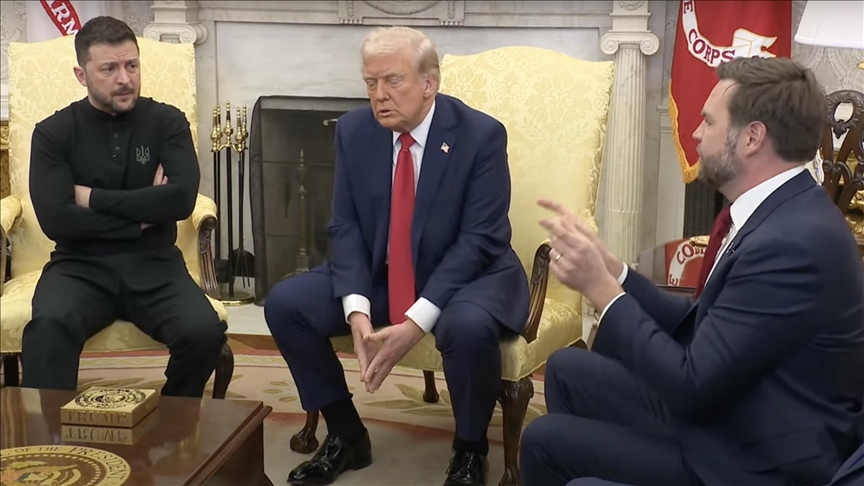
In Washington: Trump, Zelenskyy, Vance Locked in Verbal Fight

READ the Full transcript of heated exchange at the Oval Office in the White House.

Ukrainian President Volodymyr Zelenskyy on Friday got in a heated war of words with US President Donald Trump and Vice President JD Vance Friday during a critical meeting at the White House.

The public spat was over Zelenksyy’s doubts that Trump’s efforts to broker a deal to end the three-year-long war with Russia may not yield lasting peace.

Zelenskyy departed the White House following the argument, and a planned signing ceremony for a deal on critical minerals and press conference were canceled. ​​​​​​  

Here is the full transcript of the heated exchange at the White House:

Reporter: Poland was under Russian control for decades after the Second World War. When I was a kid, I looked at the United States not only as a most powerful country, richest country in the world, the country that has great music, great movies, great muscle cars, but also as a force for good. And now I’m talking with my friends in Poland, and they are worried that you align yourself too much with Putin. What’s your message for them?

Trump: Well, if I didn’t align myself with both of them, you’d never have a deal. You want me to say really terrible things about Putin and then say, hi, Vladimir. How are we doing on the deal? It doesn’t work that way. I’m not aligned with anybody. I’m aligned with the United States of America, and for the good of the world, I’m aligned with the world, and I want to get this thing over with. You see, the hatred he’s got for Putin that’s very tough for me to make a deal with that kind of hate. He’s got tremendous hatred, and I understand that, but I can’t tell you the other side is exactly in love with you know him, either. So it’s not a question of alignment. I have to I’m in line with the world. I want to get the thing said. I’m aligned with Europe. I want to see if we can get this thing done. You want me to be tough? I could be tougher than any human being you’ve ever seen. I’d be so tough, but you’re never going to get it done that way. So that’s the way it goes. One more question.

Vance: I will respond to this. So look, for four years, the United States of America, we had a president who stood up the press conferences and talked tough about Vladimir Putin, and then Putin invaded Ukraine and destroyed a significant chunk of the country. The path to peace and the path to prosperity is maybe engaging in diplomacy. We tried the pathway of Joe Biden of thumbing our chest and pretending that the President of the United States’ words mattered more than the President of the United States’ actions. What makes America a good country is America engaging in diplomacy. That’s what President Trump’s doing.

Zelenskyy: Can I ask you?

Vance: Sure? Yeah.

Zelenskyy: He (Putin) occupied our parts, big parts of Ukraine, part of East and Crimea. So he occupied in 2014. so during a lot of years. So I not speaking about just President Obama, then President Trump, then President Obama, now President Trump, God bless now President Trump will stop him. But during 2015 nobody stopped him. He just occupied and took. He killed people.

Trump: I was not here.

Zelenskyy: Yes. But during 2014 till 2022. The situation the same that people are been dying on the contact line. Nobody stopped him. You know that we have conversations with him, a lot of conversation, many bilateral conversation, and we signed with him.. In 2019 I signed with him, the deal, I signed with him, Macron and Merkel, we signed ceasefire. Ceasefire. All of them told me that he will never go. We signed him, gas contract. Gas contract, yes, but after that, he broke the ceasefire. He killed our people and he didn’t exchange prisoners. We signed the exchange of prisoners, but he didn’t do it. What kind of diplomacy JD you are speaking about? What do you mean?

Vance: I’m talking about the kind of diplomacy that’s going to end the destruction of your country, Mr. President, Mr. President, with respect. I think it’s disrespectful for you to come to the Oval Office to try to litigate this in front of the American media. Right now, you guys are going around and forcing conscripts to the front lines because you have manpower problems, you should be thanking the president for trying to bring it into this.

Zelenskyy: Have you ever been to Ukraine that you see what problems we have?

Vance: I have been to.

Zelenskyy: Come once.

Vance: I’ve actually, I’ve actually watched and seen the stories, and I know what happens is you bring people. You bring them on a propaganda tour, Mr. President. Do you disagree that you’ve had problems bringing people in your military? and do you think that it’s respectful to come to the Oval Office of the United States of America and attack the administration is trying to prevent the destruction of your country?

Zelenskyy: A lot of questions. Let’s start from the beginning. First of all, during the war, everybody has problems, even you, but you have a nice ocean and but don’t feel now, but you will feel it in the future.

Trump: You don’t know that.

Zelenskyy: God bless, you will not have a war…

Trump: Don’t tell us what we’re going to feel. We’re trying to solve a problem. Don’t tell us what we’re going to feel, because you’re in no position to dictate that exactly.

Zelenskyy: I am not telling you.. (inaudible) I am answering… question…

Trump: You’re in no position to dictate what we’re going to feel. We’re going to feel very good.

Zelenskyy: You will feel influence…

Trump: You’re right now not in a very good position. You’ve allowed to be in a very bad position, and it happens to be….

Zelenskyy: From the very beginning of the war.. (inaudible)…

Trump: You’re not in a good position. You don’t have the cards right now. with us, you start having problems right now.

Zelenskyy: I’m not playing cards…

Trump: You are playing cards. You’re gambling with the lives of millions of people.

Zelenskyy: I am the president of.. (inaudible)

Trump: You’re gambling with World War II. You’re gambling with World War III, and what you’re doing is very disrespectful to the country, this country, that’s back to you far more than a lot of people say they should..

Vance: Have you said thank you?

Zelenskyy: A lot of times…

Vance: No, in this entire meeting?

Zelenskyy: Even today…

Vance: You went to Pennsylvania and campaigned for the opposition in October, offer some words of appreciation for the United States of America and the president who’s trying to save your country.

Zelenskyy: Please, you think that, if you will speak very loudly about the war…

Trump: He is not speaking loudly, your country is in big trouble.

Zelenskyy: Can I answer?

Trump: No, no, you’ve done a lot of talking. Your country is in big trouble.

Zelenskyy: I know…

Trump: You’re not winning. You’re not winning this. You have a damn good chance of coming out okay, because of us.

Zelenskyy: We are staying in our country, staying strong, from the very beginning of the war, we’ve been alone, and we are thankful. I said, thanks…

Trump: You haven’t been alone…

Zelenskyy: I said thank you…

Trump: We gave you, through this stupid president, $350 billion we gave you military equipment…. if you didn’t have our military equipment, if you didn’t have our military equipment, this war would have been over in two weeks…

Zelenskyy: In three days. I heard it from Putin in three days. This is something…

Trump: Maybe less…

Zelenskyy: in two weeks.. of course.

Trump: It’s going to be a very hard thing to do business like this.

Vance: You said thank you.

Zelenskyy: I said… (inaudible)…

Vance: Except that there are disagreements, and let’s go litigate those disagreements, rather than trying to fight it out of the American media, when you’re wrong, we know that you’re wrong.

Trump: You see, I think it’s good for the American people to see what’s going on. I think it’s very important. That’s why I kept this going so long. You have to be thankful you don’t have the cards. You don’t have the cards..

Zelenskyy: I am thankful…

Trump: You’re buried there.

Zelenskyy: I can tell you again…

Trump: People are dying. You’re running low on soldiers.

Zelenskyy: Listen…

Trump: You’re running low on soldiers. It would be a damn good thing. Then you tell us, I don’t want to ceasefire. I don’t want to ceasefire. I want to go and I want this… Look, if you could get a ceasefire right now, I tell you, you take it so the bullets stop flying and your men stop being killed…

Zelenskyy: Of course, we want to start the war, but I …

Trump: You are saying you don’t want to ceasefire. I want a ceasefire because you get a ceasefire faster than…

Zelenskyy: Ask our people about ceasefire. What they think… (inaudible)…

Trump: That wasn’t with me, that was with a guy named Biden who was not a smart person.

Zelenskyy: It was your president…

Trump: That was with Obama who gave you sheets and I gave you javelins. Yes, I gave you the javelins to take out all those tanks. Obama gave you sheets. In fact, the statement is Obama gave sheets and Trump gave javelins, you got to be more thankful, because, let me tell you, you don’t have the cards. With us, you have the cards, but without us, you don’t have any cards.

Anadolu

Continue reading