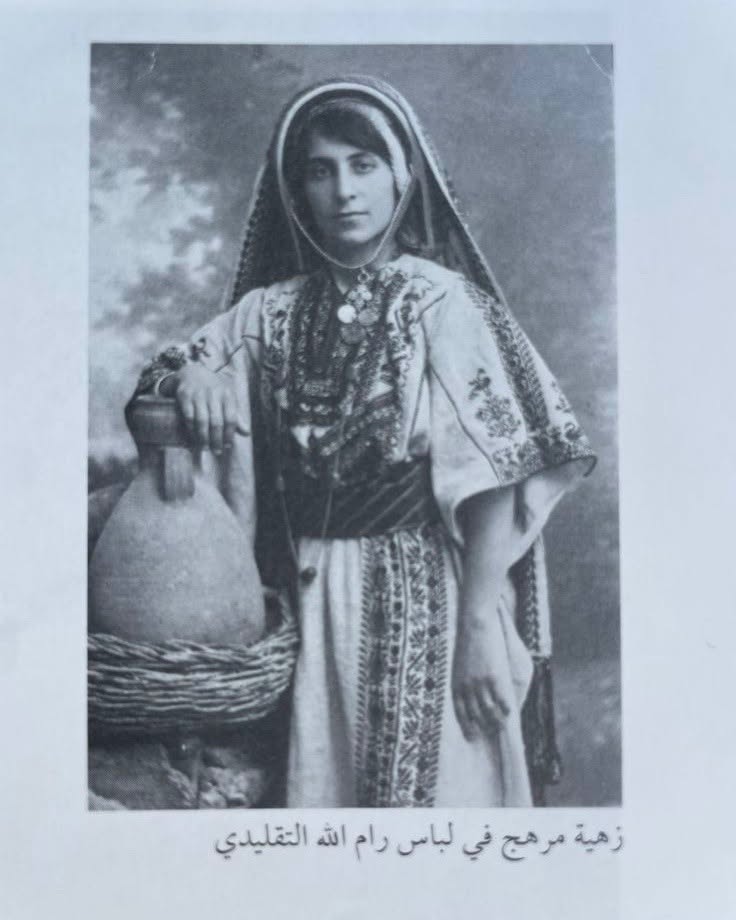
Women From The Past: Sulafa Hassan Taher Hijjawi

Creative Palestinian Women

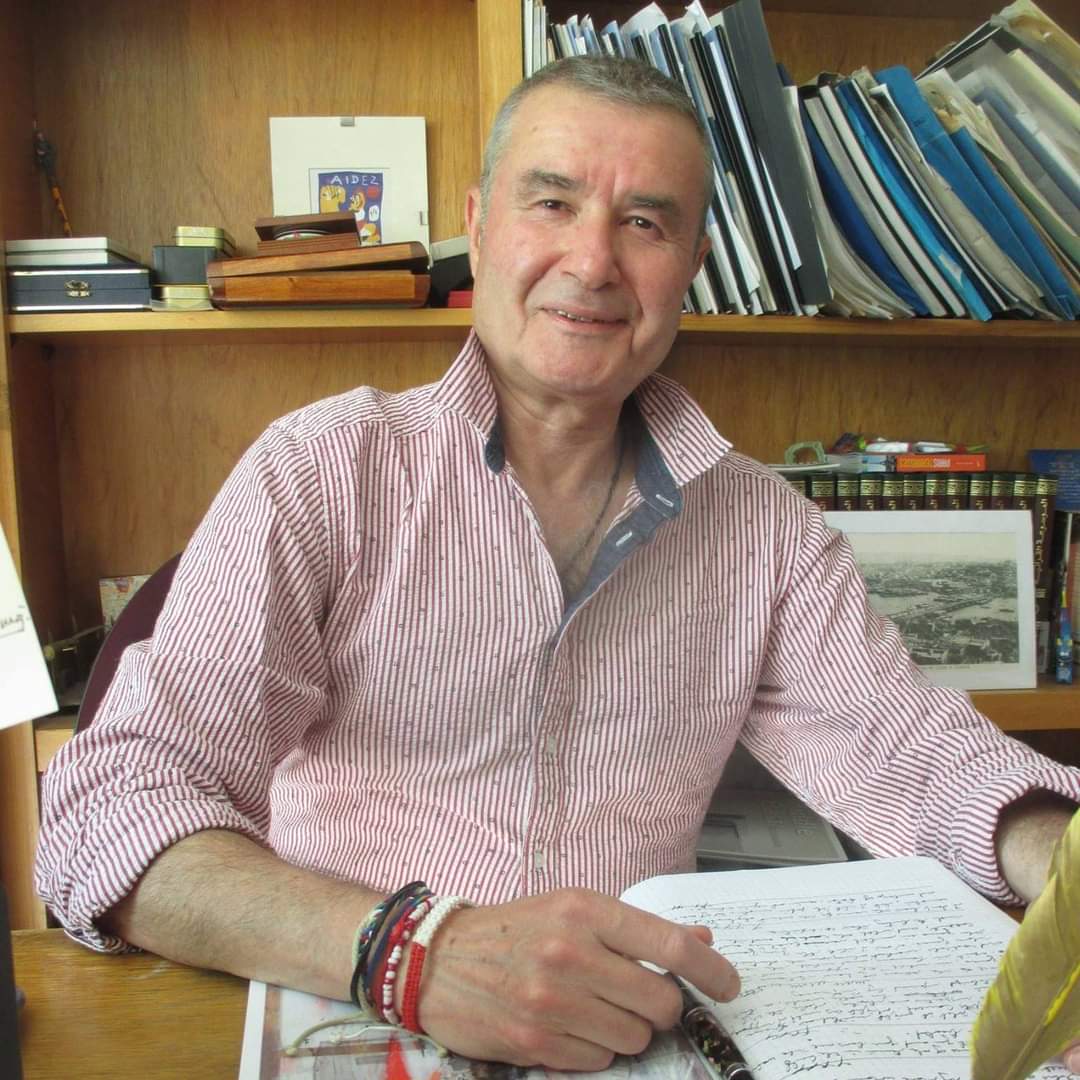
Poet and Researcher Sulafa Hassan Taher Hijjawi was a formidable Palestinian woman born in Nablus in 1934. She received her secondary education at Al-Aishiya School, then traveled with her family to Iraq, where she earned a bachelor’s degree in English Literature from the University of Baghdad in 1956.

However, she made a complete turnaround in 1987 and received a MA degree in Political Science.

She taught Political Science at the University of Baghdad for several years before resigning to join the Palestinian National Leadership institutions in Tunisia, where she became a political advisor to President Yasser Arafat.

After graduating, she married the Iraqi writer and poet Kadhim Jawad and became involved in Iraqi cultural life during the 1960s, working in research and translation.

She began her literary career early, publishing her poems in the Lebanese magazine “Al-Adab” (Literature).

Her activities include:

  • Editor of the Journal of the Center for Palestinian Studies, published by the College of Political Science at the University of Baghdad.
  • Joining the ranks of the Palestinian National Liberation Movement (Fatah) in 1968.
  • She co-founded the Palestinian Writers Union with the writer Jabra Ibrahim Jabra.
  • She established a branch of the General Union of Palestinian Women in Baghdad.
  • She represented the General Union of Writers and Journalists at the General Union of Journalists.
  • She was a member of the General Secretariat of the General Union of Palestinian Writers and Journalists.
  • She has been the Director of the Palestinian Planning Center since its establishment in 1991.

Her works include:

  • Palestinian Songs – a collection of poems.
  • Ships of Departure – a collection of poems.
  • A Dream, Poetry for Children – a collection of poems.
  • Soviet Jews – a study of social reality.
  • On the Political History of Palestine – Palestine the Place.

Her translations include:

  • Poetry of Resistance in Occupied Palestine
  • Lorca: The Lyre of Granada
  • The Creative Experience – a study in modern literature.
  • Edgar Alan Poe – His Life and Works
  • What is Criticism? – a collection of philosophical essays.
  • Zionist Conceptions of Return
  • Friends – a Japanese novel for young adults.
Continue reading
Al Rimawi Freed After 25 Years in Jail

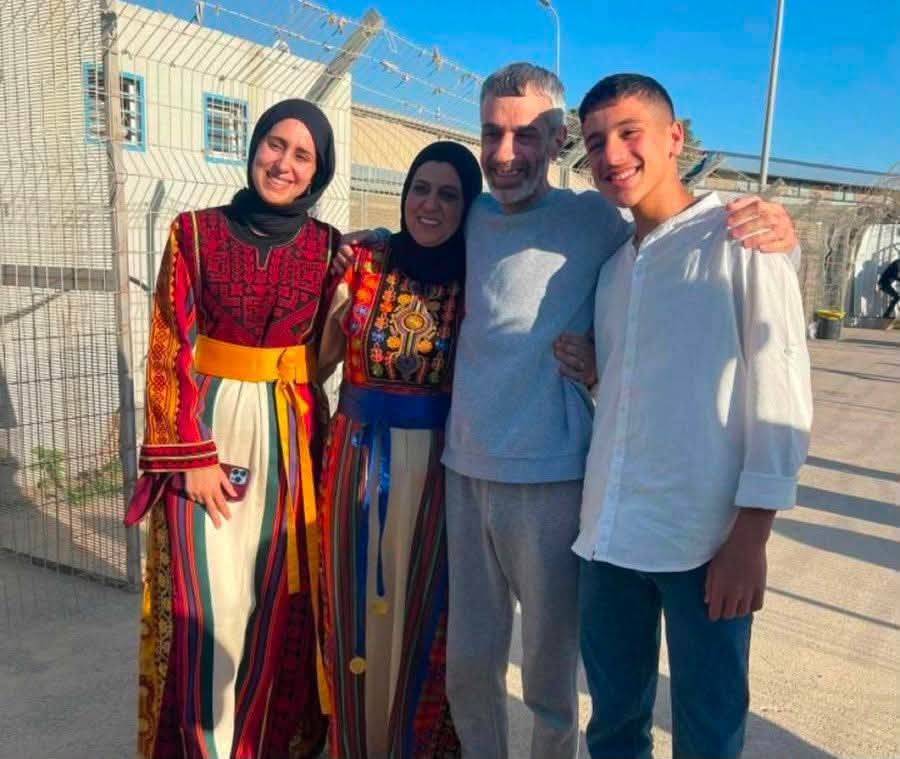
After 25 years in Israeli prisons, Abdel Kareem Al Rimawi is finally set free. After quarter of a century, his wife, daughter and his son waited for him at the Al Thaheria Checkpoint, south Hebron. His son Majd was born 14 years ago, when his father’s semen was smuggled out of prison. As to the daughter Rand, she was still a toddler when Abdel Kareem was jailed. She is now a 26-year-old woman with an MA degree in media studies. He was due to be released a year-and-a-half ago, but he refused to be exiled to Egypt, then, a condition made by the Israeli authorities. After his release he visited the tomb of the late Palestinian leader Yasser Arafat, and made his way to Biet Rima, north-west of Ramallah.

Continue reading
Middle East Psychosis

By Dr Khairi Janbek

As far as one is concerned, the Middle East has been for a long time a matter of balance of power overlapping with strategic reluctance to change its status quo. But the advent of US President Donald Trump is ushering a new era with all sorts of possibilities.

On the microcosm level for instance, Arafat’s Fateh movement in the PLO was checked in a formula of a balance of power by the leftists organizations as well as the Palestinian organizations sponsored by some Arab countries, the affiliation of all in the PLO created the sense of a balance of power.

However, with the emergance of the PNA and the affiliation of the Palestinian groups in it, albeit with variable influence, created a unit which under the balance of power notion, necessitated the creation of a check and balance on its power.

Consequently Hamas was created, and what seemingly appeared as contradiction between them, turned out to be a symbiotic relationship between them. Now, one cannot say with certainity what will happen next, however, if the objective is to maintain the balance of power by just weakening Hamas, this will require symbiotically weakening the PNA as well, but if the objective is to eleminate Hamas, the next step will be to eleminate the PNA.

As for the macro level, and as one often repeats, the Middle East, has at least for the last five decades was strategically governed by the famous triangle, Iran-Israel-Turkey, with the Arab world having little say in their own affairs , if at all.

However, since the fall of the Shah regime in Iran, the search started for a third angle to replace Iran in governing the Middle East, considering the open hostility of Iran towards West. Consequently some Arab countries jumped into the frey as possible candidates, like Egypt, then Qatar, UAE and Saudi Arabia. But as it seems, a preference for the old triangle was decided upon by the world powers, accepting the inconvenience of having to negotiate with Iran.

Now, we can see a new development that breaks the taboo of the old balance of power in the region.

Starting mid-way from the Biden administration, and with the start of the second Trump administration, the notion of balance of power by the usual triangle has turned into a balance of aggressiveness in the region, as Israel and Iran “bombard” each other, Turkey’s involvement in toppling Assad, and now the distinct possibility of confrontation with Israel in Syria, while being threatened itself by Iran if it cooperates in any possible American attack on Persia. Thus the stability which this triangle had sustained itself, is no more.

From appearances, at least how things look like: It seems Israel is being supported by Trump explicitly and by many other international parties implicitly, to be either the major power that has a say in Middle Eastern affairs. This means that Iran’s grip on the region will be curtailed through negotiations at least if not war; and here the symbiotic issue appears again, with Turkey’s role curtailed through pressures and/or and economic threats.

Here, as well, the aim is to designate Israel as only point of compass on the map of the Middle East, which Arabs are expected to flock to and normalise with.

In this case events will inevitably take a nasty symbiotic turn, meaning Iran will have to be attacked and taken out altogether with its surrogates from the power relations of the Middle East, and Turkey forced to take a more insular step from the affairs of the region, even with a regime change if required.

But we will have to wait and see what lies in store!

Dr Janbek is a Jordanian writer based in Paris, France.

Continue reading
Israel Kills Photojournalist No 189

32-year-old Palestinian photojournalist Ahmed Abu Shariah was reported killed, Tuesday morning in an Israeli artillery shelling of his home in the Sabra neighborhood of Gaza City.

He was a father of two children. His father, Yousef Abu Shariah, was the former photographer of the late Palestinian leader Yasser Arafat.

Israel persists in deliberately targeting journalists and media workers in Gaza for over 13 months in an attempt to cover up its crimes against civilians and silence the truth, killing 189 journalists since the onset of the ongoing genocide in Gaza.

Meanwhie Palestinian journalist Husam Shabat describing the moment when Israeli occupation warplanes targeted a home again where he, his team, and civil defence crews were, injuring him and his colleague and killing a civil defence worker.

Shabat said in another post that the bombing wasn’t an accident as he has been threatened by Israeli occupation forces.

Continue reading
Jordan: United Kingdom Plan and Dashing The Chance for Peace 

By Khairi Janbek

In order to reinforce the concept of the unity of the two banks, which was reaffirmed at the Cairo Arab Summit in 1970, and in order to placate the rising Palestinian sentiments, King Hussein unveiled on 15 March, 1972, his United Arab Kingdom Plan (UAK). 

In an address to the nation on that day, the late King elaborated on the proposed plan, as the Hashemite Kingdom of Jordan would, after the withdrawal of Israel from the West Bank, become the United Arab Kingdom comprising of two regions: First: Region of Palestine ie. West Bank and any future territories to be liberated and whose inhabitants opt to join in, with Jerusalem as its capital. Second: Region of Jordan, is East Bank and its capital Amman.

Furthermore, Amman would be the administrative capital of both regions. The King would be the head of state. There would be a local parliament and local government for each region, as well as a federal government and a parliament. There would be one federal supreme court and one army. 

The late King added, this arrangement is his preference, though he intended to give the Palestinians, after liberation, the opportunity to determine their own future, and pledged to respect their choice.

Despite the fact that this plan was only a proposal, it drew violent reactions from the PLO as well as the Arab states who all in the 1970 Arab League Summit reaffirmed the unity of the two banks. 

The late Mr. Yasser Arafat considered the plan a mere ressurection of Jordan’s long standing policy of insisting that the West Bank was an integral part of Jordan, and the Palestinians residents were Jordanian citizens. He considered that, a real threat to his own claim of representing the Palestinian people.

The late president Sadat of Egypt wanted to identify his own regime with the Palestinan cause, and announced before a cheering crowd at the Palestine National Council (PNC) meeting in Cairo on 10 April 1972, the break of diplomatic relations with Jordan. Syria, in order not to be upstaged by Egypt, cut diplomatic relations with Jordan and closed its borders.

Significantly the Plan remained under consideration until the Rabat Arab Summit of 1974, when the Arab states decided the sole representative of the Palestinian people should by the PLO. 

The Rabat Summit forced Jordan to withdraw from direct involvement in the peace process at the time when the eyes of the whole world and the attention of the USA, were focused on the settlement of the Arab-israeli conflict.

The Rabat decision confused the issue. Instead of concentrating on the basic problem of Israel’s occupation of Arab lands, the questions of Palestinian national rights and independent Palestinian state were introduced. The nature of the problem changed overnight. 

Jordan tried to seperate the issue of withdrawal from the issue of national rights of the Palestinian people. Jordan stood for the ending of the Israeli occupation of all Arab lands; occupied after 1967 war, establish peace and then address the question of Palestinian national rights within the context of inter-Arab relations.

But the Arabs states supported the claims of the PLO as the sole representative of the Palestinian people, and the PLO leadership was not prepared to accept Israel’s withdrawal from the West Bank in favor of Jordan, fearing that would prevent it from attaining its goal; Creation of an independent Palestinian state. 

The various Arab states supported the PLO for their own reasons, and were totally content to dump the Palestinian problem on the shoulders of the PLO.

The Late President Sadat and ex-US Secretary of State Henry Kissinger, exploited the PLO’s position and the Arab support to it, and manipulated events in order to enable Egypt to sign a separate peace with israel. 

The Rabat decision which neutralized Jordan’s role, and paved the way for Egypt’s separate peace with Israel, enabled Tel Aviv to tighten its grip on the West Bank and the Golan Heights. 

Developments since Rabat have shown that, Jordan’s position for a comprehensive peace settlement with Israel, would have been the best chance for a lasting peace. A chance dashed in Rabat.

Dr Khairi Janbek is a Jordanian writer based in Paris and the above opinion is that of the author and doesn’t reflect crossfirearabia.com. 

Continue reading