Scott Ritter: US Strikes on Iran is a Failure

The results of the Iranian strikes on US military bases in the region reflect a major miscalculation, according to former US intelligence officer Scott Ritter.

The US-Israeli military campaign effectively failed because it only killed Supreme Leader Ali Khamenei and others, including his young granddaughter, but it did not topple the regime as US President Donald Trump had hoped for.

In fact, Ritter adds, the Iranians mourned their Supreme Leader and called for revenge instead of regime change, as America intended.

The strikes also failed to end Iran’s missile program. Ritter says Iran’s response was unexpected, as it bombed Israel, some Arab countries, and economic facilities, with disastrous consequences for the idea of ​​the United States’ ability to protect its allies, especially the Gulf states.

America will face a crisis. To prolong the war, Trump will need to amass more military capabilities, something military leaders warned him about before the war, telling him that its continuation would deplete US military equipment in the region, the former US officer says.

Ritter predicted that Iran would recover from the attack and that the United States would run out of ammunition. He said that the Gulf states should reconsider their reliance on Washington for their security, anticipating major decisions in the coming days.

For his part, Ali Larijani, Secretary of Iran’s Supreme National Security Council, said that his country, unlike the United States, was prepared for a protracted war. In a tweet, he added, “We will make our enemies regret their miscalculations,” in response to the attacks launched by the United States and Israel against Iran.

In the United States, Trump threatened Iran with a powerful strike, asserting that the “big wave” was yet to come and that he did not rule out sending troops to Iran according to JO24 based on Al Jazeera.

Continue reading
War Goes Badly

The third day of the US/Israel war on Iran had suddenly become a hard one: It was no more optimism, nor speck and span. On day three America lost four US soldiers not to mention the tens of injuries in United States military bases in the region and this is in addition to the aerial disaster involving the dawning of three F-15 and F-18 fighter jets by Iranian air defenses or mysterious “friendly fire” in Kuwait. The last was a major financial pang for each piece costs around $100 million at today’s prices. Quickly the strain appeared on the face of US president Donald Trump. Previously he wanted a “quick fix” first saying the war would end quickly in days or possibly a week.

Now he is saying the war could take as long as four to five weeks and even longer. The Iranians say despite the mass attacks on their country they are in no hurry to pack it in and are preparing for a long military haul. The sudden dismay on Trump’s face suddenly blared the cameras with the dawning of the four US jets in a single day. For the past 48 hours he has been smiling saying the Iranians would get back to the negotiating table and accepting a nuclear deal because in the early hours of Saturday morning – the begining of the air strikes – US/Israeli jets bombed the compound of Ayatoallah Ali Khameini and killed the supreme leader of Iran and a host of the country’s military leaders. But today everything is changing.

“Signs of Defeat”: US Chief of Staff Confesses to Domestic Opinions: Expect More Losses… and the War with Iran Won’t End Soon! 🔴

🔥 In a statement reflecting the shock felt within the closed-door military circles of the Pentagon, the Chairman of the US Joint Chiefs of Staff admitted that the armed forces must prepare for “more losses.” This official admission came after a bloody period that saw the deaths of four US soldiers and injuries to dozens more at bases in the Middle East, in addition to an aerial disaster involving the downing of three F-15 and F-18 fighter jets by Iranian air defenses or mysterious “friendly fire.”

⛔️ “Attacking the Giants”: Implications of the Latest US Military Warning:

📌 The phrase “not overnight” is a tacit admission of the failure of the “lightning strike” plan promoted by the Trump administration. Iran has proven its endurance and ability to inflict painful losses on the US elite, forcing the military leadership to engage in “expectation management,” which has disappointed the American public.

📌 The downing of three advanced aircraft (F-15s and F-18s) in a single day represents a devastating blow to the prestige of the Air Force. This means that American air superiority is now seriously threatened, and that Iranian monitoring systems have succeeded in deciphering the codes of American aircraft and targeting them with a precision that Washington did not anticipate.

📌 The Chairman of the Joint Chiefs of Staff is attempting to prepare the American public for the scale of expected losses in the Middle East. Talk of “more losses” is a political prelude to requesting massive budgets or perhaps to justifying a tactical retreat on some fronts after American bases became “easy targets” for Iranian missiles.

🔴 In conclusion, the “Epic of Wrath” has begun to take a highly dangerous turn. Washington now realizes that confronting Tehran is no picnic, and that the Iranian arsenal is capable of taking bases, fighter jets, and soldiers out of service in moments. The Chairman of the Joint Chiefs of Staff’s statement is a “death certificate” for the idea of ​​a swift victory and an official declaration of the start of a war of attrition that could change the face of the American military forever.

⛔️ In your opinion, will the American public tolerate “more coffins” for a war that the military describes as long and difficult, or will Trump be forced to change his strategy under the pressure of losses? Share your analysis with us.

Continue reading
US Aircraft Crash in Kuwait 

US and Israeli strikes on Iran intensify, Tehran broadens its response, and Hezbollah enters the confrontation as fighting spreads regionally.

Key Developments

  • Hezbollah confirmed it targeted Haifa, saying the strike was in retaliation for the killing of Supreme Leader Ali Khamenei and in defense of Lebanon.
  • The Israeli army launched raids on Beirut’s southern suburbs and areas in southern and eastern Lebanon after missiles were fired from south of the Litani River.
  • Israel said it continues striking targets inside Iran, while explosions were reported in Tehran.
  • US President Donald Trump called on Iranians to “seize this moment and reclaim their country,” stating he had fulfilled his promise and that the next steps were up to them.
  • The British government confirmed it responded to a US request to use British bases to support limited defensive actions against Iranian missile facilities.
  • Iran’s Revolutionary Guard said it targeted the US aircraft carrier Abraham Lincoln and oil tankers in the Strait of Hormuz, and announced the ninth phase of Operation True Promise against Israel and US bases.
  • Since Saturday, US–Israeli strikes have killed Iran’s Supreme Leader and dozens of military commanders, targeting air defenses and missile launch sites.
  • Tehran responded with large-scale missile barrages on Israel, causing deaths, injuries, and infrastructure damage.

Palestine Chronicle

Continue reading
Iran Targets Office of Israeli PM

The Public Relations Department of The Iranian Revolutionary Guard stated that its armed forces have targeted the office of the Israeli Prime Minister Benjamin Netanyahu.

In a press statement it stated its: “armed forces targeted the office of the Prime Minister of the criminal entity and the site of the Israeli Air Force Commander with surprise and precise attacks using “Khaibar” missiles.

Continue reading
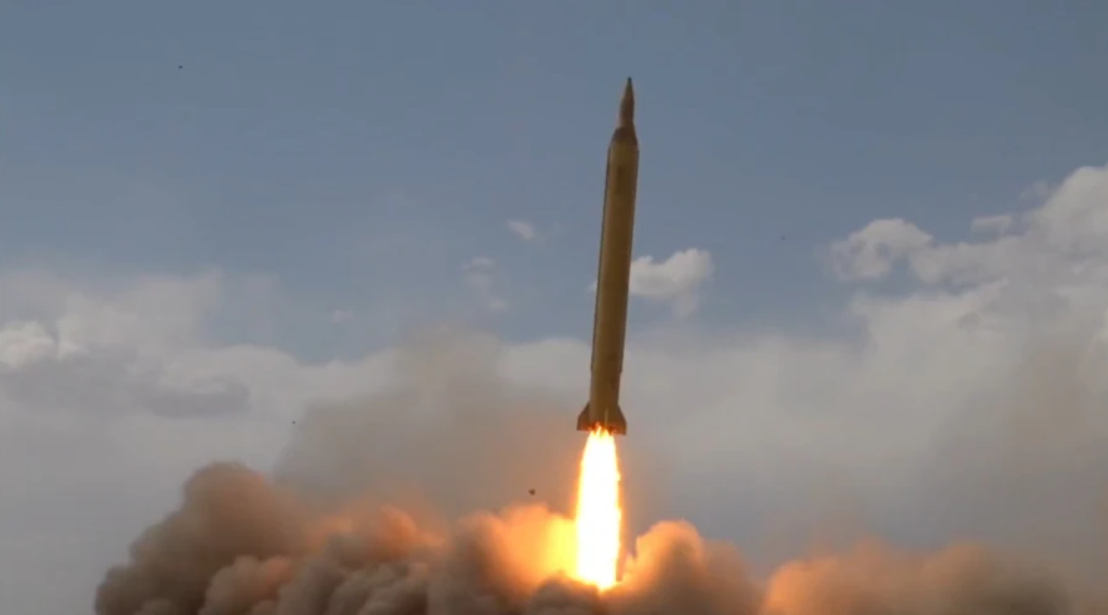
Iranian Missiles Roam The Skies

By Ismail Al Sharif

The weak one is the fool who doesn’t know the secret of his strength – Naguib Mahfouz

During the Al-Aqsa War, while Iran was launching its missiles toward Israel, some were preoccupied with mocking them, describing them as nothing more than “fireworks.” However, the unfolding events and the passage of time proved those missiles were not a fleeting display or a celebratory scene in the sky. The proof is that US President Donald Trump demanded the end of the Iranian missile program, just as he demanded the end of its nuclear program, and even declared that destroying this missile program was among the reasons for the war.

Western and Zionist media, along with the so-called “armchair critics,” have always downplayed the Iranian missile program, claiming that these projectiles caused negligible damage to Israel in the 12-day war, most were intercepted, and those that penetrated air defenses left no significant mark. However, the truth contradicts these claims, as shown by the Israeli press and other independent sources, which explains the insistence on eliminating this program by Trump and Israeli Prime Mine Minister Benjamin Netanyahu.

In the 12-day war, Iranian missiles reached the heart of Tel Aviv, striking hundreds of buildings, while air defenses failed to intercept dozens of these missiles. The Times of Israel reported at least 61 buildings were damaged, and six were later demolished. Haaretz reported an entire Tel Aviv neighborhood was completely destroyed. In Bat Yam, about 30 kilometers from Tel Aviv, at least 200 buildings were severely damaged by a single missile strike.

The attacks were not limited to civilian targets but extended to highly sensitive strategic sites. According to GlobalSecurity.org, citing The Telegraph and satellite radar data, the missiles directly hit several sensitive Israeli facilities, including the Tel Nof Air Base, a logistics base, and an intelligence-gathering center. According to a report published by the Israeli Ynet News, all operations at the Haifa Bay refinery were halted following a direct hit by an Iranian missile. A power station at the same site was also damaged, and three people were killed. The Military Intelligence School at the Moshe Dayan military base was also targeted. In Rehovot, about 20 kilometers from Tel Aviv, the Weizmann Institute of Science was hit, with approximately 90% of its buildings damaged. The institute’s director explained that 22 laboratories were completely destroyed and 25% of the institute’s activities were suspended. Reports indicate that the attack was deliberate due to its connection to military research.

The reality is that Israel possesses vital strategic sites within a small geographical area, an advantage that has become a fundamental vulnerability. It is certain that Iran’s missile arsenal is capable of reaching these sites, to the point where Iran might not even need a nuclear weapon to inflict widespread destruction on the entity.

What if it were able to target more sensitive facilities, such as desalination plants that provide more than 65% of the entity’s water, or oil refineries that supply industry with energy, or power plants? Then the war could be decided in a single strike. While such an escalation could expose Iran to an existential response that might even lead to its annihilation, the strategic loss it would inflict on the entity could be so immense that recovery would take years.

Therefore, analysts generally agree that Iran would be the losing party in this confrontation. However, Tehran’s missiles may hold surprises capable of turning the tables and changing the course of the war. Despite the series of assassinations targeting senior Iranian military leaders, including the Supreme Leader and Chief of Staff, and despite American and Israeli claims of having destroyed a large number of ballistic missile launch sites, Tehran appears confident, as if it is concealing cards yet to be played. If this is true, the confrontation could spiral out of control and defy all calculations.

This piece first appeared in the Arabic Addustour daily.

Continue reading