Duwairi: ‘High Levels of Combat Efficiency’  

The Qassam Brigades, the military wing of the Islamic Resistance Movement (Hamas), is offering an unusual performance, military and strategic expert Major-General Fayez Al-Duwairi,  told Al Sawsana website in a recent interview.

He pointed out the recent Shaboura ambush in Rafah, which appeared in a recent video clip, was carried out using a fake tunnel after luring Israeli occupation soldiers into it.

Perfect ambushes

The Qassam Brigades showed scenes preparing and executing two ambushes against Israeli soldiers inside the Yebna and Shaboura camps in Rafah, titled “Death Ambushes Part Two”.

The scenes included luring and monitoring the  soldiers: The first ambush took place in a house inside the Yebna camp, and the second in the mouth of tunnel in the Shaboura camp.

Qassam Tunnels: Types and Strategies

Al-Duwairi explained the first ambush was prepared in advance in a house entered by a number of soldiers, while the second ambush was a fake tunnel under the house, not connected to the main tunnel network.

He pointed out most of the tunnels used in operations are not part of the main network, but created specifically for individual military operations.

Advanced Combat Techniques

Al-Duwairi pointed out the video shows the first force entering the tightly booby-trapped building, with Al-Qassam controlling the explosion from a safe place, which indicates the high efficiency in planning and execution.

He also pointed out the use of barrel fillings in the second operation, which relies on old mines stored underground, reflecting the resistance’s experience in effectively utilizing available resources.

Importance of Battles in Built-Up Areas

The major-general stressed the importance of battles in built-up areas as part of asymmetric wars, where resistance forces rely on accurate knowledge of the location and effective armament to confront the occupation forces with smaller numbers but with greater efficiency.

Appreciation…

Al-Duwairi praised the management of the battles by the Palestinian resistance, describing them as advanced and should be taught in international military colleges. He stressed the resistance on the ground adopt an unconventional approach and is interested in raising the morale of its fighters.

Military pressure and field developments

Al-Duwairi pointed out that the simultaneous battles in the north and south is in line with what Israeli Chief of Staff Herzi Halevi said about the military aiming to force Hamas to make concessions, especially with regard to the release of prisoners. He pointed out that the occupation army found the bodies of five prisoners, including four soldiers, in one of the tunnels.

Future battles

The fierce battles in Tal al-Hawa and Rafah reveal a high level of combat efficiency among the resistance factions. He expects the continuation of this field rhythm will lead to tangible results within a short period, which may force the occupation army to withdraw again from these areas.
Continue reading
Military Analysis – Long Gaza Battles Spread into West Bank

Military expert Major-General Fayez Al-Duwairi said the military operations in Rafah, south of the Gaza Strip, are still in the first phase of the war. He noted also the West Bank now also needs a ‘joint operations room’ for the resistance according to Jo24.net.

Al-Duwairi confirmed – in a military analysis on Al-Jazeera – the videos shown by the resistance from Rafah reflect the ferocity of the confrontations. They confirm that all of of the Palestinian factions are quickly adapting to the reality on the ground.

He said this adaptation is reflected in the nature of the military operations, using  “economy of force and effort” because the time span of the battles are unknown.

But Al-Duwairi added the greatest possible losses inflicted are the ranks of the Israeli occupation soldiers.

The Major-General stressed the militarily, the field performance “confirm the resistance is still active while the occupation army continues to commit crimes against civilians.”

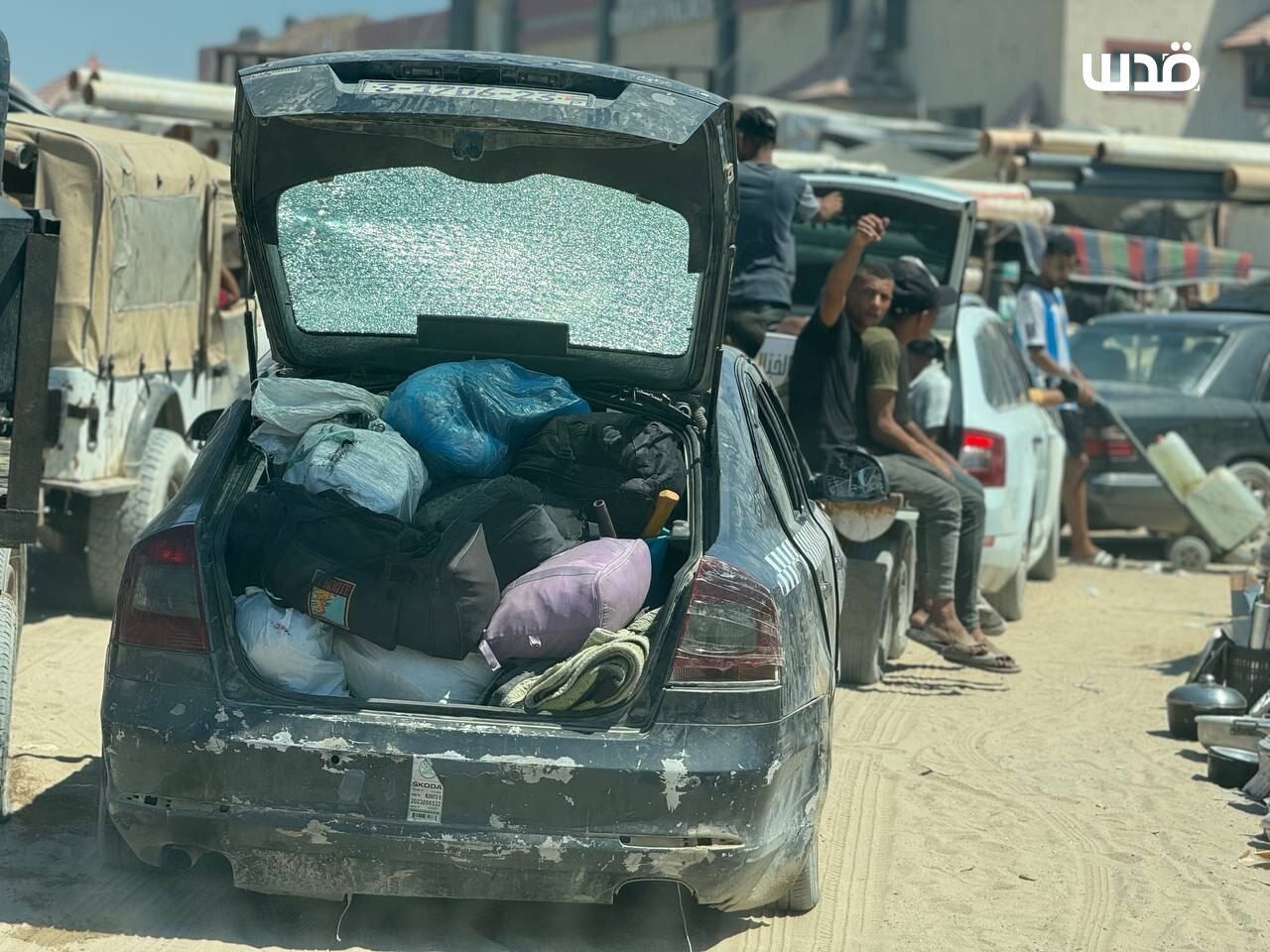
Regarding the current displacement in Khan Yunis, Al-Duwairi said that the Israel occupation army attached its 7th Armored Brigade to the 98th Division operating in the city, pointing out what is happening in the city is not a limited operation.

Commenting on the ambush carried out by the Palestinian resistance in the village of Al-Matula near Jenin in the West Bank, he said the operation “was a complex one, reflecting an accurate reading of what the occupation will do.”

He stressed these specific operations require the setting up of a joint operations room to develop plans centrally and implement them in a proper manner, taking into account they are incremental but under control, consistent with the possibility of a prolonged confrontation.

Continue reading
Senseless Massacre in Al Mawasi – UN Reports

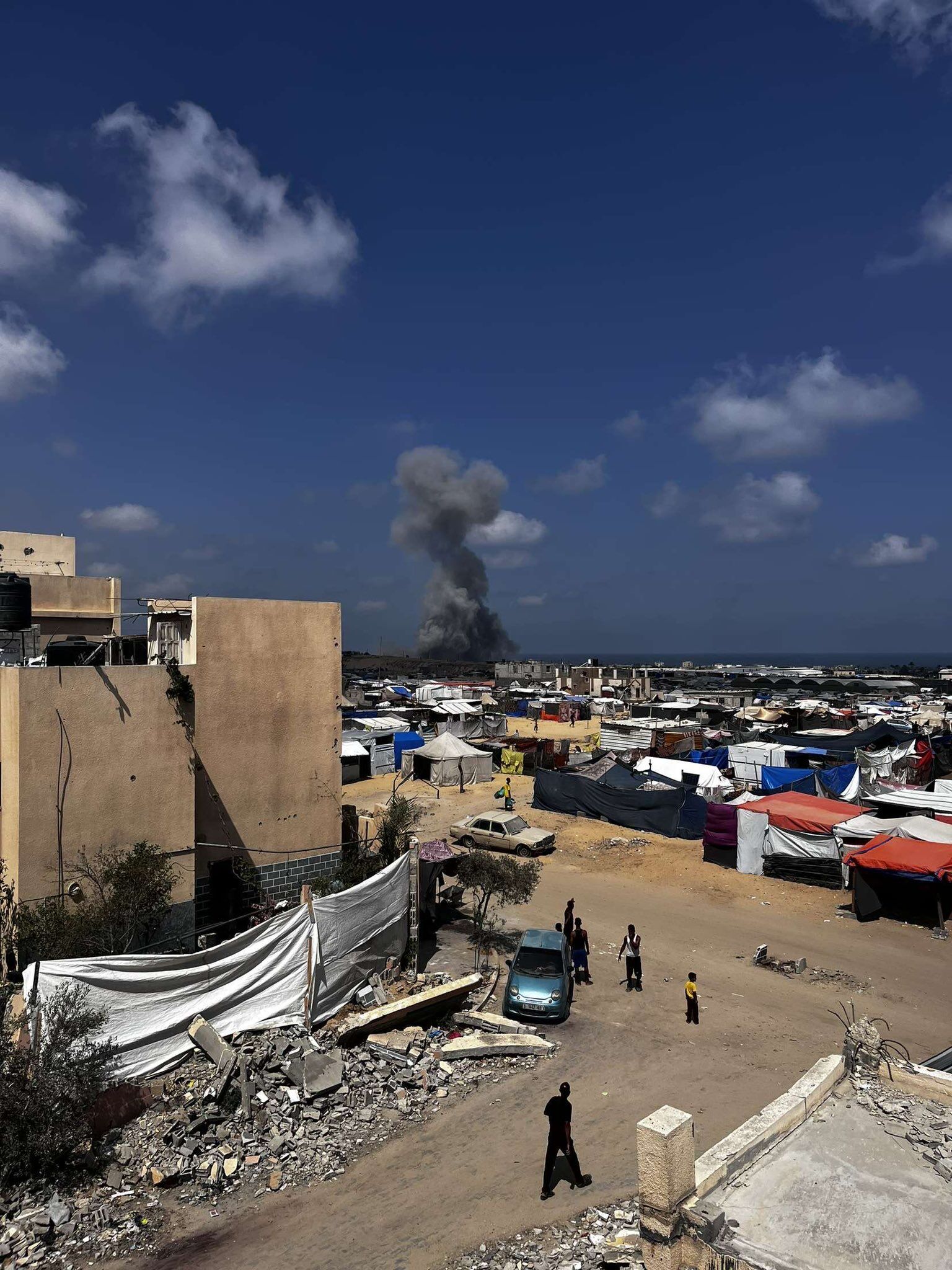
The UN health agency and partners are helping treat many of those injured during Saturday’s deadly airstrikes by Israeli forces on Gaza’s Al Mawasi area which have reportedly left at least 90 dead and around 300 injured, according to figures from the war-torn enclave’s health ministry.

The UN Secretary-General António Guterres said via his Spokesperson late on Saturday that he was “shocked and saddened by the loss of lives”.

Israeli officials said the attack had been a “precision” strike targeting top Hamas military commander Mohammed Deif and his deputy Rafa Salama.

The strike took place close to the city of Khan Younis in an area reportedly designated by the Israeli military as a safe zone for civilians.

‘Nowhere is safe in Gaza’

UN Spokesperson Stéphane Dujarric said that reports indicated the attack had taken place in a densely populated area “designated as a humanitarian zone sheltering displaced people.”

This underscores that nowhere is safe in Gaza”, he stressed. “The Secretary-General condemns the killing of civilians, including women and children.”

The Secretary-General underlined once again that there must be an immediate humanitarian ceasefire, with all hostages released “immediately and unconditionally.”

In a post on X, the head of the World Health Organization (WHO) Tedros Adhanom Ghebreyesus said that 134 “severely injured people” had been admitted to the nearby Nasser Medical Complex “which is extremely overwhelmed by the influx”.

Multiple hospitals treating the injured

WHO staffers are at the hospital along with two emergency medical teams helping to treat the injured, he continued.

“We have dispatched 50 foldable beds and 50 stretchers to increase the hospital’s capacity while our prepositioned medicines and trauma supplies are being used to save lives.”

Some of the injured have also been taken to a field hospital run by the International Medical Corps in Deir Al Balah where WHO supplies have been provided to meet the urgent needs of around 120 others. Other NGO field hospitals have also received patients in need of urgent treatment, he said.

Senior Communications Officer for the UN refugee agency for Palestine refugees (UNRWA) Louise Wateridge, tweeted harrowing video from Al Nasser hospital on Saturday afternoon local time where workers were “mopping up pools of blood with water alone.”

She described children lying on blood stained matresses “traumatised from losing siblings. Some had lost limbs. Many had life changing injuries.”

‘Senseless massacre’

The independent UN expert who monitors human rights in the Occupied Palestinian Territories Francesca Albanese, said in a post on X that she was “horrified” at the deaths and injuries sustained during the strikes on what an Israeli military official said was an operational Hamas compound, in an “open area”.

Hamas said it was “false” that Israel had targeted it’s two top military commanders.

Of the Israeli attack which she said was “yet another senseless massacre” of civilians, Special Rapporteur Albanese tweeted “The justification is always the same: ‘targeting Palestinian militants’.”

Officials from Gaza’s civil defence authority also reported that at least 20 Palestinians were killed in an Israeli attack on a prayer centre inside the Shati camp for the displaced, to the west of Gaza City on Saturday.

UN News

Continue reading
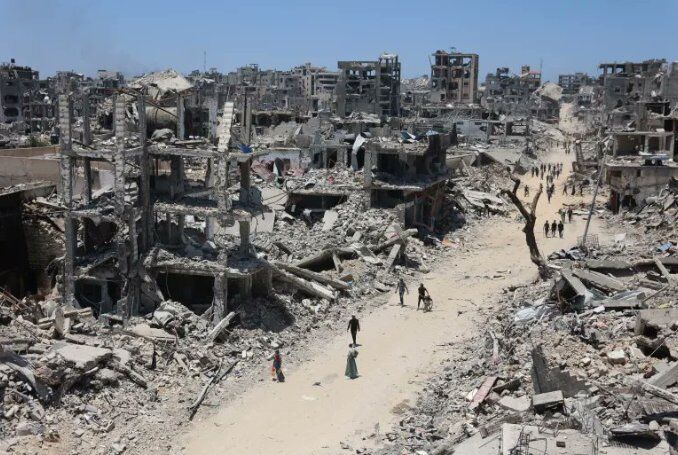
Despite Ruins, Palestinian Resistance in Top Shape

Jordanian military and strategic expert Nidal Abu Zeid said the videoclips broadcast by the Palestinian resistance groups on the methods of managing operations, ambushes, and targeting the occupation forces, prove they are still cohesive and their command and control system is capable of continuing and inflicting losses on the Israeli occupation forces.

Abu Zeid added the resistance operations are managed by an integrated system. He said the videoclips show there is a commander for the operation who directs, then there is the target reconnaissance based on intelligence gathering with another team videoing and photographing the operations.

These elements confirm such a system in the works  is still fine, stressing the Israeli occupation forces were forced to retreat and not withdraw from Al-Sinaa Street in Tal Al-Hawa after the ambush that caused much losses in reference to the latest Israeli military actions.

Abu Zeid said this prompted the occupation forces to withdraw not just from Tal Al Hawa but from the entire northern Gaza Strip according to Jordan 24.

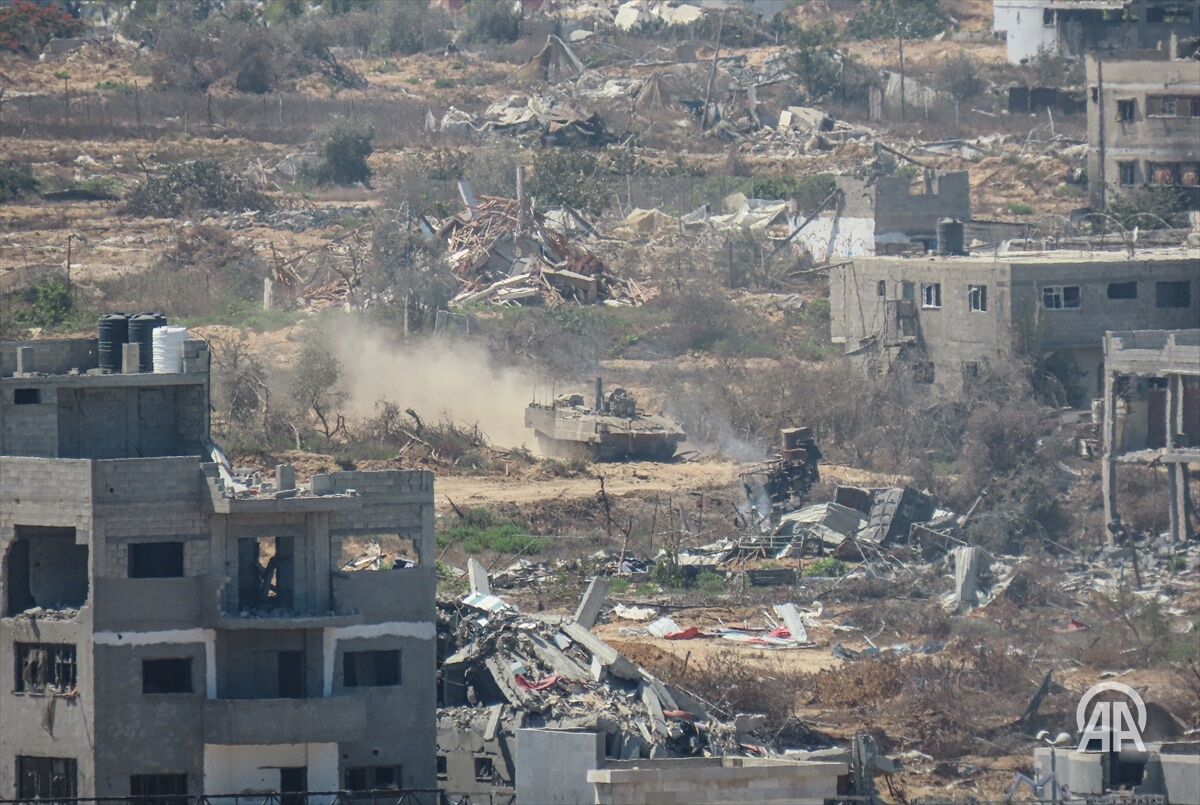
Abu Zaid pointed out most of the destructive vehicles that appeared in the circulated clips are M113 troop carriers, maintaining that this reinforces the theory that the occupation resorted to using this type of old carriers that were discontinued in 2006 due to the significant losses of modern Tiger troop carriers in the Israeli army.

He indicated the M113 carriers are not as efficient, effective and armored which also explains the high losses among the Israeli soldiers as the Israeli army announced.

That the means the loss curve is still rising between 10 to 20 soldiers per day, which imposes challenges on the occupation army in terms of manpower resources.

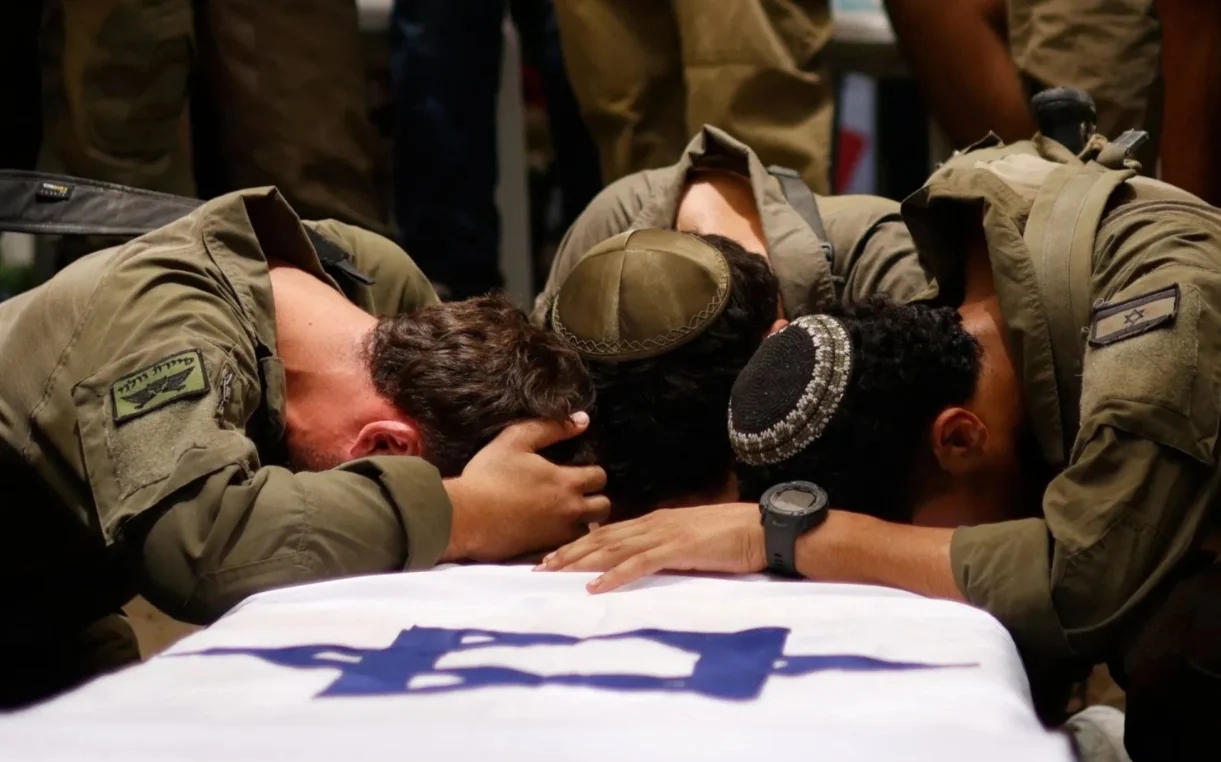
Abu Zeid stated the statements of Israeli Chief of Staff Herzi Halevi about the urgent need to recruit new elements into the army and Defense Minister Yoav Gallant statements about the necessity of recruiting ultra-Orthodox Jews who are exempt from military service confirm the magnitude of the losses the army is suffering daily.

Abu Zeid continued the Israeli combat doctrine is based on three pillars: Deterrence, early warning, and rapid resolution) pointing out the Palestinian resistance groups have succeeded in stripping the enemy of these and which explains the clear imbalance in the military operations and the occupation’s inability to take the upper hand.

Regarding the ongoing negotiations in Doha, Abu Zeid said Netanyahu is trying to booby-trap these talks and obstruct their progress by imposing conditions related to guarantees for the resumption of military action at any time.

These aim at preventing the return of the displaced to northern Gaza, and evade the issue of negotiating with the Egyptian side on the status of the Philadelphia axis, which will create further conflict between the government and the military generals and leaders of the security services.

Continue reading
Which European States Are Arming Israel?

Many of the European countries continue to supply Israel with arms and weapons as it continues its military offensive on the Gaza Strip and in spite of the world accusation that Tel Aviv is committing genocide against the Palestinians.

Some European countries are top military suppliers, others are at the tail end but it is interesting to know that the great majority of European states sell weapons to Israel, its called the arms trade of Europe.

Anadolu compiled details of the European military sales to Israel since the outbreak of the war on Gaza after 7 October, 2023.

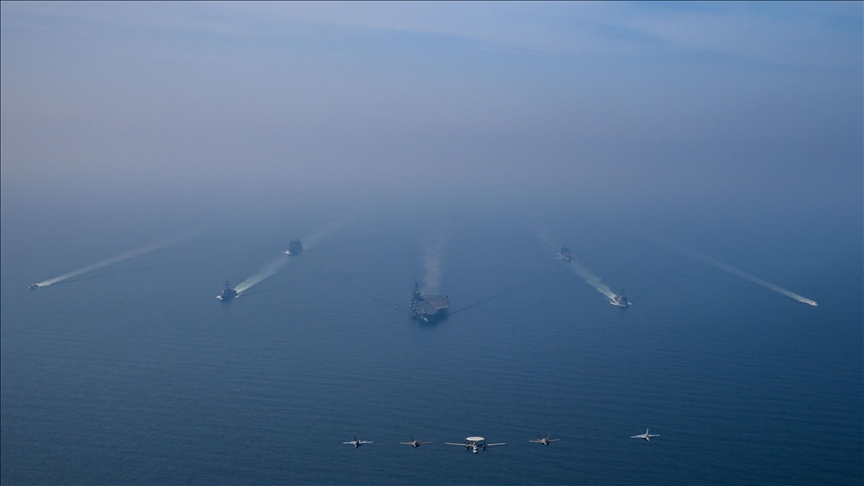
France, Italy and Germany, along with the United States have  accounted for 81% of the Middle East’s arms imports between 2019 and 2023, according to the Stockholm International Peace Research Institute (SIPRI).

Israel’s military spending spiked by 24% to $27.5 billion following its attacks on Gaza. It became the second-largest arms spender in the Middle East.

From 2014 to 2022, the European Union granted export licenses to Israel worth about €6.3 billion ($6.8 billion).

These weapons are suspected to have contributed to the deaths of more than 38,000 civilians in Gaza, including 10,000 women and more than 15,000 children, the Turkish news agency states.

Although some EU countries, including Belgium, Italy, the Netherlands and Spain, decided to halt arms sales to Israel, press reports maintain this trade has somehow continued.

Key European arms suppliers

Germany remains Israel’s largest European arms supplier, providing about 30% of Israel’s imports between 2019 and 2023. In 2023. This is whilst German arms deliveries to Israel increased tenfold to €326.5 million and peaking after 7 October.

Most of France’s arms exports in 2019-2023 went to Middle East states accounting for 34% of the total French exports. Paris is known to provide parts for Israel’s missile defense system, known as the Iron Dome.

Despite laws restricting arms sales to human rights violators, Italy sold €2.1 million worth of weapons to Israel in the last quarter of 2023. Italian Defense Minister Guido Crosetto claimed there have been no new arms transfers to Israel since 7 October, although there are reports of ongoing sales by companies such as Leonardo. Italy’s export licenses to Israel between 2014 and 2022, including for warships, small arms, artillery, aircraft and ammunition, worth €114 million.

The UK issued more than £448 million ($576 million) in arms licenses to Israel since 2015. In addition, 15% of the materials used in the production of the F-35 fighter jets purchased by Israel since 2016 are supplied by British companies, according to the London-based charity Action on Armed Violence.

Spain has not reported any arms sales to Israel since 7 October, but data from November 2023 shows a transfer of ammunition worth €987,000. Between 2014 and 2022, Spain issued export licenses worth €99 million, including for ammunition and military vehicles.

Other European suppliers

The Netherlands issued €19 million in export licenses to Israel between 2014-2022, peaking at €10 million in 2022 alone. A court ruling in the country in 2024 halted exports of F-35 parts to Israel, citing the risk of violations of humanitarian law.

Despite halting arms sales, Belgium transferred €46 million in arms to Israel between 2014 and 2022, including explosives and aircraft parts.

Portugal issued more than €12.5 million in export licenses to Israel, most of it for aircraft-related materials.

Austria’s arms licenses to Israel totaled €33 million, Slovakia’s €117 million, and the Czech Republic’s arms exports totaled €127 million from 2014-2022, with recent deliveries of ballistic vests and military equipment.

Hungary’s sales exceeded €15 million, with notable contracts for the production of drones involving Israeli and German companies.

Poland’s €4.9 million in arms exports to Israel, Slovenia’s €6.1 million and Romania’s €427 million included aircraft, military vehicles and ammunition transfers.

Bulgaria’s €49 million in arms included explosives and light weapons.

Serbia’s state-owned Yugoimport-SDPR reported €14 million in arms exports to Israel in early 2024.

The total value of the 21 export licenses between Greece and Israel was recorded at €7.6 million.

Nordic, Baltic countries

Sweden issued licenses worth less than €1.3 million for weapon sights and control systems, with a significant contract with Israel’s Elbit Systems worth $170 million in late 2023.

Norwegian companies have reportedly circumvented restrictions prohibiting arms sales to conflict zones through foreign subsidiaries.

Licenses issued from Denmark to Israel are worth more than €1 million, while the issuance of licenses worth €403,000 in 2022 was the largest sale ever between the two countries. The country is facing a lawsuit from a group of non-governmental organizations over arms exports to Israel.

Finland’s €2.4 million in licenses covered electronic equipment, armor and weapon sights.

Latvia’s €5.9 million in licenses peaked at €4.1 million in 2022. Estonia and Lithuania had minimal exports of around €300,000 each, mostly small arms.

Croatia, Luxembourg, Malta, Southern Cyprus

Croatia’s €681,000 in licenses covered armaments and ammunition. Export licenses between Luxembourg and Israel amounted to approximately €671,000, while the total value of Malta’s export licenses to Israel exceeded €17.5 million.

Southern Cyprus’ licenses were worth €97,000, with alleged support for Western military logistics to Israel, the Turkish news agency pointed out.

Israel, flouting a UN Security Council resolution demanding an immediate cease-fire, has faced international condemnation amid its continued brutal offensive on Gaza since an Oct. 7, 2023 attack by the Palestinian group Hamas.

Continue reading