Syria: 10 Days That Shook The World

Dr Khairi Janbek

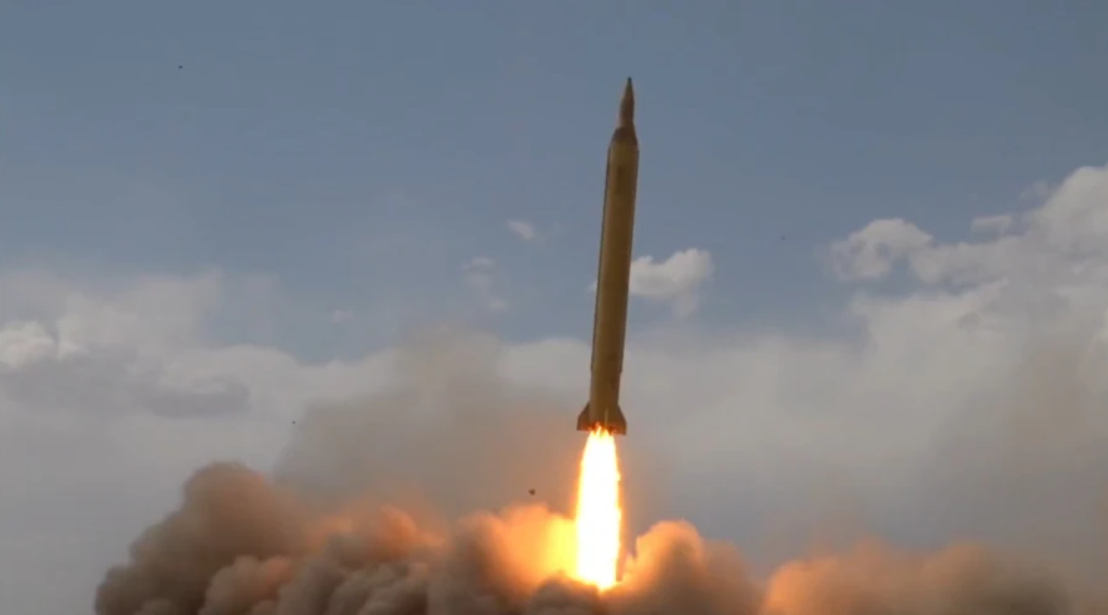
Without much ado, the western media is currently preoccupied with this question: Are the Syrian rebels Jihadis? This is while the Arab media appears to be in a state of euphoria about the Syrian rebels seen as liberators. The issue however is about two perspectives, the first being cautious about the next phase for the country, and this is for understandable reasons, while the second reflects optimism for the next stage and also for understandable reasons.

Now, the fear of dividing Syria on ethnic and sectarian grounds has its blueprint in the colonial history of Syria and certainly not a product of today and/or creative chaos utterances.

Looking back

In fact, on 1 July, 1922, the French colonial authorities divided Syria into federal statelets: statelet of Damascus, statelet of Aleppo, statelet of the Alawites, and the statelet of the Druze. Of course, the idea was that the country would be easier to rule and a regional and a sectarian balance would guarantee political stability. Of course, the Kurds were outside this formula as they were struggling to create an independent state of their own.

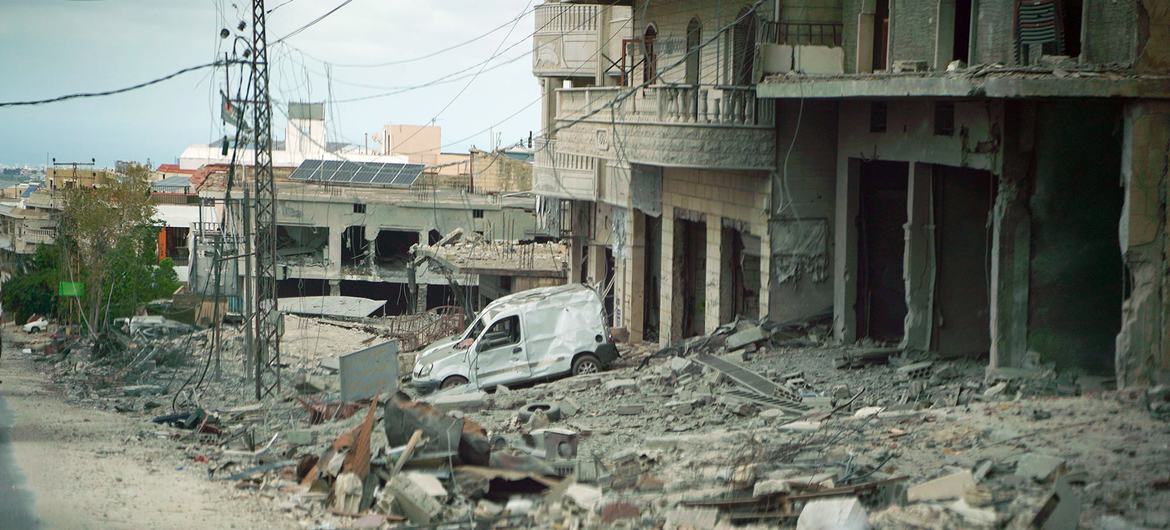
But what about Syria now, to paraphrase John Reed, after the 10 days that shook the world. Indeed, the two regional police stations in the region, Turkey and Israel seems to be gaining major influence in the current affairs, while the third police station, Iran, has lost out in this formula.

Rivalry

For all intents and purposes, no one is naive enough to think that the march towards Damascus could have occurred without Turkish support, and the Israeli foreign minister has confirmed that talks were held between his government and the Druze as well as the Kurds of Syria, whom he described as having good relations with them.

But what about the Russians? One would venture to say that they are like to stay in Syria as most probably, paying guests of the new Syrian government, renting their military installations from them.

Undoubtedly, no matter how much we can be optimistic about the future of all-inclusive democratic Syria, we will always reluctantly fall back on our cognitive dissonance regarding the case of Iraq, and make the mistake of comparison with the post-Saddam era of terrorism, sectarianism an ethnic strife.

This is simply because, we forget that in Iraq there was superpower which brought down the regime and destroyed all the functioning institutions of the country favoring when religious Islamic sect over another, and supporting one ethnicity against others. While in Syria, its the Syrians themselves brought down the Ba’ath regime.

On the face of it, the rebels don’t seem to want to be the new masters of Syria and they are working very hard to protect and preserve the functioning institutions of the country, and claim their adherence to pluralism and for an all inclusive new regime.

But two important questions remain outstanding, and only time will tell how these will unfold: To what extent will there be Turkish and Israeli influence on the emerging regime, and more importantly, what would be the share of those two police stations of the country?

In other words, how will Turkey perceive the future of the Kurds in Syria, and where does Israel see its border posts with the “new” Syria?

In all likelihood, the rebels will keep their word of wanting a stable pluralist Syria, but let us not forget also, that a future spark of ethnic, regional or sectarian conflict, will very likely turn all into extremists in the country.

Dr Khairi Janbek is Jordanian commentator based in Paris.
Continue reading
Netanyahu: Ideologue, Pragmatist or a Proxy?

Dr Khairi Janbek

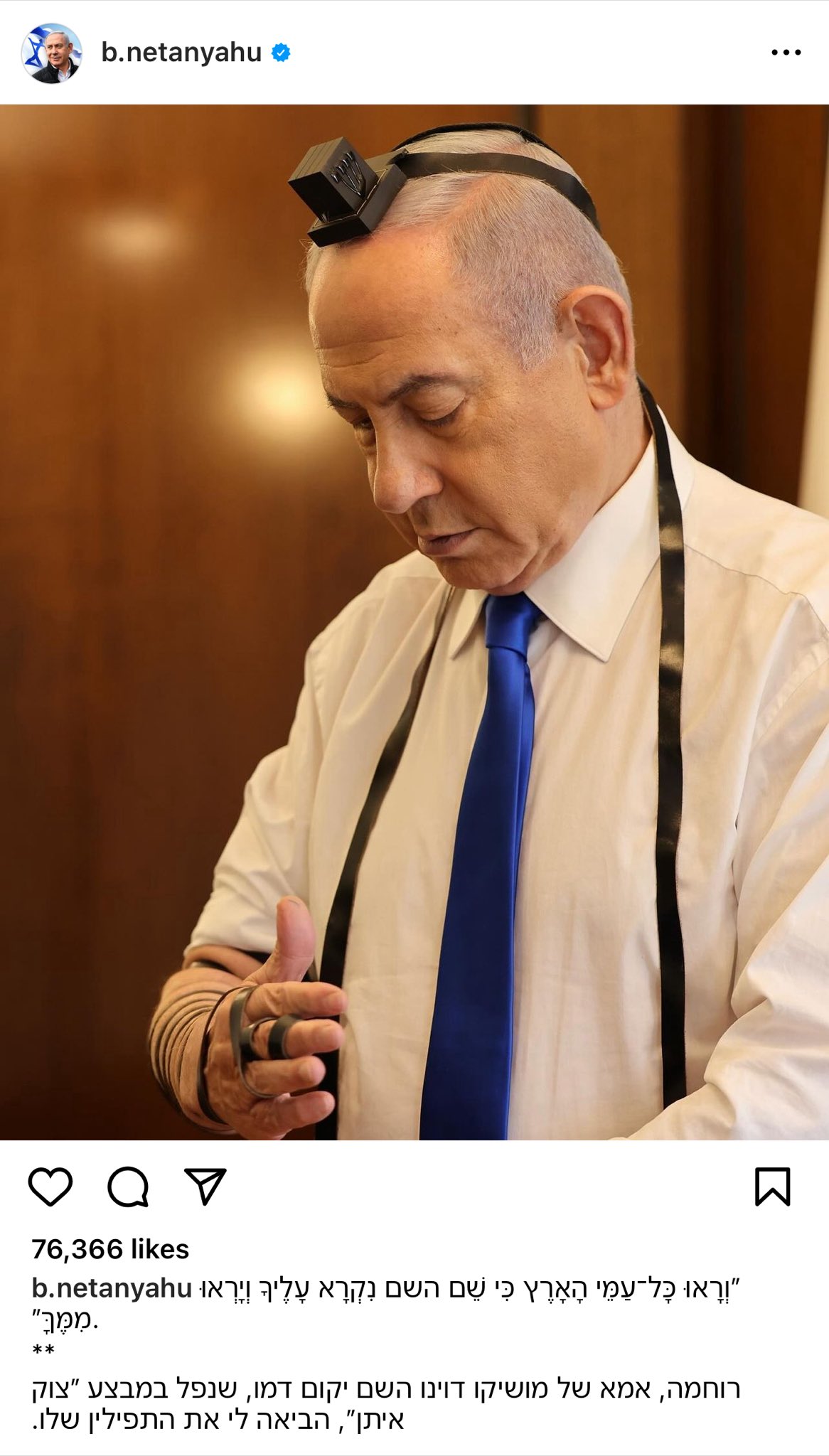
PARIS – When talking about the Israeli prime minister Netanyahu, we must not miss the point that in effect he is a politician, thus, he is both an ideologue and a pragmatist. He is an ideologue when he feels he can go all the way with brinkmanship and get away with it, and he is a pragmatist, when realizes that he should stop and talk. However, by and large that usually depends on the position of the USA primarily, and on the regional situation in the second degree.

He was a pragmatist, when he originally gave his implicit support to Hamas as a guardian of peace in Gaza, and the guarantor of border security with Israel, and he was an ideologue when he demanded that the PNA accepts that Israel is a Jewish state, and accept moreover, that any form of a Palestinian state ought to be demilitarized and just a guardian of the border with Israel.

https://twitter.com/LegitTargets/status/1847287962024747060

He was an ideologue when avenging the 7 October events and a pragmatist in letting the hostage crisis drag on. He chose to head a government in which he can present himself as the only one whom the world can talk to when compared to his extremist colleagues, through his masque of pragmatism, rather than go into a government with partners whom will make him look as the only ideologue among pragmatists.

Again, this Netanyahu dualism, be that the ideologue who has the freedom to do as he sees fit, or the pragmatist who gets to know his boundaries one cannot say is clear, at least for the moment. For all intents and purposes, the red apple of the so-called Abrahamic Accord, Saudi Arabia, remains illusive, as the Saudis have indicted in no uncertain terms, that any prospects of normalization are conditional on at least, reviving the two-state solution. But at the same time, Netanyahu still has working relationships with the UAE and Bahrain in the Gulf as well as Qatar.

As for the older cold peace partners, Jordan and Egypt, Netanyahu is content that at least the situation is stable as it could be.

Now, will Netanyahu be able to pull a rabbit out of the hat when it comes to Trump, or does he really feel that he can take Trump for granted? The current thought in the Middle East fluctuates between those two guesses. But in reality with a paradigm shift, perhaps we can see things clearer. For a start, we are currently living in the age of separation of economics and business from the world of politics, also the separation of interests from principled positions. This age is not created by either Netanyahu or Trump but it certainly suits their relationship fine.

One thing for certain, Netanyahu can rely on Trump’s support as an intransigent ideologue, for Israel is undoubtedly the advanced military post of the USA, but also as a pragmatist, he has to understand to what extent he can be a tool of US foreign interests especially that Trump is very much fond of the concept of proxies and does not like infringements on his business deals.

Dr Khairi Janbek is a Jordanian historian based in Paris and the above opinion is written exclusively for crossfirearabia.com. 

Continue reading
Ceasefire Conundrum

By Dr Khairi Janbek

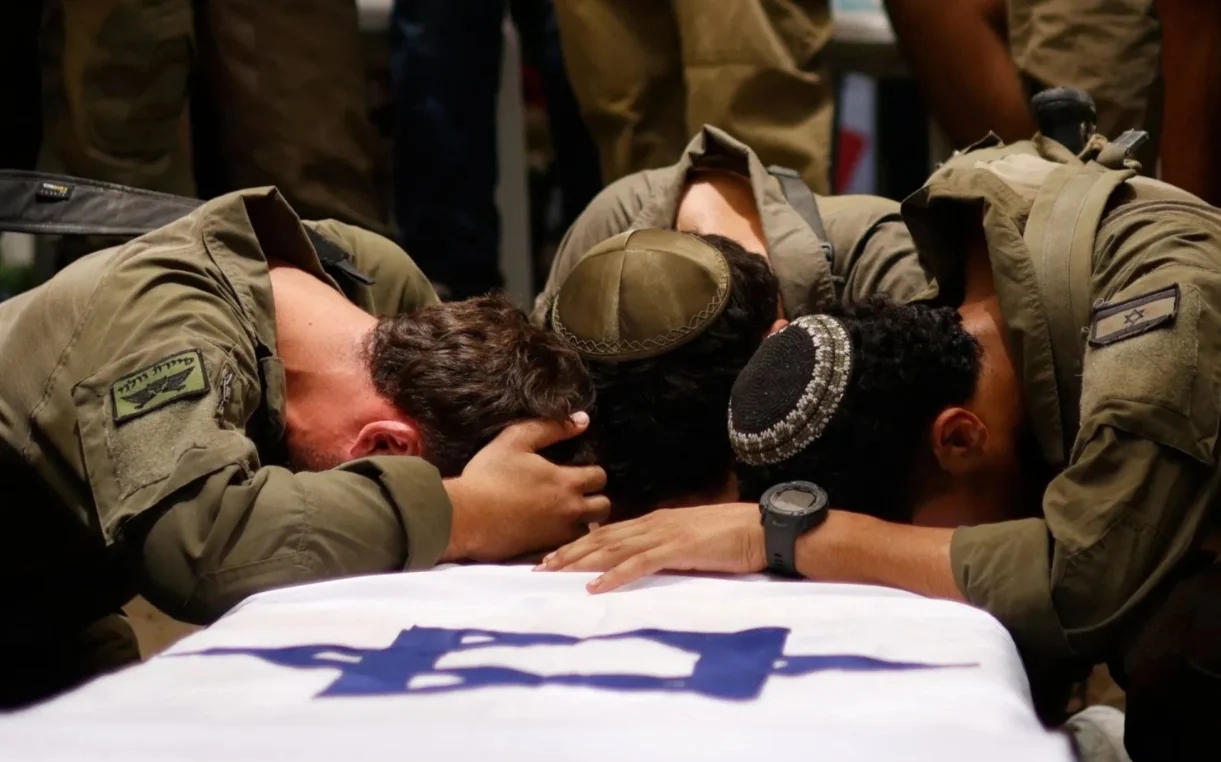
It is really pointless to keep thinking in terms of the endless circle of whether this ceasefire is a Pyrrhic victory for Israel or for Hezbullah, because the real winners are all those people who can go back to their homes hopefully very soon. In fact the whole issue is not about victory, but about the losing side, and in actual fact it is the state of Lebanon and the Lebanese people.

One the one hand, with this ceasefire agreement, Lebanon has fallen under the mandate of the US, France and Britain on the one hand, as guarantors of it, and on the other, under the mandate of Iran as the other guarantor of the accord. So where is the Lebanese sovereignty under the circumstances?

Indeed, Israel treats the Lebanese state sovereignty in terms similar to how apartheid South Africa used to treat its Bantustans, giving itself the right to intervene in Lebanon whenever it sees fit.

Moreover, what is it exactly the western overseers of this ceasefire are guaranteeing to Israel, and what is it exactly Iran has agreed to as the other overseer? One is not raising doubts here, rather wondering how this ceasefire can be implemented. For all intents and purposes, a country, unfortunately with dubious sovereignty, is supposed to secure the areas from which Hezbullah has withdrawn; from the Litani River southward, and which the Israelis will withdraw from, with the UNIFL as the other go-between.

Now, it is legitimate to ask if the Lebanese army has armaments sufficient to carry out the job and is it logistically prepared for such tasks, because we haven’t heard anything of whether there will a massive rearmament programme to support the Lebanese, especially since they don’t intend, as it seems, to deploy their forces in the area.

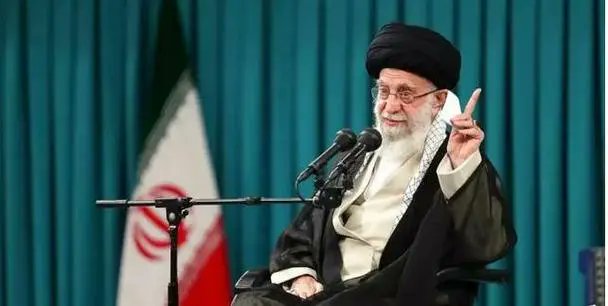
On the other hand, what will the other mandate power, Iran, like to do? Evidently the talk of Hezbullah surrendering its weapons might drag on, dependent on the “chicken game” the mullahs in Tehran will play with coming US president Donald Trump. In a sense, who will blink first. How will president Trump deal with Iran ? Will he see Tehran as the arch enemy, or will he take conciliatory steps towards it.

If Tehran is pushed in a corner, it might not relinquish all of its gains in Syria, Iraq, Yemen, not to mention Lebanon, without a fight. Consequently, and depending on how the next Washington administration handles the situation, will determine whether the ceasefire holds or not. This will be the least of the region’s worries actually especially since Mr Trump is partial to proxy wars.

Dr Khairi Janbek is a Jordanian historian based in Paris and the above opinion is written exclusively for crossfirearabia.com. 

Continue reading
Testing Iran’s Foreign Moves

By Dr Khairi Janbek

Iranian foreign policy is a mixture of historical, ideological and geopolitical factors. As a major regional power in the Middle East, its foreign policy has often been seen as pragmatic; but practicality with an ideological component.

The country’s policy decisions are influenced by its revolutionary origins in competition with other regional powers. In reality, Iran cannot be understood outside the consideration of the legacy of the 1979 revolution, which highlighted the centrality of the concept of Velayet e Faqih; the Guardianship of the Jurist on Iran’s political and and ideological stance on global affairs.

Iran adopted a foreign policy that combined ideology with the desire for regional leadership often expressed as the defender of oppressed Muslims, the power behind the spread of Islamic values and opposition to western imperialism, especially that of the USA.

The objective has been ever since to focus on expanding and maintaining influence in the Middle East, not necessarily by creating a ‘Shiite Crescent’, but rather by creating a Persian-dominated crescent through fostering alliances with groups in Syria, Iraq, Lebanon, Yemen, and Hamas in Gaza.

This crescent has been aimed primarily as being an arch to exclude, in the first degree, Iran’s biggest Islamic rival Saudi Arabia with its close relations with the USA, from its sphere of influence.

At the same time, Iran’s nuclear ambition have put it in direct conflict with the USA and western powers. However this confrontation with the USA has habitually fluctuated between agreement, as during the Obama administration, and confrontation during the first Trump administration, then the ambiguity of the current Biden administration.

However, currently, the country faces the delicate balance of managing its relations with the western powers as well as regional actors, while seeking to maintain good relations with Russia and China.

Currently, with the ongoing tensions with Israel on one side, and melting of ice with Saudi Arabia, with the possibility of further serious confrontation with the Trump administration, Iranian foreign policy and its ability to continue to be able to navigate the preservation of its interests, will most certainly be put to the test.

Dr Khairi Janbek is a Jordanian historian based in Paris and the above opinion is written exclusively for crossfirearabia.com. 

Continue reading
Palestine and Imperial Chaos

By Dr Khairi Janbek

When the British conquered the territory, they did not exactly know where to draw the borders of Palestine.  British prime minister Lloyd George conferred with his French counterpart Clemenceau and suggested that the borders of Palestine be defined on biblical basis; in accordance with its ancient boundaries from ‘Dan to Beersheba’.

But what about the sparsely-populated territory east of the River Jordan?  Although in 1915 the British promised the territory to the Sharif of Mecca in the McMahon correspondence, in the early years of British control, it remained part of Palestine, and not until 1922 did the British separate it from the rest of Palestine and named Emir Abdullah of the Hashemite dynasty as the ruler of the new country Transjordan.

Even when the borders of Palestine became clear to the British, the borders of the future “Jewish National Home” remained open to dispute. Lord Balfour’s letter spoke vaguely of the establishments ‘in Palestine a National Home for the Jewish people’ he did not refer to the whole of Palestine or any specific part of it.

Among the Zionists, the borders of Palestine were just as blurred. The ideal borders, as mapped by the Zionist delegation at the Paris peace negotiations, included south Lebanon (Northern Galilee) and a stretch of land east of the River Jordan as far as the line of the Hijaz Railway.

Weizmann continued to believe that the land east of the River Jordan should be part of the “Jewish National Home.”  This was reiterated in his Congress speech 1921 stating “the questions of borders will be answered when Cis-Jordan (West Bank of the River Jordan) will be so full of Jews that we will have to expand to Transjordan.”

The right wing Israeli revisionists continued to claim until the 1950s, the whole of Palestine on both sides of the Jordan River.

However, there was a brief glimmer of hope that an Arab-Jewish understanding might in fact be possible when Emir Faisal, later King of Iraq, and Chaim Weizemann signed an agreement in 1919, recognizing the right of the Jews to immigrate to Israel.

But reality on the ground created a different set factors, when Faisal’s condition of far reaching Arab independence in the region was not fulfilled, he declared the agreement no longer valid. In any case, the agreement did not include representatives of the Palestinian Arabs.

Also in the post-World War I era, another claim on Palestine was made in March 1920, when the General National Syrian Congress, declared that Palestine was nothing but the southern part of the Greater Syria State.

Dr Khairi Janbek is a Jordanian historian based in Paris and the above opinion is that of the author and doesn’t reflect crossfirearabia.com. 

Continue reading