Al-Duwairi: The Houthis will not stop bombing Israel Unless…

Military expert Major-General Fayez Al-Duwairi said that if the massacres and Israeli blockade of Gaza continue, the Houthis Ansar Allah group will continue bombing deep inside Israel.

He emphasized that targeting Ben Gurion Airport in particular would lead to the cessation of air traffic and the suspension of flights by some international airlines and creating a state of confusion forcing millions to go down to the shelters.

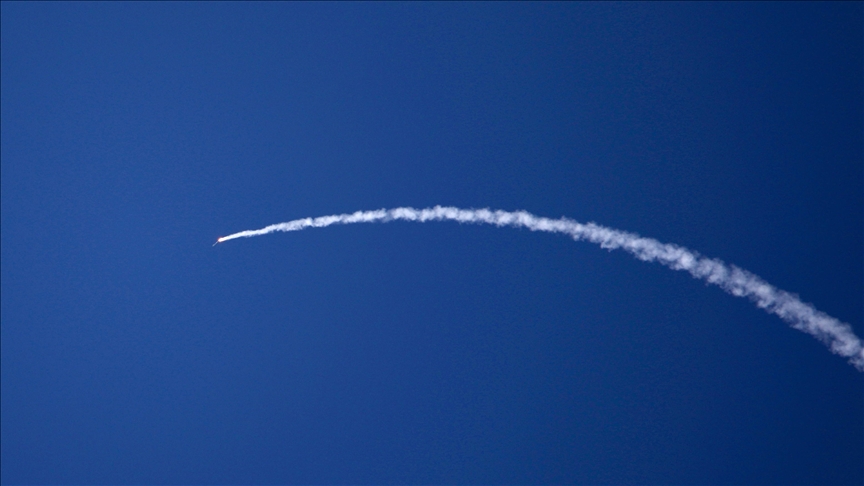
The Israeli army announced it intercepted a missile fired from Yemen toward Israel early Sunday morning as the Houthis threatened to impose a no-fly zone on airports in Israel due to the escalation in the Gaza Strip.

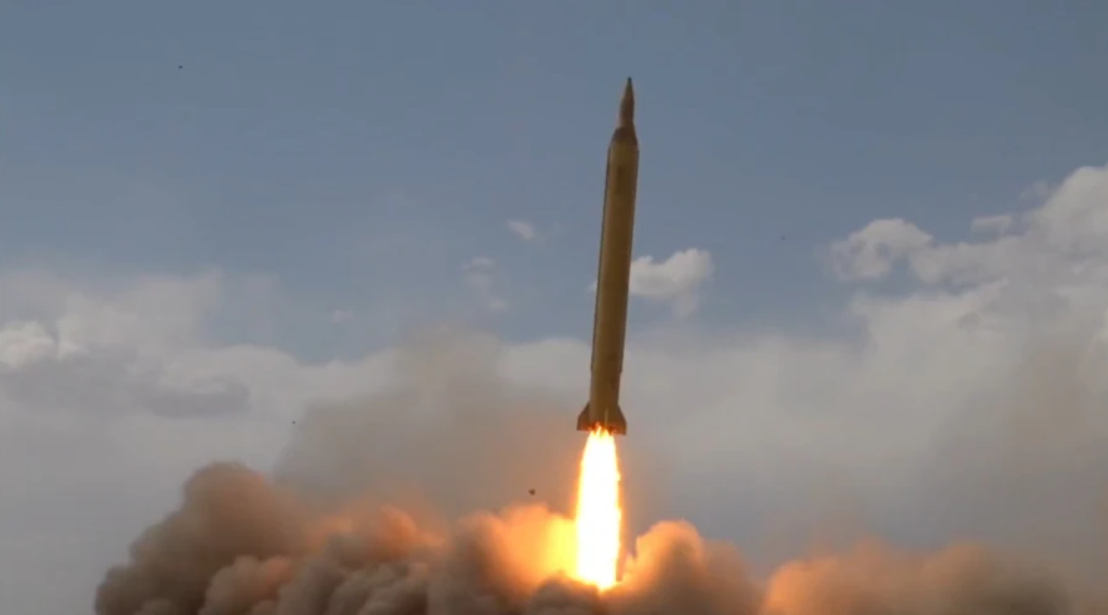
Houthi military spokesman Yehya Saree announced that the group targeted Ben Gurion Airport with two ballistic missiles all the way from Yemen, a distance of over-2000 kilometers in support of Gaza.

The Houthis have since initially linked attacks on ships in the Red Sea and attacks deep inside Israel wouldn’t stop until the  Israeli war on the Gaza Strip comes to an end.

Nasr al-Din Amer, deputy head of the Houthi media told Al Jazeera Net that the group’s long-range missiles aim to close down the Ben Gurion Airport and prohibit navigation there until the blockade and aggression on Gaza is lifted.

Al-Duwairi noted the Houthis’ strikes prompted the Israeli occupation to change its defense strategy. Since last week, its  focus shifted from the American THAAD system to the Israeli Arrow system, as THAAD previously failed to intercept two missiles launched by the Houthis one of which landed in the surroundings of the airport.

He predicts the Israeli occupation would continue its attack on Yemen and suggests that an airstrike would be imminent in the coming days. However, he explained that the targets are unknown and would likely be civilian.

The Israeli military announced in a statement last Friday it had carried out attacks on two ports in the Al Hudaydah Governorate on Yemen’s west coast using fighter jets, targeting and destroying infrastructure it claimed belonged to the Houthis in the two ports.

Prime Minister Benjamin Netanyahu threatened: “We know the Houthis are merely an arm, and that Iran is behind them and provides them with support, instructions, and authorization.” He warned the Houthis would pay a heavy price, and “we will defend ourselves by all means to preserve Israel’s security,” as reported in Al Jazeera.

Continue reading
Using Starvation as a Weapon of War

By Professor Mutaz M. Qafisheh and Manal Radaydeh

The famine raging in Gaza is not a side effect of war. It is the outcome of a willful and publicly declared plan aimed at displacing and destroying Gazans by starving the entire population. This is not a natural disaster— it is the systematic denial of access to food in a tiny, resource-scarce strip of land. Starvation is being used as a weapon—to break people’s will, force surrender, collectively punish, and carry out ethnic cleansing.

Nearly two months after the ceasefire collapsed, Israeli forces tightened the blockade on Gaza, sealing border crossings and halting all entry of food, water, medicine, and fuel. According to the World Food Program (WFP), food stocks had already run out by April 2024, and conditions have worsened significantly since March. Even modest charity kitchens that once served over a million meals daily have now ceased operations. WFP reported that the prices of the few remaining food items have surged by over 1,400%.  

Malnutrition and imminent death

This crisis is affecting everyone, but children are paying the heaviest price. UNICEF reported that over 60,000 children are suffering from severe malnutrition. As a result, thousands face imminent death. Most children survive on a single meal a day—or less. The lack of proper nutrition is damaging their bodies and minds in ways that may never be reversed. Satellite footage shows infants drinking water instead of milk. Many have withered to skeletons.

It is crucial to underline that this man-made hunger is not accidental. It is the explicit outcome of political decisions targeting civilians. Under international humanitarian law—particularly Article 23 of the Fourth Geneva Convention—all parties in a conflict must allow the free flow of humanitarian aid to civilians. The UN Office of the High Commissioner for Human Rights has described this famine as “cruel collective punishment.”

On Nov. 21, 2024, the International Criminal Court issued arrest warrants for Israeli Prime Minister Benjamin Netanyahu and former Defense Minister Yoav Gallant, accusing them of war crimes, including the use of starvation as a method of warfare—characterized as a war crime. This came after a unanimous order by the International Court of Justice on March 28, 2024 in the genocide case brought by South Africa against Israel. The ICJ ordered Israel to take all necessary and effective measures without delay to ensure the unhindered, large-scale provision of urgently needed services and humanitarian aid—food, water, electricity, fuel, shelter, clothing, hygiene, sanitation, and medical care—to Palestinians throughout Gaza. Yet Israel continues to act as if it were above the law.

Today, Gaza’s food system is completely destroyed: bakeries bombed, farms bulldozed, fishing boats burned, livestock killed, warehouses flattened, shops emptied, and aid trucks blocked or turned away. OCHA warns that famine is either imminent or already unfolding. And yet, the siege continues—on top of systematic daily bloodshed.  

Collapse of health care

The suffering is not only physical. As hunger spreads, so does the risk of disease, especially among children, the elderly, and the chronically ill. The health care system has collapsed. People with chronic diseases—cancer, diabetes, high blood pressure, heart and kidney failure—are dying. Euro-Med Human Rights Monitor recently documented the deaths of 14 elderly people due to malnutrition, among many others who perish in silence, with no one to record their plight.

The coming months and years will reveal the far-reaching consequences of the famine that struck Gaza in full view of world leaders—some of whom encouraged or were complicit in the starvation of 2 million innocent civilians. The world—particularly Europe and the Arab nations—can, if it chooses, put an end to these genocidal acts against children, the elderly, the sick, and the exhausted.

It is unimaginable. How is it possible that in the 21st century—an age of smartphones and social media—the international community watches a live-streamed famine unfold and does nothing? What has brought us to this moral and legal vacuum? If famine is tolerated this time, it will be normalized and replicated elsewhere. That would mean the erosion of values humanity has struggled for centuries to uphold.

It’s time for action, not just words. History will judge. History is here. And history is now.  

Mutaz M. Qafisheh is Professor of International Law at Hebron University. Manal Radaydeh is a Researcher in International Diplomacy at Hebron University and this article was published in Anadolu.

Continue reading
Israel is Burning: Here’s Why!

By Dr Marwan Asmar

(Crossfirearabia.com) – Israel is burning. Its war on Gaza is going nowhere, Israeli society is being torn-apart, and its remaining 59 hostages remain in the depth of the tunnels in Gaza unable to be found. Its like looking for a needle in a haystack because of the extensive hundreds of miles of underground! Many, except Israeli Prime Minister Benjamin Netanyahu, people like US Envoy Steve Witkoff believe the hostages, 24 still alive, are likely to die if the war is not brought to an end.

After 18 months of bloodshed on the Gaza Strip with its endless destruction, Israel is nowhere near to reaching its objectivity of stamping out Hamas. The Islamist organizations remains just as strong, determined and willing for martyrdom as when the fighters unleashed themselves soon after 7 October, 2023.

On the contrary all the Israeli government did by insisting on the continuation of the war on the Palestinian territory has created the wrath of many world nations, including the irritation of US president Donald Trump who has cut off contacts with Israeli Prime Minister Benjamin Netanyahu and who now feels the latter can no longer be trusted for a meaningful end to the fighting.

Meanwhile, the Israeli army which is back fighting on Gaza not of its own accord, is facing what can all be called the “Gaza malaise” of being entrapped in the Strip through ambushes, booby-trapped, once-standing houses and Palestinian resistance missiles, ammunitions and artillery.

Israel and its army – despite the killing of over 52,000 Palestinians, 100,000 injured with over 12000 remaining under the rubble – is facing the worst of times, bogged down, through its own accord in an enclave it is determined not to leave while shamelessly embarking on a spree of killing, murder and mass-bombing civilians under the intrepid eyes of the world and documented by international agencies. In fact, many experts, including Israelis, say this is the worst documented genocide which the Jewish state will not be able to live it down.  

Meanwhile, the Palestinian resistance lead by Hamas and Islamic Jihad fighters and a motley of other determined factions led by the Popular Front for the Liberation of Palestine are wreaking havoc among Israeli soldiers and their killer machines of tanks, all over the Gaza Strip from its far north, center and its south.

Privately the Israeli army is complaining because of the orders they are following from extremist politicians like Netanyahu. And they have a right to be because they have literally bombarded every nook and cranny in Gaza, forcing its 2.1 million populations on a whirlwind pool of displacements not once, not twice but up to 10 times to squat from one place to another but to no avail.

How can civilians, mostly women and children living in tents – for this is what Gaza has been reduced to – be military targets with mass bombs dropped on schools and hospital. For this is what the Israeli army is, an impressive air force, thousands of tanks and mass bombs supplied by the Americans, British and many more countries have been reduced to.

There are no Palestinians fighters here, they don’t lounge among civilians in makeshift UN schools. The fighters are in bombed houses, Israeli-gorged out what used to be manicured-gardens and residential squares, in semblance of buildings that used to be ministries, ruined university halls, restaurants, shops and libraries and much more.

Israel has made sure these longer exist. However, the Palestinian groups have came to fight among the rubble of these places that are bombed and re-bombed time and again like a macabre scene never existed before.

In many of these places, different neighborhoods of Rafah in the south of the Gaza Strip to the north the bombed-out town of Beit Hanoon to Al Tuffah in Gaza City and Shuja’iyya to the east, near the wall that divided Gaza from Israel, the rubble and wreckage has become so bad that Israelis, for the most part, are no longer able to enter their tanks, bulldozers and other heavy machinery.

The soldiers have to go on foot with their machine-guns and backpack of bombs and other “vile little goodies”. Frequently, and today, much more so, they would be running from one place to another fearful of being sniped by Palestinian fighters.

Since Israel re-started its war on the Gaza Strip after 19 March, and as the Palestinian fighters geared for action weeks later, ambushes of Israeli soldiers were stepped in in the different areas of Gaza. These ambushes resulted in the death and injury – on a daily basis of many Israeli soldiers.

While the Israeli army – and it has been so throughout this war – trying to massage and downplay the number of Israeli dead, this has not worked because of the Israeli media, the internet and power of satellite television which meant that the image and the picture – even by Israeli soldiers themselves – has been instant and at the ready ready to be posted online.

As to the intensity of the fighting when satellite television provide pictures of helicopters, both like a scene of the ambush, the booby-trapped house and landing on top of Israeli hospitals, in Tel Aviv for instance, experts said one can be sure the number of Israeli dead and injured is large because Israeli soldiers on the ground on Gaza have with them medical teams to deal with immediate emergencies.

If helicopters to be transported to hospitals are brought in, they argue the number of ‘critically’ wounded and dead is sure to be much higher and that means the resistance is meting out powerful blows at the Israeli soldiers thousands who have been protesting in this latest military campaign that they don’t want to go back to fighting in Gaza in a recent memo signed by 200,000 rank-and-file soldiers and some even prepared to go to prison for disobeying orders.

The dismay among the Israeli soldiers have been highlighted by the booby-trapped housing. In one case recent case in Al Jenienah neighborhood in Rafah, a group of Israeli soldiers with their dogs walked into what appeared to be a booby-trapped disused building and which exploded immediately bringing in the transport helicopters. The place just blew up.

Such a situation is being repeated daily on the streets of Gaza, a strip proving a tough fight that can’t be conquered nor subdued. Just to go back to Shuja’iyya, a wrecked place which the Israeli army entered many times, and which history will associate with Palestinian courage, as its name in Arabic, as of Saturday morning a military transport vehicle was just blown up.

All the Israeli army first said that there has been a serious security incident there, with helicopters hovering at the scene on top of Tel Hashomer Hospital in Tel Aviv. Later on the only owned up to two soldiers being killed and seven injured.

Brigadier-general Fayez Dwairi speaking on Al Jazeera says that the number of Israeli dead is likely to be between four and 12 depending whether we are talking about a Merkava tank and or a military vehicle that also carries 12 people. He points out the Israeli tanks is the only one in the world that has four operatives but has room for six additional soldiers.

Hence this is the battle Israel is currently waging. If Netanyahu insists that the war will continue then his army is likely to continue to face a vicious circle of death and mayhem as the Palestinian Israeli fighters will continue to mushroom.

Today the Palestinian resistance is still at the ready for with Gaza destroyed and mass wreckages that wrecks of death, they have nothing to look forward but to continue fighting especially against an Israeli government and army determined to fight Hamas and the other Palestinian factions till the end

This analysis is written by Dr Marwan Asmar, chief editor of the crossfirearabia.com website. 

Continue reading
Reshuffling Cards: Trump and Netanyahu’s Nightmare

(Crossfirearabia.com) – Benjamin Netanyahu hadn’t finished patting himself on the back for destroying the Sanaa International Airport – after all Israeli warplanes hit the country twice in less than 24 hours – before US President Donald Trump dramatically announced he had just reached a deal with the Houthis to stop striking Yemen. Shock, surprise, horror!

Trump added the Houthis promised in turn they would halt targeting all ships, including US vassals and tankers entering the world-trade-crucial Bab El Mandeb Straits, the Red Sea and presumably the Arabian Sea, just off the tip of the country in the south.

Thus, in one full swoop and at a strike of a pen, the war between the US and the Houthis, started in earnest since 15 March had come to an end in a mesmerizing fashion. During this time, the Americans had made at least a total of 1300 air-raids on Yemen in a bid to end the Houthis who had been striking Israel with ballistic missiles on a regular basis since 7 October, 2023 when Israel started bombarding Gaza.

The country that was behind the deal was Oman who had indeed announced, Tuesday, that an agreement between the United States and the Houthis, the effective but not internationally recognized government in Yemen, was reached to stop the war.

Omani Foreign Minister Badr Albusaidi said in a statement on X that: “Following recent discussions and contacts conducted by the Sultanate of Oman with the United States and the relevant authorities in Sana’a, in the Republic of Yemen, with the aim of de-escalation, efforts have resulted in a ceasefire agreement between the two sides,” as carried by Anadolu.

Analysts since suggested that the deal was reached because the two sides had wanted to end the open-ended escalation that was proving very costly not least of all to the United States which hiked the US treasury bill to about $1 billion dollars since its campaign, mostly to support Israel, in less than one month of military action.

The Houthis on the other hand didn’t want to fight on two fronts, the Americans and the Israelis. For them ending one front was perfectly logical to focus on strikes against Israel in a bid to end the latter’s war on Gaza, and which Israel has promised to step up soon and added to the misery and genocide of Palestinians in Gaza.

In agreeing to stop attacking shipping in the area they were of the firm belief that Trump had not meant that no firing against Israel as part of the deal which meant they would continue to strike Jewish cities, airports areas and military installations, more than 2000 kilometers away, until Israel ends its war on Gaza.

It is still too early to read into how things will unfold, especially since Trump is coming to Saudi Arabia and the Gulf in mid-May, but everyone is seeing the deal as creating a wedge between the US-Israeli alliance on matters relating to US security in the region and especially on the Iran nuclear file, where incessant negotiations – now in their third and fourth rounds -are taking place for the first time between Washington and Tehran in Muscat and through an Omani team lead by their formidable Omani Foreign Minister Albusaidi as mediator.

These are developments that are clearly upsetting Netanyahu who is dead against any nuclear deal that may be reached between the White House and Tehran and wants to strike Iran’s nuclear facilities regardless of the dangerous consequences. But this is seen as a critical line between Trump and Netanyahu while the former is determined to initial a new nuclear deal which he would see as a great US success and for his diplomacy in checking Iran’s nuclear weapon.

International issues as they stand are still fluid for Trump is looking for certain objectives most of all includes his slogan of “Make America Great Again”, focusing on his domestic scene, and not getting involved in unnecessary war around the globe, hence his wish to end the Ukraine War, the war on Gaza and achieve a new nuclear deal with Iran; these are objectives, especially they last two, are not at all in line with the Netanyahu who is attacking Syria, Lebanon, Iraq and occasionally Yemen.

Thus the last deal between Trump and the Houthis, regardless of whether it would stick in the end, is surely likely to be a “splitting headache” for Netanyahu, from a man who was once seen as great friend to Israel.

But the Israeli Prime Minister must not forget that Trump is no pushover, he is a broker who likes to do things his own way.

This analysis is written by Dr Marwan Asmar, chief editor of the crossfirearabia.com website. 

Continue reading
Analysts: US Fails on Houthis After Six Weeks of Bombing

After nearly six weeks of intensive US airstrikes on different areas and cities of Yemen the Houthi Ansar Allah continues to assert that its military operations in the Red Sea and against Israeli targets will not stop until the ongoing Israeli war on the Gaza Strip ends.

Houthi military spokesman Yahya Saree, Saturday, announced the targeting of the Israeli Nevatim Air Base in the Negev with a ballistic missile, as well as two other sites in the Tel Aviv and Ashkelon areas and the targeting of warships on the US aircraft carrier SS Harry Truman in the northern Red Sea are just part of the continuing ongoing military strikes.

However in response to these attacks the US aircraft launched two airstrikes last Friday night on the Ras Isa oil port in the coastal province of Al Hudaydah, which Washington considers a major source of fuel used to finance the Ansar Allah group’s activities.

According to Dr Liqaa Makki, senior researcher at the Al Jazeera Center for Studies, the USA has failed miserably in its strikes against the Houthis because of its inability to move to the second phase. He said that as a result they are  discussing an alternative scenario for this military campaign against the Houthis.

Makki believes that US President Donald Trump has reached a dead end, and that the ceiling he set regarding the Houthis is proven unrealistic, pointing out the United States, despite its military strength, is failing in Yemen because it is fighting a group, not a state.

On the other hand, military and strategic expert Brigadier-General Elias Hanna, believes that both sides are losing, whilst the image of the United States is being damaged, given the scale of the US military campaign and Trump’s engagement with the Houthis, who previously declared that  “we [US] will withdraw from all the world’s wars.”

Reports estimate the cost of the airstrikes carried out by the US military on Houthi positions amounted to approximately $1 billion in the first three weeks of the military campaign alone.

The Associated Press reported the value of the seven downed American drones made by the Houthis exceed $200 million, and the continued loss of American drones makes it difficult for the US leadership to accurately determine the extent of the damage to the Houthis’ weapons stockpiles.

Brigadier-General Hanna said that Washington lacks a comprehensive strategy in its dealings with the Houthis, and that the political goal it announced—restoring deterrence and opening shipping lanes—has not been achieved.

He also pointed out the US military is targeting the centers of gravity within the Houthi military system to disrupt it, a strategy Israel has used with the Palestinian resistance but has failed to achieve.

Appeasing the Houthis

In light of Washington’s inability to achieve its goals against the Houthis, Brigadier-General Hanna believes the pressure being exerted on Israeli Prime Minister Benjamin Netanyahu regarding the entry of aid into the Gaza Strip is part of an effort to appease the Houthis so that they will halt their operations in the Red Sea and against Israeli targets.

Trump’s upcoming visit to the region also requires a de-escalation. According to the military and strategic expert, the US president cannot arrive while the Houthis are launching missiles.

In the same context, the senior Al Jazeera’s Makki expects  that a Gaza ceasefire will soon be reached before Trump’s visit, allowing the Houthis to halt their operations as they have initially linked the cessation of their operations to an end to the war on Gaza and to the cessation of US strikes against them.

American officials have previously revealed to CNN that the US military has struck more than 700 Houthi targets and carried out 300 airstrikes since the campaign began in mid-March, “forcing them underground and creating confusion and chaos within their ranks.”

Continue reading