Baby Dies From The Cold in Gaza

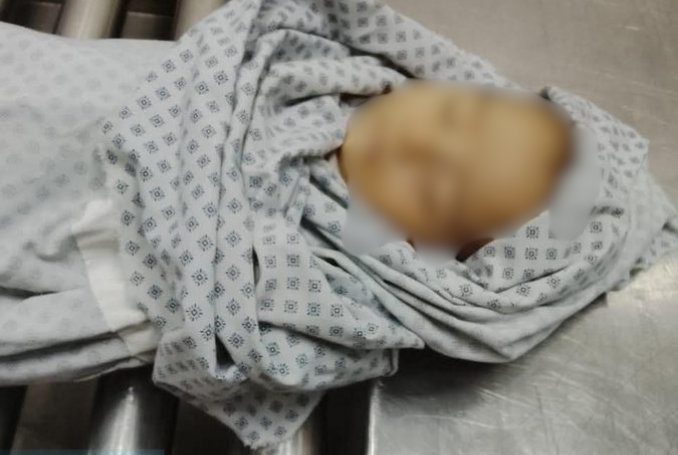
A two-month-old infant has died in Gaza City from exposure to extreme cold, Al Mayadeen reported on Sunday, as the Israeli occupation continues to tighten its blockade on the Gaza Strip, preventing the entry of essential humanitarian supplies, including food, heating materials, and weather protection.

According to Palestinian sources, the infant was identified as Muhammad Wissam Abu Harbid. His death occurred just hours after another infant, Mahmoud al-Aqra, also died from exposure to extreme cold in Gaza, underscoring the growing toll of winter conditions on the Strip’s most vulnerable residents.

The deaths come as severe winter storms sweep across the region, further deteriorating conditions for displaced families already facing acute shortages of food, medical care, and adequate shelter.

The incident is the latest in a series of ceasefire violations, as Israeli forces continue shelling multiple areas of the Strip while maintaining restrictions that block life-saving aid.

Aid Blocked at Borders

While UNRWA and other humanitarian agencies continue distributing what limited aid is available inside Gaza, they say meaningful expansion of operations remains impossible without unrestricted access. 

Aid convoys are frequently delayed at military checkpoints, trucks are turned back without explanation, and critical supplies remain stranded outside Gaza’s borders.

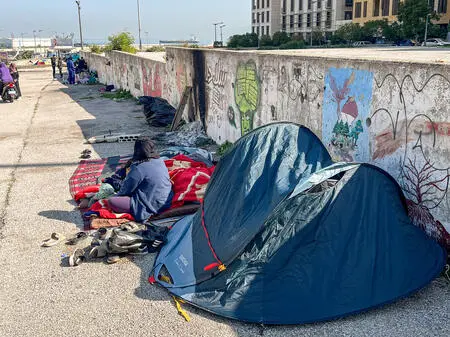
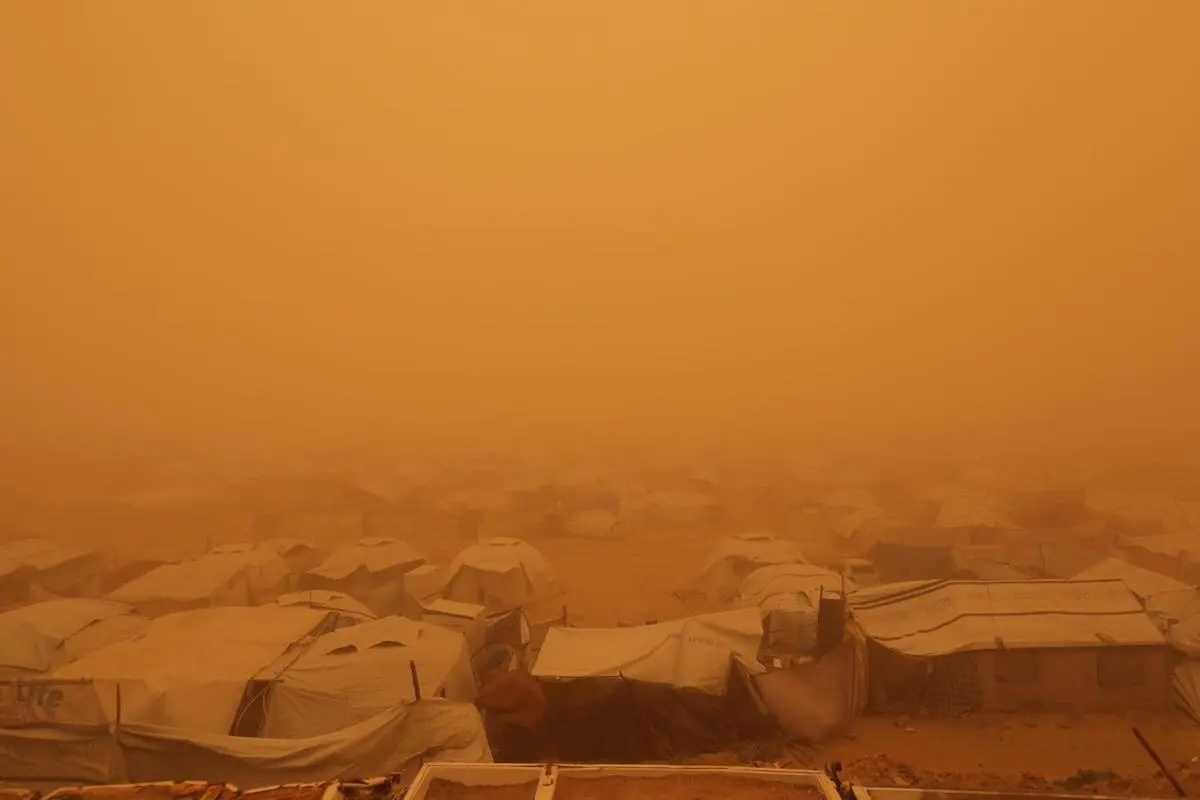
Winter conditions have further intensified the crisis. Heavy rainfall has flooded displacement camps, forcing families to burn scraps of wood for warmth. Doctors warn that the combined effects of cold exposure, hunger, and untreated illness are creating life-threatening conditions, particularly for children.

UNRWA has renewed calls for the complete lifting of restrictions on humanitarian aid, stressing that the crisis in Gaza is not caused by a lack of supplies, but by their deliberate obstruction. “The survival of Gaza’s children depends on whether the international community upholds its legal and moral obligations,” the agency said.

The agency emphasized that humanitarian access is a legal obligation under international law, not a matter of choice, warning that each day of delay deepens an already catastrophic situation for Gaza’s most vulnerable residents.

Palestine Chronicle

Continue reading
Who is Behind The Protests in Iran?

At least 109 Iranian security members were killed during unrest sweeping several parts of the country over the past few days, the Qatar-based Al Jazeera channel reported Sunday, citing Iran’s Tasnim News Agency.

The outlet did not specify how many protesters were killed.

Iran has been rocked by anti-government protests since Dec. 28 at Tehran’s Grand Bazaar, fueled by the sharp depreciation of the Iranian rial and worsening economic conditions. Demonstrations later spread to several cities.

There are no official estimates on casualties, but the US-based rights group HRANA put the toll at 116, with more than 2,600 detained.

A Tehran doctor, however, told Time magazine on condition of anonymity that six hospitals in the capital recorded “at least 217 protester deaths, most by live ammunition.”

In a detailed look at the situation, at least six security members were killed and dozens of protesters were detained as anti-government protests continued to roil Iran, fueled by worsening economic conditions, local media reported on Sunday.

State broadcaster IRIB, citing the country’s prosecutor general Mohammad Movahedi-Azad, said six security members were killed in disturbances in the western province of Kermanshah.

Press TV said Iranian security forces have arrested 200 protest leaders and seized weapons in raids on their houses.

Iran’s police chief Ahmad Reza Radan said coordination between security and law enforcement forces had intensified operations against what he called rioters.

“With proper coordination between security and law enforcement forces, the level of confrontation with rioters has been upgraded,” he said.

He said key elements behind the unrest were arrested last night, saying those detained “will face punishment after completing legal procedures.”

Radan said most of the fatalities in the current wave of protests “died from bladed weapons and knife wounds,” citing forensic findings.

“The shooting distance was very close,” which indicates the acts “were not carried out by security forces but by trained and directed elements,” he said.

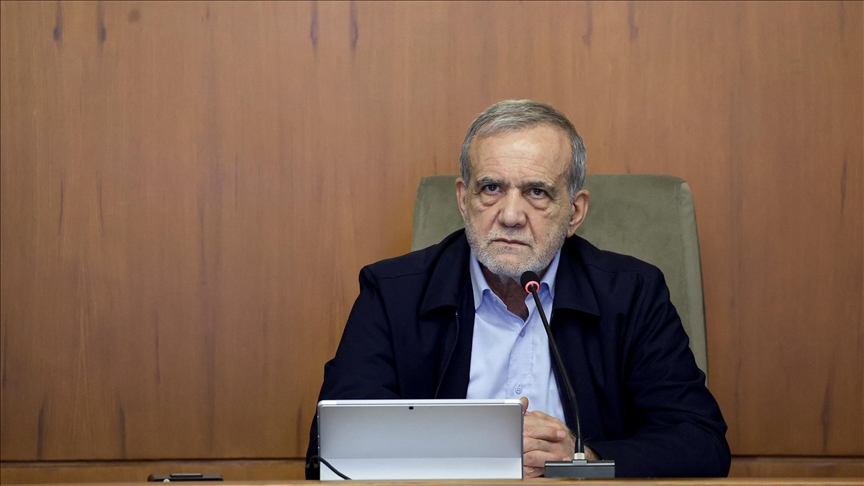
Meanwhile Iranian president Masoud Pezeshkian said Sunday that his government is determined to address Iran’s economic problems.

Iran’s “enemies are seeking to sow chaos and instability” following the country’s 12-day war last June with Israel, Pezeshkian told the state television.

His remarks were the first since protests that began last month over worsening economic conditions and the record depreciation of the national currency, the rial, turned violent last week.

Pezeshkian condemned recent attacks on public places, including mosques, in Tehran and other Iranian cities, blaming the US and Israel for the violence.

There are no official casualty figures, but some NGOs outside Iran estimate the death toll at 116, including both security forces and protesters, with over 1,000 injured.

Iranian officials have accused Washington and Tel Aviv of backing the increasingly violent protests, particularly in Tehran, where government buildings, banks, buses, and mosques have been set ablaze by armed protesters in recent days.

Internet connectivity has also been suspended across the country.

Pezeshkian accused the US and Israel of “training certain groups” inside and outside the country and bringing “terrorists from abroad” to set mosques, markets, and public places on fire.

“They have killed some with weapons, burned others, and beheaded some. Truly, these crimes are beyond our people’s nature. These are not our people. They do not belong to this country. If someone protests for this country, we listen and address their concerns,” he said.

The Iranian president said his government admits to “shortcomings and problems” and is working hard to alleviate the people’s concerns, especially regarding the economy.

“Where in the world are such protests and behaviors accepted as protests? If this happened in the US, would Americans allow it? Would Europeans allow it? If someone attacked a military base or city center, would they say: ‘Go ahead and loot it’,” he said.

He insisted that those attacking public property are not protesters, but rioters, adding that the government is willing to meet with and listen to those who have legitimate concerns.

Pezeshkian said the US and Israel tried to bring Iranians “to their knees” during the 12-day war in June but failed, and now seek to do the same through “riots.”

“We will build this country with the people’s help and stand firmly against the external conspiracies and riots, with the help of producers and merchants. We will stop them with power,” he said, offering condolences to those who have died in the ongoing protests.

Before the protests turned violent on Thursday night, US President Donald Trump tweeted that the US would “come to the rescue” of Iranian protesters if the government used lethal force against them.

His remarks drew sharp criticism from top Iranian officials, including Supreme Leader Ayatollah Ali Khamenei, security chief Ali Larijani, and Foreign Minister Abbas Araghchi.

Pezeshkian accused the US and Israel of instigating Iranian youth.

“The same people who destroyed this country and killed our youth and children now instruct these rioters to destroy more.”

He reassured the public that his government will work to solve their problems and urged families “not to let their youth mix with rioters and terrorists who kill and behead.”

“Protest if you must; we will listen and solve your concerns. Let us work together to solve problems. But worsening the country’s economic situation through chaos serves no one,” he said according to Anadolu.

Continue reading
Sudan: Cabinet Returns to Khartoum

Sudan’s government officially returned to the capital Khartoum on Sunday for the first time since the outbreak of war with the paramilitary Rapid Support Forces (RSF) in April 2023, Prime Minister Kamel Idris said.

Speaking to a crowd upon his arrival from Port Sudan, where the government had been operating as a temporary capital since the conflict began, Idris described the move as a turning point for the country.

“Today we return, and with us returns a government of hope to the national capital,” he said. “We promise improved services and a better life for our people.”

Idris pledged to enhance health and education services, rebuild hospitals and rehabilitate schools and universities, placing particular emphasis on the University of Khartoum. He also vowed to improve security and living conditions for citizens.

The prime minister said the government has submitted the 2026 state budget without imposing additional financial burdens on the public, adding that it aims to reduce inflation to 70%.

According to the latest official figures released in November, inflation stood at 74.2%.

Idris said the budget also seeks to raise gross domestic product growth to 10% and curb parallel market exchange rates as part of efforts to stabilize the economy.

He described the current year as “a year of peace,” calling it “the peace of the brave and the victorious.”

On May 21, the Sudanese army announced it had regained full control of Khartoum, declaring the capital free of the RSF following battles in the Salha area south of the city.

Last July, the chairman of the Transitional Sovereignty Council, Abdel Fattah al-Burhan, issued a decree forming a national committee to prepare Khartoum for the urgent return of federal institutions and residents according to Anadolu.

Of Sudan’s 18 states, the RSF controls all five states of the Darfur region in the west, except for some northern parts of North Darfur that remain under army control. The army, meanwhile, holds most areas of the remaining 13 states in the south, north, east, and center, including the capital Khartoum.

Sudan’s humanitarian crisis has worsened since the war between the army and the RSF erupted in April 2023 over a dispute on unifying the military establishment, killing tens of thousands and displacing millions.

Continue reading
‘Lost Generation’ of The Genocide

“Lost” Generation of Children in Gaza at Risk of a Decade Without Education Amid Israeli Genocide: Cambridge Study

A new study has warned that there is a severe risk of a “lost” generation emerging in Gaza, after two-year Israeli genocide through a combination of the assault’s physical and psychological effects, as well as the destruction of schools. The study found that children in Gaza will have lost the equivalent of five years’ worth of education.
 
The genocide has come close to erasing children’s right to education, researchers from Cambridge University found.

The report, which follows a similar study in 2024, provides an analysis of the impact of more than two years of Israeli genocide in Gaza, as well as escalating Israeli attacks in the occupied West Bank.

There are about 1.5 million children aged six to 15 in Gaza and the Occupied Palestinian Territories. The report said the schooling of more than 740,000 pupils had been severely disrupted and the lives of 27,000 teachers affected.

It warns that there is a severe risk of a “lost” generation emerging in Gaza, through a combination of the war’s physical and psychological effects, as well as the destruction of schools. 

Despite the ceasefire that took effect in October,  “learning recovery” would take longer than simply replacing the time lost due to the compounding effects of trauma and starvation, the researchers said.

The study estimates that children in Gaza will have lost the equivalent of five years’ worth of education due to repeated school closures since 2020, first through Covid-19, and then Israeli genocide. 

Although temporary and distance-learning measures were introduced by the UN agency for Palestinian refugees, UNRWA, and the Palestinian Ministry of Education, these have been impeded by continuing Israeli attacks, damaged infrastructure and chronic resource shortages.

The authors calculate that if schools remain closed until September 2027, many teenagers will be a full decade behind their expected educational level.

They also estimate that children in the West Bank have lost a minimum of 2.5 years of education as schools have also been sporadically closed.

There is also urgent need for education-related international aid in Gaza to address both severe learning losses and the assault’s psychological effects, the study said. 

It added that Israel is blocking educational and recreational materials from entering Gaza, as it does not classify these as humanitarian goods. 

This has made materials available in local markets more expensive, with a single sheet of paper costing $3. Printing materials for pupils to learn at home can cost 10 times the usual amount.

The researchers calculated the cost for education recovery to be $1.38bn. All schools in north Gaza and Rafah have been damaged, 98.4 per cent of school buildings in Khan Younis have been damaged and in Gaza City it is 93.3 per cent. Many school buildings that had not been destroyed were being used as shelter by displaced families.

As the population forcibly displace around Gaza, either south during earlier Israeli attacks or returning north after ceasefire, this also stretches makeshift facilities, meaning learning is done online despite unstable internet connections.

Education will depend on foreign aid for the foreseeable future, the researchers said, adding that, of the US$230.3 million requested by the UN humanitarian office, OCHA, for education in 2025, only 5.7 per cent had been provided by July, equating to about US$9 per child. 

The study was conducted by researchers at the Research for Equitable Access and Learning Centre (REAL Centre) at Cambridge University and the Centre for Lebanese Studies, in partnership with the UN agency for Palestinian refugees, UNRWA. It draws on data from UN agencies, charities and NGOs, alongside interviews with aid organisation staff, government officials, teachers and pupils.

Dr. Maha Shuayb, director of the Centre for Lebanese Studies, said, “Education and children’s services cannot be an afterthought. They are a vital source of stability and care.”

Many children have been left too weak to learn or play, the report warns. 

Alongside evidence of a shattered school system, it describes how attacks, starvation and trauma have eradicated any sense of “normal’ childhood.

Prof. Pauline Rose, director of the REAL Centre, said: “A year ago we said education was under attack – now children’s lives are on the brink of a complete breakdown.”

“Palestinians have shown extraordinary desire for education during this terrible war, but the loss of faith and hope that young people are expressing should be a massive red flag for the international community. We must do more to support them. We cannot wait.”

Yusuf Sayed, a professor of education at the University of Cambridge, said teachers and counsellors were displaying steadfastness and commitment to “preserving Palestinian identity through education”, but warned the scale of need was immense according to the Quds News Network.

“Thousands of new teachers will be needed to replace those who have been lost or to support a complete learning recovery. Investing in teachers is crucial to rebuilding and restoring education in Palestine,” he said.

As of October 1, 2025, the OCHA reported 18,069 pupils and 780 education staff killed in Gaza in Israeli attacks. There were also 26,391 pupils and 3,211 teachers wounded. About 13,000 children in the enclave had been treated for acute malnutrition, while 147 died.

The report found evidence of widespread despair. Teachers recounted parents asking: “Why should I care about education for my kids if I know they will die from famine?”

Continue reading