Social Media Lash Out at BBC For Gaza Film

The BBC is facing growing criticism for “failing in its duty of care” to the 13-year-old Palestinian narrator of a Gaza documentary as he has reportedly experienced intense online abuse following the BBC’s decision to withdraw the film.

The Gaza: How to Survive a War Zone documentary sheds light on the experiences of children in Gaza amid Israel’s genocide war through the eyes of narrator Abdullah al-Yazuri. However, it was removed from the BBC iPlayer, after a pro-Israel campaign centered on al-Yazuri’s relationship with a minister in Gaza’s Hamas-run government.

Abdullah’s father Ayman al-Yazuri has been labeled by media as a “Hamas chief” while he is a technocrat with a scientific rather than political background, who has previously worked for the UAE’s education ministry and studied at British universities.

Fears for Safety

Speaking exclusively to Middle East Eye (MEE) last week, the child explained that he and his family have been the targets of online abuse, adding that the affair has caused him serious “mental pressure” and made him fear for his safety.

“I did not agree to the risk of me being targeted in any way before the documentary was broadcast on the BBC. So [if] anything happens to me, the BBC is responsible for it,” he said.

The boy also said the BBC had not reached out to him to apologize.

“Hamas Royalty”

His father has also denied claims that he and his son are “Hamas royalty” in an interview this week with MEE.

His comments came after pro-Israel activist David Collier alleged that Abdullah was the son of a deputy minister in Gaza’s government and was related to a co-founder of Hamas, Ibrahim al-Yazuri, who died in 2021.

The father is a civil servant in Gaza’s government – which is administered by Hamas.

Many Palestinians in Gaza have family or other connections to Hamas, which runs the government. This means that anyone working in an official capacity must also work with Hamas.

Collier, whose revelations sparked a national scandal, described Abdullah as the “child of Hamas royalty”, a claim later repeated by mainstream British newspapers.

The father said that his full name was Ayman Hasan Abdullah al-Yazuri, whereas the Hamas founder’s full name was Ibrahim Fares Ahmed al-Yazuri. He added that his father was named Hasan and died in 1975.

“Our family is not as some claim,” he told MEE, insisting he was not “Hamas royalty”.

“There are many individuals within our family who are affiliated with Fatah and the Popular Front for the Liberation of Palestine (PFLP), including some in leadership positions within these movements.”

Sparking Debate

The child’s interview with MEE about his experiences has sparked a debate on social media on media ethics and the BBC’s responsibility to protect the children it works with.

“I posted about this concern shortly after the BBC pulled this documentary,” said Chris Doyle, chair of the Council for Arab-British Understanding, responding to Abdullah’s video.

Several social media users have accused the BBC of exposing the child’s life to danger, and say the broadcaster has a responsibility to ensure his safety.

They have also highlighted Section 9 of the BBC’s editorial guidelines concerning children and young people as contributors, which states that the BBC “must take due care over the physical and emotional welfare and the dignity of under-18s who take part or are otherwise involved in our editorial content, irrespective of any consent given by them or by a parent, guardian or other person acting in loco parentis. Their welfare must take priority over any editorial requirement”.

There are also guidelines in the section that dictate that if a person under 18 is suspected to be at risk in the course of their work, “the situation must be referred promptly to the divisional Working with Children Adviser or, for independent production companies, to the commissioning editor”.

Section 9 also states that “procedures, risk assessments, and contingencies for the impact of participating on an individual’s emotional and mental well-being and welfare may be appropriate in some circumstances”.

Others also argued that the removal appeared to be another example of media bias against Palestinians according to the Quds News Network.
Continue reading
Al Jazeera English Wins Top Award in London…

This is what Sami Al Arian, a Palestinian professor and activist wrote on his X account:

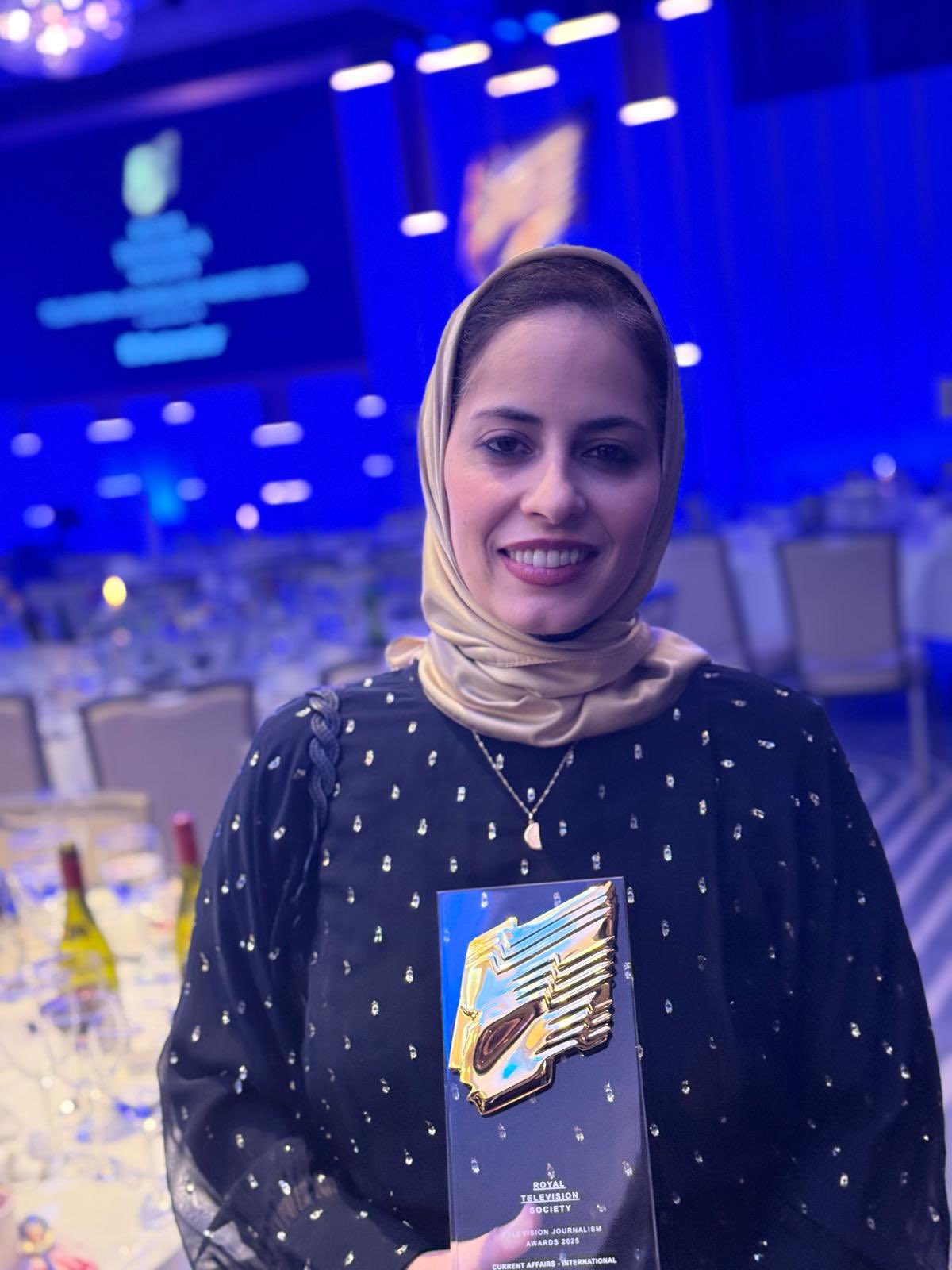
Very proud of my daughter Laila. She is the Executive Producer of Al Jazeera English Flagship ‘Fault Lines.’ Last night, she and her team won the 2025 best documentary award from the ‘Royal Television Society’ in London. The documentary was on the Gaza genocide and titled ‘The Night Won’t End.’

Congratulations to Laila and her team! May the suffering of Gaza and its valiant people end soon. Here is the link to this very powerful documentary.

Continue reading
War Ravages Through The Eyes of a Gazan Photographer

By Maria Weldali 

Through the lens of a dedicated Gazan photojournalist, each frame tells a story—stories of resilience, struggle, and hope that are often hidden behind the walls of Gaza. These images, steeped in the silent testimony of daily life amidst conflict, capture moments that the world has yet to fully recognise.

“In this series, every photograph is not just a visual record; it’s a portal into the untold experiences of life under siege. It invites us to explore the profound realities woven into the fabric of an ongoing struggle,” said Gazan photojournalist Mustafa Hassona in an interview with The Jordan Times during the Xposrue exhibition in Sharjah.

Featured in both local and international media, Hassona’s photography offers a vital chronicle of the Gazan community’s enduring spirit. His work shines a light on stories of loss, perseverance, and the relentless pursuit of a better future.

Hassona’s achievements include being named The Guardian’s Best Photographer in 2015 and 2018, as well as winning the POYi 73 prize.

Endurance of a Child

Discussing his photos, Hassona revealed the subtle emotions captured in the faces of everyday Gazans. One of his most iconic images depicts a young child, clutching a plastic chair amidst the wreckage of war—his only shield against the brutality that surrounds him.

“When missiles tore through homes and lives, this flimsy piece of furniture became the child’s last line of defence in a world that had already abandoned him,” Hassona recalled, his voice filled with both sorrow and admiration for the child’s enduring strength. 

Amidst the Rubble: The Indomitable Spirit of Gaza’s Female Doctor

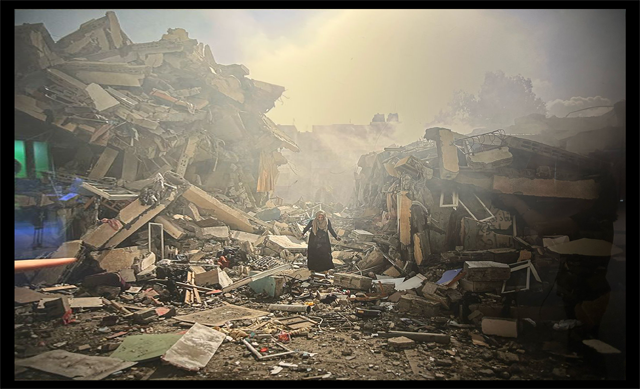
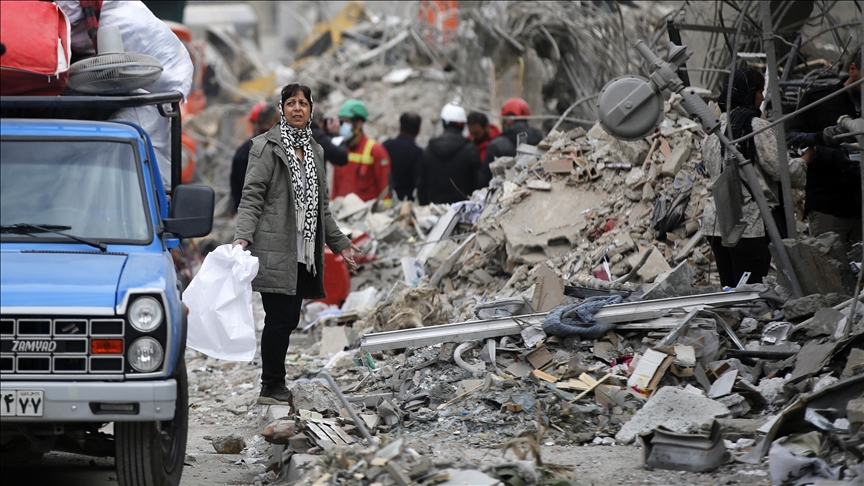
One poignant story Hassona captured revolves around a Palestinian doctor who, after spending much of her life in Belgium, returned to Gaza following her daughter’s marriage in the enclave. Liquidating all her assets abroad, she purchased an apartment in the Al Zahra Building Complex, a sprawling development of 70 high-rise buildings. For her, this wasn’t just a property purchase—it was a powerful act of reclaiming her identity.

Amid the ruins of her once-thriving community, she grieved the loss of a vibrant neighbourhood and the warmth of family gatherings, now buried beneath the rubble. “With only a single bag containing her certificates as a tangible link to her past, her story reflects the ongoing struggle of Gazans—a narrative marked by sacrifice, loss, and an unyielding hope to rebuild what has been shattered,” said Hassona.

“Her story is one of unyielding courage and resilience, a testament to the strength of Gaza’s people in the face of insurmountable adversity.”

Continue reading
Art, Dark Satire, and a Voice For Palestine

Erkul’s illustrations blend satire with activism, highlighting injustice of the Palestinians. Whether addressing war, disaster, or political hypocrisy, Erkul’s art amplifies the voices of the silenced.

Yusuf Kamadan

By Yusuf Kamadan

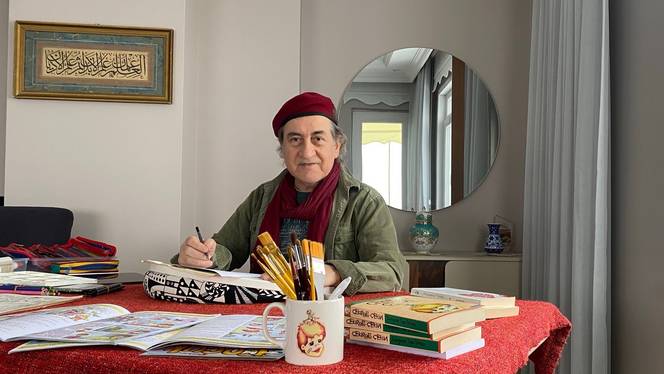
A slice of watermelon pierced by knives. A faceless figure in a suit, draped in the American flag, steering a cart off a cliff and into the flames. A set of scales, balancing Hitler on one side, Netanyahu on the other. A shapeless globe, caught in the grip of a monstrous, many-limbed octopus.

These are the unmistakable images of Muammer Erkul, the Turkish illustrator and journalist whose work—at once bold, unflinching, and darkly satirical—has spread widely across the social media. His drawings do not whisper; they speak loudly.

The satire is biting, but the implications are serious. At a time when many artists sidestep controversy, wary of political consequences, Erkul embraces it.

“I have an idea and I want to convey it to the other party. I want to pass on my feelings. One of the most effective ways to do this is to draw a cartoon,” he says.

His illustrations have become a kind of visual journalism, a counter-narrative to the political abstractions that often obscure the human cost of war.

With sharp lines and unflinching commentary, Erkul captures the resilience of Palestinians amid oppression.

Since the 1970s, Erkul has carved out a space for himself in Turkish newspapers and magazines, his work known for its wit, precision, and unrelenting social critique.

His drawings do not merely document suffering; they bear witness.

Scenes of bombed-out homes, grieving mothers, children clutching stones — his work captures the devastating realities of occupation while also portraying the quiet, stubborn resilience of a people who refuse to be erased.

“Millions of Palestinians have lost everything — their homes, their families, their lives,” Erkul says. “More than 150,000 bodies have been destroyed, and 50,000 of them have been martyred—most of them children and women.”

His words, much like his art, do not flinch from the brutal arithmetic of war. Beyond his artistic talent, Erkul has always used his work as a platform to address important issues.

Erkul’s art merges satire with activism, amplifying the voices of the oppressed through powerful imagery.

Why cartoons?

For Erkul, caricature is more than just a humorous art form; it is a means of resistance.

“Caricature is the easiest and most effective way to explain some things,” Erkul says. “A cartoon is drawn in a day and understood in an instant. It’s like the longest-range missile, and it sticks to its target.”

In an age of social media, where information moves at a breakneck pace, this immediacy is crucial. A single drawing, shared widely, can cut through the noise in ways that editorials and essays often cannot.

“I have an idea, and I want to convey it,” he says simply. “One of the most effective ways to do this is to draw a cartoon.”

Erkul has long been engaged in magazine publishing, serving as the editor-in-chief of Divanyolu, a cultural and literary magazine, until 2018.

Following the devastating 2023 earthquake, he shared his artwork on social media and made it freely available to magazines, believing that art can serve as a powerful tool for remembrance.

Reflecting on the disaster, Erkul described it as one of the most catastrophic earthquakes in history, emphasising its unprecedented scale and impact.

He recalled the initial shock and fear that gripped him, along with the overwhelming sense of helplessness. Wanting to contribute in a meaningful way, he turned to his art, realizing that while the disaster would eventually fade from public memory, visual documentation could ensure that future generations would not forget.

Early in his career, his cartoons blended humor with cultural commentary, but over time, his focus sharpened, his pen increasingly turned toward the struggles of the Palestinian people.

A single cartoon can convey what words cannot — Erkul’s work strikes at the heart of injustice with visual precision.

“Art is not neutral; it must take a side”

Erkul is not just chronicling injustice, he is building solidarity.

His illustrations are not just critiques; they are rallying cries. Erkul’s work does more than capture the suffering of Palestinians — it interrogates the machinery that sustains it.

His cartoons often expose the uneasy entanglements between Western nations and Israeli aggression.

“Everyone knows the closeness of the US and Israel,” he says. “But never in any period of history has this secret game been played so openly. It’s a chicken-and-egg story — an Israeli egg hatches from an American chicken, an American chick hatches from an Israeli egg, grows up, and lays Israeli eggs again.”

He believes artists have a responsibility to engage, to use their platforms to amplify the struggles of the voiceless. In his view, art is not neutral. It must take a side.

For Erkul, that side has always been clear: art is not just a means of entertainment; it is an act of defiance against injustice.

Art is not neutral; Erkul uses his pen as a tool of defiance against global injustice.

In his view, every artist has a responsibility to stand for justice and use their craft to fight against oppression.

His work is particularly significant in an era where digital media spreads messages rapidly, ensuring that his depictions of Palestinian suffering and resilience reach a global audience.

His legacy is not just one of artistic achievement, but of moral conviction.

His pen, like the voices of Palestinian poets, filmmakers, and musicians, is a tool for preserving memory, for fighting erasure. He firmly believes that the more artists engage with these issues, the stronger the message becomes.

“The more cartoonists and artists we have, the stronger our ideas will be,” he says.

TRTWorld

Continue reading