Memorizing The 1967 War Defeat!

By Dr Khairi Janbek

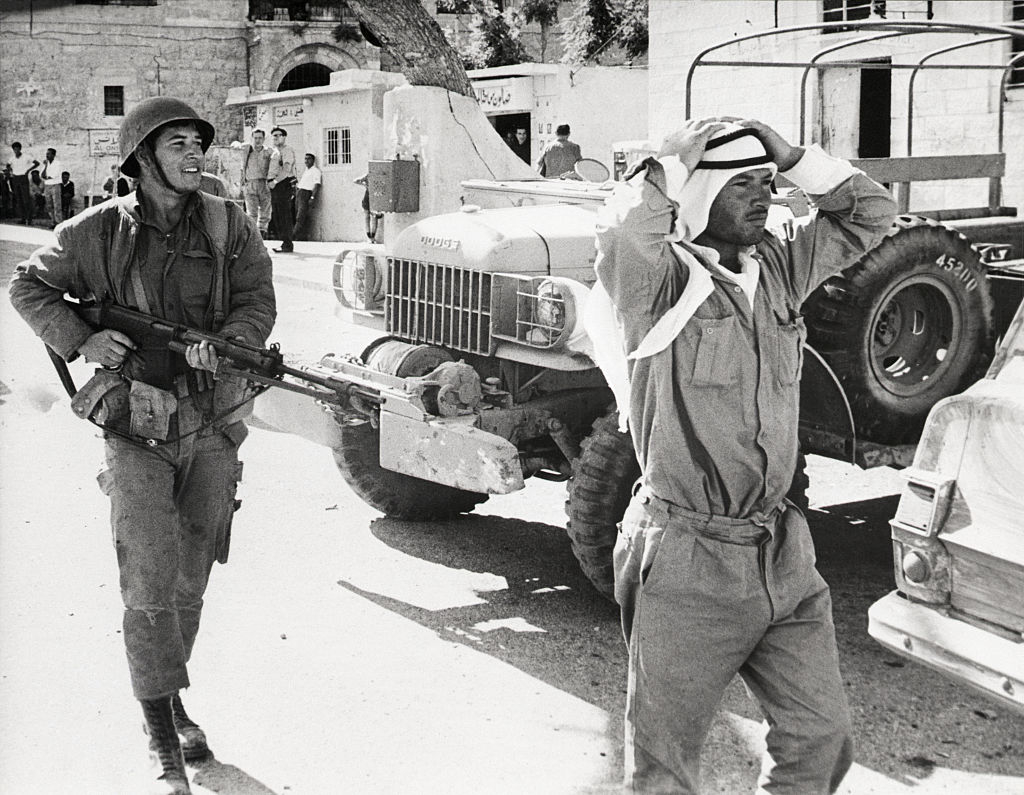
What can one say about the defeat of 1967 war, more than what the experts, the memoirs, and the active participants in it have said and written already, save from the eyes and ears of a child; for after all one was a child at the time and one must admit that growing up with defeat did have profound effect on one’s developing personality.

As it happened, in fact we were on a family holiday driving to Turkey when we heard the first actions in the war. By the time we crossed Damascus towards the north, the car radio was blasting with the advances made by the Arab armies on the path towards liberating Palestine.

However, by the time we reached an area close to the Syrian-Turkish border somewhere near Jabla in Syria, we discovered the the border was closed on the Syrian side and people including my late father were stuck around the big radio in the small roadside hotel talking about the destruction of the Israeli military forces, and the remarks that in a couple of days, Israel will cease to exist,

But low and behold, after a few days and by the time the border was opened, Egypt had lost Sinai, Syria, the Golan Heights, and Jordan the West Bank and Jerusalem; the jewel in the crown.

The car was tense, and for the first time I was disappointed, not because of the news of defeat rather, rather because I was no longer the centre of attraction for the family. As we entered Iskenderun in Turkey, a couple of young men crossing the streets, seeing our car number plate in Arabic, spat on the ground and said in Turkish; Pis Arap, meaning dirty Arab.

I didn’t undrestand Turkish at the time, until my father smiled bitterly and said, so we have just become dirty Arabs. In the small hotel in Iskenderun owned by a generous Armenian family, they brought us their transistor which could catch Syrian broadcasts and heard my father saying Nasser has resigned, and I was wondering how could he do that. For me, Nasser’s image was a cross between a king and an idol football player.

By the time we reached Ankara, it was all over. We were nothing in the eyes of the Turks at the time, but lying impotent Arabs. As the years passed, maturity set in as a strong slap in the face, with my childhood’s main scar left inside me, engulfing me with doubt, and disbelief, not only regarding what I now hear but also in what I see: with Arab politics to me, becoming just a mixture of cynicism, blatant lies, and regimes self-preservation.

The disaster from top to bottom was, unqualified military officers in Egypt, only accustomed to internal security and privileges were punching above their weight and carrying ranks which were above their undrestanding of warfare. Their ignorance was stark obvious when they knew about the attack and opted for absorbing the first blow before counter-attacking, not knowing they’ll have nothing left to counter with.

Jordan was squeezed between the hammer and the anvil diplomatically, though there were voices among the statesmen at the time urging not to participate in the impending whilst recognizing the perils, yet the decision to participate in the war and opening the Jordanian couldn’t be avoided because first of all the belief in Nasser’s victory held sway among the people, and secondly, to imagine an Arab defeat would not spare Jordan who will be blamed for this defeat due to the lack of giving support in the war.

In the case of Syria, how could an army in which the first officer who wakes up before the others and carries out a coup d’état, fight a war; and how could an army in which a general has to walk behind the coup d’état lower ranks whom are only concerned about preserving their own hold on power, conduct warfare? In fact the fall of the Golan Heights was declared by the Syria representative in the UN, 36 hours before it actually fell. And why was this? All in aid for withdrawing the army to protect Damascus.

Has anything changed? Everything has changed so that nothing changes!

Dr Janbek is a Jordanian writer based in Paris, France

Continue reading
Gaza: Changing The Middle East Face

By Mohammad Abu Rumman

The Al-Aqsa Flood operation marked a turning point in the modern political history of the Middle East. Its repercussions have gone far beyond the Palestinian and regional arenas, extending to the international system and reshaping the foreign policies of global powers toward the region.

The timing of the operation was particularly significant: it came at a transitional moment in the regional order, in the absence of consensus among international and regional actors on the rules of the game. While a fragile balance of deterrence existed between the so-called “Axis of Resistance”—led by Iran (alongside the Syrian regime, Hezbollah, Shiite political forces in Iraq, the Houthis in Yemen, and Hamas and Islamic Jihad)—and Israel, the latter was in the midst of a new phase of regional integration through the Abraham Accords.

Several Arab capitals had already normalized relations, and others were on their way, creating an unprecedented political landscape. This shift coincided with the declining influence of traditional Arab powers such as Egypt, Iraq, and Syria, and the rising centrality of the Gulf states. Many analysts began describing this new configuration as a “New Middle East”: wealthy, economically driven, and detached from historical conflicts—unlike the “Old Middle East,” where entrenched crises defined politics.

Turkey, meanwhile, had entered its own phase of recalibration. Once a champion of the Arab Spring and regional Islamist movements, Ankara sought reconciliation with Arab states, even attempting to restore ties with Bashar al-Assad’s regime (though rebuffed by Damascus), while focusing more narrowly on national security and northern Syria.

On the Palestinian front, Israel had grown complacent toward Gaza, convinced Hamas had no incentive to disrupt the status quo. Tensions, however, were mounting in the West Bank, with small armed groups emerging in places like Nablus, Tulkarm, and Jenin. Within Israeli and Western policy circles, talk was spreading about the prospect of a “mini-state in Gaza” as a substitute for a Palestinian state.

At the international level, President Joe Biden’s administration lacked enthusiasm for either the Abraham Accords or Trump’s “Deal of the Century,” yet it effectively followed the same trajectory: pursuing “regional peace” by integrating Israel into a new economic order and reducing the Palestinian question to daily livelihood concerns—employment, services, and economic relief in Gaza and the West Bank—rather than a political resolution.

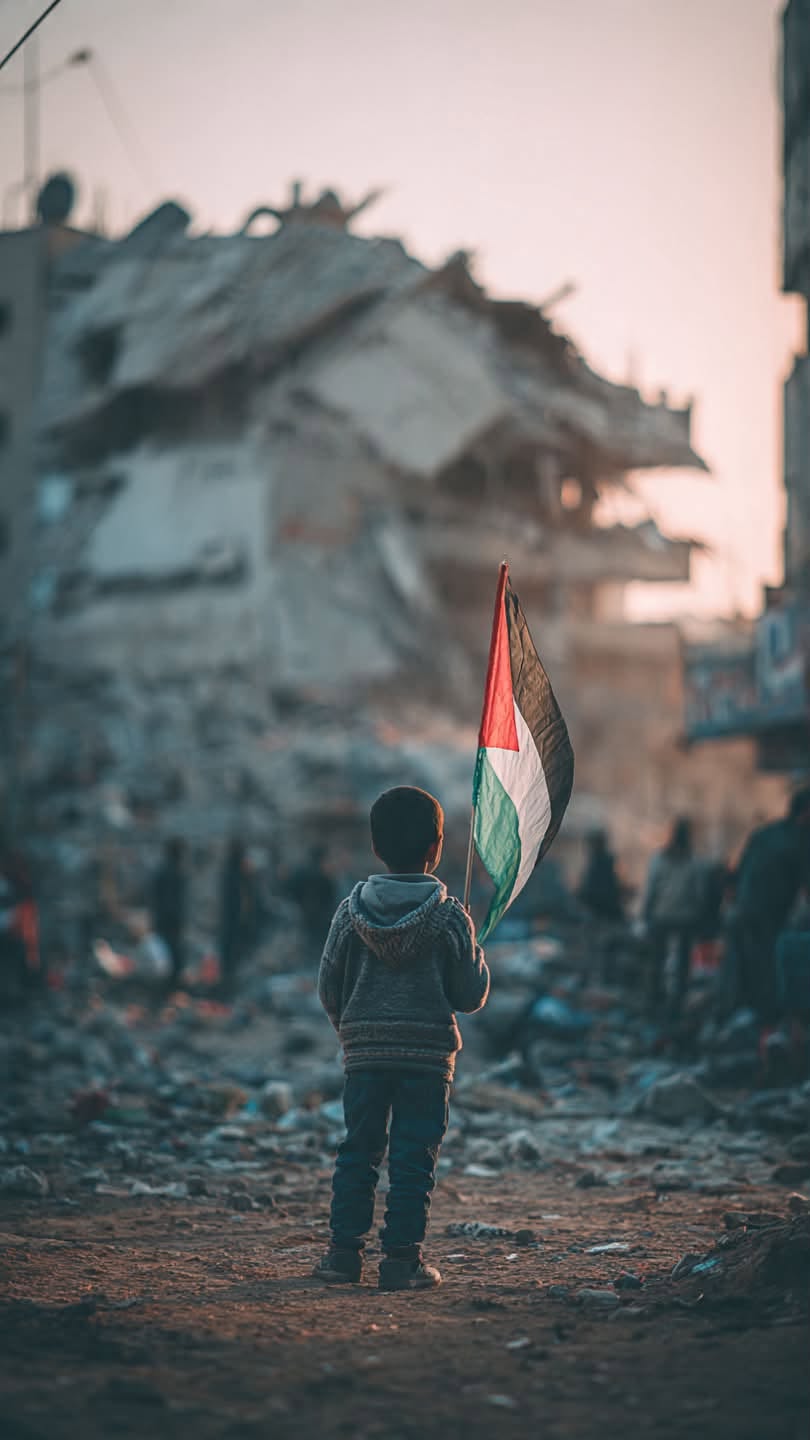
The Al-Aqsa Flood and the subsequent two-year genocidal war in Gaza shattered these calculations and fundamentally restructured strategic assumptions. Whether the outcome will ultimately benefit or harm the Palestinian cause remains too complex to assess in simple terms, but what is clear is that the pre-October 7 regional order no longer exists.

From a Palestinian perspective, the conflict has restored international attention to the cause, leading to a renewed recognition of its centrality. In the Gulf, the previously dominant security paradigm—which cast Iran as the chief threat while framing Israel as a potential partner—collapsed entirely. A new consensus has emerged: Gulf security is inseparable from the Palestinian issue, and the notion of Israel as a “strategic friend” has been critically reassessed.

Skeptics may argue that these shifts have not altered the balance of power on the ground, and they are partially correct. Yet the strategic narrative has changed. Before October 7, the trajectory was toward the erasure of the Palestinian cause (closing UNRWA, moving the U.S. embassy to Jerusalem, normalization, and de facto annexation of the West Bank). Today, there is growing recognition—regionally and internationally—that Israeli policies themselves are the root of instability, not Iran or other regional actors. As Emirati political scientist Abdulkhaleq Abdulla put it on X (September 25): “When weighing who poses a greater threat to Gulf security and regional stability—Iran or Israel—the evidence points clearly to Israel. Israel’s brutal behavior has made it more dangerous than an exhausted Iran. The Gulf needs a new defensive and geopolitical strategy for the Middle East beyond Iran.”

Israel, however, now perceives a surplus of power and is pressing for a new political and security order that extends beyond the occupied territories. With the partial unraveling of the Iranian alliance and the breakdown of the “Syrian corridor” that once linked Tehran to the Mediterranean, Israel has set its sights on even more ambitious goals, including the proposed “David Corridor” and establishing buffer zones around its borders in Syria, Lebanon, and Gaza.

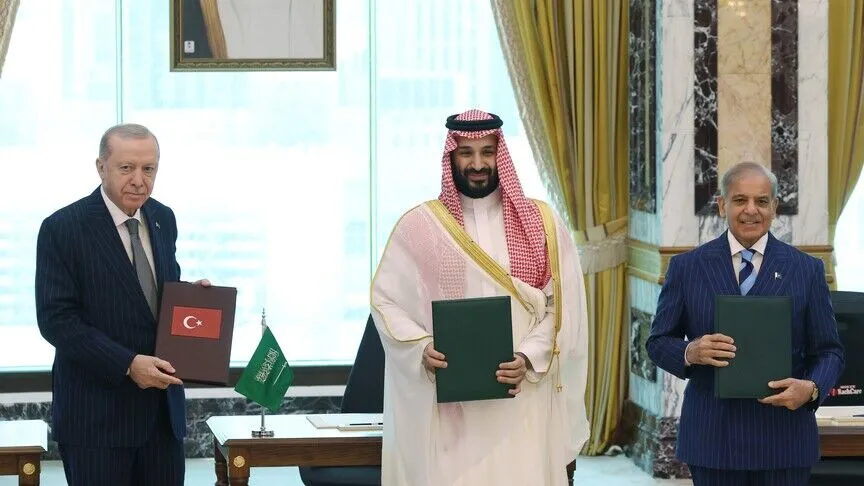
In response, a tentative regional coalition has begun to take shape, bringing together Saudi Arabia, Egypt, Jordan, and Qatar, with notable support from Turkey and Pakistan. The latter signed a defense pact with Saudi Arabia following Israel’s strike on Qatar and has since become more engaged in regional diplomacy. While fragile and constrained, this alignment presents a rare historic opportunity to rebuild a regional balance of power and establish a new deterrence framework.

Another striking development is the shift in Europe’s stance toward Israel. For the first time, Israel has lost significant ground in Western public opinion and media narratives, particularly among younger generations and in universities. This has pushed Israel closer to isolation—a position from which former U.S. President Donald Trump had tried to rescue it through his proposed Gaza peace plan, which was largely about securing U.S. and Israeli interests, without offering real guarantees for Palestinian statehood or ending the occupation.

In conclusion, it is still too early to judge the full strategic consequences of the Al-Aqsa Flood and the war in Gaza. Scenarios remain open, and outcomes uncertain. Yet one thing is indisputable: the region today is no longer what it was before October 7.

Abu Rumman is an Academic Advisor of the Politics and Society Institute and Professor of Political Science in The University of Jordan and published this article in The Jordan Times.

Continue reading
Israel is Exporting its “Crises” to Syria – Experts

Syrian political analysts are warning that Israel is seeking to export its internal crises to Syria, following its military failure in the Al-Aqsa Flood battle in Gaza. They add Tel Aviv wants to fuel regional tensions to divert attention from its worsening internal crisis.

Weakening Syria to unite the Israelis

Member of the Syrian National Dialogue Conference Abdul Nasser Hawshan believes the recent Israeli escalation “aims to prevent the establishment of a strong Syrian state and destabilize the region,” adding the Israeli occupation government is trying to unite the Israelis behind it to escape the increasing internal and international pressures it is facing.

https://twitter.com/Dylanjusti79850/status/1895386169812361434

Hawshan told Quds Press, the recent National Dialogue Conference held in in country witnessed a national consensus on the unity and independence of Syria, and the rejected partition projects as espoused by the Syrian Democratic Forces (SDF). He described such a project as a “separatist” one that “serves the Israeli agenda.”

He also pointed out that the Israeli incursions into southern Syria came “in response to this popular rejection of foreign plans.”

Druze position and rejection of Israeli intervention

Regarding the Druze community’s position in these developments, Hawshan explained that “some Druze leaders have adopted a discourse in line with the Israeli proposal,” but he stressed they “do not represent the Druze sect in general, which rejects any foreign intervention in Syrian affairs.”

He also denied the possibility of establishing the so-called Daoud Crossing, which links Israel to the areas under the control of the SDF, stressing “this project will not succeed under any circumstances.”

Irksome Turkey-Israel ties over the SDF

Political analyst Adel Hanif Daoud believes Israel is trying to exploit regional tensions to strengthen its position as an effective force, despite its escalating political and military crisis.

But Daoud warned that “any Israeli attempt to link the Druze and the SDF through the Tanf crossing could lead to an inevitable military confrontation with Turkey.” He noted Ankara considers the “Syrian Democratic Forces” a direct threat to its territorial integrity, and may resort to large-scale military intervention even if that leads to an international conflict.

He added the Druze leadership is divided between those who support Israel and those who are loyal to Damascus, but he expected that Druze leader Kamal Jumblatt would intervene to pressure the Druze community to reject the Israeli project.

As for the Turkish position, Daoud indicated that Ankara, as a member of NATO, has many political tools that it can use before resorting to the military option.

Military escalation in southern Syria

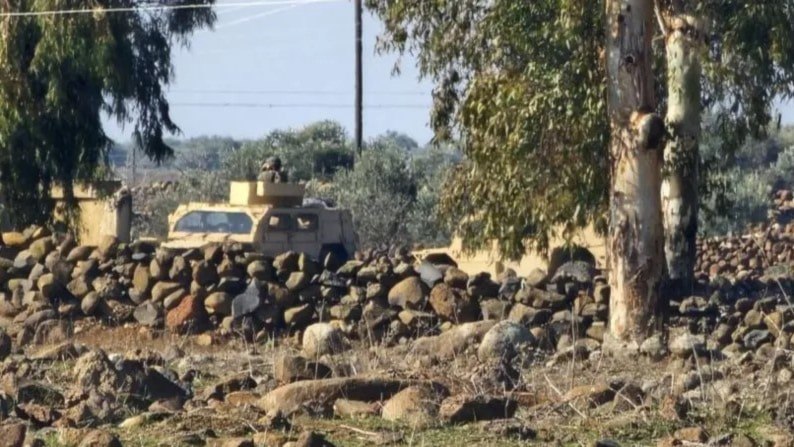
These warnings come in light of the escalation of Israeli military violations in southern Syria, as the occupation forces have intensified their airstrikes on sites in the Damascus countryside and Quneitra in recent weeks, targeting military and civilian infrastructure. Unprecedented Israeli military movements were also monitored along the occupied Golan Heights, amid reports of limited ground incursions.

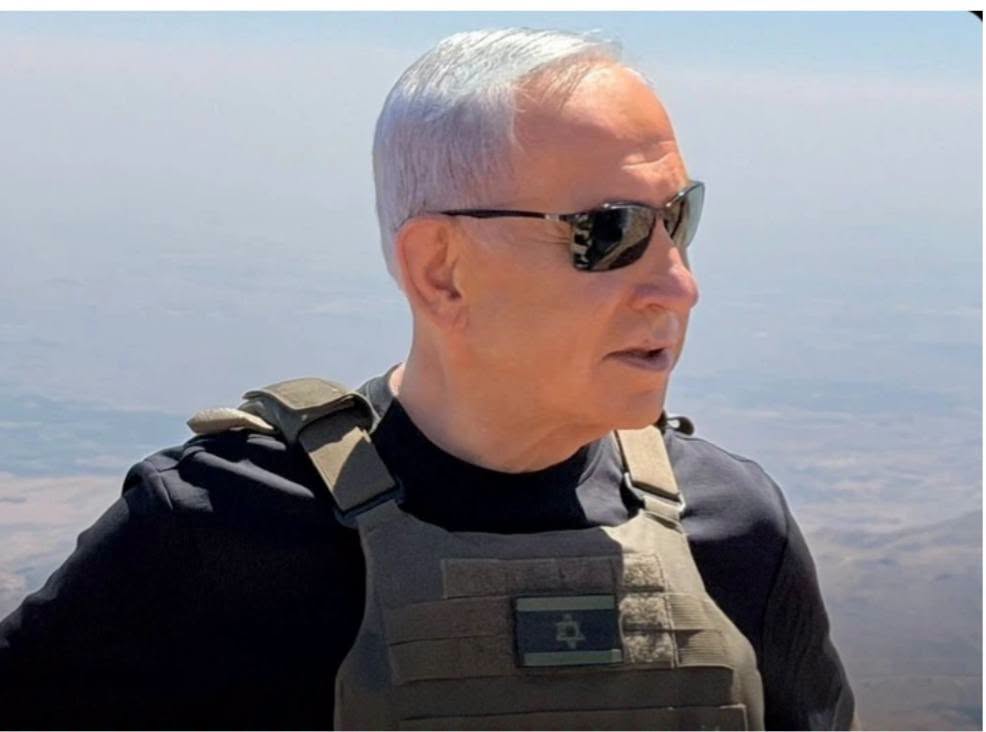
In this context, Israeli Prime Minister Benjamin Netanyahu escalated his rhetoric, stressing that his army would not allow the Syrian army or its allied forces to enter southern Syria, stressing Tel Aviv would not back down from its control of Mount Hermon, considering it a “strategic part of Israel’s national security.”

Damascus rejects Israeli aggression

For his part, Syrian President Ahmed al-Sharaa stressed his categorical rejection of these attacks, considering them a threat to regional security and a continuation of the policies of aggression against Syria’s sovereignty.

In light of this escalation, Syria continues to defend its sovereignty and rights, while calls are increasing for the international community to act to stop Israeli violations, amid growing complications that threaten the stability of the entire region.

Continue reading