Trump, Netanyahu Rift Hits Rock Bottom: View From Amman

By Saleem Ayoub Quna

The Epic Fury Operation launched by the US against Iran in February 2026, will go down in modern history as the first open military conflict, where a superpower like the United States, has willingly and openly played the role of a war-proxy, on behalf of its smaller ally, Israel.

The difference of attitude between the two close allies, US and Israel, in relation to what they perceived as Iran’s threat, imminent or potential, was a key factor behind the gradual crumbling of the American-Israeli coordinated military and intelligence efforts, to bring down the regime in Tehran.


Israel under Benjamin Netanyahu’s extreme right-wing government, kept saying Iran posed an imminent existential threat to Israel, and therefore it must be brought down by force. While the US position was constrained by its previous international commitments on the issue of Iran’s nuclear ambitions, as stipulated in the 2015 Joint Comprehensive Plan of Action (JCPOA), signed between Iran and the P5+1 powers, during the administration of President Obama.


Since that moment Netanyahu kept vigorously urging, more likely lecturing the US and the West, on the dangers of the JCOPA agreement. When Donald Trump was elected President in 2017, things took an important and completely different turn. In the following year, he took the United States out of that internationally-backed deal as he had promised to do during his election campaign. He also kept his promises of moving the US Embassy to Occupied Jerusalem and recognize the occupied Syrian Golan Heights as part of Israel.


These symbolic and important gestures, whetted Netanyahu’s appetite for more American concessions to Israeli demands.


Netanyahu’s golden opportunity came when Trump was re-elected to his second term in 2023, the same year when Hamas launched its massive assault on the Israeli settlements in the so-called “Gaza enevlope”. Other militias connected and supported by Iran, including the Houthis in north Yemen, Hezbollah in south Lebanon, Syria under the previous regime and Shia factions in Iraq coordinated their efforts to stand by Hamas during that long and unprecedented confrontation with Israel.

For its part, Iran did not shy from making it clear that it helped create this “chain” of resistance factions to encircle Israel from three directions.

The second turning magical point in the US position on the issue of direct military intervention against Iran came about when Israel succeeded in serving Hezbollah, the severest military blow ever, in the pagers’ operation and the subsequent assassination of Hezbollah’s top leaders, including its charismatic Secretary-General Hassan Nasrallah on Sept 27, 2024.


Trump was very impressed with all of that Israeli action and Netanyahu gave himself the full credit for this unexpected success.


Accordingly, Netanyahu’s plan to Trump was simple. Based on the Israeli accumulated intelligence and expertise on the Iranian internal scene and emulating its operation against Hezbollah leaders in Lebanon, accompanied by massive American air strikes would provide both allies with the best chance to finish the Ayatollahs in Tehran once and for all!


But as events unfolded, all of Netanyahu’s plans, personally and strongly endorsed by Trump and his military aides, suddenly started crumbling, one after the other. His relations with Trump slipped into stages of deterioration by the day and week as the closure of the Hormuz Strait by Iran, started hurting the world economy led by the US.


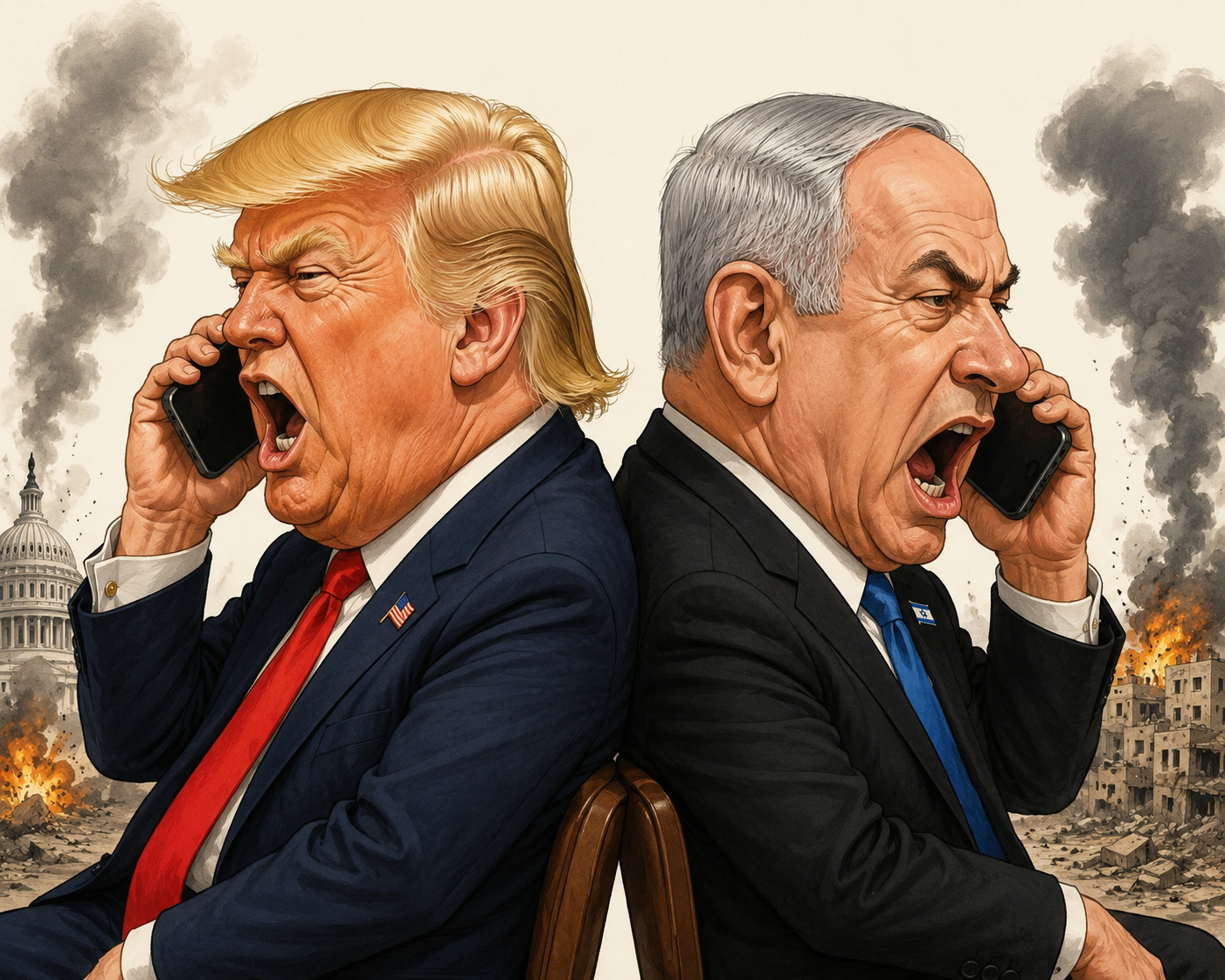
Here new red lights went on and the phone calls between the two men became more intense and vulgar. Then Trump decided to pass on the torch to his deputy, JD Vance, who seemed comfortable to tell Netanyahu what Trump avoided to do!


Conclusion: It is tricky to switch roles of allies in wars. A smaller entity can always stay safe as long as its leaders know the limits of their power and leverage. When people like Netanyahu think they have more power and clout than they actually have, versus their stronger ally, then irritation starts to brew, especially in the case of Trump who likes to show he is always in the driving seat. It also means that the leadership on the side of stronger partner has some problems of its own!


Whether it is a wrangle, rift, collision, divorce or worse between Trump and Netanyahu, we will not know for certain, until the negotiators in Switzerland close their files and head back home!
Continue reading
Netanyahu Has Irked Trump. Why?

What should one make of the recent White House meeting between US President Donald Trump and Israeli Prime Minister Benjamin Netanyahu?

Well, this time Netanyahu was almost summoned to the White House to be told few home truths. This meeting was not like the first time when Netanyahu came to the White House in early February when it was all glow to be unexpectedly told that Trump wants the USA to take over Gaza.

This time around, the meeting was more subdued, almost in a rush, like an after-thought on the part of Trump who keeps chopping and changing as he figures out how he wants to conduct America’s foreign policy in his second “robust” administration.

This time around, although Trump displayed the usual friendliness to Netanyahu, he was somewhat distant because of the tariffs the White House is set upon to start imposing on the rest of the world including best-friend Israel. Its leaders, businessmen are still in shock because Washington has slammed a 17 percent tariff on its products entering the United States.

Israeli industrialists continue to be up-in-arms. It was they who appealed to Netanyahu to seek Washington clarification because they argued that the new tariffs will cost them up to $3 billion in losses, reduce Israeli exports by 26 percent and increase unemployment by 26,000. They are already in a bad situation because of the war on Gaza but this latest step will surely cripple them.

At the White House meeting last Monday, with a chitchat in front of the cameras that looked as if it was a rehearsed meeting with Trump dominating the conversation and everyone taking their que to speak only when they are told, he pointed out to Netanyahu that he “may not” consider reversing tariffs on Israeli exports because “we give Israel $4 billion a year. That’s a lot.” He really sounded like lecturing to the Israelis.  

For a man considered to be greatly influenced by the Israeli lobby that seemed to be tough talking for in the immediate conversation Trump told Netanyahu that there would be and for the first time direct face-to-face talking with Iranians about their nuclear file.  

This seemed to be another unsuspecting blow. If there was a “shock” on his face, Netanyahu didn’t show it as he just nodded; the Israeli Prime Minister was looking for a tough military stance on Iran, possibly going to war and striking the country’s nuclear facilities. It was he, who persuaded Trump in 2018 to exit from the 2015 nuclear deal brokered by the UN with other world powers of Britain, France, Russia, China and Germany at the behest of the Barack Obama administration.

Now with Trump in the driving seat, and wanting a “tainted-Donald” deal, Netanyahu couldn’t but agree with an alluring American president. If he had any misgivings, he kept them to himself except to say Tel Aviv and Washington had an objective not to let Iran have nuclear weapons, but Tehran constantly said and throughout the past years that their nuclear program was for peaceful purposes unlike the clandestine extensive Israeli nuclear program.

Although he may not have outwardly shown it, Trump may have been a little irritated by Netanyahu in other ways. Take Gaza for example when Israel restarted its war on the enclave on 19 March exactly two months after a ceasefire took effect ending a 15-month genocide and which was brokered by Trump and his team lead Steve Witkoff.

The recent talks in the White House, and shown in front of the cameras suggest Trump would have like more time for the Doha negotiations to take hold between Hamas and Israel to see the release of the 59 remaining hostages – which include one American who is still deemed to be alive – hidden in the Gaza enclave.

The relaunching of the war, and so quickly, and with the breaking of the 19 January ceasefire is adding to the tension between Washington and Tel Aviv and is sending signals that Netanyahu wants to continue the war in Gaza and doesn’t particularly care about the remaining hostages, and whether they come out of their nightmare dead or alive.

Trump, and as shown by the White House meeting, is showing a diversion from thoughts projected by Netanyahu. As well as Iran, he has told Netanyahu, he favors Turkish President Recep Tayyip Erdogan and that he has a ‘very, very good relationship with Turkey and with their leader…”, adding that “I happen to like him, and we never had a problem” and he offered to mediate between Israel on any problem between the two countries.

Such words may have suddenly added to the glum mood of the Israeli PM who fears that Turkish influence in Syria despite the fact it is Israel that is today bombarding different Syrian cities and occupying parts of their territory, a situation that increased after the toppling of the Bashar Al Assad regime on 9 December, 2024 by a new government in Damascus, and which is seen as a threat to Israeli security by Tel Aviv.

What is worrying Netanyahu is the fact Trump recognizes Turkish influence and Syria and Ankara’s relationship with the new government in Damascus, and apparenty the man in the White House, is “ok” with it.

With all this going on, Netanyahu is not sure anymore of the way the White House is going despite the fact that Washington continues to be the main supplier of weapons to Tel Aviv. But with Trump as “fickle-minded” as he is, all cards are on the table for a new and changing relationship between the USA and the rest of the world with the strong possibility of including Israel in the new international set of thinking.

This comment is written by Dr Marwan Asmar, chief editor of the crossfirearabia.com website. 

Continue reading
S. African Ambassador Gets Huge Welcome After Expulsion by Trump

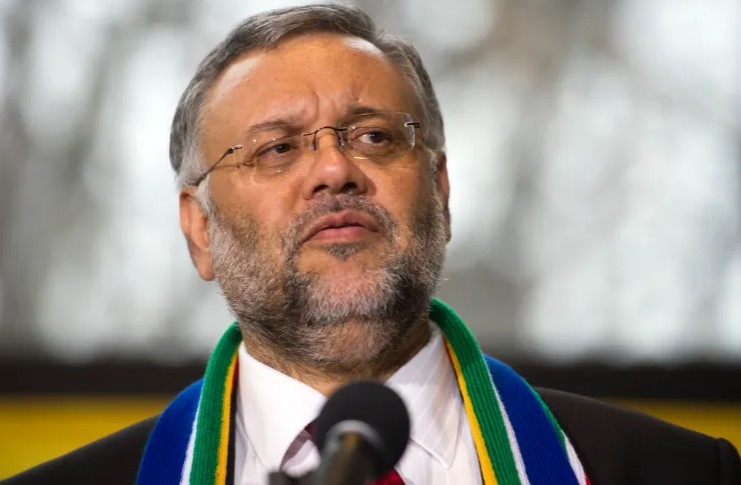
The South African ambassador, expelled and declared persona non grata by the Trump administration, received a hero’s welcome upon his return to Cape Town on Sunday, with hundreds of supporters waving Palestinian flags and chanting “Free Palestine.”

The crowds at Cape Town International Airport surrounded Ebrahim Rasool and his wife as they emerged in the arrivals terminal in their hometown.

“A declaration of persona non grata is meant to humiliate you,” Rasool told the supporters as he addressed them with a megaphone. “But when you return to crowds like this, and with warmth… like this, then I will wear my persona non grata as a badge of dignity.”

“It was not our choice to come home, but we come home with no regrets.”

Rasool also said it was important for South Africa to fix its relationship with the US after President Donald Trump punished the country and accused it of taking an anti-American stance even before the decision to expel Rasool.

Rasool was previously declared persona non grata. His return comes as US President Donald Trump has cut all funding to South Africa, a move widely seen as retaliation for Pretoria’s case at the International Court of Justice (ICJ), where it has accused Israel of genocide in Gaza.

They were the ex-ambassador’s first public comments since he was declared persona non grata, removed his diplomatic immunities and privileges, and gave him until this Friday to leave the US. It is highly unusual for the US to expel a foreign ambassador.

Rasool was declared persona non grata by US Secretary of State Marco Rubio in a post on X on March 14. Rubio said Rasool was a “race-baiting politician” who hates the US and Trump.

Rubio’s post linked to a story by the conservative Breitbart news site that reported on a talk Rasool gave on a webinar organized by a South African think tank. In his talk, Rasool spoke in academic language of the Trump administration’s crackdowns on diversity and equity programs and immigration and mentioned the possibility of a US where white people soon would no longer be in the majority.

“The supremacist assault on incumbency, we see it in the domestic politics of the USA, the MAGA movement, the Make America Great Again movement, as a response not simply to a supremacist instinct, but to very clear data that shows great demographic shifts in the USA in which the voting electorate in the USA is projected to become 48% white,” Rasool said in the talk.

On his return home Sunday, he said he stood by those comments, and characterized them as merely alerting intellectuals and political leaders in South Africa that the US and its politics had changed.

“It is not the US of Obama, it is not the US of Clinton, it is a different US and therefore our language must change,” Rasool said. “I would stand by my analysis because we were analyzing a political phenomenon, not a personality, not a nation, and not even a government.”

He also said that South Africa would resist pressure from the US — and anyone else — to drop its case at the ICJ accusing Israel of genocide. The Trump administration has cited that case against US ally Israel as one of the reasons it alleges South Africa is anti-American.

South Africa filed a case at the ICJ in December 2023, which accuses Israel of violating its obligations under the Genocide Convention in its war on the Gaza Strip. More than 10 countries have since joined South Africa in the genocide case.

Some of the supporters welcoming Rasool, who is Muslim, waved Palestinian flags and chanted “free Palestine.”

“As we stand here, the bombing (in Gaza) has continued and the shooting has continued, and if South Africa was not in the (International Court of Justice), Israel would not be exposed, and the Palestinians would have no hope,” Rasool said.

“We cannot sacrifice the Palestinians… but we will also not give up with our relationship with the United States. We must fight for it, but we must keep our dignity,” according to the Quds News Network.

Continue reading
Pezeshkian: Iran Will Not be Bullied, Tells Trump to ‘Go to Hell’

One couldn’t help but feel a tinge of pleasure in Iranian President Masoud Pezeshkian lashing out at Donald Trump. Without mincing his words, and certainly not sticking to diplomatic niceties, no doubt taking his cue from the new boss at the White House, Pezeshkian told the US president a few home truths.

Depending on the translation into English from Persian, he basically told the US president to “go to hell”. This is a phrase that is making great headlines all over the world for its intensity and meaning.

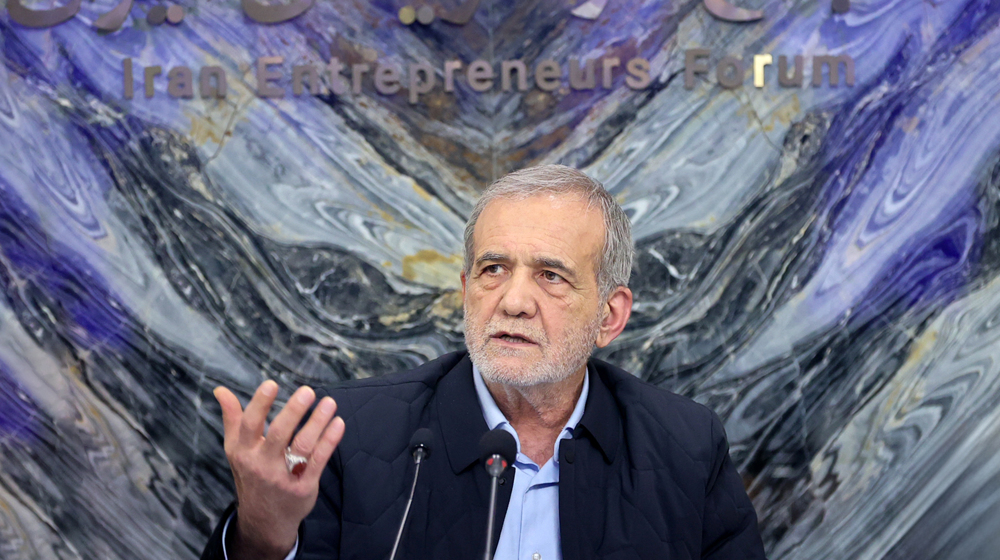
On its part, the social media is having a field day at Pezeshkian, to say the least “forthright” speech at the Iran Entrepreneurs Forum in which he lambasted Trump for the way he is called on Tehran to heed and either go back to the nuclear deal or face the mighty military of the United States.

He didn’t at all like how Trump framed his appeal for Iran to get back to the negotiations table  when he spoke nonchalantly that “there are two ways Iran can be handled: militarily or make a deal.”

In turn,  Pezeshkian and the Iranian leadership starting from Ayatollah Seyed Ali Khamenei to Foreign Minister Abbas Araghchi became particularly angry at this approach as Trump is now seeking to revive the 2015 Iran Nuclear Deal which he muzzled out of in 2018 during his first administration as one of the latest pieces of the US global, foreign and security policies.

Though denied by Iran, Trump said he sent a letter to Ayatollah Khamenei in which he told them to agree to a deal or face the military wrath of the United States with extended crippling sanctions on Iran’s oil sector, its exports and the shutting off of its global financing.

The subsequent utterings on the international media about Trump and his latest obsession in “controlling” the nuclear file of Iran has created a knee-jerk reaction among the country’s leadership which saw what Trump was doing was “coersive diktates” and imposition of maximalists pressure which today, they are in no mood to pay heed to because of so many factors including its ballistic missile attacks on Israel last October where up to 250 missiles landed on different sites of the country.

Pezeshkian, dubbed as a reformist president and one who is willing to listen, was startlingly critical at the way Trump invited, more like dictating, to get back to the nuclear deal under vastly different and stringent negotiating terms, and ones that would strip Iran of its nuclear aspirations and impose an additional and an even tougher monitoring and observation regime than the previously deal allowed for which Pezeshkian and other leaders rejected.

In plain, straight talking, again no doubt like Trump’s abrasive approach Pezeshkian leading a country on the threshold of becoming a nuclear power as many analysts suggest with more than 60 percent uranium enrichment capacity, said Iran would not negotiate with Washington while while being threatened. He essentially delivered the ultimate stab that the US president can “do whatever the hell you want”, as reported by the Iranian state media, Tuesday.

”It is unacceptable for us that they [the U.S.] give orders and make threats. I won’t even negotiate with you. Do whatever the hell you want”, Pezeshkian repeated at the behest of a country long standing up to the United States and to maintain cold and freezing relations with the United States.

Further, and to say the least, this was the ultimate snub delivered by the Iranian president who was in no mood to listen to the antics of the new US president wishing to wield his rhetorical stick around the world and was not afraid of telling him so.

Pezeshkian was especially irked him by the way Trump met the Ukraine President Volodymyr Zelensky in the White House recently calling it disgraceful and shameful and Iran would not listen to such talk as a way of moving the negotiations forward.

It was Trump, who initially pulled out of the Iran deal officially called Joint Comprehensive Plan of Action (JCPOA) signed by the then Barack Obama administration with international backing of five major UN powers including Russia, China, Britain, France and Germany in 2015.

Then Trump said the deal was a bad one and wanted to re-negotiate. But since taking the USA out of the deal, Tehran no longer found it necessary to continue to observe the strict regime imposed by JCPOA on Iranian nuclear facilities which slowly started to top up its uranium enrichment levels to where it is today.

As well, Pezeshkian was echoing the words of Ayatollah Khamenei who earlier rejected the prospects of direct talks, calling them neither “smart, wise nor honorable” while saying that Iran will not be bullied into negotiations.

This was seconded by Iran’s Foreign Minister Araghchi who made it perfectly clear on his X account that “we will NOT negotiate under pressure and negotiation, We will NOT even consider it, no matter what the subject might be, whilst emphasizing that dialogue must be rooted in mutual respect, not threats.”

For all the outward talk however, Iranian officials have stressed as they did so in the past that the country’s nuclear program has been always for peaceful purposes and is open about the country’s nuclear reactors and plants as proved in its current consultation with the different world powers of the United Nations Security Council.

The above-analysis is written by Dr Marwan Asmar, chief editor of the crossfirearabia.com website.

Continue reading