Four Days in Cairo: A Journey Into The Faces of Egypt

By Dr Marwan Asmar

EDITOR’S NOTE: This article has been made with the help of AI. I just fed it the information and it came up with the “writing glow”. I feel almost like an “information thief” but in today’s technological gadgetories we are bound to adopt. The question then becomes are we real writers or have we become mere hybrids? Can we call ourselves writers? But remember these technologies are only as good as the information we give them. I am consoling myself in a sense but I believe this is really a worthwhile article.

Some trips are remembered because of the places we visit. Others stay with us because of the people who shared them with us. Our four-day journey to Cairo was a combination of both. It was a family trip—my wife and I, our son who came from Germany to join us, three nieces and a nephew—and although it lasted only from 15 to 18 July, it somehow felt much longer. Cairo has that effect on you. Every day is crowded with people, places, sounds, history and impressions.

We left Amman in the early hours of the morning, when the city was still quiet, and a few hours later landed at the Cairo International Airport. Cairo was already awake and bustling.

A mini-bus was waiting to take us across the enormous city to the new and impressive Giza Palace Hotel. Plush, modern and comfortable, the hotel is an interesting introduction to the new face of Greater Cairo. Around us were wide highways, new developments and a city expanding relentlessly into areas that only a few decades ago were desert.

But we had not come to Cairo to stay inside a hotel. Our journey began almost immediately.

Wednesday: Into the Heart of Cairo

While the rest of the family followed their own plans, my wife and I decided to separate from the group and head straight back into Downtown Cairo. And there was really only one place to begin: The famous Tahrir Square.

Tahrir is more than a traffic circle or a public square. For anyone familiar with Egypt’s modern history, the name itself carries enormous significance. Yet standing there, what struck us first was not politics or history but Cairo itself.

Noise. Cars. Horns. People. Movement.

Cairo seems incapable of standing still. We managed to find a taxi and plunged deeper into the city toward Khan al-Khalili.

Here, Cairo changed again.

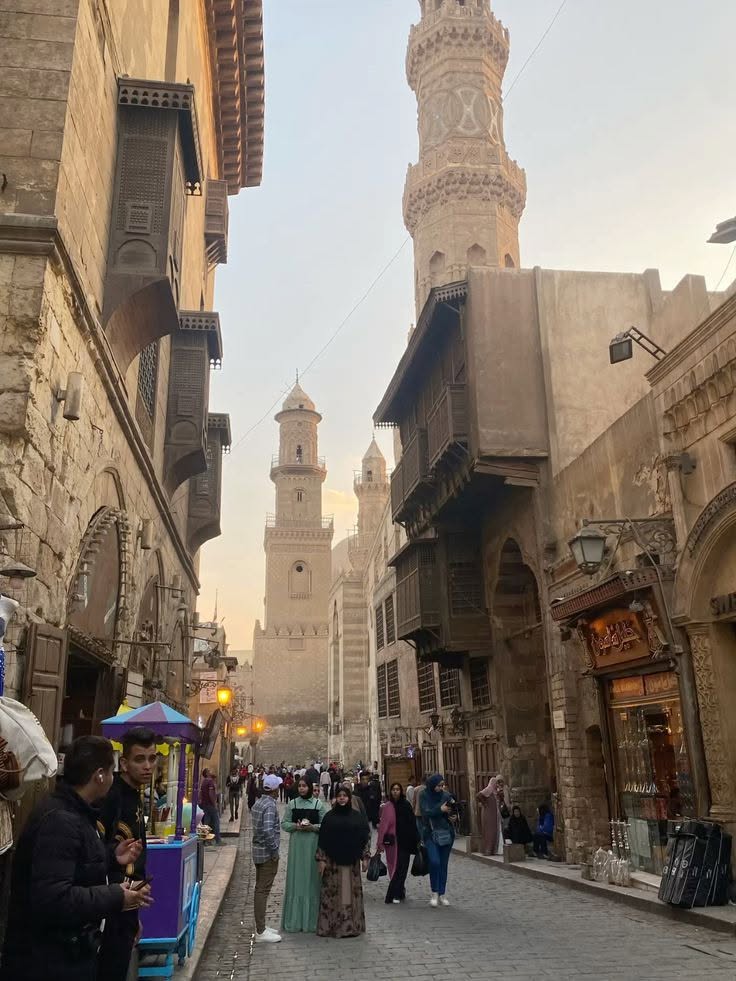
The broad streets of Downtown gave way to the atmosphere of old Cairo: Narrow streets, small shops, street sellers, cafés, souvenirs, lamps, jewellery, spices and people constantly negotiating, selling, buying and talking.

The street sellers were part of the experience. They called to us, displayed their goods and tried every possible way to persuade us to stop. There was something wonderfully theatrical about it all.

Khan al-Khalili is not a place to hurry through. You wander. You look. You bargain. And occasionally you buy something you never intended to buy.

Nearby stood another Cairo landmark: Al-Azhar, one of the great historic centres of Islamic scholarship. The mosques of the surrounding area were magnificent, and suddenly the commercial noise of the market existed beside another world of minarets, courtyards, stone and centuries of religious learning.

That is something Cairo does exceptionally well. It places different worlds beside one another without feeling the need to separate them.

By the end of the day, however, history, walking, traffic and the July heat had taken their toll. Exhausted but satisfied, we made our way back to the hotel.

Thursday: Mummies, Pyramids and the Nile

The following morning, Thursday, we rejoined the family.

Our first major destination was the National Museum of Egyptian Civilization, where one of the most memorable experiences was seeing Egypt’s famous royal mummies.

There is something difficult to describe about standing only metres away from the preserved remains of people who ruled Egypt thousands of years ago.

These were names we had encountered in books and documentaries, belonging to a civilization so ancient that it can sometimes seem almost mythical. Yet here they were.

The experience makes history unexpectedly personal.

From Egypt’s ancient rulers we travelled to the monuments that have come to symbolize their civilization throughout the world: Pyramids of Giza.

No number of photographs quite prepares you for the pyramids.

Their familiarity almost works against them. We have seen their triangular outlines thousands of times. But when you actually stand beneath them and see the enormous stones from which they were constructed, their scale becomes real.

And naturally, there were the camel owners.

They enthusiastically urged us to ride, adding another layer of noise, humour and negotiation to the experience. Around one of the world’s greatest archaeological sites, everyday Egyptian life continued at full volume.

That evening brought another change of atmosphere. We walked along the Nile near Zamalek.

The riverfront was alive. Families, young people, couples and tourists were everywhere. Restaurants and cafés were busy, while boats covered in lights moved along the water offering evening trips on the Nile.

After the dust and heat of Giza, the Nile provided a completely different Cairo—cooler, more relaxed and intensely social.

The city seemed to have come to the river for the evening.

Friday: Civilization, Salah al-Din and Another Cairo

Friday began with a visit to one of Cairo’s malls before we continued exploring the city.

We again encountered the enormous historical depth of Egypt through its museums, while our route also took us past the imposing Citadel of Salah al-Din.

The Citadel rises dramatically above Cairo, a reminder that this city’s history did not begin and end with the Pharaohs. Cairo is also a great medieval Islamic city, shaped by dynasties, armies, scholars, merchants and rulers who left behind mosques, fortifications and entire neighbourhoods.

By then, however, another important Egyptian experience was waiting for us: food. We stopped at a grand restaurant and enjoyed a hefty fish meal—the kind of meal that makes further sightseeing immediately afterwards seem unnecessarily ambitious.

Later, the rest of the family continued to Tagamoa El Khames (Fifth Settlement) and one of its large malls. My wife and I decided that we had done enough exploring for one day and stayed behind at the hotel.

Sometimes knowing when to stop is also part of travelling although one of my nieces later told me it’s a massive mall nothing like she’d ever seen before.

The Cairo Between the Monuments

Looking back, some of the strongest impressions of the trip did not come from any particular tourist attraction. They came from simply looking at Cairo and its people lounging about and going about their business.

The enormous highways were particularly striking. On one of my sojourns I counted up to 15 lanes of traffic, almost or more than the width of a football field. Modern Cairo has built an extraordinary network of wide roads, bridges and elevated highways cutting across and around the metropolitan area. They give the impression of a city determined to keep expanding.

Then there were the buildings. Tall residential blocks rose everywhere, many in dark grey colour that seems characteristic of parts of Cairo’s urban landscape. Some appeared unfinished; others seemed to merge into enormous working-class neighbourhoods stretching towards the horizon and on either side of a plush highway.

Then, sometimes only a short drive away, another Cairo appeared. Modern towers. Expensive residential developments. Shopping malls. Hotels. Landscaped compounds and impressive buildings.

The contrasts were impossible to miss, it’s a didactic Cairo.

Old and new. Rich and poor. Monumental and ordinary.

Ancient pyramids stand beside a modern metropolis. Medieval mosques exist amid the noise of cars and motorcycles. Working-class neighbourhoods stretch for kilometres, while new affluent districts continue to rise farther into the desert.

And running through it all is the wonderful blue Nile, nice to fathom rather than read about.

Perhaps this is what makes Cairo so fascinating. It does not present itself neatly to the visitor. It is noisy, crowded and occasionally exhausting. Its traffic can test anyone’s patience. On the city roads you have to learn to be patient. But it is a city that is also full of life.

Cairo does not whisper its presence, it echoes it and announces it.

Saturday: Back to Amman

On Saturday, 18 July, our mini-bus once again carried us through Cairo’s roads, this time toward the airport.

Four days earlier, we had arrived as a family ready for a short holiday. Now we were leaving with memories of Tahrir Square, Khan al-Khalili, Al-Azhar, royal mummies, the pyramids, camel owners, Salah al-Din’s Citadel, huge meals, shopping malls and evenings beside the Nile.

But perhaps the most valuable memory was simply that we had experienced it together.

My wife and I had our own Cairo adventure on that first day. Our son had travelled from Germany to be with us. Our nieces and nephew shared the larger family journey. For four intense days, three generations of experiences, personalities and interests were packed into one enormous city.

As the plane carried us back toward Amman, Cairo was left behind—but certainly not forgotten.

There are quieter cities. There are easier cities. There are cities that reveal themselves more gracefully.

But few cities possess Cairo’s extraordinary combination of history, chaos, grandeur, contradiction and life. It was only four days. 

But it is a trip we will remember for a very long time.
Continue reading
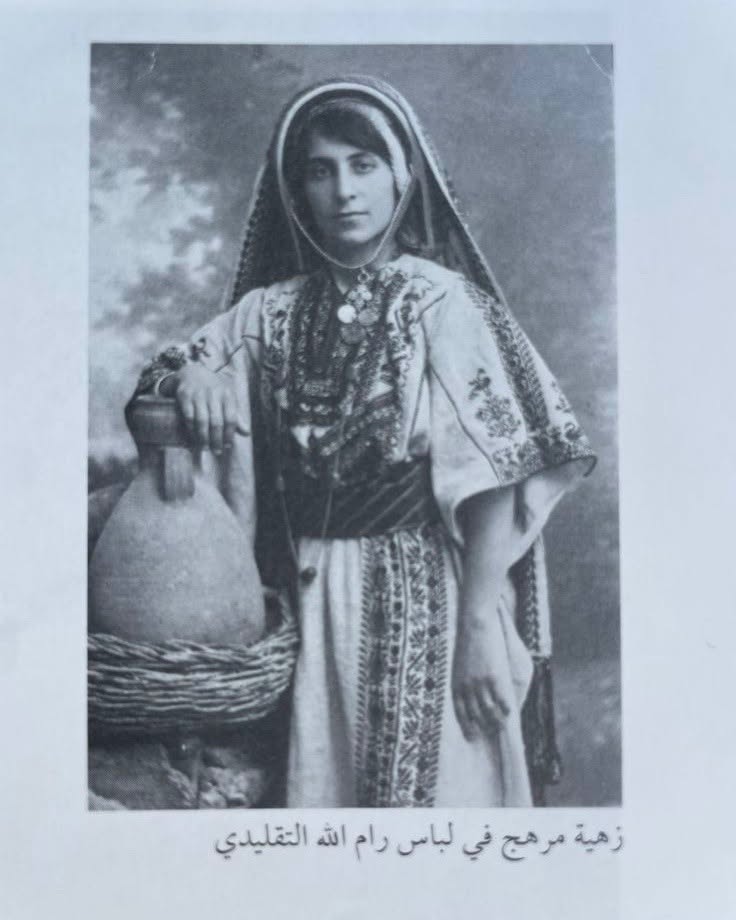
Margot Saba Abdo: A Photo Pioneer in Jerusalem

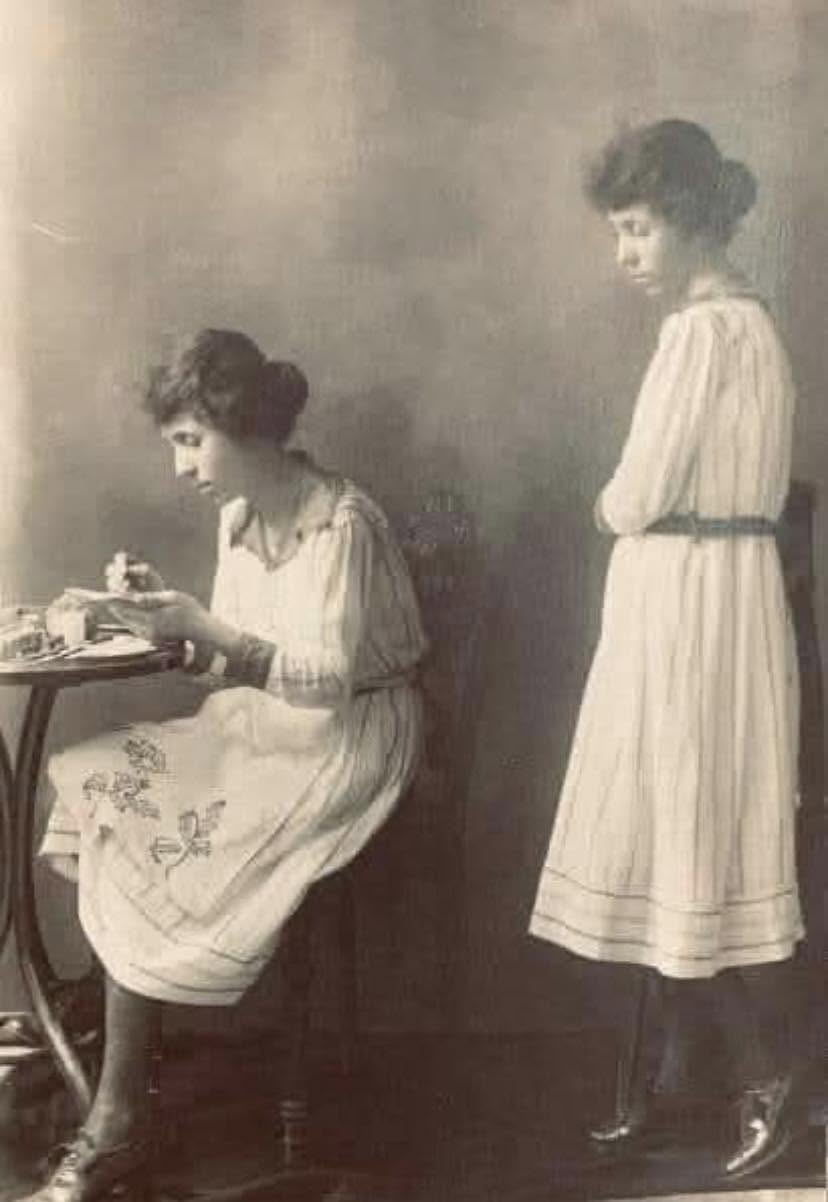
Margot Saba Abdo (1901 – 1974) was an exceptional female Palestinian photographer who worked in Jerusalem in the 1930s. Historian, sociologist Salim Tamari says she displayed a skill and mastery of the lens that surpassed Karimeh Abbud, another woman photographer from Nazareth at the time.  Margot was born in Jerusalem to a Greek mother whose brother was the Meltiadis Savvides (Saba), a well-known photographer working there in his Savvides Studios. This is where Margot learned to take pictures in her youthful years.

However, after her education at the Greek Orthodox school where she learned Arabic, Greek, English and Russian she joined her brother’s studio, Daoud Abdo. When he went to work as the chief photographer at the Palestinian Museum, Margot managed the studio. This was from 1930 to 1948 where she worked at family portraits. After the 1948 Nakba, she moved first to Cairo and then to Beirut, again working with her brother in his studio.

Continue reading
An Egyptian House in a German Town

An Arab house in a German town, all the trappings of a different culture, Egyptian, Jordanian, Syrian, and Yemeni, an Oriental setting in a traditional western German context.

The town is Bruchsal, to the west of Frankfurt, owners, the Burkards, they fell in love with a different culture, and decided to “transport it” to their house and in their lands, having lived in Cairo in the 1970s and 1980s.

Helmut Burkard and his wife Beta decided to pack their belongings and their kids in 1974 and move to Cairo. Neighbors told him “you are mad” to go to the Middle East at that precise moment. “Its dangerous.”

But he wasn’t swayed. They loved every single minute of it. Helmut teaching music at a convent, Beta, an economist by training had become a proper housewife, and the two kids growing up.

Over the years Beta spent her time collecting traditional artifacts, souvenirs, paintings and different copies of the Quran from Cairo’s old Souqs and Bazaars as she had a preordained feeling that one day she and her family would go back to their home on Mozart Way and fill it and make it a house of converging cultures.

And so today as you enter the house, you are immediately struck by the mementos, artifacts, framed pictures, the rugs, swords, scabbards hanging on the different walls of the house. The speak of a different culture, and a far away civilization embedded in a geographical separateness, novel, yet very human.

What’s fascinating about this house is that it’s totally covered with trinkets and memorabilia. The stairs, landing, living room, bedrooms all smell of a civilization that is anything but German, yet relaxing and soothing.

Pottery, pans, Arabic coffee pots, earrings worm by Bedouin women adorned the place from head to foot together with wall paintings by different Egyptian artists.

In fact, if it wasn’t for the large black piano in the living room, and the number of German books, a visitor like way would be forgiven for thinking the house belongs to a foreign family living in rural Germany.

Every wall, every corner, nook and cranny of every room—literally—filled with every aspect of an Arab life which the Burkards lived either in the long stretch in Cairo, and or the vacationing he used to take his family to in different parts of Jordan, Syria and Yemen.

Beta just kept collecting on these holidays inevitably made driving through these areas. “I wanted my family to experience these countries by roads, and not through planes,” he used to say.

The house is an Arabic treasure. On Mozart Way, you can’t say, “oh I want to write an impressionistic piece on this house” simply because of the intricate detail involved in these artifacts. The house tells a story of a past the Burkard’s lived in. If you let Beta go on, she would speak for ages on how she got this piece, and from which Souq she had to go to.

You can’t point to any particular room and say this is the pride and joy of the Burkards. They are all special. Take the living room, for instance. One is struck by its aura of combination of religiosity, culture, art, music and literature that spanned across.

There was picture frame of Al Faateha (Opening chapter of the Quran), engravings of the name of Allah (God) and Prophet Mohammad on different plates.

In a small side section named by Helmut Burkard as the “Arabic room”, there is a mixture of Arabesque and teak, a desk, a large rounded Arabesque coffee table with a copper plate and a traditional wooden shield used as a divide from one section of the house to another.

Of course both husband and wife know what all these means. Helmut speaks good Arabic with an Egyptian accent, so does Beta although she didn’t let on. But Helmut was directly in touch with the local population, that’s why he picked up the accent and the slang.

After Egypt the Burkards went back to Germany, however, Helmut returned to Jordan in 1996 as a fellow teaching in the Music National Conservatory where he remained till 2003. He first came to Cairo when he was in his early 40s, now he was in his 70s, his kids grown up, and his wife Beta attending the garden and on frequent trips to Switzerland which is just around the corner from where they lived. But he was still a “musical fighter”, humming to himself a piece by Mozart or Bach as he went down the corridor.

At the Conservatory, he established an exchange program where German pupils came to Jordan to play music followed by Jordanian pupils going to Germany to play classical music with Arab themes. He called this a “musical culture of dialogue”; the German pupils would also learn different Arabic pieces and even sing them.

Helmut, now in his early 80s, and who brought the last German music group to play in Amman in 2010, is a strong believer in a culture of dialogue between east and west as a means to bringing people closer together.

His house is a testimony to that.

This artical is reprinted from my account on Hubpages

Continue reading
Gaza, Surrealism and Empty Stomachs

By Michael Jansen

“Let them eat cake” is a careless remark traditionally but falsely attributed to France’s Queen Marie Antoinette at a time peasants had no bread and were starving. She and her husband King Louis the 16th were beheaded in 1793 during the French Revolution which overthrew the monarchy.

This past week Donald Trump spent five days in Scotland playing golf at two courses which he owns while 2.3 million Palestinians faced famine and starvation due to a four-and-a-half-month Israeli blockade of Gaza. During a press conference with British Prime Minister Keir Starmer, Trump finally acknowledged there is “real starvation” in Gaza. Later in the day, he claimed he had “told Israel maybe they have to do it a different way.” This suggested by adopting a new, less punitive policy. He was speaking after Egyptian and Qatari-mediated negotiations on a 60-day ceasefire had broken down, the US and Israel blamed Hamas and left Doha, delaying a full resumption of aid.

Hamas had demanded a return to UN and international agency deliveries of water, food, medicine, and fuel which have been blocked by Israel since March 2nd, Israeli withdrawal from areas of Gaza occupied since Israel broke the ceasefire on March 18th, and an end to Israel’s war on Gaza once the ceasefire expired.

Israeli Prime Minister Binyamin Netanyahu had refused all these demands and was backed up by his good friend Donald Trump. Instead of thinking of starving Gazans, Trump stated, “Hamas didn’t really want to make a deal. I think they want to die, and it’s very bad. It got to the point where you [Israel] have to finish the job.” He did at that time admit that images of starving children in Gaza were “terrible” but added, “They’re stealing the food,” echoing the Israeli accusation that Hamas is guilty of depriving Gazans of food. This has been denied by the World Food Programme and the UN agency looking after Palestinian refugees, UNRWA.

Israel has been fighting Hamas since October 7th, 2023, when it killed 1,200 and abducted 250, but Israel’s armed forces have failed to “finish the job.” Trump has given Israel permission to fight on indefinitely without totatally ending the blockade.

Alarmed by the “humanitarian catastrophe” in Gaza, Germany, France and Britian have called on Israel to end the conflict, “immediately lift restrictions on the flow of aid and urgently allow UN and humanitarian NGOs to resume operations. “Israel must uphold its obligations under international humanitarian law.”

Pressure from these three countries, the UN, and international humanitarian agencies has compelled Israel to declare 10-hour tactical pauses in the fighting in three areas of Gaza. During these pauses which could last a week or so, Israel is to allow air drops of supplies by Jordan, the Emirates and Israel, permit scores of lorries laden with aid to enter the strip, and create “humanitarian corridors” for aid deliveries. These “concessions” are far from a ceasefire and the reopening of all crossings into Gaza for between 500-600 lorries a day. Furthermore, this number must be greatly increased to compensate for Israel’s blockade which has deprived Gazans of sustenance as well as water, electricity and fuel.

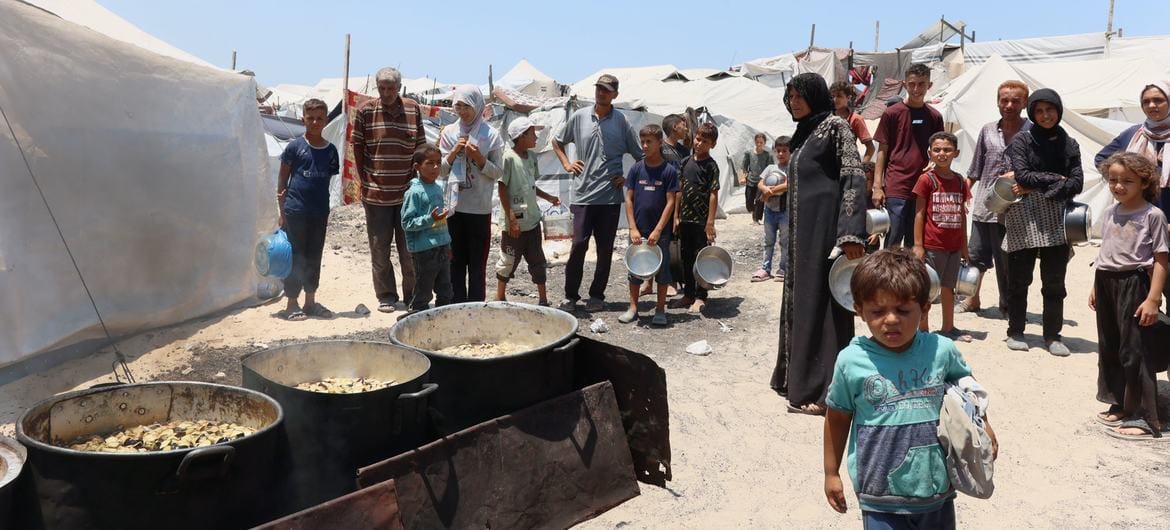
Specialised food to treat malnutrition must be included as starving people cannot absorb normal food. Parcels being delivered contain rice, lentils, and beans which cannot be cooked by many of the 90 per cent of Palestinians who have been displaced from their homes and live in tents in crowded camps. There is no wood in Gaza for fires and Palestinians rely on rubbish and plastic which pollute the environment. Palestinians cannot survive on the other items the parcels: sugar, salt, and flour. The latter they can exchange at bakeries for bread.

If ever the previous flow of humanitarian aid is restored, Gazans will need fresh vegetables, fruit, meat and chicken to revert to a nutritious diet. They used to be raised on Gaza’s farms or brought into Gaza by commercial firms from Egypt, Israel, and the West Bank.

In Sunday’s New York Times, World Central Kitchen (WCK) founder Jose Andres proposed a programme which could help resolve Gaza’s hunger crisis. He called for the reopening by Israel of humanitarian corridors to all aid groups working in Gaza and permission to operate multiple communal kitchens. While WCK has been providing hot meals in Gaza since the war began in 2023, he proposed an increase in the production from thousands to one million hot meals a day and to feed families where they dwell. He said five large cooking facilities would have to be built in safe zones “where bulk supplies can be delivered, prepared and distributed without risk of violence.” These kitchens “would supply hundreds of smaller community kitchens “at the neighbourhood level throughout Gaza, empowering communities as essential partners.”

This project depends on obtaining the agreement of Israel and equipment, raw food and fuel supplies which could be provided by aid agencies and concerned governments.

The author is a columnist for the Jordan Times

Continue reading
The Gaza Death Trap

While everyone waits for the full-blast war on Gaza which Israel promises to continue, Tel Aviv must know this will not be an easy matter not least of all by the Benjamin Netanyahu government whose ministers are split over allowing the army to resume its “fighting” position in Gaza.

Not everyone holds the view of extremist Finance Minister Bezalel Smotrich. He wants to resume, or continue, a large scale offensive on Gaza and reoccupy the enclave forever! For these opposing ministers as well as a large number of army soldiers and officers are not in favor of going back to fighting in Gaza because (a) of the bloody situation and danger soldiers were subjected to since 7 October, 2023, and because they want the rest of the remaining hostages – 59 and about 24 still thought to be alive – to be returned.

They fear – and reflecting major sections of society who have been demonstrating daily in Tel Aviv and other major Israeli cities under the of banner “bring them home,” – that increasing the wheels of war on Gaza would be signing the death warrants of the remaining hostages, originally marked at 250 and over 40 of them killed by indiscriminate Israeli bombing of the different areas of enclave over the past 17 months or so of fighting.

In the eyes of Smotrich, and he doesn’t mince his words, the return of the hostages is now secondary and what is crucial is to destroy Hamas and end its presence in the Gaza Strip.

But this is not happening. Since the resumption of the Israeli war on Gaza on 19 March, 2025 the resistance led by the Islamic organization and the other Palestinian factions have also resumed their fighting. While it is true, Hamas was slow in getting back to the war, preferring to give the ceasefire and peace talks a chance, and which led many to say the resistance are finished, this was far further from the truth.

Fighting again

Exactly one month later after 19 March, the Palestinian resistance led by Hamas and Islamic Jihad, re-started their fight against the Israeli army and the targeting of its soldiers; the Zionist army had maintained an active presence in the different areas of the Gaza Strip since the ceasefire took effect on 19 January, 2025 when the newly-elected US president was installed in the White House.

After much waiting and the gradual realization that Israel was no longer interested in the ceasefire nor in ongoing talks in Doha and Cairo, Hamas and Islamic Jihad reignited their war tactics on the Gaza battlefield. They realized Netanyahu, as prime minister of an extreme right-wing government, was no longer interested in maintaining a ceasefire.

Analysts maintained that Netanyahu was encouraged by Trump’s conflicting and dangerous stance on Gaza on top of which was the dramatic and subsequently abhorred idea of expelling the 2.1 million population of Gaza to build the Strip as the newly-plushed Middle East Riviera.

Although he quickly backed down due to Palestinian, Arab and even world pressure, Netanyahu interpreted this hugely-wrongful idea as greenlight to continue to hammer Gaza from the air and reimpose the starvation policy of its population.

Although the people got the backend of the Israeli willful mad firepower while shutting down the curtain on aid entering the 364-kilometer enclave, Hamas and the other Palestinian groups begun to regroup and re-started its military operations against the Israeli army in Biet Hanoon in the northern Gaza Strip to Gaza City in the center, Shujaiyia to the west, Khan Younis lower down and Refah, further south on the border with Egypt.

Like before, since 7 October, 2023, the resistance has now embarked on the increasing use of ambushes and booby-trap operations of luring Israeli soldiers and targeting Israeli tanks, armored vehicles and bulldozers while firing at them through locally-made, cheap but effective and deadly missiles that resulted in many of these soldiers being killed and badly-injured – numbers in the thousands – while many of the tanks and bulldozers either blown up and/or put out of action.

Towards the end of April onwards, this strategy was reactivated at full length and on different days sniping Israeli soldiers and targeting armoury would rise in multiple and different operations through the Gaza Strip. What is today of major worry to the Israeli army is that these geographical areas which were supposed to be “cleaned up” from Palestinian operatives are becoming active once again which means that for the Israeli army its back to square one.

The Israeli army had literally destroyed many of the major cities, towns, neighborhoods, villages of Gaza not once but many times. They entered places like Khan Younis, Jabalia, Shujaiyia, Nuseirat, Rafah and many more multiple times and declared them free from Palestinian resistance groups but these fighters just continue to emerge as seen recently and to the chagrin and frustration of the Israeli army.

Such frustration has led Israeli politicians like Netanyhu, and arch anti-Palestinian politicians like Itamar Ben-Gvir, Minister of National Security and hated by some Israelis for his extreme rightwing views to call for the re-occupation of Gaza, something that Netanyahu is actively contemplating. The prevailing view that once the army gets into Gaza once again, and on a mass scale, they can never leave! There are many in the army who have long rejected such an idea because they know of the “bloody situation” their soldiers would face.

However, the Israeli government and its army continues to operate under a set of illusions it is refusing to budge away from simply because Hamas and the Palestinian resistance presence is still operating in Gaza and in a robust mode to fight and kill Israeli soldiers and destroy their tanks and military hardware.

This is in addition to the fact the Israel and its army is getting nowhere near to freeing the rest of the hostages and who are likely to die if Israel embarks on a bigger war on Gaza and which Netanyahu and his extremist government are determined to do despite the warnings of the Israeli army which admits the rest of the hostages could die in any bigger military offensive.

Trump in region

Throughout this war there was always one external factor that played a permanent role in fuelling the Israeli genocide of Gaza and that was the United States through its provision of military support to Tel Aviv first under the Joe Biden administration and now under Trump.

If he could be persuaded to stop the supply of weapons to Israel, Netanyahu will finally stop the war on Gaza. Trump is on record, especially when he was running for the White House he would stop the war in Ukraine and Gaza. But will he? First of all, the Israeli lobby is entrenched in the US government.

However, there is one important factor that can pressure the Trump administration and that is the Arab countries. Trump is soon visiting Saudi Arabia and the Gulf countries including Qatar and the United Arab Emirates. If enough pressure can be applied from these quarters then surely the US president can move on the Gaza issue and halt any plans that Netanyahu is concocting for the enclave.

The Trump visit is being made in mid-May and its already played as a “bilateral” tour between the United States and these states whilest focusing on investment. And this is where their influence can be made with investment, economics and politics moving on one pedestal.

So the ball at the present time is in the hands of the Arab Gulf countries!

This comment is written by Dr Marwan Asmar, chief editor of the crossfirearabia.com website. 

Continue reading