The Devil You Know!

By Dr Khairi Janbek

One wonders what more can be said about the tragic war in Gaza, more than the outpouring of words in the East, West and the Arab world with the habitual accusations and counter-accusations which have reduced the question of Gaza, after many other things to a mere question of semantics with the same words and same policies, while the habitual loser, the hostages and their families, and the Gazan people continue to suffer relentlessly.

Delegations keep going and coming, ceasefires agreed then broken given the impression that all what is being attempted is to keep the war going without the pangs of guilty conscience or more pragmatically, pending how public opinion shifts in western countries.

For all intents and purposes, can Israel destroy Hamas or at least break its military structure, if indeed this is the intention of Israel? If it is not, what would be the point of this war?

This is because all of what is being done is mere destruction of lives of innocent civilians who have no say when it came to “Hamas terrorism” and the subsequent Israeli retaliation. The tragi-comedy of the situation, is that Israel is fighting Hamas in order to keep a smaller version of Hamas, in the manner possibly of the devil you know is better than the one you don’t.

As for the other side of the divide, one doesn’t believe that Hamas cares about the innocent Gazans more than Israel, of course their aim is to survive, and rule for another day, because as it appears they seem to believe that Israel has no wish to occupy Gaza, and they stand a good chance to rule a diminished territory compatible with their diminished organizational size.

One wouldn’t actually be surprised knowing only too well than in the Middle East nothing is meant to be resolved; neither with peace nor with war.

Then comes the international community, President Trump’s policy towards the region fits very well with all what is going on, and it reflects this inconsistency with its own inconsistency. At one point, he wants the destruction of Hamas, then he wants a ceasefire and wants the war to stop, with the only logical demand of wanting what everyone else wants, the release of the hostages.

But even on this path one wonders for how long he will be able to keep his attention span on the question. The EU has its twists and turns, apart from’Ireland and Spain, the governments of Europe have their own contradictions with each other and subject to the fluctuations of public opinion, nevertheless, there will be plenty of rhetoric but the same policies will continue.

Ironically, the only side which is not counted on, and the only side which seems reluctant to get involved actively, save for holding hostage release negotiations, is the Arab side.

One firmly believes, against common wisdom, that only the Arabs can convince Hamas to surrender its weapons, and manage a post-Hamas Gaza, guaranteeing security for Israel and start the reconstruction efforts for Gaza. It is only after that, a permanent solution can be thought of.

Dr Janbek is a Jordanian writer based in Paris, France.

Continue reading
Seismic Shift Across The Atlantic

By Dr Khairi Janbek

Even before Trump’s coming of age, which is a long way away, or  more accurately so, coming to power, one often wondered about the status of the European Union (EU) in the world of changing circumstances and the existential meaning of its presence on the world power map among the increasing differences among its member states.

Although and frankly, differences always existed within the Union, the Russian invasion of Ukraine made those differences more acute, sharper and penchant materializing between those Europeans fearing being next on the Russian menu, those who want an assertive position against Moscow, those reluctant either way, and those who are out rightly pro-Russia.

Evidently, having unity among the 27 European countries which are not necessarily different in their political structures, yet having necessarily different strategic interests end up with infighting, recriminations and threats.

As well what makes things near-impossible, is that the EU does not have a mechanism to expel a fellow-member from the Union, so one is always beleiving that there is hope that an obtrusive member of the Union would walk out voluntarily in the manner made by the British Brexit.

Now it is more complicated. Not only the EU is having to deal with a possible Russian threat, but also a looming trade war with the US that is compounded with the distinct possibility that America may be withdrawing its protection umbrella from Europe.

Of course, this legitimately raises the question about the future of NATO; a question which was raised before especially after the demise of the Soviet Union in the early 1990s. This ultimately means a new form of a military alliance will be required for the EU.

Ideally, one would have thought a smaller EU entity, leaner and meaner, with incorporation of Britain in it, would the best option, while the rest of Europe, from its center to its eastern side, hitched by accords with Russia and the USA.

This would be far better instead of the current large European crippled Levathian with Britain running like a headless chicken proposing to be the bridge between the USA and EU, a link both sides of the Atlantic believe it’s too far a gap for any meaningful effect.

Having said all that, there is a window of opportunity now with the new government in Germany, showing more courageous initiatives in wanting to see a reset of the Atlantic relationship, which falls well with President Macron of France, the other core member of the EU which has the idea of creating a single European army to protect the EU and its interests.

When it comes to transnational trade, the absurdity of the war of tariffs will hurt all including the American economy, though European companies whose main market is in the USA will go and invest in America, but those US companies whose main market is Europe, will invest in the EU.

Essentially, the seismic shift in relations across the Atlantic is set to commence with most probably less profits but more fairness.

Dr Khairi Janbek is a Jordanian writer based in ParisFrance

Continue reading
First in EU: Brussels Calls For Sanctions Against Israel

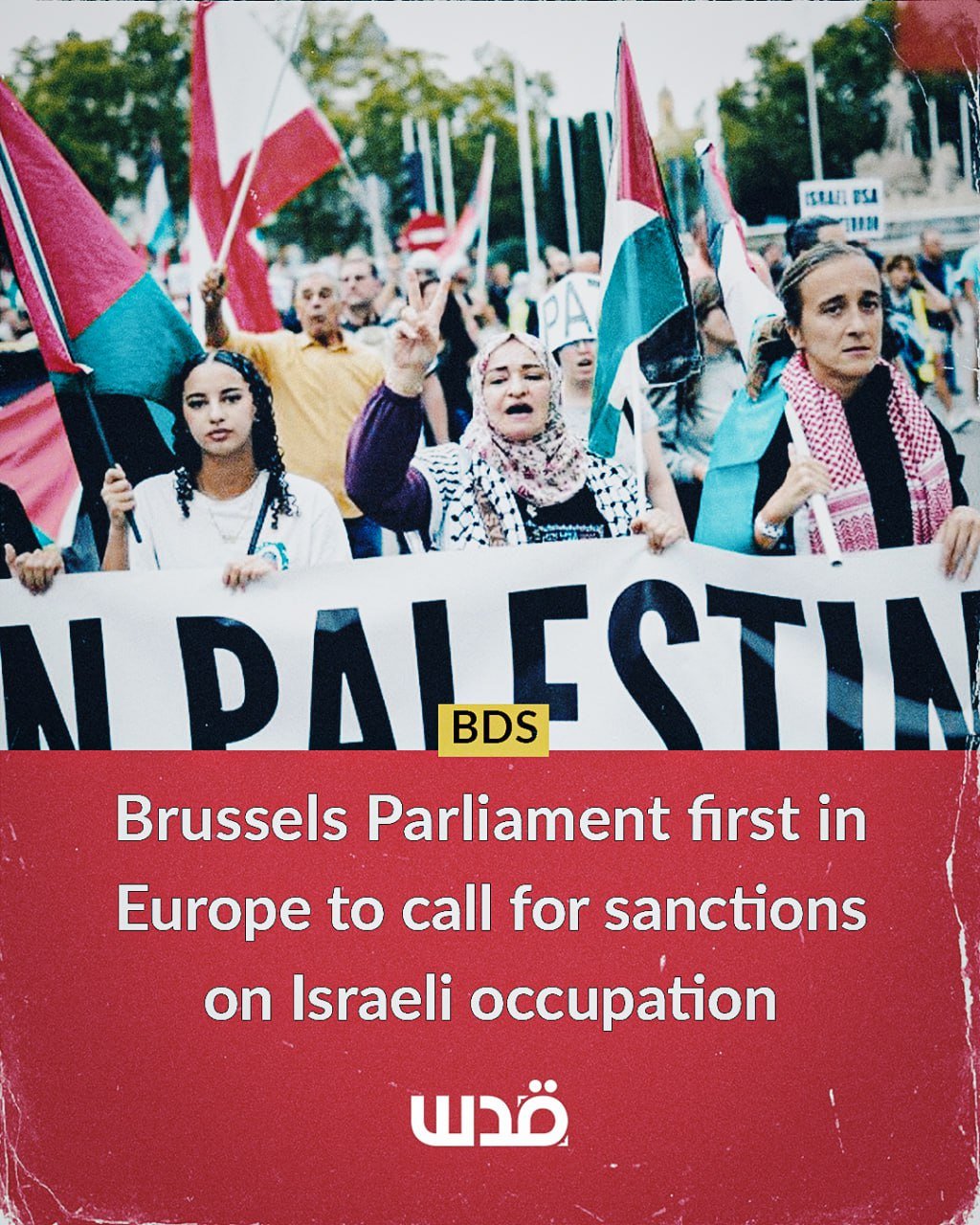
The Brussels-Capital Region Parliament made history as the first in Belgium and Europe to pass a resolution calling for sanctions on the Israeli occupation, according to the BDS movement. The resolution urges the Brussels government to withhold weapon licenses to Israel, stop supporting companies linked to its military, and sever cooperation with firms listed in the UN database.

Continue reading
Israeli Army Withdraws From The Rafah Crossing

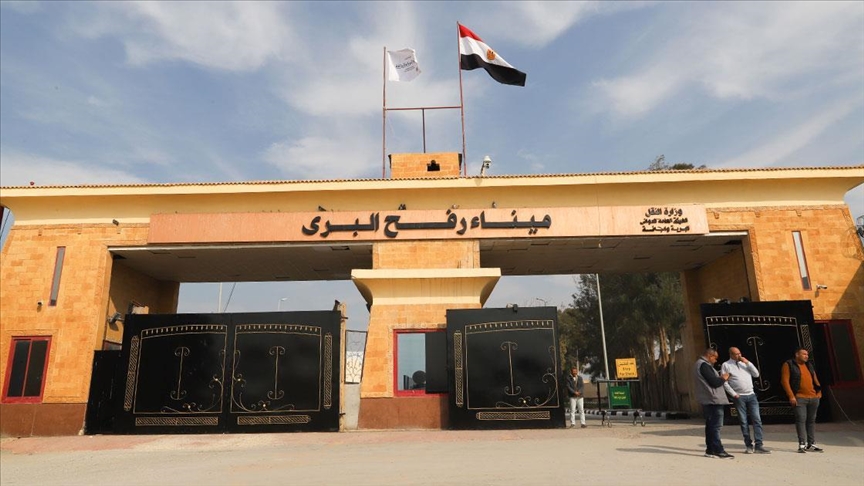
The Israeli army withdrew from the Rafah border crossing between Gaza and Egypt on Friday in accordance with the terms of the cease-fire agreement, which went into effect on January 19.

According to Israeli Army Radio, the army handed over the crossing to an international force from the European Union (EU) in preparation for its reopening later on Friday.

The radio, which quoted a security source without mentioning his name, noted that the Israeli army has redeployed its forces in an area along the Gaza-Egypt border.

Besides the EU mission, the source said Palestinians from the Ramallah-based Palestinian Authority will run the crossing from the Palestinian side, with the role being to stamp existing permits from Gaza.

The broadcaster’s correspondent, Doron Kadosh, said 50 wounded Palestinians will be allowed every day to travel in addition to three escorts to each injured, totaling 200 people every day.

He added that all names of wounded people and their escorts will be checked by the Israeli general security service Shin Bet, along with Egyptian approval on the names.

The EU on Friday resumed its Rafah border crossing mission connecting the southern Gaza Strip to Egypt, including for Palestinians needing medical care.

“Europe is here to help: the EU’s civilian border mission deploys today to the Rafah Crossing at the request of the Palestinians and the Israelis,” EU foreign policy chief Kaja Kallas announced on X.

The Palestinian Health Ministry also confirmed that the crossing would open on Saturday for the first batch of wounded people to leave Gaza.

It added that their travel is planned in collaboration with the World Health Organization.

The Rafah crossing, a vital route for humanitarian aid into Gaza, has been closed since May 2024 after Israel’s ground offensive in the southern city of Rafah.

On Jan. 19, a ceasefire agreement and prisoner exchange between Hamas and Israel went into effect, initially lasting 42 days, during which negotiations will continue for subsequent phases of the deal. The agreement is mediated by Egypt and Qatar, with support from the US.

Israel’s genocidal war has killed more than 47,400 Palestinians, most of them women and children, and injured more than 111,000 since Oct. 7, 2023.

The Israeli onslaught on Gaza has left more than 11,000 people missing, with widespread destruction and a humanitarian crisis that has claimed the lives of many elderly people and children in one of the worst global humanitarian disasters ever according to Anadolu.

The International Criminal Court issued arrest warrants in November last year for Israeli Prime Minister Benjamin Netanyahu and his former Defense Minister Yoav Gallant for war crimes and crimes against humanity in Gaza.

Israel also faces a genocide case at the International Court of Justice for its war on the enclave.

Continue reading
$250 Million: EU Spikes Israeli Research Funding

 The European Union has provided over $250 million in research funding to Israeli institutions since 7 October, 2024, despite mounting criticism over Israel’s genocide in Gaza, reported Al Jazeera. Some of these funds have gone to organizations linked to Israel’s military industry.

On the day Israel launched its assault on Gaza, European Commission President Ursula von der Leyen voiced strong support for Israel. “Israel has a right to defend itself,” she said in a statement, reiterating the EU’s alignment with Israel.

Since then, Israel has faced genocide accusations at the International Court of Justice (ICJ) and indictments against its leaders at the International Criminal Court (ICC). Yet, the EU continues to fund Israeli institutions under its Horizon research and innovation programme.

Funding Military-Linked Organizations

Data analyzed by Al Jazeera shows that the EU awarded Israeli institutions over €238 million ($250 million) in research grants since the Gaza genocide began. Among the recipients was Israel Aerospace Industries (IAI), a defense manufacturer, which received €640,000 ($674,000).

Though Horizon guidelines require funded projects to be exclusively for civil purposes, many technologies developed with EU support have dual-use applications—both civil and military.

More than 2,000 European academics and 45 organizations petitioned the EU to suspend funding to Israeli institutions, accusing the Horizon programme of advancing Israel’s military technologies.

“These funding schemes directly support Israeli military capabilities,” the petition stated. It highlighted the role of EU-backed research in Israel’s actions in Gaza, where tens of thousands of Palestinians have been killed.

Dual-Use Technologies in Focus

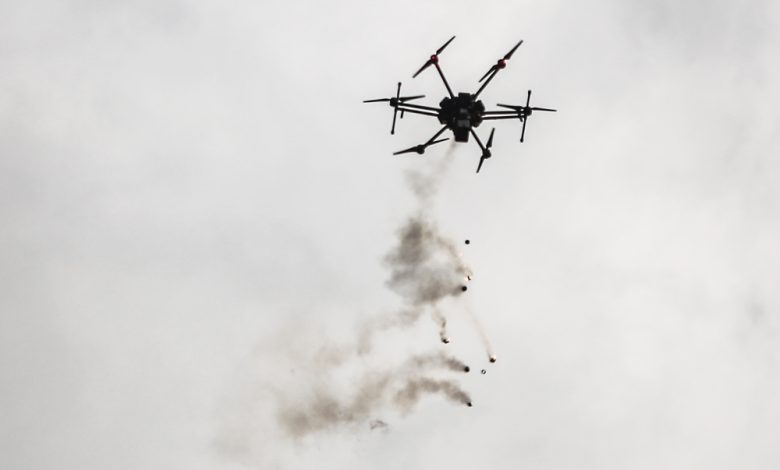
Many Horizon projects in Israel focus on dual-use technologies. For instance, IAI developed drone mapping tools with EU funds for “emergency response.” Critics argue such tools can easily serve military purposes.

Elbit Systems, another defense company, received over €10 million ($11.2 million) under earlier Horizon frameworks. The company has strong ties to Israel’s Ministry of Defence.

A large portion of Horizon funds goes to Israeli universities. Scholars like Maya Wind argue these institutions are deeply embedded in Israel’s military industry.

“Israeli universities are pillars of the military-industrial complex,” Wind said. Institutions like the Technion and Weizmann Institute have spearheaded defense technology development for decades according to the Quds News Network.

Continue reading