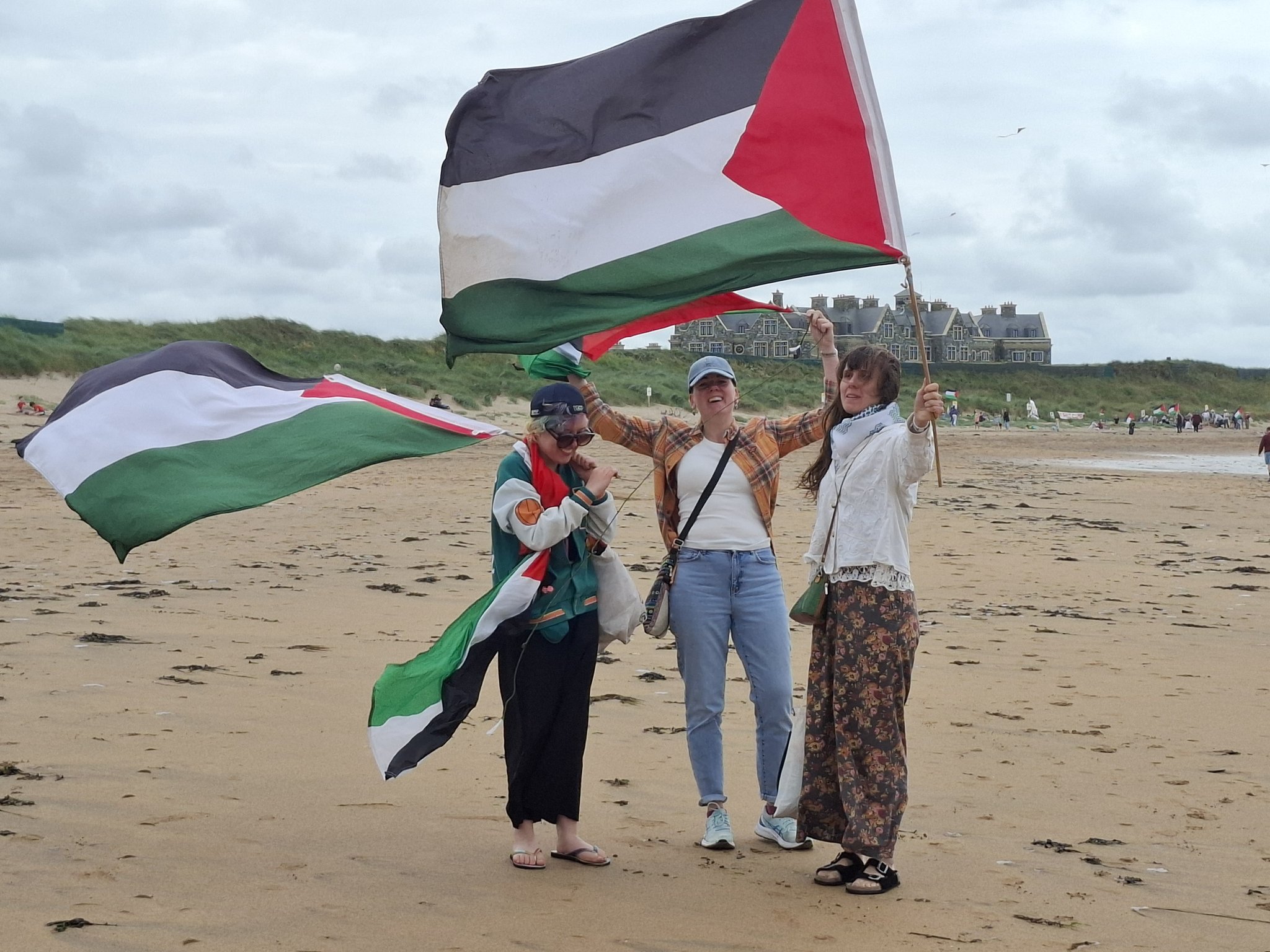
Malak: Story of a Champion Boxer Killed in Gaza

By Ismael Al Sharif

America did not come to liberate us, but rather replaced one darkness with another, and destroyed what remained of our dignity – Malalai Joya, an Afghani writer

When the USA launched its war on Afghanistan in 2001, the slogan it used was “saving Afghan women” as one of the main justifications for the invasion to gain popular support.

Stereotypes remain ingrained in memory: Veiled women deprived of the most basic rights, living under the oppressive Taliban regime, and in desperate need of a “savior” from overseas.

However, the reality was far different, as testimonies from international women’s organizations then confirmed.

Afghan women did not ask for military intervention as their basic needs were clear: Safety, livelihood to feed their children, basic health services, and safe shelter. Simple human needs were taken from them in the name of the alleged “liberation.”

The rogue state has since followed the same American approach when it launched its aggression on Iran, it claimed to defend oppressed women, and repeated the same regarding Syria.

Biased Western media, aided by opportunistic feminist organizations, rushed to publish misleading reports about the “suffering of women” in Gaza before the Al-Aqsa Intifada, allowing the Zionist entity leaders to issue shocking statements, claiming the ongoing genocide in Gaza aims to… “liberate women.”

Falsity of claims

Malak’s story exposes the falsity of these claims and lay bare their painful truth.

At the age of 20, Malak Musleh harbored a dream that weighed as much as nations: To stand in the international boxing ring, holding the name of Palestine high. She trained with a slim body and an iron will, and fought dozens of local battles. Little did she know her true battle would be against a million-dollar, western-manufactured missile fired at her while she sat in a Gaza beach café, devastating a girl who had not had enough training to avoid the fatal blow.

In YouTube footage, Malak is seen training with her friends on the same beach in worn-out gloves, improvised punching bags, and bodies defying hunger, bombardment, and displacement. Behind them is a scene epitomizing Gaza: Rubble towering above a sky open to the world’s wounds.

Their training wasn’t an ordinary sport but a dance on the brink of death, a fistful of life in the face of the extermination machine. The sight of them training with the most basic means, carrying punching bags for each other, surpasses sincerity and impact in all of the dramatic works and artificial heroics produced by the Hollywood film industry.

The solid will and human dignity of these girls far surpasses all the fictional heroic stories produced in film studios.

Before Gaza was transformed into a war zone, Malak and her 40 friends trained at the Al-Mashtal Club, the first Palestinian women’s boxing gym. Simple walls adorned with pictures of world champions, and a small arena that nurtured dreams larger than its space.

This was until the occupation came and destroyed them, just as it destroys everything that symbolizes life there. However, the bags hanging on the remains of the walls did not fall; instead, they were transported to the beach, where the girls continued their training under the bombardment, as if to say to the world:

“Even if you turn us to ashes, we will remain roots that will grow again.” The Zionist war machine failed to break the resolve of these young women even after the destruction of their sports club. They continued their training on the open beach, on the soft sand, under the scorching sun that scorched their faces, stealing moments of hope and joy amidst an ocean of endless horrors and tragedies.

Even after the martyrdom of their heroine, Malak, her companions still train in the same spot on the beach, continuing their courageous defiance in the face of the destructive Zionist-American war machine. The short but luminous journey of the late heroine, Malak, teaches us profound human lessons.

First, women in the Muslim world live dignified and free lives, contrary to the misleading Western media propaganda machine. She also quietly exposed the silence of “feminist” organizations that scream when a Western girl is killed in a trivial incident.

We also learned that despite the abject poverty, harsh deprivation, and persistent hunger, there remains in Gaza a people who love life and carry in their hearts legitimate hopes, aspirations, and dreams… just like all the free peoples of the earth.

With Malak’s untimely passing, not only were the dreams of a promising girl buried, but a devastating blow was also dealt to all the noble human values that this hypocritical world so brags about. Malak departed to her Creator, but what remains is the shameful silence of international organizations, the blatant complicity of the international community, and the shame of the onlookers who have been content to play the role of passive observers.

Today, as Palestine is reduced to the numbers of victims, Malak reminds us that beneath every number lies a love story of life, a dream that was not killed because it became fuel for other dreams. Every morning, her companions return to the shore, punching the air as they punch the world’s pain, renewing their oath: That the land of Gaza will be watered either with the tears of survivors or the blood of martyrs.

As to that million-ton rocket? The Israeli who fired it may not have realized that by killing Malak, he had turned her fist into a legend that confounded his calculations: How could a highly sophisticated weapon be defeated by the determination of a girl whose dream had not yet been fulfilled?

This is a translated piece written by Ismail Al Sharif and published in the Arabic Addustour newspaper in Amman.
Continue reading
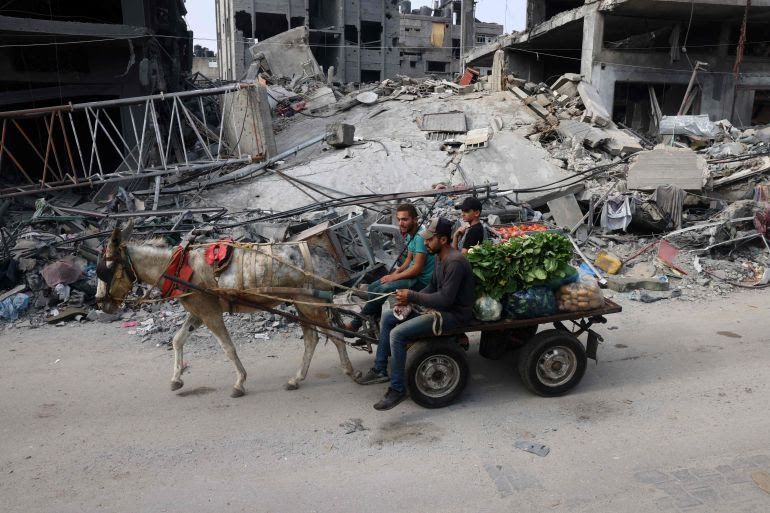
Donkeys Deserve Nobel!

It started like this. In appreciation for the donkeys of Gaza and the extremely important role they are playing, Jordanian Journalist Ahmad Theiban Al Rabieh wrote in a satirical fashion:

“The donkeys of Gaza deserve the Nobel Prize! This is because of their present and vital role of transporting the injured, martyrs killed, and displaced people with the rest of their belongings…The so-called international community (a lie!) has proved incapable of providing these services.”

Donkeys have been forced into this role soon after 7 October, 2023 when the genocide on Gaza took a full-turn and Israel begun to massively destroy all means of public and private transport in the Gaza Strip.

And so the story of the Nobel prize went on from there.

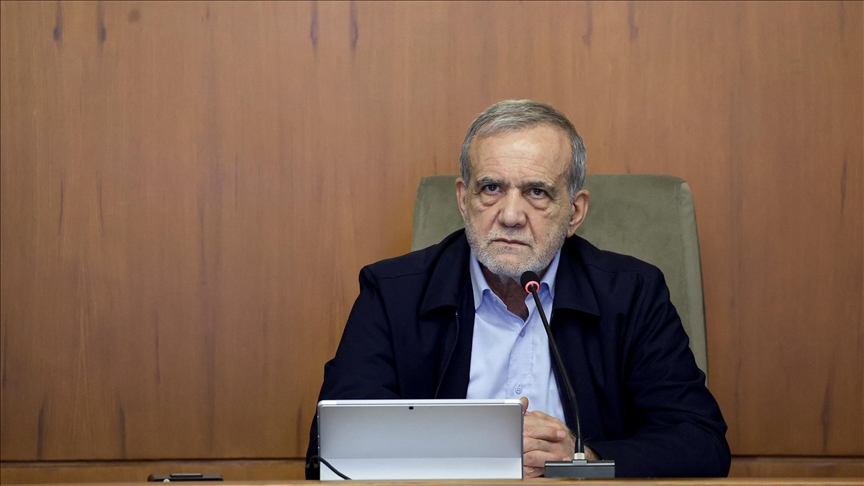
Today, US president Donald Trump is trying to be nominated to get the Nobel Peace Prize because he regards himself as a man of peace. He is trying to get as many signatures as possible to be nominated for the top Norwegian accolade.

On his last visit to Washington on 7 July, 2025, and as a measure of more “sucking up” to the US president at a White House dinner, Netanyahu graciously told Trump that he will indeed be nominating him to the Norwegian Nobel Committee. And he has the “nominating letter” already he says, as he waves it in front of the cameras.

There is one problem however, the International Criminal Court has long issued arrest warrants for Netanyahu and his former Defense Minister Yoav Gallant for war crimes and crimes against humanity in Gaza. These arrest warrants were initialed and signed in November, 2024 and there are still valid.

So his Trump nomination might be seen as an insult from a man with genocidal traits on his head. However, Trump, and on camera, is seen as smiling, and maybe even appreciative despite coming for a war criminal as per the ICC.

The issue of the Nobel Prize came up a few days later when Trump was hosting a three-day meeting with five African leaders (Gabon, Guinea – Bissau, Senegal, Mauritania and Liberia) to discuss business cooperation between the USA and Africa. The leaders were put on the spot by a young ambitious African reporter from Angola who asked the leaders whether they would nominate the US president for the Nobel peace prize.

Many saw this as an “ambush question” as the leaders were put on the spot and involved diplomatic courtesies that may go a long way to nominating Trump. But on another level, many criticized Trump for being abrasive and condescending with the African leaders while bullying them around and appreciating the “good English” of Joseph Boaka, president of Liberia. Such a comment was made with the full-knowledge of the Nobel nomination.

Continue reading
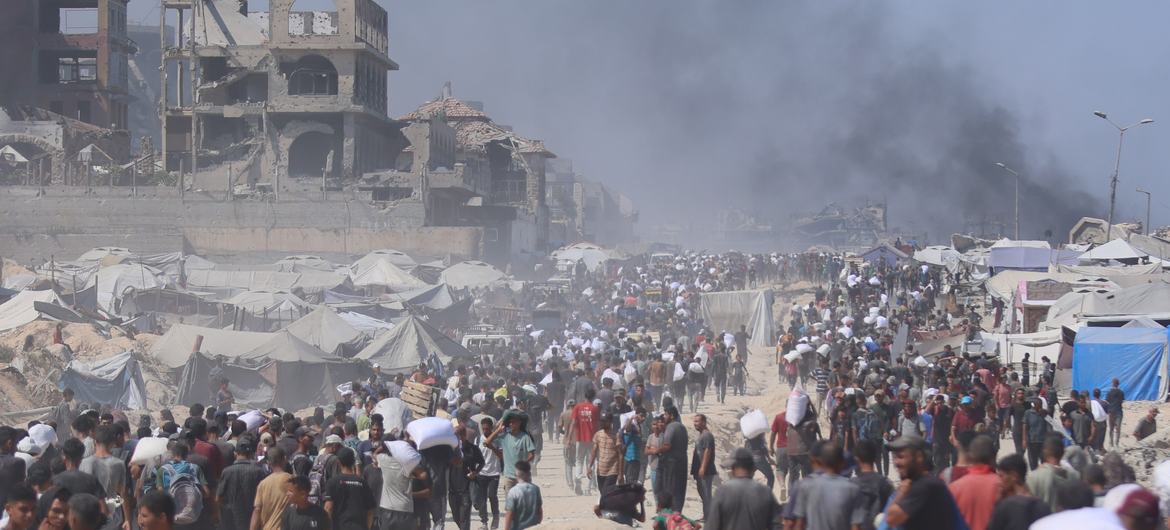
Spiralling Catastrophe: 1 in 3 Not Eaten in Days

United Nations agencies welcomed, Sunday, Israel’s pledge to implement daily humanitarian pauses in its military operations in Gaza, aimed at easing the flow of desperately needed aid into and across the devastated enclave.

But as starvation tightens its grip and “children are dying before our eyes,” UN officials and aid workers warn that the measures fall far short of the much-needed ceasefire and unfettered aid access that could help stem the spiralling humanitarian catastrophe.

“Welcome announcement of humanitarian pauses in Gaza to allow our aid through,” UN Emergency Relief Coordinator Tom Fletcher said on X. “In contact with our teams on the ground who will do all we can to reach as many starving people as we can in this window.”

In a statement later issued later by the UN Office for the Coordination of Humanitarian Affairs, or OCHA, which Mr. Fletcher heads up, he added that some movement restrictions appear to have been eased today, with initial reports indicating that over 100 truckloads were collected.

“This is progress, but vast amounts of aid are needed to stave off famine and a catastrophic health crisis. Across the UN agencies and humanitarian community, we are mobilized to save as many lives as we can, he said, but called for “sustained action, and fast”, including quicker clearances for convoys going to the crossing and dispatching into Gaza.

“Ultimately of course we don’t just need a pause – we need a permanent ceasefire,” stated Mr. Fletcher, who emphasized: “The world is calling for this lifesaving aid to get through. We won’t stop working for that.”

Also reacting via X, UNICEF said: “This is an opportunity to begin to reverse this catastrophe and save lives.”

According to the agency, since the collapse of the ceasefire between Israel and Hamas in March, children have been trapped in a nightmare and deprived of the basics to survive.

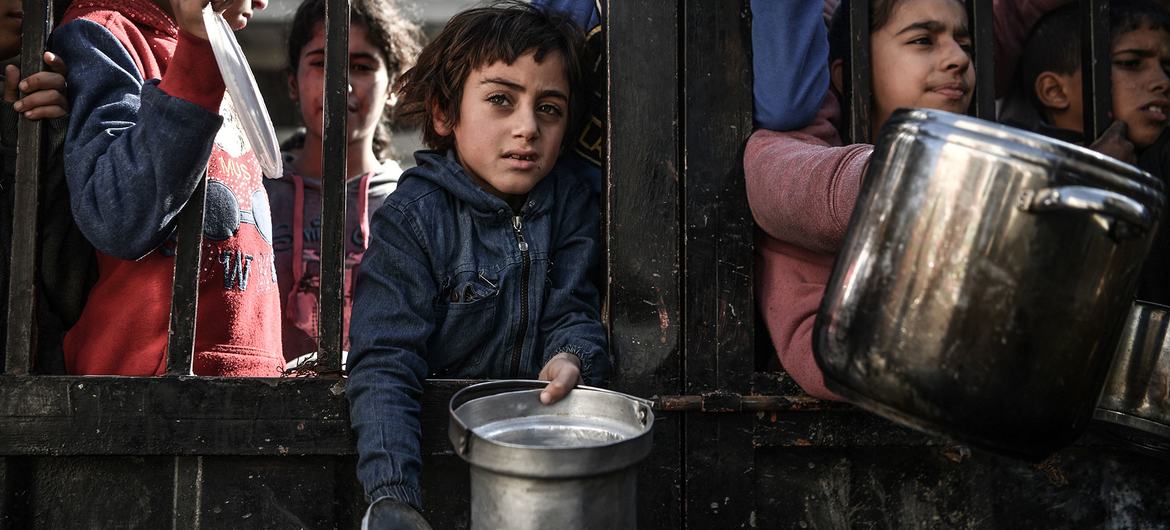
“The entire population of over two million people in Gaza is severely food insecure. One out of every three people has not eaten for days, and 80 per cent of all reported deaths by starvation are children,” the agency continued.

UNICEF emphasized that while it has never stopped delivering, “we can do a lot more if additional designated humanitarian corridors are created to facilitate the movement of our convoys – as well as commercial trucks, which are essential.”

‘A lifeline – if upheld and expanded’

The UN World Food Programme (WFP) also welcomed Israel’s announcement and its intent to open designated corridors for aid convoys in Gaza, “where hunger has reached catastrophic levels.”

With nearly half a million people facing famine-like conditions and a third of the population going days without food, WFP said in a press statement that the measures could offer a lifeline – if upheld and expanded.

Despite recent deliveries, including 350 truckloads last week, aid workers continue to face extreme risks and logistical hurdles. WFP said it has enough food stockpiled or en route to feed Gaza’s 2.1 million residents for three months, but without a ceasefire and consistent access, the scale of need far outpaces current efforts.

“An agreed ceasefire is the only way to reach everyone,” the agency stressed, calling for predictable and safe conditions to prevent further loss of life.

‘An entirely preventable crisis’

At the same time, the UN World Health Organization (WHO) warned that malnutrition in Gaza is spiralling out of control, with a sharp rise in deaths – most of them in July – marking what it calls a “dangerous trajectory.”

Of the 74 malnutrition-related deaths recorded this year, 63 occurred this month alone, including 24 children under five. Many died before reaching medical care, their bodies showing signs of severe wasting.

“This crisis is entirely preventable,” WHO said in a press release, citing the deliberate obstruction of aid for the mounting toll.

Children are bearing the brunt. Over 5,000 children have already been treated for malnutrition in July, many with the most life-threatening form. But Gaza’s four specialized treatment centers are overwhelmed, running low on fuel and supplies, and staffed by exhausted health workers.

“The health system is on the brink,” WHO warned, as disease spreads rapidly through communities with no clean water or sanitation.

The crisis is also devastating pregnant and breastfeeding women, over 40 per cent of whom are now severely malnourished. And it’s not just hunger that’s killing people—it’s the desperate search for food, according to WHO.

Since late May, more than 1,000 people have been killed and over 7,000 injured while trying to access aid. WHO is calling for an immediate ceasefire and a sustained surge of diverse, nutritious food and medical supplies.

“This flow must remain consistent and unhindered,” the agency said, urging protection for civilians, health workers, and humanitarian operations.

‘The world will judge this conference’

Looking ahead to the High-Level Conference on Palestine set to open on Monday at UN Headquarters in New York, the UN High Commissioner for Human Rights issued a strong call for immediate action to end Israel’s unlawful occupation and the ongoing devastation in Gaza.

“Countries that fail to use their leverage may be complicit in international crimes,” Volker Türk warned in a statement, urging governments to seize the moment for concrete measures that pressure Israel to halt the carnage and recommit to a two-state solution.

The UN rights chief described Gaza as a “dystopian landscape of deadly attacks and total destruction,” where children are starving and families are being killed in their search for food. The militarized aid distribution system, supported by the US and Israel, is failing to meet the scale of need.

“We can never forget that more than 300 of our own colleagues have been killed,” he added.

Moreover, in the occupied West Bank, violence by Israeli forces and settlers continues unabated, with homes demolished and water supplies cut off.

Mr. Türk reiterated condemnation of the 7 October attacks by Hamas but emphasized that the scale of suffering inflicted on Palestinians since then cannot be justified.

Calling for an immediate, permanent ceasefire, the release of hostages and detainees, and a massive surge in humanitarian aid, he concluded:

“The people of the world will judge this Conference on what it delivers.”

UN News

Continue reading
‘One Killed Every 12 Minutes’

New Islamic Relief analysis of UN data1 reveals July is now the deadliest month in Gaza for 18 months, with Israel killing one person every 12 minutes as it accelerates the systematic targeting and starvation of civilians.

An average of 119 Palestinians are being killed daily so far in July – the highest rate since January 2024. More than 401 Palestinians a day are being wounded, the highest figure since December 2023, whilst doctors report 19 people, mostly children, died from starvation in just one day this week – victims not just of violence, but of a deliberate policy of deprivation and man-made famine.

The killings have accelerated since Israel imposed its new heavily militarised food distribution scheme in late-June, with almost daily massacres of starving people as they try to collect food. The Israeli blockade has systematically impeded humanitarian aid, forcing people into starvation and shooting those who seek aid. Hundreds of desperate civilians have been gunned down, with many of the wounded piled onto donkey carts as ambulances are prevented from reaching them.

Waseem Ahmad, Chief Executive of Islamic Relief Worldwide, says world leaders must urgently take action to stop the escalating slaughter:

“The rate of killing is accelerating every day that world leaders fail to act. We are witnessing people massacred just for trying to get food, water or medicine. We’re seeing babies and young children starve to death because Israel is blocking humanitarian aid. We’re seeing starving families ordered to leave their homes, then bombed in the tents where they are told to shelter. Israel is using starvation as a weapon of war, shutting down the humanitarian system then forcing people to militarised death traps.

“There is no excuse for inaction when five more people are being killed every single hour. Every minute costs lives. Gaza’s entire society is being killed – sons, daughters, parents, medics, teachers, artists, aid workers, journalists, entrepreneurs, engineers, poets, farmers. No one is spared.

“This dehumanisation and normalisation of suffering must not be allowed to continue. Governments that fail to act are complicit. More words of condemnation and concern are not enough – we urgently need world leaders to take meaningful action to pressure Israel to stop the killing and allow humanitarian aid to reach those in need. That means ending all arms sales, suspending trade agreements and banning produce from illegal Israeli settlements. Only increased and sustained international pressure can stop this catastrophe and save lives.”

International governments have a moral and legal duty to act to prevent genocide, in line with the ruling of the International Court of Justice. They must flatly refuse the militarised distribution system and demand the restoration of the UN-coordinated humanitarian response, in line with humanitarian principles and international law.

Most of the casualties are civilians and at least 30% of people killed throughout the crisis are children. UNICEF says that 28 children are being killed every day and the global Protection Cluster warned last week that 10 children a day in Gaza are losing a limb, with a surge in amputations due to missile strikes and artillery fire.

In total, around 9% of Gaza’s entire pre-war population have now been killed or wounded, with over 59,000 people dead and over 140,000 wounded – many with life-changing injuries such as loss of limbs.

Notes

  • 1 Between 1—20 July in Gaza, at least 2,382 Palestinians have been killed and 8,030 injured, according to figures collated by the UN-coordinated Health Cluster in the Occupied Palestinian Territory. This is already the highest number of fatalities in a calendar month since March 2024 when 2,617 Palestinians were killed at an average of 84 people killed a day. The average number of people killed so far in July 2025 is 119 every day, the highest since January 2024 when 5,041 people were killed at an average of 162 per day. The average number of people wounded per day so far in July is 401, which is the highest since December 2023 when 667 people a day were wounded.
  • Islamic Relief has worked in the Occupied Palestinian Territory since 1997. During the current crisis our Palestinian staff and partners have provided vital aid to more than 600,000 people, including food, water, healthcare and education.

Reliefweb

Continue reading
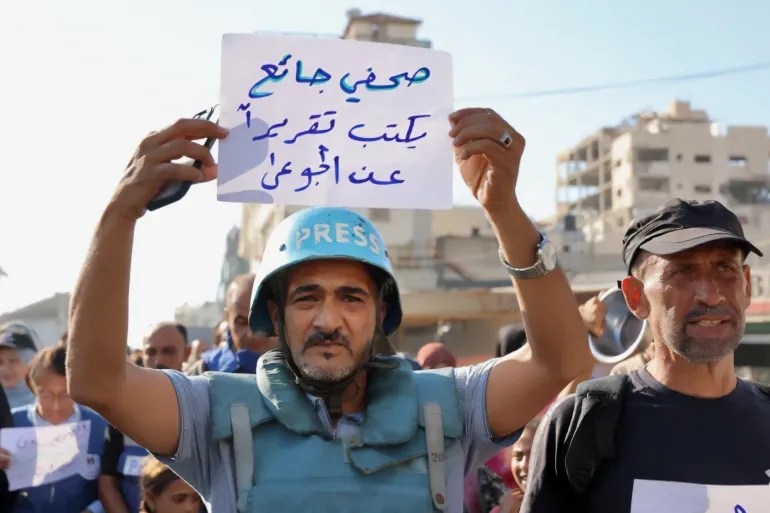
AFP Sounds Alarm Bells About Starving Journalists

Agence France-Presse (AFP) expressed fear its correspondents in the Gaza Strip may starve to death amid the catastrophic conditions of suffering Palestinians in the Strip amidst the Israeli war.

The agency said in a statement on its X platform: “We have been working with a freelance copywriter, three photographers, and six freelance videographers in the Gaza Strip since the departure of its permanent journalists in early 2024.”

The agency, founded in 1944, added: “Today, they, along with a few others, are the only ones still covering what is happening inside the Gaza Strip, after international media outlets were banned from entering the territory for nearly two years.”

The French news agency explained Bashar, who worked with the agency since 2010, “started as a field assistant, then as a freelance photographer, and since 2024 has become the main photographer.” The agency added on Saturday, July 19, he managed to post a message on Facebook saying: “I no longer have the strength to work in the media. My body is thin and I can’t work anymore.”

Bashar, 30, works in conditions similar to those of all Gazans, moving from one refugee camp to another depending on the Israeli bombardment.

“For more than a year, he has been living in abject poverty and continues his work amid grave risks.” AFP added “hygiene has become a major problem for him. He suffers from severe diarrheal illnesses, and since February, he has been living in the ruins of his home in Gaza City with his mother, his four brothers and sisters, and the family of one of his brothers.”

The Agency continued: “His house is devoid of furniture, electricity, and water, and he lives on what some of his relatives provide. On Sunday, he reported that his older brother had fallen due to… Hunger.”

Although these journalists receive a monthly salary from the French agency, it barely covers, or does not cover, the skyrocketing market prices. The banking system is broken, and the intermediary who transfers funds from foreign accounts to the Gaza Strip takes a commission of nearly 40%.

The agency explains that it “cannot provide its team with equipment or even enough fuel to travel to do their work,” noting that “traveling by car is tantamount to risking becoming a target for Israeli airstrikes.” Therefore, its correspondents travel “on foot or on donkey carts.”

Ahlam, for her part, confirms that “the biggest problem she faces is the lack of food and water.” The journalist, who lives in the southern Gaza Strip, adds: “Every time I leave the tent to cover an event, conduct an interview, or document an incident, I don’t know if I’ll return alive.”

We see them collapsing.

The agency says: “They are young and their strength is fading, and most of them no longer have the physical ability to move within the Gaza Strip to do their work. Their calls for help, torn apart, have become daily.”

She adds: “A few days ago, we realized from their text messages that their strength was no longer sufficient, that they were no longer even able to deliver news to us, so let them tell you the truth from there.”

Bashar is quoted as writing, Sunday: “For the first time, I feel defeated. More than three years of hell, and we no longer find the words to explain to the world that we live daily between death and hunger. I hope that Mr. Macron will help me escape this hell.”

His colleague Ahlam says: “I am trying to continue my work, to give a voice to the people, to document the truth despite all attempts to silence it.” Resistance is not an option, but a necessity.

More than 225 journalists have been martyred in Gaza since the beginning of the Israeli aggression on October 7, 2023, as part of the Israeli occupation’s plans, using all means at its disposal, to obscure the truth, change the image, and prevent foreign journalists from entering Gaza.

Since its founding in 1944, Agence France-Presse, despite its permanent presence in conflict zones, has not witnessed the death of any of its employees from starvation.

The Ministry of Health in Gaza confirmed that the Israeli starvation policy has led to the deaths of more than 900 Palestinians—including 71 children—due to hunger and malnutrition, in addition to 6,000 wounded among those seeking a livelihood since the beginning of the Israeli war of extermination on the Gaza Strip.

Palestinian and international organizations have warned that the Gaza Strip is currently experiencing the worst stages of famine as a result of the Israeli starvation policy as reported in Jo24.

Continue reading