
Houthis Give Israel Four Days to Allow Aid Into Gaza
 CrossFireArabia
- March 7, 2025
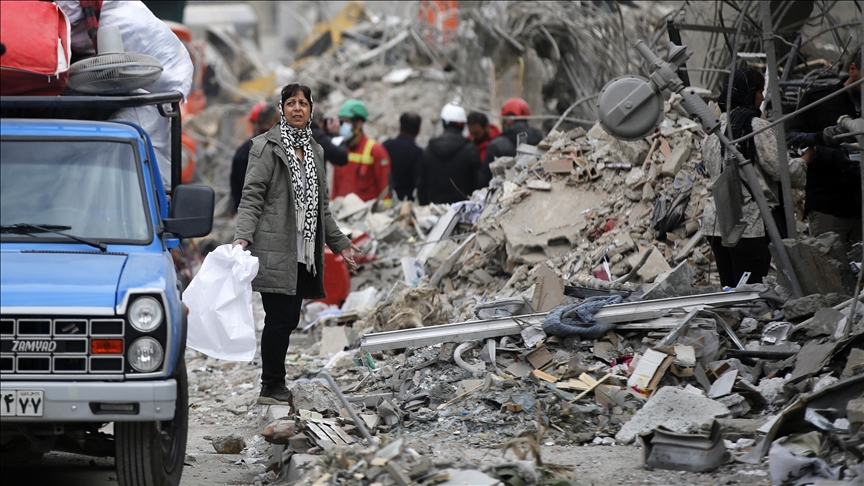
The Houthis are ready to restart their naval military operations in the Red Sea against ships bound for Israel. The leader of the movement Abdul-Malik al-Houthi, said Israel is evading its obligations regarding the humanitarian file, and that Hamas has been keen to fully fulfill its obligations the ongoing ceasefire on Gaza.
“We announce to the whole world that we will give a four-day grace period, this is a grace period for the mediators in their efforts,” he said in a speech broadcast by the Houthi-affiliated Al-Masirah Channel.
“If the Israeli enemy continues after the first four days to prevent the entry of aid into the Gaza Strip and continues to close the crossings and prevent the entry of food and medicine into the Gaza Strip, we will resume our naval operations against the Israeli enemy and meet the siege with a siege,” Abdul-Malik Al Houthi pointed out.

Social Media Lash Out at BBC For Gaza Film
- CrossFireArabia
- March 7, 2025
The BBC is facing growing criticism for “failing in its duty of care” to the 13-year-old Palestinian narrator of a Gaza documentary as he has reportedly experienced intense online abuse following the BBC’s decision to withdraw the film.
The Gaza: How to Survive a War Zone documentary sheds light on the experiences of children in Gaza amid Israel’s genocide war through the eyes of narrator Abdullah al-Yazuri. However, it was removed from the BBC iPlayer, after a pro-Israel campaign centered on al-Yazuri’s relationship with a minister in Gaza’s Hamas-run government.
Abdullah’s father Ayman al-Yazuri has been labeled by media as a “Hamas chief” while he is a technocrat with a scientific rather than political background, who has previously worked for the UAE’s education ministry and studied at British universities.
Fears for Safety
Speaking exclusively to Middle East Eye (MEE) last week, the child explained that he and his family have been the targets of online abuse, adding that the affair has caused him serious “mental pressure” and made him fear for his safety.
“I did not agree to the risk of me being targeted in any way before the documentary was broadcast on the BBC. So [if] anything happens to me, the BBC is responsible for it,” he said.
The boy also said the BBC had not reached out to him to apologize.
“Hamas Royalty”
His father has also denied claims that he and his son are “Hamas royalty” in an interview this week with MEE.
His comments came after pro-Israel activist David Collier alleged that Abdullah was the son of a deputy minister in Gaza’s government and was related to a co-founder of Hamas, Ibrahim al-Yazuri, who died in 2021.
The father is a civil servant in Gaza’s government – which is administered by Hamas.
Many Palestinians in Gaza have family or other connections to Hamas, which runs the government. This means that anyone working in an official capacity must also work with Hamas.
Collier, whose revelations sparked a national scandal, described Abdullah as the “child of Hamas royalty”, a claim later repeated by mainstream British newspapers.
The father said that his full name was Ayman Hasan Abdullah al-Yazuri, whereas the Hamas founder’s full name was Ibrahim Fares Ahmed al-Yazuri. He added that his father was named Hasan and died in 1975.
“Our family is not as some claim,” he told MEE, insisting he was not “Hamas royalty”.
“There are many individuals within our family who are affiliated with Fatah and the Popular Front for the Liberation of Palestine (PFLP), including some in leadership positions within these movements.”
Sparking Debate
The child’s interview with MEE about his experiences has sparked a debate on social media on media ethics and the BBC’s responsibility to protect the children it works with.
“I posted about this concern shortly after the BBC pulled this documentary,” said Chris Doyle, chair of the Council for Arab-British Understanding, responding to Abdullah’s video.
Several social media users have accused the BBC of exposing the child’s life to danger, and say the broadcaster has a responsibility to ensure his safety.
They have also highlighted Section 9 of the BBC’s editorial guidelines concerning children and young people as contributors, which states that the BBC “must take due care over the physical and emotional welfare and the dignity of under-18s who take part or are otherwise involved in our editorial content, irrespective of any consent given by them or by a parent, guardian or other person acting in loco parentis. Their welfare must take priority over any editorial requirement”.
There are also guidelines in the section that dictate that if a person under 18 is suspected to be at risk in the course of their work, “the situation must be referred promptly to the divisional Working with Children Adviser or, for independent production companies, to the commissioning editor”.
Section 9 also states that “procedures, risk assessments, and contingencies for the impact of participating on an individual’s emotional and mental well-being and welfare may be appropriate in some circumstances”.
Others also argued that the removal appeared to be another example of media bias against Palestinians according to the Quds News Network.

Germany Backs Egypt’s Gaza Reconstruction Plan
- CrossFireArabia
- March 7, 2025
Germany on Friday expressed strong support for the Arab League’s reconstruction plan for Gaza, which stands as an alternative to US President Donald Trump’s proposed US takeover of Gaza.
“The German government welcomes the Arab League’s plan for the reconstruction of the Gaza Strip,” Chancellor Olaf Scholz’s spokesman Steffen Hebestreit told a news conference in Berlin.
“The plan includes many valuable elements we can build upon. Constructive discussions should begin immediately,” he said, adding that Berlin maintains that Gaza must not pose any security threat to Israel in the future.
At the same news conference, German Foreign Ministry spokesman Sebastian Fischer stated that the plan contributes significantly to a sustainable solution by addressing political and security concerns in the Gaza Strip.
“We also believe that it is appropriate to rely on the Palestinian Authority as a key player in this process,” Fischer said. “The plan supports the long-term goal of a two-state solution and also a resumption of direct negotiations between the Israeli and Palestinian sides. We also support this,” he added.
When asked about Germany’s position on other plans and proposals, such as the relocation of Palestinians to neighboring countries, Fischer firmly stated that “forced relocations and expulsions are always contrary to international law.”
Bloomberg: Gaza is a Story of Resilience
- CrossFireArabia
- March 6, 2025
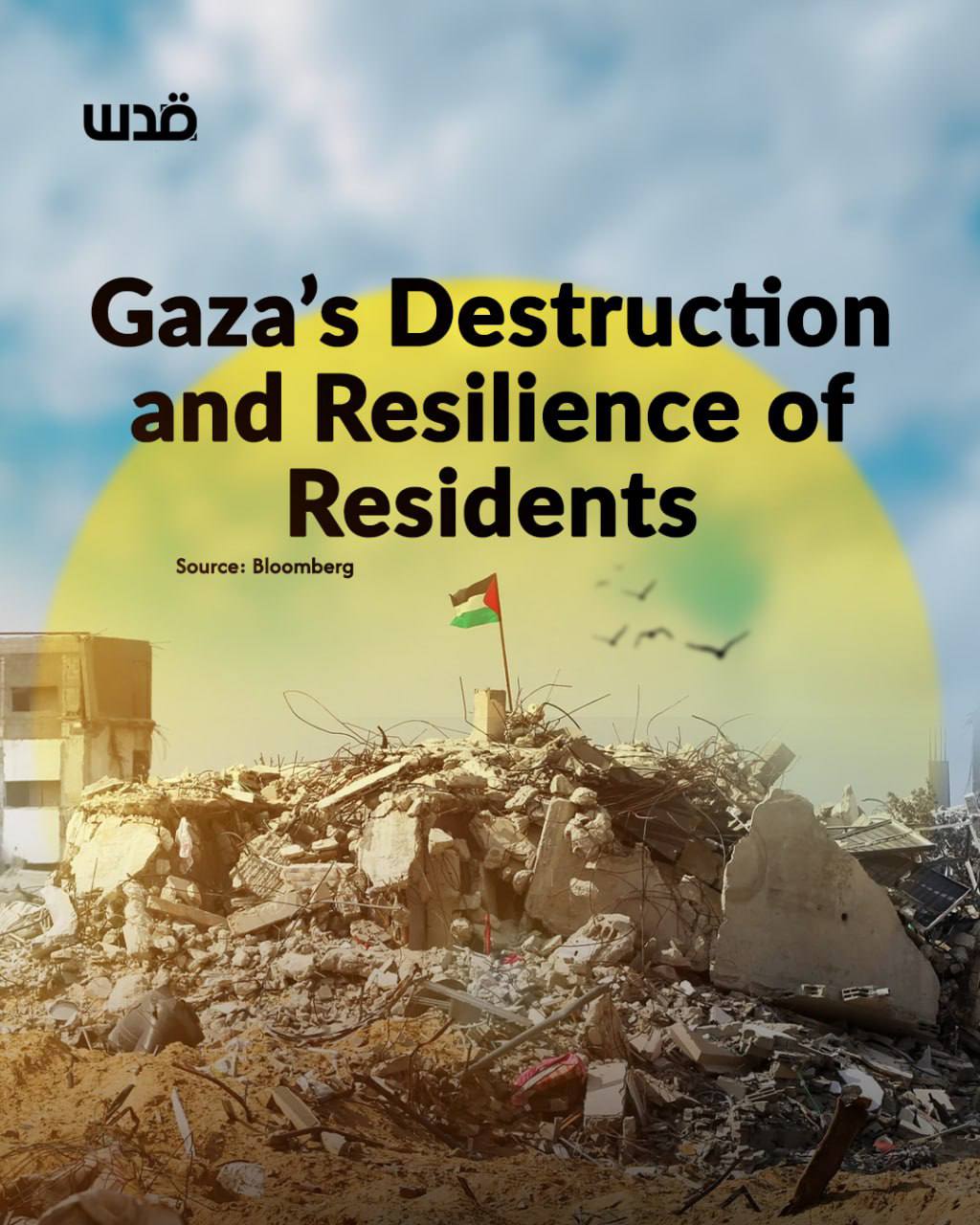
A recent Bloomberg investigation using satellite imagery of Gaza has revealed widespread devastation across all aspects of life in the region. Despite the immense destruction, the resilience of the Palestinian people continues to stand strong in the face of such adversity.