Israeli Jailers Poured Acid on Me Says Released Prisoner Abu Tawila

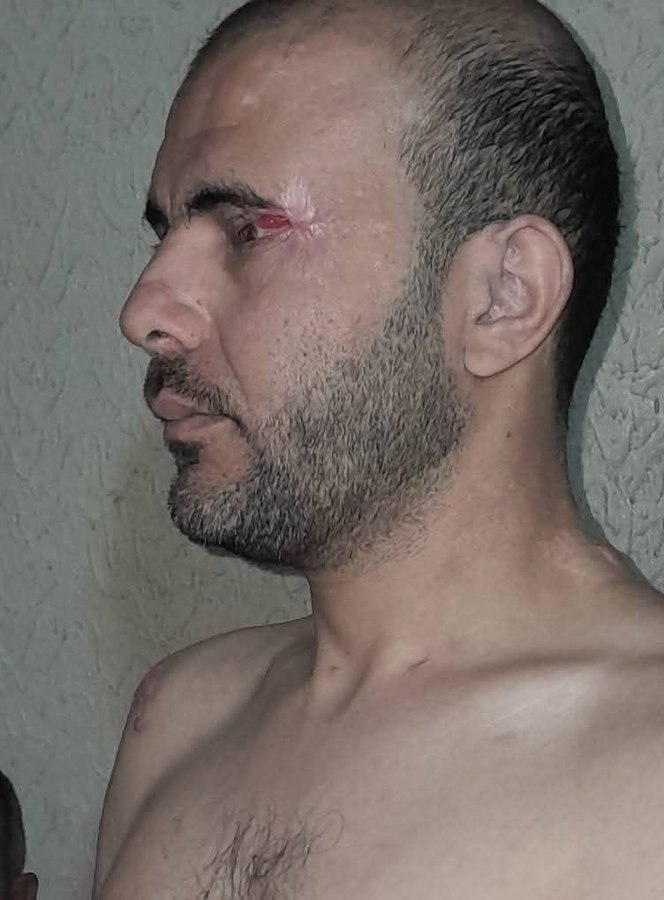
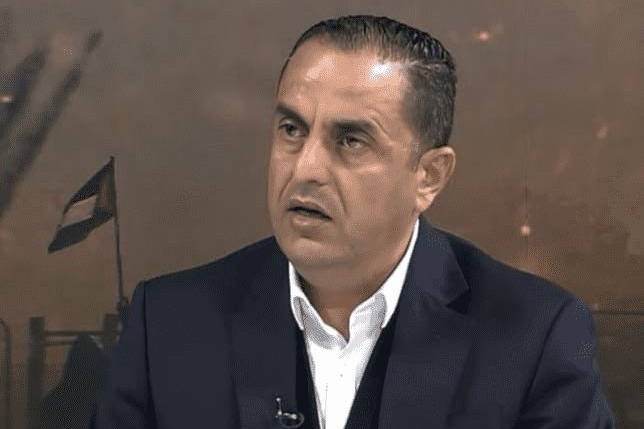
Mohammed Abu Tawila is one of many Palestinians who went through extreme conditions in Israeli jails. Recently released, Abu Tawila says Israeli jailers poured acid and other chemicals on his body during an interrogation.

Abu Tawila was kidnapped from Gaza and subjected to severe beatings, including punching him in the eye.

He was tortured with chemical substances, including chlorine, dishwashing liquid, laundry detergent, soap, and air fresheners.

“They were ignited on my body for three days.”

“My eye was included [in the torture]. One of them would keep punching me in the eye, while wearing gloves with something tough, that resembled bone,” he recounts.

Abu Tawila would later collapse on the rubble due to the severe beating.

Once the Israeli soldiers saw how his body had reacted to the acid attack and other chemicals, they transferred him to the occupied West Bank.

Abu Tawila remained in the hospital for a few weeks before his transfer to the notorious Ofer military prison.

“Of course, there was also torture in the occupied territories, from beatings, to insults and humiliation, not to mention hunger and sitting in the cold.”

“They [Israeli guards] would release dogs on us, storm in and beat us inside, tie our hands, and take us outside to the prison yards.”

“They would also kick us, causing our faces to swell and bleed,” Abu Tawila recounts.

In a recent post on X, Israel’s far-right politician Itamar Ben Gvir shared a video showing the abuse and humiliation of Palestinians in the Keziot prison, located in the Negev desert.

In the clip, a detainee can be seen kneeling and painting the prison walls, while an Israeli guard stands over him, pointing a weapon in his direction.

Several other prisoners are shown kneeling and facing the opposite wall.

Testimonies also describe regular beatings by guards, extreme overcrowding, humiliation and inadequate hygiene.

In early August 2024, the Israeli rights group B’Tselem accused Israeli authorities of systematically abusing Palestinians in “torture camps,” subjecting them to severe violence and sexual assault.

Human rights organizations say Israel continues to violate all rights and freedoms granted to prisoners by the Fourth Geneva Convention and international laws.

Palestinians subjected to ‘severe torture’ under Israeli detention: Euro-Med

Euro-Med says the terrible health conditions in which Palestinians were released from Israeli prisons indicate a pattern of torture and abuse until the very last moments.

Dozens of Palestinians killed in Israeli detention

In a statement released on Tuesday, the Palestinian Prisoners Society (PPS) said at least 59 Palestinians held by Israel have lost their lives since October 2023.

The PPS said 38 people of the group are from the Gaza Strip.

The PPS accused the Israeli authorities of hiding the death of scores of Palestinian prisoners in detention.

Separately, the Commission of Detainees’ Affairs confirmed that Musab Hani Haniyeh was the latest victim who died in Israeli custody according to PressTV.

Haniyeh, 35, from the southern city of Khan Yunis, was abducted on March 3, 2024. His family said Haniyeh was in good health before his detention.

More than 14,500 Palestinians have been kidnapped by Israeli forces across the occupied West Bank since October 2023. Dozens of them have died in detention in recent months.
Continue reading
Political Schizophrenia and Prisoners’ Exchange

Military and strategic expert Nidal Abu Zeid said that the Netanyahu government increases the intensity of its media discourse between threats and intimidation after each prisoner exchange to cover up its failure in its war on Gaza. He said however, that the intensity of the statements swing low with the approach of the delivery of a new batch of prisoners. He added this is met with calm and stability in the media discourse of the Palestinian resistance, which relies on actions, not words.

Abu Zeid added to Jordan 24 that postponing the release of the seventh batch of Palestinian prisoners at a time when the resistance committed itself to releasing the bodies and its prisoners clearly shows the state of political schizophrenia and confusion the Netanyahu government is suffering from in front of the Israeli street and the world after the scenes and messages of the resistance during the prisoner handover operations.

The military expert indicated the Israeli intransigence in not committing to releasing the Palestinians from prisons will not last long. He expected the seventh batch of Palestinian prisoners will be released before the end of this week.

Continue reading
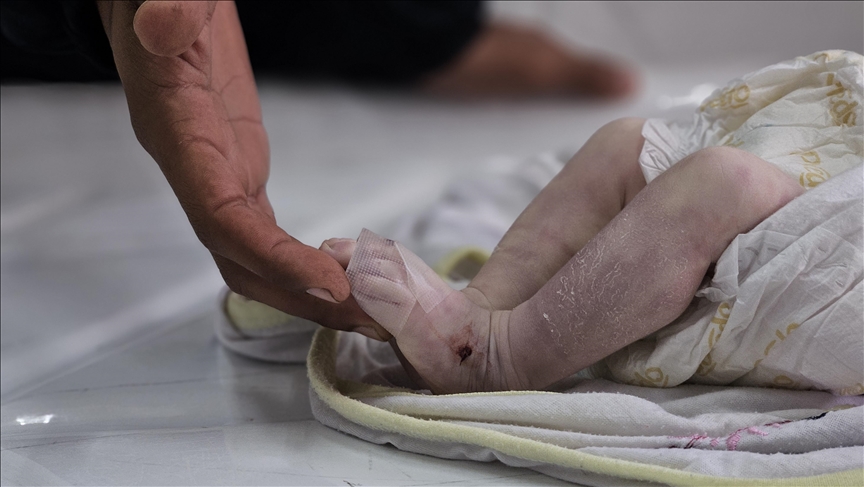
Five Infants Die in Gaza Because of The Freeze

“Nine infants were hospitalized in the past two weeks due to health complications caused by severe cold,” Saeed Salah, Director of the Patient’s Friends Benevolent Society Hospital in Gaza, told Anadolu.

“Of the nine cases, five infants aged between one day and two weeks died,” he added.

Salah said one baby is still on a ventilator due to his serious health condition, however, three others were discharged from hospital.

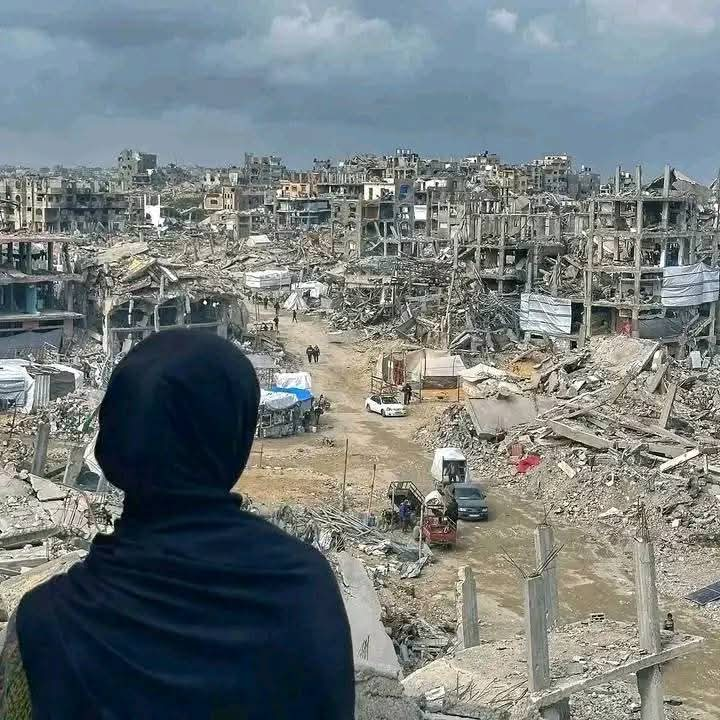
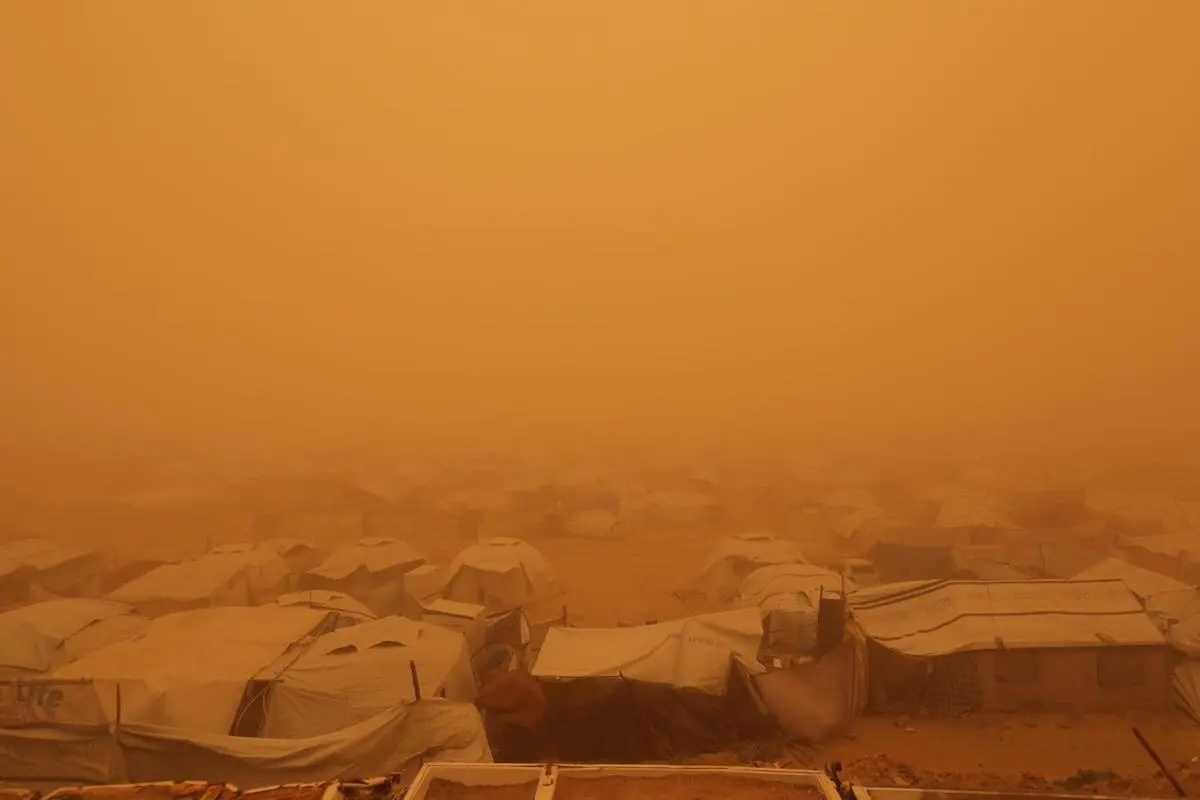
He said the nine new born were transferred to the hospital from northern Gaza because the region there has been completely destroyed and where most of the population has been displaced and are living in tents following Israel’s destructive war on the enclave.

Salah appealed to the international community to intervene to allow the entry of mobile homes, tents, and fuel into Gaza to provide shelter to thousands of Palestinians.

Hamas blamed Israel’s “criminal policies” for the death of the babies in Gaza news of which are trending on the social media.

https://twitter.com/MustafaBarghou1/status/1894328481514750222

In a statement, the group called for immediate intervention “to stop Israel’s violations of the ceasefire agreement and allow the entry of urgent shelter, heating, and medical aid supplies into Gaza to the children there.”

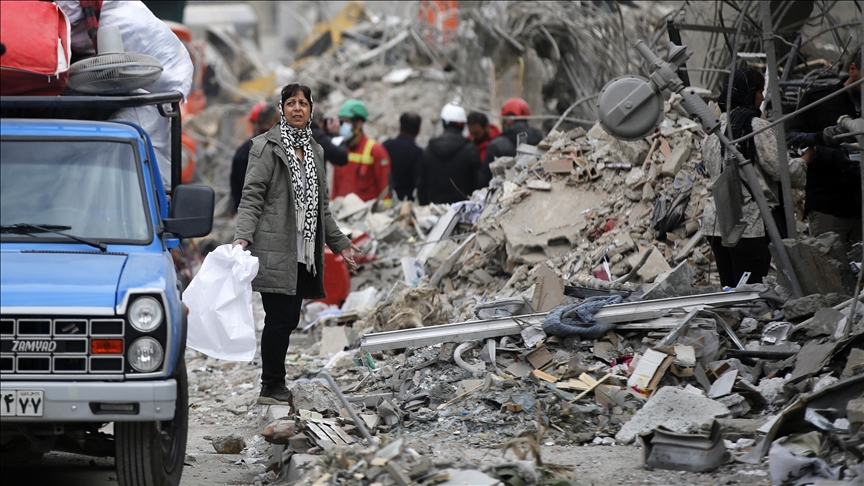
According to Gaza’s government media office, nearly 1.5 million Palestinians have been left without home or shelter after Israel waged its deadly war on the enclave.

A ceasefire and prisoner exchange agreement has been in place in Gaza since last month, pausing the Israeli war that has killed at least 48,350 people, mostly women and children, and left the enclave in ruins.

Last November, the International Criminal Court issued arrest warrants for Israeli Prime Minister Benjamin Netanyahu and his former Defense Minister Yoav Gallant for war crimes and crimes against humanity in Gaza.

Israel also faces a genocide case at the International Court of Justice for its war on the enclave.

Continue reading
Who is Going to Rebuild Gaza?

No official announcement was made following the Riyadh Summit, which was considered fraternal, friendly, and consultative rather than formal. The summit, held a few days ago, was attended by the Gulf states, along with Jordan and Egypt, in anticipation of the Cairo Summit scheduled for March 4. The Cairo Summit is expected to approve and announce a new Arab plan for rebuilding Gaza as an alternative to Trump’s plan. However, more importantly, the Arab plan presents a comprehensive political approach linking the Gaza issue to the establishment of a Palestinian state and a peaceful resolution in the region. This approach counters Israel’s new policies, which are based on political hegemony—not only in Palestine by eliminating the two-state solution but also by expanding Israel’s security boundaries to include parts of Syria and Lebanon and inciting the U.S. into a confrontation with Iran.

The Egyptian-Arab approach is still in its final stages of preparation. It takes into account a combination of financial, technical, political, and security aspects concerning Gaza. Palestinian Prime Minister Mohammad Mustafa has proposed modifications to the plan originally put forward by the World Bank, the United Nations, and the European Union, which estimated the cost of rebuilding Gaza at over $50 billion in a rapid and preliminary needs and damage assessment report (IRDNA). Instead, Mustafa proposed a more realistic and feasible plan costing no more than $20 billion, to be implemented in three phases. The Egyptians have incorporated this into their reconstruction plan, which includes dividing Gaza into three safe zones, using temporary housing (caravans) and tents, and developing a technical vision for redesigning the sector’s infrastructure through specialized Egyptian companies.

The Arab approach links the reconstruction plan to several key elements. The first is the technical, logistical, and financial aspect of rebuilding. The second is reforming the Palestinian Authority (PA) to counter Israeli claims of its incompetence, with reform measures covering political and security aspects. The third element concerns the administration of Gaza in the post-occupation phase. A significant development has occurred with the Palestinians agreeing on a temporary administrative committee responsible for technocratic affairs. Hamas has accepted this arrangement, and President Mahmoud Abbas has reluctantly agreed to it, as it implicitly means that the PA will not return to Gaza.

The most challenging aspect of the Arab plan lies in the security arrangements during the reconstruction phase. Arab states refuse to deploy security forces or enter Gaza without a clear vision for ending the Israeli occupation and establishing a Palestinian state. As Arab diplomats emphasize, what is needed is not just a roadmap for resolving the Palestinian issue, but rather an agreement on final-status issues and recognition of a Palestinian state—followed by a roadmap for implementation, not the other way around.

The most contentious issue in the Arab approach is Hamas’s weapons. Israel, along with the United States, will not accept Hamas retaining its weapons in Gaza. Israel has made it clear that it links the second phase of the process to this condition, and the U.S. has accepted this demand. On the other hand, the Arab side ties the issue of disarming non-state actors to the establishment of a Palestinian state that would have the exclusive right to possess weapons. The key question remains: Who would disarm Hamas? The only legitimate entity that could do so is a recognized Palestinian state, which remains the missing piece in U.S. policies that align with Benjamin Netanyahu’s vision.

The Arabs hope that this approach will establish a new framework for relations with the United States and offer alternative strategic options. They even believe it could persuade President Donald Trump to secure several achievements—perhaps even earning him a Nobel Peace Prize in the end.

This is undoubtedly a highly optimistic approach, but it represents a new Arab attempt to present a united position and alternative strategic options. However, the biggest challenge this vision overlooks lies in the details. As the saying goes, “the devil is in the details.” What kind of Palestinian state is actually possible under the current circumstances? What was previously proposed by Trump himself? Is there a single Palestinian—any Palestinian—who could accept a state comprising only 30% of the West Bank, without East Jerusalem, and without control over borders? How could Hamas and its supporters—or even the majority of Palestinian refugees—be convinced of such a proposal, even if there were Israeli and American acceptance of the new Arab approach?

Mohammad Abu Rumman is a columnist in The Jordan Times.

Continue reading