Jordanian Prime Minister Jafar Hassan on Tuesday called the so-called “Greater Israel” vision an “illusion,” stressing that Tel Aviv is “isolated” due to its “extremist” policies.
“We hear about visions and proposals that imply a perpetual war with no end, such as the illusion of Greater Israel entertained by extremist politicians in Israel,” Hassan said during a meeting in Amman with his Lebanese counterpart, Nawaf Salam, who arrived in the Jordanian capital early Tuesday for an unannounced visit.
He said Israel is “isolated and besieged because of its extremist policies.”
“The entire reality points to (Israeli) policies that deepen hatred and resentment as a result of ongoing massacres, and the peoples of the world and the region will not forgive them,” he added in his comments carried by the official Petra news agency.
On Monday, Jordanian government spokesman Mohammad al-Momani accused the far-right in Israel of “threatening the region and undermining prospects for a two-state solution.”
“Greater Israel” is a Biblical term used in Israeli politics to refer to the expansion of Israel’s territory to include the West Bank, Gaza, Syria’s Golan Heights, Egypt’s Sinai Peninsula, and parts of Jordan.
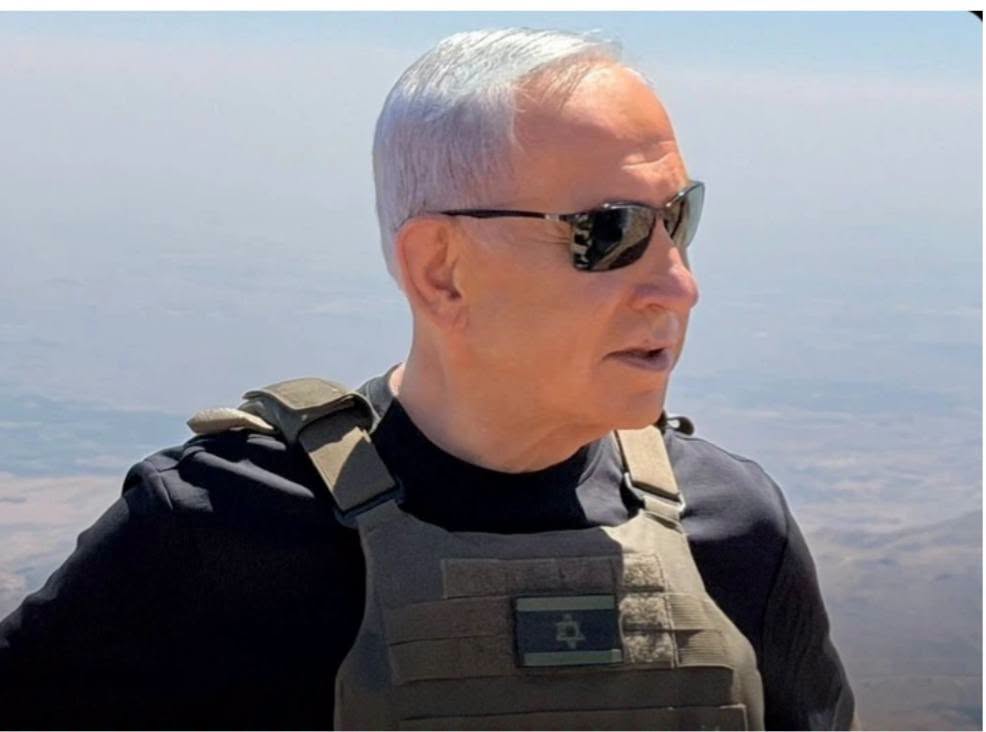
Last week, Israeli Prime Minister Benjamin Netanyahu told a news channel that he feels “very attached” to the vision of a Greater Israel. He said he considers himself “on a historic and spiritual mission” which “generations of Jews that dreamt of coming here and generations of Jews who will come after us,” according to Anadolu.
Israel has killed more than 62,000 Palestinians in Gaza since October 2023. The military campaign has devastated the enclave and brought it to the verge of famine.
Last November, the International Criminal Court issued arrest warrants for Netanyahu and his former Defense Minister Yoav Gallant for war crimes and crimes against humanity in Gaza.
Israel also faces a genocide case at the International Court of Justice for its war on the enclave.
Since his arrival on the American political scene, Donald Trump has been an exceptional case in the United States’ relationship with Israel. Historically described as a strategic alliance, this relationship has transformed under Trump into a personal partnership between him and Israeli Prime Minister Benjamin Netanyahu. This relationship has deepened to an unprecedented degree, with Trump becoming one of the most biased and supportive American presidents toward Netanyahu, not only in foreign policy decisions but also on issues of a purely Israeli domestic nature, such as the ongoing trials against Netanyahu or calls for early elections.
What drives Trump to this level of involvement in Israeli domestic affairs? And why does he insist on defending Netanyahu despite the criticism and accusations against him? In the current Israeli landscape, Netanyahu faces significant domestic challenges related to multiple corruption trials, in addition to escalating tensions within the ruling coalition, particularly with the religious parties, which have expressed on more than one occasion their desire to dissolve the Knesset and call for early elections. These parties, despite being partners in the government, view continuing under Netanyahu’s leadership as a political burden due to the corruption cases and poor performance in some cases. This recently prompted them to propose a vote within the Knesset to call for new elections.
In this context, Trump’s position was clearly supportive of Netanyahu, expressing his rejection of any attempt to remove Netanyahu from power and considering his continued rule essential to Israel’s stability and its security and political future. Even stranger are the reported interventions by Trump or his circle in the matter of Netanyahu’s trial. It has been reported—through both official and unofficial channels—that he called for a pardon or an end to the legal proceedings against him, arguing that these trials are politically motivated and that Netanyahu is being subjected to an unfair campaign by the Israeli judiciary. This intervention raises many questions, most importantly: What is Trump’s interest in Netanyahu’s survival? Why would he risk his political reputation for the sake of being a foreign leader facing criminal charges?
The answer to these questions requires examining the nature of the relationship between the two men. Since Trump assumed the presidency in 2017, he has pursued an unprecedented agenda in support of Israel, including moving the US embassy to Jerusalem, recognizing Israel’s sovereignty over the occupied Syrian Golan Heights, and supporting the “Deal of the Century,” considered the most biased in the history of US mediation.
All these measures were met with widespread acclaim and celebration by Netanyahu, who used them in his election campaign to bolster his domestic popularity, portraying himself as capable of bringing absolute US support to Israel.
In turn, Trump found in Netanyahu a reliable ally who reflects his vision for the Middle East and helps him win the support of a pivotal electoral base within the United States: evangelical Christians. People must realize that the true backbone of support for Israel in America is not the Jewish community, but evangelicals, who constitute approximately 25% of the population, compared to less than 2% of American Jews.
Therefore, Trump—as he has stated on more than one occasion—considers engaging with evangelicals more effective than appeasing the Jews, because they constitute a formidable lobbying force pushing for American policies aligned with the Israeli right-wing agenda, and view support for Israel as part of the Christian Zionist religious doctrine. These people see Netanyahu as the leader most qualified to preserve the “Jewishness of the state” and advance policies of expansion and hegemony.
Accordingly, Netanyahu’s downfall, or even his trial, represents a threat not only to Trump, but also to the political and ideological system he has meticulously crafted during his presidency. It is impossible to trust that potential Israeli alternatives will maintain the same level of loyalty or pursue the same confrontational approach toward Iran and the Palestinians.
Hence, for Trump, defending Netanyahu becomes a defense of a broader regional project that keeps Israel at the forefront of the confrontation with Tehran and strengthens right-wing populist alliances globally.
Moreover, Trump himself faces investigations and legal prosecutions in the United States, whether related to his attempt to overturn the election results, his retention of classified documents after leaving the White House, or various financial issues. Therefore, his defense of Netanyahu may be implicitly understood as self-defense. He seeks to establish the principle that the trial of political leaders is primarily a selective political process, not a fair judicial process. If Netanyahu is able to escape accountability or obtain a pardon, Trump will see this as a precedent that will strengthen his argument before the American judiciary and domestic public opinion.
Strategically, Trump does not view Israel merely as a traditional ally, but rather as an extension of his global political vision based on isolation from international institutions, undermining the liberal multilateral order, and strengthening bilateral alliances with strong leaders who share his political style and confrontational personality. For him, Netanyahu is the Israeli version of this model: a leader who clings to power despite internal and external pressures, fiercely confronts the media and the judiciary, and relies on a solid right-wing popular base fueled by a sense of existential danger and threat.
From this perspective, Trump’s support for Netanyahu is not limited to domestic issues but extends to regional security issues, most notably the open confrontation with Iran. Trump believes that an alliance with Netanyahu is necessary to sustain the escalation against Tehran and contain its influence in the region. Therefore, any weakening of Netanyahu, whether through elections or trials, is viewed as a direct blow to the axis of pressure on Iran and a threat to the deterrence strategy adopted by Trump during his presidency.
All of this explains why Trump supports Netanyahu and even intervenes in domestic issues, such as seeking a judicial pardon or rejecting early elections that could lead to Netanyahu’s removal from the political scene. It is a deeply mercenary relationship that transcends diplomatic protocol and extends to an ideological alliance between two leaders who each see the other as a mirror to their own selves and a first line of defense for their political and personal futures. Despite the criticism Trump faces for this involvement, he continues this approach without wavering, driven by an overwhelming desire to return to the White House and see a world shaped according to his own vision. In this world, there is no place for trials of political leaders, no room for elections that bring down allies, and only mutual loyalty, no matter the cost.
Dr Dajah is a professor of Strategic Studies at Al-Hussein Bin Talal University. He contributed this article to the Jordan Times.
Israel will not leave Syria alone! Israeli raids, Wednesday evening, struck the Scientific Research Institute in the Barzeh neighborhood in Damascus according to Sana, the Syrian news agency.
Israeli warplanes went on to strike the Hama military base with more than 11 air raids, Sana pointed out. later reports show that the military airport was targeted 17 times.
The Israeli Channel 12 added that an additional target was the T4 military airport in rural Homs.
The Israeli raids, almost daily, started months ago on Syria and its capital, Damascus, and increased after 9 December 2024 when there was a change of regime in the country.
Residents in Damascus said they heard loud explosions after the intense air raids that targeted the scientific building in Barzeh.
But before that Israel has been conducting deadly air raids, literally mounting to thousands on Syria for years under the now ousted Baath regime of President Bashar Al Assad.
Israel then claimed it was targeting Hezbollah and Iranian bases but there were many deaths and injuries.
Israel occupied most of the Syrian Golan Heights after the 1967 Arab-Israel war, and took advantage of the fall of the regime and occupying the country’s buffer zone and declaring the collapse of the 1974 disengagement agreement between the two sides.
The current talks between US officials and Hamas leaders in Qatar is certainly a deep wound for the Israeli Prime Minister Benjamin Netanyahu who had long promised that he would finish off the Islamic organization in Gaza for good.
Indeed, it’s a double-wound for Netanyahu and his extremist government who had been under an illusion, perhaps a strong word to use, that US President Donald Trump would long share the Israeli extremist objectives of taking over Gaza, getting rid of its people en masse, and end Hamas rule in the 364-kilometer enclave.
‘We’re the United States. We’re NOT an agent of Israel’ — Trump’s hostage envoy Boehler
Trump, especially over the past few weeks, had certainly given the Israelis that impression, especially when he blurted out at a devastating press conference with Netanyahu in the White House in early February 2025, that what he wants is to create a Middle East Riviera in Gaza that would include ‘voluntarily’ displacement of the 2.2 million Palestinians living there and swiftly end Hamas-rule. The president added what he wants to do is for the United States to take over Gaza and make it a top property front-beach development.
The whys, ifs, and hows didn’t matter whilst the details were left to be ironed out for later, while the focus zoomed on what Trump was saying which literally seemed to be straight off the top of his head as unrehearsed “blabber” non – certainly not members of the new administration – knew about as the new man in the White House dictated his shallow views and hearsay.
To Netanyahu it was music to his ears and he couldn’t believe what he was hearing. He just stood, smiled, glared and looked into the cameras pleased with his friend. To say the least however, he was gob-smacked and taken off-guard.
Trump’s bombshell announcement created an almost mass hysteria among the Palestinians, Arab world and internationally with people aghast, not knowing what to say, what to do and how to respond. Trump had then just announced the trampling on decades of international law – behest through the United Nations resolutions condemning Israeli occupation of Palestinian territories of the West Bank and Gaza and its heinous and vile military rule.
Enters Hamas in US thinking
However, Netanyahu’s smirk was soon wiped off when it became clear that Trump was offering him Dutch-courage support while directly talking to Hamas officials at the same time. The Israelis become livid, especially when they got to know about the on-going meetings through third parties and leaked sources.
Today, Netanyahu is in a state of a quandary. For the first time he is finding that the political strings and threads are no longer in his court anymore as was the case with the former administration and despite the fact Trump just unfroze the MK-84 2000-pound bombs to Israel which Joe Biden slammed on Israel in May 2024 and adding that the security of Israel remains his top priority.
But today Netanyahu has become deeply-troubled with what is being regarded as double-talk and double-dealing! The bombs supply were to be a palliative to what is being “cooked” behind closed doors.
In Trump, and through his team led by Steve Witkoff and Adam Boehler, Netanyahu is finding out that the new republican president in the White House is not an easy man and despite the strong Israeli lobby in Washington he doesn’t necessarily mean what he says and he is always looking out for America as the No. 1 interest. It is high politics trickery designed to get things done.
For the first time in this 16-month war on Gaza which Israeli started after 7 October, 2023, Netanyahu is finding himself in a corner, no longer able to pay just lip-service to the multitude of talks held in Doha and Cairo over the months of 2024 and which led to nowhere but increased the destruction of Gaza and the killing of its people.
Although Trump maybe a very good friend to Israel – a claim registered in his earlier administration when he moved the US Embassy to Jerusalem, a first-ever move by a US president and openly-backed the continued occupation of the Golan Heights, the businessman-politician is not interested in wars and has moved immediately to stop the three-year-old Ukraine war with Russia and now is dilly-dallying with Gaza.
The current talks in Doha are aimed to extend the ceasefire to be executed in three stages reached on 19 January, just one day before Trump officially entered the White House. While stage I has just ended, the Netanyahu government is foot-dragging, not wanting to move onto the second and third stage mainly because of ideological, domestic political reasons and his eminent threat of going to prison on corruption charges.
Netanyahu fears continuing the ceasefire deal would mean the end of his government that is controlled by extremists who want the war on Gaza to continue and have stated time and again that they would bring the government down if Netanyahu makes a deal that is less than re-occupying Gaza and stamping out Hamas which continues to be a fanciful dream.
Present talks
But the present US talks in Gaza with the Islamist organization that ruled the enclave since 2007, and under a tight Israeli siege that continues today, is creating a flurry of muted tense relations between Tel Aviv and Washington occasionally coming out in-the-open as was the case through a leaked phone call between Boehler, a new man in charge of the hostages file in the US administration and Israeli Strategic Affairs Minister Ron Dermer, a close Netanyahu ally.
His protest was made recently by refusing to go with his Israeli team to join the latest bout of negotiations in Doha to kick-start the second stage of the ceasefire and release more hostages at their current number of 60 including one US-Israeli soldier and four American bodies that have been killed by Israeli bombardment and kept during Israel’s war on the enclave in the last months.
At the present time four meetings were held between American and Hamas officials with the last headed by chief of the movement Khalil al-Hayya. To say the least, Israel is irritated, angry, and dumbfounded and what is happening. Netanyahu is simply flabbergasted at Trump which he always regarded as a deep personal friend of him and Israel. He and Dermer had impressed on the US administration not to take Hamas directly but it is clear the latter has not and is not heeding to the suggestion and going their own separate way.
Through different media sources and to the annoyance of the Israelis Boehler has stressed that talks so far has been “very helpful” and indicated that a resolution of the freeing of the hostages held by Hamas in Gaza would be finalized in the next few weeks.
The world is watching to see how this intricate situation will unfold. The Trump administration is trying to play down their meetings with the Hamas leaders, but this is not working, especially as Boehler keeps talking to the media about how constructive the talks are going and the fact that these Hamas leaders are “pretty nice guys,” and these “guys are just like us,” as he recently told CNN.
The next few weeks will show more. When he came to office, Trump said that if Hamas doesn’t surrender, he would turn Gaza into hell. Judging from what is happening on the ground today such a comment is merely rhetorical.
The above-analysis is written by Dr Marwan Asmar, chief editor of the crossfirearabia.com website.
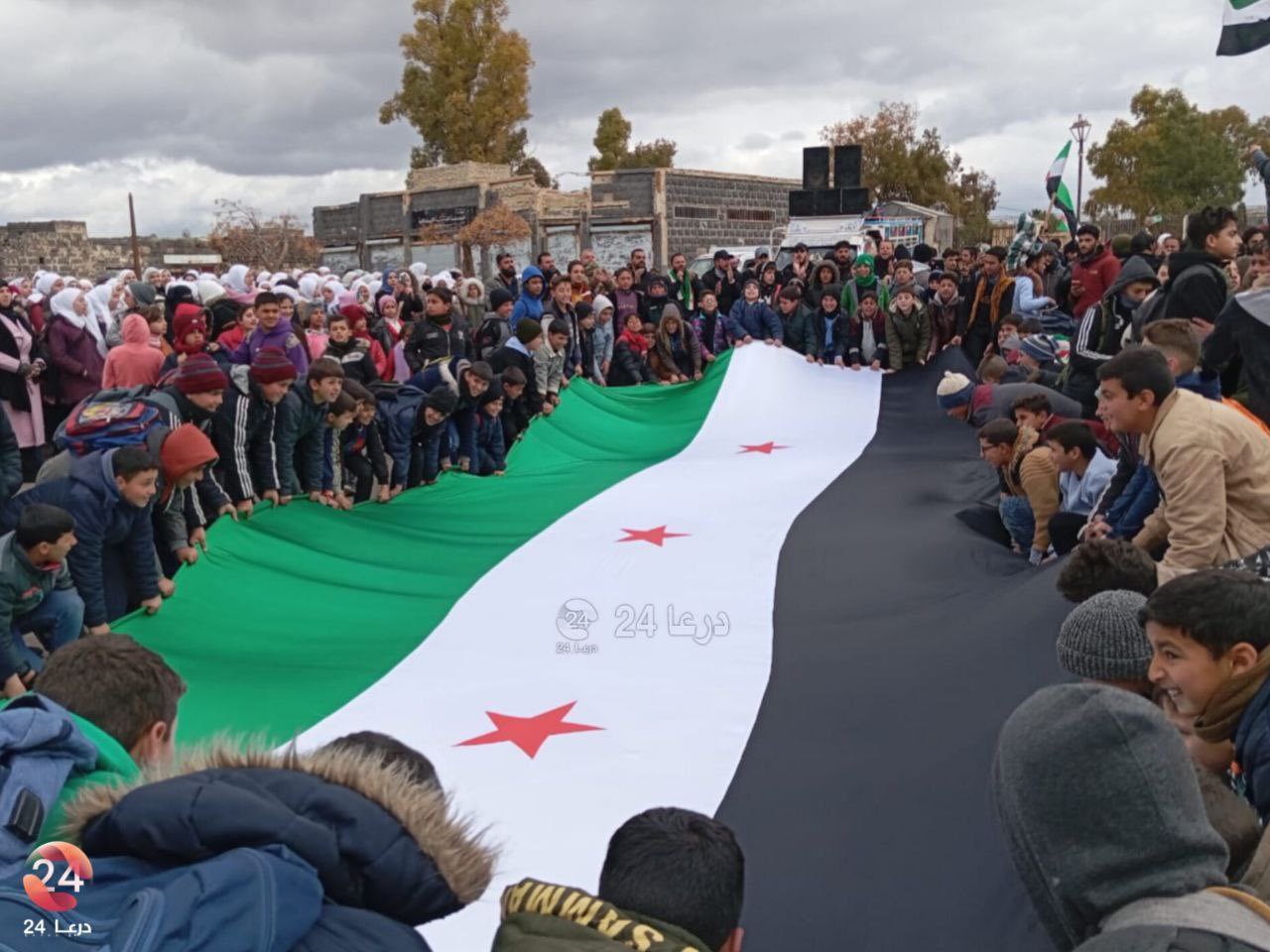
Hundreds of Syrians demonstrated in the southern Daraa province on Tuesday against Israeli Prime Minister Benjamin Netanyahu’s call for the demilitarization of southern Syria.
Protesters gathered in the March 18 Square in Daraa city, calling Netanyahu’s comments a “blatant interference” in Syria’s internal affairs, according to an Anadolu correspondent.
Israeli drones were seen flying over the area during the protest.
On Sunday, Netanyahu called for the complete demilitarization of southern Syria in the provinces of Quneitra, Daraa and Suweyda from the forces of the new Syrian army.
“We will not tolerate any threat to the Druze community in southern Syria,” he claimed, saying that the Israeli army will stay in Syria’s buffer zone and the Syrian Hermon Mount “Jabal al-Sheikh” for “an unlimited period of time.”
After the fall of the Bashar al-Assad regime in December, Israel expanded its occupation of the Syrian Golan Heights by seizing the demilitarized buffer zone, a move that violated the 1974 disengagement agreement with Syria.
Israel’s recent military advances in the Golan Heights, which it has occupied since 1967, have drawn condemnation from the United Nations and several Arab nations.

 CrossFireArabia