Litmus Test: Israel-USA Ties Dive as Trump Officials Talk to Hamas

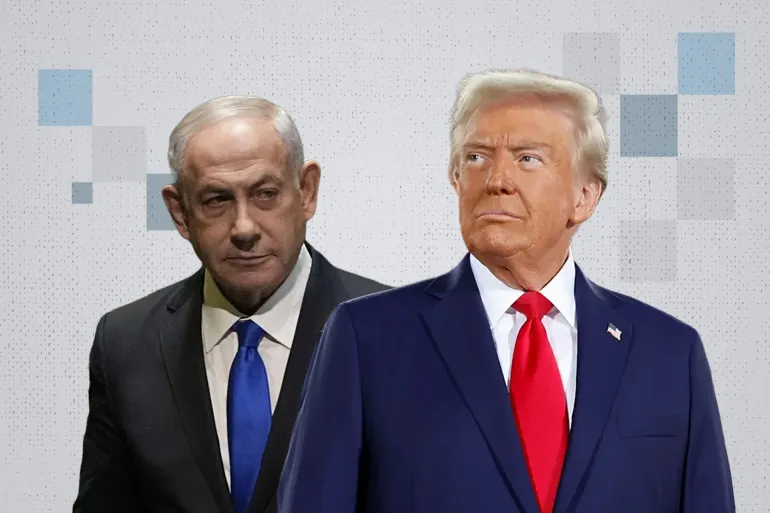
Relations between Tel Aviv and Washington is it is becoming clear that White House officials are talking to Hamas. The US-based Axios website quoted an Israeli informed official as saying that Israeli envoy to the United States Ron Dermer, who is close to Prime Minister Benjamin Netanyahu, had a tense call with American hostage envoy Adam Boehler about the matter.

Axios political correspondent and Middle East expert Barak Ravid explained Israel’s concerns about the Trump administration’s secret negotiations with Hamas erupted in a controversial phone call last Tuesday between Dermer and Boehler.

He revealed that the aids of US President Donald Trump informed Israeli officials early last month of the possibility of dealing directly with Hamas, and the Israelis then advised the American side against doing so, especially without preconditions. However, Israel discovered through other channels that the United States was moving forward in that direction nevertheless.

No direct criticism of Trump

Netanyahu avoided criticizing Trump publicly since Axios revealed the unprecedented talks between the United States and Hamas last Wednesday, and has only said that Israel has made its opinion clear to the United States.

But hours after Boehler met in Doha with Hamas leader and head of the negotiating team, Khalil al-Hayya, Dermer did not hold back in expressing Israel’s concerns about the talks.

The American message was such a deal would go a long way with Trump, who would then push for a broader deal that could include a long-term truce, safe passage for Hamas leaders out of Gaza, release of all remaining prisoners, and an end to the war. The alternative would be a renewed Israeli military campaign to destroy Hamas.

Trump and his advisers had hoped for a breakthrough before his address to Congress the previous Tuesday, but found Hamas’s response inadequate.

Israeli Concern

The reporter said that while Netanyahu was initially averse to the idea of ​​the United States sitting down with Hamas, he and his advisers became increasingly concerned as the idea became a reality.

Ravid quoted his sources as saying that Dermer objected to Boehler making proposals without Israel’s consent, and Boehler responded that the talks did not come close to a deal with Hamas, and that he understood Israel’s parameters.

An Israeli official claimed that Dermer’s tense call with Boehler prompted the White House to reassess its approach.

The site explained that when Trump’s envoy Steve Witkoff joined the efforts to reach a deal on Gaza in the final days of the administration of former US President Joe Biden, he suggested holding a direct meeting with Hamas to accelerate the talks, but that ultimately did not happen then, an Israeli official and a former US official said.

Pressure on Hamas

Trump and his advisers held a long meeting last Wednesday about the talks with Hamas, and decided that they needed to send a strong public message.

A US official said the idea was to pressure Hamas to make concessions and make clear that the US position on the movement had not changed.

On Wednesday evening, shortly after meeting with a group of the released hostages, Trump issued a new public ultimatum to Hamas to release all remaining hostages, describing it as a final warning.

On Thursday, Trump defended the talks with Hamas, describing them as beneficial to Israel “because we are talking about Israeli hostages.”

Luring Political Capital

Steve Witkoff, who is scheduled to travel to the region early next week, said the release of American hostage Alexander is the administration’s “top priority,” noting that he is wounded.

He said “good humanitarian action by Hamas” regarding Alexander “will get them a lot of political capital,” and stressed that there is a “deadline” for Hamas to agree to a deal.

Trump’s envoy said that if Hamas does not take a more “reasonable” approach, “there will be some action by Israel.”

Al Jazeera

Continue reading
Stranger Than Fiction: Hamas in Trump’s World

By Dr Khairi Janbek

We often use George Orwell’s 1984 novel as a metaphor for similar circumstances which we feel we are living in contemporary times. In fairness, many a time, the novel provides an apt description of these circumstances. But a novel which is forgotten or overlooked, is the trilogy of Isaac Asimov –  the Foundation – written in the early 1960s. Now, if he meant it to be a prophetic prediction of the future, one is likely to say he has come close to describing our epoch and circumstances.

In Asimov’s trilogy, and in a scientific fictitious world, a mathematical genius creates a world based on laws, order, and controlled emotions, in a sense, a world built on rationality. But suddenly, a mutant emerges, gathering a large following and support, and bent on destroying the existing norms, abolishing order, and breaking all laws. The author, calls it the mutant: The mule. Of course, one is talking here science fiction.

However, if we extrapolate from science fiction into real life, US President Donald Trump can be understood only by shedding the veil of absurdity that surrounds him, as, for all intents and purposes purposes, he is here here to break all the existing norms and order to the extent of firing even those whom have elected him.

As he projects his image on the domestic and international scenes, he comes out not as a president of a reality show but rather as a president of a “parallel” reality show. And what does that essentially mean? To the discerning observer it means that Trump is flip flopping between the two realities.

It was always known that president Trump dislikes multilateral and/or rather negotiations with blocs, whilst maintaining a preference for bilateral negotiations. So in carrying out his style of negotiations, he tends to pick the strongest or the wealthiest potential partners in any bloc to negotiate with. After all he is the one whom coined the dictum, if your rich and powerful then you must be right, but if you are rich but poor and weak, well, it’s your fault.

Consequently, this style of presidency, throws his allies and detractors into total confusion, and even close observers are finding it difficult to grapple with the US presidency bent on striking deals than reaching agreements.

He has no qualms about trying to reach a deal with Iran regarding its nuclear project, when in effect he was the one who tore up the nuclear agreement in the first place, but take note, it was an agreement not a deal.

He came out to negotiate directly with Hamas, though what’s the deal he is proposing, is not really known, but he doesn’t seem to have any qualms about breaking taboos and norms here.

So where does this leave his friends and allies? No man’s land really, in which you just go half way with him.

Dr Janbek is Jordanian writer based in Paris, France.

Continue reading
Houthis Give Israel Four Days to Allow Aid Into Gaza

The Houthis are ready to restart their naval military operations in the Red Sea against ships bound for Israel. The leader of the movement Abdul-Malik al-Houthi, said Israel is evading its obligations regarding the humanitarian file, and that Hamas has been keen to fully fulfill its obligations the ongoing ceasefire on Gaza.

“We announce to the whole world that we will give a four-day grace period, this is a grace period for the mediators in their efforts,” he said in a speech broadcast by the Houthi-affiliated Al-Masirah Channel.

“If the Israeli enemy continues after the first four days to prevent the entry of aid into the Gaza Strip and continues to close the crossings and prevent the entry of food and medicine into the Gaza Strip, we will resume our naval operations against the Israeli enemy and meet the siege with a siege,” Abdul-Malik Al Houthi pointed out.

Continue reading
Israel Starves Gaza For Politics

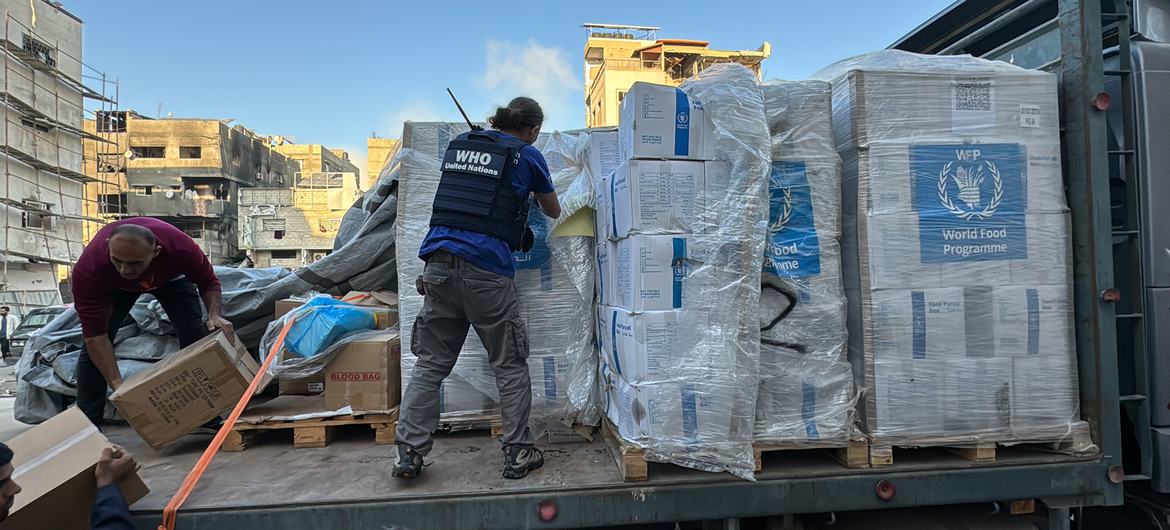
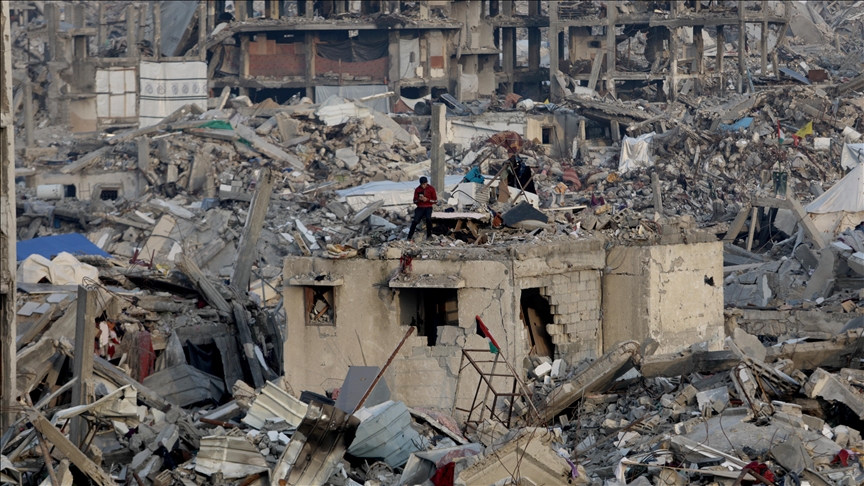
Israel’s move to prevent all aid from entering the Gaza Strip after Hamas reportedly refused to accept a plan to continue with phase one of the fragile ceasefire has had an immediate impact, including a 100-fold increase in the price of flour and vegetables.

That’s according to the UN aid coordination office, OCHA, which said on Monday that the Kerem Shalom, Erez and Zikim crossing closures means that vital humanitarian assistance, including thousands of tents, can’t be delivered to civilians in need.

Phase one of the ceasefire mediated by Egypt, Qatar and the US expired on Saturday, with Hamas calling on Israel to move on to the next agreed phase – but Israel is calling instead for a continuation of phase one through the end of the Holy Month of Ramadan in line with a proposal from the top US envoy to the region.

January’s ceasefire deal has seen the release of 33 Israeli hostages who’ve been held captive since the 7 October terror attacks, with around 1,900 Palestinian prisoners exchanged.

“The ceasefire has provided the opportunity to distribute food, to distribute water, as well as shelter assistance and medical aid, allowing nearly everyone in Gaza to receive food parcels,” said UN Spokesperson Stéphane Dujarric, briefing reporters in New York.

“Our humanitarian partners tell us that following the closure of the crossings into Gaza yesterday, flour and vegetable prices increased more than 100-fold. Partners are currently assessing the stocks that are currently available,” he added.

Ceasefire, ‘a critical lifeline’: UNICEF    

The UN children’s agency, UNICEFwarned that the stoppage of aid deliveries into Gaza will quickly lead to devastating consequences for children and families who are simply struggling to survive.

“The aid restrictions announced yesterday will severely compromise lifesaving operations for civilians,” said Edouard Beigbeder, UNICEF Regional Director for the Middle East. “It is imperative that the ceasefire – a critical lifeline for children – remains in place, and that aid is allowed to flow freely so we can continue to scale up the humanitarian response.”

The agency said that between 19 January and last Friday, almost 1,000 UNICEF trucks had crossed into the enclave carrying clean water, medical supplies, vaccines, therapeutic food and other materials.

Since the start of the ceasefire on 19 January, UNICEF and partners have provided warm clothing to 150,000 children in Gaza and increased daily water distribution for nearly half a million people living in more remote areas, Mr. Dujarric said.

Nearly 250,000 children and thousands of pregnant and breast-feeding mothers have received nutritional supplements since the ceasefire took effect.

Over the past two weeks, in Rafah, Khan Younis and Deir al Balah, aid partners have distributed vegetable seed kits for gardening to try and encourage more diverse diets.

Around 1,500 water distribution points are now operating across Gaza – double the number operational at the start of the ceasefire. “However, partners tell us that pipes and spare parts for maintenance are urgently needed,” said Mr. Dujarric.

Classrooms open

Across Gaza, more than 100 public schools have reopened, allowing around 100,000 students back into the classroom.

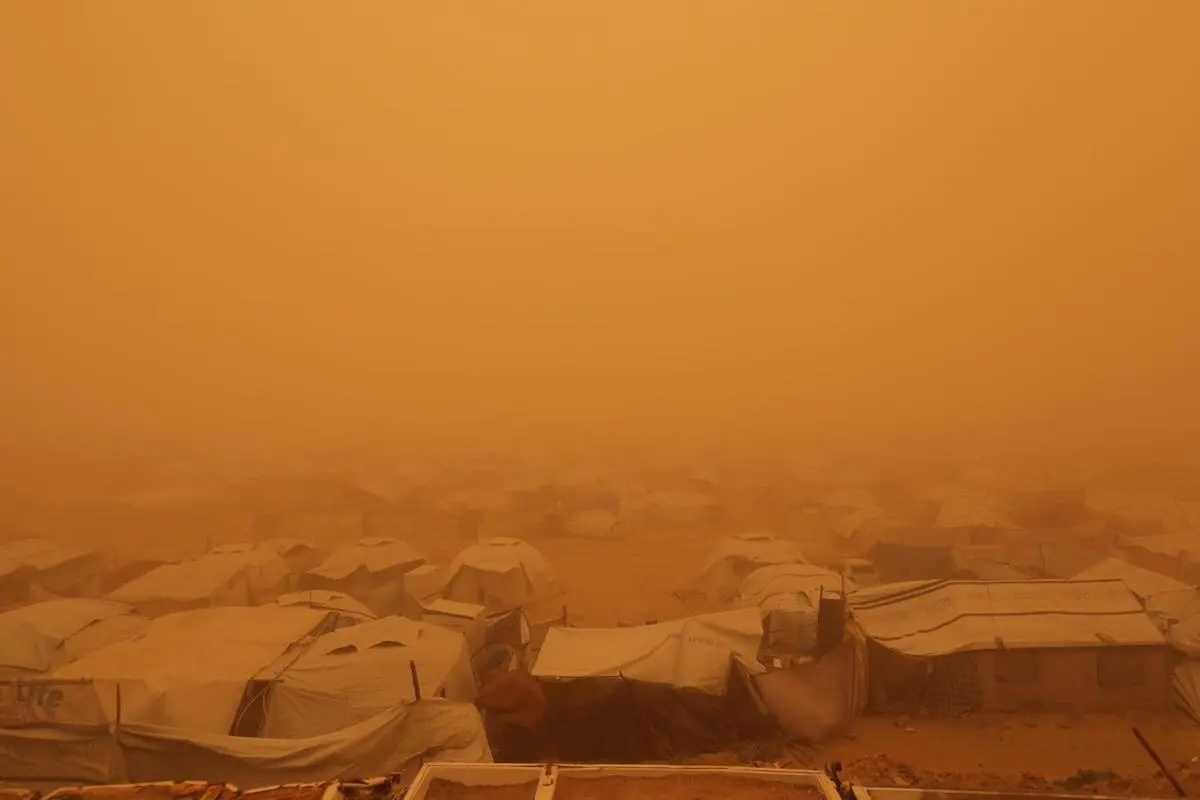
In Gaza City and North Gaza, UN partners will use tents to ensure children can continue learning, with some wood pallets recycled into school furniture.

OCHA teams visited a displacement site in Khan Younis on Monday where around 1,200 people are staying. These communities have not been allowed to return to their homes, which are located in the buffer zone.

OCHA is working to mobilise assistance to meet their needs.

Meanwhile in the occupied West Bank, OCHA reports that ongoing operation by Israeli forces continues to drive humanitarian needs in northern areas. Humanitarian partners continue to face movement restrictions.

UN News

Continue reading
Israel Threatens to Resume War…

Israel has threatened to resume its genocide war in Gaza, setting a deadline of 10 days for Hamas to release the remaining captives, a move that violates the ceasefire agreement.

Israel’s Channel 12, citing an Israeli official, said on Monday that the occupation government has set a deadline 10 days from now for Hamas to release the remaining captives in Gaza before a return to war.

“We are currently at a dead end regarding the deal negotiations,” the official told Channel 12.

At the parliament on Monday, Israeli Prime Minister Benjamin Netanyahu threatened, “I tell Hamas: If you do not release our hostages, there will be consequences that you cannot imagine.”

Defence Minister Israel Katz later said if Hamas did not free the captives, “the gates of Gaza will be locked, and the gates of hell will open”.

“We will return to fighting, and they will face the (army) with forces and methods they have never encountered—until a decisive victory,” he said in a statement.

Israel Violates Ceasefire

Israel has imposed a block on all aid entering Gaza following the end of the first phase of the ceasefire deal. Netanyahu’s office issued a statement on Sunday morning confirming the decision.

The move, which coincides with the holy month of Ramadan, came after Hamas refused to accept the extension of the first phase of the ceasefire deal.

Israel said that it had accepted a last-minute proposal put on the table by the US president’s special envoy for the Middle East, Steve Witkoff, for a temporary ceasefire over Ramadan and Passover.

According to Israel, the proposal also outlined the release of all captives still in Gaza in two stages, with the second stage contingent on negotiating a permanent ceasefire.

“With the end of phase one of the hostage deal, and in light of Hamas’ refusal to accept the [US envoy Steve] Witkoff outline for continuing the talks – to which Israel agreed, Prime Minister Netanyahu has decided that starting this morning all entry of goods and supplies into the Gaza Strip will cease,” the statement said.

“Israel will not allow a ceasefire without the release of our hostages. If Hamas continues its refusal, there will be further consequences.”

Hamas refused to extend it, noting it will only release captives in phases, per the ceasefire agreement, which Israel is now refusing to continue.

It said it would only accept moving to the second stage, which was supposed to guarantee the definitive end of the assault, an Israeli withdrawal from Gaza, and the release of remaining captives.

Hamas also slammed Israel’s decision to block the entry of aid and adopt the US proposal. In a statement, the movement said this “is a blatant attempt to renege on the agreement and evade negotiations for its second phase.”

“Netanyahu’s decision to block the entry of all humanitarian aid into Gaza is a cheap blackmail and a war crime in an appalling violation of the ceasefire deal. Mediators and the international community must act to place pressure on the occupation and put an end to its punitive and immoral measures against more than two million people in the Gaza Strip.”

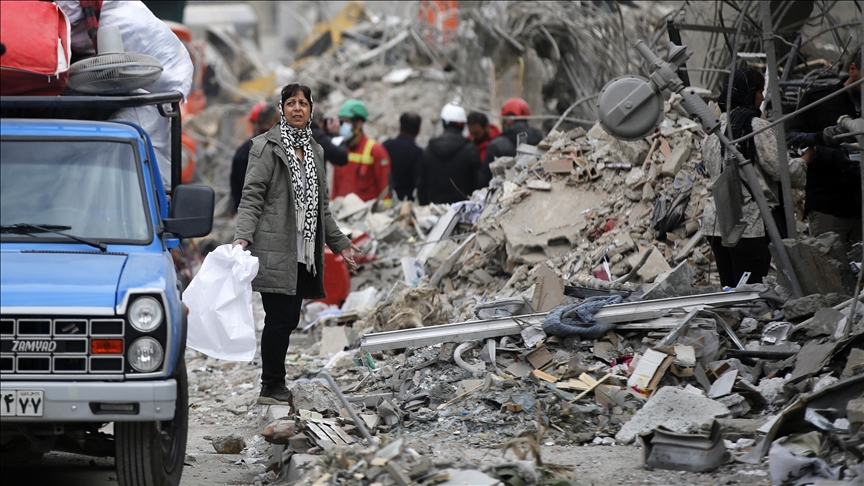
Hamas stated that Israel has continued to violate the ceasefire since it took effect, which has resulted in the killing of over 100 people in Gaza and the disruption of the humanitarian protocol. This includes blocking the entry of sheltering and relief aid, further aggravating the humanitarian catastrophe in Gaza. According to Gaza’s Government Media Office, Israel has committed around 962 violations of the ceasefire agreement according to the Quds News Network.

Continue reading