Poll: 47% Believe Trump ‘Take Over’ of Gaza is ‘Bad Idea’

Nearly half of Americans rejected US President Donald Trump’s proposal to “take over” the Gaza Strip and relocate Palestinians to neighboring countries, calling it a “bad idea,” as did several major Arab, European, and other countries around the world.

According to a CBS News/YouGov poll conducted between Feb. 5 and 7, in which 2,175 US adults were polled and released on Sunday, 47% of Americans believe the US proposal to “take over” Gaza is a “bad idea,” with only 13% supporting it and 40% unsure or saying “it depends.”

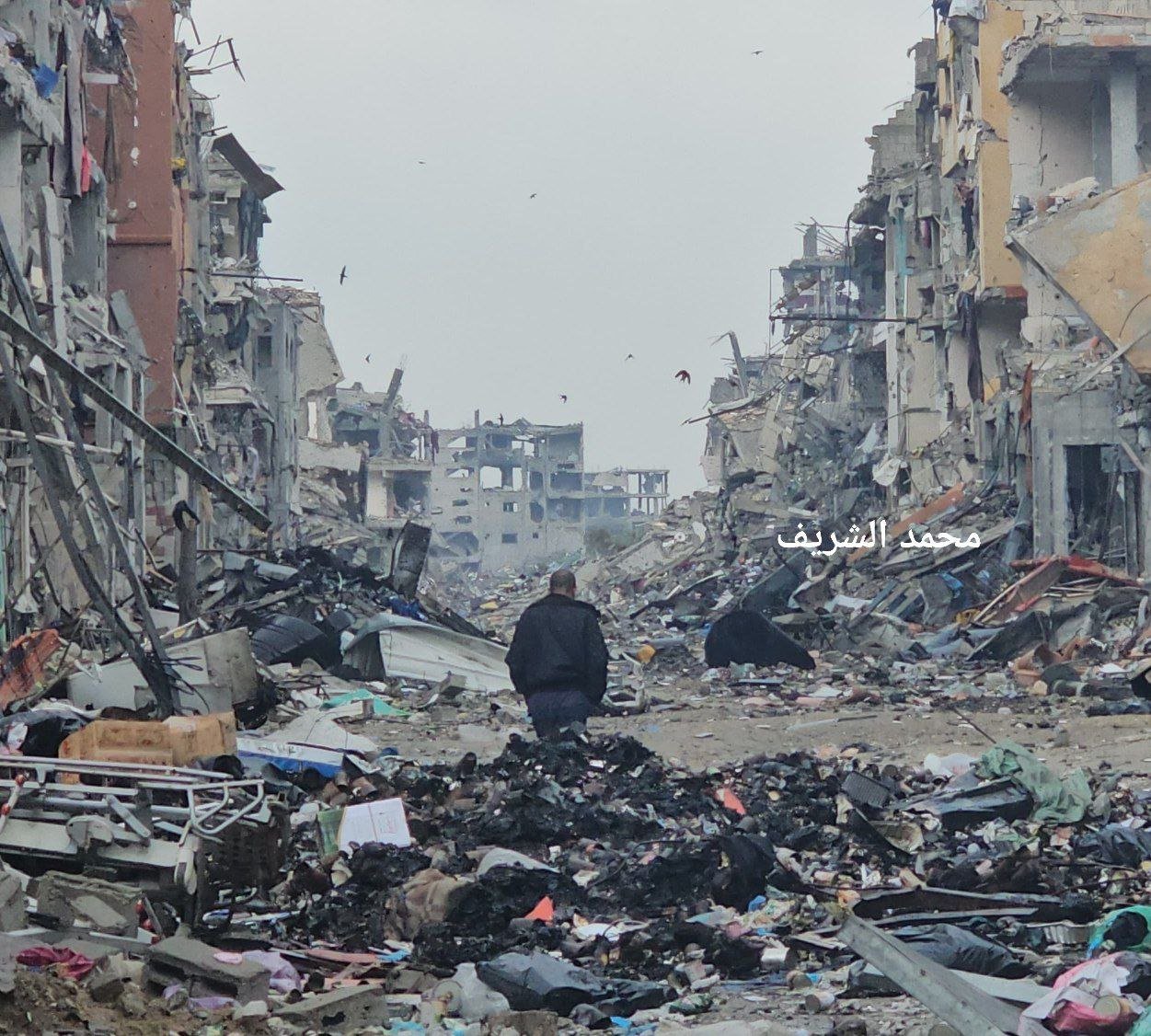
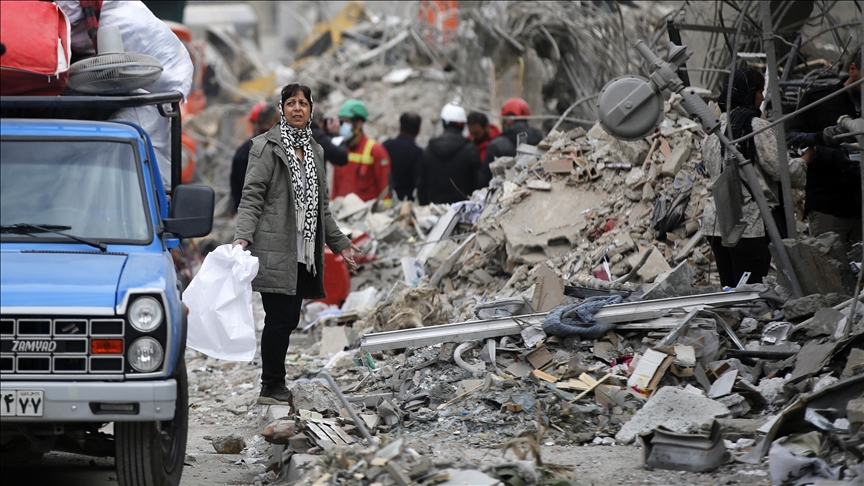
The poll also found that 34% of respondents had little or no knowledge of the proposal to relocate Palestinians from Gaza, which has been nearly completely destroyed by brutal Israeli forces since Oct. 7, 2023, killing nearly 48,200 people, the majority of whom are women and children.

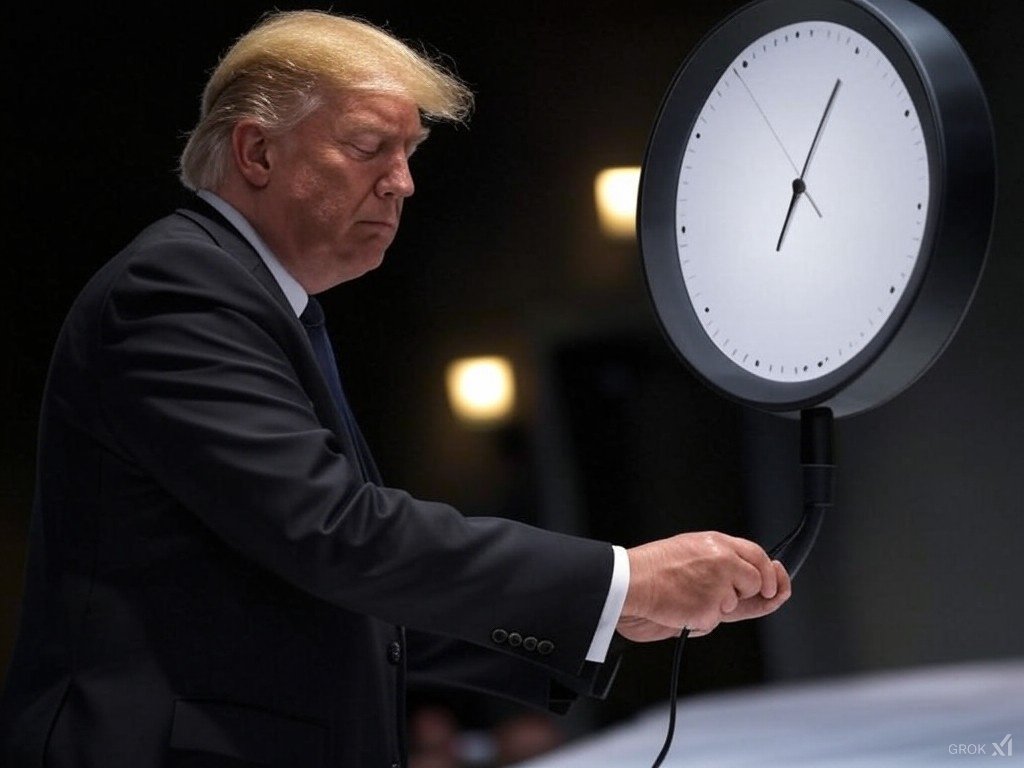
On Feb. 4, Trump said Washington would “take over” Gaza and resettle Palestinians elsewhere under an extraordinary redevelopment plan that he claimed could turn the enclave into “the Riviera of the Middle East.”

His proposal was met with wide condemnations from the Palestinians, Arab countries, and many other nations across the world, including Canada, France, Germany, and the UK.

During the survey, 46% disapproved of Trump’s handling of the Israel-Hamas conflict, while the rest approved, “driven largely by Republican support.”

Regarding Trump’s goal in proposing the Gaza plan, 22% believe it is to have the US take over Gaza, 28% believe it is to begin negotiations with Middle Eastern countries, and 29% believe it is both.

The poll also found that Trump has a 53% approval rating, with 70% saying he is keeping campaign promises.

Continue reading
Israeli Army Withdraws From Netzarim

Israel has withdrawn its forces from the Nitzarim axis in central Gaza as reported by different media sources. This is part of the ceasefire agreement and comes after over a year of Israeli occupation of the of the Gaza Strip and its three-month occupation of the axis.

Full Withdrawal…

Under the deal, Israel must evacuate its last military outposts along the axis, which has been a key Israeli military stronghold in Gaza. The withdrawal marks a significant shift, as settlers had hoped to establish a permanent presence in the area. Israeli forces will now remain only in the buffer zone and along the Philadelphi Corridor Quds News Network reported.

The area lies to the east of the Salah Al-Din Road. Once Israeli forces withdraw, no troops will remain in northern Gaza except for the 162nd Division, which has repositioned in the buffer zone near the border.

The Nitzarim axis has long been a symbol of Israeli assaults and settler ambitions in Gaza. Settlers held public rallies at its entrance, viewing it as a gateway for their colonization of the strip.

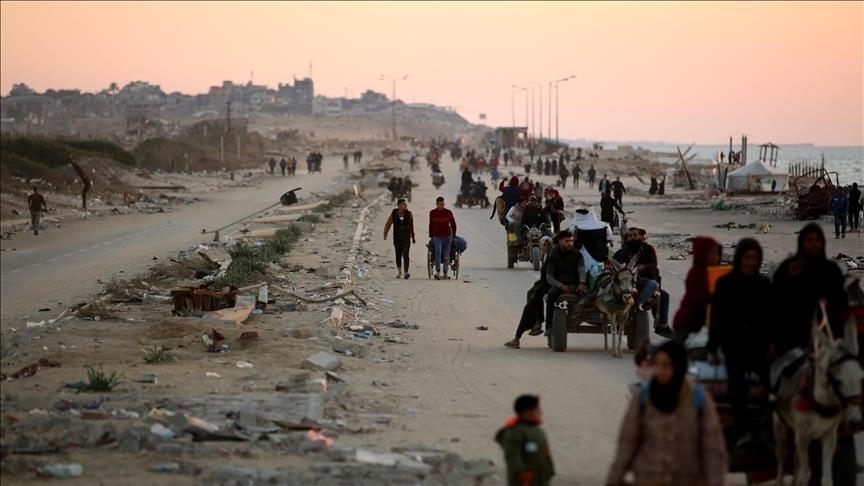
Two weeks ago, Israel partially withdrew from sections of Nitzarim to allow displaced Palestinians to return north under the ceasefire agreement. Over 500,000 have since made their way back to their wrecked homes in the north of the strip.

The withdrawal from Nitzarim highlights Israel’s failure to maintain long-term occupation of Gaza. The army had expanded the axis to 80 kilometers in length and up to 7 kilometers in depth through wiping out several neighbourhoods, establishing multiple fortified positions. However, intense resistance and political pressure forced an Israeli army retreat.

This marks Israel’s third withdrawal from Nitzarim in 20 years. In 2005, then-Prime Minister Ariel Sharon pulled Israeli forces out of Gaza. In 2009, Israel withdrew again after a three-week invasion. Now, after months of military assaults and infrastructure development, another retreat is imminent.

Ceasefire Agreement at Risk

However, a senior Hamas official warned, Saturday, Israel’s failure to fully implement the ceasefire agreement threatens its collapse. Basem Naim, a member of Hamas’s political bureau, said the deal remains fragile because of the Israeli foot-dragging in the negotiations for the second phase of the ceasefire agreement.

“The delays and violations we are seeing could derail the agreement,” Naim said, adding that Hamas wants to avoid a return to war.

Saturday marked the exchange of a fifth group of prisoners, halfway through the first phase of the ceasefire deal. The agreement, brokered by Qatar, Egypt, and the US, is divided into three phases, each lasting 42 days. Talks on the second phase maybe starting but at a snail’s pace..

Nitzarim ‘s ‘Line of Corpses’

Haaretz previously reported that Israeli officers stationed along the Nitzarim axis admitted to systematically shooting any Palestinian who approached the area. Soldiers targeted civilians, including children and unarmed people, leaving their bodies exposed.

An officer told Haaretz that the army treated every person as a potential threat. “Every woman is a scout, or a man in disguise,” he said, adding that soldiers killed cyclists under the pretext of them being collaborators.

The investigation revealed that Israeli forces enforced an unmarked boundary near Nitzarim with standing orders to shoot anyone who approached. “This line appears on no map and exists in no official military order, but in Gaza, it is brutally real,” the report stated.

Continue reading
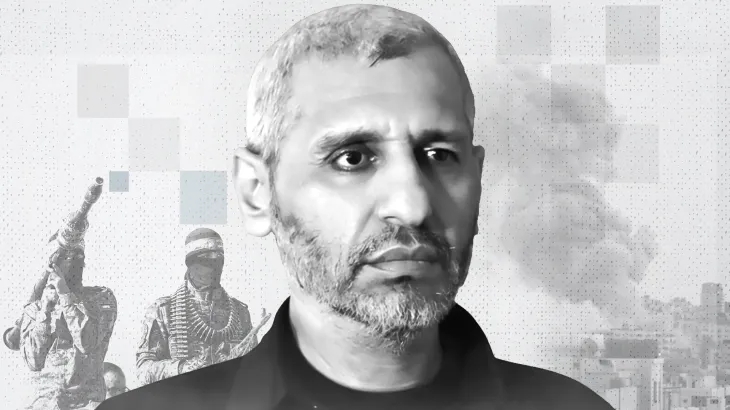
Israeli General: ‘If Deif Was in Our Army He Would Have Been a Top Commander’

Former Shin Bet chief Carmi Gillon said if the commander of the Izz Aldin Al Qassam Brigades, Muhammad Deif, was an Israeli, he would have been a senior commander of the Israeli army’s special forces.

Gillon added – in Al Jazeera’s “Fawq Al Sulta (Above Authority)” program broadcast on 7 February – he was determined to kill Deif when he was spy chief and that Deif wanted to have him killed, describing him as a highly competent opponent.

This statement reflects an unprecedented appreciation by an Israeli general for a Palestinian leader, especially in light of the war that lasted 15 months before stopping after the ceasefire agreement.

https://twitter.com/dgkn_yl/status/1887864686382629171

Gillon pointed out that Deif possesses exceptional leadership qualities, which earned him respect even among his opponents.

Abu Obeida, the Qassam Brigades spokesman – the military wing of the Islamic Resistance Movement (Hamas) – “announced on 30 January, 2025, the Al Deif, and a group of senior mujahideen members were killed.

Abu Obeida that besides Deif, a number of other leaders, most notably Marwan Issa, Deputy Chief of Staff of the Qassam Brigades, the Commander of the Weapons and Combat Services Section, Ghazi Abu Tama’a, the Commander of the Human Resources Section, Raed Thabet, and the Commander of the Khan Yunis Brigade, Rafeh Salama were also martyred according to JO24.

Continue reading
Arab States Say No to Trump On Gaza

Arab nations and organizations continued to express their firm rejection of US President Donald Trump’s plan to seize Gaza and displace Palestinians.

Egypt, Algeria, Iraq, Libya and the Palestinian group Hamas released statements Thursday.

It followed earlier rejections from Saudi Arabia, the United Arab Emirates, Jordan and Oman, along with several regional and international organizations including the Arab League and the Gulf Cooperation Council.

On Thursday, Trump claimed that Palestinians would have “better lives” under his plan, suggesting they would settle in “safer and more beautiful communities with modern homes.” He said the US would collaborate with development teams to build “one of the greatest projects of its kind.”

Earlier in the day, he claimed that Palestinians would have “a chance to be happy, safe, and free” due to the relocation scheme he proposed.

He added that they “would have already been resettled in far safer and more beautiful communities, with new and modern homes, in the region.”

On Tuesday, Trump told a press conference with Israeli Prime Minister Benjamin Netanyahu that the US will “take over” Gaza and resettle Palestinians elsewhere under an extraordinary redevelopment plan that he said could turn the enclave into “the Riviera of the Middle East.”

Commenting on Trump’s plan, Egypt said it rejects any proposal “that aims to liquidate the Palestinian cause by uprooting the Palestinian people or displacing them from their historical land and seizing it, whether temporarily or permanently.”

King Abdullah II of Jordan reiterated in a call with UN Secretary-General Antonio Guterres that Jordan opposes any attempts to annex land or displace Palestinians from Gaza and the West Bank.

Kuwait’s Ministry of Foreign Affairs reaffirmed its steadfast support for Palestine’s right to establish an independent state, condemning Israeli settlement policies and the displacement of Palestinians.

Algeria condemned any plan to expel Gaza’s residents, warning that such schemes “undermine the core of the Palestinian national project.”

Both Iraq and Libya expressed their strong opposition to any proposals or attempts to forcibly displace Palestinians, calling on the international community to take a firm stand against these actions.

Palestinian President Mahmoud Abbas called Trump’s plan a violation of international law, asserting that Gaza is an integral part of Palestine and rejecting foreign decisions about the future of Palestinians.

Hamas also denounced Trump’s statements, with spokesperson Hazem Qassem calling for an urgent Arab summit to oppose the displacement project, warning that the US is essentially seeking to occupy Gaza.

Saudi Arabia reiterated its unwavering support for Palestinian statehood, while the United Arab Emirates also condemned the displacement efforts, calling for a just solution to the Israeli-Palestinian conflict.

The Arab League and Gulf Cooperation Council both reaffirmed their commitment to the Palestinian cause, rejecting any plans for the forced relocation of Palestinians.

The Houthi movement in Yemen also condemned Trump’s statements as a blatant attack on Palestinian rights and an insult to the Arab and Muslim world.

A ceasefire agreement took effect in Gaza on Jan. 19, halting Israel’s genocidal war, which has killed nearly 47,600 Palestinians, most of them women and children, and left the enclave in ruins, according to Anadolu.

The International Criminal Court issued arrest warrants in November last year for Israeli Prime Minister Benjamin Netanyahu and his former Defense Minister Yoav Gallant for war crimes and crimes against humanity in Gaza.

Israel also faces a genocide case at the International Court of Justice for its war on the enclave.

Continue reading
Trump Goes Rogue

Donald Trump has gone rogue during the first days of his second residence in the White House. His executive decrees have upset US global relations and threaten US short, medium and long-term interests.

Trumps’ actions have unsettled this already tense region. His call 2.3 million Palestinians to be expelled from Gaza to Egypt and Jordan and for the US to take-over and develop the Strip as a tourist destination has been rejected by Gazans, Hamas which rules Gaza, the West Bank-based Palestinian Authority, Egypt, Jordan, Saudi Arabia, Qatar, the United Arab Emirates and the Arab League. They have rejected any attempt to displace Palestinians from their land and called on Trump to support “a just and comprehensive peace in the Middle East based on the two-state solution.” This is, of course, rejected by Israel which has colonised the West Bank and annexed East Jerusalem to pre-empt the emergence of a Palestinian state in this territory illegally occupied by Israel since 1967.

Trump’s administration has backed Israel’s January 30th ban on UNRWA, the UN agency caring for Palestinian refugees, which is meant to end its operations in East Jerusalem, the West Bank and Gaza. The UN Palestinian Rights Committee condemned the ban as a “direct violation of the General Assembly mandate [resolution 302 of December 1949] and the resolution [supporting UNRWA’s mandate] recently adopted by the General Assembly by an overwhelming majority.” The ban has also been condemned by Britain, Belgium, Ireland, Luxembourg, Malta, Norway, Slovenia and Spain. Belgium’s foreign ministry said the Israeli action “sets a disastrous precedent that deeply undermines the multilateral system and the United Nations itself.”

As soon as he took office, Trump ordered a 90-day halt to US foreign and military aid except for Israel (of course) and Egypt. Secretary of State Marco Rubio subsequently issued a waver allowing for “life-saving humanitarian assistance” programmes.

The US gives Israel $3.8 billion a year in military aid and Israel has received an additional $17.9 billion during its genocidal and devastating war on Gaza, according to Brown University’s Costs of War Report. The US has given Egypt $1.2 billion in military aid since the 1978 negotiations which led to the 1979 peace treaty with Israel.

His ignorant and destructive decree has frozen $95 million allocated mainly for Lebanon’s military as the country’s troops deploy in the south to secure Israel’s withdrawal under the fragile ceasefire between Hizbollah and Israel. This sum had previously been earmarked for Israel and Egypt, the Associated Press reported.

The non-governmental organisation managing Syria’s Al-Hol camp has said it will have to end operations without US funding. Controlled by US-sponsored Syrian Democratic Forces. Al-Hol houses more than 40,000 wives and children of Daesh fighters.

The freeze could negatively impact Jordan ($770 million in 2023) and Yemen ($35.9 million) which receive economic aid through the $95 million provided by the US Agency for International Development. The lion’s share of $14.4 billion has been allocated for Ukraine which is fighting the US-led Western war against Russia.

UN and other humanitarian agencies promptly responded to the freeze by ordering reductions in programmes to cut spending. UN Secretary General Antonio Guterres called for exemptions to “ensure the continued delivery of critical development and humanitarian activities for the most vulnerable communities around the world.” Committed to his “America First” policy, Trump cares little for such communities.

Trump has paused for 30-day his imposition of 25 per cent tariffs on imports from Canada and Mexico which have threatened to launch a North American trade war. Canadian Prime Minister Justin Trudeau said he would impose tariffs on $106.6 billion worth of US imports to his country. These include beer, wine, fresh fruits and vegetables, processed food, seafood, vehicles, dairy, and spare parts, crude and refined petroleum.

Trump justified his tariffs on Mexico by accusing government of being in league with drug cartels which smuggle drugs into the US, an allegation hotly denied by President Claudia Sheinbaum. She charged the Trump administration of “slander” and told the US to cut the illegal southward flow of guns arming the cartels. She asked her trade minister to respond with 25 per cent tariffs and non-tariff measures. the main goods Mexico exports to the US are computers, cars and vehicles, spare parts and accessories.

Trump justified announced tariffs by saying, “This was done through the International Emergency Economic Powers Act because of the major threat of illegal aliens [crossing into the US] and deadly drugs killing our citizens, including [the addictive drug] fentanyl.” 

During the pause, Trump can be expected to use tariff leverage to compel Canada and Mexico to capitulate to his demands on border security and other issues.

Beijing said it would lodge a complaint with the World Trade Organisation as Trump levied a blanket 10 per cent tariff on Chinese goods. Combined, China, Mexico and Canada accounted for more than 40 per cent of imports into the US last year.

He has also threatened tariffs on the European Union which he claims is taking advantage of the US. Trump stated, “They don’t take our cars, they don’t take our farm Products, they take almost nothing, everything from them.”

The Washington Post reported Trump’s tariffs could cost every US household $1,200 which could be ignored by the wealth and absorbed by the middle class while stressing the working class and driving the poor into debt.

Trump has not forgotten his determination to transform Canada into the 51st US state despite overwhelming Canadian rejection and to buy or occupy Greenland which belongs to Denmark. In Panama on his first trip abroad Secretary of State Marco Rubio said the US could take action to reassert control over the waterway if the Panamanian government does not exclude Chinese presence around the canal which connects the Caribbean Sea with the Pacific Ocean. The US considers the operations of canal, built by the US between 1904-1914 but ceded to Panama in 1999, a national security issue.

Trump’s ill considered transactional pronouncements and policies have rattled close allies and created global concern over the stability and reliability of the US as the world’s hyperpower.

Michael Jansen is a columnist in the Jordan Times.

Continue reading