Gaza: A Year of Horror


By Van Esveld

A bedrock principle of the laws of war is that all warring parties, whether national armed forces or armed groups, must do everything they can to minimize harm to civilians. Deliberate attacks on civilians, but also attacks that don’t distinguish between civilians and combatants, are prohibited. International law seeks to limit civilian suffering and destruction.

Yet in Israel and Palestine, the last year has been defined by unlawful attacks on civilians, causing suffering on a horrifying scale.

Achiad Milba, 29, was on Zikim Beach when Palestinian fighters, including from Hamas’ armed wing, landed in boats and killed at least 19 people there, among 815 civilians killed in southern Israel on October 7, 2023. “When people run for their lives, they fall, and they are screaming. And it’s an awful feeling I can’t describe.” About 251 people were taken hostage that day.

Mu’min al-Khalidi, 21, was sheltering with his family in northern Gaza City on December 21, when Israeli soldiers threw grenades and fired into the room, killing seven people. He regained consciousness under their bodies. “There are no words to describe what I felt. All I want to know is why? Why did I have to live through such a massacre? Why did I lose all these people? What did we do to deserve all this?”

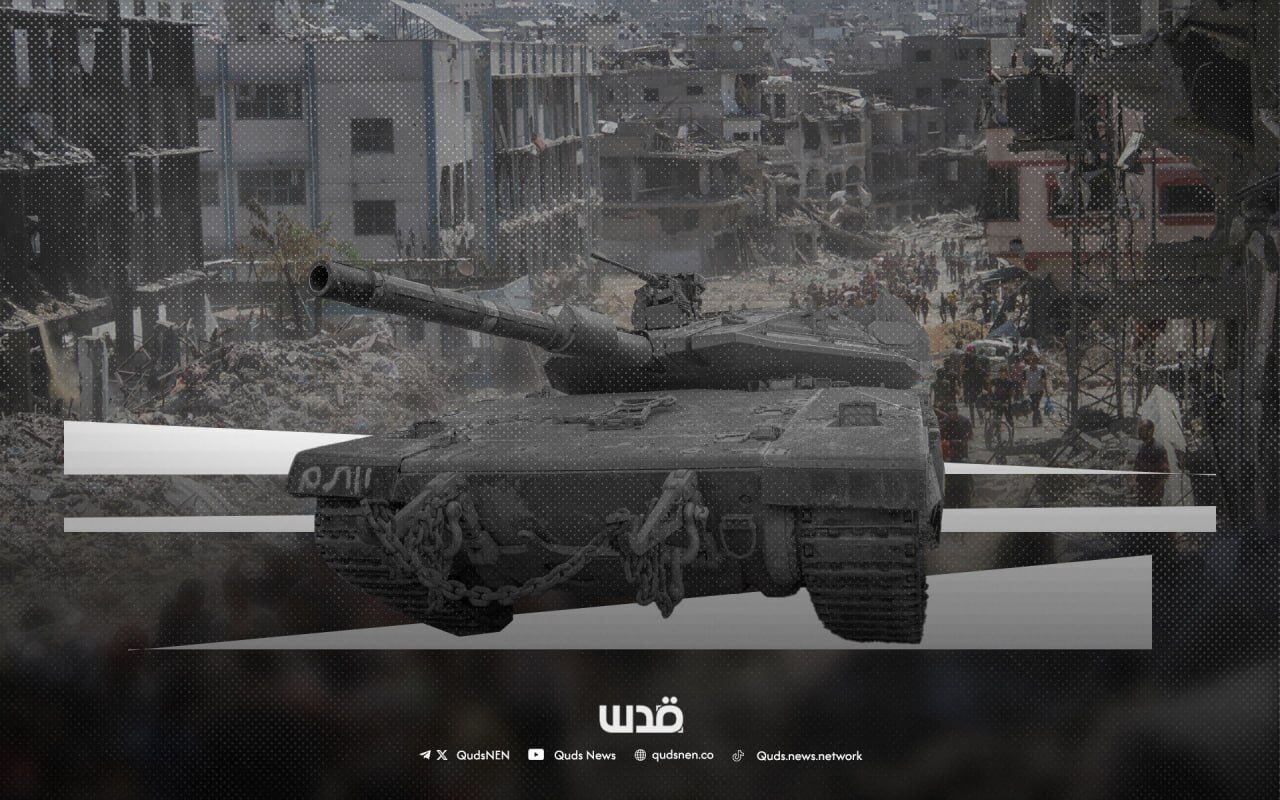
https://twitter.com/QudsNen/status/1842991017332765148

Hostages in Gaza have been shot dead by their captors and subjected to inhumane treatment. Palestinians in Israeli detention facilities have been tortured, abused, held in incommunicado detention, and subjected to sexual violence.

The International Court of Justice in the Hague has ordered Israel three times to prevent genocide against Palestinians and let necessary aid enter Gaza. Yet the Israeli military has maintained its unlawful siege and repeatedly attacked hospitals and humanitarian workers.

As of September 2024, nearly 42,000 Palestinians had been killed in Gaza according to the Gaza Ministry of Health, the majority women and children. The number of those under the rubble and others who have died from starvation, illness, infection, and disease may be higher.

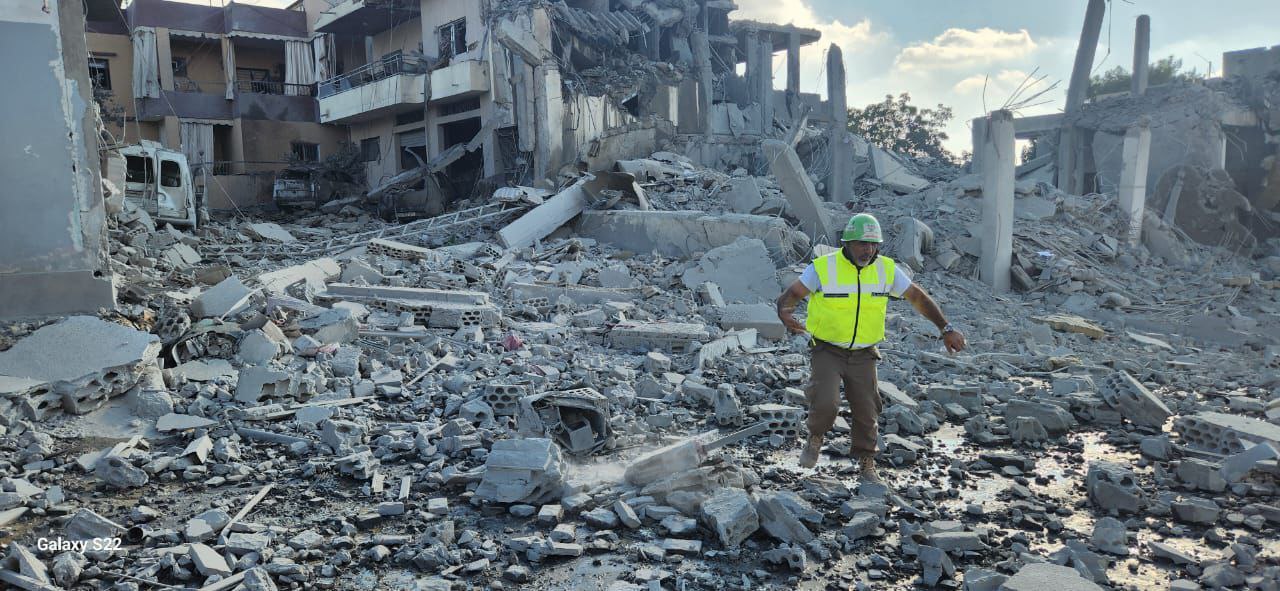
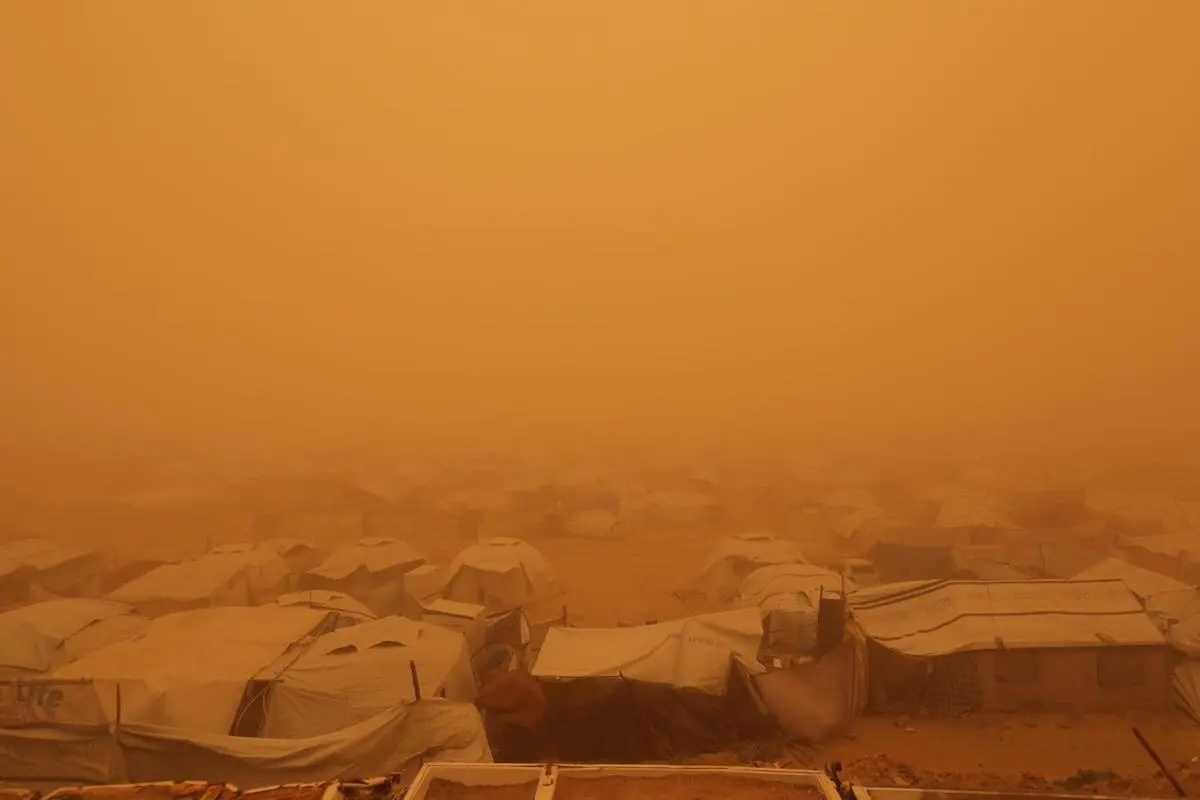
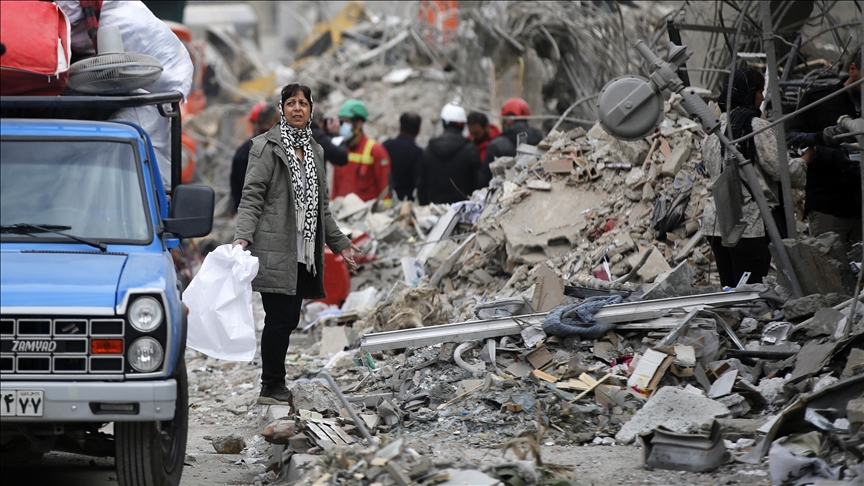
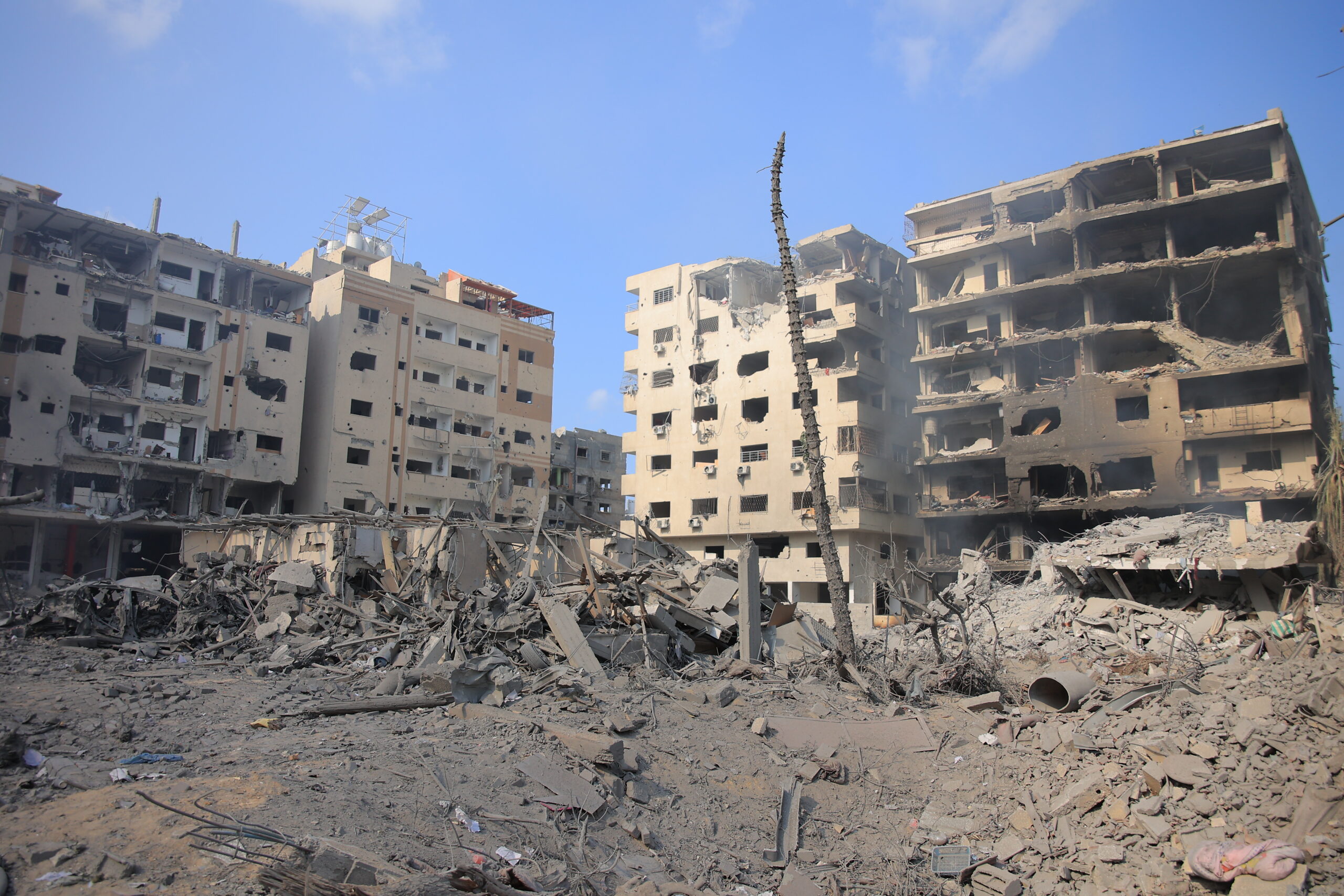
Almost all civilians in Gaza are displaced, with most crammed into an area that consists of just 3 percent of Gaza’s territory. Nearly all suffer from hungerChildren have no schools and face trauma. The majority of buildings are damaged or destroyed. Entire neighborhoods have been razed to the ground.

Ghazal, a 15-year-old girl with cerebral palsy, said she lost her assistive devices in an attack on her home in Gaza City on October 11 and begged her parents to leave her behind when they had to evacuate two days later following the Israeli military’s evacuation order: “I was a burden on them [my family], an extra load alongside their belongings. I couldn’t find any means of transportation. I gave up and sat on the ground in the middle of the road, crying. I told them to go on without me.”

Victims of rights abuses in Israel and Palestine have faced a wall of impunity for decades. Israel’s policies of apartheid and persecution against Palestinians are worsening, including land grabs and deadly violence in the West Bank.

The International Criminal Court is now considering arrest warrants for several Israeli and Hamas leaders.

Some foreign governments say they are trying to end the abuses yet pour fuel on the fire, sending arms to warring parties that are committing widespread abuses. Foreign officials, including in the United States, who knowingly send weapons to an abusive force risk complicity in international crimes.

The recent escalation of hostilities across the Middle East is putting more civilians at risk. All civilians—in Israel, Palestine, and Lebanon—are entitled to protection, dignity, and justice.


Bill Van Esveld Associate Director, MENA, Children’s Rights Division at Human Rights Watch
Continue reading
After Gaza Regional War Looms

As the war in Gaza enters its second year, the Palestinian enclave is now unrecognizable, with most areas reduced to rubble. The Palestinian death toll exceeds 41,000 while over 95,000 people have been injured, a large number of them facing life-changing injuries. Thousands of people are estimated to be still buried under the rubble.

At the same time, 97 out of 251 people abducted in Israel on 7 October 2023, are still held hostage by Palestinian armed groups in Gaza, denied humanitarian visits. This horrific attack also cost the lives of 815 civilians.

Both Israel and Palestinian armed groups have committed a series of violations of international law resulting in significant civilian harm and the widespread destruction of key infrastructure across Gaza.

Over the last 12 months, each attack against civilians and civilian objects has further undermined the rules of war. This sets a dangerous precedent that threatens the stability and security of the region and beyond.

The devastation in Gaza has been fueled by the supply of foreign weapons from a wide range of States. These arms, including the use of explosive weapons in densely populated areas, have caused staggering levels of civilian harm.

As a result, civilians in Gaza have had nowhere safe to go amid near constant bombardment and ground operations. This was apparent within weeks of the outbreak of war. This is why we at Center for Civilians in Conflict (CIVIC) were among the first organizations to call for a #CeasefireNow.

Nearly 365 days after the start of the war in Gaza, we continue to call for an immediate ceasefire, the protection of civilians, and unfettered humanitarian access.

We now extend this call to Lebanon, where recent strikes have resulted in hundreds of civilian casualties and displaced more than one million people. With nearly 90 percent of Lebanon’s population living in urban areas, Israel’s continued used of heavy explosive in populated neighborhoods will undoubtedly cause further harm to civilians.

We are also gravely concerned about the ongoing retaliatory attacks between the Houthis, Israel, and its allies. These strikes have already targeted vital infrastructure, including power plants and seaports in Yemen, such as the Hodeidah port—a critical lifeline for delivering food and humanitarian aid to the Yemeni population.

With Israeli strikes in Gaza, Lebanon, Yemen, and Syria, as well as Iran’s missile attack against Israel on Tuesday evening, we stress the urgent need for immediate de-escalation across the region to prevent further civilian suffering, which has already reached unbearable levels.

Immediate action is necessary to halt the growing human cost.

We demand:

  • All warring parties to cease all their attacks against civilians and civilian infrastructure, including the designated so-called ‘safe zones’ in Gaza, and to stop violating international humanitarian and human rights laws.
  • The immediate release of hostages and all individuals detained unlawfully in Gaza and Israel.
  • All warring parties to allow unconditional, safe, and unhindered humanitarian access to affected populations.
  • An immediate end to the transfers of arms to Israel and Palestinian armed groups. In particular, we call for an end to US arms transfers to Israel, including the passage of recently introduced US Senate resolutions to suspend sales of weapons documented in extensive civilian harm and repeated apparent violations of international law.
  • All countries and world leaders to use their influence to secure an immediate ceasefire, ensure the protection of civilians and compliance with international humanitarian law, and support de-escalation across the region.
  • All warring parties to stop using explosive weapons in populated areas.
  • International, independent, and transparent investigations into all allegations of violations of international law, and ensure those responsible are held accountable.

It’s now time for international leaders and warring parties to demonstrate political courage and moral leadership, to prevent the world from falling into a state of normalized lawlessness, and to abdicate the double standards.

What has unfolded in Gaza and the region for the last 12 months is unparalleled in its intensity, brutality and scope. The response of global powers to this reality will shape the future of warfare for the better or the worse.

This statement is made by by Hichem Khadhraoui, executive director of the Center for Civilians in Conflict and posted on Reliefweb

Continue reading
Dialectic of Converging Interests

By Dr Khairi Janbek

One’s experience has always been in peace building and not war mongering, therefore try to understand that to make a paradigm shift can make one fall into the transition gap.  

From the start I can say I have been wondering about the daily carnage, murder and destruction in the Middle East. Point one, how come a country like Israel, well-endowed with superior technology, can pinpoint the time and space accurately of the Hezbollah leaderships, same with Hamas, and assassinates them with impunity, fails to see the coming of 7 October from merely across the border? 

Some said that Israel has been fighting Hezbollah for a long time which enabled it to organize infiltrations and plans for assassinations, but isn’t its war against Hamas has been just for the same length of time?

So can Israelis accuse their own state with negligence, or is this so-called negligence carries notions that are more than meets the eye?

Now, what about Israel carrying out land operations across the border into Lebanon, for all intents and purposes, this would be the ideal time with the Hezbollah command in disarray? Or is it really that fact that Israel has no intention of doing so a priori?

To explain what I mean bluntly, after all the expected new leader of Hezbollah is Hashem Safi el Deen; he is through and through Iran’s man, his brother is also the bureau chief of Hezbollah in Tehran, all the top ranking commanders of the Iran allied groups in Syria and Iraq will be also through and through Tehran’s men and strictly under its direct command.

Therefore, the most logical conclusion is that Iran neither sold out Hezbollah nor any other its allies, but rather sold out the leaderships of those allied organizations in order to end their autonomy.

Which could mean also, Israel’s intentions are not actually the elimination of the allied organisations of Iran, but rather the elimination of their leaders in a dialectical formula of convergence with its Iranian enemy

Dr Khairi Janbek is a Jordanian writer based in Paris and the above opinion is that of the author and doesn’t reflect crossfirearabia.com.

Continue reading
Domination Space For Common Space

By Dr Khairi Janbek

When we think of contemporary Iran, one always believes that the Arab Middle East had always been dominated by the three Non-Arab American allies; Iran under of the Shah, Turkey and Israel.

One thinks that those “neighborhood police stations’ were the guarantors of stability through their convergence, and at times contradictions, in the age of Cold War and oil. However, the Shah of Iran was deposed and the Anti-communist Cold War ended, but that didn’t mean that oil stopped becoming important nor that Russia and China were no longer threats.

One would say, that the rehabilitation of Iran and possibly turning it into a negotiations partner aims at keeping the third angle of the police stations triangle going, because non of the Arab countries, no matter how much they tried, could never replace Iran, because no Arab police station is permitted to emerge as a third angle.

Having said that, it would be beyond naive to think that the expansion of Iran’s power and influence happened by stealth or escaped the notice of the US and NATO.

After after all Iran grew to become a Red Sea country through its influence on the Houthis in Yemen, a Mediterranean country through its influence in Syria as well Lebanon through Hezbullah and the major Gulf country through its supporters in Iraq. 

In fact this Iranian domination of space is what has created a common space between all its long-arm organisations in the region.

Essentially, if we compare Iran to an octopus, all those various groups are its tentacles, and they all serve the purpose of Iran’s strategic interests, albeit not through a push-button approach, but through not taking any action which would not please their Persian master.  

Of course, this puts Iran in a strong position to be a major player in the region and an inescapable negotiations partner for the US, which is also convenient for the Americans, in order to remind their Arab allies who is their protector in a region policed by Turkey, Israel and Iran.

Of course this takes us to the point of saying that, for all intents and purposes, for the Americans a trusted adversary is more important than distrusted friends, and that it would be absurd to think that all those long arms of Iran in the Arab world can be amputated by military means; they certainly can be weakened, but without the consent of Iran and without the right price, so long as it remains behind them, nothing much can change.

At this point, from what one can only see, is that no one in their right mind or otherwise, will permit a war to emerge in which Israel is pitted against Iran and the US as well as NATO putting all their weight behind Israel and forcing the Arabs to choose their camp.  

That would be the scenario of the end of the world as we know it, or with major civil wars in the Arab countries controlled by the tentacles of Iran, and which no one wants.

Dr Khairi Janbek is a Jordanian writer based in ParisFrance

Continue reading
A Middle East Powder Keg

By Dr Khairi Janbek

Like Dorian Grey in Oscar Wild’s novel, we hated the face of Arab political realism in the 20th century when we saw it, and hated it more in the 21st century when we stopped seeing it.

Without much ado, the current ongoing war, or perhaps more accurately wars, in the Middle East, started by opportunists for opportunistic goals that converged.  Hamas with its 7th October attacks knowing only too well that Israel has the most right-wing and racist government in its history, and must have known that the its retaliation would be most severe.

It stands the reason to think the more severe the better, because this is likely to involve what is called as the axis of resistance in Lebanon, Syria, Iraq, Yemen, and as a bonus Iran as well. But closer to home, Israel by making Gaza uninhabitable to the people is expected to cause an exodus towards Egypt thus bringing it into the conflict, and the inevitable thought of Israel moving into the West Bank, and the likely push out of the Palestinians towards Jordan will bring the country into the conflict as well.

For Israel, with its most extremist right wing and racist government, the attacks couldn’t have come at a more opportune time. The situation presented them with the opportunity of attempting to put what were merely theoretical ideas in their minds, into practical policies.  Of course the root of what became a policy, is the rejection of an independent Palestinian state and the death of the two-state solution, by starting with breaking the Hamas grip in Gaza and transforming the area into a buffer zone with possible rebuilding of colonies/settlements on the area.

This is while the Gazans can be completely dependent on the good will of Israel for their survival, however, if the Arabs want to rebuild Gaza then by all means, but let them this time protect their investments by keeping actively the peace, and if Egypt can be persuaded to voluntarily taken in some Gazan refugees all the better!

Of course all eyes are also on the West Bank. Here Israel’s aim, one would say, is to turn the area into a “bantustan” totally dependent on Israel,  with the trimmings of municipal power to the PNA to manage internal affairs while real control of the economic, political domains remain in Israel’s hands.  

The Palestinians here would also be dependent on the Israeli economy, and relations between the West Bank and Jordan would be only possible with Israeli consent.  If of course, Jordan would accept taking displaced Palestinians from the West Bank voluntarily, all the better as well.

Having said all that, where do we stand now after so much recent death and destruction? A total war? Whatever does that actually mean when Jordan has already its own war against drugs, Egypt and its problems with Ethiopia, Somalia, Syria between the hammer of Israel and the anvil of Iran, Iraq a soup for Americans, Iranian partisans and a non-descript government, Yemen teetering on the brink of losing the existential battle, while Iran obsessed with its nuclear programme. One would hazard a guess that total war means, the killing of Israeli civilians by Hezbollah.

Dr Janbek is a Jordanian writer based in Paris, France

Continue reading