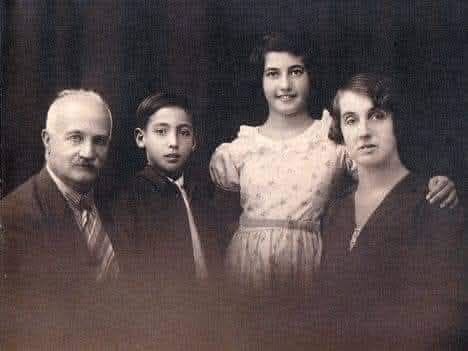
Palestinian Photographer Khalil Raad With Family in Early 20th Century

Palestinian littérateur Newspaper (صحيفة المثقف الفلسطيني)

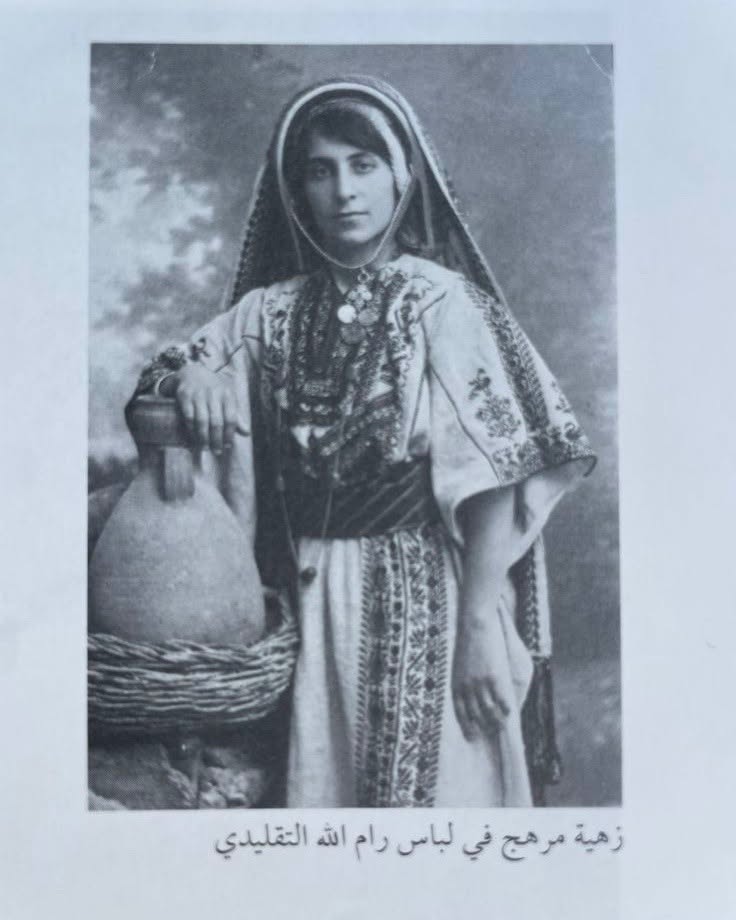
A rare photograph of the Palestinian photographer Khalil Raad with his family in the early 20th century.

Khalil Raad is considered one of the first Palestinian photographers to document life in Palestine at the end of the Ottoman era and during the British Mandate. His collection of more than 3,000 photographs documents social life in Palestinian cities and villages. Raad began his work from a studio he established on Jaffa Street in Jerusalem in 1890, which was destroyed by Zionist militias. He managed to save 1,230 of the 3,000 photographs in the studio with the help of a friend from Italy who was living in Jaffa.

Continue reading
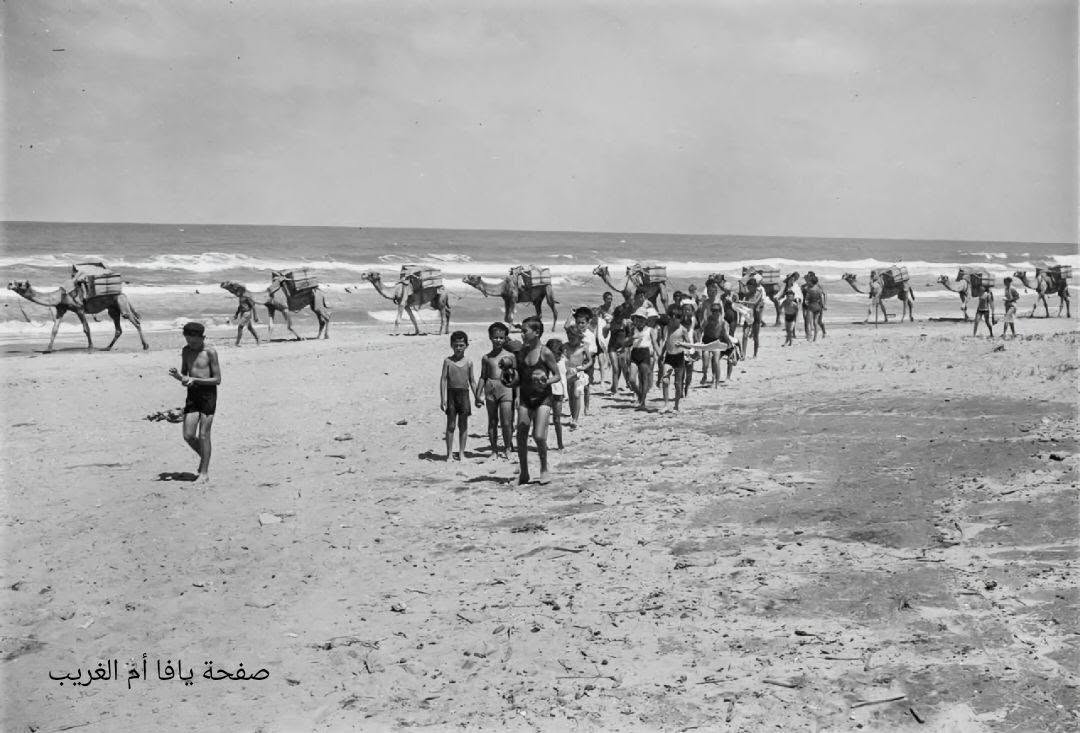
Jaffa: Our Grandparents in 1945

From Yafa Umm Al Ghreeb

This is photograph that is shown for the first time of children from Yaffa (Jafa); these children are probably now our grandparents. The image highlights how our grandparents lived during that wonderful summer, playing on the beach in the Manshiyya neighborhood, while camel caravans traveled along the shore laden with crates of oranges. The photograph is from 1945.

Continue reading
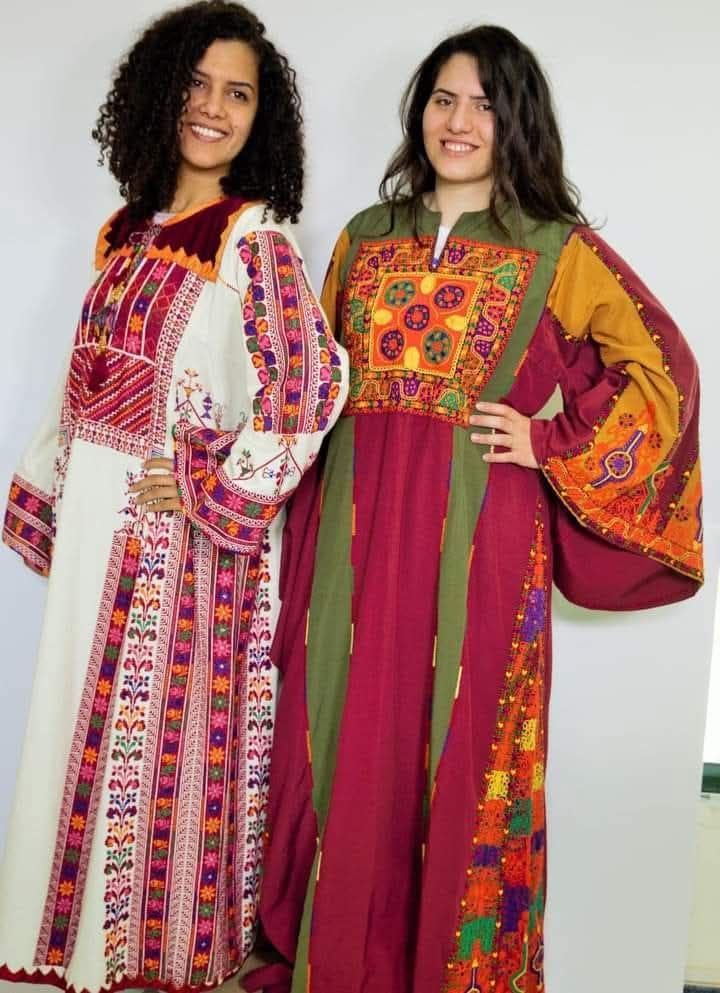
Palestinian Dresses Immortalize History

Eileen Shomali Al-Yateem writes:

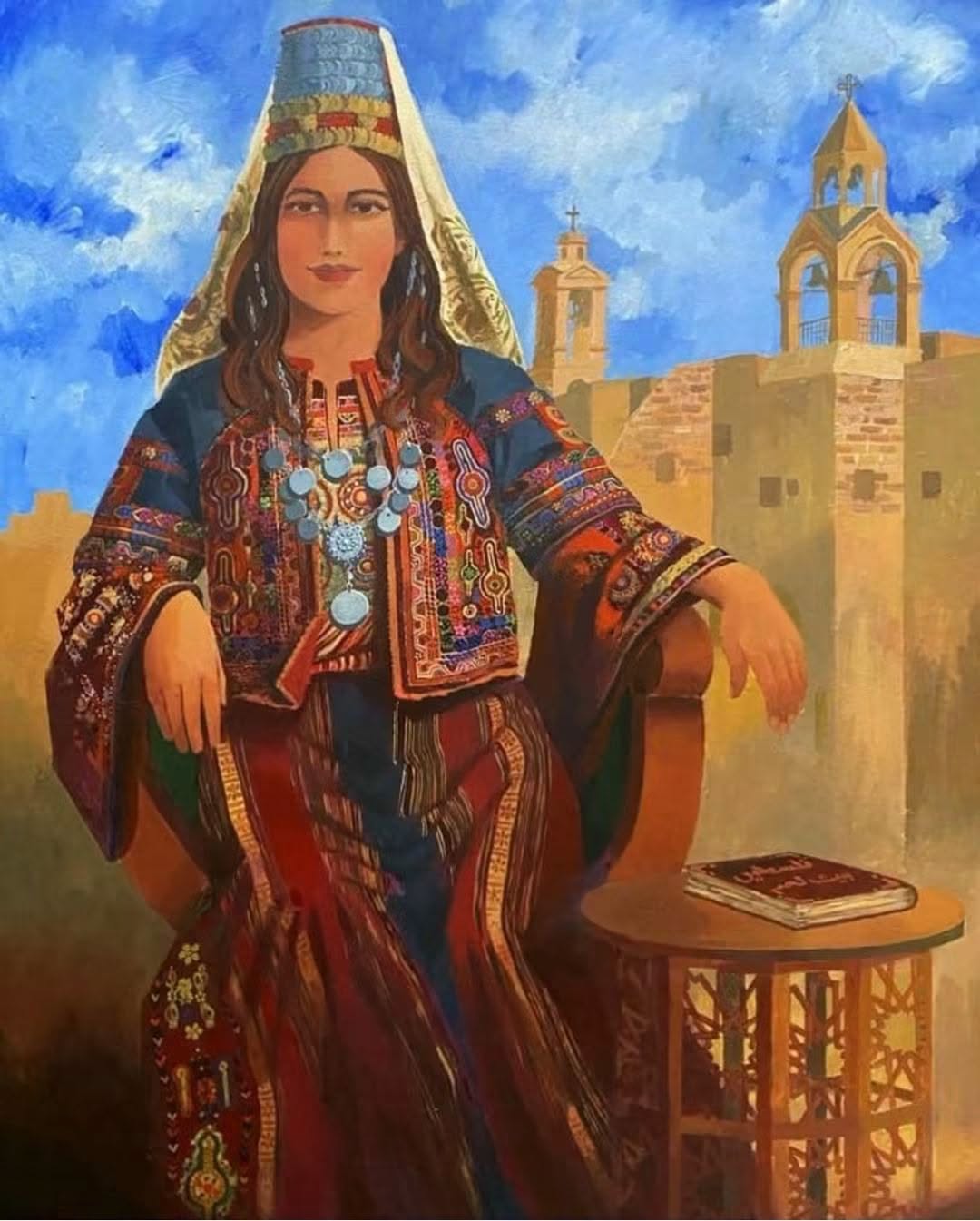
Palestinian dresses immortalize history, heritage, and tradition of the now displaced Palestinian villages.

The “Heaven and Hell” dress was named so because it was made of red and green silk fabric and was worn for weddings and special occasions in the displaced village of Lifta and some other villages in Jerusalem.


The white dress of the bride is from the displaced village of Yazur in the Jaffa District: It was made of white fabric, mostly red, with several cheerful colors… with beautiful floral designs on the dome and sides.

Continue reading
Jerusalem Signs: Identity and Political Power

At a recent lecture hosted by the Council for British Research in the Levant (CBRL), Yasir Suleiman, professor of Modern Arabic Studies at the University of Cambridge guided the audience through the intricate linguistic landscape of Jerusalem. Exploring the Holy City’s street signs, Suleiman revealed how these seemingly mundane markers act as silent witnesses to history and power struggles, charting the evolution of identity and conflict in the region. 

“Language is important, not because it gives you information, but because it stands for something that is beyond language,” Suleiman explained. “Road signs, anywhere in the world, do tell a story. They present you with a narrative, a cultural map, a linguistic map, and a political map.”

Language Layers of Jerusalem 

Jerusalem’s street signs have long served as a battleground for identity and political power, reflecting the city’s historical transformations, from the Ottoman period through the British Mandate and into the present day. Suleiman traced this history, showing how language has shaped and been shaped by competing claims over the city’s public space. 

https://twitter.com/CBRL_news/status/1878758921340678444

Before the fall of the Ottoman Empire in 1917, Jerusalem’s signs prominently featured Ottoman Turkish (written in Arabic script) alongside English and occasionally French. Hebrew was largely absent. For instance, an original 1892 sign at the Jerusalem-Jaffa train station displayed the name of “Jerusalem” in English and Ottoman Turkish, with Hebrew was only added post-1948. 

This marked a time when Hebrew was largely absent from Jerusalem’s linguistic landscape, reflecting its limited presence in the population’s daily life, while Arabic script was present, but the Arabic language itself was absent.

However, the rise of the Zionist movement sought to change this, prioritising Hebrew revival as a cornerstone of its political and cultural agenda. 

Three Languages, One Hierarchy

Under British Mandate, it was decided that English, Arabic and Hebrew were all required on street signs. Yet, their arrangement revealed the prevailing power dynamics: English appeared at the top, Arabic in the middle, and Hebrew at the bottom, as stipulated by British authorities. 

This vertical hierarchy symbolised the ruling power, with English taking precedence and Arabic reflecting the majority population (around 90% of the people in Palestine were Arabic-speakers, including the Jews and Christians). Hebrew’s lower placement underscored its marginal status at the time. 

The Zionist movement, unhappy with this arrangement, lobbied for horizontal signs, where all three languages appeared side-by-side. Even so, Arabic retained a visual advantage because its right-to-left orientation naturally positioned it above Hebrew in terms of linguistic flow, as any right-to-left script placed on the right takes visual precedence over one positioned on the left.

Three Languages, Three Names

Suleiman highlighted how different languages on street signs often tell different stories about the same location. For instance, the famous Damascus Gate is labelled in Arabic “Bab el-’Amoud,” referencing Roman pillars in the area, while in Hebrew, it is called “Bab Nablus,” acknowledging Nablus’s religious significance for Jews, and in English, it is “Damascus Gate,” reflecting the trade connexions to the Syrian capital. Each language offers a distinct historical or cultural claim to the place, underscoring the city’s layered identity. 

Three languages, Two Boxes

The 1948-1967 Jordanian control of Jerusalem brought changes to Jerusalem’s signs. With almost no Jewish presence within the Old City’s walls, the Jordanian authorities only put street signs in Arabic and English. 

Arabic was placed above English, with the English text mirroring the Arabic perfectly (e.g., “Al-Malak Road”). This reflected a shift in status: English was no longer the language of the ruling power but had become merely a lingua franca, while Arabic took precedence as the dominant language.

However, after the Israelis occupation of East Jerusalem in 1967, the linguistic order shifted again. New signs were introduced, with Hebrew taking the top position, symbolising Israeli sovereignty. Arabic and English were relegated below it, marking a significant reordering of visual and political priorities. 

By 1980, when the Israeli Knesset declared Jerusalem the capital of Israel, the street signs further evolved to reflect political realities. A single box now contained all three languages, with Hebrew firmly at the top. Arabic began to diminish in influence, with English morphology increasingly aligning with Hebrew rather than Arabic conventions. For instance, “Ha-Malak Road” replaced “Al-Malak Road,” subtly asserting Hebrew’s dominance over Arabic. 

Signs of Power

This dynamic became even more pronounced in 2018 when the Israeli Knesset stripped Arabic of its status as an official language. On modern street signs like “Nablus Road,” Hebrew now appears on top of the three languages and often in its fully pointed form, a form traditionally reserved for sacred texts, emphasising its elevated status in Israel’s narrative of Jerusalem. 

Suleiman underscored how Jerusalem’s street signs are not just tools for navigation, they are symbols of power. “These signs are not about informing you where you are, they tell you who owns the place, who calls the shots.”

Street signs of Jerusalem have become a linguistic archaeology, with layers of history etched into their evolving forms. From the Ottoman period to the present day, they quietly tell the story of a city at the centre of competing claims over its identity. 

This article was written by Sophie Constantin and appeared in the Jordan Times

Continue reading
Yemeni Missile Forces ‘Millions of Israelis’ Down to Shelters

The Israeli army claimed on Tuesday to have intercepted a missile fired from Yemen, marking the third attack by the Houthi group within a week.

A military statement said air-raid sirens were activated in central Israel, including Tel Aviv, after rocket fire from Yemen.

The army said the missile was shot down before entering Israeli airspace by the long-range Arrow air defense system.

According to the Israeli public broadcaster KAN, “millions of Israelis” ran to shelters after air-raid sirens were activated in central Israel.

An Israeli woman was seriously injured while running to a shelter, KAN said.

There was no comment from the Houthi group on the Israeli claim.

On Monday, the Yemeni group said that it launched two combat drones towards military targets in Jaffa and Ashkelon in Israel.

The attack came two days after at least 20 Israelis were injured on Saturday when a missile launched from Yemen landed in the Tel Aviv-Jaffa area in central Israel.

Israeli Prime Minister Benjamin Netanyahu vowed on Sunday to act against the Houthis in Yemen.

According to Israeli media, the Houthis have launched over 200 ballistic missiles and 170 drones at Israeli targets since the outbreak of the Gaza war last October.

The Houthis have targeted Israeli cargo ships or those associated with Tel Aviv in the Red Sea with missiles and drones in a show of support with the Gaza Strip, where over 45,300 people have been killed in Israel’s genocidal war since Oct. 7, 2023 according to Anadolu.

Continue reading