Israeli Army Forces Thousands Flee Khan Younis

Thousands of Palestinians are fleeing from the east of Khan Younis under heavy Israeli attacks. 

They are running out of the city on foot and quickly while most of them don’t know where to go. These people are already displaced and have moved more than once.

The displacement of people – some say tens of thousands – is trending with video images.  

“Why is this happening to us” a displaced woman hurriedly on the move with her children  from Khan Younis said. 

“Look at the kids, they are holding toys, toys not rockets…” she’d added.

“What are these kids holding, are they holding rockets, you tell me, another one added.

The Israeli army says they are moving into the already destroyed city to look for Palestinian armed operatives but who are nowhere to be found. 

Here, it is just women and plenty of little children on the move. 

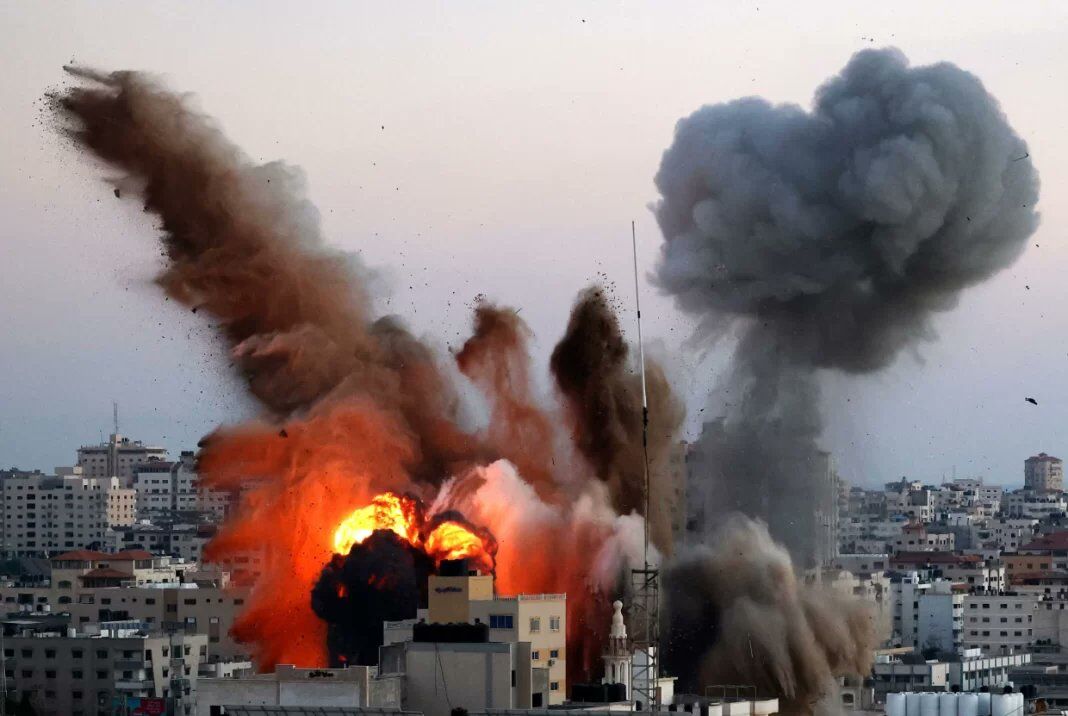
This is a surprise invasion that is being backed by Israeli warplanes who are firing at homes, places and people in the streets, on hospitals and those simply seeking to seek shelter and staying out of harms way.

But in the central regions of Gaza there are know safe areas. The new missiles and bombs have started people moving again mostly to the east of the Gaza Strip to Dier Al Balah which is already under Israeli attack.

Reports say there are 45 reported deaths in and around Khan Younis. Around 40 killed have been taken to the Nasser Hospital in Khan Younis as well as around 150 injured. 

Eyewitness reports say that the hospital halls are full with patients in corridors while most of those injured were shot in the head and chest with case of people whose intestines falling out of their stomach.

The scenes are harrowing. Meanwhile an Israeli drone targeted a journalists’ tent within the grounds of Shuhada’ Al-Aqsa Hospital in Deir Al-Balah. The attack resulted in the deaths of two individuals and injured several others according to the Al Quds News Network.

Continue reading
Israeli Soldiers Confess Khan Younis is ‘Toughest’

Israeli soldiers and officers who took part in the battle of Khan Yunis say the fighting in Gaza is complicated and that Hamas Al Qassam fighters are changing their tactics in this ongoing war on the Strip for the 288th day according to the Israeli daily Yedioth Ahronoth.

They explained Hamas fighters are emerging alive from under the rubble after being bombed because they took shelter in basements protected by reinforced concrete.

Earlier this month, Israeli combat unit commander in the Nahal Brigade said the brigade lost 50 fighters, and “we must listen to mothers and take care of the reserve soldiers and detainees.”

Also last month, The Jerusalem Post newspaper also quoted Nahal Brigade Commander Yair Zuckerman as saying there are tunnels in almost all of the homes in Rafah, and progress of his forces is slow and the battles are exhausting.

The Israeli commander explained the Palestinian resistance factions are planting many cameras in Rafah to manage the battle from above and below the ground.

He said among the challenges facing his forces is booby-trapping houses and rooms in the city before the Israeli forces enter them, and detonate them remotely.

Despite the time-period of about nine months since the start of its war on Gaza, reports continue to highlight the inability of the Israeli occupation army to achieve any of what it calls, its declared goals, to  recover the Israeli prisoners in Gaza and to eliminate the capabilities of Hamas.

Daily, Palestinian resistance factions in Gaza announce the killing and wounding of Israeli soldiers and the destruction of their military vehicles throughout Strip. Resistance factions also fire missiles at Israel, and broadcast video clips documenting some of their attacks on Israeli soldiers, their tanks and troop carriers.

The occupation army continues its ongoing war on Gaza, leaving about 125,000 martyrs and wounded, most of them children and women, and more than 10,000 missing amid massive destruction and worsening famine in the besieged Strip.

Continue reading
Bombs And The Pregnant Women of Gaza

When Hanin first sought care for her malnourished daughter in Khan Younis in southern Gaza, Palestine, the clock began ticking on her chances of survival.

“[My] child was in a critical condition. They referred me to the hospital but there was no means of transportation,” explains Hanin.

Finally, they reached the Médecins Sans Frontières (MSF) inpatient therapeutic feeding centre on a cart.

“My child was tired. She was resting her head towards me and not moving,” says Hanin. “She was close to death before we reached the hospital.”

In contexts like Gaza, where the health system has been decimated and has collapsed, late access to care is posing a health risk to pregnant women and their children. – MERCÈ ROCASPANA, MSF EMERGENCY UNIT HEALTH ADVISOR

After nine months of relentless war, people’s access to healthcare in Gaza continues to worsen, particularly for those most vulnerable when healthcare is unavailable, such as pregnant women and children. Their vulnerability has been exacerbated by repeated displacement, inadequate living conditions, insecurity, and poor nutritional conditions. As a result, MSF teams are seeing an increase in pre-term deliveries and malnutrition in children in the south of Gaza.

“The main health risks for pregnant women are blood-pressure related complications such as eclampsia, haemorrhage and sepsis – which can become deadly if not treated in time,” says Mercè Rocaspana, MSF emergency unit health advisor. “In contexts like Gaza, where the health system has been decimated and collapsed, late access to care is posing a health risk to pregnant women and their children.”

Sole option for maternity and paediatric care in southern Gaza

Al-Nasser hospital is the last tertiary hospital providing maternal and paediatric care in Khan Younis. In February, after several weeks of intense fighting with Palestinian armed groups in Khan Younis, Israeli forces stormed the facility, which had been under siege. MSF teams were forced to flee the hospital.

In May 2024, MSF teams returned to the hospital, and in June, together with the Ministry of Health and other organisations, we reopened the maternity and paediatric wards, including an inpatient therapeutic centre. We started providing support to the paediatric intensive care and neonatal intensive care units.

The needs of women and children are skyrocketing, yet MSF teams at Al-Nasser hospital are witnessing a shortage of vital supplies, jeopardising the provision and quality of care. Due to the lack of other functioning healthcare centres, Al-Nasser is facing an overwhelming increase in patients every day. Between 29 June and 5 July, the paediatric emergency department alone recorded more than 2,600 consultations, meaning staff attended to more than 300 children each day. As more and more children are admitted for inpatient care, they are being forced to share beds, pushing the paediatric services beyond their capacity.

“We are seeing malnourished children, an issue never seen in Gaza before,” says Joanne Perry, MSF project medical adviser, a member of the MSF team working in Al-Nasser hospital. “People are living in tents with minimal access to clean water, and abysmal sanitation. Bombing has devastated the sewage and water systems, resulting in diarrhoea, dehydration, and hepatitis A and skin infections among children.”

Some women are delivering prematurely, often with postpartum complications exacerbated by their living conditions. – MOHAMAD SHIHADA, MSF NURSING TEAM SUPERVISOR

Access to lifesaving maternal care

As the last hospital providing maternity care in Khan Younis, Al-Nasser hospital and its medical team is handling from 25 to 30 deliveries a day. In addition to functioning hospitals being destroyed or closed, the decimation of infrastructure has also created severe obstacles for pregnant women to reach medical facilities. Pregnant women are often forced to navigate unsafe routes amidst the fighting and without safe transportation – often delaying access to healthcare and putting them at higher risk of complications.

“I rode on a donkey-pulled cart to Al-Nasser hospital alone, as my husband couldn’t afford to join me due to financial constraints,” says Najwa, an expectant mother in Gaza.

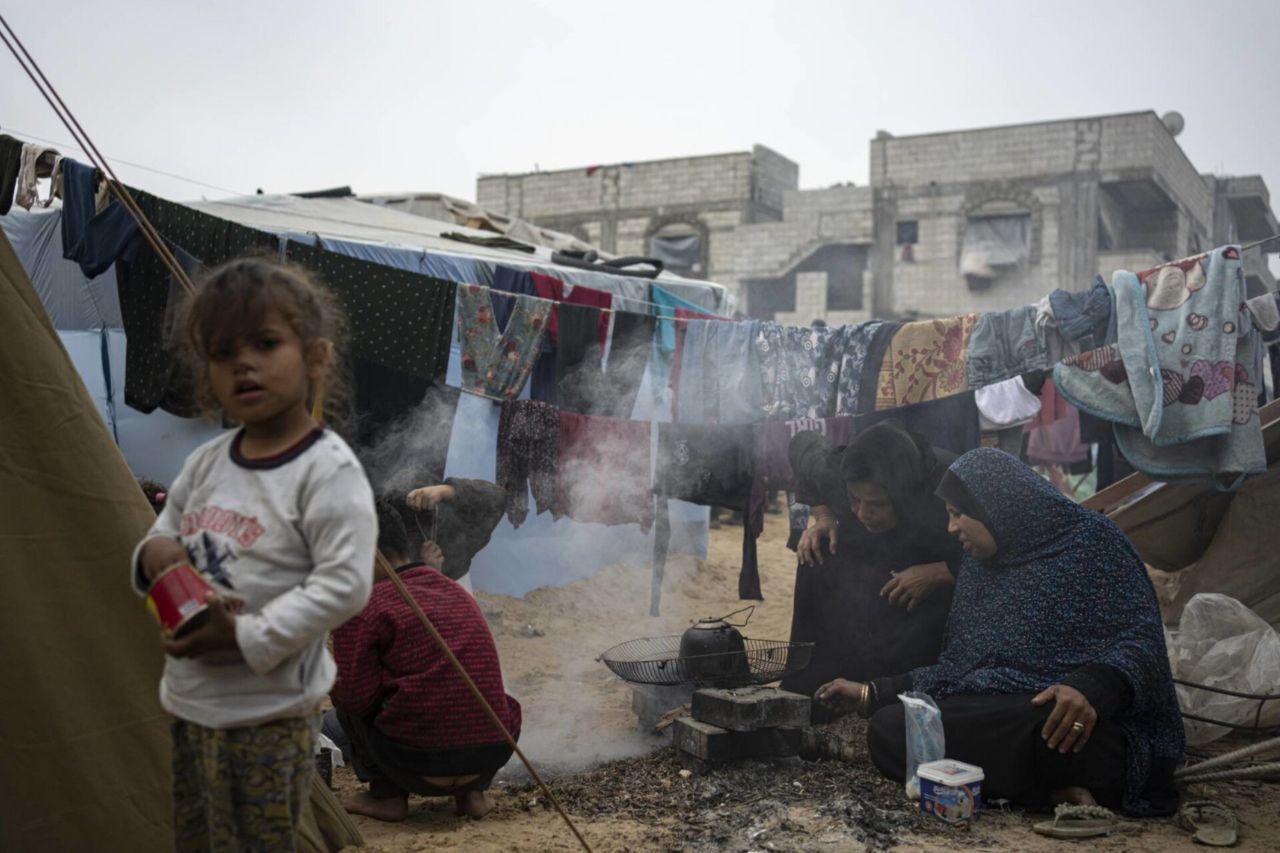
At the same time, once women have given birth, they must quickly return to unsanitary conditions, often in tents, where lack of food and constant stress put them and their newborns at further health risk.

“Some women are delivering prematurely, often with postpartum complications exacerbated by their living conditions,” says Mohamad Shihada, MSF nursing team supervisor working in the MSF neonatal intensive care unit of Al-Nasser hospital.

In addition to maternity services, MSF is supporting the neonatal intensive care unit, which is equipped with 29 beds and incubators for high-risk newborns.

“There’s no […] diapers, or suitable clothing for my baby,” says Khadra, who gave birth in Al-Nasser hospital’s maternity ward. “Living in a tent exposes them to extreme conditions without even a proper bed.”

As the sole functional maternity unit in southern Gaza, Al-Nasser hospital will continue to face challenges with capacity. Reopening the maternity and paediatric wards is one step forward to providing care, but an immediate and sustained ceasefire in Gaza, alongside unhindered humanitarian aid is the only solution to alleviate the suffering of people trapped in the Gaza Strip, including pregnant women and children.

This article is reprinted from reliefweb

Continue reading
Shattered Dreams of Gaza

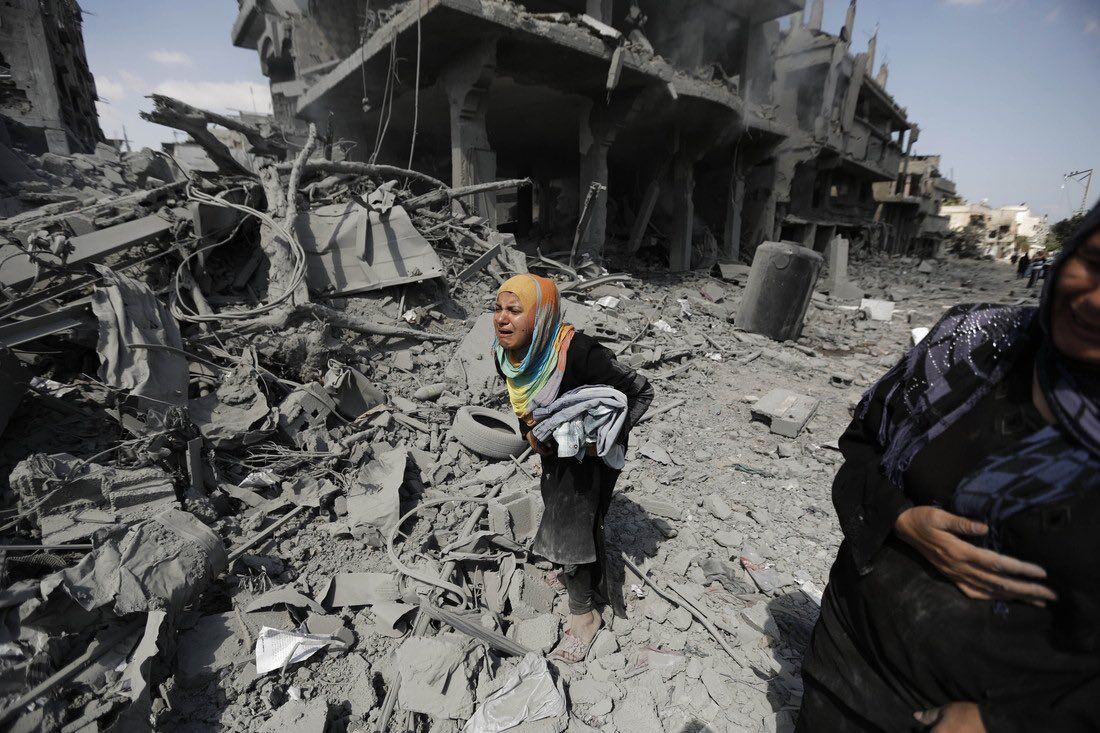
In Gaza, where daily life has become a battle for survival, the stories of Palestinians who lost their homes in the midst of the genocidal war waged by Israel on the Strip 10 months ago come as a mirror-image reflecting the suffering of an entire people, carrying with it bitter human details of what it means for someone to lose their home.

The Al-Sayyid family was living in peace until that fateful night. “The night had fallen, and suddenly, we heard the sound of a huge explosion. Then the voices of the remaining neighbors shouted ‘I had to evacuate the area because there was a threat to blow up the residential tower opposite my house,’” Ahmed, the father, tells the Palestinian Information Center.

At first Ahmed’s family of a wife and seven children moved to a shelter school in the Sheikh Radwan neighborhood south of Gaza City, and as the Israeli ground invasion expanded, they moved to Al-Aqsa University in Khan Younis but when the Israeli army withdrew from the city, they went back.

“I did not wait a minute after I learned of the occupation army retreat to the northern parts of Gaza Strip. Me and my brother rushed to inspect our three-story house. As soon as we arrived there, we were shocked by what happened to the place,” Ahmed told the PalestineIn formation Center Tuesday.

“I found a large part of the house destroyed by artillery shells and burning furniture. It was harsh moments. This is the first time I have faced such an experience like thousands of others who repeatedly lost their homes in previous Israeli wars.”

The man, who is in his 50s, stresses “losing a house is not an easy matter. You are not lose stones here. You feel as if someone has token you to a distant world, erasing a lifetime from your memory. In every corner of the house there are memories, feelings, emotions and life experiences.”

Israel has systematically and extensively destroyed homes in Gaza, completely destroying hundreds of thousands of housing units and in just 283 days,  it has turned their owners and residents into homeless people living in tents and shelters.

Israel warplanes bomb houses over the heads of their residents resulting in their instant deaths. In many times the people mostly women and children are deeply buried in the rubble of these homes. This is not to forget the aerial bombardment of blowing up residential blocks.

Residents ask why is this happening to us? There is no need for it. International organizations protest and condemn but to no avail.

Ahmed points out the psychological and social pain is more severe than the material loss. “Many a time, my tongue twists and turns when my children ask ‘we are going to get back to our house, how long will it take to repair it, how long do we have to stay here?,” Ahmad waves his hands at a loss.

 “How can children feel safe in a temporary shelter? They have lost everything, even their small toys.”

Satellite images by the United Nations Satellite Center show 35% of all buildings in the Gaza Strip are either completely destroyed or extensively damaged due to this Israeli war of annihilation. This means the number of buildings razed to the ground is 88,868.

In its last March assessment, the center used high-resolution images taken by satellites and collected on 29 February, and compared them with images taken before and after the outbreak of the war.

Dreams crushed

Whenever she remembers her home and her memories there, Aya Ahmad, is reduced to tears.  “I had a private room and/or a suite. All my memories, books, and office are gone now.”

“I am a medical student at the beginning of my third year, and at the beginning of my university studies, my father prepared the second floor of our house, bought me a large collection of medical books, and prepared a special room for me with an office, on the walls of which I wrote my hopes and ambitions,” Aya told the Palestinian Center

The 23-year-old girl lives in the city of Khan Yunis, and she has never been forced to move in previous Israeli wars on Gaza, as in this war.

“This is the first time I have been displaced, and when we were forced to do so at the beginning of December 2023, we cried a lot then. We took a few of the house’s belongings in the hope that we will get back.

But this wasn’t so, its been 10 months now since the war started, it hasn’t stopped, we were not able to return to our house which we lost subsequently due to the bombing, and we lost most of our personal belongings there. We moved between tents, and we lost many loved ones, and then the destruction of the house increased our pain. My certificates, my clothes, and my memories were all crushed, and with them many dreams were lost too.”

The garden of the house was Aya’s refuge after the rigors of a long university day. She had pleasant evenings with her parents under the palm and lemon trees on summer nights. But no more, for all of the family now are sheltering in tents of those that were forcefully displaced.

“My wish was to return home, I even wanted to return to it after the occupation forces retreated from our area. At the time, it was still standing and was only partially damaged, but the occupation army returned months later and bombed.”

Aya is still confident about rebuilding her house and whatever

the occupation destroyed, despite the pain she experiences whenever she looks at pictures of her former home and the social memories of each moment there.

A UN assessment found it would need a fleet of more than 100 trucks working for 15 years to remove the 40 million tons of rubble in Gaza. Such an operation could between $500 and $600 million.

According to the assessment by the UN Environment Programme, last month, 137,297 buildings were damaged in Gaza alone not to say anything about the destroyed buildings.

Not stones!

As for Abeer Abu Salem, resident in the Beit Lahia Project in the north Gaza, the smell of gunpowder still haunts her, as if it had just happened. “I will never forget what I experienced that evening, and it cannot be erased from my memory. I cannot describe the scene because of the horror of what I saw.”

Abeer recounts what happened: “I heard the sound of an explosion and saw the walls collapsing and columns flying. I tried to escape but could not, and with the air closing in, I found myself in the second room. I cannot imagine that I am still alive. It all happened in seconds, turning my life upside down.”

Abeer stayed in the Indonesian hospital for about a month, before the occupation army forced them to flee to the south of the Gaza Strip. When asked about what it means to lose a house, she answers:

“It is not easy to lose your house you grew up in. The house is full of precious memories. We worked hard for many years so that my father could build it for us as an apartment above the family home.”

She points out the fear she experiences is not related to their ability to rebuild the house that was leveled, as much as it is to the emotional feelings of seeing what happened to the family home.

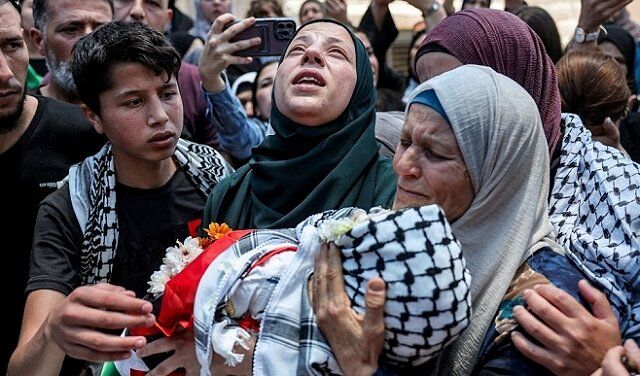
 “We are now displaced. We do not know the fate that awaits us after the end of this cursed war. We cannot think about whether we will truly return to Beit Lahia or whether we will live what our ancestors lived when they forcibly left their homes 76 years ago in the Nakba of 1948 and died on “I hope to return,” she laments.

Continue reading
UNRWA Chief: ‘…Air Filled With The Smell of Blood’

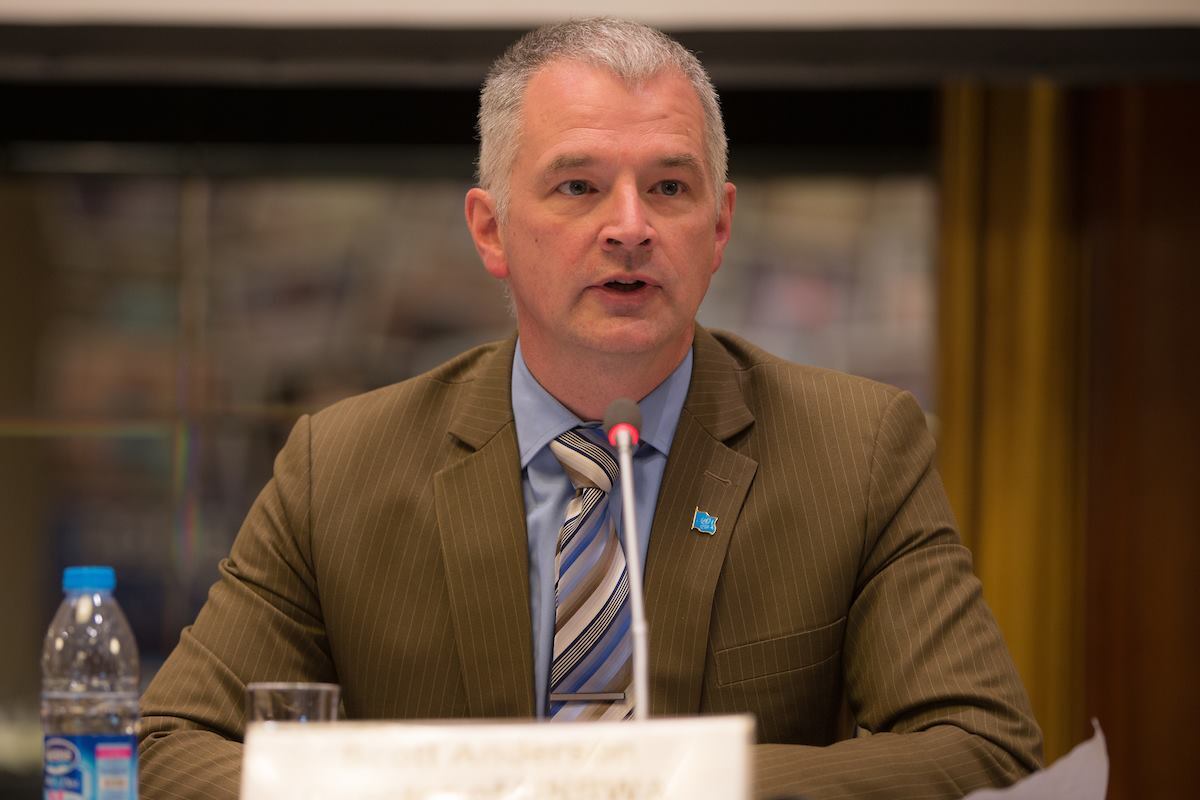
CROOSFIREARABIA – “The air was filled with the smell of blood,” Scott Anderson, deputy humanitarian Coordinator, UNRWA Affairs Director in Gaza said during his visit to the Nasser Medical Complex in Khan Younis.

“Visiting the Nasser Medical Complex in Khan Younis yesterday, I witnessed some of the most horrific scenes I have seen in my nine months in Gaza,” he added.

“This overstretched health facility admitted well over 100 of yesterday’s severe injuries. With not enough beds, hygiene equipment, sheeting, or scrubs, many patients were treated on the ground without disinfectants,” he pointed ot.

“Ventilation systems were switched off due to a lack of electricity and fuel, and the air was filled with the smell of blood,” he said according to the Palestine News Agency WAFA.

“I saw toddlers who are double amputees, children paralyzed and unable to receive treatment and others separated from their parents. I also saw mothers and fathers who were unsure if their children were alive. Parents told me in despair that they had moved into the ‘so-called humanitarian zone’ in the hope that their children would be safe there,” he said.

“My colleagues from the humanitarian community are doing everything possible to increase medical capacity in Gaza, where the health system has long been on the ropes. Yesterday, we provided referral services, as well as additional tents, beds, stretchers, disposables, and medications. But impediments to humanitarian operations prevent us from supporting people anywhere near the scale necessary,” Anderson added.

“Civilians must be protected at all times. We urgently need a ceasefire, the release of all remaining hostages, respite for the people of Gaza, and a meaningful opportunity for healing to begin,” he concluded.

Continue reading