Israel Will Not Start a Ground War Into Lebanon – Expert

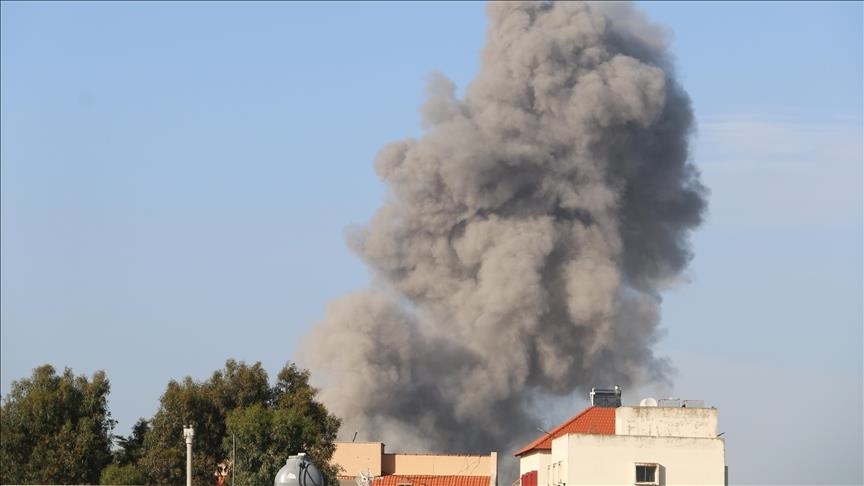
The Israeli army is carrying out a series of military operations in south Lebanon to avoid entering into a ground battle with Hezbollah, Mamoun Abu Nawar, ex-Major-General and military expert, said.

It therefore struck the strategic weight of the party leadership to change within the inside to try to achieve complete paralysis in its elite forces affiliated to Al Radwan brigade whilst isolating its leadership from ground operations control centers that manage the war, he added.

The Israelis leaders resorted to these operations after the United States refused to approve their ground invasion of Lebanon and expand the scope of the war and enter into a comprehensive regional war Abu Nawar told Jordan 24.

Israel will not dare to wage a ground war because it would be the main loser and will therefore be satisfied with missile strikes from the air, he pointed out.

Although the situation is “uncomfortable” the war will not expand and remain under control and Israel will not go to a war that will burn everyone, but it is stricking Hezbollah’s so-called strategic center of gravity – the Radwan to avoid a ground war – as it knows it will not win and will get involved in new losing battles in light of Hezbollah’s ability to strike the infrastructure inside Israel, Abu Nawar concluded.

Continue reading
A ‘Bomb Telegram’ to Arabs

By Maher Abu Tair

Israeli security breaches are not new. We used to hear about the assassination of Palestinian leaders through the explosion of a mobile phone, said every time to be stuffed with explosives activated suddenly but this is unlikely, because those leaders do not receive mobile devices from anyone with such naivety.

Most likely however, is that there is software that leads to heating up of the batteries of these devices and turns them into explosives: So the bomb is now in the hand of the fighter and his pocket, and the same bomb is filming, eavesdropping and spying in the new era of electronic wars.

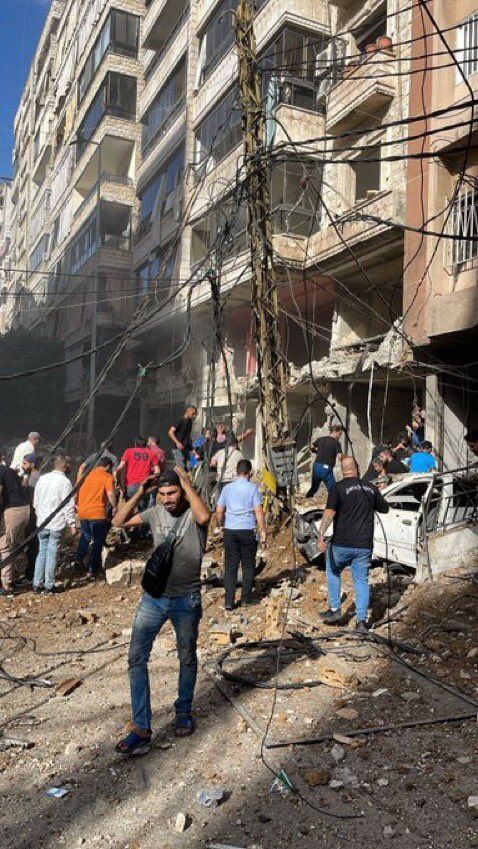
Today there is all possibilities as Israel is penetrating beyond Lebanon, into all countries of the region, through human and electronic penetrations and software. The recent strike on Lebanon go beyond that country, reaching all in the region to seek to make Israel “gigantic” and restore its reputation, by saying it has the ability to blow up our mobile phones and even TVs connected to the Internet to burn your homes, and disrupt all services from water to electricity, to banks software, ATMs, and airports whilst disrupting military and civil devices and others.

This is the telegram Israel wants to send to the mail of the region and its people, to prove it is penetrating many countries, and is preparing for any emergency by continuously monitoring every movement in the countries neighboring Palestine.

Telegram of Intimidation

This telegram of intimidation wants to say, you must know your size, your area, and the capabilities of those in front of you on the technical, military, economic, and political levels, so that you do not meet the same fate.

Intimidation however will not work and change the reality. We already all know there are scientific, technological and military differences, and these differences have not  eliminated hostilities, nor will they force any people to surrender, especially since these wars are now managed from a distance.

Their pattern is painful.  There is no better evidence of that than Israel’s technical and intelligence failure to monitor the 7 October attack, and their failure to track missiles, and failure in many security operations, including reaching the prisoners, or specific names in Palestine, Lebanon, and other countries.

So many do not invest in the intimdation story that says that Israel can never be confronted in this region.

But Israel does not want war with Lebanon, because although it has killed and wounded thousands of Lebanese, it realizes missile wars are very costly, more so than a ground war, which Israel is avoiding because it will be playing in a different arena and exposed to great losses.

Despite this, Israel is trying to invest in cautious calculations in Lebanon working on the assumption that Lebanon does not want to be dragged into an open war, but this conviction may not last long. In  the face of embarrassments, Israel has caused the Lebanese may find themselves at some point, obliged to respond to the technological warfare strikes.

The most dangerous being leaked by the Israeli media is the focus on the motives of the recent Israeli telecom strikes to force Lebanon to pressure the Gaza resistance to handover the prisoners and stop the war, and here Israel is accusing the Palestinian resistance of receiving orders from Hezbollah, and Hezbollah wants the war to continue in Gaza, so that Israel is preoccupied with the Palestinians away from Iran’s camp and its groups, an accusation aiming to connect the arenas and link the regional scene.

The regional war, whose rhythm was controlled in the past few months, has lost its rhythm, and has exceeded the  limits drawn for it, stating the entire region now faces an open scenario if the Israeli strikes continue, and if the Lebanese reactions change, especially since all the continuing battles have not yet led to a political settlement, and we are still in the stage of exchanging punches till now!

This article is translated from Arabic on the Albaladnews website.

Continue reading
Yossi Hadar: ‘Netanyahu Lost The War to Hamas’

Israeli political analyst Yossi Hadar, in the Jewish Maariv newspaper, said Israeli Prime Minister Benjamin Netanyahu lost the war to Hamas, and instead of signing a prisoner exchange deal with it, he is trying to drag Israel into a war of attrition that will keep him in power.

The analyst harshly criticized Netanyahu for trying to dismiss Defense Minister Yoav Galant, describing it as a political move to preserve his position, ignoring the military failures in the Hamas attack of 7 October, 2023.

The writer began his article by referring to the operation attributed to Israel of blowing up the wireless devices in Lebanon and Syria, which resulted in the death of 32 Lebanese and the wounding of hundreds, according to the latest statistics.

“If the attribution of this operation to Israel is correct, it reveals another aspect of Israel’s enormous military capabilities, but at the same time it could bring us closer to a real war with Hezbollah, while the war in Gaza continues, the Houthis attacks on Israel, and Iranian threats continue, with operations growing in the West Bank and inside Israel,” he added.

The analyst accused Netanyahu of deliberately prolonging the war for political reasons, ignoring the serious security implications for Israel, and described him as the most failed prime minister in Israel, and that he “is leading an approach of political baseness and exhaustion and implementing a Machiavellian plot aimed at tightening control over the country by pushing the public to despair.”

Hadar stressed that Netanyahu’s escalation in the north is “the way Netanyahu seeks to maintain his rule, not in order to do something beneficial for the citizens of Israel, but only for his personal and political interests, just so he can continue to exhaust us.”

Political Maneuver

The writer then went on to assert that Netanyahu’s attempt to dismiss Galant is part of a political maneuver aimed at strengthening his power, rather than addressing the military failures that were evident in the 7 October attack, which puts Israel in a weak position in the face of the growing threats.

“All this does not prevent Netanyahu from hatching a plot to overthrow the defense minister at this critical moment for the security of the state, and in the midst of a war that could expand,” he said.

He explained Netanyahu’s move as a bid to replace his defense minister because of his opposition to the Haredi conscription law that the Orthodox parties insist on, in exchange for appointing the head of the Right-wing Israel Party, Gideon Sa’ar, because the latter will pass this law, referring to Sa’ar’s volatility, who was previously quoted as saying, “If you want Netanyahu as prime minister, don’t vote for me.”

Hadar also denied Netanyahu’s followers’ marketing of the reason for Galant’s dismissal as a “weak leftist,” saying that Galant himself offered, just four days after the 7 October attack, to attack Hezbollah as a preemptive move, but Netanyahu refused, in a state of panic over the events.

The writer recalled that Netanyahu is the one who divided Israel by leading “an attempted coup against the judicial system that he created before 7 October,” and he is the one who brought upon Israel “the catastrophe of 7 October,” and now he is dragging another catastrophe by dragging Israel into a war of attrition.

He said, “Instead of waging a short and intense war, he chose a dangerous and failed war of attrition that goes against all strategic logic, and dragged Israel into the worst state it has been since its founding, because what matters is only the logic of political survival,” according to Jordan24.

Continue reading
Hassan Nasrallah Vows ‘Hell’ For Israel

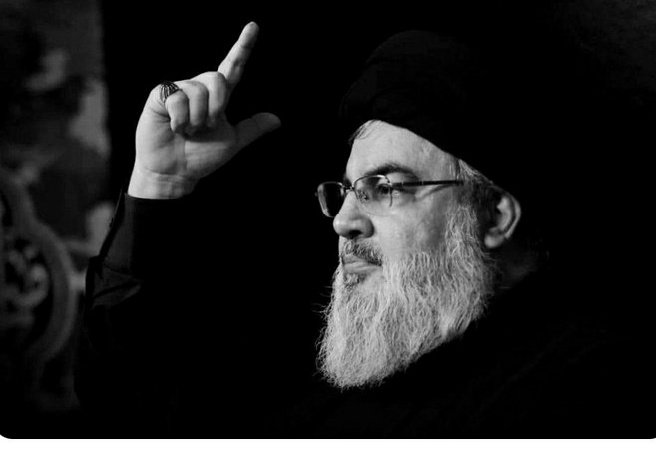
Hezbollah Secretary-General Hassan Nasrallah vowed to turn Israel’s actions into a “hell”, Thursday, after the group suffered a “severe blow” when communication devices were detonated earlier this week in Lebanon.  

Nasrallah made the remarks during a televised speech to address the explosions that killed 37 people and injured thousands.  

“We admit we have received a severe blow which is natural as we acknowledge Israel’s technological superiority, backed by the US, NATO, and the West,” said Nasrallah. “The Israeli enemy sought to kill 5,000 people within just two minutes, showing no regard for anything.”  

“The number of pagers carried by Hezbollah members is 4,000, which implies that Israel intentionally sought to kill 4,000 people,” he said.  

The explosions “will be met with a just retribution, severe reckoning, timing, place, the nature of which we will determine,” said Nasrallah.  

He warned Israel that if it establishes a security belt on Lebanese territory, “it will be turn into a trap and a hell.”  

Nasrallah added that multiple investigative commissions were formed to examine the circumstances of the explosions and they have reached a nearly definitive conclusion, but the Lebanese resistance group is awaiting confirmation.  

He noted that the severity of eye injuries from the explosions “has placed significant pressure on hospitals in Lebanon.”  

Furthermore, Nasrallah pointed out that many of the explosions occurred in hospitals, markets, public roads and homes – areas predominantly inhabited by civilians, including children and women.  

His speech coincided with the intensive flights of Israeli warplanes flying at low altitude over the Lebanese capital, Beirut, breaking the sound barrier multiple times, Anadolu reporter said.

The Hezbollah chief considered the blasts to be a natural occurrence, stating: “This is the nature of war and conflict. We know that our enemy has a technological superiority because America stands behind it, along with NATO and the West.”   

He emphasized: “the Lebanese front will not stop until the war on Gaza stops.”  

Nasrallah noted that senior Hezbollah leaders do not carry the type of pager devices that exploded on Tuesday, asserting that the resistance’s structure “remains large and cohesive.”  

Nasrallah concluded his speech by affirming that what occurred on Tuesday and Wednesday will be met with “just retribution and severe reckoning,” indicating that Hezbollah “will determine the timing, place, and nature of the response.”  

At least 37 people were killed and nearly 3,000 others injured on Tuesday and Wednesday in explosions that targeted thousands of wireless communication devices across the country.  

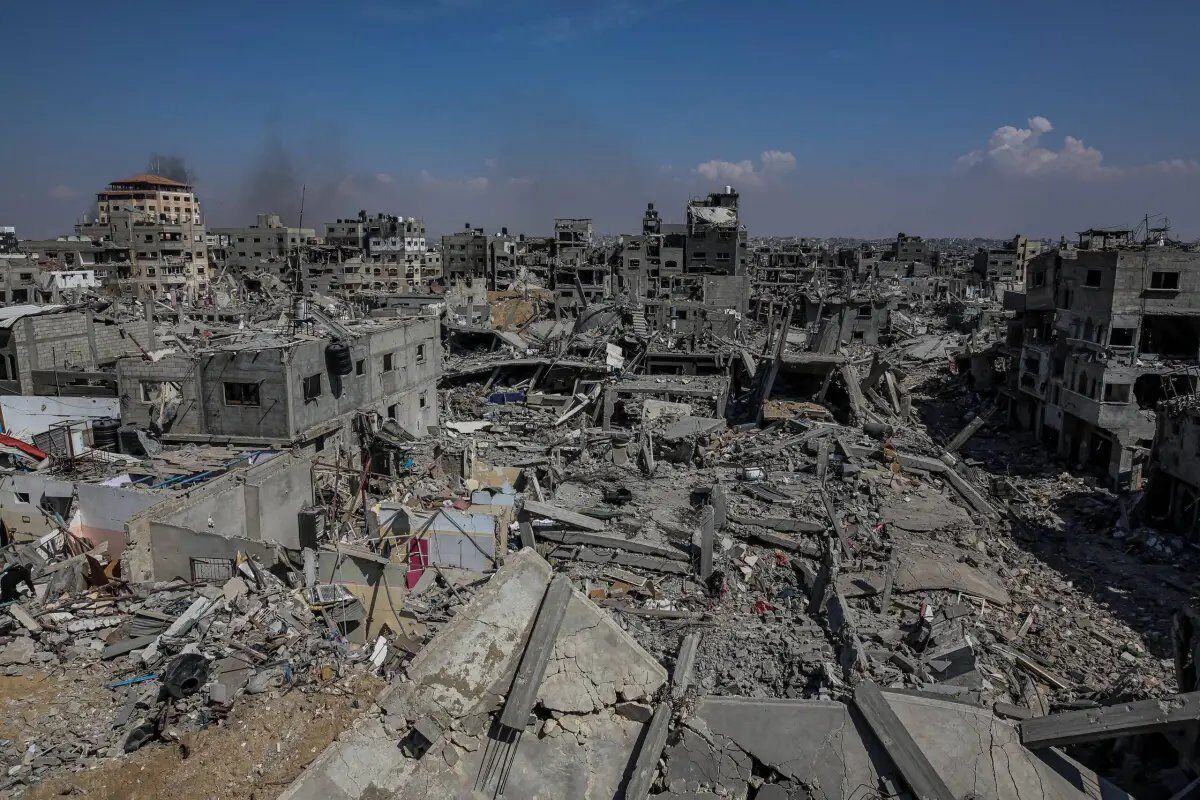
There has been no Israeli comment on the blasts, which came amid an escalation in cross-border warfare between Israel and Hezbollah since the start of Israel’s deadly war on the Gaza Strip, which has killed nearly 41,300 people, mostly women and children, following a cross-border attack by Hamas last Oct. 7.  

Continue reading
Lebanon Will Never Break

Dyab Abou Jahjah is a leading Lebanese author, speaker and an activist who lives in the southern part of the country with an open website. This is a reprinted comment he made recently on Lebanon and the Lebanese people, their sorrow but also their love for life and defiance.

This is a somewhat of a personal post, so please indulge me. As a Lebanese, especially coming from South Lebanon, today and yesterday are painful days. There is no denying it. We feel sorrow, and there is no shame in that.

But if there’s one thing about our people, it’s that we don’t break easily. If you ask about us, you’ll understand. We are the children of Canaan, our roots intertwined through faiths that have shaped us—whether in the name of Jesus or Muhammad. That connection makes us one with our Palestinian brothers and sisters, who, like us, have endured so much, yet remain unbroken.

We’re a people who love life. We laugh, we sing, we create art. Some might say we’re a bit romantic, even soft at times. But all our enemies—especially those who’ve tried to occupy us—know how we fight when we have to. There’s a strength in us that comes out in the hardest of times, a resilience that refuses to bend.

Israel’s anger towards us is because we don’t just speak in support of Palestine—we act. Whether we’re part of the resistance or find other ways to contribute, we do what we can. Even in moments when there’s not much we can do, we at least raise our voices and stand by justice. For those of us from South Lebanon, our connection to Palestine runs deep.

It’s something we feel in our bones, a bond that nothing can break. We’ve drawn their wrath, not just because we’ve resisted, but because we’ve made an impact. And though it may bring consequences, we won’t stop. Our support for Palestine is something personal, something that feels right in every sense—as a duty to our kin, to our faiths, and to the shared humanity that binds us.

We don’t glorify war, nor do we seek it. We value life, every bit of it. But when the choice is between humiliation or standing tall, even if it means death, we’ll face it with dignity. And in doing so, we’ll ensure that whoever invades our little country will perish or live to regret. May God protect Lebanon and Palestine, and may the eyes of the cowards never sleep.

Continue reading