Vandalizing The Olive Tree

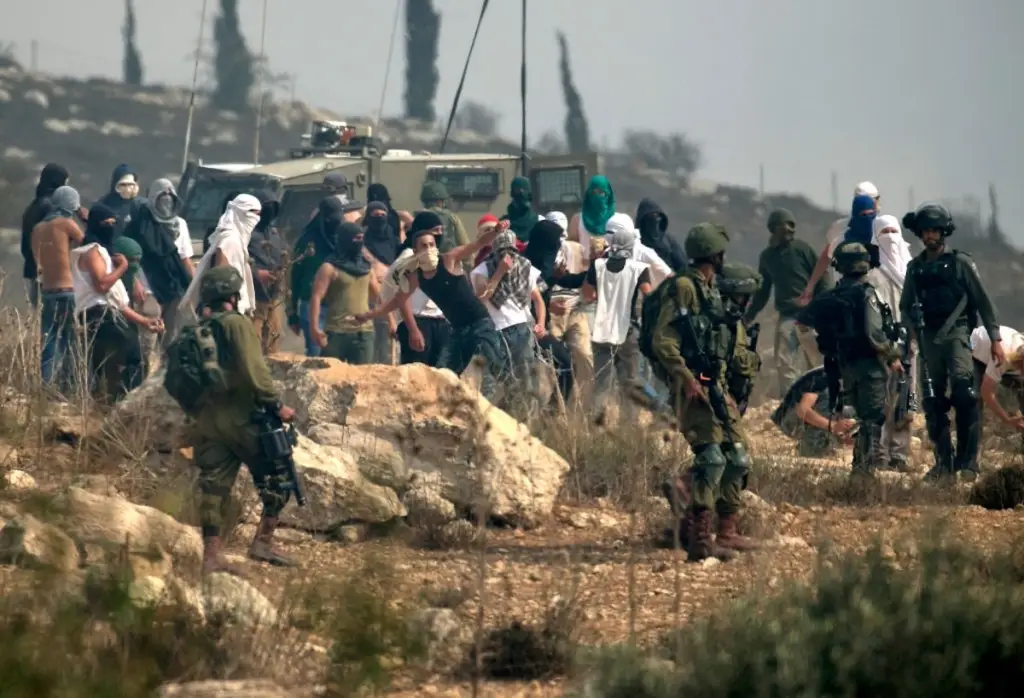
The current olive harvest season in the occupied West Bank has seen the highest level of illegal settler attacks in five years, a UN agency said Saturday.

The UN Office for the Coordination of Humanitarian Affairs (OCHA) said in a statement that 126 attacks were recorded in 70 Palestinian towns and villages, while over 4,000 olive trees and saplings were vandalized.

“The 2025 olive harvest season has so far witnessed the highest level of damage and number of affected communities due to settler attacks since 2020,” it added.

OCHA noted that 60 of the documented attacks involved direct assaults on Palestinian civilians, with at least 17 people injured and 19 vehicles vandalized in the past week alone according to Anadolu.

The UN agency said illegal Israeli settlers from newly established outposts have also imposed access restrictions on Palestinian farmers in multiple locations, preventing them from reaching their groves during the harvest.

On Saturday, illegal Israeli settlers attacked Palestinian olive pickers in the village of Burin, south of Nablus, and assaulted several of them, the official news agency Wafa reported.

Illegal settlers stormed farmland between Burin and the nearby town of Huwara, beat multiple harvesters and forced them to leave the fields, the broadcaster said.

Wafa added that the attackers also scattered the olives the farmers had already collected, leaving them on the ground.

The attack came amid a sharp rise in settler violence against Palestinian farmers during the annual olive harvest, which typically begins in mid-October each year.

According to the official Colonization and Wall Resistance Commission, 259 attacks on Palestinians carried out by the Israeli army and illegal settlers during the olive harvest season.

Israeli attacks have escalated across the occupied West Bank since October 2023, killing more than 1,062 Palestinians and injuring 10,300 others, according to Palestinian figures.

In a landmark opinion last July, the International Court of Justice declared Israel’s occupation of Palestinian territory illegal and called for the evacuation of all settlements in the West Bank and East Jerusalem.

Continue reading
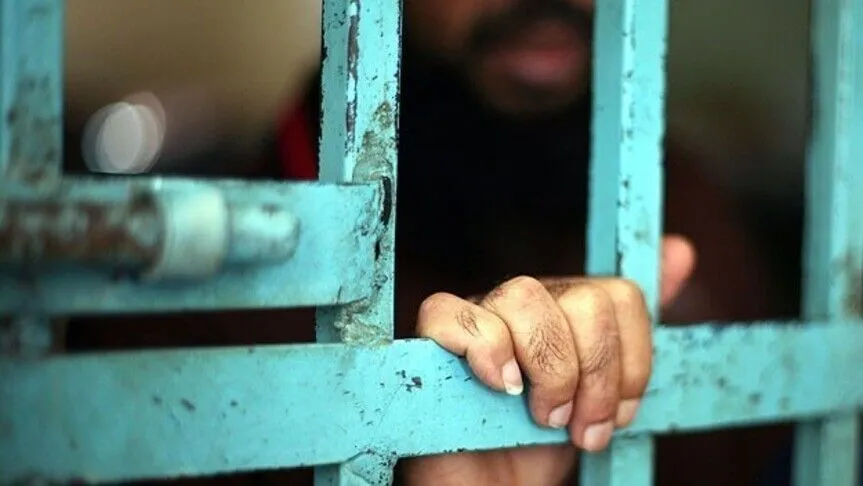
Palestinian Released After 21 Years in Jail

In pictures | In an emotional and long-awaited moment, Hassan Bahar Al-Dam was reunited with his family in Askar refugee camp, Nablus, after spending 21 years in Israeli captivity. His release was part of the prisoner exchange deal secured by the Palestinian resistance.

Continue reading
Profile: Meet ‘Prince of Shadows’ Abdullah Barghouti

Nicknamed “the Prince of Shadows” Abdullah Barghouti is the Palestinian political prisoner with the most number of life sentences ever given to a single detainee.

A former leader of the Hamas’ al-Qassam brigade’s armed wing, in the West Bank, he now appears to be on the verge of release in the Hamas-Israel prisoner exchange. 

Born in Kuwait in 1972, Abdullah Barghouti grew up outside of occupied Palestine, despite his family having originated from the village of Beit Rima, located near Ramallah. Barghouti attended school, up until high school in Kuwait.

Upon the eruption of the first Intifada in the occupied Palestinian territories, in 1987, Barghouti recounted in his memoir that the uprising had inspired him to seek revenge against the occupiers, especially after Israeli forces murdered one of his cousins and youngest uncle. “Simply put, they threw stones at the Zionist occupation forces that were wreaking havoc, so they were shot and martyred” he stated.

During the first Gulf War (1990-1991), Abdullah Barghouti was reportedly arrested for around a month after being accused of participating in the fight against US forces, later being released after the war. Prior to this, Barghouti had decided to pursue the combat sport of Judo and was trained by a man named Munir Samik who was also Palestinian.

Samik once asked Barghouti: “Aren’t you Palestinian? Don’t you want to liberate your country? If you use it against all those who occupied your homeland, there in Palestine, use what you learned here.” Inspired to make himself physically strong and capable of fighting Israel, he then began training in the use of firearms and explosives in the Kuwaiti desert. During the war, Barghouti’s family was forced to flee to Jordan.

When he traveled to live in Amman, Jordan, he would finish high school there but due to his family being too poor to afford University, so he would borrow money from a relative in order to open up a mechanic shop, continuing to practice Judo as a hobby. However, he wasn’t able to earn enough money to keep his business afloat and pay back his relatives and decided to move abroad in order to pursue higher education instead. 

A friend of Barghouti had recommended he apply for a visa program to travel to South Korea, which ended up leading him there in pursuit of an education. When he arrived, he had no money and little but the clothes on his back.

Barghouti walked from the airport to a location that was supposed to help him secure an education; his journey would take three days during which he went without eating. He recalled that he drank water from public parks until reaching the address he had been given, finding out that it was a wood-cutting factory. 

So, without any money or prospects, he ended up working at the factory for 45 days without having money to buy food, eating only from what the factory would supply him.

In 1991, after a few months in the wood-cutting factory, he moved to work in a mechanical factory and studied in parallel with his work at an engineering institute, specializing in electromechanics. This was also the time during which he would meet his wife, who was of Korean origin.

However, his passion for seeking the liberation of Palestine through armed struggle would not perish while he lived in South Korea, as he would routinely go deep into the forest and practice making improvised explosive devices and refining his craft. In 1998 he would then return to Amman with his wife, before deciding to divorce her due to his desire to have children.

Around this time he started becoming more religious, moved to Jerusalem and then the West Bank, married a Palestinian wife, and settled down in his family’s village of Beit Rima. He later had two daughters, Safaa and Tala, and a son called Osama.

It just so happened that in 2001, Beit Rima would be the first area in the West Bank that would experience a full-scale military invasion during the Second Intifada. Israeli forces deployed tanks, attack helicopters, and a huge military force to the village.

Abdullah Barghouti joined the Qassam Brigades in 2001, seeking out his cousin Bilal Barghouti in order to share his expertise in bomb-making.

After his cousin, who is currently serving 16 life sentences in Israeli military prison, witnessed how skilled he was at engineering explosives, he told his superiors in the Hamas military wing and Abdullah Barghouti would begin military training in the Nablus area, going on to become a commander of the Qassam Brigades in the West Bank.

This entire time, almost nobody close to him knew of his secret ambition to seek revenge against Israel and his bomb-making skills. He would later go on to participate in the manufacturing of explosives that killed 66 Israelis and injured over 500.

When he was eventually tracked down in 2003 and arrested by the Israeli occupation forces, he was interrogated and tortured for over five months, before being handed 67 life sentences, amounting to 5,200 years in prison. In later interviews recorded with Barghouti from inside an Israeli prison, he would confidently state that one day interviewers would come to meet him while he sits inside a hot tub in Ramallah.

If he is to be released during the upcoming Hamas-Israel prisoner exchange, it is likely that Israel will request his deportation outside of occupied Palestine. It is speculated that Barghouti could be useful to Hamas in developing its influence in the armed struggle inside the West Bank, which is currently dominated by Palestinian Islamic Jihad (PIJ) and Fatah-aligned fighters.

(The Palestine Chronicle)

– Robert Inlakesh is a journalist, writer, and documentary filmmaker. He focuses on the Middle East, specializing in Palestine. He contributed this article to The Palestine Chronicle.

Continue reading