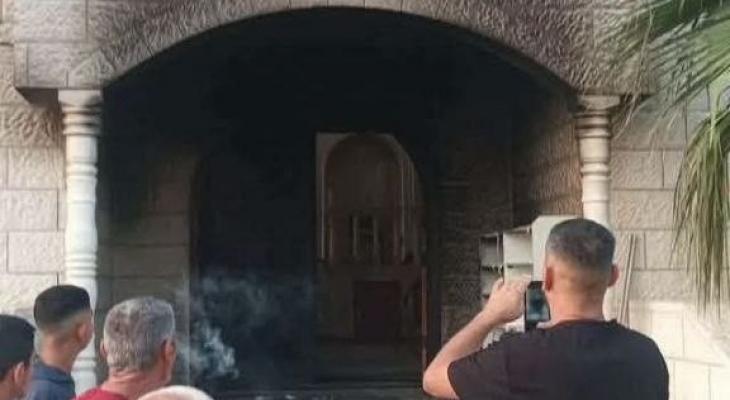
CROSSFIREARABIA – Israeli settlers burned down two mosques in Nablus and Tulkarem, Sunday dawn. This included burning of vehicles and attacks on vehicles and an ambulance in a new escalation on Palestinians and their properties. Settlers raided the village of Qusra, south Nablus and set fire to the Al Rahmah Mosque there and wrote in Hebrew racist slogans on its walls. Settlers also set alight a mosque in the Qora village in Tulkarem. They also revenge slogans on its walls. Settlers also went on the rampage on the areas between Ramallah and Hebron while settling alight a number of vehicles and beat a guard in the area according to the Palestine Information Center.
جريمة جديدة.. دمار كبير بعد إحراق مستوطنين مسجدًا أثناء هجومهم على بلدة قصرة جنوب نابلس. pic.twitter.com/P1KLEiG7KK
— المركز الفلسطيني للإعلام (@PalinfoAr) July 26, 2026
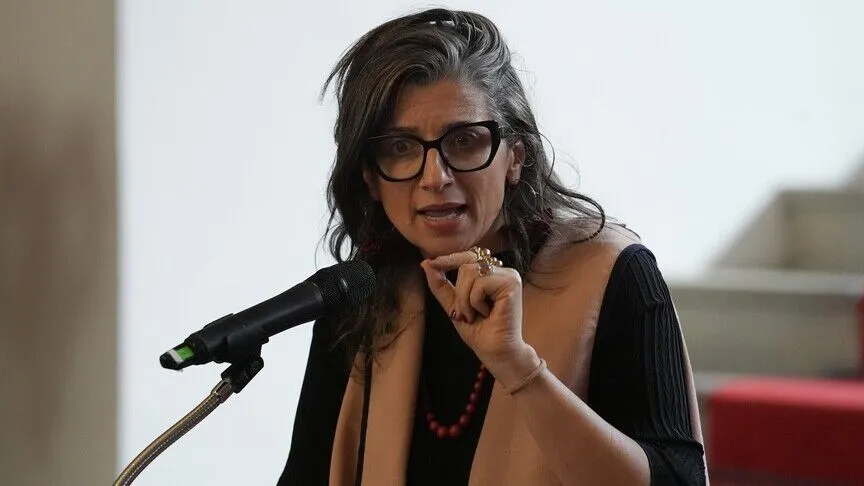
UN Special Rapporteur on the occupied Palestinian territories Francesca Albanese on Saturday described Israeli attacks against Palestinian civilians across the occupied West Bank as “pogroms,” calling for an immediate arms embargo and a halt to trade with Israel.
“Pogroms against defenseless civilians all over the West Bank, while Gaza is under fire,” Albanese said on US social media platform X.
She accused Israeli civilians and the army of “joining forces” in the attacks, arguing that responsibility was not limited to Prime Minister Benjamin Netanyahu or “a few rotten apples.”
“Arms embargo now — stop trade now,” Albanese said, adding that such measures are required under international law.
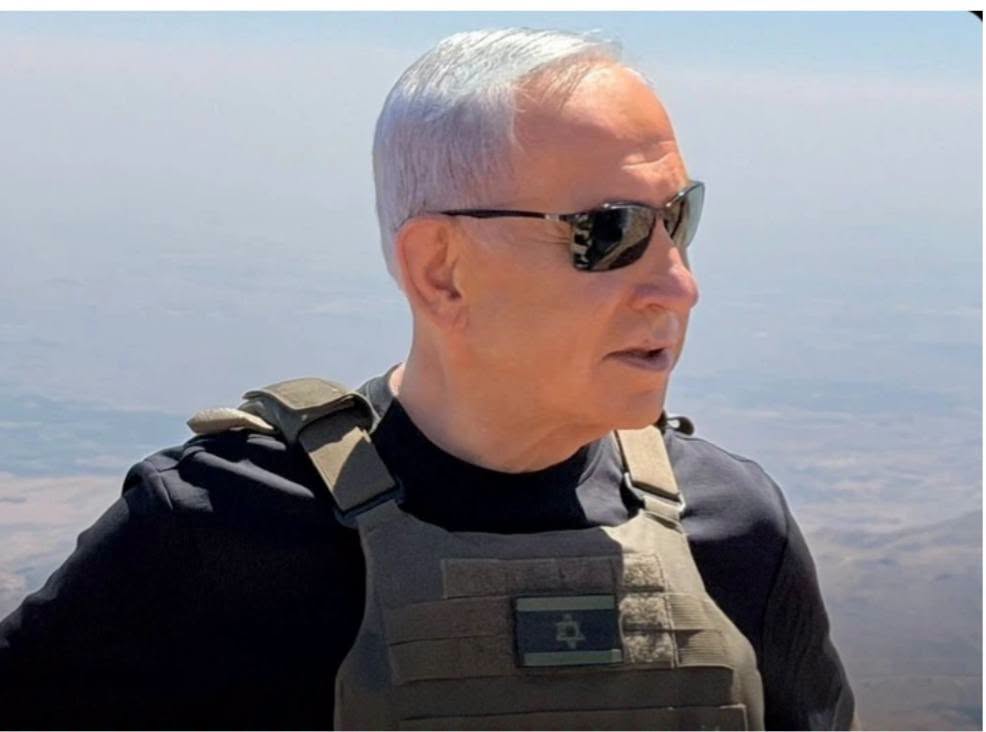
On Friday, Israeli Premier Benjamin Netanyahu and Defense Minister Israel Katz ordered a “wide-scale military operation” in Palestinian villages across the West Bank following an attack near the illegal Havat Gilad settlement that killed two Israeli soldiers and wounded three others.
According to sources and witnesses, Israeli occupiers later attacked several Palestinian communities in the Nablus governorate, setting fire to Palestinian homes and other property.
Four Palestinians were killed on Friday in an attack by Israeli occupiers and Israeli forces on the town of Tell, according to the Palestinian Health Ministry. Anadolu
On Friday morning, 24 July, the town of Tell, southwest of Nablus, witnessed not just a passing raid, but a legendary tale embodied by the heroism of an unarmed young Palestinian man.
Amidst the smoke and gunfire targeting Palestinians, the young man, Farouq Adnan Ali Ramadan, bravely stepped forward, creating an extraordinary scene in the history of popular resistance in the West Bank.
Clash at point-blank range:
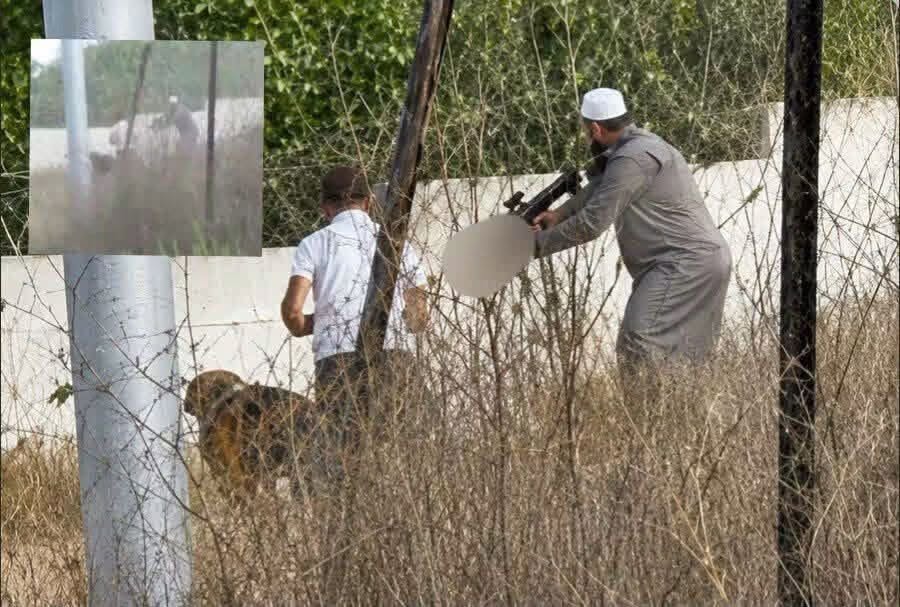
The events began when groups of settlers attacked the eastern part of Tell. Residents confronted them and forced them to retreat. Just half an hour later, the settlers returned, supported by Israeli military vehicles, and stormed the western area near the Havat Gilad settlement outpost. Clashes and hand-to-hand combat erupted between unarmed residents and armed settlers.
At that critical moment, amidst the indiscriminate gunfire directed at the residents, Farouq Ramadan advanced steadily and without hesitation, breaking through the wall of fire to directly confront one of the settlers’ security personnel and guards at the outpost. In a swift and direct physical confrontation, Farouq managed to forcibly seize the automatic weapon from the guard’s hand.
Not content with disarming the assailant, Farouq immediately shifted from a defensive position to confront the source of the fire, directly firing at the settlers and occupation officers in defense of the town of Tell and its inhabitants. This confrontation resulted in the death of an Israeli officer with the rank of major and a soldier from the Jerusalem Brigade, and the wounding of others, completely disorienting the attacking force.
Four Martyrs from One Family
In response to this operation, which shook the occupation’s security apparatus and led to the closure of Nablus and the imposition of a curfew, the occupation forces brought in massive reinforcements and opened fire indiscriminately, resulting in the martyrdom of Farouq Ramadan.
Farouk Ramadan’s heroism was not an individual act, but rather one etched in the blood of four members of the same family who stood firm against the massacre. Alongside Farouk, three of his relatives and cousins—Imran Ahmed Ali Ramadan, Ibrahim Hussein Ali Ramadan, and Jawad Hussein Ali Ramadan—were martyred defending their home.
Impact of the Operation and the Occupation’s Panic
Farouk Ramadan’s bravery sparked panic within the Israeli political and security establishment. Prime Minister Benjamin Netanyahu and several ministers in his government convened emergency meetings, while the Israeli army announced the deployment of additional battalions, imposing a complete security cordon around Nablus and Tell, and storming the Nablus Specialized Hospital.
The Israeli army announced that its forces were preparing to carry out a large-scale operational activity in the West Bank, adding that soldiers’ leave had been canceled and troop deployments throughout the West Bank had been reinforced.
Farouk Adnan Ramadan and his cousins departed, leaving behind an extraordinary scene that will remain in the memory of Tell and the West Bank, and one that the occupation will also long remember. Aljazeera
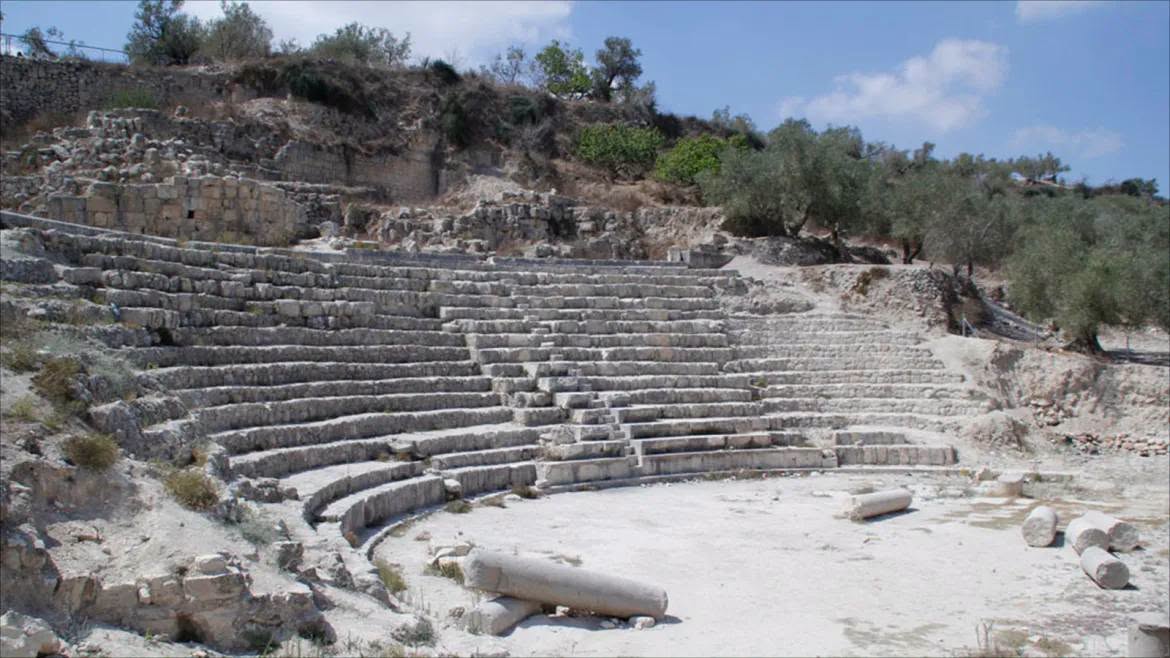
Palestine has successfully secured the inscription of the archaeological site of Sebastia on UNESCO’s List of World Heritage in Danger, Palestinian Minister of Tourism and Antiquities Hani al-Hayek announced on Friday.
The decision was made during the 48th session of the World Heritage Committee of the United Nations Educational, Scientific and Cultural Organization (UNESCO), held in Busan, South Korea.
The committee approved the listing of Sebastia under the emergency procedure and based on criterion (iii) of the World Heritage Convention, following the adoption of Palestine’s nomination file, which highlighted the site’s outstanding universal value as a unique testimony to the succession of civilizations and cultures that inhabited the area from the Iron Age through the Hellenistic, Roman, Byzantine, Crusader, and Ottoman periods.
In its decision, the committee said Sebastia is distinguished by its multiple archaeological layers and clear historical sequence, reflecting the continuous development of an urban, political, and religious center over more than two millennia, giving the site exceptional universal value deserving protection under the World Heritage Convention.
The committee also decided to place the site on the List of World Heritage in Danger due to what it described as serious threats, including Israeli occupation-related measures, land seizure plans, projects aimed at altering the historical and archaeological character of the site, and restrictions affecting protection, management, and preservation efforts.
The Ministry of Tourism and Antiquities welcomed the decision, describing the inscription of Sebastia as a historic national achievement that reflects Palestine’s cultural significance and demonstrates its commitment to protecting its cultural heritage in accordance with international standards despite challenges posed by Israeli occupation practices. WAFA
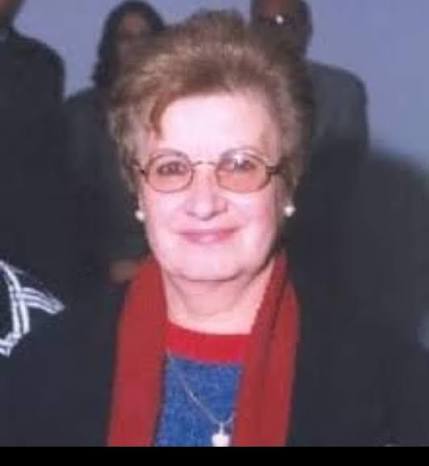
Poet and Researcher Sulafa Hassan Taher Hijjawi was a formidable Palestinian woman born in Nablus in 1934. She received her secondary education at Al-Aishiya School, then traveled with her family to Iraq, where she earned a bachelor’s degree in English Literature from the University of Baghdad in 1956.
However, she made a complete turnaround in 1987 and received a MA degree in Political Science.
She taught Political Science at the University of Baghdad for several years before resigning to join the Palestinian National Leadership institutions in Tunisia, where she became a political advisor to President Yasser Arafat.
After graduating, she married the Iraqi writer and poet Kadhim Jawad and became involved in Iraqi cultural life during the 1960s, working in research and translation.
She began her literary career early, publishing her poems in the Lebanese magazine “Al-Adab” (Literature).
Her activities include:
Editor of the Journal of the Center for Palestinian Studies, published by the College of Political Science at the University of Baghdad.
Joining the ranks of the Palestinian National Liberation Movement (Fatah) in 1968.
She co-founded the Palestinian Writers Union with the writer Jabra Ibrahim Jabra.
She established a branch of the General Union of Palestinian Women in Baghdad.
She represented the General Union of Writers and Journalists at the General Union of Journalists.
She was a member of the General Secretariat of the General Union of Palestinian Writers and Journalists.
She has been the Director of the Palestinian Planning Center since its establishment in 1991.
Her works include:
Palestinian Songs – a collection of poems.
Ships of Departure – a collection of poems.
A Dream, Poetry for Children – a collection of poems.
Soviet Jews – a study of social reality.
On the Political History of Palestine – Palestine the Place.
Her translations include:
Poetry of Resistance in Occupied Palestine
Lorca: The Lyre of Granada
The Creative Experience – a study in modern literature.
Edgar Alan Poe – His Life and Works
What is Criticism? – a collection of philosophical essays.

marwan

 CrossFireArabia